Latest News

World

Occupy protest: ‘Public needs educating’

6807407510_87e96e8176_bThis is some dummy copy. You’re not really supposed to read this dummy copy, it is just a place holder for people who need some type to visualize what the actual copy might look like if it were real content.

If you want to read, I might suggest a good book, perhaps Hemingway or Melville. That’s why they call it, the dummy copy. This, of course, is not the real copy for this entry. Rest assured, the words will expand the concept. With clarity. Conviction. And a little wit.

In today’s competitive market environment, the body copy of your entry must lead the reader through a series of disarmingly simple thoughts.

All your supporting arguments must be communicated with simplicity and charm. And in such a way that the reader will read on. (After all, that’s a reader’s job: to read, isn’t it?) And by the time your readers have reached this point in the finished copy, you will have convinced them that you not only respect their intelligence, but you also understand their needs as consumers. (more…)

a, Features

Why McGill can’t “Pack the Stadium”

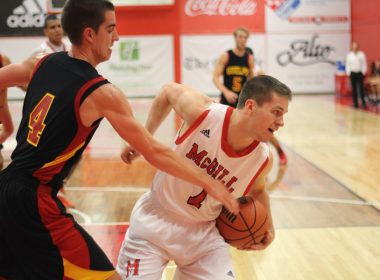
With nearly 40,000 students and an endowment that is upwards of $1 billion, McGill is no doubt a large and well-funded university. Despite this, attendance rates for sports games are low, and a general sense of apathy is palpable towards athletics at McGill.

McGill’s athletic history, much like its academic past, is both prestigious and noteworthy. Dr. James Naismith, a McGill alumni and former Director of Athletics, invented the game of basketball. McGill students were also instrumental in the formation of another sport, ice hockey, as they collaborated to codify the first rulebook of the sport before creating the McGill University Hockey Club in 1877, the first of its kind. McGill also had a major impact in the development of another of the ‘Big Four’ of North American professional sports—the remaining being hockey, baseball, and basketball—as the first North American styled football game was played between McGill and Harvard in 1874.

McGill’s athletic success isn’t simply limited to the history book, either. In the past three years, the Redmen and Martlets have combined to win 15 championships in conferences such as the Ontario University Athletics (OUA) and the Reseau du Sport Etudiant du Quebec (RSEQ), among others. In addition to this, men’s and women’s ice hockey, men’s baseball, men’s lacrosse as well as men’s and women’s tennis have won national championships in the past three years.

The obvious lack of school spirit and excitement surrounding varsity sports gives the impression that McGill student athletes are unsuccessful. With the exception of the men’s basketball, hockey, and football teams—collectively known as the ‘Big 3’—most games are played in front of near empty arenas and stadiums. Even for the aforementioned ‘Big 3,’ attendance rates over the last three years have lagged considerably compared to other schools with significantly smaller student populations and comparable athletic records.

According to former McGill Martlet Kristin Hazzard (2002-2006), the culture of athletics at McGill has always been like this.  She started off her career on the women’s volleyball team, a program that ranked consistently in the nation’s top 10. After her first year, she made the switch to the ice where the historically dominant Martlet ice hockey program made it to nationals every year she was on the squad. Despite the success in both sports, she noted that fan engagement was clearly lacking.

“I was on very good teams […] but nobody really watched us except for family and [sometimes] friends,” said Hazzard.

One of the main reasons that McGill Athletics struggles to generate interest is because of the university’s location in the heart of a major city. For many schools located in rural or semi-rural areas, university-sponsored sports are an integral part of daily life. Without alternative sources of entertainment, students are naturally drawn to varsity sports. Hazzard’s experiences echo this sentiment.

“At French-Canadian universities in smaller towns like Laval and Sherbrooke there would just be a different atmosphere,” Hazzard said. “[In] Sherbrooke […] the volleyball program was just something the entire town got behind.”

Tessa MacDougall, a former Syracuse Women’s Soccer player (2006-2010), commented that it was fairly common to see student life centred around college athletics at a National Collegiate Athletics Association (NCAA) school like hers, compared to its relatively low profile at McGill.

“There were a lot of events [surrounding] sports, things like pep rallies or homecoming were a huge deal […] and there were tailgates for every game of every sport.”

(Laurie Anne Benoit / McGill Tribune)

Syracuse is in a metropolitan area with a population of less than 700,000 people and only one major higher education institution. Montreal, on the other hand, has a greater population of just under four million and hosts four major universities. Consequently, students here are given limitless options to satisfy their entertainment needs. Olivia Sutter, a former Carleton Raven and current McGill Martlet, noted that despite being the fourth largest city in Canada, Ottawa pales in comparison in terms of city life.

“In Montreal, as a student, there’s just so much more to do. There’s the culture, the nightlife, [whereas] in Ottawa you’d be more inclined to go to games because you know your friends are going,” said Sutter.

Neal Prokop, a forward on the Redmen ice hockey squad and former student athlete at the University of Manitoba, noted that schools that are in urban centres with large swaths of commuter students face added difficulty.

“Once a student leaves campus [for the day], they aren’t as inclined to come back, especially in the colder months of the year,” explained Prokop. “I think it is difficult for a school to maintain a ‘campus atmosphere’ with students spending so much time living ‘off-campus.’”

Drew Love, McGill’s executive director of Athletics and Recreation, sees the other entertainment options as just another component of what he calls the ‘Montreal Fabric.’ The centrepiece of this idea is, of course, the Montreal Canadiens who dominate a disproportionate amount of both the media coverage and the fan engagement and interest. Other professional teams have struggled for a market share whilst competing against the Habs, despite seasons having very little overlap. The Alouettes, Montreal’s CFL team, have struggled to stay in the city throughout the course of their history while the Impact, Montreal’s Major League Soccer (MLS) team, have really focused on finding its consumer base in the large immigrant population.

Hazzard believes that funding is a major factor that drives the culture of athletics.

“It always seemed like other universities were pumping in more money into their programs. We were very lucky in ice hockey with the funding we had. I know in most other sports, including volleyball, it was very minimal.”

MacDougall’s experiences at Syracuse were completely different. She noted that funding was never an issue and was a consistent driving force in the development and maintenance of a successful culture.

(Alessandra Hechanova / McGill Tribune)

“I was paid to go there [through my scholarship] just like all the other student athletes. And […] alumni donate back to make sure the experience improves,” MacDougall said.

While McGill Athletics has a budget of $3.8 million, most NCAA athletic departments see much bigger numbers. Syracuse Athletics’ profit alone is around $4.1 million.

In addition to this, there are certain characteristics about the student body that are unique to McGill. One such characteristic is the location and structure of the athletic facilities.

“At Carleton the arena was right on campus and everyone knew where it was. Here, it’s hidden,” said Sutter.

Hazzard noticed that the atmosphere around the McGill vs. Concordia rivalry game was noticeably different if the game was being played at Ed Meagher Arena at Concordia, as opposed to McConnell Arena.

“The game [at Ed Meagher] was always more popular and the atmosphere was better […] because their arena was structured so that there was only one side of the ice for bleachers.”

Love reiterates the statement when it comes to McGill’s field sports, as the atmosphere created is misleading if only attendance rates are taken into account.

“You can’t create a sense of urgency around buying a ticket when you never sell out […] because our venues are so large that if 3,000 people show up you can’t black-out the rest of the stadium and create a positive atmosphere,” Love said. Percival Molson stadium has a seating capacity of over 25,000. so even a crowd of 3,000 would look relatively modest.

Another key factor that is mostly unique to McGill is the academic and research-orientated nature of the school. This is something that affects everyone that is a part of the university, including those in the Athletics program.

“We know that this is an academic institution,” said Love. “That’s why we’re all here, and we say that we develop student athletes, students first, athletes second [….] We see, even in [the Athletics Complex], the result of fans and players who have to fight their way through very difficult academic situations […] It’s just reality here and it affects the fan base.”

MacDougall’s experience at Syracuse, a reputable and top 50 institution in the United States, is a far cry from those within the McGill community.

“It was the sort of situation where you’d rather skip an exam than skip a game […] because it’s the main reason you’re going to the school,” she explains.

McGill still has a long way to go in terms of branding its program compared to other Canadian universities. Sutter has noticed the marked change during her time as a Martlet.

“[Here] there aren’t flyers anywhere promoting the games. [At Carleton] it was everywhere on every wall of the student centre,” said Sutter.

Prokop noted that the University of Manitoba was able to parlay two major developments on campus, the building of a new stadium and a new active student centre, into added interest for university athletics.

“The school is using the opportunity to create a new ‘fan experience’ through student promotions, university events, state of the art facilities and a new website,” he explained. “The football team has drawn some of their largest crowds to date, and the ‘buzz’ on campus, with the help of social media, is focused on engaging as many students as possible.”

Prokop also believes that a successful athletics program should strive to move past just success or fan engagement and focus on the development of its student athletes.

“I think the healthiest university athletic program are those that produce great student athletes,” said Prokop. “Having the support in place to help athletes succeed in and out of the classroom should be a priority.“

In this respect McGill undoubtedly succeeds. However, as evidenced by the current state of the program, more needs to be done by both McGill Athletics and by the student body as a whole. Love says he is fully aware of the unique, inherent problems that McGill faces when trying to develop its fan base and has been spearheading the charge to tackle these issues. It has become clear that it is not enough to just broadcast that there will be games certain nights and expect fans to show up. Rather, its latest policy has focused on generating buzz through step-by-step solutions that make it easier and more exciting for the greater McGill community to attend games.

“We’ve created special event nights [like] ‘Fandemonium’ and ‘Pack the Stadium’ […] to generate interest and get people [in],” said Love. “We’re trying to work with Red Thunder and get them more active and out to more games. We’re working [on] some programs now with [the residences…] to get the community to come in […] but the thing is it’s never-ending, it’s a four year cycle that keeps on going.”

The program is also currently going through a marketing program that has focused on bringing more advertising towards main campus and away from the Athletics complex. The new strategy places a greater emphasis on branding the uniqueness of McGill. Phrases such as: “Behind every great team there is a great university,” or, “#werunthiscity” can now be found on walls in academic buildings on campus. Despite the continuing efforts of McGill Athletics, students must also choose to shift time away from alternative entertainment options and choose to support their peers. A perfect opportunity to do so will be Homecoming Week. McGill football faces off against the Université de Montreal in the annual Homecoming Game on Saturday Oct. 19 at 1:00 p.m. in Molson Stadium, a tilt with major playoff implications. Later that evening, as part of the festivities Men’s Ice Hockey will also be playing its Homecoming Game against UQTR at 7:00 p.m. in McConnell Arena.

The foundation for creating a strong culture of athletics exists at McGill. The shared onus now falls upon the entire community to take the next step forward.


a, Art, Arts & Entertainment

Venice in all its glory

The Montreal Museum of Fine Arts (MMFA) is showcasing their interdisciplinary exhibit, Splendore a Venezia, exploring the interplay of visual art, music, and political culture in the Venetian Republic between the early 16th century and the fall of the Serenissima. The museum investigates these overlaps, exhibiting a diverse collection of work:  prints, drawings, illuminated manuscripts, original period instruments, and early music texts.

Although music plays in the background of the exhibit, viewers are encouraged to use complimentary audio guides, available via portable music players and headphones. Many pieces are paired with a specific track number designed to accompany your interpretation. This intimate experience provides greater understanding with regard to theme and time period of the artwork.

“At the Montreal Museum of Fine Arts, it is now equally impossible to see without listening, to listen without seeing,” remarks Museum Director and Chief Curator Nathalie Bondil. Matched with François Filiatrault, musicologist for the event, these combined talents have ensured the success of Splendore a Venezia.

Difficult to imitate, the culture of Venice is authentically depicted here. There are three major themes explored in the exhibit, each aesthetically organized. The first is titled “Art and Music in the Public Sphere,” focusing on the influence of art in religion and politics. Some major features include items such as the “Corno-Ducale,” a crown worn on official occasions by the Doges of Venice (translated as ‘Duke’).  This section looks at ceremonies and processions, with the inclusion of many period instruments that have never before been exhibited in North America.

The second theme revolves around “Art and Music in the Private Realm.”  During this time, music was the art of the courtier and educated class; nobles were often depicted with instruments or were in the process of composing. The pieces in this section celebrate Venetian musicians, concerts, and street performances of the 17th and 18th century and include “The Concert” by Titian, on loan from the Palatine Gallery in Florence. Also featured is an authentic Venetian gondola, crafted in the late 20th century by Pietro Amadi, comprised of various woods and metals, and inscribed with the phrase “In Barca Vien Con Mi” (Embark With Me).

The third and final theme focuses on “Art, Music and Mythology,” detailing the world’s first public opera house, Il Teatro Nouvo di San Cassiano,  which opened in 1637 in Venice. This section focuses on mythology in Italian Renaissance paintings, showcasing a heritage marked by allegory, myths, and symbols. A beautiful pastel portrait of the great soprano Fuastina Bordini is part of this section, along with other drawings by Count Antino Marie Zenetti that have never been exhibited in North America.

There were 61 contributors to the exhibit worldwide, including the MMFA, the New York Public Library, and the Louvre, to name a few. The MMFA’s publishing department has issued a full color exhibition catalogue in English and French featuring essays by leading international experts in Venetian art, culture, and music. Bourgie Hall, the MMFA’s fine concert venue, will also be producing a series of 20 concerts which will explore five centuries of Venetian music.

Splendore a Venezia provides a fresh perspective on history; capturing the full scope of the two golden ages in Venetian art and entertainment, this exhibit is classic and informative. Don’t miss the opportunity to catch a glimpse of this key period in art history.

Splendore a Venezia exhibits at the MMFA from Oct. 12, 2013 to Jan. 19, 2014. Tickets are $10.44.

a, Student Life

Rebel finds kitchen at Prato Pizzeria; poutine packs major punch

The man behind Fidel Gastro, a Toronto street food experience company, held a pop-up restaurant event at Prato Pizzeria on St-Laurent last Friday. Between serving foodies and the occasional exclamations of his catch phrase ‘Ole,’ Matt Basile took the time to speak to the Tribune about street food, making it in business, and giving in to your professional appetite.

Basile didn’t always dream of becoming a culinary sensation. He started off working as a copywriter in Toronto. Cooking was something he did with his family and to make a little money on the side. When he realized he wasn’t doing what he really enjoyed, Basile gave notice that he would be leaving his job at his marketing firm in order to pursue his passion for food. According to Basile, listening to Steve Jobs’  commencement address to Standford University on YouTube consolidated his new outlook.

“It was so much aligned to what I had just done moments earlier that it was like Steve Jobs was talking to me directly,” Basile said. “You know, people aren’t meant to be task-doers; they’re meant to carve their own way. That’s the human spirit—do your own thing.“

Basile has certainly trod his own path. In addition to doing pop-up food events, where he takes over a restaurant for a night to serve up his own food, Basile sells street-fare from his food truck, Priscilla, and runs his restaurant Lisa Marie in Toronto. These ventures are featured on Travel and Escape network’s television show Rebel Without a Kitchen, which he hosts.

Looking for a last-minute destination to pop-up in, a stop in the Belle Province was a no-brainer for Basile. One need look no further than the food trucks parked outside Leacock to realize that the street food movement has hit Montreal with full force.

“I’m not from here, but I definitely have a huge love for this city,” Basile said. “I [thought], how do we do something in such a short amount of time and still [do] Montreal justice?”

For his Friday night menu, he prepared two variations of Montreal-inspired poutine—if they can even be called that. The first dish incorporated Schwartz’s smoked meat into the classic Quebecois meal. Though smoked meat-topped poutine certainly isn’t unheard of, Basile made the Montreal experience his own by topping it off with Dijon honey sauce instead of the traditional gravy.

The second was a marinara poutine made with delicious local cheese curds and marinara sauce prepared by him and Prato’s owner, Rosa. It simultaneously delivered the standard Italian-style tomato, basil, and cheese trio and satisfied any late night poutine cravings.

“Smoked meat, poutine, pizzerias—these are all things that are near and dear to everyone’s hearts, so all I [had] to do [was] put the Fidel Gastro twist on it,” Basile said.

That “Fidel Gastro twist” is what Basile does best.

“Whether it’s in my restaurant or in my truck, or on a table in Montreal, in order to really make an impact in the food industry, you just always have to be different,” he said. “That’s the most important thing.”

Although Basile’s job comes with reality television-esque drama, like issues with his deep fryer and Prato’s power on Friday, he said he feels incredibly fortunate to be where he is today.

“I love my job and I love doing it every day,” he said. “I’m very blessed in that sense.”

a, Sports

From the Cheap Seats: Fenway in October

I’d like to say that I lost control of my body—that it wasn’t me in there. How could I be screaming my voice hoarse along with 38,029 New Englanders, high-fiving the stranger standing a row behind me, whipping my t-shirt above my head as David Ortiz lifted a booming game-tying grand slam in the bottom of the eighth inning?

It couldn’t have been me because I have hated the Boston Red Sox ever since I attended my first game at the Rogers  Centre in 2006.

It is with a sense of disbelief, then, that I sift through my memories of attending Game 2 of the American League Championship Series at Fenway Park this past weekend. I’m remembering myself at the beginning of the game. There’s no cap on my head; I’m in a sea of Red Sox red as I stand out in a dull brown flannel that can’t be mistaken for any major league colour; I don’t clap (or boo) when the home lineup is introduced. I don’t sing along to a foreign national anthem.

When I came into the opportunity to go to Boston to take in some post-season baseball for the Thanksgiving weekend, I didn’t hesitate to seize it.  As a lifelong Blue Jays fan born a few years too late, I had never seen baseball played past September in real life.  I had not even been to a stadium beyond the Rogers Centre, much less an open-air stadium like Fenway, steeped in a century of myth and lore. I buried my deep-rooted loyalties and got on the eight hour Greyhound to Beantown.

________________________

Sunday night: Pushed up against the door of a crammed Boston subway car, the first “Go Sox!” cheers bubble up out of the crowd as Kenmore station is announced.  As I step onto the Fenway concourse, all of Boston—all of New England—seems to be crowded around me. I push past a horde of scalpers who look and sound like they just stepped off the set of The Departed. “Sahx tickets heeah!”  As soon as I pass through the gate into the concession area, the history is palpable. The smell of hot dogs and chowder wafts through the green underbelly of the stadium. The attack on my senses is overpowering.

The anxiety doesn’t hit me until a roar erupts from the crowd around 10 minutes before the game even begins—across town, Tom Brady of the New England Patrots had just thrown a game-winning touchdown pass with five seconds left. Who was I going to cheer for? I had no compelling reason to risk rooting for the visitors, the Detroit Tigers, but I sure as hell wasn’t cheering for Boston.  Eating away at me though was this thought: would I be able to resist the infectious euphoria of the Fenway crowd if something—something like a walk-off—happened?

Luckily, there wasn’t much to worry about through the first seven innings, as Tigers starting pitcher Max Scherzer completely dominated to the tune of one earned run, striking out 13 players along the way. I did not cheer for any of the five runs Detroit scored. I just stood there as silent as the rest of the crowd, hoping against the hopes of everyone in the stadium that the next few innings would be just as uneventful.

Then something happened.

After a quick first out, Detroit reliever Jose Veras allowed a double to rookie Will Middlebrooks. Fans around me started to turn their caps inside out—the universally recognized ‘rally cap’—and before I had time to think, the bases were loaded. Bottom of the eighth, two outs, with David Ortiz—Big Papi—taking slow, measured steps to the plate. What happened next could only be described as inevitable. Unstoppable.

The temperature had dropped a few degrees over the course of the game, and I could see thousands of little clouds puffing out around me as the crowd began a deafening chant: “Papi! Papi! Papi!” Standing next to me, my brother’s friend—a lifelong Red Sox fan—turned to me and said, “This is Fenway.  This is Fenway.”  Then, on the first pitch of his at-bat, Ortiz belted a line drive just past the outstretched glove of right fielder Torii Hunter. I surged to my feet and jumped; the breath from my cheers condensed with everyone else’s in the cold October air.

In my mind, there is no guilt or conflict.  It was a primal reaction. There was no moment in which I decided to do it—it just happened. Who knows if it will ever happen again, but I’ll never forget the night that I cheered for the Boston Red Sox.

a, Student Life

Birks Reading Room proves good things come in small packages

Best known for its quiet, intimate atmosphere and its no-shoes policy, the Birks Reading Room is one of the smallest libraries on campus. Located on the second floor of the Birks Building, the reading room currently holds approximately 20,000 items from the Religious Studies’ collection including texts on biblical studies, comparative religions, modern theology, Hinduism, and Buddhism.

History

Although the building itself was built in 1930, the Religious Studies collection started almost two decades before the reading room even existed. The collection dates from 1912, when the Joint Board of Theological Colleges was established in affiliation with McGill. Participants of this foundation made their library resources available to the university, and this trend continued with groups that were later associated with McGill such as the Montreal Diocesan Theological College and the United Theological College. The Birks Reading Room housed the entire collection for the Faculty of Religious Studies until most of its holdings were relocated to McLennan Library in 1996.

In 1994, the Faculty of Religious Studies faced an uncertain future, when then-principal Bernard Shapiro proposed that McGill only support faculties capable of generating the revenues required to sustain themselves. According to Allan Youster, the library clerk who runs Birks Reading Room during opening hours, this tentative situation meant that the library was in poor condition when he was assigned to its care in 2000.

“It was dirty, the floor was coming apart, and it was dark, so people never came,” he said. “I started cleaning just because I had nothing to do, and slowly people started coming. It was quiet, and people like quiet.”

After seeing the renewed interest in the library, Youster said the university refurbished the lighting and power in the library, and also invested $70,000 to redo the floors.

Resources

Although Birks isn’t known for its resources, it still offers the essentials. Besides taking out books from the collection, you can use one of three available computers.

With only 40 chairs, however, the library can get quite busy during midterm and exam season. If you’re wondering how likely you are to find a seat, look out for a “library full” sign on the door at the busiest times of year.


Atmosphere

For many students, the draw of Birks Reading Room is the atmosphere. From the bay windows with stained glass insets to the high ceilings and wooden furniture, the library feels a world away from the steel bookshelves of McLennan. Altogether, it’s a cozy, intimate atmosphere that is hard to come by at McGill.

“Most universities—especially ones in financial trouble—don’t keep spaces like this,” Youster said. “People come here when they’ve done their research and they need a place to read and write, because it’s quiet and a place to think. A lot of people from other faculties also come here because no one knows them here, so they can write without being bothered.”

Part of this atmosphere is the policy that Birks is perhaps best known for: shoes off at the door. According to Youster, this does more than just protect the expensive hardwood floors from unnecessary wear.

“It also adds to the ambiance because there’s no noise,” he said. “When people walk in [shoes] it makes noise and disturbs the atmosphere; but if people take their shoes off, right off the bat, it’s quiet, it’s clean, it just helps.”

Something special

Set off from the main study area, the stacks of books that hold the collection are designed to encourage a comfortable atmosphere conducive to browsing. Chairs scattered throughout these stacks make it possible for students to sit and browse through the collection, rather than just retrieving individual books.

“I’m not keen on things like compact shelving—they’re interesting for storage, but […] the sense of browsing is gone,” Youster said. “Here we encourage that. Have a seat, look around—you have your one call number for one book, but there’s so much beside it. Who knows what you’ll find?”


a, Opinion

Quebec plays politics with education

The Quebec provincial government, currently led by the Parti-Quebecois (PQ), has ordered Quebec school boards to make $100 million in budget cuts over the next two years. This is the latest development in what has become a relentless back and forth between provincial policy makers and school officials. It is also another big blow to the province’s public educational institutions.

Earlier this year, Pauline Marois’ PQ government announced a two-year plan to cut funding to all public school boards by $200 million. School boards across the province responded by raising school taxes on residents some by as much as 30 per cent. Today the PQ have adjusted their stance. According to Minister of Education Marie Malavoy, the inflated taxes are “unacceptable.” The provincial government is now demanding school boards reduce taxes to their original rate in exchange for reducing the cuts from $200 million to $100 million. However, this still leaves the schools with a significant overall funding reduction. Josée Bouchard, head of the francophone Quebec Federation of School Boards, insists that the government’s demands cannot be met without degrading the quality of education delivered, and cutting services to students.

Ever since Marois and the PQ were elected in September of last year, their agenda has come under frequent criticism. Take last month, when thousands took to the streets of Montreal to protest the proposed Charter of Values. The ‘charter of secular values,’ ironically legislated under a crucifix at the National Assembly in Quebec City, highlighted a familiar case of ethnocentric hypocrisy from provincial government officials. The motives behind Premier Marois’ actions are questionable to say the least. There have been plenty of rumours going around Quebec of an upcoming provincial election, and there are few better ways to gain valuable votes from parents of a million-strong student body than to lower their taxes. This announcement, along with last Monday’s aptly timed four-year ‘jobs plan’ costing upwards of $2 billion, all point to the likelihood of an upcoming election.

Rather than playing politics at the expense of our children, the Ministry of Education should look inwards to reduce the deficit. In ‘Busting Bureaucracy to Reclaim Our Schools,’ a study by the Institute for Research on Public Policy, Prof. Stephen B. Lawton notes that the Quebec Ministry of Education has 5,000 administrators to oversee the education of a million students, while the entire country of Denmark—first place in the UN’s Education Index—has only 50 administrators to oversee the same amount of students. Maybe this suggests that the fat can be trimmed elsewhere. Or, instead of targeting our childrens’ education to balance the budget, maybe obsolete public organizations such as the ‘Office Quebecois de la Langue Française’ should be the ones to take the hit considering the redundant nature of its tasks, as well as its $19 million annual budget.

Regardless of the motives behind the government’s thoughtless approach to balancing the budget, this flip-flop points to a serious lack of direction. The government imposed $200 million in budget cuts earlier this year, only to back down from that decision merely a few months later. Did they not expect the school boards to retaliate to the regulations the way they did? More than anything, this behaviour shows that even our so-called ‘leaders’ do not have a clue as to how this is going to be settled. Unfortunately, the students will be the ones who suffer.

a, Student Life

Butternut squash puff pastry tart

Makes 12 slices

Ingredients

1 sheet frozen puff pastry

Egg wash (1 egg and 1 tsp water)

1 butternut squash (medium)

1tbsp olive oil

¼ cup honey

Dash of chili flakes

2 tbsp water

10-12 sage leaves

Dash of salt


Instructions

1. Preheat oven to 375oF and line baking sheet with parchment paper

2. Roll out sheet of thawed frozen puff pastry and transfer to baking sheet

3. Prepare egg wash and lightly brush over pastry

4. Slice squash into 1cm rounds and arrange over pastry

5. Bake for approximately 10 minutes

6. Brush squash with olive oil and sprinkle with salt

7. Continue to bake for 25-30 minutes or until a golden brown

8. Boil honey, chili flakes, and water in saucepan until thickened

9. Drizzle honey mixture onto pastry

10. Fry sage leaves in a oil until crispy

11. Cut into squares.


a, Sports

10 things you didn’t know about hockey

1. This year marks a new era in the NHL. As part of the league’s conference realignment, the Winnipeg Jets are back in the Western Conference after a 17-year absence, and the Detroit Red Wings moved to the Eastern Conference after a 20-year stint in the West.

2. There are also new rules in the NHL introducing hybrid icing and restricting the size of goalie pads. These are designed to increase scoring and player safety. In addition, players are now being penalized for taking off their helmets when fighting, as concerns about brain injuries have increased. Last year’s most penalized team, the Toronto Maple Leafs, as well as the perennially tough Philadelphia Flyers will have to adjust to the new rules if they want to succeed.

3. The average NHL player travels at over 20 mph in most game situations. The fastest players often top-out above 30 mph on a daily basis. To give some perspective, Usain Bolt has never sprinted above 27.79 mph. But if you think that’s fast, just wait till you hear how fast the …

4. … World Record for hardest slap shot is. The rocket shot clocked in at an astounding 114.13 mph and occurred at the 2012 KHL All Star Game Skills competition in Latvia. The hardest shot ever recorded in the NHL came off Boston Bruin Zdeno Chara’s 108.8 mph shot. He also happens to be the tallest NHLer, standing 6 feet and 9 inches tall …

5. … In contrast, current Caroline Hurricanes left winger Nathan Gerbe holds the honour of shortest active player in the NHL. The Michigan native stands at 5’5”, which hasn’t held him back from scrapping with the local giant, Chara, himself. Gerbe also holds the distinction of having scored two goals in five seconds against the New York Islanders, proving that size doesn’t matter

6. Since 2008, the NHL has held outdoor games every season. Teams have faced off at Fenway Park (Boston), Ralph Wilson Stadium (Buffalo), Wrigley Field (Chicago), Heinz Field (Pittsburgh), and Citizens Bank Park (Philadelphia). These Winter Classic games routinely draw crowds of upwards of 40,000 fans willing to brave the elements to enjoy their favourite sport in its purest form. But that doesn’t compare to the crowd that showed up for…

7. … The Big Chill at the Big House. On Dec. 11th 2010, Michigan took on rival Michigan State in the NCAA in what is considered the largest attended hockey game in history. Over 110,000 fans were at the game and saw current New York Rangers winger Carl Hagelin score two powerplay goals to lead Michigan to a convincing 5-0 victory over the Spartans.

8. In June, the Stanley Cup will be handed out for the 86th time in the NHL era. 2004-2005 was the only season Lord Stanley was not awarded, as the season was cancelled due to the player lockout. Weighing in at 35 pounds, the Stanley Cup is one of the heaviest and most recognizable trophies in all of sports and was once hoisted by…

9.  McGill alumnus Mike Babcock in 2008 when he coached the Detroit Red Wings all the way to the Stanley Cup. Babcock was not the first former Redmen to win the Cup, as Lester Patrick guided the New York Rangers to glory in 1933. In 2010, Babcock won gold with Team Canada in Vancouver, finally bringing Olympic hockey gold back to Canada. In high-pressure games, Babcock is often seen sporting his lucky McGill tie behind the bench.

10. Canadians make up 52.6 per cent of all players in the NHL, which includes about 363 players on current NHL active rosters.Twenty-eight out of the 58 rookies in the league this year are Canadian. Roughly 600,000 males register with Hockey Canada every year. Taking age into consideration, a young Canadian male’s chances of playing at least one NHL game are one in 4,100.


a, Creative

Thanksgiving in Quebec City

Read the latest issue

Read the latest issue