Latest News

a, Student Life

Back to school must-haves

It’s the beginning of September and it’s almost time to bid farewell (regrettably) to breezy dresses and bare legs and say hello to plaids, knits, and knee-high boots. For back to school, we’re talking stylish layers, a darker colour palette, and a killer bag. Here are the essentials you need right now:


Stylish tote

Chuck the backpack and invest in a strong tote for your textbooks. Choose a patterned tote to give your outfit a splash of excitement even when you’re wearing basic colours. You can also substitute it with a glam satchel to give you that collegiate feel.


Knee highs

The beginning of September brings that awkward in-between weather; it’s not exactly the time to bring out those jeggings or your itty-bitty shorts. Invest in knee-length or over-the-knee socks, pair them with a light- weight high-waisted skirt and loafers, and voila: a perfect transition piece!


Plaids

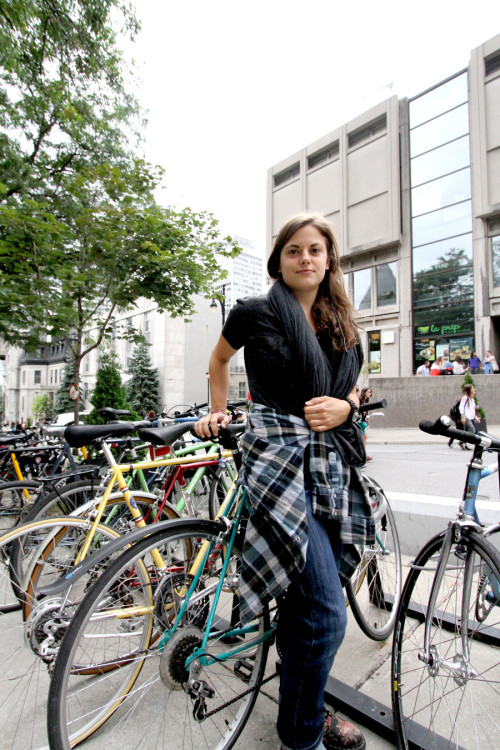
Fall’s eternal love affair with plaid is still going strong. As a twist to the traditional wear, try tying a flannel blouse around your waist, and pair it with an all-black outfit, a beanie, and military boots. If you want to go for a more polished look, invest in a plaid mini.


Varsity chic

The varsity jacket is back for fall and it couldn’t be more fitting as school starts. The beauty of this jacket is that it’s light and perfect for that in-between weather. It’s versatile and can be worn over virtually any outfit, but stay away from patterns!


Boyfriend jeans

These babies have been all the rage this season. They’re comfortable, stylish, and casual chic, which makes this a favourite for those lazy days where you’re contemplating sweatpants (gasp!). They usually hit right at the ankle, so it’s a great transition piece you can wear well into the fall. Pair them with a chic ankle boot, silky blouse, and dangly jewelry—date night, anyone?

a, Science & Technology, Student Research

Interview with Carl Ulysse

For Carl Ulysse, working at neurologist Lesley Fellows’ lab was both an inspiring and rewarding experience. Unsure what to do with his summer after completing his first year in medicine, Ulysse applied to the Faculty of Medicine’s research bursary program, which provides funding for student research for eight weeks during the summer.

Through the program researchers list projects on a website, which students can sift through and use to apply to various supervisors. Through this process, Ulysse stumbled across Fellows’ research and was excited when she accepted his application to assist her in her project regarding HIV and its impact on people’s cognitive abilities.

Fellows specializes in disorders of cognition. Her research focuses on the functions of the frontal lobes, which are involved primarily in controlling emotions as well as many other functions like memory and problem solving.

“[Fellows] is a clinician scientist, so she does a bit of both clinical medicine and research,” explains Ulysse, “For this project, she works with a whole team. There is a psychiatrist, neurologist, kinesiologist, and an occupational therapy and physical therapy psychologist. They are basically working to help people with HIV deal with their cognitive issues.”

According to Ulysse, the HIV virus targets the brain, causing a host of problems. “It’s really hard to detect, and really hard to treat, so I’m trying to do something about that,” adds Ulysse.

In response to the virus’ detrimental cognitive effects, Fellows’ lab is working on developing means for those afflicted to deal with cognitive impairment.

“My project is developing a self-management program for cognitive impairment,” explains Ulysse, “So I’m building scripts for people […] to use to learn tips and tricks about attention and memory. I’m working a lot with the computer, actually, because I’m working on the scripts, but I shadowed a bit in psychiatry and neurology to see what the people I was targeting were like.”

According to Ulysse, “Script writing is [essentially] data analysis. I had never done it before, so I just learned it now. I definitely regretted not taking a statistics class [before]—it would have been useful!”

Ulysse based these computer scripts off of research he gathered from his time shadowing at Royal Victoria Hospital (RVH), as well as from surveys distributed by the lab. Though it was a daunting project, Ulysse was happy to take on the challenge.

In addition to script writing, Ulysse found that he developed strong problem-solving skills over the summer thanks to his lab work.

“The project I’m doing right now is not [actually] the project that I applied for. We’re dealing with an online survey, but the response was not high enough so I had to do a turn-around and find something else to do with the help of the lab. That’s something you have to learn how to deal with: What do you do when something doesn’t work out?”

Despite this challenge, Ulysse loved the experience he gained this summer from his time in Fellows’ lab. Working with so many scientists, he was inspired by this opportunity to see firsthand an interdisciplinary team of researchers collaborating together—a novelty that his classes emphasize will form the future of medicine. Although Ulysse is unsure of where he wants to be in 10 years, he says he feels that research will probably be part of it.

Favourite lab task:

“I shadowed a psychiatrist for awhile, and that was really interesting. Getting to see the people I was working for—that was really inspiring, I felt like I was doing [my work] for a reason.”

Least favourite task:

“The survey was definitely kind of frustrating. I thought it would be done before I starting working at the lab […] but we sent it to all these organizations and we were not getting the feedback we wanted. It’s probably just because it was summer…[the volunteers] have other commitments and are not full-time workers—they’re just volunteering and they need to take a break at some time too.”

Advice for students applying to a lab:

“Contact people as soon as you can, at the beginning of the year, because a lot of professors are interested in having people help them out, but so many students are interested that when you apply, all the projects are taken.”

If you could be a mad scientist, what would you do in your lab?

“I used to really like Pinky and the Brain, so I’d probably be plotting for world domination—it was one of my favourite shows when I was little.”

Favourite ice cream flavour:

“Something with chocolate chips!”

a, Sports

Fall team previews

Redmen Football

The 2012 season offered many tough lessons for a rebuilding program that has survived multiple winless seasons. Despite the struggles of years past, the Redmen (0-1) have numerous reasons to be optimistic after finishing last season with a 3-7 record and an RSEQ playoff loss against eventual national champions, the Laval Rouge et Or.

The biggest of these reasons is 6-foot-5, 305-pound offensive lineman Laurent Duvernay-Tardif. Duvernay-Tardif, a senior medical student, finished last year on the CIS All-Canadian squad and has attracted attention from both CFL and NFL teams. Behind him quarterback Jonathan Collin—the 2009 RSEQ Rookie of the Year— has completed a long road of recovery from a leg injury in 2010 and plans to build on his previous success.

Although the Redmen lost nine starters from last year’s squad, the most impactful blow to both short-term and long-term success was the transfer of sophomore wide receiver, Shaquille Johnson. Johnson was a second team All-Canadian and also garnered CIS Rookie of the Year honours, playing a major role in leading the Redmen back to the playoffs and beyond.

Head Coach Clint Uttley enters his third season in the position and has done a commendable job so far of turning the program around. Watch for Uttley to continue building on last season’s moderate successes by developing a strong cast of rookies and sophomores, many of whom have been solid contributors so far in the pre-season.

The regular season has seen the Redmen drop its opener to Laval, 32-8, in a well-fought battle. They continue their season with their home opener on Sept. 6 with a Shaughnessy Cup tilt against cross-town rival Concordia. This game should provide an excellent chance to make a statement to the rest of the RSEQ that McGill Football is on the rise.


Martlet Soccer

Last season, the McGill Martlets reached the semifinals of the RSEQ playoffs.  Their final game ended in a heartbreaking shootout loss to Université de Sherbrooke, which ended their hopes of making it to Nationals after a strong third-place finish (9-3) in the regular season RSEQ standings.

Sophomore midfielder Kristina Pearkes thought that her team “started off strong but struggled to pull through in the playoffs” in a match that “could have gone either way.”  Look for Pearkes to combine with senior Meghan Bourque and 2011 CIS Rookie of the Year Alexandria Hoyte to form a formidable midfield.

One of the biggest obstacles on their path to the playoffs will undoubtedly be the turnover on the sidelines as long-time Head Coach Marc Mounicot has left to coach the Redmen squad. His successor Jose-Luis Valdes will look continue that success. Valdes was a top assistant for the squad for nearly a decade and has been an important factor in five conference titles.

Furthermore, the team lost CIS All-Canadians Bahar Sansar and leading goal scorer and first team All-RSEQ Hannah Rivkin. Additionally, a leadership void must be filled as talented seniors Beth Armstrong and Julia Bahen have graduated.

Despite this, there is a sense of confidence in the locker room going into the 2013 season as the Martlets hope to build off of last year’s success. Sophomore Midfielder Julia Conzon noted, “Although we lost some older players, there’s still a strong core of returning girls and we have a lot of new promising recruits.”

The Martlets’ home opener is against Université de Montreal on Sept. 5, and a squad primed to take the next step will be ready for the new season.


Redmen Soccer

Coming off a disappointing year in which the use of an ineligible player forced McGill to retroactively forfeit 11 of its 12 games, the Redmen (2-2-2) will undoubtedly be looking to turn a new page this fall.

It will be a season of many new beginnings for the team, the most important of which will occur behind the bench. Marc Mounicot assumes his new role as head coach after 15 seasons with the Martlets team. In that time he received numerous Coach of the Year recognitions, and became the most successful coach in Martlets soccer history.

By all accounts, McGill will be fielding a young and mostly unproven squad this year. If pre-season lineups are any indication, only a handful of the team’s starters come into this season with more than a year of CIS experience. However, the returning contingent includes sophomore goalkeeper Max Leblond, who will look to build upon an impressive rookie season, and already seems to be having a strong pre-season, posting two shutouts and boasting an impressive 0.60 goals allowed per game against CIS opponents.

The team will also look to Leblond to play an increased role off the pitch, given the absence of key veterans, namely last year’s MVP, Alexis Pradié. With Pradié’s departure, the club loses a two-time CIS All-Canadian and an invaluable member of the locker room.

Despite the uncertainty that comes with so much off-season change, this year offers the Redmen an exciting opportunity at a fresh start.  Although inexperienced, expect to see a talented and energetic squad this Thursday Sept. 5 at 8:30 p.m. when the Redmen take to Molson Stadium in their season opener against the Montreal Carabins.

a, News

Meet your SSMU executives

Katie Larson: President 


What have you accomplished this summer?

This summer really felt like it got going around the end of July. Transitioning into the role of a SSMU executive is not easy, and I think we all finally have the basics under our belts. In my portfolio, the main thing that got a lot of work done was the Constitutional review process, [which] started more than a year ago and is now almost complete. Additionally, there are a lot of new faces in our permanent staff, and learning about how to work to improve SSMU HR [human resources] has been interesting.

What challenges do you expect for the upcoming school year?

The lease for the University Centre has not been signed. I am hopeful that we are close, but that is still an ongoing priority. Another upcoming challenge will be the BoG [Board of Governors], and the CAMSR [Committee to Advise on Matters of Social Responsibility] committee terms of reference review. This will be a particular challenge because communicating [with students] will be difficult until the end of the process due to confidentiality.

What are your long-term goals this year?

Signing the lease for the Shatner Building in the interest of SSMU in the long term is a priority. Also continuing to work on interfaculty collaboration is a must, and establishing ways to increase this communication is key.

How would you describe your approach to interacting with upper-level administrators?

My approach to interacting with administrators is the same way I interact with any person. At the end of the day, in any business relationship it is important to act in good faith. I feel encouraged that our new deputy provost and principal are going to be a refreshing change to McGill’s often-criticized admin.


Brian Farnan: VP Internal BrianSSMU.AlexandraAllaire.online

What have you accomplished this summer?

Throughout the summer, we’ve essentially been working towards a much more integrated orientation week. Through May, we met as all the various coordinators from the faculties and [Macdonald] campus, [and] went on a retreat organized by SSMU and the Student Services First-Year Office. [We] essentially outlined the various issues that occurred last year and in years past, tried to identify those issues, find out solutions for those, and outline our goals, as well as the various initiatives that we wanted to undertake.

Some of the goals we came up with were [to create] a more integrated and inclusive orientation week. We’ve worked hard to develop innovative and inclusive programming. This  programming allows all ages the option to do ‘à la carte’ events and have a choice of what they participate in.

What challenges do you face as VP Internal this year?

I’d say there are two large challenges, the first of which is redefining how events are run and the various things that go into them. Part of my platform was to consult an appropriate equity and sustainability resource before any of my events, so that has happened with frosh.

Another challenge is bolstering SSMU’s communications. It’s a part of the portfolio that’s really been neglected for the past couple of years, and so I hope to improve that. We’ve implemented a new software called Soapbox. This allows students to rank various ideas, or submit questions or concerns and then rank them. It allows us to see which are the popular questions, concerns, or ideas, and then implement them. That’s going to be unveiling and launching in September.

What are your long-term goals this year?

Myself and some of the permanent staff who work with my portfolio have made it a goal to revamp the communications of the SSMU. We’ve worked over the summer on a communication guide as well as communications strategy, so fully completing that communications strategy, [and determining] where we see ourselves now and where we see ourselves going over the course of the year. It’s going to be a main priority for me to truly figure out our publications — having Old McGill returned to its former glory, having it restored and marketed properly and filled with the best content possible.


JoeySSMU.AlexandraAllaire.onlineJoey Shea: VP University Affairs

What have you accomplished this summer?

There have been a few projects I’ve been working on. One, in conjunction with Sam Gregory, is called IDEAS (the Institute for the Development of Entrepreneurship and Advancing Society). Students who have project ideas and are looking for a place to make it a reality can go and be connected to the wider Montreal community. We are looking at it being very interdisciplinary and multidisciplinary. For example, an NGO wants to develop an app, so they would use engineering students to help develop the app. There would also be room for political science students to participate.

A few years ago, there were these things called Sustainability Fridays. People across the university would get together and talk about the research they’ve been doing about sustainability, and try to make connections across the university. Since Vision 2020 and everything last year they kind of fell by the wayside, but we’re interested in getting them started again. McGill’s Harrassment, Sexual Harassment, and Discrimination Policy is also under review.

What challenges do you predict for yourself in your position over the next year?

I think that all the issues that have come up with the libraries will be a challenge. Obviously, the library equipment fund is under my portfolio, and there have significant changes with that over the summer. We’ve been looking into ways for SSMU to help out, especially with the extended hours, possibly looking into how the Shatner Building can be used for study space. We will be holding a town hall where students can come and ask questions about what happened over the summer.

What are your long-term goals this year?

One of my long-term goals is to really start off those two very important relationships with the [new] principal and deputy provost on the best note that we can and build really strong foundations so that we can work together.

What changes will you be making to SSMU that will be different from last year?

One thing that I want to change this year is the way that the senate caucus is run. I really want to make those positions as effective as possible and give the most support for the senators and their personal projects by using the academic research position and the secretary general positions.


Sam Harris: VP External 

What have you accomplished this summer?

I attended a lot of meetings of TaCEQ [Table de concertation étudiante du Québec], which is the students’ association that SSMU is a member of. We had some structural reform where there was a third executive position created. SSMU also took over TaCEQ’s accounting because there were issues where TaCEQ was not paying its taxes to Revenu Québec and was getting fines. That was kind of a mess, but we cleaned it all up and it’s going really well.

The one other area that I’ve been working on this summer is community relations in Milton Park. During frosh we’re doing street teams—pairs of McGill students who are identifiable giving out water, apples, and granola bars, and reminding groups of students to quiet down for the residents. I’ve also been meeting with Hélène Brisson, who’s the main contact with the Milton Parc Citizens’ Committee, and trying to figure out what are the best harm-reduction and noise-reduction strategies for the year ahead.

What are your long-term goals this year?

For external affairs, I want to strengthen relations between McGill and the wider community of Montreal and Quebec. One example of how that could be achieved is through the municipal elections coming up on Nov. 3. We’ve had two mayors resign within the last year­—one of which was arrested with 14 criminal charges—and I think there are a lot of municipal issues that are really interesting to students.

I also want to make TaCEQ more financially transparent. We’re going to present the TaCEQ budget at Council, and we’d also like the Secretary and Vice-Secretary Generals to present themselves to Council. It’s also been our position that we should translate both the website and the Règlements généreaux—basically the constitution.

Do you have any ideas for how to advance the community relations, which is part of the portfolio, especially after frosh?

One thing we’re planning on doing is for Community Engagement Day, which is being organized through SEDE (the Social Equity and Diversity Education Office). We’re hoping to have a big community barbecue and meet-and-greet, possibly on campus or somewhere where the students and residents can meet up, talk over barbecue, and possibly have a film screening.


Stefan Fong: VP Clubs and Services

What have you accomplished this summer?

One thing I did was change the advanced room booking system. In previous years you could only book within two weeks of your event. What I’ve decided to change this year is to have all the rooms be bookable six weeks in advance for the internal groups, and then have the special event rooms open three months in advance. Those rooms are only available two months in advance and the regular rooms four weeks in advance for external groups. So there’s a period where only the internal groups can book before it’s opened up to external groups.

What are your long-term goals this year?

I really want to have a better communications process with the services. Because of high exec turnover, a lot of information is lost throughout the years; so I want to work with the executives this year to create guides for the incoming executives next year.

The ISG (Independent Student Group) status isn’t terribly defined as of yet and hasn’t been granted in quite a while, but this year I’ve already received five applications for ISG status, which basically provides a lot of privileges. Right now the bylaws just say that I have to be satisfied that the group is beneficial to the student community, and bring it to council as a recommendation. That isn’t terribly legitimate compared to the clubs and services, which have to go through a rigorous process. I’m interested in providing the foundation for ISG status this year because I think there’s a lot of potential there for a lot of groups.

Do you have plans to change the way activities night is run?

Yes—we’re going to open up the Brown Building this year, which allows us to plan a route so that every group has equal exposure. The security issue at activities night is the capacity of the building itself, and the fact that people are walking in different directions in the same area. Opening up the Brown Building will allow us to have a route that is one-way the entire way, and for every space in the building to be visited equally. It reduces confusion and provides more flow for the event.


Tyker Hofmeister: VP Finance and Operations 

What have you accomplished this summer?

The most significant project that Jean Paul [Briggs, former vice president finance and operations] started and I hope to finish is a complete review of all of SSMU’s banking. This project has the potential to lower costs for upcoming years and to provide a higher level of service to all of the SSMU Clubs and Services who run bank accounts through the SSMU.

Another project I have begun is the compilation of a database including all of each faculty association’s significant purchases over the last year. The database currently includes the purchases for four student associations and is expected to be completed upon the end of September. The VP Finances and I will be meeting later in the year to discuss the patterns that arise within the data and whether or not having contracts with preferred suppliers is a suitable option for everyone. This system could drastically lower costs that each faculty pays on a recurring basis by levying the purchasing power of each student association jointly.

After speaking at length with other executives and the SSMU general manager, we have agreed that all of SSMU’s governance documents are to be reviewed over the coming year. This project will help ensure that the SSMU’s finances are responsibly managed in the future.

I also created a document that details all of the necessary work that needs to be completed if a Student Run Café is to open in the foreseeable future.

What challenges do you predict for yourself and for SSMU in the upcoming school year?

My challenge will be the coordination of the budget. I have already gone through previous years’ budgets, and the tools SSMU accounting department past executives have used. This is a tremendous effort, not just for my position but for many SSMU permanent staff members and for the SSMU Services. I have worked on a timeline for myself in order to manage my work done to complete this project. I am confident that I will complete a budget that demonstrates transparency for SSMU’s finances, while ensuring their responsible distribution, but I am well aware [that a] great effort will be needed to complete the budget revisions and creation by the time they are required.

a, Student Life

Personal budgeting basics: getting your finances in order

Many students begin the road to independence upon commencing university. Part of this change is taking on new responsibilities—especially financial ones. Whether you’re working two jobs to pay for your tuition and housing or still living with your parents and receiving a monthly allowance, you make monetary decisions every day of your life. These choices can influence the state of your finances years into the future.

Due to increasing tuition fees, it is difficult for students to support themselves, and the ease with which students may acquire credit cards makes it all the more probable that they will accumulate potentially crippling debt. In the Bank of Montreal’s 2012 Student Survey, more students ranked paying for their education as their top source of stress, rather than the stress of succeeding academically or finding a job after graduation. Although just hearing the word ‘budget’ may make most McGillians cringe, personal budgeting is essential for a fiscally responsible life.

No matter what budgeting format you choose, planning a budget comes down to the same basics of estimating, prioritizing, and persistence. The first step is to estimate your total pool of monetary resources—for example, from a job, student loans, and parental assistance like Registered Education Savings Plans (RESPs). Then calculate your total costs, starting with known ones such as rent and tuition, and moving on to other living expenses like groceries, transportation, and entertainment. These costs can then be prioritized—ideally allocating more for necessary costs and savings for the future, and fewer for bar tabs.

Although this may sound difficult and intimidating, there are fortunately plenty of resources available to help students manage their finances. One valuable tool is The Frugal Scholar Program, which is run by McGill’s Scholarships and Student Aid Office. This program provides financial guidance for students and advice on how to be money-wise. The website provides a step-by-step explanation for how you can plan your budge for both your year and the entire duration of your education at McGill.

If you’re interested in technology, there are also numerous other budgeting tools available online and for mobile devices. The Financial Consumer Agency of Canada (FCAC) has a free budget calculator that creates downloadable summary reports and Excel spreadsheets. Another free online option is the website Mint.com, which connects information from all of your bank accounts together, tracks spending and payments, sets up budgets, and identifies financial goals and potential ways to increase savings. You can access your account from a computer or with the smartphone app.

Living on a budget takes some practice and the hardest part is sticking to it. It can be so easy to just pull out some plastic to pay for a round of drinks or cab to Upper Rez when it’s -20oC without considering the consequences. Beyond having self-restraint from over-spending, it’s also prudent to record spending to ensure that you’re staying within your budget. Doing so allows you to reap the benefits of being able to see where to cut back on spending, or if there’s an opportunity to increase savings.

The school year is just beginning, making now the perfect time to plan out a budget before all your summer earnings are spent on alcohol, new shoes, and overpriced groceries. Here’s to a new, fiscally responsible school year!

a, Off the Board, Opinion

On tomatoes

The players are far from unknown. There’s the tomato: a round, plump fruit, often confused for a vegetable (although definitely a vegetable for taxation purposes, according to a 19th century U.S. Supreme Court ruling). Then there’s McGill University: a Canadian research institution with global renown and an annual late-August set of welcome exercises for new students.

It was, in retrospect, a match made in heaven.

A week ago this Tuesday, McGill’s Student Housing and Hospitality Services organized a five course, tomato themed meal, culminating in a 500 pound tomato cake. As I wasn’t there, it’s hard to tell whether that would count as the dessert—that probably hinges on the fruit vs. vegetable distinction. Even so, the event last week could not outdo last year’s welcoming gambit, an 11,197 pound fruit salad that, according to no less an authority than the Guinness Book of World Records, was the world’s largest at the time.

Sounds tasty. But what’s the point? According to an article in the McGill Reporter, the event certainly attracted some local luminaries—Members of Parliament and city councilors, doubtless ever-aware of a photo opportunity. This year’s event, certainly smaller but in a similar vein, was more of the same: foods from Macdonald Campus, donations to charity, all that good stuff.

But are we really served by these festivals of epicurean excess? In this age of reduced budgets, our university needs every dollar it can find. Every serving of tomato cake is probably equal to 1/2000 of a library budget that does not need to be cut, or one third of a course lecturer’s semester wages. I’m not saying we can’t have these events, but we need to be asking these critical questions of our administration. Perhaps eliminating these events could even allow for a fraction of a cent discount on every first-year’s residence bill, who knows.

Even if the goal is breaking records, the triumph is ephemeral at best—earlier this week, the University of Massachusetts Amherst  bested  McGill with their own, 15,000 pound plus fruit salad.

Still, if the administration ignores my humble suggestions, let’s hope that our next food-based welcome event features foods that are a bit less acidic. My stomach upsets easily.


a, Student Life

Five classes you won’t regret choosing as electives

Students spend the majority of their their time in university in classes that will propel them towards a future career. Many don’t have electives and the few who do sometimes waste them on so-called ‘bird courses.’ If you’re looking for a new approach, try choosing courses that are worth your while—either subjects that interest you, or courses that provide a fresh look at your field and will give you a new spark that will help keep you excited about studying in that department. Here are five courses for students, across the board, that either have great professors, interesting material, or—if you are really lucky—both.

History of Math (MATH 338):  Are you interested in how math began and developed? Does learning how to do math in the way of the Egyptians and Babylonians intrigue you? This can be a class for both math and non-math students who appreciate the origins of specific equations and how they changed the world. A word of caution—general math knowledge and, more specifically, calculus, is valuable in this course. If you’re inexperienced in those areas, however, you can always go to Room 911 in Burnside to visit the Department of Mathematics & Statistics help desk.

World of Chemistry (CHEM 181): There are four different World of Chemistry courses: Food, Environment, Technology, and Drugs. The professors for the course, Harpp, Fenster, and Schwarcz, are all well-known for being funny, interesting, and knowledgeable. The courses themselves address diverse topics. For example, the food course has a class on wine and cheese where you learn about things like reading  wine labels and good pairings. You’ll also learn about the chemical structures of sugars, carbohydrates, and fats and pertinent issues like global warming or dieting. Finally, there is the option of buying notes from the Note Taking Club (NTC), which have the most important points in bold. This allows you to better enjoy what you are learning in class by reducing the level of stress caused by scrambling to write down all the important information for the final exam.

Social Psychology (PSYC 215): Social interactions are an important part of everyday life, which makes a course about social psychology suitable for anyone. Professors Lyndon and Taylor alternate teaching this course. Having taken this course myself, I can assure you that both are fantastic. I have nicknamed it Dating 101 because Taylor teaches how to read the signals that indicate if it is okay to hold someone’s hand on a date—it’s hilarious. Similarly, Lyndon has a 3.5 rating  out of four on Ratemyprofessors.com and is described as entertaining. Every class is interesting, the matieral is very applicable. You’ll learn a lot about yourself and those around you.

Religion and the Sciences (RELG 340): This course looks at how science and religion interact and affect one another, and is suitable for students in philosophy, religious studies, the history and philosophy of science, and science, or students wanting to expand their horizons regarding the so-called conflict between religion and science. The professor who teaches the course keeps an open mind, listens to different student’s perspectives, takes the time to repeatedly explain complex philosophical ideas, and, most importantly, does not choose a side between religion and science—at least not in the classroom. Perspectives of Science (BIOL 210) is another option for students looking to see how science and the arts interact with one another, and how the arts are quite important to the sciences.

Special Topics in Canadian Studies (ENGL 441): In humanities, the focus is all too often on Britain and America. Most courses focus on these countries, and will add notes here and there about how, and if, Canada plays a role in a particular field. Courses like Special Topics in Canadian Studies are great because they vary from year to year, provide an interesting Canadian perspective on a field, and incorporate a cultural studies aspect to the course. This could mean that students watch movies and examine visual media like photos, in addition to reading a large variety of literature. If English is not your thing, try to find a class in a different department that focuses on Canada or Montreal in relation to Canada and the world.

a, Sports

Point counterpoint

In July 2013, Russia’s president, Vladimir Putin signed a law which gave police officers the right to make arrests on the grounds of disseminating “gay propaganda.” A number of other anti-gay laws have since followed under Putin, creating a whirlwind of controversy. Two contributors weigh in on whether a boycott by athletes and nations of the 2014 Sochi Olympics would be a good idea.


Against boycotting Sochi:

Before beginning, I would like to make it clear that I believe that the Russian government’s behaviour is clearly wrong. The Russian anti-gay legislation is a grave human rights violation. Unfortunately, despite this glaring fact, the 2014 Winter Olympics is unlikely to be moved. Many athletes and countries will be forced to make a tough decision: whether or not to boycott the Games. I believe they should not.

Qualifying for the Olympics is no easy feat, and those that do make the cut will probably only do so twice during their career, maybe three times if they’re lucky. Athletes spend their entire lives dreaming about an Olympic gold medal, but they have very few opportunities to realize this goal. If countries boycott the Games entirely, they will be taking away one of the few chances that a competitor gets to reach the pinnacle of athletic success. While a boycott by countries such as Canada or the United States would be detrimental to Russia and the Olympics, the impact would be brief and not very noticeable in the long run. However, the effect it would have on athletes and staff from the boycotting country could be very significant. This is why the decision to participate should be one that each athlete makes individually.

While some athletes will not be comfortable being a part of the Games, for most, it would be a mistake to boycott. If one athlete snubs the Games, another who didn’t originally qualify will surely be willing to step in to replace them. These “replacements” would likely have been just seconds too slow to qualify. Thus, even with boycotts from certain athletes or countries, the level of competition would remain high and the actual product would likely not be significantly worse than what was offered by past games. The Athletes who do want to compete are not who we should be demonizing. Instead, both Russia and the International Olympic Committee (IOC) should be punished.

The most effective boycott would be one by the viewers. Don’t watch on television and don’t purchase tickets to the events. If there is Olympic gear for sale, make sure that it stays on the shelves. This would serve the purpose of driving down the attention that these Games receive. Low television ratings and reduced media coverage would send a clear message to the IOC and to the Russian government that we as viewers will not be a part of future Games with similar situations. With all the problems that are surfacing in Brazil in anticipation of the 2014 World Cup, it seems that the IOC may have to make another difficult decision in a few years about leaving a host nation with significant social problems. A viewer boycott, not one by athletes or countries, would set the IOC on a path to making the right choice come 2016.

— Wyatt Fine-Gagné


For boycotting Sochi:

Boycotting the Olympics has been a failure in the past. It did not affect the Soviet Union’s behaviour following the 1980 Olympics. In fact, it only caused a backlash in 1984, where the Soviet Union and 15 other nations declined to attend the Los Angeles Olympics because their athletes could not be guaranteed safety. In the media, it has been largely judged that having a presence in Sochi is better in terms of making a pro-LGBT rights statement than to not be there at all. Still, a boycott has its benefits and should be considered a legitimate choice to make a change to Russia’s new legislation against “homosexual propaganda.”

First, a boycott of the Olympics would mean that Russia’s nationalist propaganda is not seen nor experienced by the world. Jesse Owens, an African-American sprinter chose to participate in the 1936 Berlin Games, and his four gold medals in Nazi Germany were viewed as a triumph in disproving Hitler’s view of a ‘master race’. Unfortunately, the Olympics as an event was construed as a victory for the Third Reich. While showing up to the Games can provide a platform to make a statement, small acts of defiance can only go so far.

Second, the Olympics could be potentially dangerous to athletes and guests to Russia. It is unclear whether Russian officials will really target foreigners at the event, risking strained relations in the international community or even causing a diplomatic crisis. However, we cannot preclude this possibility—the situation should absolutely be approached with caution.

Third, a boycott can occur in more than one way. Pierre Martin, a writer for The Toronto Star, suggested that Canada boycott hockey at the 2014 Olympics because it would send a message to hockey-crazy Russia. Since hockey is a sport in which only a few teams—namely the U.S., Canada, and Russia—dominate the play, not having Canada or the United States attend would render Sochi’s most popular competition meaningless. Boycotting specific sports suggests that there is prominent governmental support for LGBT rights. Not only is the government voicing its opinion against Russia’s legislation, it is also actively supporting LGBT rights and the movement towards equality at home. Also, by boycotting only specific events, many athletes still have the opportunity to have a presence in Sochi and initiate dialogue on the issues.

Finally, doing this shows Russia that its behaviour is unacceptable; nations will not stand by and watch this happen. A study shows that two-thirds of Russia’s population accept and support the new legislation.  Although boycotting may be an extreme action, it ultimately produces a strong message. As actor Stephen Fry said in an open letter to the IOC and British Prime Minister David Cameron, “At all costs Putin cannot be seen to have the approval of the civilized world.” If we attend the Olympics, we will be giving Putin our approval.

— Rebecca Babcock


Editors’ pick: Don’t boycott the Games

Although boycotting the Sochi Olympics would certainly send a powerful message to Russia about their mandate on banning homosexuality, there are other effective methods to make a statement without risking the dreams of athletes around the world. Top-level athletes only have a few opportunities to reach the Olympics, and a boycott of the Games is a brash solution to a complex problem.

a, Arts & Entertainment

Drinking like there’s no tomorrow

If  there is one lesson to be learned from all three features writ- ten by Edgar Wright and Simon Pegg in the last decade, it is that looks are always  deceiving.  In Shaun of the Dead (2004), the titular Shaun treks to the  corner  store  to buy  Cornettos— the U.K. equivalent of Drum- sticks, and a recurring motif in each of the films— oblivious  to the fact that a zombie  apocalypse is occur- ring around him. Similarly, Hot Fuzz (2007)  played  upon  the  superficial innocence  of a sleepy English  village. The creative duo revisits these themes of lurking malevolence in The World’s End, this time waxing Sci-Fi while simultaneously exploring one man’s yearning to return to his golden youth. The result does not disappoint.

Pegg  stars  as  Gary King,  a 40-year-old alcoholic deadbeat who tries to relive the greatest night of his life by dragging his high school bud- dies,  now  successful  businessmen, back  to  his  hometown  of  Newton Haven. They plan to finish the ambitious 12-stop pub crawl, culminating at the aptly named ‘World’s End’ that they failed to complete 20 years ear- lier. Yet an unlikely obstacle stands in their way: body-snatching  aliens have settled in Newton Haven. The concept   works   brilliantly   as   we watch King gallop from pub to pub, his  resentful  friends  trailing  along behind him and berating his idiocy as they are forced to battle with malicious humanoids.

Also  key to this film’s appeal are  excellent  performances  on  the part  of Pegg  and the remainder  of the  film’s  entire   supporting   cast. Pegg    perfectly    portrays    King’s groan-inducing immaturity and desperate nostalgia as he enters middle age, while his buddies provide other moments  of  hilarity.  Martin  Free- man  is excellent  as the  Bluetooth-sporting  Oliver,  whose  catchphrase — “Double-you  tee eff, Gary!?”— gets increasingly hilarious with each repeated exclamation.

If The World’s End has a weak-ness, it’s that it tries to cram so much material   into   its   modest   running time of 109 minutes that the viewer can sometimes  feel left in the dust. Wright  and Pegg seek to bring the audience up to speed by kicking off the film with a delightfully  kitschy prologue   telling   the   whole   story of  the  legendary  1990  pub  crawl through  King’s  eyes.  But  because the sequence  moves so  rapidly and we get so little time with each character,  it’s  frustrating  to  figure  out which friend is which in the present- day scenes that follow.

Luckily, we have Wright’s dynamic  directing  style to keep us engrossed  from start to finish. That being  said, Wright offers nothing new here stylistically;  almost all of the   ingenious   techniques   he  uses are recognizable  from his previous work. Also reused are a number of sight gags: characters  find creative ways to finish off their inhuman foes just as they did in Shaun of the Dead, and turn their heads only to be met with the creepy, synchronized stares of the townspeople  just as they did in Hot Fuzz. Nevertheless, the visual gags have been used just sparingly enough that they still feel fresh and entertaining  here.  Moreover,  some of  them— like when King tries to jump over a fence and  instead knocks it over (a trilogy trademark) —are clearly intended to be winking tributes rather than lazy repeats.

The  World’s End doesn’t try to hide the fact that it owes a great deal to its predecessor  and to classic Sci-Fi staples like Invasion of the Body Snatchers and  Doctor Who. In the end, it doesn’t need to, since Wright and Pegg have the imaginative potency to make even the most recognizable movie clichés feel new again.

The World’s End was released on Aug. 23 and is currently playing at the Scotiabank Theatre on 977 rue Sainte-Catherine Ouest.

a, Opinion

Will work for free: unpaid internships in focus

Last semester, with finals still looming, I began to contemplate what to do for the summer. A lot, or very little, can be accomplished in four months. After applying to several positions, I landed a full-time marketing internship close to home with a small company that seemed very professionally enriching. The only issue was that it was unpaid.

I ended up taking the internship and working part-time on top of that. It was a great experience, and I learned what day-to-day life in an office is about. It would have been ideal to be paid minimum wage, or worked part-time, but instead I ended up working exhausting 13 hour days between my two jobs. Even then, I didn’t make nearly enough money for the incoming year. While I’m lucky to have parents with the resources to cover the shortfall, for many this isn’t possible.

The ethics of unpaid internships seemed to be the major debate this past summer. While unpaid internships have existed for years, they have become more necessary to achieving the holy grail of a paid job within one’s field, and students everywhere—myself included—are lining up to work for free.

Recently, some have argued that the student part of the equation should be cut off. Students, they feel, should just say “No” to unpaid internships. While appealing in theory, it is unreasonable to ask students to give up an opportunity for the purported ‘good’ of the general populace.

Instead, companies must be the ones to change. At the moment, each province has its own Labour or Employment Standards Act, which tries to stem the surge of unpaid labour. Ontario’s act, for example, specifies that a company employing an unpaid student must derive “little, if any, benefit from the activity of the individual while he or she is being trained,” and that such a trainee must not displace a paid employee. Many are also suggesting that unpaid internships must qualify for course credit at academic institutions. This is starting to take hold at McGill, where there are dedicated departments which aid in locating internships and offering course credit for them, such as the Arts Internship Office. However, the most effective means of combating the negative effects of unpaid internships would be a more vigorus enforcement of labor laws. While such efforts would come at a cost to both governments and schools, it would certainly pay dividends for society.


Read the latest issue

Read the latest issue