

Latest News

a, News

Hundreds march for missing, murdered Indigenous women

Last Thursday evening, approximately 300 people participated in Montreal’s 7th Annual Sisters in Spirit March and Vigil for Missing and Murdered Native Women. This year’s Spirit March, held the same night as over 100 similar marches, focused on the theme of government accountability.

The Spirit March has been held annually since 2005, and is spearheaded by Bridget Tolley, an Algonquin woman who has worked with the Native Women’s Association of Canada (NWAC). Tolley started the movement to help seek justice for her mother Gladys, who was killed by in 2001 when she was struck by a police cruiser on her reserve in Quebec.

According to statistics gathered by Amnesty International Canada, Indigenous women are five times more likely to die because of violence than any other group of women in Canada. Furthermore, according to Sisters in Spirit—NWAC’s research initiative—at least 600 Indigenous women have been murdered or have gone missing since 1980.

Bianca Mugyenyi, Campaigns and Programming coordinator at Concordia’s 2110 Centre for Gender Advocacy and member of Missing Justice—one of the 2110 Centre’s campaigns—helped plan this year’s march, which Missing Justice has organized since 2009.

The march began at Place Émilie-Gamelin, where people gathered to listen to speakers and musical performances. The crowd then marched to Phillips Square for a candlelight vigil, and more speakers and performances.

While Mugyenyi believes that progress has been made in terms of international and media recognition of violence against Indigenous women, she said she does not think that enough has been done on the part of the Canadian government.

According to Mugyenyi, the federal government has failed to respond to requests for a public inquiry, submitted by the United Nations Committee on the Elimination of Discrimination Against Women.

“There has also been a regression because Sisters in Spirit had their funding taken away [by the federal government],” Mugyenyi said.

Ellen Gabriel—a human rights advocate who has been active at the international level, participating most recently at the UN Expert Forum on the Rights of Indigenous Peoples, and former president of the Quebec Native Women’s Association—participated and spoke at the march. On her blog, sovereignvoices1.wordpress.com, Gabriel refers to herself as Onkwehón:we. She has attended this march every year since it began seven years ago.

“When [this march] first started, it wasn’t very big, but now with all the vigils happening across Canada—this being one of them—to see the numbers is very inspiring,” Gabriel said. “It’s nice to see the young people interested, and taking part in this kind of movement … I think it means a lot to families who have been affected.”

However, Gabriel mentioned she would also like to see the federal government take more direct action.

“I think the NWAC earlier this year stated that [relations with the government] haven’t improved,” Gabriel said. “It’s gotten worse … and it’s really a lack of political will. All that research the NWAC did, and there hasn’t been any policy made or implemented.”

Even though police escorted the marchers through the streets, the evening remained peaceful. According to Mugyenyi, police were not informed of the route of the march beforehand despite Law 12, which requires that all protest routes be made known to the Montreal Police.

“The city has definitely calmed down since the demonstrations last year, so it’s a different world,” Eli Freedman, U3 arts, said. “Last year, there were so many police officers. It was very intimidating …  [But now] I’m not worried about pepper spray or tear gas.”

Mugyenyi, like Gabriel, was pleased with the turnout and diversity of people present at the Spirit March.

“There [are] Indigenous and non-Indigenous marchers alike, which is very encouraging, particularly given the history around the silence,” Mugyenyi said.

Mugyenyi also noted that 150 similar marches were more prevalent in Canada and around the globe this year than ever before.

“Most of them are in Canada, but [now] there [are] even some marches in South America and in the U.S,” Mugyenyi said. “A movement is definitely building to make our society safer for Indigenous women.”
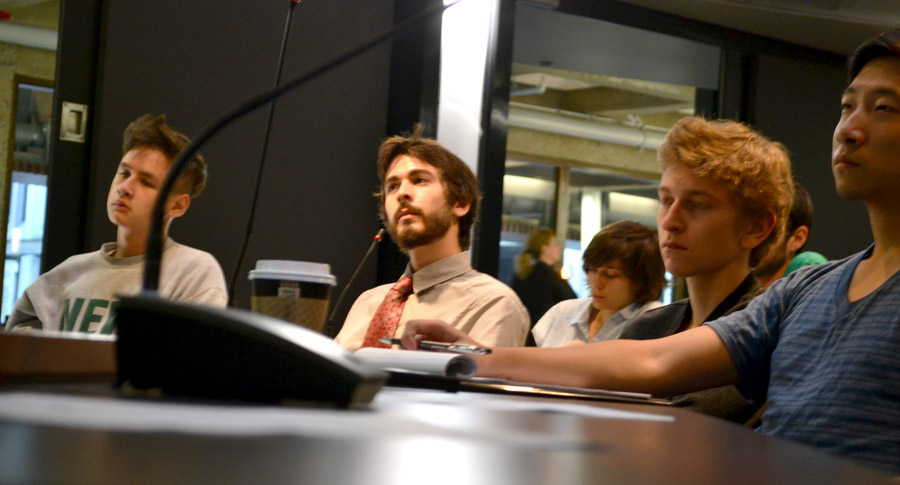
RGCS member Isaac Stethem listens to Waldron’s lecture. (Cassandra Rogers / McGill Tribune)
a, News

Waldron offers controversial views on constitutionalism

Last Thursday, McGill’s Research Group on Constitutional Studies (RGCS) hosted scholar Jeremy Waldron in Leacock 232 for a lecture entitled “Constitutionalism: A Skeptical View.”

Waldron is a professor of law and philosophy at New York University, and Chichele professor of social and political theory at All Souls College, Oxford. With work spanning over two decades, Waldron has become an outspoken critic of torture and judicial review. He is also a member of the American Academy of Arts and Sciences.

Waldron’s lecture was the first in a series planned by the RGCS. The RGCS brings together McGill scholars in the departments of political science and philosophy, as well as from the Faculty of Law.

According to Dr. Jacob Levy, coordinator of RGCS and Tomlinson professor of political theory at McGill, the primary interest of the RGCS lies in “studying the values, institutions, and processes that go into making up […] democratic and constitutional orders.”

“We thought that a lecture series […] would help bring problems of inquiry into the nature of a free society to a broader undergraduate audience,” Levy explained. “Waldron’s arguments about constitutionalism […] have, for two decades now, been really fascinatingly controversial in the intellectual and academic world.”

The lecture’s attendees included students and faculty from a variety of disciplines. Though Waldron’s arrival was delayed, the crowd stayed in high spirits, warmly greeting Waldron with applause upon his eventual arrival.

Throughout the lecture, Waldron expressed skepticism towards views commonly associated with the word “constitutionalism”—in particular the idea that constitutions are solely means for limiting or controlling the state. Waldron said that he believes such a perspective looks at government through the lens of a false dichotomy—one that takes constitutions as dictating either what is permitted or prohibited, while forgetting that constitutions often include principles of a third category: obligations.

Waldron also raised concerns over potential tensions between constitutionalism and democracy.

“I think when constitutionalism [views] democracy, it thinks about something distasteful, or antagonistic, or something that needs to be very, very carefully brought under constraint,” Waldron said.

(Cassandra Rogers / McGill Tribune)

Waldron pointed to how the obligations that constitutions set on the state may, in fact, foster democracy.

“Empowering ordinary people, ensuring the fair value of political equality, is also something that won’t happen by magic,” Waldron said. “It usually means giving power to people who, if things are left to themselves in the ordinary way, won’t have power.”

“Democracy is never the default mode of operation of a political system,” Waldron continued. “Democracy is something that has to be concocted, noted, [and] sustained against all sorts of possible attacks.”

The lecture also touched on other issues,  from the “ancestor worship” for drafters of the American constitution, to the way global ethical norms, such as those concerning human rights, may become international law, subsequently influencing the constitution and legal system of individual states.

Many students’ reception to the lecture was warm.

“I think my favourite part of the lecture was when, at the very beginning, Waldron said it’s unfortunate that it’s almost taboo to say today that you’re not a constitutionalist,” Diane Shnier, U1 arts and member of the RGCS, said. “I like that he’s willing—tentatively, at least in this case—to go against the status quo.”

“I’m going to take away [the idea that] constitutionalism based on limitation, restraint, and control is maybe too narrow a view,” Matthew Finn, a fourth-year law student, said.

When asked what he hoped students will gain from the experience, Levy replied encouragingly.

“[I hope they will gain] a desire to keep thinking, keep reading, keep arguing, keep engaging on their own,” Levy said. “There’s more intellectual work to be done, and I want to inspire students to do it themselves.”

Waldron’s lecture will be followed by scholars from Brown, University of San Diego, and Stanford, including a lecture by Leif Wenar of King’s College London this Thursday, titled “Oil, Dictators & Civil Wars: Our Contributions, Our Solutions” at 4:30 p.m. in Ferrier 456.

Full disclosure: Chris Liu is an undergraduate fellow of the RGCS.

a, News

McGill hosts inaugural Mental Health Awareness Week

This past week, McGill hosted its first Mental Health Awareness Week (MHAW), which consisted of a series of panels and workshops with the purpose of increasing awareness for mental health issues on campus.

According to Access Services Advisor Gordon Dionne, the idea for MHAW originated when McGill’s Ombudsperson, Dr. Spencer Boudreau, proposed it to Senate, as many students were coming to see him about mental health issues. Eventually, the idea reached Student Services, where Dionne picked it up as a project on behalf of McGill Mental Health Services.

“It’s still spearheaded by Mental Health, but it’s really become a cross-divisional project,” Dionne said. “Most of Student Services [have been] involved at all levels throughout the whole week [and] everybody on campus has been invited to come to all the events.”

Mental Health Services conceived of MHAW as a result of Canadian universities’ growing realization of the importance of mental health issues on campus, and was tied into last week’s National Mental Illness Awareness Week.

MHAW’s panels included a lecture by Lina Di Genova, manager of student assessment at Student Services, and Vera Romano, clinical director of Counselling Service, entitled, “Spotlight on Mental Health and Psychosocial Well-Being at McGill.” Di Genova and Romano presented the findings of a McGill survey that was based on Pennsylvania State University’s mental health and counselling benchmark study.

Approximately 2,500 McGill students took part in this anonymous, web-based survey that encompassed eight categories of mental health issues: depression, generalized anxiety, social anxiety, academic distress, eating concerns, family distress, substance and alcohol abuse, and hostility.

The survey’s results were analyzed in relation to demographic intersectionalities. For example, of the 50 per cent of the student sample who reported dealing with depression on a recurring basis, there were higher proportions of women and students who were experiencing financial difficulties.

Di Genova and Romano’s lecture also hypothesized reasons for the increase of mental health issues on campus, including biological factors, family-related stressors, as well as “Generation Me”—a phenomenon which indicates that young adults feel a high need to be exceptional due to societal pressures, but struggle with doing so in a period of global economic crisis.

According to Romano, Student Services can improve their assistance to students dealing with mental health issues by focusing on resiliency and wellness, instead of using negative language to approach such issues.

“Mental health is not the absence of disease or distress, but the promotion of holistic wellness,” Romano said.

The panel ended with an overview of the various organizations that promote wellness at McGill, including Fitness McGill, Counselling Services, and the Health Promotion Team.

“We want to really help engage students and empower them to take ownership of their own wellness,” Di Genova said. “[They should] feel as though they’re a part of the [McGill] community.”

MHAW also offered free yoga sessions to students throughout the week. Yoga instructor Annie Shiel led a “Yoga for Stress” session this past Friday.

“It’s not an exercise class,” Shiel explained. “It’s really focused on what yoga does for your mind. We try to help people let go of everything else for 60 minutes, and give people tools that they can use off of the mat as well.”

Yoga for Stress is normally put on by Fit @ McGill and the Eating Disorder Program.

Overall, Dionne expressed satisfaction with how the inaugural MHAW has been received by the McGill community.

“I [saw] more and more people coming to the events [as the week progressed], and wearing the orange buttons that were made as a part of the campaign,” Dionne said. “It’s exciting to see that people are actively supporting the idea of having a ‘well campus.’ ”

a, News

SEDE promotes community involvement

On Oct. 5, McGill’s Social Equity and Diversity Education (SEDE) Office held their first annual Community Engagement Day (CED). The event featured approximately 20 different activities in which students had the opportunity to engage with Montreal community organizations, participate in volunteer activities around the city, and become involved in discussions on different social issues and challenges in Montreal.

“[The idea] was really to provide an opportunity to celebrate the different community engagement initiatives that exist on campus and in the city, in the effort to foster a culture of engagement at McGill,” CED Project Coordinator Max Halparin said.

One of the many events offered by CED was SPEAK UP! Bursting the bubble: Ways to breach the university-community divide, a discussion-based event that focused on the importance of ties between McGill and the surrounding city. Located on  Lower Field, the event consisted of a moderated discussion led by McGill graduate student David Gray-Donald and Associate Professor for the School of Social Work Jill Hanley.

Students and faculty of McGill, residents of Montreal, and members of neighbouring universities attended the discussion, which kicked off with the topic of barriers within the Montreal community.

“If we were to map out the group of friends and the people I was interacting with, it would be very much centered around this university,” Gray-Donald said. “And it’s not hard for that to happen.”

Other examples of divisions that came up in the discussion included the ones between students living in and out of residence, and those between individual faculties. Ross Koby, U1 arts also discussed the way students at McGill are separated from the greater Montreal community by language and location.

“Maybe they feel a little isolated from other universities,” Koby said. “I think a lot of people from McGill, unless they’re living in a student community like the Plateau … might not meet other people from other [universities].”

The conversation progressed from discussing barriers to brainstorming methods useful in overcoming them.

“Just showing respect for [another] language opens the door in an important way […] If you have that approach when you go outside, it changes everything,” said one participant. “I find people appreciate it.”

Other CED activities included CKUT radio workshops, the Moccasin Walk, and Afternoon Tea with the South Asian Women’s Community Centre.

Many students expressed their satisfaction with the event this year.

“I would love to do this next year,” Eryn Fitzgerald, a student at Concordia University, said.

“As the first annual event of its series, there is quite an amount of space for change, as well,” Halparin said. “For next year, [we’d achieve a] more collaborative selection process, with input from the community. I’d get more projects, as well […] my goal is to make it bigger and better.”

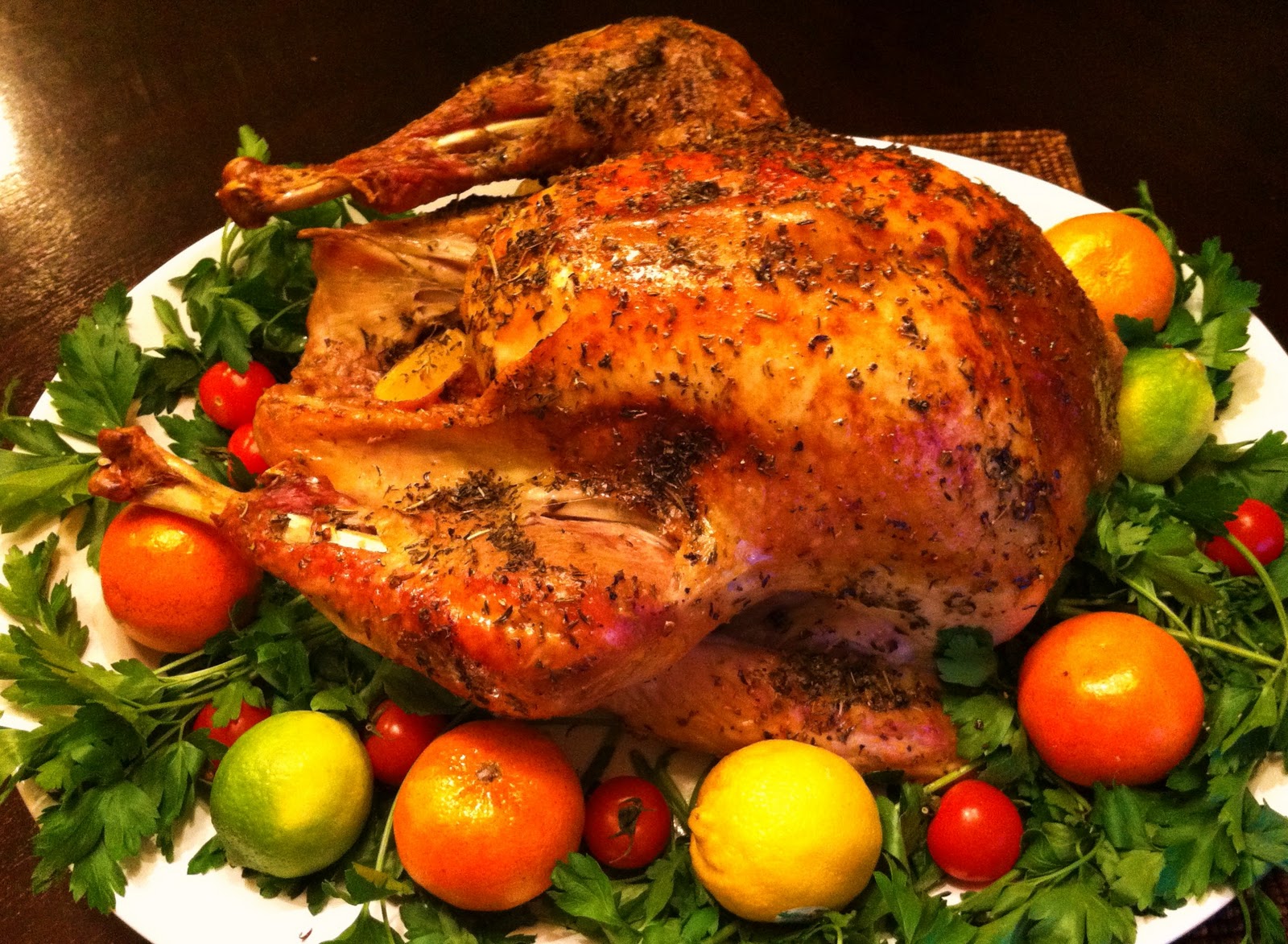
New ways to cook the same bird. (1.bp.blogspot.com)
a, Recipes, Student Life

Leftover Thanksgiving Recipes

Turkey, turkey everywhere! After a Thanksgiving feast, you probably can’t take any more turkey. Try some of these ideas to use up the extra Thanksgiving goodies. Most can be frozen and kept for those days when you are ready to indulge in more.

Layered Stuffing Casserole:

Mix your leftover stuffing with a handful of bread crumbs to make a drier version of the dish. Press the mixture into a large casserole plate. For the filling, mix a can of cream of mushroom soup, ¾ cup of milk, leftover green beans (or peas), and  chopped turkey. Pour the mixture into your stuffing shell, and bake for 30 minutes at 350F.

Leftover Turkey Salad:

Mix up your chopped turkey with some dried cranberries, walnuts, minced red onion, and chopped apple or pear. Add some crumbled blue cheese if you like. For the dressing, flavour up some mayonnaise with dijon mustard, salt, pepper, paprika, and lemon juice. Serve salad over crunchy lettuce.

Go Mexican:

Turkey enchiladas and turkey tacos? Why not? Mix your chopped turkey up with some cheese and layer it on a warm tortilla or taco shells. Top with your favorite Mexican fixings like onions, olives, black beans, and peppers, and melt in the oven for a few minutes.

Puff it up!

Who doesn’t like puff-pastries? To make a wonderfully easy casserole, mix two cups of the leftover gravy, with three tbsp of flour, one tsp of poultry seasoning, three cups of turkey and two large sweet potatoes cut into cubes. Pour the mixture into a deep eight-inch casserole dish, and on top, lay thawed puff-pastry sheets. Brush with an egg wash, score the top and bake in the oven at 375F for 25 minutes.

Fried Thanksgiving Bites:

Didn’t get enough at dinner? Well, indulge in these savory little bites. Take your leftover stuffing and shape into small balls. In a separate bowl, whisk together two eggs and two tbsp of milk. Thoroughly coat the stuffing bites in this wash and dredge in bread crumbs. Fry this mixture in oil on medium-high heat until crispy. Serve this decadent snack with a cranberry-walnut relish made by zipping up your leftover cranberry sauce with a handful of walnuts and some pepper in a food processor.

a, News

Indigenous Studies Program Still In The Works

The status of the McGill Indigenous Studies Program has been clarifed following a miscommunication between the relevant parties.

In her last report to Council, SSMU Vice-President University Affairs Haley Dinel wrote that Dean of Arts Christopher Manfredi had approved a new Indigenous Studies Program. Although the project is in development, Manfredi has not approved the program, as he does not have the authority to do so (see “Re: ISP,” page 8).

According to Dinel, the confusion arose from a call she received from a member of the Social Equity and Diversity Education Office (SEDE), discussing the proposal for the program that is currently being compiled by McGill’s Institute of Canadian Studies.

“There was just some miscommunication between the two of us,” she said. “I didn’t ask any more questions because our conversation was very brief.”

According to Coordinator of McGill’s Aboriginal Sustainability Project Allan Vicaire, the program cannot be approved until William Straw, the director of McGill’s Institute of Canadian Studies, develops a proposal outlining the potential program.

While Vicaire hopes that a proposal will be ready late next semester, he said the program will probably begin as a minor in Indigenous Studies. This minor could then potentially be developed into a major within a few years.

According to Vicaire, his researcher has been looking into Indigenous Studies programs at other universities, to see how they work and what they use as a foundational course. Vicaire explained that the proposed program will likely be interdisciplinary.

“There are already a lot of courses given in lots of faculties—education, law, history, anthropology,” he said. “My researcher has emailed all these departments and [asked], if they would cross-reference courses into the program if we were to have a program. And we’ve received many responses as ‘yes.’”

Vicaire said those involved in the development of the program are looking to collaborate with the Students’ Society of McGill University (SSMU), which has also hired a researcher to look into the possibility of a program. Vicaire will be meeting with Straw later this week, to discuss further steps in developing the proposal.

“We want to figure out how we can get the community involved to hear their voices in terms of what they want in this program,” Vicaire said. “Their opinion and our data will transpire into an actual proposal. There needs to be more collaboration in terms of getting everyone’s opinion—not just the Indigenous students but all students campus wide, and also the neighbouring Indigenous communities.”


a, Student Life

10 tips to help you hit the books this midterm season

1. Plan and Prioritize.

Studying always seems overwhelming when you have everything due at the same time—which seems to happen frequently. It’s essential to put your obligations into perspective by making a prioritized study schedule. A schedule will allow you to spend less time deciding what to do, and more time working. This method saves you from the last-minute panicked cramming which does no favours to your grades. Always remember that millions of students have been through the exact same thing as you and survived. You can do it.

2. Take breaks, plan non-studying activities.

Your brain is not a sponge. It needs some distraction from constant harassment. Schedule 10-minute breaks in your study plan to allow your brain to breathe. Also, pencil in some fun events, like a dinner out with friends or a walk in the park. Give your body something to look forward to beyond your studies.

3. Find your study place. 

Studying on your bed under the covers in dim light is not studying: it’s either torturous or, will inevitably lead to sleep. Choose a regular study space free of distractions, that you can keep coming back to. Using the same space will allow you to  spend less time to get into study mode. Schedule regular times in the day to study thereby allowing your body to get into a rhythm, setting the mood for your daily date with the books.

4. Use all your resources.

Homework problems, TA info sessions, extra classes, group discussions, or any sort of organized exposure to course material will improve your marks. Your best learning is done in group sessions where you are forced to think about the material. Turn that passive knowledge into an active understanding by varying your learning techniques.

5. Meditation and breathing.

The biggest problem with this time of the year is the mounting stress that cause so many of us to stumble. Adopting relaxation techniques like meditation, controlled breathing, and yoga into your daily routine, your mind will remain calm—increasing its ability to absorb and retain information.

6. Eat well, exercise well.

Do not fall victim to the potent mix of Kraft Dinners or fast food with a side of immobility. At this time of year, you need to focus on keeping fit in order to give your brain the optimal resources to perform. Eat balanced meals and keep up with your exercise routine to maintain sanity and ward off illness.

7. Study effectively.

Tackle lectures using both top-down and bottom-up approaches. Focus on the details, memorize them, and then make the connections to the big picture. Also, try to decipher the theme of a lecture or topic and discover how this applies to the nitty-gritty. Keep things in perspective, and your courses will become clear.

8. Refresh yourself.

Stress can transform even the smartest students into less intelligent versions of themselves. To increase the effectiveness of any exam study session, refreshing activities are recommended. Chewing on some minty gum is a great way to freshen the mind, as is sipping on some tea or indulging in aromatherapy, which can be done by using simple incense sticks.

9. Read between the lines.

Pick up the hints that professors and TAs inevitably drop about upcoming exam questions. Also, professors will often test on what they are interested in. If your professor starts a topic that focuses on their personal research, then there is a high probability that this will appear on your exam.

10. Group study.

Group study offers ways to expose yourself to information by teaching, learning, and brainstorming together. Needless to say, studying can be boring and motivation can wane, but when you have a date with some friends for coffee and Timbits, you are more likely to wake up early on Sunday morning to get back to the books.

a, Student Life, Student of the Week

Student of the Week: Kelly S.

Q: What is your motto?

A: YOLO.

Q: If you could be anywhere else in the world right now, where would you be?

A: The Caribbean.

Q: Who is your hero?

A: Ellen Degeneres. Big fan.

Q: Denim jackets or leather jackets?

A: Both. Like a mix of the two in one.

Q: What is your lucky charm?

A: I dunno, my rings? We’ll go with that.

Q: If you could say one thing to Justin Bieber, what would it be?

A: Oh my God. That is such a good question. What would I say to Justin Bieber? I dunno, I’d probably start singing some of his songs.

Q: Breakfast or dinner?

A: Breakfast.

Q: What’s your favourite holiday?

A: Hanukkah. No, what am I saying? Thanksgiving.

Q: Justin Timberlake or Justin Trudeau?

A: Timberlake.

Q: Name a song that you consider completely overrated.

A: Don’t Stop Believing. I hate that song!

Q: Which historical figure would you most want to have a beer with?

A: Wow, that’s a really intense question, and I’m a poli sci student… I’m gonna say Franklin Roosevelt.

Q: What’s your favourite topic of conversation?

A: Jokes, like when people tell funny stories.

Q: Vancouver Canucks or Toronto Maple Leafs?

A: Oh…I don’t watch hockey.

Q: What’s the last song you remember listening to?

A: Lovers’ Eyes by Mumford and Sons. Great new album. I want to scream from the top of a mountain that it’s like the best album ever.

Q: What word or expression do you most overuse?

A: Like

Q: What’s your favourite bar in Montreal?

A: The W’s bar. The W hotel—they have two bars in there. They make the best cocktails I’ve had here.

Q: Rank the Toy Story movies from best to worst.

A: 1,2,3—in order that they came out.

Q: Describe Montreal in three words.

A: Cold, Drummond, McGill.

Q: Peyton Manning or Eli Manning?

A: Which one is the one that just recently won…I’m gonna go with Peyton. Are they brothers? Wow, good for them! Both in the NFL!

Q: Jeopardy or Wheel of Fortune?

A:  Wheel of Fortune.

Q: What’s the first thing you think of when I say Redmen?

A: McGill.

Q: Who would play you in the movie of your life?

A: Stop. I think about this all the time! Do you ever think about that? Natalie Portman.

Q: Why are you an asset to McGill?

A: I live in the library. I would say the Law Library is my second bedroom.

a, Recipes, Student Life

The best of the left-overs: turkey soup

Prep: 30min

Total Time: 2h30min

Makes: 6-8 servings

Step 1: Make the turkey broth

In a large pot, boil together for 1

to 1 ½ hours:

– 2L water or chicken stock

– 1 Turkey, all meat, fat removed

– 1 onion, roughly chopped

– 1 celery stalk, roughly chopped

– 2-3 bay leaves

Strain the broth through a fine sieve and again through cheese cloth. Retain the liquid and discard the solids. This step can be done the night before and the broth can be stored in the fridge overnight or frozen in smaller portions for later.

Step 2: Make the soup

– 3 cups of finely diced turkey           meat

– 4-5 garlic cloves, minced

– 1 onion, chopped

– 2 tbsp oil

– 1 carrot, minced

– 1 celery stalk, minced

– 3 cups of leftover vegetables

such as Brussels sprouts,

sweet potatoes, green beans,

and corn

– 1 tbsp of fresh sage and/or thyme leaves, chopped

In a large soup-pot, gently heat the garlic and onion in the oil until the onion turns translucent, about four to five minutes. Add the minced carrots and celery and gently fry until everything is soft, five to six minutes. Add the soup broth, sage, and thyme, and bring soup back to a simmer. Add the diced leftover vegetables, except sweet potatoes, and let it come back to a simmer. When boiling again, add the sweet potatoes then turn off the heat and let the flavours mingle in the hot pot for several minutes. Enjoy!

Military style ankle boots. (dwdshows.com)
a, Student Life

The style guide for fall 2012

This Fall’s trends stormed the runways of New York and Paris Fashion Week. Here are some of our favourite wardrobe staples, accompanied by tips on how to wear them all without committing fashion overkill.

Peplum detail on a fall jacket. (4.bp.blogspot.com)

THE PEPLUM 

This feminine fad isn’t ready to go yet. The peplum, a small flare or ruffle of fabric that can be seen over a dress or on a coat, was one of the most wearable trends of spring 2012, and we’re so glad it stuck around for fall. Don’t limit yourself to dresses and skirts; add a little peplum flare to your shirt or pants, and spice it up with your favourite accessories. Chunky necklace, anyone?

THE COZY KNITS

Without a doubt, fall would not be the same without the cozy knits we love. This time around, follow J. Crew’s suit, and dress your knits up with silky pants or a statement skirt. You’ll be sure to catch a few glances, so don’t forget to pair similar colours so your outfit looks more put-together.

THE MENSWEAR WATCH

If you haven’t stolen one from your dad or uncle yet, it’s time to invest in this fashion staple and get one of your own. Adorn your wrist with a chunky, rose-gold menswear watch from Michael Kors, or layer  your old timepiece with bracelets and cuffs.

THE DETACHABLE COLLAR

A bold statement, the bedazzled collar makes even the dullest outfits classy-chic. Collars are all the rage, both on and off the runway. It’s easy to find detachable collars at H&M and Topshop. Indulge yourself, but avoid looking too trendy, by pairing your collars with plain tops and knits for a subtler look.

THE LOAFER

These ladylike shoes are no longer only for your grandmother. As statement shoes on the runway get more and more polished, the refined loafer is high in demand this fall.  Whether sequined or suede, take a break from your old ballet flats and invest in the shoe you’ll be wearing for much longer than just one season.

THE LUXE FABRICS

Incorporate textures into your outfit. Luxury fabrics like cashmere, angora, and mohair made a statement on the runways, so get them into your closet! Not only will you be weather-ready, the fabrics will also act as a staple that’s worth investing in. Let your new piece stand out in your outfit, and remember not to dress head to toe in the same texture.

THE ANKLE BOOT 

Ankle boots are always a fall favourite, but the new, perfectly tailored ankle boots in for this year call for more style worship. We love the classic military boot from Steve Madden, or go with a more smooth and refined look from A.P.C. or Zara.

THE LEATHER LEGGING

Break out of your comfort zone and reach for an edgy leather legging instead of your go-to black pair. Wear it with an oversize graphic sweater or a sheer top for a high impact look.

This menswear watch makes a statement. (2.bp.blogspot.com)

THE OVERSIZED EARRING

Yes, we absolutely adore the fact that oversized earrings are in style for the fall season. As if Dolce & Gabbana couldn’t have made it clearer on their runway, these babies are back and ready to dominate your outfit.

THE SILK SCARF

Fall would not be complete without scarves. This season, invest in a silk scarf to add some glam to your getup. Granted, we would all love an Alexander McQueen, but Zara and Urban Outfitters can serve as substitutes. A burst of colour can make all the difference in a neutrally-toned outfit!

Read the latest issue

Read the latest issue