Thanks to the work of McGill professors Jérôme Waldispühl and Mathieu Blanchette, anyone with access to the Internet can contribute to current research in molecular biology. The duo designed a computer game known as Phylo, aimed at harnessing the problem solving abilities of humans to decipher the multiple sequence alignment problem—comparing sequences of DNA, RNA, and proteins to identify regions of similarity. These comparisons can be used to trace the source of certain genetic diseases. Though the game was released in 2010, it has recently gained attention for its innovative use of citizen science, and the future applications of similar technologies.
Phylo allows you to slide coloured blocks back and forth to align them with other similarly coloured blocks, leaving as few gaps as possible. These blocks represent the DNA, RNA, and proteins that are present in our genome (the genetic material of an organism). Accompanied by piano music and resembling a cross between Tetris and Connect Four, this computer game is one of several crowd-sourcing initiatives to engage non-scientific volunteers in researching and troubleshooting scientific questions.
“We wanted to tap into casual gamers, not into people with a foundation in science. That’s why we make it accessible: You can just go on a website, play one game and leave. It takes 30 seconds, and it might change your mind; [if] you had fun, and you’ll reuse it,” Waldispühl explained in an interview this September with the Globe & Mail.
While computer algorithms are usually used for comparing genomes, these programs do not generate optimal results. According to the Phylo website, “This is due in part to the sheer size of the genome, which consists of roughly three billion base pairs, and the increasing computational complexity resulting from each additional sequence in an alignment.”
With Phylo, humans have the opportunity to improve the algorithms that the computer has already generated. Waldispühl and Blanchette based this idea on the fact that humans have evolved to recognize patterns and solve visual problems efficiently.
The comparison of genomes is one of the most powerful tools in molecular biology. It aids in identifying new genes and mapping DNA. Most importantly, by comparing sequences between animals, biologists can trace the source of certain genetic diseases—a process the public may now contribute towards.
Phylo can be accessed at: http://phylo.cs.mcgill.ca
Early on in the Breaking Bad series finale, Skinny Pete, friend and former drug runner for main character Jesse Pinkman (played by Aaron Paul), makes a remark that aptly sums up the episode and the series as a whole: “The whole thing felt kind of shady, like, morality-wise.”
Through a dazzling series of parallels, self-referential images, and an allusion to a country song, series creator Vince Gilligan brought the bleak morality of the Breaking Bad universe to a staggering level in its conclusion, entitled Felina, on Sunday night.
The episode’s opening scene began with the use of the Marty Robbins song “El Paso.” The song, which gave the episode its title, narrates the story of a Texas gunslinger who murders a man after seeing him with the woman he loves, Felina. The protagonist then flees to New Mexico and eventually returns to see Felina, only to be met by vengeful cowboys who shoot and kill him. The reference suggests how twisted protagonist Walter White’s outlook on life has become: family is a crucial part of his ‘Felina,’ but it is rivaled by the blue crystal methamphetamine that increasingly became his one true love. This love, much like the gunslinger’s love for Felina, manifests itself in frightening ways.
Gilligan further elaborates on Walter’s perverted psyche by showing what he was like at the beginning of his descent into madness. When he breaks into old colleague Elliot’s home, Elliot weakly brandishes a butter knife at him. Elliot resembles Walter as we knew him in his early stages—brimming with emotion but too inexperienced to express it effectively. Walter’s stoic response to Elliot’s meekness starkly reaffirms the progression he has undergone.
Walter’s later behavior leaves no doubt of this full transformation. When he arrives at his wife Skyler’s home to see his family, the camera zooms in on him touching her face. This powerful image is echoed in the episode’s closing minutes, where the camera zooms in on him touching his meth-cooking equipment in a similar fashion. This analogy furthers the heartbreaking conclusion which Gilligan began hinting at with El Paso: Walter’s love for his meth has equalled or surpassed his love for his family.
Towards the end of Felina, Gilligan also references memorable images from prior seasons to make insinuations about Jesse and Walter’s morals. After brutally murdering former partner-in-crime Todd, Jesse shakily aims a gun—given to him by Walter—at Walter, in a shot highly reminiscent of the closing sequence of the third season finale. In the third season, Jesse chose to fire the gun at past cooking colleague Gale, but here he decides to leave it and make his escape. Jesse was haunted by Gale’s murder, and it’s unclear here whether he spares Walter’s life to avoid mercifully putting him out of his misery, or because he doesn’t want to put himself through that guilt-ridden torment again . The multivalency of the scene suggests the moral ambiguity that has long been the show’s calling card.
Finally, the closing shot recalls the image that concluded season four’s Crawl Space, the crane shot which zooms out from Walter laughing maniacally at his fate. In this instance, the camera zooms out from Walter’s vacant stare as police storm the compound. The former shows him losing his mind, and the latter depicts his physical death. In both shots, the initial focus on him is contextualized by gradually showing more of the world around him, thus signifying the effect that his evil has had upon it.
It is significant that Walter’s death is ultimately a product of his own invention, because it symbolizes how he has always been responsible for his fate. Throughout the show, Walter has consistently made decisions that have made him a less and less redeemable character. In Felina, Gilligan showed us the ultimate consequences of such decisions, in a devastating but satisfying finale.
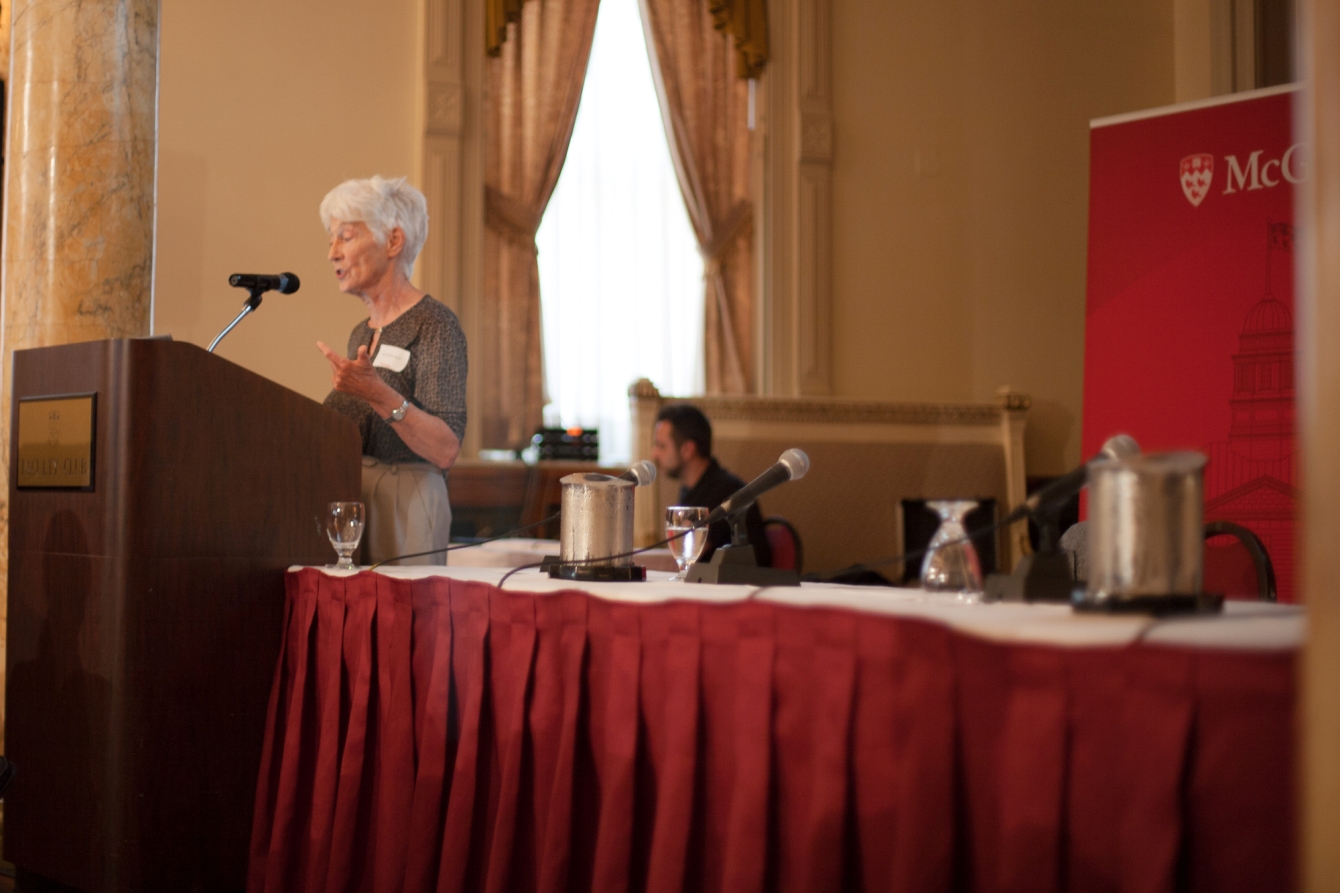
On Oct. 1, the Faculty of Medicine hosted Asbestos: Dialogue for the Future, a conference designed to address past criticisms of research on asbestos at McGill and to discuss the role of privately funded research at universities.
The conference was organized following a controversy in February 2012, when a CBC documentary challenged the findings of research conducted between 1966 and 1998 by retired McGill professor John Corbett McDonald. McDonald’s studies found that chrysotile asbestos was “essentially innocuous” and that no adverse health effects would come from its use except at extremely high levels.
The documentary accused McDonald of misrepresenting his results and questioned the legitimacy of his research because it was funded by the asbestos industry.
“Professor McDonald’s research is still of huge concern today,” anti-asbestos advocate Kathleen Ruff said at the conference. “The asbestos industry is targeting developing countries, saying that chrysotile asbestos […] can be safely used [even though] no country has ever succeeded in safely using chrysotile asbestos.”
Last October, McGill released the report of an internal investigation on the studies by research integrity officer Abraham Fuks, who concluded that McDonald had publically acknowledged the asbestos industry as his funding source and that he was not guilty of research misconduct. Tuesday’s conference is the result of a recommendation Fuks made in his report.
Dean of Medicine David Eidelman said that the event was planned to allow for an open discussion of the issues surrounding the controversy.
“We made sure it was structured in a way to make sure there was a very open and frank exchange of views, and made sure we seriously considered the issues that were brought up in the context of the McDonald controversy,” he said. “I was very glad to have the people who raised the controversy present so they could present their views.”
These critics included Ruff, who criticized McGill for holding an internal investigation on McDonald’s research rather than allowing an external party to examine the case. At the conference, Ruff emphasized that she will continue to push McGill to retract to McDonald’s initial research despite the conclusions of the internal review.
“It’s a real concern that’s having impact in the real world, so it is important that McGill address this issue,” she said. “McGill should become a leader in Canada to introduce an effective ethical review system that prevents scientific integrity and the public good.”
According to David Egilman, a professor at Brown University and a critic of McDonald’s research in the CBC documentary, the way in which McDonald conducted his research on asbestos points to greater problems in the way corporate-funded research is conducted at universities.
“In [McDonald’s] case, money should have been given to the workers [and] the unions to hire independent experts to consult with them, to evaluate the protocols in the research,” Egilman said. “The same thing’s true for drug research—if you’re doing corporate-funded pharmaceutical-medical research, there should be an independent group evaluating that research, [but] the norm [today] in drug research is that the data analysis is all controlled by the company.”
Jaye Ellis, a professor of law at McGill, said communication can be difficult between university researchers and corporations because each player has a different understanding of their goals in the research.
“It’s not possible for all of the players in these relationships—the university, administrators, the corporation, the researcher—to be on precisely the same page,” Ellis said. “[We need to] talk about how we present communicative structures among these different players to protect the values that we want to protect—rigorous academic freedom, independence, and so forth.”
McGill has several Research Ethics Boards (REBs) intended to promote ethical standards of research and protect the rights and welfare of individual participants in research projects. Researchers must obtain approval for their project from an REB before they begin recruiting participants or collecting data. However, McGill philosophy professor David Weinstock criticized the way university researchers tend to view Research Ethics Boards.
“[Researchers] still have a vision of REBs that reflects a conception of ethics that is altogether too superficial, too checklist-like, and too much at the tail end [of the process],” Weinstock said. “Everything that we do can be ethics-free until we get to that point when we have to fill out the ethics checklist and at that point all the important decisions have been made. That has to change.”
One potential solution that arose in the discussion was the creation of an additional body concerned with ethics at McGill, which would investigate and follow up on projects after they have received REB approval. According to Weinstock, however, this idea presents logistical difficulties.
“Questions about composition, mandate, independence, [and] the purview become crucial,” he said. “We don’t have the time to do the kind of serious research on the ways in which these details would need to get worked out.”
While Eidelman said he could not comment at this time on how the ideas raised at the conference will be used, he emphasized the potential for improving the university’s ethics review system.
“There is an imperative for the Faculty of Medicine and the university […] to think about how we can make sure that when we’re doing research we’re really meeting the highest standards,” he said.
Ruff said she was sceptical of the effect the conference would have on corporate-funded and asbestos-related research at McGill.
“It’s a good opportunity for the issue to be discussed, but […] the conference is not a substitute for doing the right thing,” Ruff said. “I think that we still have a very serious problem in the way McGill has dealt with this issue of misuse of research and the asbestos industry influence. I don’t think that has been properly addressed.”
Redmen lacrosse (7-0) was continued its dominance on Tuesday as it took on the Concordia Stingers for the second and final time this season. Freshman Spencer Bromley starred for McGill in its 23-1 trouncing of the Stingers, scoring five goals and adding on two assists. Other key contributions came from attackman Leland de Langley and midfielder Rhys Burnell, who both notched hat tricks in the winning effort.
The Redmen led 14-0 at halftime, and narrowly missed out on a shutout with Concordia scoring its lone goal in the third quarter. Manning the net for McGill were two rookies: William Waesche and Gordon Hart.
Following their victory against the Stingers, the Redmen traveled across the border to Troy, N.Y. to take on the Rensselaer Polytechnic Institute—a much tougher challenge. McGill fell 6-11 to its NCAA foe.
McGill currently leads the CUFLA’s Eastern Division with its 7-0 conference record, competing with the Bishop’s Gaiters (4-2) for first place overall.
The Redmen’s next match will take place in Ottawa against the Carleton Ravens on Oct. 5.
Football
Vs Concordia
Molson Stadium played host to an outstanding football game on Saturday as the Redmen faced off against Concordia in the 37th annual Montreal Shrine Bowl. The match featured seven lead changes, culminating in a 53-52 overtime victory for McGill.
Pierre-Luc Dussault started at quarterback in place of Jonathan Collin, throwing for 538 yards and three touchdowns. The Redmen came back from a 20-point hole in the second half of the game to tie up the score at 46-46. The key play occurred in the last minute of regulation, as Dussault threw to fourth-year Samy Rassy, who executed a 35-yard field-goal to force overtime.
The game-winning possession came on the back of Redmen running back Luis Guimont-Mota, who rushed the ball for 35 yards, ultimately scoring a one-yard touchdown to give McGill the 53-46 advantage. The Redmen held on to seal the victory.
Dussault was awarded offensive player-of-the-game honours, while freshman rush end Carl Laverdiere took home defensive honours.
McGill will host the Bishop’s Gaiters on Oct. 4 at Molson Stadium in a match that will have playoff implications for both teams.
Baseball
The McGill Redmen (9-6) won three straight this past week to move into second place in the Northern Conference. McGill started off the dominant week by blowing out the John Abbot College Islanders (1-12) by a score of 20-4. The squad’s offensive output was so strong that the game ended after five innings rather than the requisite seven as the mercy rule was applied. Despite only outhitting the Islanders 8-7, the Redmen were able to capitalize off of six errors, 13 walks and two batters who were hit by pitches to pile up the runs. McGill then followed up with a double-header in the nation’s capital as they faced the Ottawa Gee Gees (5-8). In the first game, pitcher Landen Moore, went all seven innings to register the complete game. Sophomore second baseman Jamie Fuoco led the squad offensively with four RBIs. In the nightcap James Vardy picked up the win for the Redmen. Once again, McGill won despite not dominating the hits column, tying Ottawa 7-7. The week moves the Redmen 3.5 games behind Concordia for the lead in the conference with the playoffs starting on Oct. 5.
Rugby
The McGill Redmen (4-0) took on the Bishop’s Gaiters last Thursday in an RSEQ showdown. The seven-time defending champions, McGill were able to extend their winning streak as they emerged victorious by a score of 24-5. The win represented the highest margin of victory for McGill this year as their path to another RSEQ championship has been considerably tougher. Cameron Perrin led the scoring for the squad with nine points, three from a penalty goal and an additional six from three successful conversions. Elsewhere, the squad had balanced scoring that was buoyed by freshmen Konstantin Born and James Wilson, and sophomore Thomas Stokes. The Redmen now play host to Sherbrooke (1-2) on Oct. 10 as they continue their quest for another championship.
Later on in the weekend the Martlets (4-1) took on the Gaiters and were able to top the century mark in a 109-5 victory over their overmatched opponents. Sophomore fullback Deanna Foster led the way with 30 points while senior fly-half Brianna Miller tacked on 29 while hitting 12 of her conversion opportunities en route to being named the most valuable player of the game. Emily Barber, Bianca Della Porta, and Katrine Lightstone also tallied double digit points totals for McGill. The Martlets now host Laval (3-2) in their second last game of the regular season on Sunday, Oct. 6. at McGill’s Macdonald Campus.
LOOK VIBRANT Look Vibrant opened at 8:00 p.m. at Casa del Popolo last Friday, kicking off a show that included later sets by AroarA (which includes Broken Social Scene member Andrew Whiteman) and Montreal psychedelic rock outfit Filthy Haanz. The members of Look Vibrant certainly appreciated the gig, and lead singer Justin Lazarus frequently thanked the modest crowd for attending despite the relatively early set time. The lo-fi noise pop they played sounded great live, with a cleaner feel than their fuzzy cassette release Plateau. One drawback was Lazarus’ self-conscious, falsetto-whine vocals, which lag behind his songwriting. However, the band’s enthusiasm, well-rehearsed guitar shredding, and effective use of an intimate venue atoned for his tone.
(Alexandra Allaire / McGill Tribune)
Local Natives Los Angeles group Local Natives were clearly a fan favourite on Friday, and talk of their show at Metropolis circulated around the McGill campus this past week. I had low expectations, due to my certified cynicism of indie-folk, and in the end, my worst fears were confirmed. While concert attendees around me nodded enthusiastically and sang along in ecstasy, I absent-mindedly browsed my POP pocket guide for better acts. Band members Taylor Rice, Kelcey Ayer, Ryan Hahn, and Matt Frazier barely spoke to their audience, letting their music do the talking. Undoubtedly, their set was well-rehearsed, but in the end the monotonous mix of guitars and sickeningly earnest vocals failed to speak to me.
Ewan Pearson Ewan Pearson took over the decks at Société des Arts Technologiques (SAT) at midnight, beginning with some relaxing house music that fit the chilled-out lounge setup of the venue on Friday. SAT’s excellent sound system was well-adapted to his mix, and a calm, cozy atmosphere—the main concert space was closed off by curtains, which gave it a satisfyingly balanced ambience. As abstract, geometric visuals alongside the DJ booth developed at a quicker pace, so did Pearson’s mix, taking off into techno territory as well as more up-tempo house. A shy but attentive crowd was slow to move to the dance floor, but Pearson was soon surrounded by dancing silhouettes, who grooved against a backdrop of fluorescent lighting and street-level St. Laurent crowds.
Chali 2na Jurassic 5 member Chali 2na got off to a bit of a late start, arriving right behind me just half an hour before his scheduled set time. In the meantime, supporting acts Quills and Kayo attempted to amp up a sparse crowd, at one point playing Kendrick Lamar and Macklemore. Ironically, an hour later, Chali was asking a denser audience whether they liked “good music” and “good hip-hop”; this received rousing cheers, while silence and boos were the response when the same question was asked of “Top 40 radio” (I gave an enthusiastic whistle). Turning the space into “Chali 2na radio” was pretty successful, however, due to his charming stage presence and talented articulation. Considering this was Chali 2na’s first date in Montreal, he commanded a strong debut performance in the appropriately grungy, urban Cabaret Underworld.
Dead Horse Beats I only caught the tail end of this set, but from what I could make of Halifax hip-hop head Dead Horse Beats’ music, it really does sound like a horse dying. Nevertheless, his name actually has another origin. In a past interview with music blog High on Beats, the producer explains “[…] every white kid in university tries to make hip-hop music, and be really cool, and be a DJ—that’s kinda beating a dead horse at this point, so I’m gonna do the same thing.” That thing happens to be remixing modern hip-hop classics such as “C.R.E.A.M.,” “In Da Club,” and “Still D.R.E.” with his own “DHB edit” style. The problem is that such tracks are so well-produced that they are essentially untouchable, unless one wants to be unfavourably compared to the original. As one might suspect, the bland, experimental remixes of stale hip-hop didn’t measure up, and the sound periodically cutting out of Dead Horse’s Macbook didn’t really help matters either.
(Alexandra Allaire / McGill Tribune)
Emancipator American trip-hop producer Emancipator played a fantastic early-morning set this past Friday, getting on the decks at 1:30 a.m. and deftly mixing bass-heavy instrumentals into pleasantly ambient strings. Neé Doug Appling, Emancipator’s mixes are layered and symphonic, likely result of his multi-instrumental musical knowledge (the violin, mandolin, banjo and viola are all in his repertoire). Also impressive were Emancipator’s sampling skills, which he demonstrated live throughout his mix at Club Soda. As the last act I saw on Friday, attending this gig was certainly a enjoyable way to conclude that day’s POP experience.
-Will Burgess
Jian Ghomeshi Live Q Broadcast The first event I took in at the POP Montreal festival was a live broadcast of the popular interview program Q, hosted by Jian Ghomeshi. Unlike the other shows I would attend, it drew in a predominantly middle-aged crowd. But despite the average age of the audience, the atmosphere at L’Olympia was electric.
Ghomeshi boasts a cool but affectionate demeanor that is largely responsible for the overwhelming admiration he receives. He could be described as an intellectual-rock star hybrid, but those in attendance on Thursday evening treated him like the latter, showering him with raucous applause at every available moment. Unsurprisingly, one of the first questions asked to the sought-after bachelor was “When are you getting married?”
Ghomeshi’s opening monologue—a brief piece that he prepares and reads aloud to kick off every Q episode—was a warm tribute to the artistic and cultural landscape of Montreal. He even went so far as to suggest that Osheaga might have become the best music festival in the world. In any event, you know you’re doing alright if POP Montreal is arguably only your second biggest musical festival.
In accordance with the monolouge theme, each of the episode’s guests were primarily Montreal or Quebec residents: best-selling author Louise Penny, comedian Sugar Sammy, musical group BRAIDS, actor Antoine Bertrand, and a three-person media panel that discussed Quebec’s proposed Charter of Values.
My highlight was listening to Montreal native Patrick Watson, who got the honours of kicking off and concluding the show. He and his band dazzled the audience with their experimental orchestral sound, and he later spoke to Ghomeshi about collaboration in the Montreal music scene.
“When I think about the days where we were building what we were doing, I can’t exclude all the people that were so inspirational around us,” explained Watson. “There’s a long list of people we’ve all shared the stage together and made some silly noise with [.…] I think that was the strength of the city, it was not a competitive nature.”
Syngja The highlight of seeing Montreal natives Syngja? I got to cross going to a live show that features the theremin—an instrument used in many movie scores to produce particularly eerie sounds—off my musical bucket list. For me, though, that was just one of the lone obscure bright spots in what was to become a very strange show.
Everything about Syngja (a name which draws from the band members’ Icelandic roots) is unusual. Their glam-inspired costumes; their primary instrument lineup of synth, double bass, and theremin; and the analog photo projection that accompanies their performance.
Surprisingly, they approached the realm of mainstream pop for a fleeting moment with a cover of Katy Perry’s “Hot N Cold.” Needless to say, they took many artistic liberties with their rendition.
The photos, like much of the music, walked a fine line between dreamlike and uncomfortable. It made for an intriguing artistic pairing at times, but the combination could also be very creepy at others. Though Syngja certainly exposed me to some fresh artistic styling, I’ll pass on a follow-up show.
(Wendy Chen / McGill Tribune)
Royal Canoe This Winnipeg band likes doubles. On various songs, they’ll have two band members playing drums, two playing bass, two playing keyboards, and the lead singer singing into two microphones. It also would have been nice if they had played a double set.
On Saturday night, this six-member group had Petit Campus rocking with their rich, eclectic sound, combined with their fantastic live energy.
Playing a unique style of indie-pop, Royal Canoe oscillated between slow, funky, and feverish. When things did pick up, their lead singer poured everything into his vocals and stood out from the heavily layered music.
Many of their songs even had memorable—if unconventional—hooks. In “Bathtubs,” for instance, the singer chants, “The bathtubs in the hallway are here to stay.”
It’s not quite the traditional sound that one would expect from a band that contains the word ‘canoe’ in its title, but Royal Canoe deliver a great live show that benefits from their unique but alluring, music.
After dropping their first two matches of the season, the Martlets came into their Friday contest looking to extend their undefeated streak to five games. McGill faced off against the undefeated Laval Rouge et Or, who sported their own winning streak entering the game. The match resulted in a 1-1 draw.
Sophomore defender Zoe Fasoulakis knew that her squad was in for a tough test against the No. 2 ranked team in the nation.
“We were a bit nervous coming into the game, knowing their record […] but I was also very excited to get the chance to be the first team to beat them,” Fasoulakis said.
From the kickoff, Laval’s speed was put on display as its strikers managed to cut through the Martlets’ defense and put pressure on net. However, after an early shot was stopped by McGill’s veteran goaltender Victoria Muccilli, momentum began to sway in the Martlets’ favour as the backline tightened up.
McGill jumped out to an early lead when senior defender Kelsey Wilson put a free kick from the 10-yard marker past Laval keeper Joelle Morasse. The shot, taken in the 11th minute of play, drifted from the sideline to the far side—easily beating Morasse, who was expecting a cross.
The Martlets’ lead remained intact through the first half as Head Coach Jose-Luis Valdes’ tactics quieted the potent Rouge et Or offence.
“Our coach emphasized playing very tight in the back,” Fasoulakis said. “Just dropping back and staying in a tight defensive formation was key in keeping their offence in check.”
In a dramatic sequence right before the 45th minute mark, senior forward Meghan Bourque used a burst of speed to shed a Laval defender in the right wing and got off a tough angle shot that Morasse couldn’t hold onto. Sprinting through midfield, her sister Sarah Bourque, a sophomore winger, managed to put a powerful kick on the ensuing rebound but missed by centimetres as the ball bounced off the crossbar.
The Martlets were able to settle into their game against an intimidating opponent due to the early lead.
“It gave us that little edge and made it easier to play, knowing we had that cushion and not having to worry about scoring,” Fasoulakis said.
However, momentum quickly shifted away from the Martlets as Laval dominated play throughout the second half. McGill struggled to get the ball through Laval’s concrete midfield, and yellow cards hampered several promising rushes.
At the 78th minute mark, Laval’s Cynthia Turcotte took advantage of a sloppy clear in McGill’s half, breaking away with Rouge et Or forward Lea Chastenay-Joseph. A short cross past the diving Muccilli by Turcotte allowed Chastenay-Joseph to tap the ball into the empty net for the equalizer.
The Martlets were unsatisfied with the final outcome of the game, but should be able to use this game as a stepping stone for a strong playoff push in the second half of the season.
“It was a bit disappointing. It was an unlucky giveaway on our part that resulted in them tying the score. The fact that we were able to be the first team to take points away from Laval was a good feeling,” Fasoulakis said.
The resulting tie extended undefeated streaks for both teams. Laval improved to a division leading 6-0-1, and the Martlets moved to 4-2-1 solidifying their grasp on the fourth and final playoff berth.
McGill will take on their crosstown rivals, the Montreal Carabins (5-1-1) on Oct. 4th at Stade CEPSUM.
Are you stuck with the problem of deciding where to eat for a special occasion? Or maybe your parents are in town and dinner is on their dime? Although there are many places that will impress in this city, finding the best places to indulge your appetite can be difficult. For a dinner that costs approximately $25 to 35, here are some personal favourite locations where you can enjoy an exceptional meal out in Montreal.
Joe Beef
I always choose Joe Beef whenever my family comes to visit. It’s one of those staple restaurants that everyone should experience at least once while living in this city. Joe Beef uses classic and indulgent Quebec ingredients such as maple syrup, cream, and foie gras in innovative ways. With an ambience reminiscent of a classic pub, this restaurant serves up fine dining twists on fast food such as the “foie gras double down”—a crave-inducing sandwich with peppery fried chicken serving as the bread, stuffed with foie gras, bacon, and melted cheddar cheese, all drizzled with maple syrup. The interplay between fat and sugar is mouth-wateringly irresistible. Other noteworthy dishes include a chicken nugget-style meal made instead with smoked eel, a moist piece of halibut covered in a pimento pepper crust and served with a tomato-infused butter sauce, and fresh blueberry sorbet with Madeleine cakes.
2491 Rue Notre-Dame Ouest.
Tel: (514) 935-6504
(Alycia Noë / McGill Tribune)
(Via www.wmontcarte.ca)
Au Pied de Cochon
The brainchild of chef Martin Picard, Au Pied de Cochon is known for its full appreciation of the pig. The chef creates succulent homemade sausages, head cheese, and even offers pig’s trotters—i.e. feet. A visit to this protein-centric restaurant will amaze anyone as it wastes no part of the animal, while managing to make even their most eccentric dishes delicious. Au Pied de Cochon is by no means small, but since it is usually filled to capacity it can begin to feel slightly cramped. Be prepared for a buzzing atmosphere filled with many customers, all bursting with energy.
536 Avenue Duluth E.
Tel: (514) 281-1114
Park
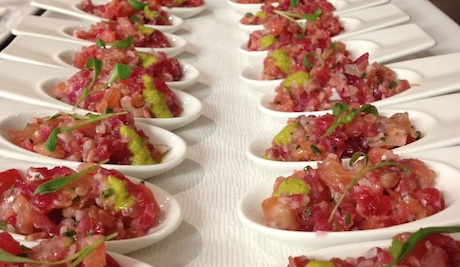
Montreal is an excellent city to explore up-and-coming chefs. Park, a new-age sushi restaurant in Westmount, only serves what chef Antonio Park considers ‘in season’, and ships fresh fish in from all over the world. Chef Park creates an unusual and delightful experience that reflects his modern approach to food, with the kitchen open to the view of those in the dining room. Visible all night long, the chefs work meticulously to carve fish and craft gorgeous sushi presentations. When you order a tasting plate, the chef creates any type of sushi after his inclination. Although the patron has no choice, the combinations I have experienced—such as jalapeño hamachi and B.C. albacore topped with kimchi—blew my mind, bringing sushi to a whole new level.
378 Ave Victoria, Westmount.
Tel: (514) 750-7534
(Via Tourism Montreal)
Lawrence
A relaxed bistro delighting with traditional British fare, Lawrence is another one of my recently discovered favourites. Walking into the restaurant that seats at most 30 people, your first impression may be that the atmosphere is informal—the entire restaurant is contained in one room, and there is no one waiting to greet you at the door. It may be tempting to write-off the restaurant, but you must put aside your preconceived notions about British food and typical dining settings when you eat at this restaurant. Simply enjoy their bizarre creations like rabbit offal (internal organs) and sorrel on toast, arctic char with horseradish and red wine, and beef cheek and tongue served atop lentils.
A MORE house will be converted to a sustainable living space beginning in Fall 2014, according to a report on the ECOLE project presented at SSMU Council last Thursday.
Councillor Courtney Ayukawa and former McGill student Lily Schwarzbaum, coordinators of the project, gave a presentation which outlined the history, outlook, and timeline of progress of the project. The house will be located in the Milton-Parc community and is financially backed by the Students’ Society of McGill University (SSMU). The project plans to transform a current student residence into a sustainable living space for eight to ten undergraduate student facilitators, who will be determined through an application process that has not yet been released.
Various sustainable living practices will be developed in an exploratory manner, and specific examples will become clear once facilitators of the project are hired in January.
“Examples of things that we are likely to explore include composting, collective living, anti-oppressive practices, [and] vegetarian/vegan diets and meals,” Ayukawa wrote.
The two-story house will have communal spaces on the ground floor and rooms for facilitators on the second floor.
According to Ayukawa, the project will provide the key mechanisms required for developing an example of sustainability in the community.
“We’re providing the physical space for it which does not currently exist; we’re offering resources for this house, and [we’re] bringing together people who are interested in sustainability,” Ayukawa said.
Each student facilitator will be responsible for engaging with the community and developing an independent study project on their sustainable lifestyle. Rent for the facilitators will amount to approximately $400 per month, which will be subsidized due to their additional responsibilities.
Along with SSMU, other stakeholders in the project include McGill’s Office of Sustainability (MOOS) and Student Housing and Hospitality Services (SHHS).
“MOOS and SHHS have provided us with a lot of support and acted in an advisory-like role,” Ayukawa said.
The house is located right across from the university and houses the residential Green Living Learning Community, which, according to McGill’s housing website, is an environment where “residents work together on sustainability projects and participate in environmental programs with various organizations throughout Montreal.”
Milton bike gates
Council also passed a motion regarding the recently installed bike gates located at the Milton-University intersection. The motion opposes the presence of the gates and is similar to one recently passed by the Arts Undergraduate Society (AUS). The SSMU motion, opposes the gates, pledges to send a letter to the administration, and resolves to explore alternative means of designating space for bicycles on campus.
“We’re opposing the construction of the gates on the grounds that they did not consult students [and] they did not consult the Office of Student Disabilities, who have expressed the concern that the gates are built assuming that everyone is a [tall, able-bodied] person,” Claire Stewart-Kanigan, Arts senator, said.
AUS President Justin Fletcher said the gates have not fulfilled the purpose for which they were installed, since individuals still ride their bikes on campus.
“You can either bike through the gates, which means they don’t do anything, or you can bike right up to the gates, get off your bike, and get right back on,” Fletcher said. “These gates do not solve the problem that they wish to rectify.”
The gates were installed last summer to encourage members of the McGill community to walk their bikes on campus.
Councillor David Benrimoh said he ran a survey for his constituents in the Faculty of Medicine, and found that 54 per cent of respondents opposed the gates. He also received feedback with regards to alternative strategies for reducing accidents or near-accident between bicyclists and pedestrians on campus.
“One thing that kept coming up, over and over again was [the suggestion of] bike lanes,” he said.
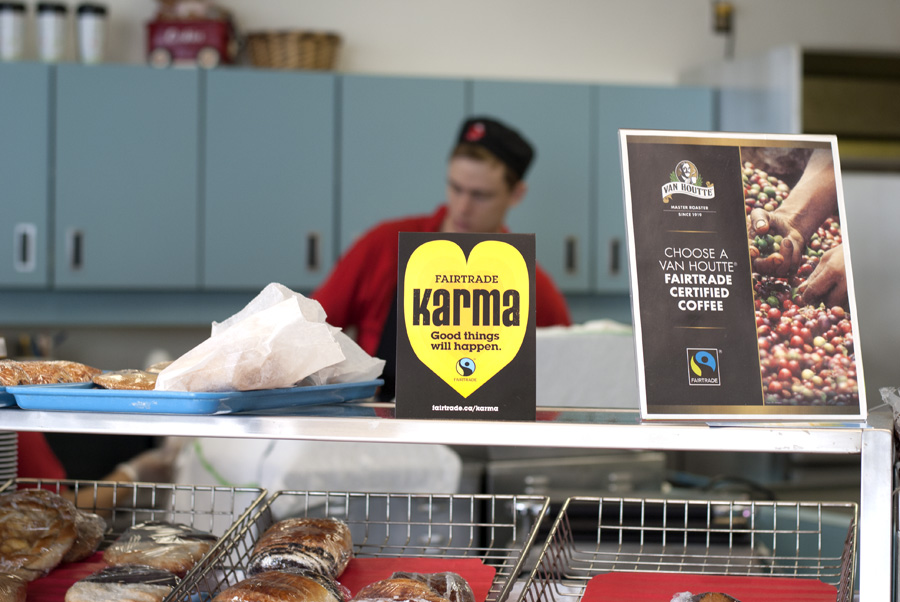
Last week, McGill celebrated Fair Trade Week with various events dedicated to the promotion of fair trade products, including free coffee and chocolate fountains. The weeklong event followed the announcement over the summer that the university became the first school in Quebec and the fifth in Canada to become fair trade certified. The week was a collaboration between McGill Food and Dining Services (MFDS) and Engineers Without Borders (EWB).
The motion to bring fair trade certification to McGill began two years ago, when EWB approached MFDS with the suggestion of becoming certified. MFDS conducted the major administrative work in order to achieve certification for the university.
Fair trade certification means that McGill supports aspects of food production such as fair wages for farmers and producers. Every cafeteria and food service on campus has fair trade certified foods. Oliver De Volpi, Executive Chef for MFDS, described the journey towards certification as a long but successful process.
“In the last few years, we’ve led this push,” De Volpi said. “At first […] no one wanted to take an initiative in this process, because no one knew who to really speak to in terms of food service. It took a while for it to be organized and for [the Students’ Society of McGill University (SSMU)] to jump on board in recent months.”
Some students suggested that a continued effort to raise awareness about fair trade issues is necessary. A student who asked to remain anonymous said there were not enough advertisements of this event on campus.
“I think a lot more publicity could’ve been going on,” she said. “I didn’t know McGill [was] fair trade certified until last week, which is a bit late, I think, for such a thing.
However, Jessica Hoch, members of EWB, said there were daily efforts on campus to raise awareness of Fair Trade Week and EWB.
“EWB has spoken with stu dent-run food stores on campus [such as] SNAX, Dave’s, and the EUS General Store, and encouraged them to purchase fair trade products; this idea was met with support by all student-run stores,” Hoch said. “We also have a fair trade booth on Mondays and Fridays in the FDA building that runs from 8:30 to 3:30 p.m., selling fair trade products by donation, as well as awareness events throughout the year.”
McGill’s efforts focus on ensuring produce and products, such as coffee and chocolate, are attained through fair trade procedures, according to De Volpi.
“Vegetables and fruit for us are already fair trade—we’re not buying from overseas countries, we’re buying as local as possible,” De Volpi said. “The main problem is chocolate [….] We’re buying fair trade cocoa powder already, and our next step might be to get [fair trade] chocolate milk.”
As part of this initiative, McGill partners with Fair Trade Canada, a company that works with farmers to ensure they have fair wages and attempts to gain support from schools and businesses. Fair Trade Canada Executive Director Sean McHugh said that the combined efforts of MSDS and EWB successfully brought certification to McGill, and that he looks forward to working with the university in the future.
“We’ve been working together for the past few years to make McGill fair trade certified,” McHugh said. “I work with volunteering groups across Canada, including EWB, and they are such a pleasure to work with [.…] We’re looking to expand to other schools, starting with coffee and chocolate, then eventually sugar, clothing, soaps, hand creams, spices, [and] vegetables.”