

Latest News

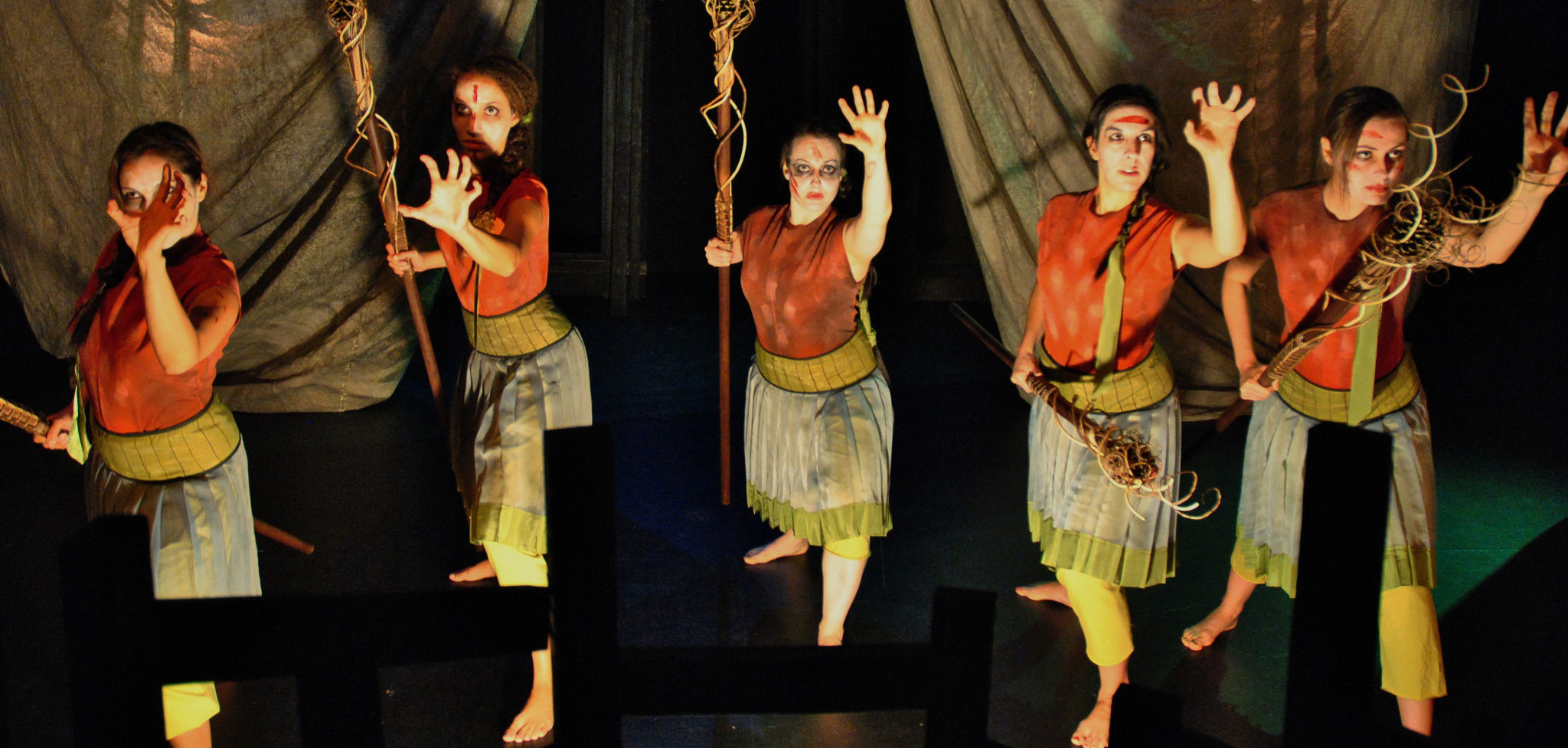
The maenads—frenzied followers of Dionysus. (Courtesy of Carnivale Theatre)
a, Arts & Entertainment

War, worship, and wine: resurrecting ancient Greece

It’s been said that art finds its highest form in the Grecian tragedy. After watching The Bacchae, it’s easy to see why. Scapegoat Carnivale’s production of Euripides’ classic benefits from an original translation by director Andreas Apergis and assistant director Joseph Shragge. The resulting textual clarity aided the talented cast in conveying a story convulsing with hubris, violence, and painful horror—a tale that, after nearly 2,500 years, still packs quite a punch.

How is a god born? From another god’s thigh, of course. Dionysus’ mortal mother was killed while he was still a fetus; Zeus’ flesh became the supplemental womb. As if such an experience wasn’t traumatic enough, the entire mortal side of Dionysus’ family rejected him. It’s blasphemy; it’s sacrilege! This is the tale told by the young god at the beginning of the story; teen angst coursing through divine veins is a fearsome sight indeed.

Alex McCooeye’s Dionysus trembles with rage and vengeance that borders on the psychotic. The modern conception of the god of drunken revelry caricatures the original in this regard; McCooeye’s fragile and off-kilter performance reminds us of the frightful wrath of gods.

This wrath is directed towards Thebes, where his mortal family resides. The King, Pentheus, refuses to accept Dionysus’ divine status, even after the women of his city are driven by the god into a frenzied ecstasy. Wolves suckle at their breasts. Milk flows out of the ground when they scratch at it with their fingers. Wild beasts are ripped apart by their bare hands. That Pentheus precipitates his own grizzly doom (though not before a scene of unexpected humour) by wilfully ignoring all this comes at no surprise—this is a Grecian tragedy after all.

Brett Watson’s Pentheus finds a mostly singular note of throttled rage and impotent indignity, though it serves the character well while verbally sparring with the disguised Dionysus. In the latter parts of the play, the now-enraptured noble fully externalizes the fool; Watson fleshes out these dimensions with skill—the subtle sighs and vocal quiverings heighten the comic horror of the moment—but even this results after a transition that is all too brief.

Amongst the supporting cast, Teiresias (Greg Kramer) is a stand-out, dominating his scenes with full-bodied, nuanced enunciation. Equally stunning is the Messenger (Paul Van Dyck). From his lips sprung the most violent and fantastical imagery, more vivid than any graphic representation could ever aspire to achieve. The purity, the monumentality of the terror inspired by Van Dyck’s speech as well as that of the Attendant (Karl Graboshas), are easily the show’s highlights. Agave (France Rolland) is the clearest fusion of oral and physical virtuosity; as the mother of Pentheus, Agave epitomizes anguish in the production, and Rolland fulfils this role with expert precision.

The five-member Greek chorus serves as an amiable interlude to scenes, though ultimately, the whole is greater than the sum of its parts. Harmonization across the vocalists is incredible, euphoric even, but solo segments have mixed results. Brian Lipson’s score—a concoction that oscillates between unremarkable golden hues and contemplative minor dissonance—seems uninspired. Leslie Baker’s choreography is as simple and unvaried as the chorus members’ facial expressions, and its execution sorely lacks synchronicity.

A separate choir at the back of the theatre contributes to a near-surround sound experience—a fantastic decision that could be utilized even more fully. This creative use of the whole of theatrical space is evidenced by the staging of many characters throughout, and is equally beneficial to the performance. Erwann Bernard’s lighting design generally opts for the unobtrusive, and is not without a few moments of thoughtfulness. Francis Farley’s minimalist-yet-functional set design is similarly spartan, and it appropriately allows for the focus to be on the cast itself.

If the goal of Scapegoat Carnivale is the revivification of ancient masterpieces for a contemporary audience, The Bacchae is undoubtedly a success. Traditionally, the play is an important form of ritual worship of Dionysus; I suspect the god of revelry and ecstasy, looking down from Olympus, would be proud of this production.

The Bacchae  runs through Oct. 20 at the Centaur Theatre (453 Saint-François-Xavier Rd.) Tickets are $18 for students.

a, Arts & Entertainment

Safe haven

Any excuse to meander around Old Montreal and not study for midterms is a good one, right? Currently showing at the Montreal History Centre, Nous Sommes Ici is an interactive photography exhibit that documents the lives of immigrants to Montreal, and their past struggles with violence in their countries of origin.

Jaw-dropping statistics about the number of “Montrealers” previously considered  refugees, and the stories about their past lives they lived  are especially eye-opening. A multimedia experience through pictures, text, video, and artifacts draws you into the lives of the hardship of the exhibit’s subjects. Although the pieces pose thought-provoking questions to the viewer, it is disappointing to find that they are never answered. The exhibit does not show why Montreal was chosen, how cultural identites are reconciled, nor why the refugees stayed in the city. Nous Sommes Ici is an exhibit to show the lives of a large demographic of Montreal—yet the city is always kept at arm’s length.

Nevertheless, Nous Sommes Ici is incredibly informative, relevant, and relatable to Canadians. Visiting this exhibit will help one begin to understand, if not completely ingrain, the overlooked suffering that many of these immigrants faced. By exploring others’ lives through art, we become a more conscious and involved society.

Nous Sommes Ici, on display at the Montreal History Centre, runs through Apr. 14 2013. $6 for general admission.

Members of Anonymous at a protest in Los Angeles. (Vincent Diamante / Wikipedia Commons)
a, Arts & Entertainment

Lolcats and revolutions: the faceless future of hacktivism

Brian Knappenberger, the writer and director of We Are Legion: The Story of the Hacktivists, claims to have compiled a documentary which explores the roots of hacktivism. What Knappenberger has created, in fact, is a fawning, if well-intentioned, tribute to Anonymous—the loose virtual collective which originated on the 4chan message board.

4chan, and its /b/ section (the anything-goes message board) in particular, is one of the internet’s most unique locales. Something akin to cyberpunk writer William Gibson’s Walled City, 4chan is an online community brimming with silliness, biting sarcasm, and posts aiming to shock even the die-hard denizens of the internet. By default, all posts are made under the username ‘Anonymous’, leading to the joke that the board is actually populated by the postings of a single trigger-happy user.

Over time, 4chan users began to band together to take part in practical jokes, or harass other users en-masse. These forays (referred to as raids) gradually developed into a haphazard commitment to vigilante justice, with Anonymous hacking into a notable neo-Nazi’s email and revealing that he was, in fact, an FBI informant. While a certain cadre  of the group objected to this do-gooder stance, such campaigns continued, with the majority of Anonymous fighting against censorship by Scientology and Middle Eastern governments alike.

We Are Legion channels the furious energy that simmers beneath Anonymous’ masks, their rebellious nature, and their acute sense of injustice, but it sorely lacks any second opinions. If the distributed denial-of-service attacks employed by Anonymous in protest of Paypal’s suspension of service to Wikileaks (while still serving organizations such as the KKK) are the modern-day equivalent of civil rights sit-ins, as various hacktivists assert, where are the comments by ACLU members and civil rights scholars? If, as Anonymous claim, they were of some help to dissidents throughout the Arab Spring, where are the men and women who put their lives at risk in Tunisia and Egypt, grateful for the virtual assistance they received while speaking out against oppressive rule? These accounts may very well corroborate Anonymous’ statements—their exclusion, however, leaves the impression that that the viewer didn’t get the whole story.

Neither does the film address in depth the instances of internet activism preceding the rise of Anonymous. Knappenberger presents a slick, streamlined version of hacktivism—in the beginning, groups like L0pht and Cult of the Dead Cow were loosely interested in the idea, and a group named Electronic Disruption Theatre took a stand against Lufthansa’s allowance of planes to deport refugees. Anonymous then came about, and after playing some jokes using avatars in online chat rooms, the group grew in strength. How can Knappenberger retell the history of hacktivism without the slightest mention of 1997’s mass takeover of Indonesian government websites, in protest of its policy on East Timor (one of the first instances of a large-scale act of hacktivism)? What about the virtual sit-ins of U.S. and Mexican government websites, aimed at bringing attention to indigenous rights in Mexico?

These omissions stem from Knappenberger’s somewhat misguided vision for the film. We Are Legion portrays Anonymous as the culmination of internet activism; the volatile democratic apogee of political participation, in line with the internet century’s liberal, populist ethos. Had Knappenberger seen fit to tell the story of hacktivism itself, he would not have portrayed Anonymous as the alpha and omega, but merely an important part of a larger, more complex whole. The sad result, wherein hacktivism is equated with Anonymous, falsely relegates the remainder of the term’s history to Wikipedia stubs.

We Are Legion: The Story of the Hacktivists opens at Cinema du Parc this Friday, Oct. 19

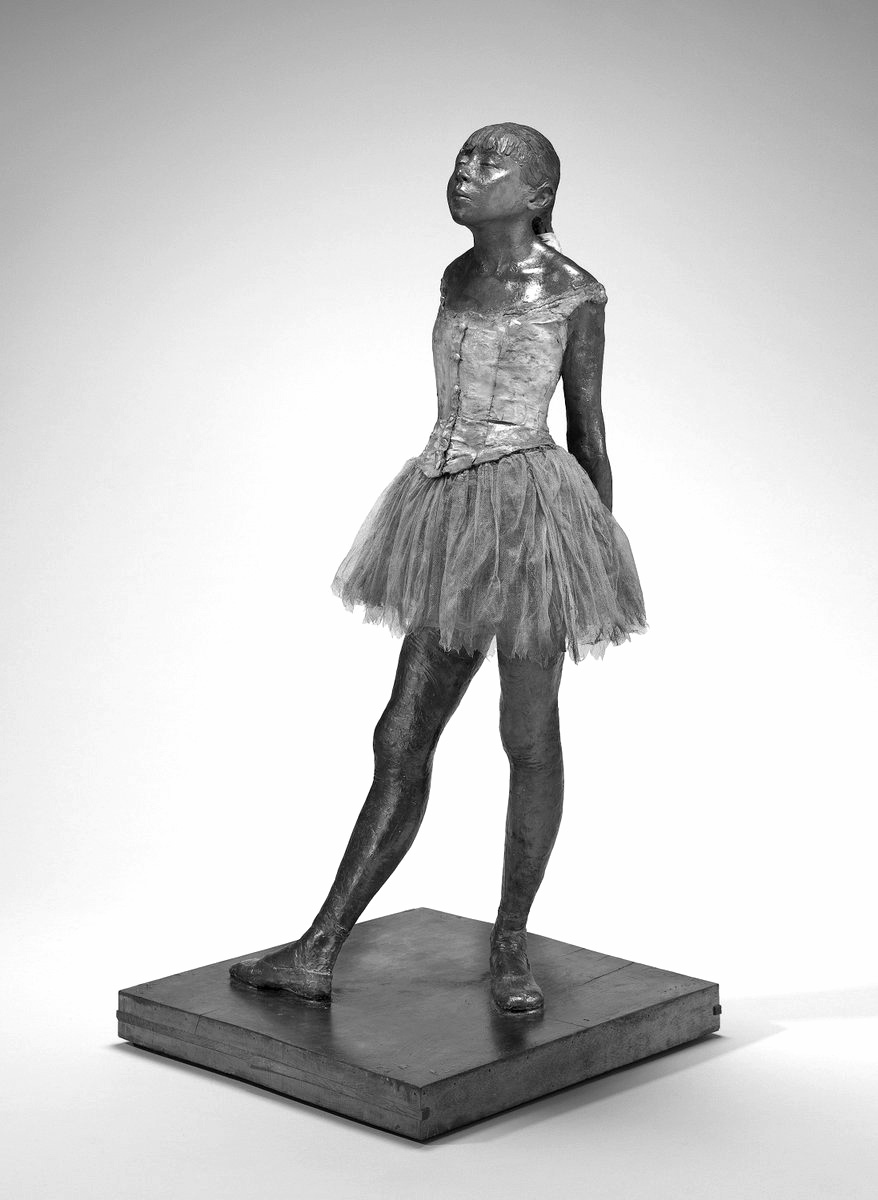
Degas’ “Little Dancer, Aged 14.” (pmcmurray.wordpress.com)
a, Arts & Entertainment

La Belle Époque, here and now

A unique opportunity to see works by Degas, Gauguin, Monet, Pissaro, as well as twenty-one canvases by Renoir, has opened at the Montreal Museum of Fine Arts (MMFA). More than a million people worldwide have already viewed the 75 Impressionist paintings on loan from the Sterling and Francine Clarke Art Institute, but this is the first time the collection has come to Canada.

According to Nathalie Bondil, the director of the MMFA and chief curator of this exhibit, “Impressionism has become the best loved and most popular art movement of all time, and yet it turned the world of Western art upside down, restructuring it [into] what it is today. More than a style of painting, it crystallized the aspirations of an era of profound changes in society.” Once Upon a Time… Impressionism makes it easy to see why.

The show is organized in line with new research in art history. It tells the story of Impressionism while keeping abreast of the historical context, and deals with themes such as ecology and optical science, the momentum of modern life, art as a commodity, artistic subversion as a manifestation of political progress, and Impressionism’s role in women’s liberation. If you’ve ever wondered why a particular movement is important, or why we should care about art, do not miss this exhibit (nor the incredible information and quotes printed on the walls throughout the exhibit).

In particular, make sure to catch a glimpse of Renoir’s “Peonies” (begin close and move back slowly to experience a focal change in the canvas from blur to near-photographic), “Sleeping Girl,” the famous “A Box at the Theatre—At the Concert,” and “Blonde Bather.” Monet’s “Tulip Fields at Sassenheim, near Leiden” is quintessential Impressionism. Pissaro’s “Road: Rain Effect” beautifully conveys a nostalgic rainy day feeling. Degas’ “Dancers in the Classroom” and sculpture “Little Dancer of Fourteen Years” will demand close examination. Gérôme’s “The Snake Charmer” brings to life the stereotypical European view of the ‘exotic’ Middle East in sharp hyper-realism and unparalleled image depth. Stevens’ “A Duchess—The Blue Dress” is visually intriguing due to the velvet of the subject’s dress.

The hype surrounding the exhibit is more than merited. Be prepared to spend a couple of hours walking through the four rooms of the show, completely absorbed by the paintings themselves; approaching them up close (unlike many exhibits of famous works, only a thin sheet of glass separates the canvas from the viewer) to peer at the prominent, often pixel-like, brushstrokes characteristic of Impressionism, and then moving back across the room to observe the optical illusion of each stroke and smear of garish colour blending together into a cohesive whole. The two hours I spent at the exhibit weren’t anywhere near enough; art lovers, plan for a second visit.

Once Upon a Time… Impressionism: Great French Paintings from the Clarke is at the MMFA until January 20th. Tickets are $12 for those under 30; $10 Wednesday evenings from 5 to 9 p.m.

a, Arts & Entertainment, Music

The Sea and Cake: Runner

In their nearly 20-year career, The Sea and Cake have not only maintained incredible consistency in sound and quality, but have also shown incredible versatility. Named after a mishearing of “the ‘C’ in ‘Cake,’” the Chicago-based quartet avoids the labels of genre (although post-indie-breathy-jazz-rock-fusion is a start)—The Sea and Cake are equally suited to background music in Starbucks, a trendy clothing store, a cool friend’s mix-tape, or an easy-listening Pandora station. Between its affiliations (to varying degrees) with post-rock patriarchs Tortoise, post-hardcore heroes Slint, post-country champion Bonnie “Prince” Billy, and a slew of other poster children of ‘post,’ The Sea and Cake has superseded nearly every genre but ‘Good Music’ (look for it in the bargain section of HMV).

With Runner, The Sea and Cake depart from their previous (i.e., post-Biz) material. Here, members Sam Prekop and Archer Prewitt dip their fingers into samba-spiced coffee shop strummers and ethereal synth-scapes. When these two flavours appear in the same bite, the results fall mostly flat—see folk throwaway “Harbor Bridges.” When the band segregates its echoplexed and nylon-stringed sides, like on the looped and loopy “The Invitations,” the result is clearly a case of divided-they-fall. Runner’s highlights, though, gallop right out the gate. Opener “On and On” is the breeziest breath the band has ever taken, while “Harps” is easily the group’s most viral melody since Prekop figured out how to plug his piano into a computer.

As a consistent sampler by a consistent band, Runner earns its spot in The Sea and Cake’s ‘C’ in canon.

a, Arts & Entertainment, Music

The Zolas: Ancient Mars

Vancouver’s The Zolas take an original approach to indie-pop with their evocative Ancient Mars release. The duo’s sophomore album is full of imaginative lyricism perfect for a fall heartbreak compilation.

Ancient Mars opens up with “In Heaven,” a lackluster jumble of sounds. It’s not that the track itself is disappointing, but it pales beside those to follow. “Knot In My Heart,” which lays punchy, pop vocals over a crackling synth keyboard, is easily the album’s highlight. It mixes modern indie-pop with the age-old theme of lost love, steering clear of its usual clichés. “Ancient Mars” and “Strange Girl” continue on the vein of introspectively assessing past life and love. “Escape Artist” is a smooth interlude right in the middle of the album, without the build-up that characterizes the rest of the songs. Other memorable tracks are “Local Swan,” a slower-paced lament, and the bonus track, “Cultured Man,” which uses snare drums to differentiate itself from typical pop songs.

Ancient Mars feels like a narrative whose consistent theme allows for a cohesive album. The Zolas don’t deliver anything wholly new—there are definitely some 90s influences—but they do bring a unique approach to their sound. Instrumentation and clever lyrics like, “I know you oh so well/since we were 15/so well I feel my joints /when your weather’s shifting” in “Strange Girl” contribute to a brilliant album with only one failing: its ten tracks aren’t nearly enough.

The Zolas will be playing October 17 at Sala Rossa, tickets $18.60

a, Arts & Entertainment, Music

Tyler Hilton: Forget The Storm

The last time I heard a Tyler Hilton song was in 2004, and the track was “Kiss On Me;” the 20-year old singer-songwriter was, meanwhile, guest-starring on the hit TV series One Tree Hill. Now, a good eight years later, Hilton has grown up. Forget The Storm is only his third full-length studio album—his last release was 2004’s The Tracks Of—but this long hiatus seemed to be just what he needed.

Forget The Storm kicks off with the sultry “Kicking My Heels;” a Gavin DeGraw-like pop-soul track. The song has a solid hook, giving an early 2000s feel. As the album progresses, Hilton tries to channel more of a rock sound with “Loaded Gun,” a catchy pop-rock tune. “Jenny,” meanwhile, is a heartfelt love song, reminiscent of Van Morrison’s “Brown Eyed Girl.” Hilton brings the rock again with “Ain’t No Fooling Me,” but the track loses its steam before it can finish its course.

“Leave Him,” is perhaps the most compelling track, where Hilton begs his girl to do just that. The song fits nicely with the other acoustic ballads on the album, such as “Hey Jesus.”

It’s difficult to know what to expect when picking up an actor’s musical foray, but Tyler Hilton leaves listeners with a pleasant surprise, worth a spot on any fall playlist.

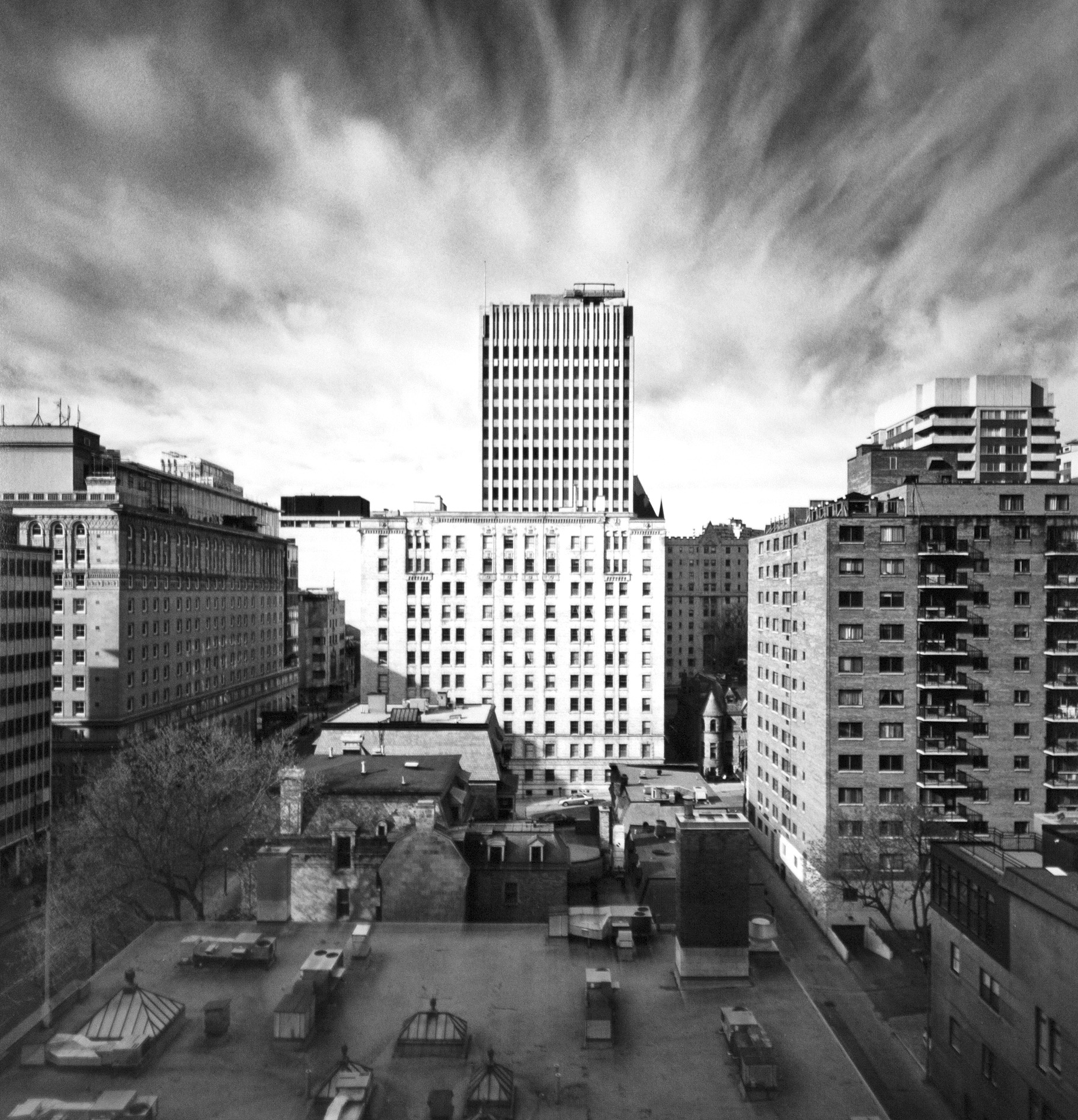
Montreal, Standard Life Building. (Mimmo Jodice)
a, Arts & Entertainment

World at your doorstep

“Montreal has it all.”

This was how I neatly summed up the city, when writing home about my first impressions of my student-exchange destination. And it would seem that the world-renowned Italian photographer Mimmo Jodice agrees, putting Montreal in league with an impressive list of the worlds’ metropolises featured in his photo exhibition Sublime Cities, at the McCord Museum.

I was lucky enough to attend the exhibition’s vernissage, and in my eagerness,  arrived too early. The woman who welcomed me looked slightly stressed as she checked her watch and twisted her bracelet, before deciding to pull back the no-entry rope at the exhibit’s entrance, telling me to take a quick tour of it before everyone else arrived. She then hurried off, leaving me to embark on a solitary tour of the world through Jodice’s lens.

A journey from the history-filled cities of ancient Europe to the (by comparison) modernized capitals of America and Asia, Sublime Cities places Montreal in a unique position at the meeting point of two different worlds: the antique Europe of Naples, Venice, Rome, and Paris, where Jodice’s aesthetic inspiration was born, and the flashy skylines of steel and glass in the skyscraper-dominated urban centres of New York, Tokyo, and Sao Paolo. Montreal, as a city which is still developing and asserting its rich European heritage in a strongly North American-influenced geographic setting, lies at the very heart of this clash of cultures.

The exhibition could have focused on this fairly obvious juxtaposition of the old and the new; however, Mimmo Jodice is not merely documenting the specific features of the different cities he visits, contrasting the antique and the modern. He also seeks something beyond the visual. His dozen black and white photos of Montreal portray some of the city’s most significant landmarks, yet the manner in which they are taken adds new dimensions of mystery to scenes normally taken for granted. Through Mimmo Jodice’s lens, Montreal emerges as an ethereal metropolis, taking on the very definition of sublime.

When I returned to the museum foyer, the floor was packed with what I presumed to be art and photography connoisseurs, all well-dressed and drifting about while elegantly sipping their wine. Three glasses of wine, numerous canapés, and 45 minutes of excellent people-watching later, the few hundred guests were finally allowed to view the exhibition. As people slowly started jostling their way into the exhibition rooms, elbowing each other in order to actually see the photographs, I snuck out and made my way home, feeling strongly inspired to fire off a few more e-mails about my study-abroad experiences, this time concluding them all with the words: “Montreal is sublime.”

Mimmo Jodice—Sublime Cities runs from Oct. 11 2012 to Mar. 3 2013 at the McCord Museum. General admission $14, student admission $8.

Rowe on the Chikyu waiting to recieve an 850 meter core from the Japanese fault. (James Kirkpatrick )
a, Science & Technology

Christie Rowe: earthquake hunter

Christie Rowe is an earthquake hunter. The Wares Faculty Scholar and assistant professor of earth and planetary science at McGill travels the world studying fossilized earthquakes— earthquakes that occur deep in the earth’s crust, but eventually leave a visible record in rock that has risen to the surface because of uplift and erosion. 

Last April, Rowe was part of a team of 28 researchers investigating the fault that caused the massive Tohoku earthquake and tsunami of March 2011. The project, called the Japan Trench Fast Drilling Project, brought together scientists from ten countries to drill cores of the fault.

Mud core from the Japanese trench
Earthquake glass from the Sierra Nevada range in California. (Christie Rowe)

The Tribune sat down with Rowe to discuss her work studying earthquakes from Africa to Japan, and how to ride out tremours like the 4.5 magnitude quake that shook Montreal last week.

McGill Tribune: What was the deal with the earthquake last week—what happened?

Christie Rowe: Honestly, the western Quebec seismic zone is not very well understood. The theories are that we have very old fault structures in the crust that date back to the Cretaceous, but when we have earthquakes like this, we can’t really be sure that those structures are responsible.

MT: So, should we be worried?

CR: No. Most earthquakes are not dangerous, but [historically] large earthquakes have happened, that are damaging.* An earthquake like the size four that we had is absolutely the fun size of earthquake. Everybody gets to really experience it, and know that it’s happening. It’s not dangerous—not scary.

One thing that’s working in our favour is that the crust in this region is very strong because it’s old. That means that when the seismic waves move through the crust, they move quickly and you get less ground shaking [as opposed to] somewhere on the west coast, where the crust is younger and more damaged because of the seismic history. [There], the shaking lasts longer.

*Rowe is refering to the 1732 Montreal earthquake that measured 5.8 on the Richter scale.

MT: Were you awake during the earthquake?

CR: Yeah. Well, I heard the earthquake before I felt it, and that’s because the P-waves—the primary waves, the fastest travelling waves—they don’t necessarily create the type of ground motions you would feel, but they’re very effective at vibrating windows.

You hear the rumbling and you hear the shaking and that’s the P-waves. Then, the next wave arrival that comes through—that’s the S-waves [secondary waves]—and that’s the one that’s going to give you a jolt probably, a vertical acceleration … followed by the surface waves that have a rolling and lateral shaking motion.

Ben Melosh, a graduate student working with Rowe, walks along the Pofadder Shear Zone in southern Namibia home to 1.1 billion-year-old afossilized earthquakes. (Louis Smit)

MT: Tell us about what you do.

CR: I am a fault geologist, so I’m interested in earthquake processes, but instead of studying earthquakes that happen now, I go to where earthquake source areas have been uplifted and the rocks have been eroded so they’re exposed. These are rocks that have been uplifted 10, 20, [or] 30 kilometres, and the real guts of the earthquake system are now on the surface. I collect those and put them in my office.

… As you walk along [a fault] surface you’ll see areas that have melted rock, areas that have broken rock—there’re lots of ways that energy is used in rock destruction.

MT: How do you date earthquakes?

CR: When the rock is melted during the earthquake. Only some earthquakes produce frictional melt, but when it does happen, the glass that forms traps potassium, [which] decays over time to argon. So if you have a potassium-trapping event, and the formation of earthquake glass, then you can measure the argon isotope ratios and it gives you a little clock.

MT: Tell us about the Japan Trench Fast Drilling Project.

CR: The Japanese government, about ten years ago, built the world’s largest science ship. It’s called Chikyu, which means ‘earth,’ and it’s 600 feet long. It was basically built for this event; it can drill in deeper water, and drill deeper in deeper water than any other ship.

We went out to the very limit of what Chikyu can do, the deepest part of the Japan Trench, and drilled a few holes 850 meters deep in the sea floor, and found a lot of mud—but really weird mud, mud unlike anything I’ve ever seen … it’s made of the purest clay … it’s shiny and black because there are titanium oxides and iron oxides that are deposited on the sea floor because of black smoker activity at mid-ocean ridges.

MT: What did the expedition discover about the Tohoku earthquake? 

CR: What this earthquake did was completely run away. It started at depth as a pretty big earthquake, and as it got shallower toward the trench it got bigger, and this is something that we have not really seen before—this is a really unusual event.

One thing that might have happened is that friction heated up the water in the [mud] and effectively pressurized the fault zone, opening it like an air hockey table. There was no frictional contact, and no strength in the fault—that helped it run away.

Think of [the runaway earthquake] like a propagating crack: as the crack opens, it puts more stress on the crack tip, which causes it to open more.

MT: Is there any way to know if earthquakes like this have occurred before?

CR: Japan has the longest historical [earthquake] records. For a thousand years—at least—they have had instruments that quantify things like ground shaking—intensity and magnitude, and other things like tide gauges that show long-term changes in sea level that are actually caused by the motion of Japan, not by the sea level. We have those records going back 1,200 [or] 1,500 years almost, which is fantastic. That is about the length of time between large earthquakes, so now we have two recorded events—it’s not enough to establish a trend.

Earthquake glass from the Sierra Nevada range in California. (Christie Rowe)
Mud core from the Japan Trench

MT: Does measuring a small event help us understand a large one?

CR: The short answer is [that] we don’t know enough about large events yet to even know if there’s some kind of predictive power in a small event … I think one of the big open questions in earthquake science right now is [this]: is a large earthquake just a bigger version of a smaller earthquake, or is it a fundamentally different thing?

MT: What should everybody know about earthquakes?

CR: Don’t be afraid—ride it out, enjoy it … I know a seismologist, who, when an earthquake occurs, will just drop to the floor and lie spread-eagle on the ground and try to determine which way the waves are coming from—I didn’t react fast enough to do that the other night.

This planet is very much alive. It’s such a cool moment when the human experience intersects with the geologic time scale, and we get to experience an earthquake.

Tee-shirts from the charity F— Cancer (vancitybuzz.com)
a, Science & Technology

Charitable auction site launched

Big companies have always been pressured by customers, governments, and charities to take an active role in social responsibility. Technology is now bridging this gap.

CampusAuction, an online, Vancouver-based company that launched this August, connects students, businesses, and charitable organizations for the benefit of all. Open to any user, the site targets students by holding online auctions for products like laptops, gift cards, furniture, and more. For instance, a Toshiba tablet on the site went for $72.00 with an hour and 51 minutes left in the auction.

Unlike most companies, CampusAuction donates a large amount of their profits (either 50 per cent of net profits or 10 per cent of gross revenue—whichever is greatest) directly to charity organizations that bidders select by vote. Users can also choose to donate the difference between their bid price and the item’s sticker price to charity.

“Our president … did a lot of work at the University of British Columbia, and he kept seeing … companies coming onto campus and attempting to get in touch with students,” Alex Hobbs, managing director of CampusAuction, said. “But it’s a very difficult thing … and you’re just at the mercy of luck. You have to find the right student … with enough time to come and sit with you, and find out about your product.”

The site allows companies that hope to build brand loyalty to overcome this barrier, and facilitates student support for charities, even if they don’t directly donate.

The site also highlights corporations’ philanthropic work. Toshiba continues to be CampusAuction’s biggest contributor, promoting one of their favourite charities by supplying the online company with laptops and electronics. Starbucks, EA Games, Cineplex, and Staples are amongst the other companies that have partnered with the site. Charitable partners include Apathy is Boring, F-Cancer, and U:end Poverty.

CampusAuction raised $78,000 in charity funding during their nine-week trial in 2011. The site hopes to build traffic to increase awareness of both the charities and companies. They have already received more than 1.7 million web page views, more traffic than an advertising booth on campus could expect, and exposure that would be expensive for charities to buy.

CampusAuction, if nothing else, demonstrates the role technology can play in giving consumers an easy way to donate to charity and meet the needs of what Hobbs calls “not only the next generation of purchasers, but also the next generation of philanthropists.”

Read the latest issue

Read the latest issue