
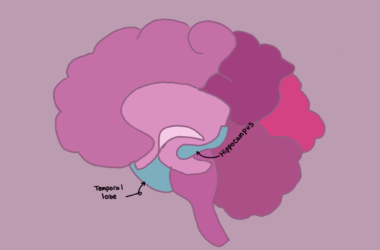
Alzheimer’s disease (AD) is a progressive neurodegenerative disease that affects memory, thinking, and eventually grows severe enough to interfere with daily life. AD is the most common cause of dementia, an umbrella term that encompasses many different symptoms of cognitive decline. While AD is still categorized as an incurable disease,[Read More…]
Tag: neuroscience

SciLearn: Learning how to learn
Starting a science degree at McGill can feel overwhelming. Between heavy course loads, fast-paced lectures, and the pressure to perform, many students struggle to find study strategies that work for them. SciLearn, a program run by McGill’s Office of Science Education (OSE), aims to change this. Grounded in neuroscience, SciLearn[Read More…]

Uncovering Parkinson’s disease
Parkinson’s disease (PD) results from the progressive loss of specific brain cells responsible for movement. As these neurons deteriorate, patients experience tremors and difficulty with balance and coordination. Although treatments can alleviate specific symptoms, nothing slows the progression of the disease. Projections estimate that by 2031, approximately 163,000 Canadians will[Read More…]

Sex-specific autonomic signatures of tonic pain
The subjective experience of pain varies drastically between people, but subjective measures of pain correlation provide an important understanding of its underlying mechanisms. Emerging literature on pain points to a relationship between muscle sympathetic nerve activity (MSNA)—a measure of how active the sympathetic nervous system is while signalling blood vessels[Read More…]

Fact or fiction: Is your brain wired for a specific learning style?
You have likely encountered the idea that everyone learns best through a specific ‘learning style.’ Social media, classroom discussions, and even online quizzes often promote this claim, categorizing students as auditory, visual, writing and reading, or kinesesthetic learners. This conception sounds convincing, and after many years in the educational system,[Read More…]
A new approach to chronic pain management in children and teens
Chronic pain is not unique to adults; it affects millions of children and teenagers worldwide. In fact, about one in four children will experience a period of chronic pain—pain which lasts three months or more—at least once in their lives. This often-invisible burden can interfere with school, friendships, physical activity,[Read More…]
SCAnning the genome to uncover the genetics of a neurological disorder
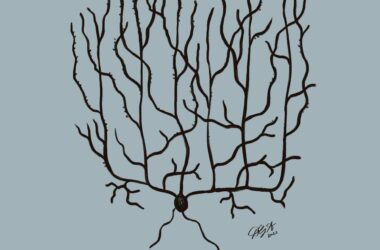
Recent advances in molecular biology techniques are bringing new insights into complex diseases. These insights extend to spinocerebellar ataxias (SCAs), a group of progressive neurodegenerative disorders characterized by the deterioration of the cerebellum—a brain structure critical for balance and movement coordination. In 2019, between 30 and 48 per cent of[Read More…]

Neurodevelopment through an infant’s eyes
Before kids obtain the ability to smoothly track a moving object with their eyes, there is a brief period in infancy when this skill is out of reach. Visual tracking, a crucial milestone in our cognitive development, begins to develop about one month after birth. In a recent publication in[Read More…]

Upping the ante: The latest research on communication in ant societies
On Feb. 29, McGill’s Department of Biology hosted a lecture on ant societies, led by Daniel Kronauer, an associate professor at Rockefeller University and a leading researcher in the field of ant evolution, genetics, and neuroscience. “In my lab […] we try to understand how ant societies have evolved, how[Read More…]
Human Cognition: Moving away from the brain
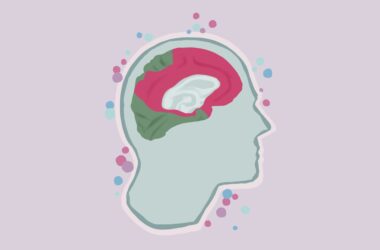
Long before Francis Schmitt coined the term “neuroscience” in 1962, scientists have been interested in demystifying the secrets of the human brain. Although neuroscience primarily focuses on the functions of the cortex—the outer layer of the brain— researchers have begun to highlight the importance of more primitive brain anatomy: Namely,[Read More…]