

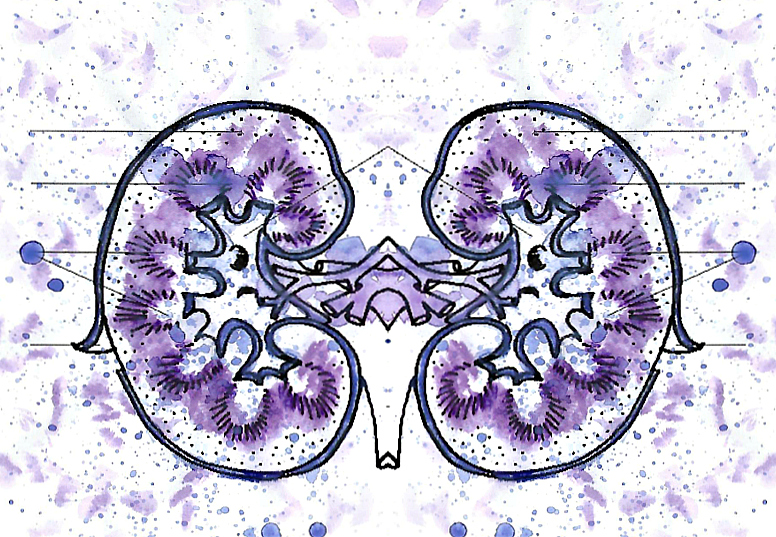
A registered organ donor can save up to eight lives and drastically improve the lives of over 75 people. This statistic—while impressive—does not tell the entire story. It does not reveal the number of hours that a kidney recipient would be able to spend at home with their family instead of on a hospital bed. It cannot measure the amount of happiness that a parent might feel in seeing their child, who has just received new lungs, run for the first time. It cannot illuminate the sense of hope and gratitude that one might experience in holding their partner’s hand after undergoing a successful heart transplant operation. Indeed, it is overwhelming to consider the full implications behind these numbers. I remember the day when I first heard this statistic; I was in grade ten. I had excitedly stepped into my favourite class in high school—science. Immediately, I noticed the serious expression on my teacher’s face, a countenance that was hard to spot on someone with the reputation of being the most laid back teacher in my school. I recall word for word what he said to the class before his lesson that day. “We learn a lot of important things in this class: Optics, cells, chemical reactions, the periodic table. These are all very important topics, yes,” he said. “But, I can guarantee that no other piece of information you receive from this class will have a greater impact on your life and society than what you are about to learn in the next few days.” What followed was a series of lessons about organ donation. It was the first time I was formally educated on the topic. Naturally, we covered some of the science behind it, but my teacher made great effort to emphasize the need for awareness about organ donations. He showed us documentaries, wrote down statistics, and engaged us in conversation about the lives of the people on the waiting list for organs in Canada. Since then, I’ve tried my best to stay up to date on news about organ donations. Some facts are reassuring; for example, organ transplantation rates have risen by 23 per cent over the last decade in Canada. Yet, this figure cannot change the reality that in 2014, there were 4,573 Canadians on the waiting list for an organ donation. Out of that group, 300 people died while waiting for an organ that year. The struggle to meet transplant demands in Canada can be accounted for by the insufficient rate of successful organ donations in the country. Quebec is relatively successful when it comes to facilitating organ donation. The province had the highest deceased organ donor conversion rate in Canada in 2014, with 21 per cent of eligible deceased patients donating their organs However, according to Transplant Quebec, barely one per cent of all patients that pass away in the hospital end up donating organs. In 2013, about 15 people out of a million Canadians ultimately became organ donors, which was significantly lower than countries such as the United States, where approximately 26 people out of a million became donors. Experts in medicine and the humanities has expended significant effort to identify the factors behind Canada’s low organ donation rate. According to Matthew Dankner, an MD-PhD student at McGill, and a member of the McGill Students for Organ Donation Awareness (MSODA) group, there are two primary contributing factors to the issue. “Our group has identified two main reasons [for the low number of organ donations in Canada],” he explained. “Most people aren’t [registered] organ donors, they don’t know about it, [or] they don’t sign the card [….] But what we’ve come to realize over our three years [running MSODA], is that what is arguably even a bigger issue is that health professionals are not adequately trained in [organ transplantation].” Dankner’s first point about the lack of awareness and preparedness regarding organ donation is an issue that everyday Canadians can do more to alleviate. For Dankner, the decision to become a donor came naturally. Therefore, he believes that awareness is the most effective way to increase organ donation rates.
Under your skin
More in Features:
-
 Blackface at McGill
September 8, 2026
Blackface at McGill
September 8, 2026
-
 How can I show you I’m doing better if there’s nothing good for me to do?
April 13, 2026
How can I show you I’m doing better if there’s nothing good for me to do?
April 13, 2026
-
 Your health, your problem
April 8, 2026
Your health, your problem
April 8, 2026