


The Quebec Public Interest Research Group (QPIRG) at McGill’s Alternative Library offers a Free Textbook Loan Program to students of all faculties and programs, with the goal of providing low-income students free semester-long access to textbooks.
Carl Bystram, community research and working groups coordinator at QPIRG, detailed the program’s purpose to The Tribune in a written response.
“The cost of textbooks can be overwhelming for many working class students, and the lifecycle of textbooks has been foreshortened,” Bystram wrote. “As a result, the majority of students are stuck with having to buy new textbooks, which also has a negative environmental impact. Our Textbook Loan Program insists on lending out textbooks for the entire semester partly to curb this problem.”
What is the program?
The Free Textbook Loan Program was established to address the inaccessibility of affordable physical textbooks in academia. McGill Libraries, while offering course reserves, only allows students to borrow books within a three-hour to two-week time range, with a limit of three checkouts. Students then have to photocopy materials, pay the printing fee, and manually scan each page if they want to access the content later in the semester.
Students may also struggle to access textbooks in the first place as there is a limit to how many people can access the Course Reserve at a given time.
McGill’s libraries cannot buy digital copies due to copyright laws, and academic publishing houses often overcharge buyers as they know students are required to make the purchase regardless of cost.
QPIRG proposed the initiative as an alternative through which students can donate textbooks to receive compensation, borrow textbooks without cost, and dispose of textbooks without waste, thereby increasing both sustainability and accessibility on campus.
How do I borrow books?
Borrowing books through the program is entirely free and operates on a first-come, first-served basis, with priority given to students in the Faculty of Arts. Students can search the catalogue and suggest purchases if the library does not carry their needed materials. After filling in a request form,
QPIRG will provide students a pick-up time and location to retrieve their books. Requests for syllabus materials are expedited, though students may also borrow textbooks for research purposes. The loaning period lasts an entire semester, ranging from the first day of classes to the last day of exams. QPIRG does not charge late fees and offers loan extensions to students who cannot return materials by the given deadline.
How do I donate books?
The library accepts both textbooks and novels pending approval of their contents. Students must first fill out a donation form which asks for the donor’s contacts and the details of the books they wish to give away. Only books that are listed on a currently running class’s syllabus can be exchanged for the five-dollars-per-item compensation, so after filling out the form, donors should email the relevant syllabi to the library directly. If the request is approved, QPIRG will contact the donor and arrange a meeting at the Arts Lounge sometime between 1:00 p.m. and 6:00 p.m.
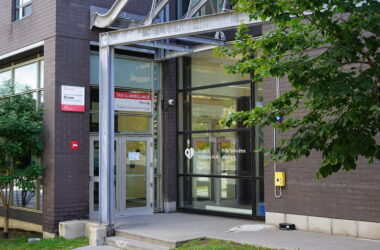
Textbooks that are not included in syllabi are still accepted and can be dropped off at the Alternative Library located at 3516 av. du Parc during opening hours.
Why should I use the program?
The Free Textbook Loan Program is a student-led initiative, relying on the work of volunteers to continue providing this essential service not only for the McGill community but also for prospective learners across Montreal who lack access to physical and digital textbooks. To support the program, students can volunteer, donate, and utilize the resources offered to sustain the circular economy model in which the program operates.
“More students should take advantage of this program because it is free and it is designed to help them save money,” Bystram wrote. “One of the main barriers to the expansion of this program—and to getting this program funded—has been that it can be hard to reach the average student and get them to actually use this resource.”