
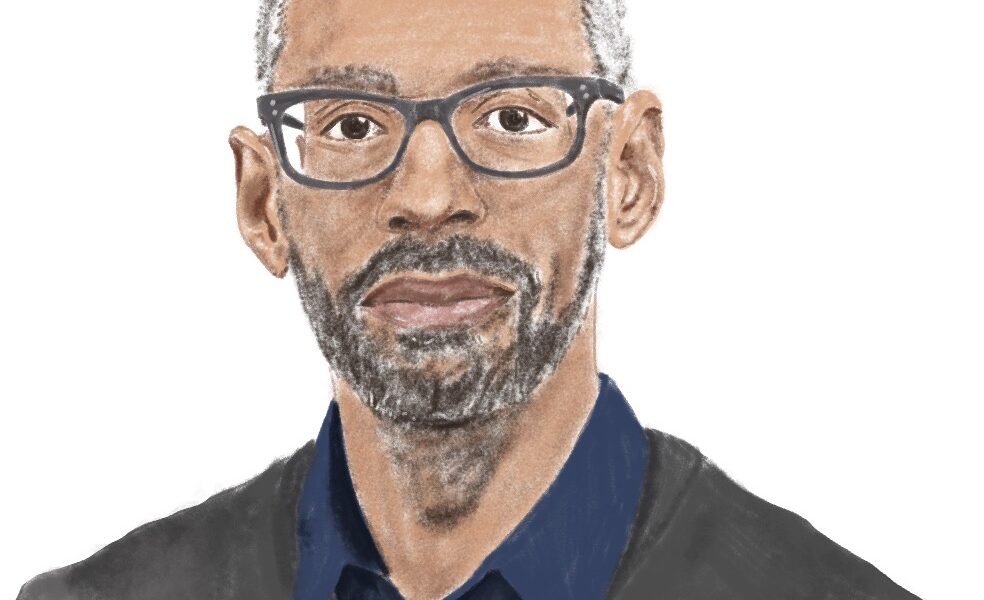




What do engineers actually do? They are often described as problem-solvers, scientists, and inventors, but even with this framing, what they do on a day-to-day basis is not always obvious. In an attempt to dispel this mystery, The Tribune sat down with Mechanical Engineering professor Siva Nadarajah, who explained his education, why he chose to pursue engineering, and most importantly, what he actually does.
“I did my education in the States, [I’m] originally from Malaysia, but I was in the States for about 10 years, and so I did a […] [joint] Bachelor’s in Aerospace Engineering and a Bachelor’s in Mathematics,” Nadarajah explained. “And then I did a Master’s and a PhD, all in Aerospace Engineering, but mainly in the Applied Math aspect of engineering.”
As with other disciplines, engineers are faced with the daunting decision of pursuing either academia or industry after they graduate; Nadarajah, however, undertook his education knowing he wanted to work in academia. Academia affords faculty the freedom to pursue their own projects, research aspects of their specialty that interest them, and contribute to ever-expanding literature and subject expertise. While working in industry can be immensely rewarding, Nadarajah was drawn to the nature of academic work—he wanted to work through fundamental problems.
“So after my PhD, I submitted my thesis when the office opened at nine o’clock in the morning. [These were] the times when you had to kind of print the whole book,” Nadarajah said. “And so the office opened, I handed them the thesis, and then I got on [an] 11:30 flight from San Francisco Airport and landed in Montreal. I literally handed [in] my thesis, then got onto the flight to come to McGill.”
He has been at McGill ever since.
In addition to his professorial duties, Nadarajah is the Director of the McGill Institute for Aerospace Engineering (MIAE) and runs his own lab, the McGill Computational Aerodynamics Group, where he completes his research.
MIAE brings students and researchers from various faculties together to study different aspects of aerospace, from engineering to Air and Space Law. This work culminates in the seminar series “Grand Challenges and the Future of Aerospace,” which MIAE hosts either once or twice per semester, depending on the year. Nadarajah explained how this seminar brings together students from across engineering disciplines to network with large aerospace companies to understand the problems they are currently facing. The speakers at these events are typically either Chief Technology Officers or Vice Presidents, offering students perspectives on the current problems industry professionals understand as impacting the field.
However, while his research and the work done at MIAE are interesting, Nadarajah expressed that he loves teaching just as much as he loves his research.
“I think that that, by far, that is definitely the most enjoyable thing is to is to be able to discuss and share the wonders of what we do […] [and] standing in a classroom and lecturing and sharing passion with others who are also interested. I think that’s a lot of fun.”
Nadarajah’s current research centres around fluid dynamics. He and his team are working on developing algorithms to optimize the efficiency of aircraft wings based on the movement of air around them. Once designed, this algorithm will be applicable to other aerodynamic structures.
“So on a daily basis, I would say, I think most of the time is spent on the applied math and understanding the sort of equations developing these algorithms, but also keeping the back of the mind on the architecture of the computer that you’re trying to solve these problems on,” Nadarajah said.
Ultimately, Nadarajah’s work combines his passion for exploring fundamental problems with his desire to enact change, all while giving the rest of us some insight into what it really means to be an engineer.