























Antoine – BSc, Honours Biology Dear Bio, If you’re into bio, you’d better learn to love DNA. Breathe it. Dream about it. Because everything comes back to DNA. What’s the reason behind ‘phenomenon X?’ A gene. ‘Phenomenon Y?’ Another gene. Are you curious about the composition of a microbial community?[Read More…]
Articles by Antoine Larocque
Has spring felt weird this year? This is why
Spring has felt unusually out of sync this year, with winter lingering well into late March and only brief, inconsistent stretches of warmth. Is this just a strange season or a symptom of climate change? In an interview with The Tribune, Robert Fajber, Assistant Professor in McGill’s Department of Atmospheric[Read More…]
Think you know plants? These six fun facts might surprise you
From the giant sequoias of the Sierra Nevada to the stinking corpse lilies of tropical forests in Southeast Asia, plants take astonishing forms. Despite all relying on the same basic ingredients to thrive—sunlight, water, air, and nutrients—the plant world is endlessly diverse. But what do plants mean to people at[Read More…]
At the water’s edge: Stories of climate adaptation
One wave at a time, coastal communities are becoming increasingly vulnerable to the impacts of climate change. Rising sea levels, intensifying storms, and shifting fisheries threaten ecosystems, infrastructure, and commerce. These challenges were at the heart of this year’s Annual Grand Challenge on Sustainability, organized by Desautel’s Faculty of Management’s[Read More…]
Meet your prof: Alex Ketchum
Food. Gender. Tech. Queer history. What do these topics have in common? They are all key research areas for Alex Ketchum, a historian and an Associate Professor in McGill’s Institute for Gender, Sexuality and Feminist Studies, whose research explores how these topics intersect. Ketchum has long been interested in feminist[Read More…]
Parenting Black and Latine children in an era of heightened racism
In a political context marked by U.S. President Donald Trump’s inflammatory rhetoric vilifying people of colour, the rise of white supremacy, and heightened anti-immigration enforcement by ICE, racism and discrimination have become increasingly prevalent and dangerous for many people of colour. Black and Latine youth, in particular, are victims of[Read More…]
Improving Black and Latine youths’ sense of belonging in schools
Adolescence is a formative time for young people to define both who they are and who they hope to become. For Black and Latine youth, that journey often unfolds against a backdrop of historical barriers and discrimination in society as well as in educational settings, ultimately shaping how they see[Read More…]
SciLearn: Learning how to learn
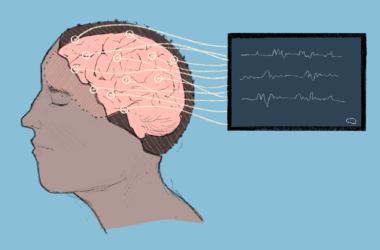
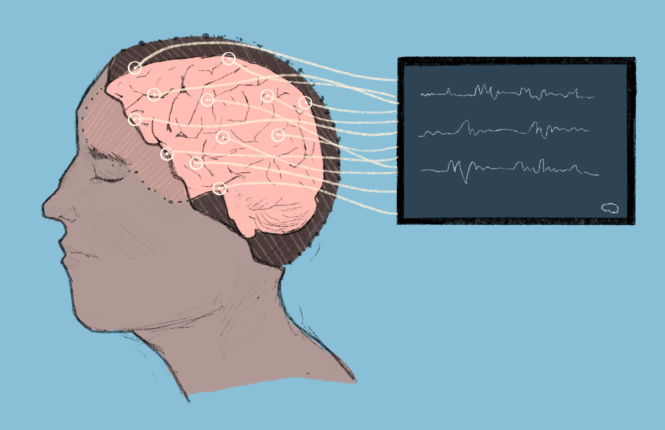
Starting a science degree at McGill can feel overwhelming. Between heavy course loads, fast-paced lectures, and the pressure to perform, many students struggle to find study strategies that work for them. SciLearn, a program run by McGill’s Office of Science Education (OSE), aims to change this. Grounded in neuroscience, SciLearn[Read More…]
A world in decline: Can ecological restoration reverse the damage?
Human activity has degraded or destroyed many ecosystems; an estimated 75 per cent of the Earth’s land surface has been significantly altered by human activity. This degradation contributes to climate change, reduces water quality, degrades soils, and disrupts pollination patterns. Restoration of degraded ecosystems may serve as a solution to[Read More…]
Freedom space: A new blueprint for river resilience
For decades, river management in Quebec has focused almost exclusively on water. However, rivers do not just carry water; they also transport sediments, and ignoring this may explain why current river management practices fall short. At last week’s GeoSpectives seminar—an annual seminar series hosted by McGill’s Department of Geography—Concordia University[Read More…]
The cost of silence: How occupational therapy institutions have failed Palestinians
In the face of the Palestinian genocide, Canadian occupational therapy institutions have largely remained silent. This institutional silence has deeply affected many practitioners, who must navigate both ethical responsibilities and moral obligations. To challenge this lack of a clear institutional stance, Hiba Zafran, assistant professor in McGill’s School of Physical[Read More…]
There are not plenty more fish in the river: A story on endangered Quebec fish
Copper redhorses, a kind of freshwater fish, are the only vertebrates found exclusively in Quebec. However, their population is declining. Recent evidence suggests that the ‘recruitment’—a measure similar to birth rate—has dropped in the past few years. Hugo Marchand, a postdoctoral researcher in Jessica Head’s ecotoxicology laboratory at McGill’s Department[Read More…]
Are deep-ocean microbes waiting for lunch?
The deep ocean—at least 200 metres below sea level—is home to an organic carbon pool comparable in size to the atmospheric carbon reservoir. This carbon pool has remained consistent in size for millennia. If just one per cent of the deep-ocean carbon were released in the atmosphere through microbial respiration,[Read More…]
All ages aboard: Making public transport more accessible for older adults
A city’s public transit system should serve the needs of all its inhabitants and leave no citizen behind. However, many older adults living in Canadian cities are reluctant to use these services, relying on their cars instead. Meredith Alousi-Jones, a PhD candidate in McGill’s School of Urban Planning, and her[Read More…]
Back to the roots: Investigating how soil influences root traits
Plant roots may be out of sight, but they are not out of mind for McGill researchers. While it is known that fine roots—those less than two mm in diametre—possess highly variable physiological and morphological properties, the reasons behind this variation remain unknown. Caroline Dallstream, a PhD student in McGill’s[Read More…]
Dementia and disparities: The sex differences in healthcare use
Healthcare inequities—avoidable differences in health across population subgroups—are ubiquitous in Canada. Even though women are more affected by dementia—a group of age-related diseases characterized by memory decline—than men, current dementia policies often do not consider sex-based differences. Dementia is a major public health issue, with the number of cases projected[Read More…]
Energy poverty in Canada demands political attention
With 20 per cent of Canadian households facing energy poverty—when individuals lack reliable and affordable access to energy services—it is surprising how little political and research attention this social issue receives. Motivated by this research gap, Mylène Riva, an associate professor in McGill’s Department of Geography, and her collaborators set[Read More…]
SCAnning the genome to uncover the genetics of a neurological disorder
Recent advances in molecular biology techniques are bringing new insights into complex diseases. These insights extend to spinocerebellar ataxias (SCAs), a group of progressive neurodegenerative disorders characterized by the deterioration of the cerebellum—a brain structure critical for balance and movement coordination. In 2019, between 30 and 48 per cent of[Read More…]
Eating sustainably, one DISH at a time
Given that around 26 per cent of mortality cases in Canada are attributable to dietary choices, and that the global food system is responsible for a third of global greenhouse gas emissions, researchers are exploring ways to balance nutritional value with sustainability. McGill scientists have recently developed a consumer-focused approach[Read More…]