




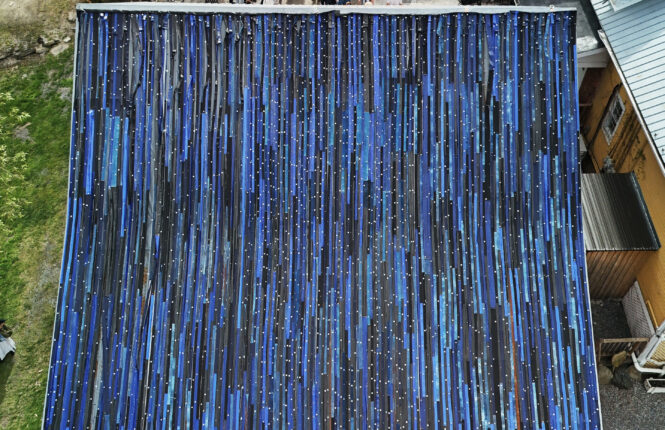










Nov. 17 marked the end of the “Food for Thought” lecture series’ 21st season. Hosted by the Faculty of Agriculture and Environmental Sciences, this year’s theme was centred on sustainable use and conservation of resources that are otherwise taken for granted. Michael Jemtrud, an associate professor at McGill’s School of[Read More…]
Articles by Ronny Litvack-Katzman
Senate and BoG discuss the impact of COVID-19 on the McGill community
McGill’s annual joint Senate and Board of Governors (BoG) meeting, which took place virtually on Nov. 12, addressed the university’s response to the COVID-19 pandemic and future challenges of remote learning and in-person instruction. Principal and Vice-Chancellor Suzanne Fortier began the meeting by acknowledging the toll that the pandemic and[Read More…]
An update on the GNL Quebec-Saguenay pipeline project
Environmental degradation, loss of endangered species, increases in greenhouse gas emissions—these are just some of the negative effects that the GNL Québec-Gazoduq Énergie Saguenay Project is predicted to have on Canada’s natural environment. The project, which proposes the construction of a 782-kilometre pipeline to carry natural gas from Northern Ontario[Read More…]
In ‘The Invisible Man,’ not seeing is believing
Leigh Whannel’s film The Invisible Man, based on H.G. Wells’ 1897 novel of the same name, tells the story of a young woman, played by Elizabeth Moss, who escapes an abusive relationship with a tech-savvy millionaire. After faking his own death, Adrian, Moss’s on-screen ex-boyfriend, devises a bodysuit using optical[Read More…]
Nerdy going on thirty: Soup & Science returns for its 30th edition
The first-ever Soup & Science event, held in 2006, was hardly an extravagant affair. Professors and students gathered together in the second-floor lobby of the Trottier building to talk science, pass along research developments, and, of course, share in the event’s eponymous light refreshments. Thirty editions and a venue change[Read More…]
Award-winning novel ‘The Dishwasher’ is a dark, nostalgic trip to a past Montreal
Stéphane Larue’s novel, The Dishwasher, begins with an all-too-familiar scene: Montreal in the dead of winter. However, the story that emerges from beyond the snowbanks is anything but ordinary. Larue’s novel is a masterful depiction of Montreal in all its dark, eclectic charm at the turn of the new millennium.[Read More…]
Soup & Science goes digital for “Sun & Science”
On May 22, the Faculty of Science offered students and community members their widely popular Soup and Science presentation series, where professors from various departments deliver short talks on their research. For the first time in its history, lectures were offered in the spring and online, prompting organizers to aptly[Read More…]
Student-led Face-Shield Initiative seeks support and materials
Personal protective equipment (PPE) is essential for health care workers on the front line in the fight against COVID-19. As the number of global cases continues to increase, hospitals are experiencing shortages of basic medical equipment, most notably protective face shields, plastic guards that protect doctors and nurses from infectious[Read More…]
Bacteriophages in the battle against malnourishment
‘You are what you eat’: It is an idiom many have heard in trendy food advertisements or in their grandparents’ kitchen. But, for scientists, this common phrase has been proven in the now extensive body of research known as gut microbiomics. Aiding in digestion, producing certain vitamins, and even assisting[Read More…]
Exploring McGill’s scientific archives
You’ve read books on science, but have you ever thought about the science behind a book? Lauren Williams, curator of the Blacker Wood Natural History collection at the McGill’s Rare Books and Special Collections, sat down with Staff Writer Ronny Litvack-Katzman to talk about just that. From Issac Newton’s personal[Read More…]
Conservation in the digital age
The power of a convincing story often goes overlooked in the scientific community. While most researchers opt to display their findings in flashy publications or high impact journals, others are taking a less traditional but conceivably more impactful approach at communicating their findings. Story maps are a simple yet elegant[Read More…]
Solving the mysteries of Earth’s Cryogenian ice age
Typically, one wouldn’t think to ask a geologist about the most pressing issues in evolutionary biology. Yet, for some biologists, rock formations and fossil records—which have only gained the attention of natural scientists in the last 50 years—provide a plentiful source of untapped information about the history of life on[Read More…]
The haphazard world of scientific research funding
Human systems, from medicine and technology to industrial agriculture, are built upon the tools and findings brought forward by scientific achievement. Yet, to practice science in the 21st century, researchers depend upon another cornerstone of modern civilization: Money. The amount of funds required to conduct scientific research is almost incomprehensible.[Read More…]
The underlying unity of life
Comparing animals of various sizes has historically been a challenge for biologists. From simple observation, an elephant could not be more different than a mouse. Yet, a universal underlying principle concurrently governs them both. Scaling laws—derived mathematical models that compare an organism’s key life traits to its body mass—present an[Read More…]
Testing Darwin’s ecological questions
Rarely does the title of a scientific study live up to the aspirations of its authors. The BIG Project, however, is an exception. BIG, which stands for the Biotic Interaction Gradients experiment, is the first endeavour of its kind to explain one of Charles Darwin’s oldest theories: Species interactions play[Read More…]
Jane Goodall returns to McGill
Jane Goodall began her second Beatty Lecture as she did her first: By saying hello to the audience in “chimpanzee.” Goodall, best known for her work in studying African chimpanzees and her later humanitarian and environmental activism, spoke on Sept. 26 at the 65th anniversary of McGill’s Beatty Lecture series. [Read More…]
Searching for a home away from home
Scientists believe that planets outside of the solar system capable of supporting life should look a lot like Earth. The theory posits that if the chemical components comprising Earth’s atmosphere can be found in that of distant planets, those worlds could harbour similar carbon-based life-forms. This summer, two McGill University[Read More…]
Climate change has become a multi-faceted dilemma
The most recent report from the International Panel on Climate Change (IPCC) (drafted on Aug. 7) emphasizes the susceptibility of global food security to changes in climate and land use. The report highlighted that adaptive strategies to reduce total carbon production and preserve natural ecosystems are humanity’s best chance at[Read More…]
Biological crisis forces species to adapt or go extinct
An extensive report released last month warns that unsustainable human activities, such as agricultural expansion and marine pollution, are accelerating species extinction rates and causing the fastest loss of biodiversity in human history. Authored by the Intergovernmental Science-Policy Platform on Biodiversity and Ecosystem Services (IPBES), the foremost body for issues[Read More…]
An obituary for ‘Oppy,’ humanity’s long-lost Space Prince
Opportunity, the Mars robotic rover that stunned humanity by remaining operational for over ten years past it’s original mission date, powered off for the last time on Feb. 13, 2019; a final goodbye at the end of a 225-million kilometer journey. Affectionately nicknamed ‘Oppy,’ the National Aeronautics and Space Administration’s[Read More…]
Montreal’s winters unlikely to remain white
Some McGill students count themselves lucky for bearing the harsh Montreal winters. Despite what may feel like another long and harsh winter coming to an end, a recent CBC data analysis shows that winters in Canada are only getting milder. Over the last two decades, they have consistently been characterized by[Read More…]
Measles resurgence spells trouble for Canadians
In the first two months of 2019, Canada has seen an increase in the number of active measles cases compared to the same period last year. There are currently ten confirmed cases in British Columbia, enough for the Provincial Health Services Authority to declare an outbreak, and one in Quebec[Read More…]
Removing the barriers for genetic data sharing
The emerging field of computational genomics, which uses statistical analysis to unpack the plethora of information harboured inside the human genome, is complicated. The sheer amount of data that comprises the human genome is massive. Meanwhile, the pressure is high: With more people turning to their genes for answers to[Read More…]
Ebrahim Noroozi recognized for sustainable lab initiatives
The only thing that makes Ebrahim Noroozi salivate more than food is its sustainable practices. As lab supervisor, he clearly takes pride in making his experiments more environmentally friendly. He carries with him a seemingly endless list of the many innovations he has implemented in the Department of Food Science[Read More…]
Eyes on the skies: Upcoming innovations in 2019
2018 proved to be breakthrough year for the scientific community. From finding the first traces of liquid water on Mars to unearthing the largest land animal to have ever lived, humanity continued on its quest to better understand the universe around us. Now, as scientists turn their attention to 2019,[Read More…]
Protecting the powerless
Whales, dolphins, and other members of the cetacean family are now one fin-stroke closer to freedom thanks to the new Ending the Captivity of Whales and Dolphins Act, Bill S-203. The act, which passed in the Senate on Oct 23 and is currently undergoing its second reading in the House[Read More…]
Cannabis as a key for chronic illness
Since the legalization of cannabinoids—chemical compounds found in cannabis—for medical purposes in 2001, a growing number of Canadian physicians have turned to medicinal marijuana for patients suffering from cancer and other chronic disorders such as multiple sclerosis and arthritis. Cannabinoid receptors, which bind cannabinoids, influence cognitive and physiological processes and[Read More…]
United Nations stresses climate conundrum
It was a mild morning in London, England when the United Nations Intergovernmental Panel on Climate Change (IPCC) released its groundbreaking report in May 1990. By proclaiming that the Earth’s gradual warming is unquestionably man-made, it became the first international body to state so. The report was concise: “Unless emissions[Read More…]
Which came first: The chicken or the dinosaur?
At first glance, a chicken and a dinosaur may seem as distantly related as any two species could be. For Hans Larsson, McGill associate professor of paleontology and biology and director of the Redpath Museum, the correlation between the two could not be clearer. In his presentation on Sept. 14,[Read More…]
Eager volunteers take to the web in search of spiders
A recent McGill study following the distribution patterns of the northern black widow and black purse-web spider populations hints at what the future of biodiversity research may look like in the digital age. Using previously collected observations from public online databases, McGill researchers have joined the increasing number of academics[Read More…]
A story of community: Trees, fungi, and microbes work hand-in-hand
Researchers at McGill, in partnership with the Université de Montréal’s (UdeM) Plant Biology Research Institute, have discovered a hidden ecosystem that works to clean polluted land. The project consisted of a collaboration between Nicholas Brereton, a research fellow at UdeM’s Plant Biology Research Institute and senior author of the study,[Read More…]
The universe at odds: Quantum mechanics versus general relativity
For over a century, the field of theoretical physics has been in a perpetual state of quandary. In recent weeks, following noted physicist Stephen Hawking’s death, popular media has turned the spotlight onto the unsolved mysteries of physics. With physicists searching for the next steps to advance the field, the[Read More…]
Five science documentaries to binge this Reading Week
Reading week has finally arrived. For many eager students, this well-deserved break only moves their academic pursuits from the lecture halls and libraries to the comfort of their own homes. While the semesterly grind may leave students feeling bogged-down and stressed-out, kicking back and relaxing with a good documentary, in[Read More…]
Inspiring the aspiring: AsapSCIENCE at SUS Academia Week
The dynamic and informative SUS Academia Week, which ran this year from Feb. 5 to Feb. 9, came to an enlightening conclusion on Friday night. Mitchell Moffit and Gregory Brown, self-proclaimed ‘science communicators’ and creators of the popular science YouTube channel AsapSCIENCE, presented this year’s keynote lecture, “Into the Future[Read More…]
Can vitamin C really cure the common cold?
It’s that time of the year again. Flu season is upon us, and everyone seems to be getting sick. Most people resort to their personal catalogue of remedies and preventive strategies to avoid the winter plague—among them, reaching for a bottle of ascorbic acid, or vitamin C. The theory that[Read More…]
Canada’s fentanyl crisis by the numbers
The scientific community describes the fentanyl crisis in these general words: Catastrophic and growing. Over the past decade, Canadian researchers have observed the deadly effects of the growing trend of cutting fentanyl into powdered party drugs. With the help of Edith Zorychta, associate professor in the Department of Pharmacology and[Read More…]
The indestructible deconstructed
A group of McGill scientists were recognized for their cutting-edge research, an example of innovation at its finest. “Innovations are the solutions that no one else would think of,” Don Sheppard, professor of microbiology and immunology and researcher, told The McGill Tribune. Québec Science Magazine recently recognized Sheppard and his team[Read More…]
The mitochondria: More than just the “powerhouse of the cell”
The cells in our bodies perform functions that have yet to be fully understood. These structures which have existed for two billion years continue to baffle the scientific community. The mitochondria, an organelle with many unique features and functions, has been a topic of widespread research ever since its discovery[Read More…]
Dealing with tragedy thousands of kilometres away
Tupperware containers in hand, two Mexican McGill students implored hundreds of strangers in Leacock 132 to spare some change to support relief efforts in the wake of the Sept. 19 earthquake in Mexico City. Living away from home is not easy, let alone watching tragedy strike from afar. Challenging routine[Read More…]
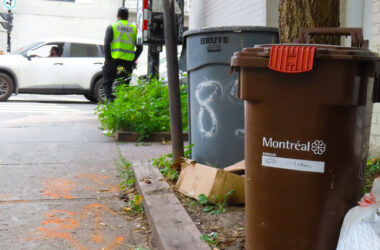
From the trash and back again: The importance of recycling on campus
From the shelf, the average recyclable is typically used, emptied, and hopefully placed in a recycling container. It then awaits collection and sorting, until it can be sent to the corresponding manufacturer to be reused in the most appropriate manner. The problem in this system lies at the very start:[Read More…]
Curing cancer with 1’s and 0’s
Rapid chemical analysis that takes days to complete in a lab can now be done with the click of a button. A self-proclaimed “Beast in Science,” associate professor in the McGill Department of Chemistry, Nicolas Moitessier, worked with his team of computer engineers and biochemists at the Moitessier Research Group[Read More…]