



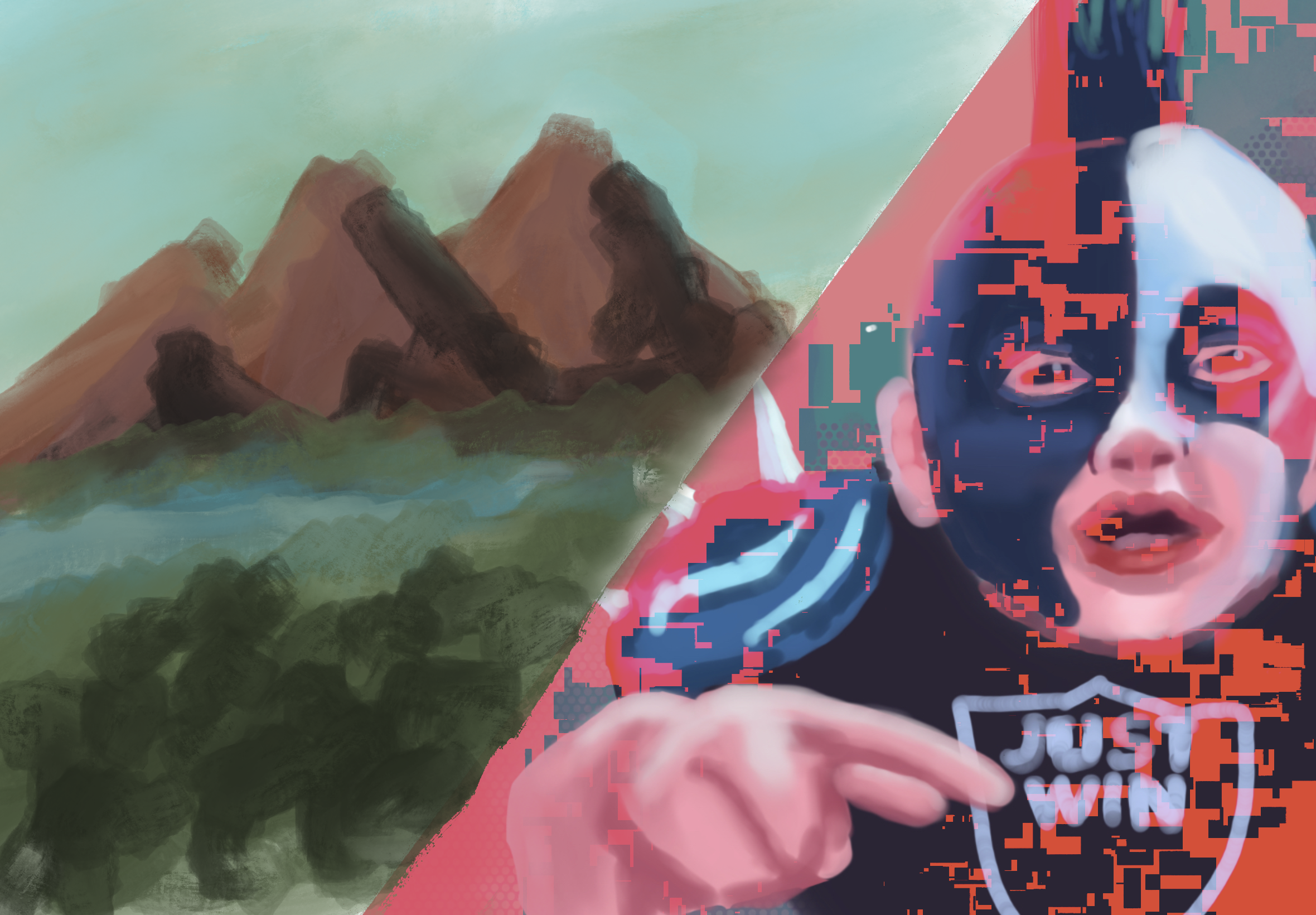

On March 20, the South Korean boy band Bangtan Sonyeodan (BTS) released its first group album in nearly four years: ARIRANG. Long-awaited and highly anticipated, the album sparked an influx of online debate after defying some listeners’ expectations, quickly becoming one of the group’s most divisive projects. As someone who has followed BTS’s releases for the past 10 years, the discourse and noise are inevitable, but experiencing this album is so enjoyable when individual expectations are not projected onto artists’ work. Despite pushback, BTS’s musical ventures and choices for this album—from genre diversity, to English lyrics and an unexpected lead single—feel natural to their artistic journey. For 13 years, the group has pushed boundaries, delivering new songs that reveal unexpected sides to the artists.
The album takes a more experimental turn than their previous releases, featuring tracks written and produced by Mike WiLL Made-It, JPEGMAFIA, Kevin Parker from Tame Impala, Teezo Touchdown, El Guincho, Diplo, and Flume, among others. Some listeners were surprised by the number of collaborations with Western, namely American, writers and producers. But this is nothing new for BTS, whose music, like the K-pop genre in general, draws heavily from Black American music and culture.
ARIRANG takes its name from the centuries-old traditional Korean folk song and unofficial national anthem “Arirang.” It has around 3,600 variations and about 60 versions—reflecting the contributions made by generations of Koreans who continue to create and add new lyrics, adding to the song’s cultural and musical diversity. The significance of this song deserves its own deep dive, as the history of “Arirang”’s first official recording inspired the artistic direction of the group’s new album.
In an interview with Jimmy Fallon, Kim Namjoon, the leader of BTS, explained the song’s importance and meaning.
“It’s the song that represents Koreans the most [….] It includes lots of emotions in it, it could be joy, it could be sorrow, longing, sadness, […] resistance,” he said.
These emotions are depicted throughout the tracks in BTS’s ARIRANG alongside love, separation, and nostalgia, as the group reaffirms and pays homage to its Korean identity.
The album is structured into two parts, with “No. 29” marking the transition from the high-energy first half of the album to the softer, more mellow second half of the album. The track contains the sound of South Korea’s 29th National Treasure, “Divine Bell of King Seongdeok,” adding a multitude of layers of meaning to the album.
ARIRANG opens strong with “Body to Body,” which fuses pop, hip-hop, and national Korean music. It lets listeners experience traditional music without feeling overly patriotic—a worry that some members of BTS had when choosing whether to include “Arirang” in this track.
The next four songs pulse with vibrant and upbeat energy that echoes the group’s musical roots in hip-hop. “Aliens” features a hard-hitting beat with lyrics that project BTS’s pride in their culture and identity, whilst sharing their experiences of othering and alienation. Its lyrics make culturally specific references and draw on BTS’s lived experiences, resonating with those who understand what it’s like to be labelled an “alien” in a foreign country.
Moving into the second part of the album, “SWIM”’s mellower style and completely English lyrics made it an unexpected choice for a lead single. Its appeal lies in its approachable melody, with lyrics open to different interpretations and a message about swimming forward through hardship. “Merry Go Round” is one of my favourites, both musically and lyrically, because of its beautiful, melancholic melody and introspective lyrics about the pain of being stuck in a loop or cycle. “Like Animals” is another standout track in an alternative rock style new to BTS, with piercing vocals and instruments. I also have to shout-out “Please”—an R&B track with addictive vocals.
The album finishes strong with “Into The Sun,” which evokes the perfect feelings for a finale. It uses a vocoder for the first half of the song, adding an interesting vocal texture that fades out at the end when their voices, free from the distortion, sing “I’ll follow you into the sun.”
For all its context, wit, and creative nuance that cannot be fully encapsulated in this review, this album is for real music lovers and those willing to search for the various meanings and references in its samples, lyrics, wordplay, and musical arrangement. This album is bound to be misunderstood when listeners lack a full picture of the creative vision, especially in the meaning-ridden lyrics. I encourage readers to experience this album for themselves to form their own opinion.