
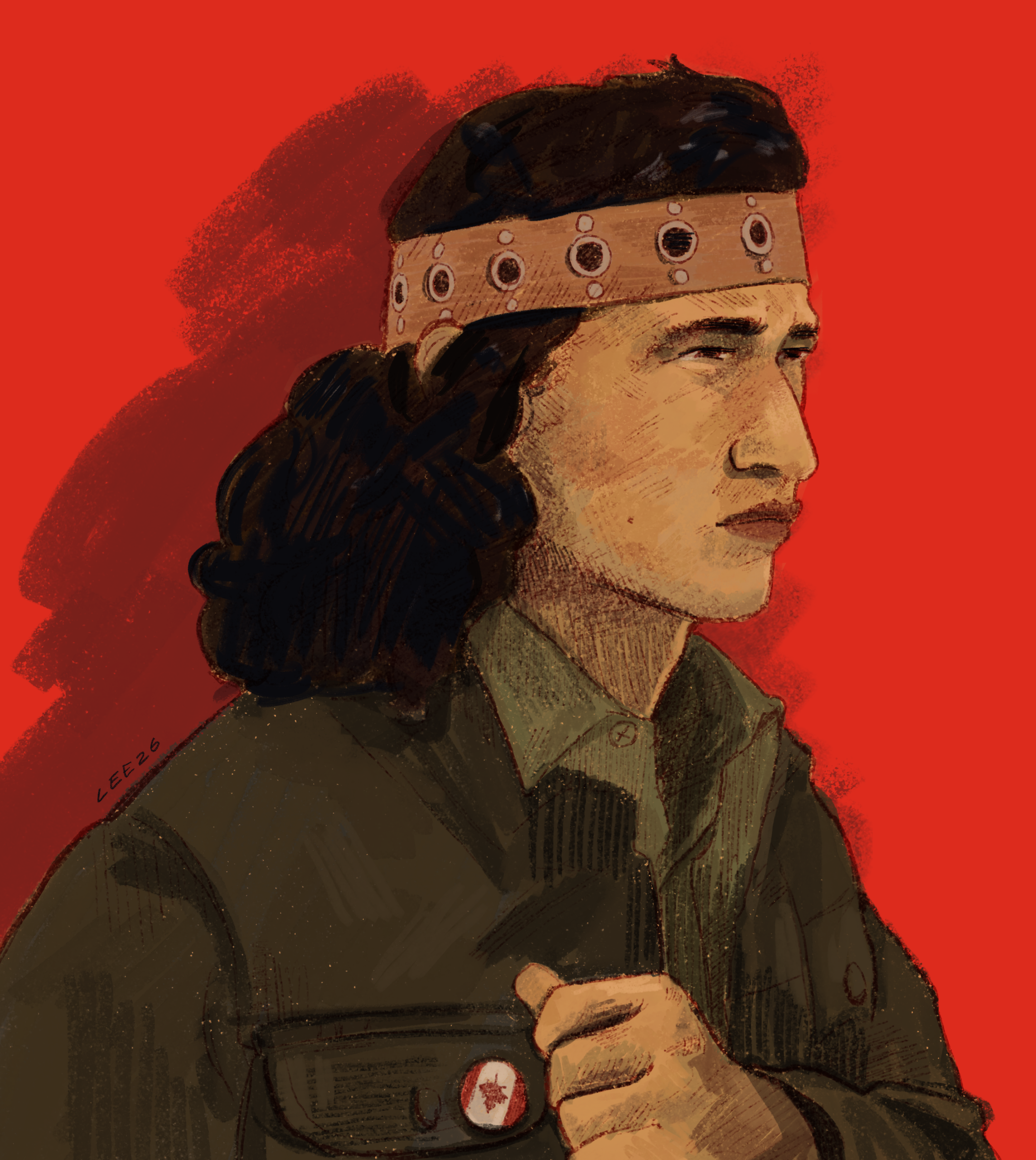



While researching for her book, The Knowing, Anishinaabe journalist, author, and filmmaker Tanya Talaga was asked by a friend what she knew about the 1974 occupation of Anicinabe Park. That prompted her to explore the story further. What followed was a captivating collaboration with Metis writer, director, and filmmaker Shane Belcourt, recounting the story of the young Louis Cameron.
On March 16, Cinema Politica Concordia hosted the Montreal premiere of Ni-Naadamaadiz: Red Power Rising as part of their Winter 2026 program, Carpe Machina. In the summer of 1974, led by Cameron of the Ojibway Warriors Society, a peaceful occupation of Anicinabe Park began, following a four-day youth conference. The documentary weaves interviews, archival footage, and a voice-over of Cameron’s son, Tyler, reading Cameron’s unpublished manuscript.
The film begins by setting the scene of life for a young Anishinaabe person living on the Grassy Narrows First Nation Reserve, or in nearby Kenora, Ontario. Racism and discrimination plague the lives of the local Anishinaabe youth, both during the film’s time period and today. For example, interviewees share experiences of being refused service in restaurants and denied public-facing jobs as Indigenous people. The film also explores how the Kenora region housed one of the largest numbers of residential schools in Ontario, where Cameron and other Anicinabe Park Warriors spent their youth facing sexual, physical, and emotional abuse.
The narrative then follows Cameron’s son, Tyler, as he explains the extent of the mercury poisoning in his community and the process of getting his daughter tested. This is especially significant given that Indigenous communities disproportionately suffer from the effects of environmental racism, in which practices and policies result in greater pollution or health risks for Indigenous or racialized communities. Belcourt also illuminates the high levels of violence in the town, including the “Kenora Indian Beaters”—a violent and racist gang of non-Indigenous young men that target Anishinaabeg.
Despite the widespread culture of hate in town, the police focused their attention on Cameron.
“My dad, Louis Cameron, was one of the most wanted men in Canada. An outlaw. They called him a terrorist. I call him a warrior,” says Tyler in the film.
The photos and videos of the occupation dispel this depiction by revealing a very young group, with ages ranging from 20 to as young as 17. The occupation, which lasted 40 days, involved Anishinaabe mothers, youth, and leaders camping out in the park through cold weather, threats from the Kenora locals, and constant police surveillance. Their demands included better housing, more employment opportunities, an overhaul of the Department of Indian Affairs, and—most significantly—the return of Anicinabe Park lands, which they claimed were illegally purchased by the federal government and sold to the City of Kenora in 1959.
During the post-screening Q&A, Talaga shared her intent behind the film.
“I wanted to show the youth our heroes. The heart of this film is human connection [.…] The youth in this film were standing up to resist what was happening, what is still happening,” Talaga said.
Cameron emerged as a political visionary who was both charismatic and well-spoken despite his youth. He left behind an unpublished manuscript, stored in a pink storage bin in Tyler’s home. The manuscript, narrated in both Anishinaabemowin and English, reveals the breadth of Cameron’s vision for his people. The film positions Tyler as the emotional thread of this movie, inviting audiences to share in his experience of revisiting his father’s legacy of activism from Anicinabe Park to Parliament Hill. Digging into the storage bin, the film gently unravels this forgotten juncture in Canadian history. Stunningly, Tyler looks and sounds exactly like his dad, reminding audiences that Indigenous resistance echoes through generations.