




Now and then, I fall into deep conversation with my friends about Disney princesses: Who’s our favourite or least favourite? Who should we dress up as for Halloween? These characters were integral to my childhood. Though I grew up rewatching Princess Jasmine’s adventures long after Aladdin, going to the theatre when Frozen 2 was released, and having my mom collect the Rapunzel Animator’s Collection dolls, Cinderella remains closest to my heart.
As a child, what initially drew me to her was the gentleness of her story. Assuredly, I wouldn’t want an evil stepmother and stepsisters, but Lady Tremaine’s cruelty was far more bearable to watch compared to Ursula stealing Ariel’s voice, or Dr. Facilier’s scary “Friends on the Other Side. Watching Cinderella felt comforting and joyful rather than frightening.
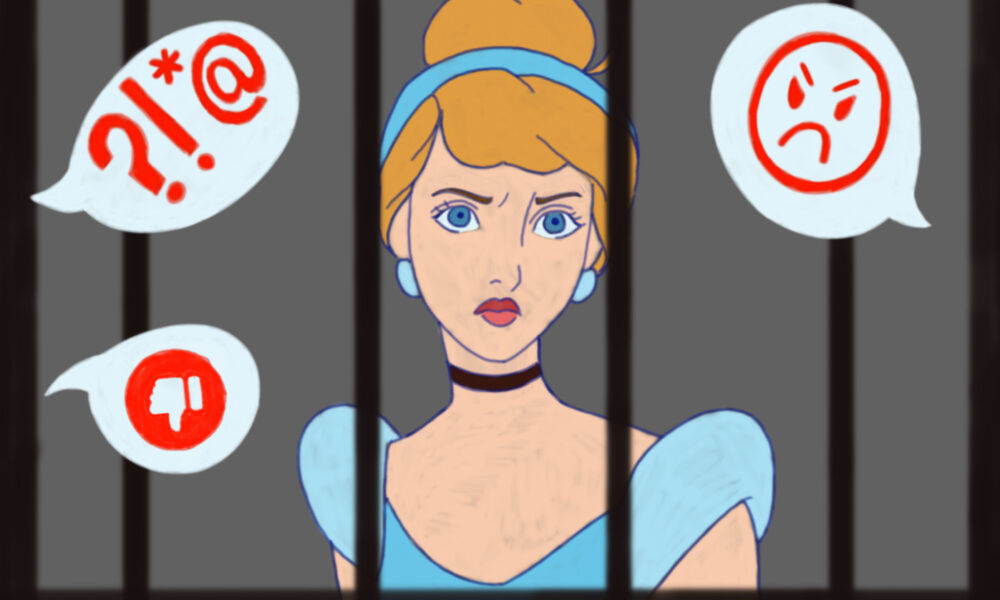
As an adult, whenever I admit that Cinderella is my favourite, I am met with people’s side eyes: ‘Other princesses teach better lessons,’ ‘She doesn’t have a personality,’ ‘There are just more interesting stories to watch.’ On Medium, Lipika Sahu criticizes Cinderella’s obedience, depicting her as spineless. A New York Times article once described Cinderella as a “symbol of the patriarchal oppression of all women.” While I don’t discredit these takes, it is unfair to dismiss the merit of Cinderella’s story entirely.
When I rewatched the 1950 film to recall her tale, I was reminded of its beautiful animation: hand-drawn and vivid Technicolour. The animals’ minute details, delicate movements, and elegant backgrounds comprise this dedicated piece of art. Visually, Cinderella is iconic.
Before becoming a princess, Cinderella endures dreadful hardships. She loses both her parents at a young age, leaving her at the mercy of an uncaring stepmother. Every day, Cinderella rises early to feed her stepmother’s cat, Lucifer, cook everyone’s breakfast, and fulfill her assigned chores. Everyone, even Lucifer, tries to make her life harder. The most upsetting scene is when she excitedly goes downstairs wearing her late mother’s dress, ready to go to the royal ball, only for her stepsisters to shred it apart.
The claim that Cinderella is frustratingly obedient or unable to defend herself blatantly ignores the abuse she sustained at the hands of her stepfamily. Her abusers were her only family; she had nowhere else to go. Forced labour and insults were her entire environment, and she adapted to it. It’s easy for one in a different position to claim that she could’ve always left, but the truth is more difficult. Exiting an abusive situation is one of the hardest things to do, and this argument virtually victim-blames Cinderella.
Others argue that her story is patriarchally boring. Prince saves maiden, the end. While Cinderella does end up with Prince Charming, it’s worth remembering that she didn’t go to the ball to meet a man. She simply wanted to have fun and take a much-deserved break from her never-ending duties. She didn’t even realize she was dancing with the prince—marriage to him was a bonus to her freedom.
All things considered, there’s nothing directly negative to learn from Cinderella’s character. She’s kind, a hard worker, and never gave up on her dreams. People place higher expectations on Cinderella because she is seen as a paradigm of the ideal fictional woman. The lesson isn’t to be blindly obedient; it’s to be resilient. Don’t give up on your dreams; kindness and persistence will be rewarded. Cinderella teaches us a simple but significant lesson.
I find beauty in her tale; a simple story is sometimes just as powerful as a complex one. Cinderella and the other princesses’ legacies remain after 50 years. While we shouldn’t base our entire lives on princesses, there’s no harm in enjoying a film about finding happiness in a difficult life.