



Trigger warning: This piece contains mentions of sexual violence.
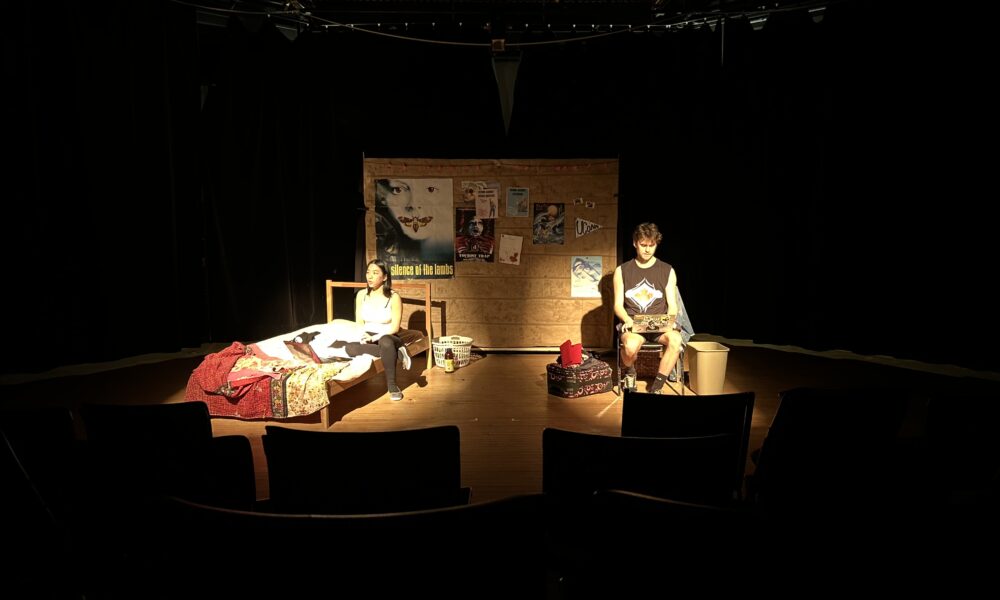
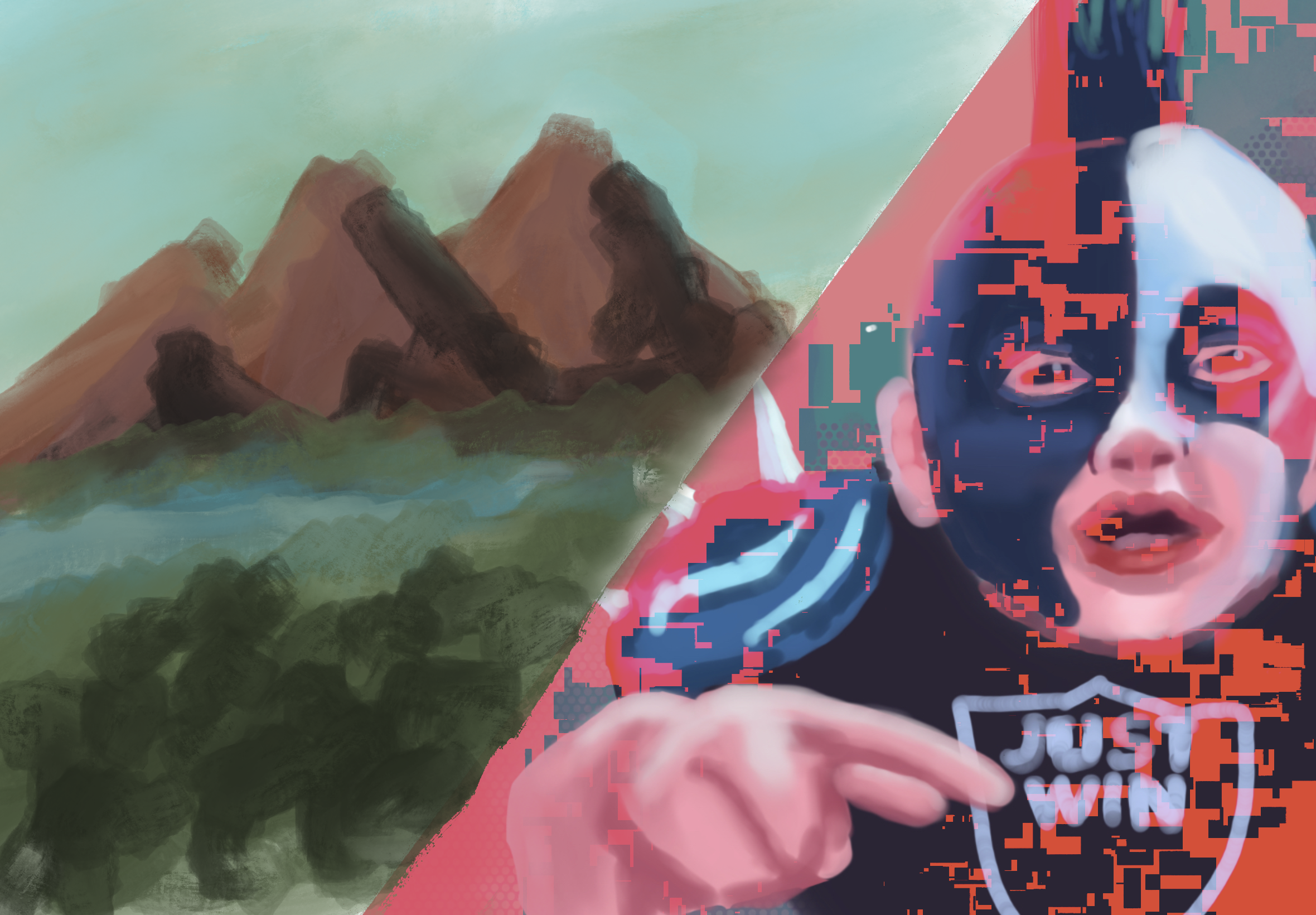
Tuesday Night Café Theatre (TNC)’s production of Hookman explores grief through the metaphor of a masked killer representing guilt. The show ran from March 17 to 20, under the direction of Andrea Alcaraz (U1 Education). The play, written in 2012 by Lauren Yee, follows first-year college student Lexi (Alyssa Yeung)’s attempt at navigating life after witnessing her childhood friend Jess (Gemma Martin-Fung)’s death in a car crash. Throughout the play, this scene reoccurs as Lexi begins to recollect clarity of that night, most notably remembering the masked killer who was hunting her down.
Upon first introduction, one would likely assume Hookman, who wears a ghoulish mask and boasts an unsettling aura, to be the killer. Perhaps we even expect his dramatic unmasking—but this is not the case. Hookman is instead revealed to be a physical manifestation of the suffocating grief and regret of losing a loved one.
A pivotal moment in the play is a conversation between Lexi and Jess, where Lexi opens up about a time when she was sexually assaulted. However, rather than being supportive, Jess questions the validity of her friend’s experience. This scene thus explores the impacts of victim-blaming and complicates Lexi and Jess’s friendship.
A very important aspect of this production was the lighting design. Much of the play takes place in the dark, with a small spotlight on Lexi. While this was likely done to master the creepy feeling of a thriller, it created an emotional connection between the audience and Lexi. The distinct spotlight expresses her loneliness and vulnerability, and places the audience in the surrounding darkness. Through her powerful facial expressions and line deliveries, Yeung also excellently expressed frustration, confusion, and sadness, luring the audience in.
The people surrounding Lexi often claimed that her hardships were inevitable. This sentiment and belief were echoed throughout the play as the cast did not make eye contact with Lexi, and the hugs given to her out of compassion for her suffering did not feel genuine. However, by the end of the play, Lexi finds the strength to fight back. She expresses that violence against women is not inevitable and that these situations should not be approached passively. Her newfound strength is a turning point in the play, pushing the other characters to later empathize with her—though victims should not have to fight for compassion in the first place.
Despite the play’s heavy theme, there are comedic moments in the dialogue. These express to the audience that even when going through traumatic times, there is still a way to find moments of laughter with loved ones.
The play’s final scene is the third and final flashback of Jess’s death. In this flashback, Lexi finally confronts Hookman. Instead of a dramatic fight, the play ends with them sitting together in a car, demonstrating Lexi’s acceptance of feelings she once feared.
The TNC did a fantastic job tackling a play that is both dark and comedic at the same time, with actors seamlessly navigating between comedy and sorrow. Lexi’s endearing awkwardness does not go unnoticed, as it balances the play’s heavy theme. Overall, this production was an authentic representation of the complexities of grief. Not only did this play create an opportunity for important discussions about grief and assault, but it also demonstrated how important it is to counter passive reactions to violence. True change can only occur when we overcome the fear of “taboo” topics and instead face them head-on.