
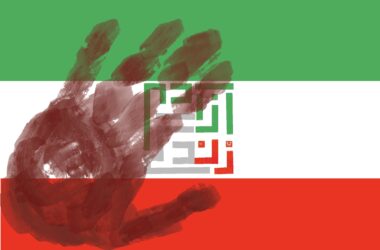
For an institution that prides itself on global engagement, McGill’s response to the crisis in Iran isn’t just inadequate—it’s indefensible. On Jan. 13, Dean of Students Tony Mittermaier sent an email to all students who hold an Iranian passport on McGill’s records. The message acknowledged the “civil unrest and disruptions[Read More…]
Author: Admin
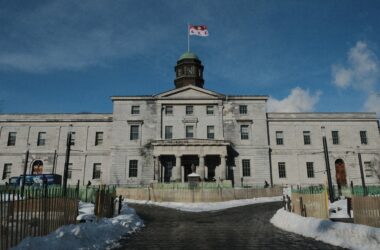
COFAM continues negotiations with McGill over CAS precarious faculty employment
In July 2025, the Confederation of Faculty Associations of McGill (COFAM), composed of five faculty unions, began bargaining with McGill over the working conditions of Contract Academic Staff (CAS). COFAM consists of the Association of McGill Academic Staff of the School of Continuing Studies (AMASCS/AMPEEP), the Association of McGill Professors[Read More…]

Know Your Athlete: Lily Rose Chatila
Growing up in Quebec City, Martlets Basketball Guard Lily Rose Chatila, U3 Science, found basketball by chance. At just 10 years old, she was introduced to the sport unexpectedly while watching her older sister’s High School Musical school play. What began as a coincidence has since grown into a defining[Read More…]
Take the Tribune’s Science and Technology quiz
In 1989, Alan Emtage, a graduate and system administrator at McGill, created the first Internet search engine, which present-day search engines still rely on. What did he call his search engine? a) WebCrawlerb) Yahooc) Archied) ChatGPT As of Fall 2025, which faculty had the largest number of students enrolled? a)[Read More…]

‘Partition’ views Palestine from the interwar period to modern-day experiences
McGill’s Department of Anthropology and the Institute for the Study of International Development hosted a screening and Q&A session for Diana Allan’s film Partition on Wednesday, Jan. 14, at McGill’s Critical Media Lab (CML). Allan, a filmmaker and professor of Anthropology at McGill, considers Partition a collaborative work; other members[Read More…]
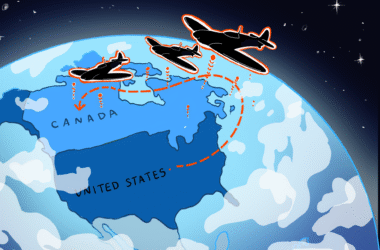
The Tribune Explains: The No More Loopholes Act
On Sept. 19, Jenny Kwan, current New Democratic Party Member of Parliament (MP) for the Vancouver East Riding, introduced Bill C-233. While Canada has ceased direct military exports to Israel, Canadian arms can reach Israel and other conflict zones unregulated through a U.S. ‘loophole.’ The Tribune explains Kwan’s proposal, which[Read More…]
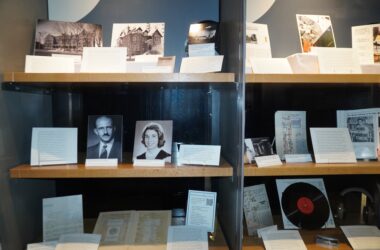
Sixty years of song and community celebrated at the Marvin Duchow Music Library
Since its inception 60 years ago, the Marvin Duchow Music Library has seen McGill students through the good, the bad, and the never-ending tears that accompany late-night cramming sessions. Wandering the aisles for the first time, I passed towering shelves lined with scores of music I doubt I will ever[Read More…]

The link between mental health and breathlessness
Have you ever trudged through the snow up rue University, about to write a final exam that will make or break your grade? By the time you reach the top of that hill, you might be feeling more out of breath than usual. A recent study involving Dennis Jensen, a[Read More…]
Recap: AGSEM in the process of bargaining for better invigilator contract
The Association of Graduate Students Employed at McGill (AGSEM) is bargaining for an improved contract for invigilators after the Collective Agreement between the university and the association expired on Dec. 1, 2025. The new contract demands a pay increase from $18 CAD per hour to a comparable wage between Université[Read More…]

Safety isn’t one-sided when harm reduction saves lives
McGill University researchers from the Department of Epidemiology, Biostatistics, and Occupational Health recently found that overdose prevention and supervised consumption sites in Toronto were not associated with long-term increases in local crime, with rates remaining stable or even declining over a decade. Yet fear about public safety continues to shape[Read More…]