
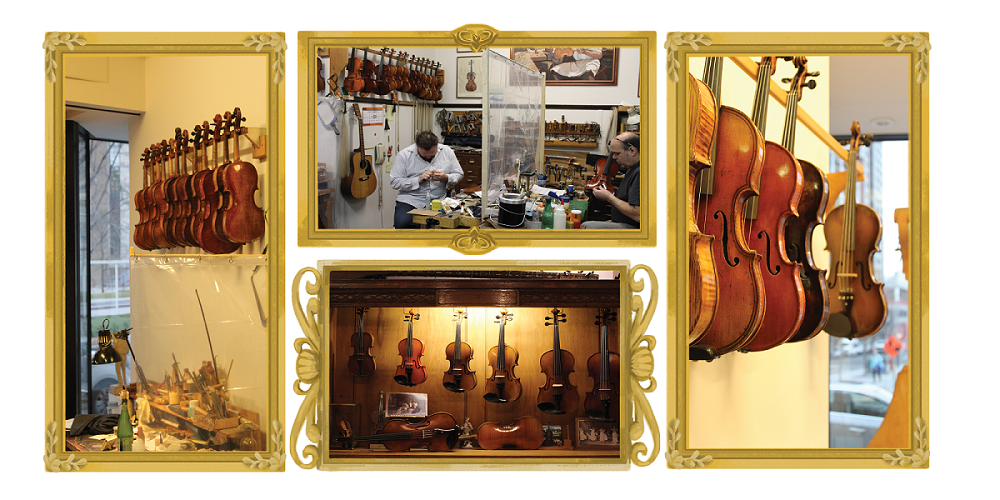



Growing up, my favourite movie scene was the wand-shop sequence from Harry Potter and The Philosopher’s Stone. The scene opens with Harry entering Olivander’s wand shop, surrounded by towering shelves of wands and surfaces cluttered with tools and scraps of parchment. After trying an array of wands, he settles on one that feels just right. Olivander explains, “The wand chooses the wizard, Mr. Potter. It’s not always clear why. But I think it is clear that we can expect great things from you.”
To me, this scene offered a parallel fantasy to picking out a string instrument—an experience every string musician has in their life. A luthier—a maker of stringed instruments—brings out an array of instruments, and lines them up on a counter for you to play. After what can be a multi-day selection process, the musician picks the instrument they will play for dozens of hours a week, for what will hopefully be the rest of their life. Montreal’s classical music community is tightly-knit, and musicians at all levels—students, teachers, and amateurs—have been facilitating musical collaboration and connection before and during the pandemic. The amount of love and labour that goes into music making and crafting instruments is important, broadening horizons and encouraging people to pursue their passions.
Lili Saint-Michel manages sales, rentals, and institutional relations at Jules Saint-Michel Luthier, a string instrument shop in downtown Montreal. Saint-Michel studied biochemistry at University of Montreal, but when she developed tendinitis in her hand 25 years ago, she decided to start working at her father’s violin shop.
“The relationship with customers is very diversified,” Saint-Michel said. “You never get bored because the violin is something you can always learn more about [….] Repairs are very interesting. Sometimes, we may have a violin in the family that hasn’t been played for a long time and we put it back in playable condition, and it can be very emotional [….] It’s very nice to see the connection between people and their instruments through the restoration process.”