
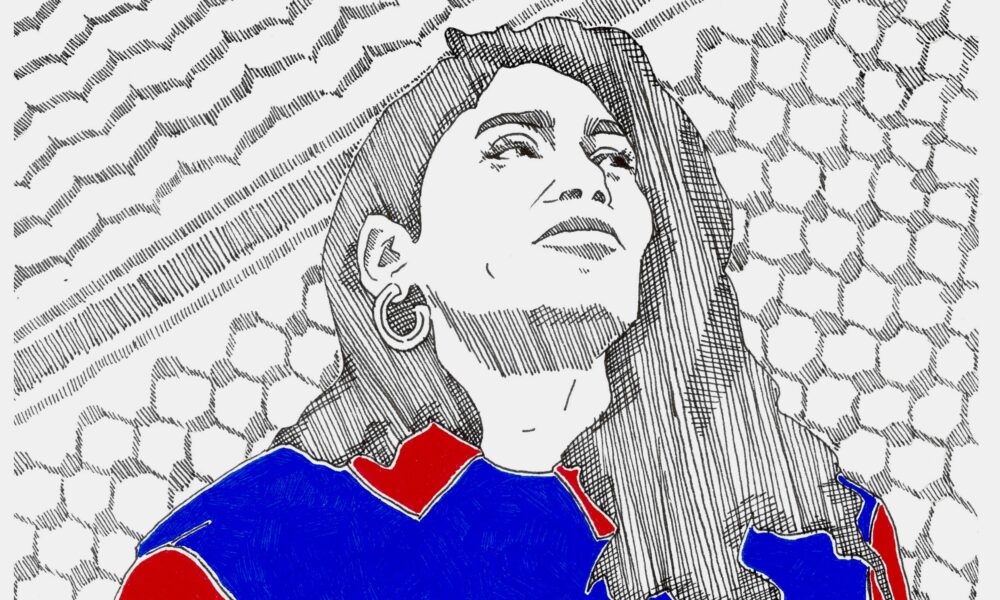

Rima Hassan, a French-Palestinian Member of European Parliament (MEP), was denied entry into Canada days before she was scheduled to attend conferences in Montreal on the suppression of Palestinian advocacy and the rise of the far right. Canada’s Office of Immigration, Refugees, and Citizenship (IRCC) did not provide a specific reason for refusing Hassan’s entry, merely blaming the situation on Canadian legal requirements. According to the IRCC, Hassan had failed to announce a previous visa refusal or denial of entry as well as an alleged criminal offence, arrest, indictment, or conviction.
Hassan has since described the IRCC’s decision as an “attempt at censorship” and an “obstacle to parliamentary action and freedom of expression.” Québec solidaire member Andrés Fontecilla seconded her declaration, calling upon the government to explain itself. Contrastingly, Jewish advocacy groups such as B’nai Brith and the Centre for Israel and Jewish Affairs (CIJA) have supported the denial of her entry, claiming that speech that “justifies terrorism, glorifies violence, and denies Jewish history” ought to be limited.
There has been a rise in censorship in Canada, particularly through the mainstream media’s warping of news and content related to Palestine. Often, Canadian mainstream media manipulates language to minimize or misrepresent the genocide, excluding Palestinian voices. The lack of credibility awarded to journalists on the ground in Gaza, as scholar Adel Iskandar explains, perpetuates a colonial dynamic where “the native cannot speak for themselves.” This selectiveness silences Palestinian perspectives to distort the public’s worldview. Taken together, Hassan’s exclusion and the media’s framing of Gaza reflect this imbalance, where those affected by a conflict are not given the right to speak for themselves.
Hassan being denied entry is not the first time Canadian institutions have limited public discourse on Palestine. In Sept. 2025, the IRCC banned Liam Óg Ó hAnnaidh, a member of the Irish hip-hop band Kneecap, better known by his stage name ‘Mo Chara,’ from entering Canada based on unproven allegations of terrorist activity. Similarly to Hassan, the band was quieted with opaque justifications before even being given the chance to speak.
These constraints on speech also extend to universities. In 2024, McGill instituted a 10-day injunction against Students for Palestine’s Honour and Resistance (SPHR), banning the group from protesting on campus. Since then, McGill has threatened to terminate its agreements with other student groups, such as Quebec Public Interest Research Group (QPIRG) at McGill and the Students’ Society of McGill University (SSMU), for refusing to sever ties with SPHR. This form of censorship is a consistent pattern, with the administration interfering in a democratic vote of the Law Students’ Association (LSA) to boycott Israel last week. Universities play a crucial role in shaping the beliefs of the next generation; excluding important perspectives on global conflicts inhibits students from thoroughly grasping them. Not only do they have the right to hear all points of view, but obstructing them maintains colonial power dynamics where dissenting voices are intentionally suppressed.
Such gatekeeping and political obstruction hinder collective understanding of global issues, with consequences at a broader level. Not including all of the historical perspectives involved in an issue distorts publicly understood narratives, which most affects those whose stories are already underrepresented. It maintains power imbalances where the freedom of expression of those already oppressed is perpetually hindered.
Some may argue that Hassan’s denial of entry occurred due to administrative reasons, not political motives. However, regardless of the IRCC’s intentions when restricting Hassan’s entry, the refusal’s effects remain the same: Rima Hassan cannot tell her story.
The cornerstone of a democratic society is free expression. Failure to do so puts the public’s right to know at risk and continues to perpetuate a system that maintains the censoring of some while uplifting others.