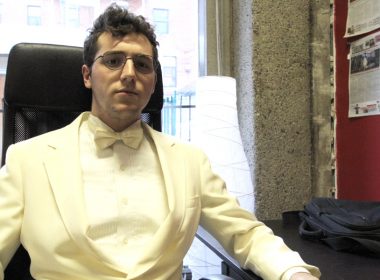
The Cystic Fibrosis Translational Research Centre at McGill University and the University of British Columbia are looking in unexpected places for potential cures—under the sea. Dr. David Thomas, Chair of McGill’s department of biochemistry and Canada Research chair in molecular genetics, focuses his research on investigating quality control of proteins.
The researchers have discovered a chemical that restores the function of the defective protein that causes cystic fibrosis. It comes from an unusual source: marine sponges from the South Pacific.
Proteins are the ‘workhorses’ of molecular life—both by functioning as the main structural building block and taking part in almost every cell activity. If a protein is not functioning properly, it can cause disorders: namely protein trafficking diseases like cystic fibrosis. Since these abnormal proteins are harmful, the body has developed mechanisms to eliminate them. Dr. Thomas’ lab investigates these mechanisms, hoping to find treatments for disorders like cystic fibrosis.
“We work on determining … the rules of protein quality control,” Dr. Thomas explained. “If you’ve ever driven an AMC car, and you drive a BMW, you know what quality control is.”
Cystic fibrosis (CF) is an autosomal recessive genetic disorder that is caused by a mutation in the gene of a protein called CFTR (cystic fibrosis transmembrane conductance regulator). This protein is necessary for moving chloride and sodium ions across membranes in the lungs. In CF, the protein is mutated, so that ion transport cannot function properly, and viscous secretions build up in the lungs.
About five years ago, Dr. Thomas began to research treatments for the defective protein that causes CF. In collaboration with Professor Raymond Andersen, a natural products chemist who specializes in isolating novel molecules from marine sponges, he looked into a variety of chemicals that could correct the basic defect that causes most CF cases.
It turned out that one marine sponge provided a chemical extract that corrects the localization and function of CFTR. They purified this compound and traced down one important chemical—lantonduine. Despite this success, Dr. Thomas’ team will continue investigating other compounds that might play a role in treating CF.
Looking to the future, Dr. Thomas does not believe developing treatment will be easy.
“The problem with cystic fibrosis is that it is a rare disease … about 90,000 people have it worldwide, and big companies are not going to be interested in working on orphan [or rare] diseases”.
This problem is not unique to CF.
“Between six to eight per cent of the population suffer from an orphan or rare disease, but there is such a vast array of them, that no one is going to develop a therapy when you only have 200 people [in need]”.
Still, studies like those conducted by Dr. Thomas’ team could be potentially applicable to a wider range of patients.
“Something that works for cystic fibrosis [could] also work for other protein trafficking diseases,” Thomas said.
“The market is 90,000 [patients, but perhaps] they can add to it by looking at other protein trafficking diseases.”
Over the past 20 years, scientists have completed hundreds of studies on the adverse effects of nicotine consumption—especially from cigarette usage. However, the progress made in lowering the fatalities and costs from the drug has been disappointing, given the amount of money put into these studies.
Approximately 37,000 deaths and $4.4 billion in hospital fees occur annually as a result of nicotine usage, according to Health Canada. Perhaps new angles on this research should be taken if progress is to be made towards cutting the drug’s expensive social and economic costs.
Current studies of nicotine use demonstrate weak conclusions: nicotine increases incidents of heart disease, lung problems, addiction, and cancer. Others study the genetics and psychology behind why some people are more addicted to it than others.
Researchers have designed products like nicotine patches to help smokers quit, but again statistics show poor results. According to a 2002 study in the peer-reviewed journal Addiction which followed over 5,000 smokers, fewer than 10 per cent of people were still smoke-free after six months of using the patch. Despite extensive research and many products available to prevent smoking, little progress has been made in helping smokers kick their habit.
One of the fundamental processes in science is analyzing situations objectively. Perhaps, it is time to approach nicotine research from a new angle, and examine the possible benefits to be gained from smoking, or chewing tobacco. This new perspective does not mean that nicotine should be used to improve people’s health. However, researchers could gain more insight into what drives the addiction and find possible nicotine substitutions with fewer health side effects.
Researchers, such as Joseph McClernon and his team at Duke University, have identified nicotine’s therapeutic effects in their studies. In one project, they randomly assigned nicotine or placebo patches to 11 non-smokers who exhibited depression. After eight days with the patches, the researchers analyzed participants, by a standardized method used to measure depression. Results showed that nicotine has the potential to improve mood, or temporarily relieve symptoms of depression.
McClernon’s study gives reason to believe that cigarettes help relieve anxiety. Meanwhile, other research reveals the dangers in stress-related illnesses. It could be interesting to compare the positive and negative effects of smoking to reduce anxiety in the long term. Would those who smoke to relieve stress live longer than those who succumb to constant anxiety? Could nicotine be helping people to an extent, and could this, in turn, be a major cause of dependence?
The results could potentially uncover a strong correlation with other studies on the harms and benefits of anti-anxiety drugs. Some pharmacies have already begun to work on new depression medications based on nicotine’s stress-relieving properties—eliminating the dependence it causes.
Logically, finding the benefits of smoking would also lead to finding the most effective method to quit smoking. If scientists uncover the reasons to smoke, they could mimic them in a placebo that satiates an addict’s cravings. Because nicotine patches have such low success rates, there must be other benefits than just nicotine in the bloodstream.
To uncover these benefits, scientists need to look beyond the negative effects that people suffer from smoking or chewing.
Though this type of study would be controversial to the current anti-nicotine movement, it could open new doors for understanding what drives people to begin and continue smoking. The new angle would allow scientists to see nicotine from the perspective of an addict.
Most of society is well enough informed to know the dangers of smoking, so the benefits driving people to smoke must be outweigh the risks in their conscious or unconscious minds. Instead of repeated studies on the various carcinogens in cigarettes, researchers should invest their time discovering what people gain from the habit.
Preparing for one of its biggest weekends of the year, McGill’s women’s lacrosse team woke up for a 6 a.m. to practice at Molson Stadium. An hour into the two-hour session, members of the Redmen football team took over the field, and the women were forced to cut their practice short. The men had been scheduled to play on Forbes Field, but needed to get into the proper ‘headspace’ for an upcoming game.
For competitive clubs at McGill, the bottom rung in the McGill Athletics hierarchy, this sort of second-class status is now the norm, and many have accepted it. Many athletes and teams once held varsity status, which entitled them to preferential treatment from McGill Athletics, but lost it during the summer of 2010, when McGill restructured its athletic organization. Today, teams like women’s lacrosse, men’s volleyball, cycling, and others have all adapted to restructuring in a variety of ways. Some fear for the survival of their teams, others are hopeful for the future, and some teams even believe they are now better off.
* * *
(Alexandra Allaire / McGill Tribune)
Caroline Lucas-Conwell, a fourth-year lacrosse player and co-captain of the team knew she wanted the sport to be part of her university experience. McGill’s former coach, Heather Roffey, was on sabbatical in California. She turned Lucas-Conwell’s eyes to the women’s varsity lacrosse program at McGill.
“I was really into lacrosse and I knew that I wanted to play.” Lucas-Conwell said. “I had opportunities at other schools, but I chose McGill.”
Jessica Kras, Lucas-Conwell’s co-captain was on the fence between McGill and Ottawa. “Lacrosse was the deciding factor,” Kras said. She chose McGill despite being offered an academic scholarship in the nation’s capital.
In 2012, Women’s lacrosse was a severely underfunded Tier III team, but was on its way to an upgrade to Tier II status. That came to a crashing halt in the team’s second year.
“Our captains at the time were here all summer, trying to find out what exactly was happening with the restructuring,” Kras said. “We weren’t sure exactly what the status would be, what it meant to lose varsity status, and who had ultimately made the decision to restructure.”
By the second week of August (lacrosse season takes place at the beginning of the school year) the women weren’t sure if they would even have a team.
Losing varsity status has had significant effects on the team: they have no guarantees of field space and time, and have to make do with the scraps that varsity teams and campus recreation programs leave behind. They lost the ability to use the ‘Martlets’ name, and McGill no longer signs waivers to allow them to participate in the Ontario championship, which they are invited to every season.
“I remember representatives from athletics coming into a sports club meeting and saying ‘there’s nothing we can do anymore,’” Kras said, showing how far the team has fallen from its previous status.
Caroline Lucas-Conwell (6) and Jessica Kras (22) pose with the rest of McGill’s women’s lacrosse team. (Photo courtesy McGill women’s lacrosse)
Recently, they have been forced to pay for playing time at Jeanne-Mance Park in order to supplement their practice time at McGill. The new status also means less access to athletic trainers and medical staff. Members of the team have been forced to medically assist one an other before finally getting time at McGill’s Windsor clinic.
What has changed most, though, is the attitude of the team itself.
“When we were varsity, we were expected to have a certain level of commitment because [we] are varsity [athletes], but now that we’re a competitive club, it’s more relaxed,” says Lucas-Conwell. “A lot of girls now … say they are happy that it’s a club because they don’t feel as pressured. There’s a different mentality. We value our teammates’ commitment, but we can’t ask as much from them in the last few years as we have been able to in the past.”
Now that they are not expected to make cuts, the McGill women’s lacrosse team welcomes more beginners into their team. Although it is more open, the level of play is not what it could be.
Why do they continue to play despite a lack of funds, respect, or a trophy to play for?
“Everyone who’s on the team is there because they love lacrosse,” Lucas-Conwell said. “You’re not there because you got a scholarship. You’re there because you want to play and you love to be on the field.”
Despite the positive attitude, Lucas-Conwell and Kras wonder how long these good feelings will last, and how deep the restructuring will really cut into the organization.
“It feels like what they’re trying to do is cut out all possibilities to survive as a team until we die,” Lucas-Conwell said, speaking for many in the organization. “We’re afraid because we’re both graduating soon, and we’re scared that the team’s not going to live.”
* * *
(Alexandra Allaire / McGill Tribune)
For Adam Bouchard, VP External of McGill Cycling, it is the uncertainty that makes life difficult for him and his team.
“There’s a little bit of ‘rolling the dice’ every time you walk into the building,” Bouchard said. “We always have to wonder, ‘Is our room going to be our room?’”
Cycling lost access to the varsity weight room with the 2010 restructuring, along with a small $500 grant from McGill. According to Bouchard, however, different teams have different cultures, and therefore have been affected to different degrees.
Neither the loss of the miniscule grant, or their position on the bottom rung on the room-booking hierarchy is a big loss to cycling.
“$500 a year, as far as funding goes, is change for a lot of [other] teams. We have a much larger budget and we have team fees,” he said. “It’s not killing the teams so much as it’s just annoying.”
Having access to the varsity weight room is key for the group training sessions because the cycling team can have as many as 40 cyclists attend a workout. However, since they don’t need a court or a field, unlike other competitive clubs, there is less friction with the needs of varsity athletes.
“All we need when we’re training inside, is one room to do our plyometric workout, and we use the spin room for spinning. We’ve been lucky in that, [as a] summer sport, [our] winter training method doesn’t compete with any of the big teams.”
The unique culture of cycling actually means that the restructuring might be a benefit for the team in the long-run. Without the restrictions of having to hire a paid coach, select out elite squads to be named ‘varsity,’ or compete in an all-Quebec competition, Bouchard and his teammates can promote their sport to newcomers, while competing with the best.
“If you have a helmet, working brakes, and a bike, you’re ready to go,” Bouchard said, noting that, had McGill been forced to select only the elite, he would have never gotten involved in road racing. “The place we compete has everywhere from an ‘A’ category, with semi-professional racers, to an intro category where people are only going to race for 12 minutes because they’re brand new to the sport. ’”
Unrestricted by university and CIS regulations, McGill’s cyclists travel south of the border to compete with Northeastern schools like Harvard, MIT, Rutgers, and NYU, managing top 10 finishes against American elites. Bouchard would like to see a league start up in Quebec—a necessary step in order to regain varsity status. However, he would not use it to make the jump to varsity, as the strength of the U.S. competition helps the team’s cyclists grow. For him, the restructuring is an annoyance, but it also leaves the team well-positioned for the future.
“It’s fun when it works,” he said. “And it’s fine when it works.”
* * *
Vincente Burchard-Levine goes on the attack. (Alexandra Allaire / McGill Tribune)
Alex Nachman came to McGill in Sept. 2010, immediately after the varsity restructuring. Passionate about volleyball, he now sits as the volleyball club’s vice-president. Nachman represents the new, more relaxed attitude of the athletes that make up McGill’s competitive clubs today.
“I wasn’t expecting to be involved in sports when I came [to McGill],” Nachman said. He found out about the club halfway through his first semester, and went to a try-out to get onto the squad. “I like the level of play, [and] it’s a great group of guys. I didn’t have intentions of being a top-level volleyball player, but by now I’ve gotten pretty good.”
When Nachman joined the team, it was mainly composed by athletes who had been a part of the varsity team. He said that the crestfallen ex-varsity players lacked the fire that they once had, and took far too relaxed a commitment to the team. Practice time was cut from every day to five hours a week. McGill was no longer competing for a coveted CIS National Championship, but played games and competitions against anyone in the Montreal area willing to take them on.
However, now that only a couple of former varsity players remain, the team has a new attitude, something that Nachman feels makes it special.
“For the first couple of years, the attitude was very different,” he said. “Now, players are excited that they get a chance to play at a higher level. This is their only chance at post-high school volleyball. They’re interested in getting better, and being the best we can be in our competition.”
Because he’s never played varsity volleyball, Nachman’s feelings towards McGill Athletics are rather mild. He feels that McGill does as much as it can, considering its resources to help the team succeed. He also understands where he and his teammates stand in the hierarchy.
“You do get a small sense of being at a ‘lower status’ than varsity teams, but that comes with being a club, and that’s what a club is,” he said.
Of course, not everything is easy. The team is forced to jump through hoops to design its uniforms based on McGill’s strict regulations concerning insignia, their practice time is encroached upon by varsity teams, and the team’s equipment is stored in a place where it can be touched and used by anyone. The men fundraise for their team, partially by working jobs around the gym, particularly for the women’s team, who retained varsity status.
“We want to be a competitive team,” Nachman said. “It’s frustrating trying to build a team when you don’t necessarily have the time to do it.”
That notion of ‘building’ is what Nachman stressed the most. Having to re-imagine themselves as a competitive club, the men’s volleyball team is trying to build itself for future success within the new restrictions.
“[We have] a really bright future,” Nachman said. “We’re still trying to build our identity, two or three years into building a program. We’re not entirely sure where it’s going to go, and what it’s going to look like down the road, but if this year is any indication of what’s to come, it’s pretty great.”
* * *
Above all, McGill’s competitive clubs live a life of daily uncertainty. From Kras and Conwell’s concerns of whether their team will survive; to Bouchard’s concern of whether he will have space for his team to train; to Nachman’s question of what his team’s identity will be in the future, life is certainly not easy. While the administration claims to be allocating resources as fairly as possible, one wonders why the #McGillPride campaign does not apply to all students willing to wear red-and-white and to represent McGill at the highest levels of competition.
“You have to understand the hierarchy of how things are booked in this place,” said Katie Uttley, responsible for competitive clubs, as well as for the Fitness Centre and varsity strength and conditioning. Though she helps the teams with travel arrangements and their McGill Athletics accounts, she stresses that the clubs are 100 per cent student-run.
“Life isn’t fair,” she said. “With us not able to build up in our structure or build out, we’re really limited by the resources we have. It’s very difficult to ensure what we can for the clubs.”
“McGill doesn’t want to label a team they’re not giving funding to a varsity team because it looks like they’re leaving them at the wayside,” said Bouchard. As long as competitive teams live in the shadows, the illusion that these teams just don’t exist will persist.
Full disclosure: Tribune sports editor Jeff Downey is president of the McGill men’s volleyball club. He did not participate in the research or writing of this story.
1. Beat together the brown sugar, butter, orange rind, sugar, cinnamon, nutmeg, cloves, and salt in a bowl with an electric mixer.
2. Mix in the rum and boiling water until the sugar mixture dissolves.
3. Divide the mixture into 4 mugs and garnish each with a cinnamon stick.
Home-made Eggnog:
Serves 8-10
4 cups milk
5 whole cloves
½ tsp. vanilla extract
1 tsp. cinnamon
12 whole egg yolks
1 ½ cup sugar
2 ½ cup light rum (or to taste)
4 cups light cream
2 tsp. vanilla extract
½ tsp. ground nutmeg
1. In a small saucepan, warm milk, cloves, ½ teaspoon vanilla extract, and cinnamon over low heat. Slowly bring mixture to a boil for about 5 minutes. Stir often to prevent burning.
2. In a separate bowl, whisk together the egg yolks and sugar until light and fluffy. Then, slowly whisk in the hot milk mixture. Once combined, return mixture to pan and cook over medium heat for 3 minutes, stirring constantly. Allow mixture to thicken, but do not boil.
3. Strain mixture to remove cloves and let cool to room temperature (about an hour.)
4. Stir in rum, cream, 2 tsp. vanilla extract, and nutmeg. Refrigerate for several hours before serving.
Ginger Snap:
Serves 1
¾ oz. spiced rum
½ oz. ginger-flavored Brandy
4 oz. eggnog
1 ginger snap
Mix everything (even the cookie) in a blender until smooth.
McGill Compliments is a new Facebook account that is quickly joining many McGill students’ friend lists. McGill Compliments provides a safe, anonymous outlet for McGill students to do just that: compliment one another. Through private inbox messages that get posted by the McGill Compliments profile creator, and tagged by whoever happens to know the recipient, McGillians are sharing the love.
It’s based on the premise that we all like a compliment, but don’t always take the time to show our gratitude to those we value most. The Tribune sat down with the mind that brought the compliments movement to McGill to talk about the recent phenomenon.
McGill Tribune: So what is the basic idea behind ‘McGill Compliments?’
McGill Compliments: I feel like everyone needs to hear good things every once in a while, and I don’t think there’s enough positivity on campus ….This is just an outlet for people to tell others, without the possibility of judgement, what they think of them … whether they’re your best friend … or whether you’ve never talked to them before…. The basic idea is just [to] spread positivity, without judgement, and [to create] a network on campus where every student feels connected to each other—because we’re all McGillians. It’s a form of school spirit, I guess.
MT: Other schools like Queen’s have profiles as well. Do you know where this idea came from?
MC: It started at Queen’s, I believe [in September]. I think [McGill] was the seventh or eighth school to get in on it. Now there are 50 plus, since [November 14th], when I made it. So yeah, it’s [become] pretty viral. It’s been awesome.
(Alexandra Allaire / McGill Tribune)
MT: How did you first hear about this movement?
MC: My friend at Columbia. At that time, I think five other schools had profiles like that, and I thought, ‘this is awesome, it needs to be at McGill,’ [so] I did it.
MT: Are you in contact with the people who run the profiles for other schools, or are they all independent of each other?
MC: Queen’s actually made a group around a week ago. Just a university Compliments group for all the profiles to join. It’s a private group where we collaborate; if we have questions about how to deal with Facebook’s stupid automated security system—[which] often designates us as spammers—and things like that. We’re currently forming a petition to send to Facebook to stop the threat of bans, because some of us are unable to send friend requests. We also share ideas for other things outside of Facebook. I think Princeton just organized a Secret Santa across campus, and Berkeley is doing some cool things too.
MT: How are you dealing with the problems you’re running into with Facebook?
MC: I’m not too worried about it …. I think that Facebook wouldn’t do anything, because this is pretty viral. … Time magazine recently wrote an article about the whole compliments movement. I think it [makes] Facebook a positive forum for output like this, when often, [there are only] Facebook fights.
MT: Are you the only running the profile? Do you see it growing to the point where you have to bring in help?
MC: I see myself doing that very soon in fact. Two thousand friends was my benchmark, and now I’m at [about] eighteen hundred. Especially with finals coming up and stuff, most of the other schools now have two to four people running [their pages].
MT: How much time do you typically spend in a day working on it?
MC: It’s hard to say …. I have my iPhone with me everywhere, so every time [a compliment] comes in … while I’m doing something else, I just open it, read it, make sure it’s okay, and [post it]. I’d say I do it all day, [but I’m] multi-tasking.
MT: Anonymity can sometimes be a dangerous thing on the internet; have you encountered any problems with content since you’ve been posting?
MC: Actually, people have been really good. I’ve only had six posts out of [about] 500 that I’ve deemed [inappropriate] to post. Everyone else has been taking it really seriously—genuinely. It’s good to see.
MT: What’s your favourite part of running McGill Compliments?
MC: Just seeing all the reactions and reading these messages and seeing all the love …. People don’t often take the time to tell other people [how] they feel about them. This just gives an outlet for them to do that, a purpose to do it rather than just out of the blue. I find compliments mean more when there’s no face behind them, in fact, because there’s no secondary purpose. It shows that they really think that way, because they’re not getting anything out of it.
send your compliment at www.facebook.com/mcgill.compliments?fref=ts
A: I get a lot of flack for using the word ‘primo,’ which is a way to say ‘awesome.’
Q: What’s your biggest pet peeve?
A: When people drag their feet when they walk.
Q: What’s your secret talent?
A: I can throw a deck of cards across a room without a box or rubber band, and have them stay together. You bend down the corners and the sides, so it takes all the air out of the deck. So if you throw it [at the right angle], you can throw it [across] long distances. It’s a great party trick.
Q: Name a holiday movie you watch every year.
A: I can’t say I watch holiday movies every year …. I like It’s a Wonderful Life.
Q: What’s one place in Montreal you think everyone should visit?
A: Cheskie’s Bakery is up at Bernard and Parc. They have these amazing sprinkle cookies. It’s up farther than a lot of McGill students would ever venture, especially when it gets cold, but it’s definitely worth the walk.
Q: What’s the best piece of advice you’ve ever received?
A: Someone said ‘don’t sweat the small stuff, and it’s all small stuff.’ Which is a nice thing that I definitely don’t live by as often as I should.
Q: What’s your dream job?
A: Professor of American History. That might change, but that’s where I’m pointing myself for the future.
Q: I’ve been told you’ve written papers and travelled to give talks about Bruce Springsteen. How did that come about?
A: I really like Bruce Springsteen. Something was bothering me about one of his songs, this narrative dysfunction in some of his lyrics. My dad’s an academic, so probably [those genes] drove me to write an essay, which I eventually sent out to a few authors who I thought would be interested in the subject to get their feedback. One of them invited me to a conference to speak last October, and I did. He kind of introduced me to this whole world of academics who also like Bruce Springsteen, and relate their academia to Springsteen’s work specifically, and its context in twentieth century America and its literary meaning. It’s a really awesome community, and it’s something that more than anything I feel comfortable writing about and I enjoy writing about. Obviously, when you can go to a concert and that counts as fieldwork, that’s really cool.
Q: What’s your favourite Bruce Springsteen song?
A: That’s like asking me to pick my favourite child.
Q: You’re the President and captain of the Quidditch team. what are the best and worst parts?
A: There’s no better feeling than when you’re losing by a couple of points, and then you snatch a snitch to win the game. The worst part: our placement in Montreal isn’t ideal. There’s a Quidditch hub in the Boston area, and in New York. There’s an emerging scene in Ottawa, but [we’re] just far enough away that it’s a bit of an inconvenience to get there. So as President, I’ve had to deal with the logistics of getting buses to get to specific tournaments. It’s not fun work, but someone has to do it, and after three years on the team, I was in the best position to do it.
Q: You’ve also been a floor fellow for a few years. Can you talk about how that experience has been?
A: I’ve been a floor fellow for two years, and I’m now the assistant director at New Rez. I’ve been at New Rez all three years. I had a great experience in rez my first year [at Carrefour Sherbrooke], and really like the community and opportunities of living in residence. I really relish the responsibility to successfully guide 50 first-years through what certainly can be a difficult experience. The hope is [that], at some point, I’m able to make it stop being [difficult], and make a successful [experience] that leads to four years of happiness [at McGill].
Q: What are the best and worst parts of the job?
A: The worst part is [when people get sick]. I’ve gotten used to it. The best parts overshadow the worst parts though. And that’s the opportunity to guide these students through their first year experiences, and put them on a road of academic success and extracurricular involvement. That’s what I think McGill has to offer; obviously, there’s always time for fun and there always should be. That’s definitely what first year is. And there’s no better feeling in the world than when you solve a roommate conflict.
Classes are coming to an end, finals are rapidly approaching: it’s the final push. Sometimes it’s difficult to cope with so much stress, but whatever holiday you celebrate, if you stop to think about it, there is a lot to look forward to.
Food:
The first delight of the holidays is arguably the food. In addition to delicately preparing holiday dinner, we make and consume delicious desserts. The choices range anywhere from pecan tarts, to apple crisps, to fruitcake—yes, even fruitcake—in the kitchen. This is the time of year to eat anything and everything your heart desires. It’s always enjoyable to cook and bake with family—and let’s not forget the numerous family traditions every household possesses. During Christmas dinner, we always burst open crackers, which are similar to miniature fireworks that contain surprising little gifts. On Boxing Day, we invite friends and family over, piling our plates high with copious amounts of leftovers and tasty treats, and play board games until the early morning.
Rest:
Holidays are also a time for rest and relaxation. After a long, and at times sleepless, semester, I always look forward to returning home. I can sleep in past noon, watch too much television, or play cards and board games with my family. This is the season where you realize family bonding time is significantly undervalued. Before coming to university, you may have been eager to escape your typical surroundings, but as famous saying goes, ‘absence makes the heart grow fonder.’
That Christmas feeling:
It is also impossible to forget the music, movies, decorations, and weather associated with the holidays. Christmas music and movies never cease to capture the imagination. Classic songs like Rudolph the Red-Nosed Reindeer play continuously and movies such as The Miracle on 34th Street, It’s a Wonderful Life and, of course, Scrooged are must watches. Decorating the house is a vital part of the joy and merriment of the holiday season. There are always ornaments to hang on the tree, garlands to wrap around the banister, and wreaths to hang on the front door.This time of year also helps everyone romanticize about the harsh and frigid Montreal weather, after all, ‘I’m dreaming of a white Christmas!’
Giving:
I think we can all appreciate the fact that everyone seems to be a little nicer during the season of giving. Most people look for any way, big or small, to help out and eagerly place money into the red Salvation Army kettles, or volunteer their time at a charity. The holidays are also a time to show our loved ones how much we care. We take time to just be with each other, and put serious thought into the perfect present. It’s always rewarding to see the enjoyment on someone’s face when they finally receive their gift. Another part of the holiday shopping fun is finding the best deals and discounts. When you manage to buy a present worth hundreds of dollars for 60 per cent off, you might even enjoy making the purchase more than they enjoy receiving it.
New Year’s Eve:
New Year’s Eve is always an anticipated event. Staying up late, surrounded by all your loved ones is a great way to ring in the New Year. You wait around for hours, watching the television coverage—I recommend Anderson Cooper on CNN—and waiting for the countdown to begin. When I hear ‘ten, nine, eight…’ my stomach begins to turn with anxiousness and excitement. Finally, ‘three, two, one…’ and the New Year has arrived. The New Year is the perfect ending to an amazing time with family and promises a new beginning for everyone.
So relax, and enjoy what’s truly important this holiday season, no matter how you celebrate. Leave your stress behind, get home, and get comfy—‘tis the season, after all!
After sundown on Dec. 8, Jewish people around the world will light the first candle of Chanukah. Celebrate the Festival of Lights with this traditional latke recipe—they’re so good that you can take them home to your mother for the holidays. This recipe makes at least two dozen, so you’ll certainly have enough to.
Ingredients:
6-8 potatoes (Yukon Gold or yellow fleshed are best)
1 onion
3 eggs
1 tbsp. oil
1 tsp salt
Pinch of pepper
¼ cup flour
2 tsp baking powder
Oil for frying
Instructions:
Cut and grate the potatoes into a bowl, not too fine. Grate the onion and mix with the potatoes. Scoop the mixture into a cheesecloth and squeeze to remove liquid. Return to the bowl and mix with the rest of the ingredients. Pour a generous amount of oil into the pan for frying. Scoop a tablespoon of the mixture into the pan and flatten into pancake shape. Turn them over when you see the bottom turning brown. Place the cooked latkes on paper towels to absorb some excess oil, and serve with apple sauce or sour cream.
Once the first snowflakes start falling, we know that winter is officially here. And with winter comes hot chocolate, and cozy blankets. When we bring out the word ‘holiday,’ it also means decorating, baking, and lots of eggnog. That’s right, it’s time to get excited! Even though you’re going to be stressing for finals—it’s inevitable—make sure that you take some time to relax, to give yourself a break, and get into the holiday spirit. There are tons of must-see attractions around the city that are guaranteed to take your mind off of school. So grab your tacky sweaters, your mittens, and enjoy the best of Montreal’s Christmas attractions.
Ice Skating:
A timeless classic that most of us learned when we were little is now an exhilarating study break. Montreal has a few outdoor skating rinks, but Beaver Lake and Bonsecours Basin come highly recommended. Beaver Lake is located on the west side of Mount Royal, and is a favourite among many. Admission is free, and if you don’t have your own skates, you can rent a pair for seven dollars. Bonsecours Basin sits in the heart of Old Port and boasts amazing views of the city. Admission and skate rental cost about $12 in all. Both rinks are open seven days a week, but hours of admission vary. Check online for more details, as well as information on directions and special theme nights.
Fireworks:
Telus presents Fire on Ice: a breathtaking annual fireworks display in the Old Port. Each Saturday night in December fireworks are shot over the St. Lawrence River at 8:00 p.m., creating an amazing spectacle of pyrotechnics. On New Year’s Eve, the display coincides with the midnight countdown. The event is free; all you have to do is get there early for a good spot. The closest metro stop is Place-d’Armes, but check online for other viewing locations.
The Nutcracker:
The classic story of Clara, her nutcracker, and their fantastic journey is being performed by Les Grands Ballet throughout the month of December. Performances will be taking place at Place des Arts starting December 13 through 30 on various days, alternating between 2:00 p.m. and 7:30 p.m. showings. Tickets start at $41, and are available through grandsballets.com. Check online to score your pass into the wonderful world of dancing snowflakes, fearsome swordplay, and sugar plum fairies.
Downtown Core:
If you are not particular about the activity, just taking a walk around the downtown core—hot chocolate in hand—can boost your holiday cheer. Take a walk down McGill College at night for the festive displays; the trees are wrapped with lights, and there are lit up wreaths and angels hung on the surrounding buildings. Once you hit Ste. Catherine, look across to Place Ville Marie to see the giant Christmas tree, and try not to feel warm and fuzzy.
The holidays inevitably mean shopping: window or otherwise. While trying to find that perfect gift, make sure you head to The Bay on Ste. Catherine, or the Ogilvy store on the corner of la Montagne to look at some of the gorgeous Christmas displays. You can even stop and take a picture in front of one of them. Keep your eyes open for Santa Claus, too!
Stay at Home:
If you’re not up for leaving the house, there is still plenty that can be done in your own home to bring in some Christmas cheer! Burn a yuletide-scented candle; bake a batch of your favourite holiday treats and deck the halls while listening to your favourite holiday album. My recommendation: Michael Buble’s album Christmas. End your day off with a classic seasonal movie—or two. Love Actually, How the Grinch Stole Christmas, It’s a Wonderful Life, Elf, and A Christmas Carol are all must-watch.
Try something new:
If you’re in the mood for a change, why not try creating a new tradition? Take the opportunity to celebrate Chanukah or Kwanza, and learn about other holidays. This year, Chanukah begins at sundown on Dec. 8 and ends on Dec. 16. Kwanza begins on December 26 and ends on January 1. You could also partake in a classic Quebecois tradition and eat some tourtière this holiday season. This meat pie offers tons of flavour, and a delicious way to celebrate French-Canadian culture.
So whether you’re braving the cold, or snuggled up at home, remember to take a break this exam season and enjoy what Montreal has to offer. Happy Holidays!
Looking to rebound from a disappointing 2011 season, the Redmen turned to new Head Coach Jason Starr to restore order in McGill’s nationally renowned baseball program. Despite a poor start—dropping four of their first five contests—the Redmen stayed composed, and won eight of their final eleven games to secure a playoff berth.
Characteristic of the 2010 National Champions, McGill caught a spark at the most opportune time. They swept both their semifinal and final playoff opponents in Ottawa and Carleton, respectively, and qualified for the CIBA National Championship in the process. McGill remained hot throughout nationals, culminating in a dramatic walk-off grand slam to send the team to the national semifinal.
However, this proved to be as far as the momentum would carry them, as the Redmen fell to eventual champions St. Clair College 4-2, ending hopes of a second national championship in three years.
Martlet Soccer – B
MVP: Meghan Bourque
Athlete to Watch: Kristina Pearkes
The Martlets looked ready to earn another CIS Championship tournament berth after opening the 2012 season with six straight wins; they were ranked amongst the top ten in the country and were dominating RSEQ competition. However, McGill’s inconsistent play plagued the team down the stretch, as it managed to win just three of its last eight games. While McGill qualified for the conference playoffs, the team was clearly out of sync. The Martlets needed to prevail in the RSEQ semifinal to earn a trip to nationals, but lost to Sherbrooke on season-ending penalty kicks.
There were a few Martlets that put together impressive seasons, notably first-year standout Kristina Pearkes, leading goal-scorer Hannah Rivkin, and third-year midfielder Meghan Bourque. Looking forward to next season, the team will maintain a strong nucleus, including 2011 CIS Freshman-of-the-Year Alexandra Hoyte, who missed all of the 2012 campaign due to injury. Martlet leaders Julie Bahen and Beth Armstrong leave the team following graduation, and while this year’s result was undoubtedly disappointing, the program’s future looks bright.
McGill Cross-Country
RedmenB-
MVP: Benjamin Raymond
Athlete to Watch: Charles Litwin
The Redmen placed 16th at the CIS Championship—a decent showing for the runners. Freshman Benjamin Raymond played a crucial role, posting second place finishes at the McGill Open, the Laval Open, and the RSEQ Championships. The first year polished off the season with Quebec Rookie-of-the-Year accolades. Other top-scorers for the season included freshman Charles Litwin and sophomore Michael Abramson. Promising rookies Raymond and Litwin look to lead the team moving forward.
MartletsB+
MVP: Jessica Porfilio
Athlete to Watch: Caroline Pfister
The Martlets started their season strong, winning five of their first six meets, including multiple podium sweeps and the RSEQ Championship. Rookie Caroline Pfister, a high-profile athlete previously representing Canada at international age-class competitions, led the Martlets throughout the year. Other top runners included sophomore Quebec conference runner of the year, Jessica Porfilio, as well as seniors Sarah McCuaig and Madeleine Cummings. The Martlets placed seventh overall at nationals. The team has good depth and a young core, which bodes well for next season.
Martlet Rugby – B-
MVP: Brianna Miller
Athlete to Watch: Emily Barber
The McGill Martlets had a season of up and downs in 2012. They opened their season winning four out of their first five games. However, they failed to deliver when it counted once again, as the team fell in the RSEQ semifinal for the fifth consecutive season—this time, to rival Concordia. Third-year back Brianna Miller was honoured with All-Canadian status and named the RSEQ player of the year after recording six tries and a conference-high 40 conversions. The Martlets lose just two players to graduation, so next year’s roster has the potential to end their recent playoff woes.
Redmen Football – C+
MVP: Laurent Duvernay-Tardif
Athlete to Watch: Shaquille Johnson
After multiple seasons of disappointment on the gridiron, the Redmen finally ended their 23-game winless streak with a 36-9 victory over Mt. Allison. Overall, it was a tumultuous season for the Redmen, as strong performances—including another win against Bishop’s, and a narrow loss to rival Concordia—were mixed with the 40-point shutouts seen in previous years.
The improvements on the field were spearheaded by two All-Canadians: third-year offensive lineman Laurent Duvernay-Tardif, and freshman wide receiver Shaquille Johnson. Johnson became only the second Redman to capture the CIS Rookie-of-the-Year. This season also marked Head Coach Clint Uttley’s first full year in the position. This was a smart hire for McGill, as Uttley injected life into a downtrodden program. With both All-Canadians returning and only eleven graduating seniors, look for the Redmen to ride this wave of momentum into even more playoff appearances in the future.
Redmen Soccer – D
MVP: Alexis Pradié
Athletes To Watch: Max Leblond, Olivier Lacoste-Lebuis
The Redmen had an unfortunate season. After the year’s conclusion, the RSEQ announced that McGill had forfeited 11 of its 12 games for use of an ineligible player. The news sent the Redmen to the bottom of the standings with a miserable 0-12-0 record.
However, McGill MVP and centre-back Alexis Pradié still earned some glory when he was named to the CIS All-Canadian first-team for the second consecutive year. Pradié will graduate this year, undoubtedly leaving a huge hole in the leadership department.
However, with new rising freshman star Max Leblond coming through the ranks, McGill is sure to have a formidable team next fall. Leblond brought strong leadership to the keeper position, and delivered a laudable performance. Head Coach Jose Valdez will enter his second season at the position, which will give him more time to make his mark on the program.
Redmen Rugby – A
MVP: Cameron Perrin
Athlete to Watch: Robert Ashe
It was certainly a roller coaster ride for the Redmen this season. After coming out of the gate with four straight wins, the team was devastated after an ineligible player cost them all their victories. Despite the forfeits, the Redmen continued to dominate the rest of the year, and won their final four matches. The Redmen cruised to the championship by easily defeating Bishop’s in the semifinals, and for the third consecutive year, McGill faced Concordia in the final. While the Redmen played a somewhat sloppy game, they managed to come out on top to claim their seventh straight RSEQ title.
Even though McGill loses 15 players to graduation, the team is still in great shape. Fortunately, seniors comprised only half of the starting lineup. The team is in good hands moving forward, as Head Coach Craig Beemer currently sports a 66-6 record during his tenure at McGill.
Redmen Lacrosse – A
MVP: Jishan Sharples
Athlete to Watch: Alex Rohrbach
The Redmen finally achieved what they desired. The team had a storybook run through the playoffs to capture its first-ever CUFLA championship. McGill finished the regular season on top of the Eastern Conference with a 9-1 overall record. The Redmen pulled off a three goal rally in the final 80 seconds to stun Guelph in the national semifinal matchup. Then, in the championship game against Western, with mere seconds remaining in double overtime, captain Jishan Sharples scored the game-winner to claim the Baggataway Cup.
The Redmen will lose two key players to graduation: Ryan Besse graduates as McGill’s all-time leading goal scorer, while Sharples, who provided leadership and clutch play all season, will also not be returning. With veteran Coach Tim Murdoch at the helm, and depth at every position, the Redmen will have a chance to repeat as champions again next season.