Latest News

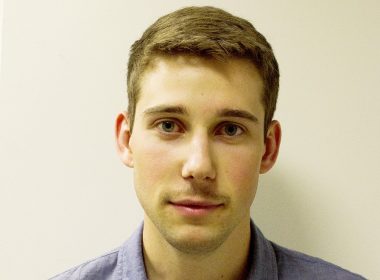
Phi Nguyen Chemical Engineering U3 {Alexandra Allaire/ McGill Tribune)
a, Student Life, Student of the Week

Student of the Week

Q: Why are you an asset to McGill?

A: I work with Drive Safe and, currently, I am doing research with … the chemical engineering department.

Q: What do you like most about working with Drive Safe?

A: Well, I mean I get to drive. I love driving. You feel kind of fulfilled, helping drunk people. I used Drive Safe a lot myself in first year, and I just feel like it’s rewarding to give back to the younger generations.

Q: If you were a club at McGill, what club would you be and why?

A: I’d say one of the dance clubs. I’m not in any of them, but I guess Urban Groove. The style [of dancing] that I like resembles them the most.

Q: What’s one song you’ll never get tired of listening to?

A: New Divide – Lincoln Park.

Q: St. Laurent or Crescent?

A: St. Laurent.

Q: What are the best and worst television shows currently on air, in your opinion?

A: The best would be America’s Best Dance Crew, the worst would be Jersey Shore.

Q: You’ve just won the lottery. What’s the very first thing you buy?

A: How much? I would buy stocks.

Q: If you could have a vacation house anywhere in the world, where would it be?

A: Definitely not Montreal. I’d go for Alaska.

Q: Where would you be a perfect tour guide for?

A: My hometown: Hamburg, Germany.

Q: Who’s your favourite Olympian?

A: I guess I just look up the Vietnamese Olympians and cheer for the ones with my last name.

Q: Describe Canada in three words.

A: Diverse, polite, bilingual.

Q: Name a movie you think everyone should see.

A: Inception.

Q: Monopoly or Risk?

A: Monopoly.

Q: What’s your biggest pet peeve?

A: I don’t think I have any.

Q: Describe one of your last embarrassing and/or awkward moments.

A: I don’t have awkward moments, because awkward moments are a state of mind. You can suppress that.

Q: Would you rather win a free ticket to the Super Bowl or an invite to the Oscars?

A: Invitation to the Oscars.

Q: What word or expression do you most overuse?

A: I can’t say it.

Q: If you could only eat one thing for the rest of your life, what would it be?

A: Poutine.

Q: What’s the first thing you think of when I say ‘Tribune?’

A: When I first came to McGill, when I first read the Tribune, I misread it for tribute. So I thought of sacrifices. English isn’t my first language, so when you first read a word, you just try to guess at it, so I guessed tribute. But that doesn’t make sense.

Q: What’s your go-to procrastination activity?

A: I play video games.

Q: What’s your secret talent?

A: If I say it, it won’t be a secret any more.

Q: If you could have any super power, what would it be and why?

A: To be able to take control of someone’s mind. If you can take control of certain people or certain groups, you can basically control the world.

Q: Would you use your mind control for good or evil?

A: Well, good and evil are very relative terms. Define good and evil.

Q: Okay, well what would you use it for?

A: If I had that power, I’d probably have too much power, so I’d try not to use it too much. Maybe play some tricks or something, but other than that, I wouldn’t use it too much.

Q: What’s the best piece of advice you ever received?

A: A student from my high school came to McGill [a couple of years before me], and he told me ‘Whatever you do, don’t do engineering frosh. Do arts frosh or science frosh, or management frosh, but please don’t do engineering frosh.’

Q: Who is your hero?

A: This might sound cliché but I’d say it’s my dad. He was one of the boat people [people who left communist-controlled Vietnam by boat during the 1970s], and it amazes me that he had the will-power to endure days and days without knowing where [he was] going until [he reached] freedom. I respect him a lot. That’s why he’s my hero.

Q: If you could say one thing to him right now, what would it be?

A: Dad, I need money.

Mike King / McGill Tribune
a, Sports

Size does matter: Carabins ruin Martlet home opener

Size and experience proved to be the difference as the Montreal Carabins shut out the McGill Martlets three sets to none in the Martlets’ home opener on Sunday afternoon at Love Competition Hall.

The Martlets (3-3) kept it close in the first half of the first set, but Montreal (4-2) went on a scoring run from which McGill could not recover. The Carabins effectively used their towering front row to limit McGill’s ability to penetrate the block, holding the Martlets to just 15 points in the set.

The rest of the game played out in the same way, with the Carabins’ front row outmatching the Martlets, and forcing McGill to commit errors that led to easy Montreal points. The match concluded with Carabins defeating the Martlets 25-15, 25–17, 25–19.

In order to overcome the size difference, McGill planned to use their excellent defence to prevent the Carabins’ from receiving easy balls on serves. Martlet captain Geneviève Plante still believes the team can overcome Montreal’s front row, as long as the team is disciplined on defence.

“In volleyball, size is [obviously] important. But if you play smart, no matter who is the bigger team, you can put them in trouble.  For example, Montreal can be bigger at the net but are they better in the back row? Not necessarily,” Plante said.

However, Plante was quick to explain that the game plan didn’t pan out the way McGill had intended.

“We are a good defensive team, but we didn’t show up as we usually do in practice and other games,” she said.

Head Coach Rachele Believeau noted that neither part of the Martlets’ strategy came to fruition during the match.

“We were going to try to serve really tough today, but unfortunately we did miss a lot,” Believeau said. “We have to put pressure [on their passers], and this is what we didn’t do well.”

Despite the Carabins’ dominance, the Martlets did show small flashes of brilliance on the court. On a few occasions, McGill setter Marcela Mansure put over short volleys, fooling the Montreal backcourt. Rookie power hitter Ashley Norfleet led the McGill attack, interchanging cross-court and line attacks. Most importantly, the Martlets’ morale never seemed to fade. The ‘Sea of Red’ in the stands was part of the reason, as they supported their Martlets loudly and passionately throughout the game.

After last year’s squad finished the season with a bronze medal at the CIS national championships, the current edition of the Martlets has large shoes to fill. The team features six new faces, who must quickly overcome the steep learning curve that comes with the first year of varsity play.

“We have a lot of new players,” Believau explained. “Technically and tactically, the game for them is at a whole new level.”

Inexperience may plague the Martlets, especially because they play in one of the country’s toughest divisions. With two of McGill’s divisional opponents, Laval and Montreal, ranking in the CIS Top 10, this season will be no easy ride for the Martlets.

However, with McGill’s winningest coach at the helm, the team is in good hands. Beliveau, a former Olympian, has a simple answer to the team’s challenges.

“We have good potential … we are dealing with a lot of injuries. We’ve lost three key players at the beginning of the season and have players playing positions they never have before,” she said. “This forces us to re-stabilize. We are going to have to be patient.”

The Martlets will look to rebound when they take the court to play Laval on Nov. 9.

a, Sports

Promising season ends too soon; Martlets eliminated

The 2012 soccer season ended tragically for the Martlets on Friday night, as they lost on penalty kicks to the Sherbrooke Vert-et-Or in the RSEQ semifinals.

McGill’s Hannah Rivkin put the Martlets ahead 1-0 in the 34th minute, before Sherbrooke’s Marie-Eve Jacques tied the game just before the halftime whistle.

Following an uneventful second half and two 15 minute overtime periods, the game headed to penalty kicks—where Sherbrooke ultimately prevailed 5-3.

Head Coach Marc Mounicot weighed in on many aspects of Martlets’ season, including the difficult penalty kick loss (PK) on Friday.

“It’s always difficult to lose on PKs because you have no real control, and a lot of it is just about emotions [rather than] execution. We prepared well for them, have won many times on PKs in recent years, and we were confident and ready for them,” Mounicot said.

Julia Bahen, a graduating midfielder, played her last outdoor game for the Martlets in the loss. She seconded Mounicot’s disappointment, but lauded the overall focus.

“Penalty kicks are such a difficult way to decide a game. [But] I think we can take pride in the fact we stayed concentrated for the entire game, including the 30 minutes of extra time, and prevented Sherbrooke from scoring any further goals.”

What made the loss even more distressing was that just moments prior to the lone Vert-et-Or goal, Sherbrooke forward Chloé Belhumeur-Limoges blasted a shot at Martlet keeper Victoria Muccilli, sending her out of the game as she exhibited concussion-like symptoms. In a controversial decision, the referee reached only for a yellow card against the offending player, rather than a red. This decision helped pave the way for the Sherbrooke victory. Belhumeur-Limoges potted the final tally for Sherbrooke during the penalty kicks.

McGill missed Muccilli in the penalty kicks, as she excels in this area.

“The worst is that we had to play without Muccilli after 45 minutes. [Substitute Aidan] Mahoney did great and had a few key saves, but Muccilli is a great keeper on PKs, and has won a few games over her first three years with us in those special conditions,” Mounicot said.

Despite the semifinal loss, Coach Mounicot was quick to point out that the campaign was still a strong one for the Martlets, full of many impressive feats.

“Our season started very well. We were undefeated so long and we dominated all teams we faced all season, outshooting the opposition in every single game,” Mounicot said. “We scored more goals than the last three seasons and had the best defence in our conference.”

In the end, a few crucial injuries and an inability to finish hurt the Martlets during the season.

“The low point, which cost us first place, was the two negative results back-to-back versus Concordia. [Here again] we had to play without Muccilli and [Zoe] Fasoulakis for a while. We were not sharp enough in our finishing. Some girls worked hard, but needed to be more composed in front of the net in important situations,” Mounicot said. “After the fourth game, we never had everyone healthy. Even if we have good depth, as a coach, you are looking to start the same team most or your games.”

The Martlets’ future is quite promising, as they fielded a young team all season. Only two players, Bahen and Alexandra Armstrong, are expected to graduate. This youth provides an exciting core for upcoming campaigns.

“The team is young, and some have a nice future,” Mounicot said. “Fasoulakis was strong all season. [Rookie Julia] Conzon was a playing a position she never played before and did great. [Captain Bahar] Sansar … is a natural leader and a great player. [Hannah] Rivkin and [Meghan] Bourque were excellent as midfielders. Then you have [Kelsey] Wilson, who never played at her full potential coming back from surgery, and [Alexandria] Hoyte, 2011 CIS rookie of the year. All of whom will be back next season.”

Coach Mounicot concluded by praising the graduating girls and their contributions to the team.

“They have grown as better players and nice women, supporting the young ones and being role models. They have been great in the locker room and it was a pleasure to coach them for four years and to see them become such great individuals.”

Bahen was sentimental about her time as a Martlet.

“Being a Martlet has meant a lot to me. I’ve had a family away from home since first year. …I think women’s soccer is a very strong program at McGill and a lot can be expected from this team in the future. With so many young players, there is a lot of potential and room to grow as the team progresses together.”

Head Coach Tim Murdoch hoists the Baggataway Cup, as the Redmen celebrate their title. (Kevin Caplice)
a, Sports

McGill wins first Baggataway Cup in school history

Despite qualifying for the CUFLA semifinal five out of the past six seasons, the McGill Redmen lacrosse team has been used to disappointment. Frustration turned into fuel for these Redmen, who were determined to claim a title this past weekend at the CUFLA championship in Peterborough, Ontario. This time, they didn’t disappoint, and returned to Montreal with a Bagattaway Cup.

After winning a thrilling 9-8 semifinal match against the Guelph Gryphons, McGill earned its first CUFLA national championship in school history by defeating the Western Mustangs 7-6 in  overtime.

Redmen Head Coach Tim Murdoch, who just completed his 10th season with McGill, was emotional after finally completing his championship goal.

“It was quite amazing … when we won it, I sprinted over to [co-captain] Jishan [Sharples] to give him a big hug while the rest of the team was over at the other end of the field around our goalie [Riley McGillis],” Murdoch said. “It was surreal. It was an emotional moment.”

The weekend was filled with emotional highs and lows. The Redmen were on the verge of another frustrating finish, flirting with elimination in the semifinals against Guelph. The Gryphons built a two-goal lead in the game’s final quarter. McGill pressed for scoring chances, but Guelph continually stalled their attack. With just 80 seconds remaining, second-year attackman Alex Rohrbach tallied a marker to cut the lead to one. 20 seconds later, Sharples added one more to complete the comeback. However, the Redmen weren’t finished, as Brandon McLean—later named the tournament MVP—fired a shot into Guelph’s net with only four seconds on the clock, and sent McGill to the CUFLA final.

Murdoch was confident that his team had the perseverance to come back, even when facing a two-goal deficit with just a few minutes remaining in the contest.

“I’ve been coaching and playing lacrosse for many years … the beauty of the game is that it’s never impossible to come back. You never need that much time to score goals,” he said. “Frankly, I was [only] hoping to get to overtime, but we managed to get that last goal to avoid overtime.”

Despite overcoming the semifinal hurdle, the Redmen were determined to stave off disappointment once more to finally claim a national championship. They were in tough against Western, who boasted the best defence in Canada during the season. The Redmen came out flat in the first half, trailing 3-1, but fought their way back to build a two-goal lead in the fourth quarter.

After being in Western’s situation the game before, McGill knew that anything was possible. Despite trying to kill time, the Redmen were given an unsportsmanlike penalty after challenging a missed slashing call. The Mustangs took full advantage and scored twice, notching the tying goal with just six seconds remaining.

As the game headed into overtime, McGill looked for its senior leaders and captains to step up. Sharples rose to the occasion. After making an incredible move to the front of the Western net, he leapt and buried a shot past the Mustangs’ goalie, giving McGill the 7-6 lead. After milking the little time that remained, the Redmen rushed the field and claimed the Baggataway Cup.

Murdoch praised Sharples’ efforts in the game, and mentioned the confidence he’d had in his star player throughout his career with McGill.

“[Sharples is] a terrific player. The reason you think you can win games like that is because of players like him,” Murdoch said. “He’s a clutch player and you want to get him the ball at the end of the game. He did it time and time again for us.”

The Redmen will lose some key players to graduation—chief amongst them Sharples, all-time leading scorer Ryan Besse, and defencemen and all-Canadians Kyle Robinson and Jeff O’Neill. However, Murdoch is excited about his young core and feels like the team is poised to be a force in CUFLA for the forseeable future.

“I think we have the potential to build a dynasty, even though that word may not be appropriate because we’ve only won one championship. We’ve built a program that is durable and strong from a recruiting and financial standpoint. I think it’s a formula that will prepare us extremely well for the future,” he said. “We want to win more national championships. This is just the beginning. We’re not done at all.”

Photos by Kevin Caplice.

Participants of “Who Needs Feminism?” week wrote personalized signs for the photo shoots. (wnfmcgill.tumblr.com)
a, News

McGill students host “Who Needs Feminism?” week

The launch of McGill’s first “Who Needs Feminism?” week—an event organized by McGill students, took place last week. As part of the event, photographers took photographs of students and members of the McGill community holding signs reading, “I need feminism because…” followed by their personal explanations of its importance.

Inspired by a similar event held last spring at Duke University in North Carolina, organizers promoted the event through their Facebook page, and then conducted photo sessions around campus and within university residences. They uploaded the photos to their tumblr blog, wnfmcgill.tumblr.com.

“One of the goals was to begin conversation and dialogue around feminism—and it has, on so many different levels and within all [these] different groups around campus,” Courtney Ayukawa, U2 arts and science and an organizer of the event, said. “In that sense, I think [the event has been] a huge success.”

Many students reacted positively to the event, and the demand for photo shoots exceeded original expectations. Many supporters spoke in favour of bringing attention to feminism, which they viewed as an issue worthy of more discussion.

“I think it’s a great initiative,” Ethan Zmenak, U0 management, said. “It points out stuff that you don’t realize all around you and how inequality still happens.”

The initiative also reached students at other universities, such as Mafisa Kap, an art history student at Concordia.

“The thing about gender inequality … is that I find that it’s something that’s so institutionalized, so systematic, that it’s hard for women to even necessarily be able to point out when they’re not being treated like equals,” Kap said.

“Feminism doesn’t just look out for the equality of women, it looks out for all marginalized people, whether those are people of low or middle class, whether those are people of colour, whether those are people of sexual or gender differences,” Kap added.

Participants also commented on various situations in which inequalities—both economic and cultural—continue to present themselves in modern society.

“I think that the wage discrepancy is just astounding,” Elizabeth Flannery, U2 arts, said. “When you’re raising a child as a single woman, and there’s such a huge discrepancy, it’s just terrifying.”

Flannery also addressed the complex connotations associated with feminism today.

“What I see feminism as is fighting for equality,” she said. “Feminism has proven to me [that] I can do things like start my own business. I should really thank the people who started the feminism movement, because we wouldn’t be where we are without their help.”

Despite the widespread support and enthusiasm demonstrated by participants, the initiative also received some negative critiques.

“We’ve gotten criticism for not having an exceptionally high level of understanding of the background of feminism,” Brooke Nancekivell, U2 arts and another event organizer, said. “But from our angle, the whole point is to start these conversations, and [the event’s] accessibility and openness has allowed for that.”

Looking forward, organizers expressed both short and long term goals for future events and dialogue on the topic of feminism.

“Something we have talked about [for next semester] is … [having] a series of workshops, film screenings, critical discussions on feminism, feminist issues, [and] women’s issues, and how they relate to our society,” Nancekivell said.

“The dialogue about feminism that this campaign has started will hopefully lead to people learning about other forms of privilege and structural oppression, and really start thinking critically about their role [within] it,” Ayukawa said. “Hopefully, this is just an entrance to all of the things in our society that can be really looked at again and again and again.”

On Tuesday Oct. 30, the event will conclude with a McGill community discussion on feminism in the Shatner Ballroom of the Students’ Society of McGill University building.

The referendum campaign period runs from Nov. 1 to 11, and polling will take place between Nov. 5 and 11. (Alexandra Allaire / McGill Tribune)
a, News

CKUT and M-SERT to run fee increase referendum questions

This fall’s referendum period for the Students’ Society of McGill University (SSMU) will include questions on increases in SSMU base fees for both the McGill Student Emergency Response Team (M-SERT) and CKUT, McGill’s campus-community radio station. The campaign period runs from Nov. 1 to 11, and polling will take place between Nov. 5 and 11.

Last year, the administration invalidated the results of two referendum questions by CKUT and QPIRG after deeming the questions’ phrasing to be “unclear”. The questions addressed both the organizations’ existence and a proposed change to make their fees only opt-outable in person. While CKUT was able to negotiate with the administration for the continued recognition of its existence, QPIRG ran another question during the Winter semester.

SSMU Chief Electoral Officer Hubie Yu said these concerns about the clarity of referendum questions have affected the way Elections SSMU, students, and the administration interact this semester.

“Students interested in submitting questions approached me early in the semester, and I’ve been working with them to ensure that questions each deals with only one issue,” she said. “In addition, the office of the Deputy Provost (Student Life and Learning) has a new form approval process to ensure that questions are implementable.”

CKUT

Following the invalidation of its 2011 referendum question, CKUT ran another, asking for its fee to become non-opt-outable. This referendum was unsuccessful. This year, CKUT seeks to increase its opt-outable student fee by $1, to be implemented in January 2013.

“The opt-outable fee hasn’t gone up since 1988, and the cost of running the station has gone up a lot since [then],” Carol Fraser, chair of CKUT’s board, said. “The $4 fee hasn’t increased with inflation, and we need increased funding [to maintain] our utility fees, staff, equipment, and transmitter.”

Currently, student fees are the largest source of revenue for CKUT. An increase in student fees would substantially affect CKUT’s operations.

CKUT Funding and Outreach Coordinator Caitlin Manicom emphasized CKUT’s benefits to students.

“CKUT provides great programming, extensive training, internships, work study positions, free concerts on McGill campus, free tickets to other Montreal concerts, and more,” she said. “It truly offers so much to the McGill community, and also helps promote McGill’s name in Montreal and across the world.”

M-SERT

Like CKUT, M-SERT is seeking a fee increase in this referendum period. Its question asks for a $0.50 increase for all full-time and part-time undergraduate students studying at the downtown campus, starting in the Winter semester of 2013.

M-SERT is the only student-run volunteer service that provides emergency first aid to McGill students and the Montreal community. It is regularly stationed at McGill residences, and covers McGill activities such as frosh, faculty association events, and intramural hockey games, as well as other events around the city. M-SERT also offers Red Cross first aid courses throughout the year.

Ahan Ali, director of M-SERT, said the increase will help offset costs the group has incurred from further investment in responders’ training.

“We are looking to continue to improve our service, and the supplies and equipment available at each of our response stations, [including] residences, main office, [and the] hockey arena,” Ali said. “We [also] want to restructure the allocation of our finances such that revenue [from our first aid courses] can be used to continually improve the quality of our [these] courses.”

Currently, M-SERT receives $0.25 per student each semester as part of the “Safety Network” fee within SSMU. It has also independently generated approximately 60 per cent of its operating costs through its Red Cross first aid courses, but its growth over the past five years has added “more and more financial strain,” according to Ali.

“We are currently operating at a sufficient level to provide quality first aid care to the McGill community,” Ali said. “The concern we have is being able to maintain [this quality] in the long term as we continue to expand.”

Ali said M-SERT is important for the McGill community because of its commitment to student life.

“M-SERT has responders on shift in Molson, covering Upper Rez, and in La Citadelle, covering Lower Rez, from 6 p.m. to 6 a.m. every night of the academic term,” he said. “We are dispatched through security to medical calls, and we carry oxygen, an automated external defibrillator, epi-pens, and many more first aid supplies regularly required when responding to the various incidences we are called to.”

M-SERT has formed a ‘Yes’ committee of roughly 20 people, and the committee chair is finalizing the methods and strategies for the campaign.

At the time of press, no ‘No’ committees had been organized for either question.

a, News

J-Board upholds AUS Referendum

Last week, the Judicial Board (J-Board) of the Students’ Society of McGill University (SSMU) ruled to uphold the Winter 2012 referendum for the Arts Undergraduate Society (AUS). Chris Bangs, U3 arts, filed the case against former AUS president Jade Calver and former AUS Chief Returning Officer (CRO) Victor Cheng last March.

“We recognize that the Respondents were at fault for violating the by-laws,” the verdict reads. “However, we do not find that these violations were so severe as to undermine the voting system and require the invalidation of the AUS Winter referendum.”

In his petition, Bangs raised concerns about alleged violations of six AUS by-laws. He argued that these violations compromised the results of the election, and asked that the J-Board invalidate the two questions for which he chaired the ‘No’ committee. One motion mandates the online ratification of decisions made by the AUS General Assembly (GA), and the other increases the number of votes needed to amend the AUS constitution to a two-thirds majority.

Design by Susanne Wang

The J-Board found that three of the six alleged by-law violations were justified. The AUS failed to ratify motions in both French and English, to give a minimum of six days for campaigning, and to advertise the elections in a student publication.

The J-Board explained that the third violation is “serious.” The AUS advertised the information in its listserv, which does not count as a student publication, according to AUS by-laws.

“Listservs, unlike newspapers, are not a medium through which students can voice their opinion,” the verdict reads. “Listservs do not have a reply mechanism equivalent to letters to the editor, for example. The very informational nature of listservs is therefore not conducive to debate in the way that newspapers are.”

However, the J-Board found these three violations provided insufficient grounds for the invalidation of the referendum, because the “reasonably informed voter” would still have had sufficient time to learn about the issues. In addition, the AUS by-laws allow Elections AUS to exercise its discretion when dealing with violations.

“The Respondents’ conduct, though not free from scrutiny, was indicative of a person mindful of its role in preserving the integrity of the elections all the while ensuring that the process runs smoothly,” the verdict reads.

Bangs expressed concerns over the verdict after the ruling was issued. In its consideration of the AUS’ failure to ratify the motions in both languages, the J-Board argues that Bangs did not submit the referendum questions, which meant that the J-Board could not assess the differences between the two.

“I do not have an official copy of the referendum questions, which were never sent out to the members,” Bangs argued. “That is something the decision did not recognize—I could not submit copies of the motion to the Judicial Board.”

Bangs said he is grateful the case has been resolved, but is also worried about the implications this ruling has for the AUS.

“While the CRO cannot, according to the Judicial Board, just ignore the by-laws, the J-Board believes that it falls on the members of the AUS to inform themselves of the minutia of the by-laws and document complaints at every infraction,” he said. “This leaves the AUS unaccountable for poor decisions.”

AUS President Devon LaBuik said that the J-Board case only affects the AUS in that this semester’s referendum period and GA were delayed. If the J-Board case had been successful, the delayed referendum period would have allowed movers of the invalidated motions to re-submit their questions.

LaBuik said the case has also affected the AUS’ approach during the referendum period.

“We’re being much more careful in acknowledging … the electoral by-laws,” he said.“We’re being very careful this time around and ensuring we’ve followed every rule in the book.”

Calver and Cheng could not be reached for comment.

a, News, SSMU

SSMU GA motions ratified

Last Thursday, the Students’ Society of McGill University (SSMU) released the results for SSMU’s first online ratification period, in which students voted for motions passed at the Oct. 15 SSMU General Assembly (GA). Both motions were ratified—one calling for the installation of a bouldering wall in the SSMU Building, and the other regarding renaming the SSMU Breakout Room.

Introduced this fall, the online ratification process allows students to vote on motions passed at the GA. Through the Elections SSMU website, students could watch a video of debate on a motion at the GA and then vote on its ratification.

The voting period ran from Oct. 18 to 25. According to the Elections SSMU results webpage, 2,931 (13.3 per cent) of 21,975 eligible voters cast a ballot, exceeding the 10 per cent quorum.

SSMU President Josh Redel was pleased with the online voter turnout, considering that online ratification is a new practice.

“I think that for … the first time, the rate was decent,” Redel said. “I certainly hope more people will turn out in the future, both in person and online.”

The motion regarding the bouldering wall—a student initiative moved by members of the McGill Students’ Outdoors Club (MOC)—passed, with 79.2 per cent of voters in favour of the motion. According to MOC President Sarah Solnit and past president Mark Kojima, MOC has been working on the project since last March.

The motion proposed that SSMU install a bouldering wall that is “accessible in price and location to all McGill students” in the SSMU Building. According to Solnit, the volunteer-run wall will most likely be located in the sub-basement of SSMU, although the official location has yet to be decided. For now, MOC is focusing on getting funding and creating a design for the wall.

“We’re about to start working with SSMU’s Vice-President Operations [and] we’re currently working on getting external funding,” Solnit and Kojima wrote in an email to the Tribune. “The MOC will be responsible for the initial financing. We’ll also be covering the running costs—largely insurance—which we will accomplish through some sort of fee system.”

Solnit also shared MOC’s plan to keeping the bouldering wall accessible to McGill students.

“Right now, we’re looking at charging a very cheap yearly membership rate and a collective-style operation, and also having open rock climbing sessions and workshops for a nominal daily fee,” she wrote. “Our prices would be a small fraction of what you’d find anywhere else. We’d be a service, not a business.”

Solnit said MOC hopes to get the wall up and running for the Winter semester, if possible.

The motion regarding the SSMU Breakout Room passed with 81.3 per cent in favour and proposed that SSMU rename the Breakout Room to the ‘Madeleine Parent Room,’ after the Quebec labour leader, gender equity activist, feminist, and McGill graduate. Parent devoted her life to battling social injustices and is particularly famous for organizing textile workers in the 1940s. She passed away in March.

SSMU Vice-President External Robin Reid-Fraser said that no other names were considered for the room, and explained the reasoning for proposing Parent’s name.

“We felt that because Madeleine Parent was a particularly significant figure in the history of Quebec and Canada, and because she passed away so recently, she would be a suitable person to honour with this gesture,” she said.

Details surrounding the official renaming of the Breakout Room have not yet been announced.

In order to encourage higher participation rates at future GAs and during online voting, Redel expressed interest in pursuing some additional strategies, such as introducing a new style of GA report and having better publicity about the purpose and benefit of GAs.

The Oct. 15 GA lost quorum after passing the bouldering wall and Breakout Room motions. As a result, four additional motions—regarding SSMU opposition to Plan Nord, ethical investment at McGill, opposition to Canadian military involvement in Iran, and support for accessible education—were passed by the assembly as a consultative forum.

According to Redel, the next steps for these four motions will be discussed at the SSMU Council meeting this Thursday.

a, News

SSMU plans for McGill education summit move forward

On Oct. 22, members of La Table de Concertation Étudiante du Québec (TaCEQ) met for a preliminary meeting in Quebec City to discuss the upcoming Quebec education summit, which the provincial government has slated to occur in early 2013. As the provincial summit draws closer, McGill students are also working to organize campus discussions of key issues regarding education.

TaCEQ is a federation of students associations—of which the Students’ Society of McGill University (SSMU) is a member—that aims to promote the interests of Quebec students regarding post-secondary education. Other members of TaCEQ include Laval University and Sherbrooke University.

“Universities are crucial for the future development of Quebec,” TaCEQ General Secretary Paul-Émile Auger said in a press release in French. “It is necessary to identify the real issues and get to the heart of the challenges facing post-secondary education. The actors who will tackle this challenge will put forward the interests of Quebec … this is the only way we can identify priorities for the future.”

While the Quebec education summit is still in its preliminary planning stages, and does not yet have a definite date, SSMU Vice-President External Robin Reid-Fraser said that SSMU is moving ahead with plans for an education summit at McGill. This would consist of several events taking place throughout November.

On Oct. 19, Reid-Fraser met with executives from the undergraduate societies for law, music, science, arts and science, and physical and occupational therapy to discuss the roles that faculties could play in McGill’s summit.

Reid-Fraser said the discussion resulted in a goal to have smaller, more informal events hosted by faculties during the first few weeks of November. Following these events, Reid-Fraser will bring a list of themes to SSMU council, which will represent the main topics students want to see discussed at the education summit. SSMU would also use these themes as the basis for a series of formal sessions that will resemble last year’s Strategic Summits.

“Most of [the faculty executives] feel like their members wouldn’t necessarily come to a big, structured SSMU [event] but might be down to stop in for coffee and a chat,” Reid-Fraser said. “They can at least start to get a bit more of a sense of the issues that their members are thinking about.”

Reid-Fraser also expressed hope for an interactive website or blog that McGill students could access during the events, although this is still in preliminary stages.

SSMU will then compile the information collected at McGill events into a document which they may either present to TaCEQ, or to the Quebec education summit itself, if SSMU is invited to participate.

Finola Hackett, president of the Bachelor of Arts and Science Integrative Council (BASiC), said BASiC Vice-President External has been holding office hours to hear students’ opinions on tuition increases and other topics of discussion for the Quebec education summit.

“It’s important for us to get a good idea of what BA.Sc. students’ views on the issues are before taking further steps on BASiC’s involvement in the summit,” she said.

Read the latest issue

Read the latest issue