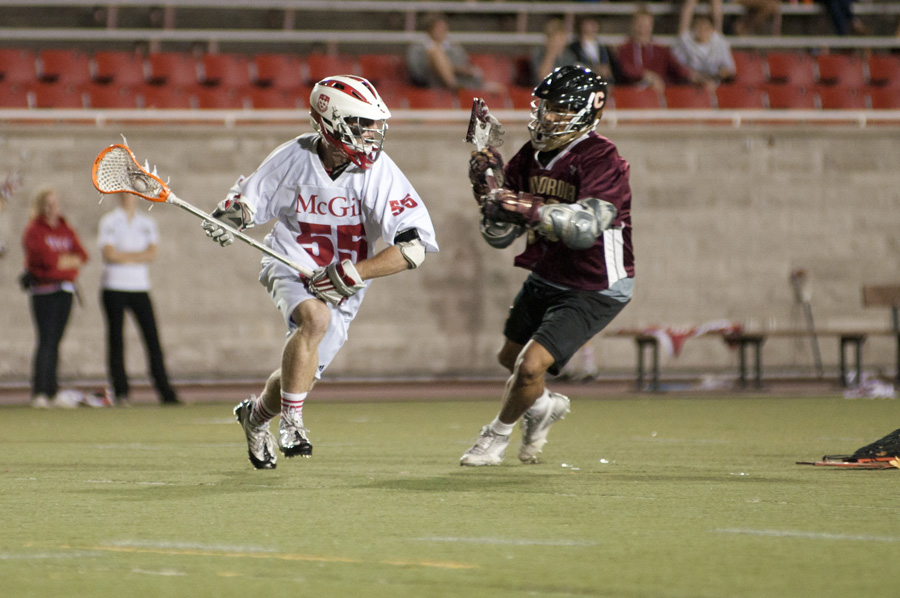
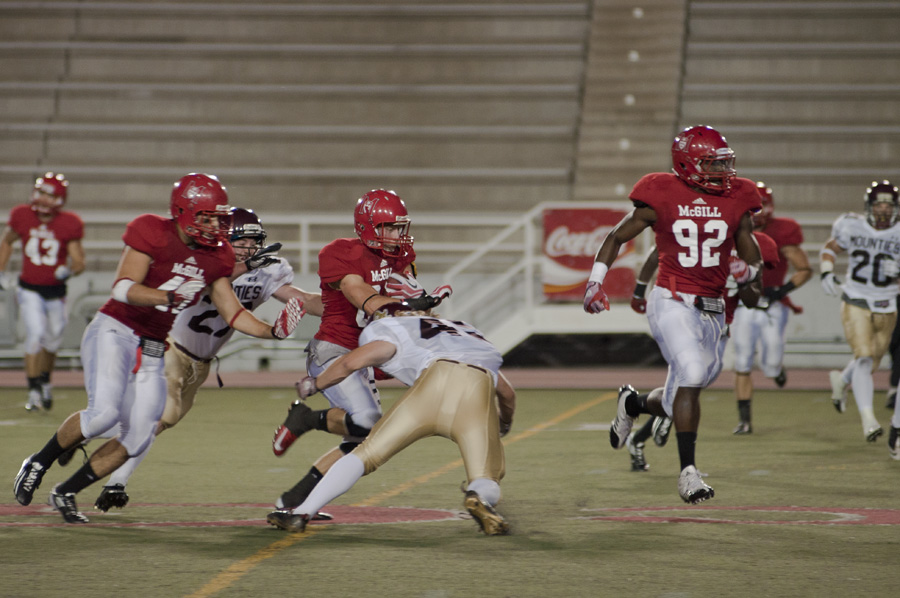
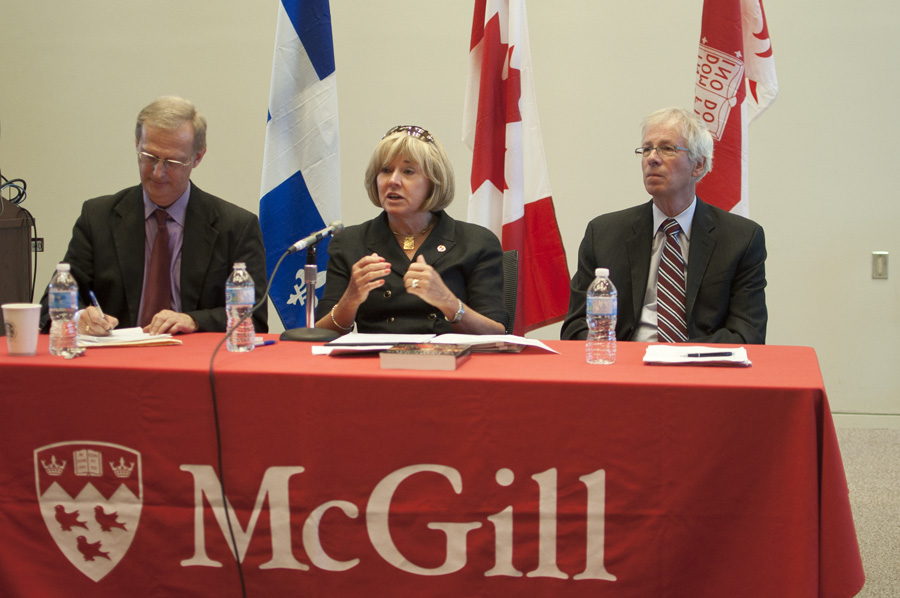
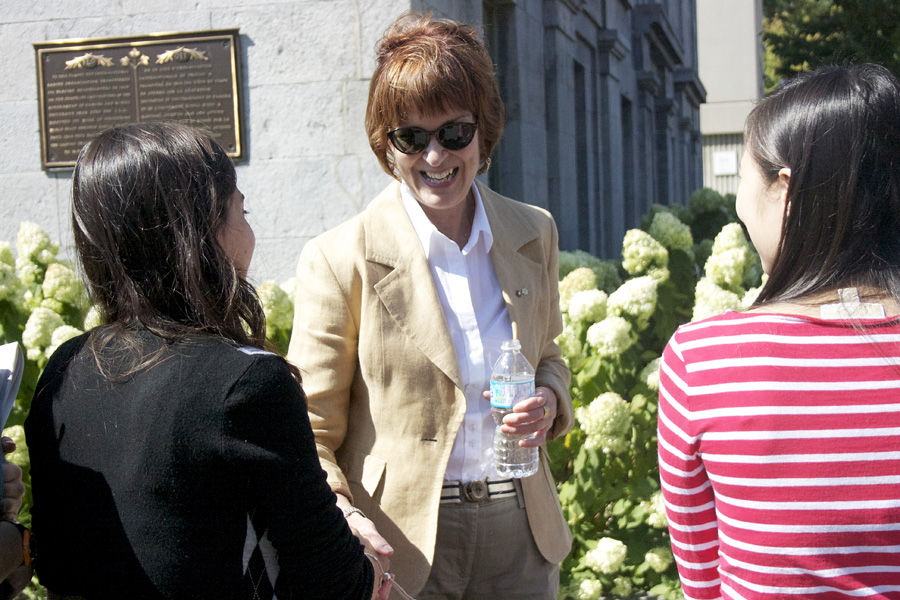
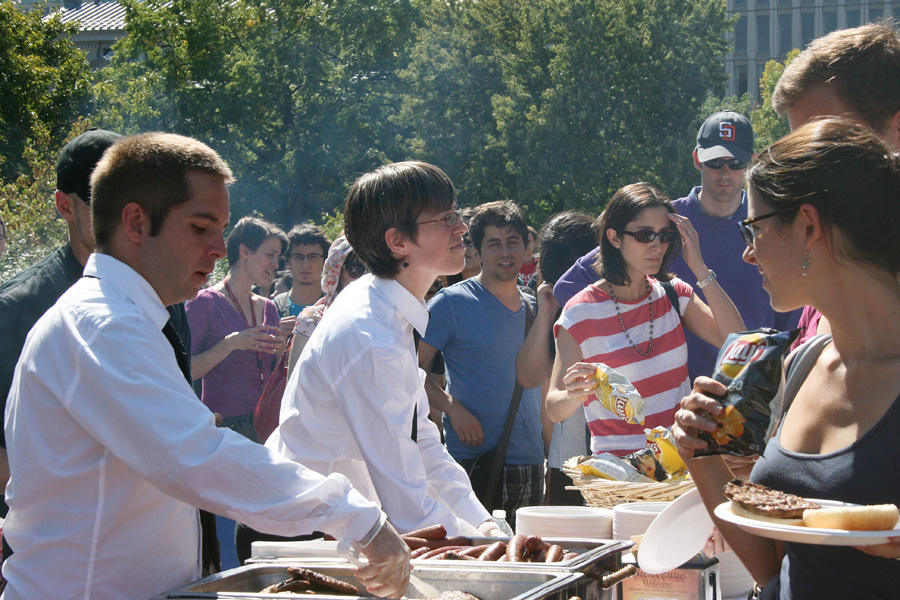
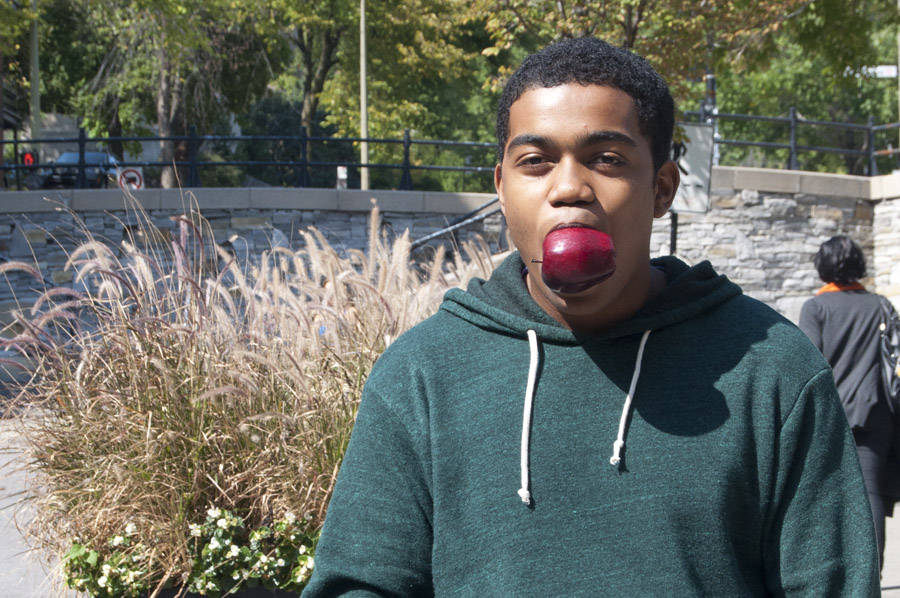
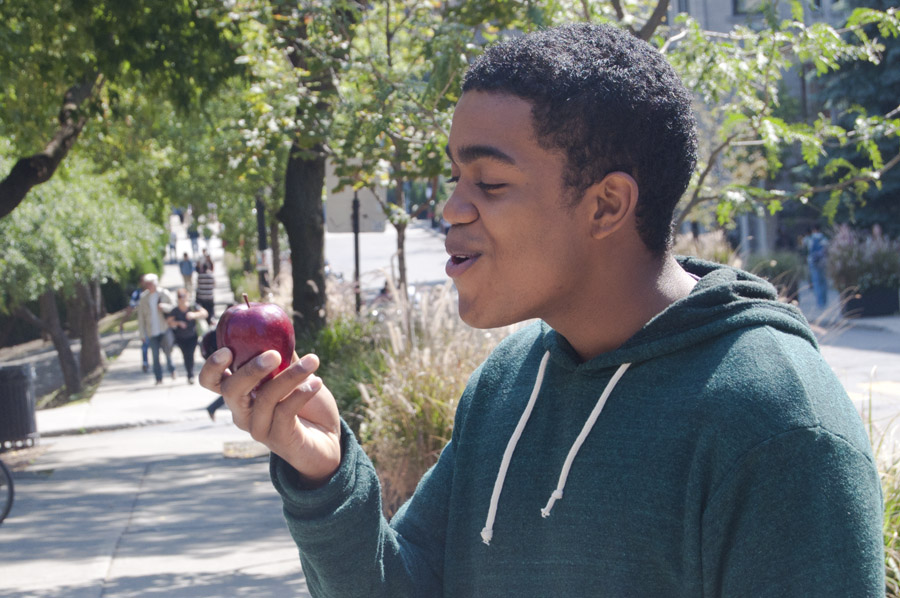
And here are the latest photos from Issue 3 of 2012-2013!









Published by the SPT, a student society of McGill University
 Boundless: McGill Tribune Special Issue
November 30, 2016
Boundless: McGill Tribune Special Issue
November 30, 2016
 The Sport Authority EP. 7: Looking back at Sam Hinkie and The Process
April 12, 2016
The Sport Authority EP. 7: Looking back at Sam Hinkie and The Process
April 12, 2016
 Rare books: The hard spine of the modern library
April 5, 2016
Rare books: The hard spine of the modern library
April 5, 2016
And here are the latest photos from Issue 3 of 2012-2013!
 Boundless: McGill Tribune Special Issue
November 30, 2016
The Sport Authority EP. 7: Looking back at Sam Hinkie and The Process
April 12, 2016
Rare books: The hard spine of the modern library
April 5, 2016
Boundless: McGill Tribune Special Issue
November 30, 2016
The Sport Authority EP. 7: Looking back at Sam Hinkie and The Process
April 12, 2016
Rare books: The hard spine of the modern library
April 5, 2016
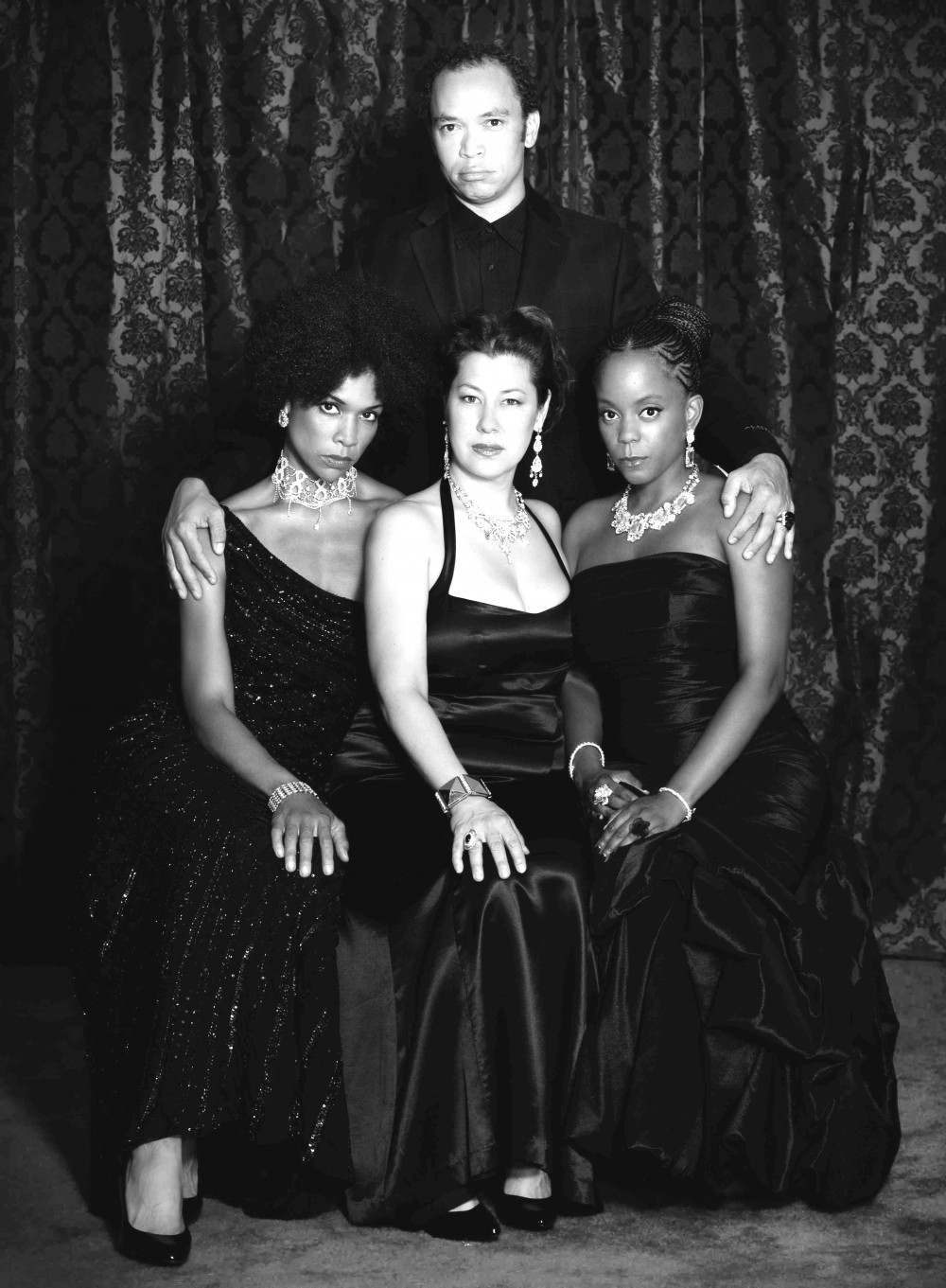
A fusion of new and old takes the stage this week with Metachroma Theatre’s inaugural production, Richard III, brought alive through a contemporary spin on a Shakespearean classic. As Montreal’s newest theatre company, Metachroma aims not only to pay homage to he Bard, but also to make a cultural statement that resonates with the modern audience. The concept of “beyond colour”—the literal translation of the Latin words “meta” and “chroma”—has unified actors and actresses of visible minorities from around the city to take up roles traditionally denied to them.
For actress Julie Tamiko Manning, this unity is part of the fun of getting involved. Manning, who plays Clarence, in addition to the Duchess of York, a bishop, and a soldier (she plays both the characters of mother and son), is a founding member of the company and has witnessed the production’s evolution. “I’ve lived in Montreal for 20 years and there aren’t a lot of opportunities for actors of colour,” she says, making light of an ironic dilemma. Indeed, it is surprising that in a space as diverse as Montreal, visible minorities still remain underrepresented on the main stage.
Azeem Nathoo, another cast member, had no problem finding representation as an actor of colour when he lived in Britain. “Here, when I came back, I realized we were behind,” he says, referring to the traditional North American preconceptions of how actors should ‘look the part.’
In choosing Richard III for their first production, Metachroma Theatre invites the audience to forget colour, and simply, enjoy the show. “The story can be told by whomever,” says Manning. “It’s unnecessary for there to be a label.”
Instead, the company asks audience members to join them in untangling the complex web of deception and horror that is Richard III. An enduring tale that is as relevant today as it was during Shakespeare’s time, Richard III recounts the story of a man whose lust for power knows no bounds, and whose selfishness will cost him even more. He mercilessly cuts down anyone standing in his way, alienating an entire nation.
“The power struggle, the arrogance, it really resonates with today’s audience,” Manning says. Indeed, the dictatorship of Richard III continues to hold political salience, nearly 600 years after it took place.
Notably, McGill graduates are among the cast members. Nathoo, who studied economics and political science, has since found his true calling in the theatre world. Although he looks back fondly on his time at McGill, he adds a word of advice for McGill students who are thinking of dipping their feet in the acting industry: get proper training.
“I ended up going back into training. You need something like that,” says Nathoo, who became involved in his first production as a non-actor while studying at McGill.
While such devotion to the stage may not be for all of us, Metachroma’s Richard III is perfect for those who are simply content with sitting back and admiring the art of theatre.
Richard III will run from September 19th to the 30th at the Segal Centre of Performing Arts, 5170 Côte-Ste-Catherine
 Boundless: McGill Tribune Special Issue
November 30, 2016
The Sport Authority EP. 7: Looking back at Sam Hinkie and The Process
April 12, 2016
Rare books: The hard spine of the modern library
April 5, 2016
Boundless: McGill Tribune Special Issue
November 30, 2016
The Sport Authority EP. 7: Looking back at Sam Hinkie and The Process
April 12, 2016
Rare books: The hard spine of the modern library
April 5, 2016
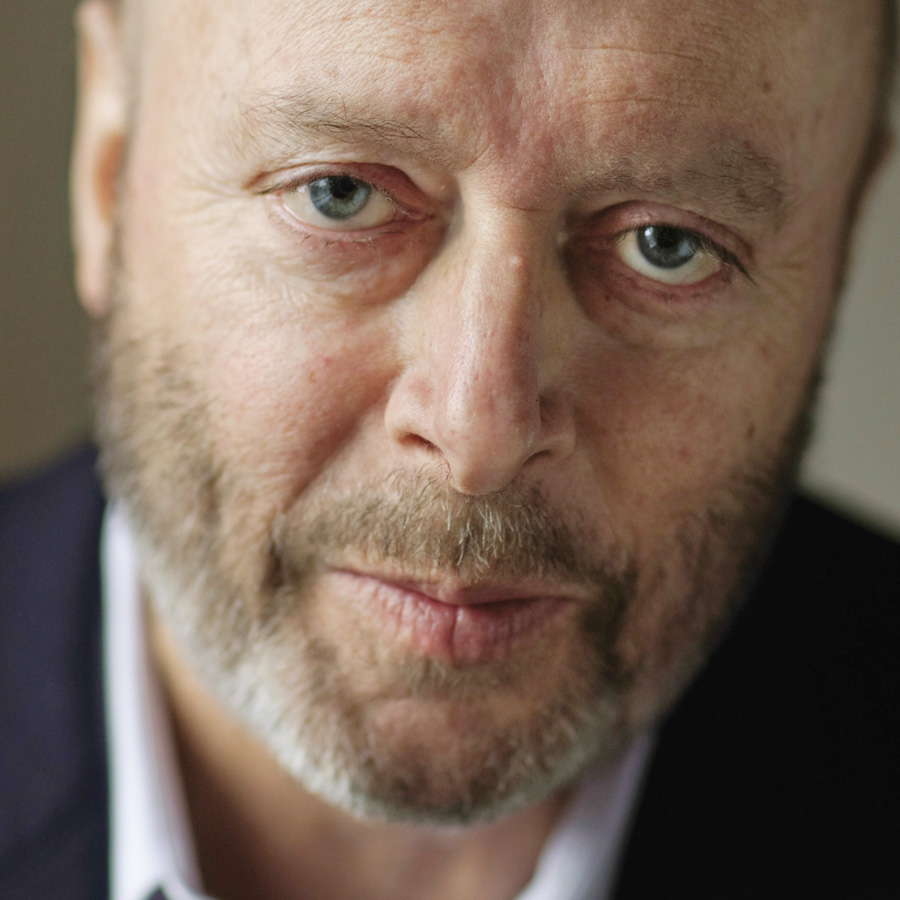
When Christopher Hitchens learned that he was the subject of a prematurely written obituary at the outset of 2007, he decided to set down an autobiography before the corrected proof came in. The book came fast on the heels of his bestselling anti-theist tirade, God Is Not Great: How Religion Poisons Everything. Brimming with Hitchens’ customary eloquence, immutable moral certitude, and jaunty wit, the autobiography was an instant success.
On June 8, 2010, when he was due to double-bill both The Daily Show and the 92nd Street Y, Hitchens awoke to find he was barely breathing. Weeks later, the diagnosis was in: Hitchens had Stage Four esophageal cancer. As the author was fond of saying, there was no Stage Five.
For the next 19 months, Hitchens attacked life with furious, defiant abandon. Despite undergoing extensive debilitating treatments, his incendiary polemics in Slate continued, as did his prolific speaking engagements. In his last weeks, drifting between frail consciousness and morphine induced stupor, he composed an incisive essay on G.K. Chesterton, whose biographer he scolded for misinterpreting aspects of the man’s character. It was during this period that he wrote his final book.
Mortality is unlike any of Hitchens’ previous writings. In past works, Hitchens delivered beautiful analyses with an overwhelming confidence, ranging from invectives against Mother Teresa to detailed examinations of George Orwell and Thomas Jefferson. In Mortality, a distillation of Hitchens’ dying thoughts and observations loosely grouped into chapters, the writing feels less grounded. There’s no sense of this missing spirit in chapters centered on religion or torture; contemplations of that old lie, “What doesn’t kill you makes you stronger,” as well as cancer etiquette, however, evince a rare helplessness in the face of his characteristic self-assuredness. This chink in the stoic armour is precisely what makes the personal chapters, like that in which the author laments the loss of his voice, so affecting. Especially distressing is the final chapter, which consists of his fragmentary personal jottings—one cannot help but picture the waning author amidst a web of IVs, scrambling to write his final thoughts.
Nonetheless, Mortality is replete with the perspicacity which Hitchens’ readers have come to expect. The most perceptive writers tend to expand from the specific to the general, and Hitchens fills his pages with observations that use the immediately personal to glean something broader. His protracted discussion of his own medical treatment never borders on the solipsistic, and seems largely formulated to emphasize the maddening senselessness of those standing in the way of certain medical research. While fraternal accounts of similar cancers, such as that written by the British columnist John Diamond (the laudably honest C: Because Cowards Get Cancer Too) opt for a narrative, Hitchens refuses to tell a story—he has too many ideas to limit himself with a story arc.
Although his obituary ran on December 15, 2011, Hitchens always endeavored to write as if he were to be read posthumously. With Mortality, the first book published after his death, Hitchens is still flashing what his close friend Ian McEwan calls his “Rolls-Royce mind”—it’s just that he’s suddenly become more human.
 Boundless: McGill Tribune Special Issue
November 30, 2016
The Sport Authority EP. 7: Looking back at Sam Hinkie and The Process
April 12, 2016
Rare books: The hard spine of the modern library
April 5, 2016
Boundless: McGill Tribune Special Issue
November 30, 2016
The Sport Authority EP. 7: Looking back at Sam Hinkie and The Process
April 12, 2016
Rare books: The hard spine of the modern library
April 5, 2016
For the musically shy, POP Montreal’s surplus of talent can be daunting, if not overwhelming – the annual festival, a landmark on the local calendar for the past decade, boasts over 350 acts wedged into a whirlwind five-day extravaganza. Luckily, the Tribune’s intrepid team has scoured the lineup for you—from household names to up and comers, we’ve got the most anticipated gigs covered.
 Grizzly Bear
When “Sleeping Ute,” the first single off Grizzly Bear’s latest offering Shields was released, I fell into a momentary state of shock. The group’s last album—2009’s Veckatimest —had put the Brooklyn-based quartet at the top of year-end lists, casting an indelible mark on listeners with its tight-knit instrumentation, impeccably clean riffs, and dream-like vocal harmonies. In contrast, “Sleeping Ute” opens with explosions of sound; jangling guitar chords are sent spinning wildly, contraposed to crashing cymbals and booming drums. The difference between what I expected to hear and what I actually heard was night and day.
Shields is now streaming in its entirety at NPR’s website, and it’s quite clear that Grizzly Bear has grown much in their three year hibernation. But the traits that made the group stand out from the indie-rock multitude—the rustic-made-cool demeanour; the punchy drums that swim in perfect complement to the bass; Ed Droste’s voice, which carries too much emotional oomph for just one man—are very much still there. While much of Veckatimest seems cool and refined, Shields brims with energy, with tracks that jump between the frenetic and the anxious, irrespective of tempo.
From its inception as Droste’s solo project, Grizzly Bear has steadily ascended to its current status as a veritable household name. In one sense, Shields represents a zenith of this progression; whereas previous work was predominantly created by Droste, songwriting for this album was fully collaborative. Living up to their ursine moniker, the four retreated to the wild beauty that is the Catskills in New York to work on the new tracks. The result is a sonically rich compilation that plunges emotional depths—as well as a musical act that, after four albums spanning nearly a decade, continues to surprise.
Performing Sunday, Sept. 23th at 8:00p.m., L’Olympia (1004 Ste-Catherine Est.)
— Chris Liu
 Beta Frontiers
Here’s the problem with writing on new artists: sometimes, the material just isn’t there. In the case of the Toronto-based electronic-act Beta Frontiers, this conundrum is compounded by the fact that the artist seems to be playing hard to get. The photos scattered throughout their Bandcamp profile feature a male figure whose face is perpetually covered. The other elements of these shots reveal an intriguing mix of influences, ranging from urban decay, to retro Tokyo, and finally to arcade games of decades past. The only clear picture one can draw is from the music itself—and what a picture it is.
Running throughout the tracks is a violence: barely contained, yet nevertheless, channelled into a frenzied mix of primal-techno majesty. Songs are made with swift, steady strokes. Relentless bass lines and hard, driving beats underscore synths that explode like laser lightshows. Notes often sound on the verge of being ripped apart at the seams. Irresistible hooks are looped in cascading cycles of ecstasy.
To date, Beta Frontiers have just one EP to their name; although the repertoire is accented by remixes of Fear of Men’s “Green Sea” and Major Lazer’s “Get Free”—both upgrades, in this writer’s view. Signed to Toronto indie label Daps Records alongside acts such as Phèdre, the attention received by Beta Frontiers has thus far been largely local. But with sizzling, neon-tinged tracks that practically scream to be heard, it’s unlikely that Beta Frontiers will be going away anytime soon.
Performing Thursday, Sept. 20th as part of a Daps Records showcase, beginning at 9:00p.m., CFC (6388 Saint-Hubert.)
— Chris Liu
 Gotye
Gotye
Singer-songwriter Wouter De Backer, commonly known by his stage name Gotye, is a POP act not to be missed. The Belgian-born Australian first gained international popularity with his 2011 single, “Somebody That I Used to Know.” Almost a year after its Australian release, which featured a collaboration with New Zealand’s Kimbra, the track reached the number one spot on Bilboard’s Hot 100. It’s no wonder his songs appeal to a large audience—Gotye tackles everyday themes with an ear for catchy, honest lyrics. Tracks like “I Feel Better” brim with upbeat rhythms that capture the listener’s worries, while “State of the Art” is slightly darker, and demonstrates Gotye’s versatility. His ability to cover well-worn ground in pop compositions, while exploring both pleasure and pain, give his catchy sound surprising depth.
Gotye’s videos possess a certain creative and artistic quality that makes watching his music just as much of a pleasure as listening. With over 319 million hits on YouTube for “Somebody That I Used to Know” alone, he demonstrates that the human body and a little bit of paint go a long way towards capturing an audience. Animated videos such as “Hearts a Mess” from his second album mirror the macabre glint of his verses. Vocals in the piece cut through the instrumentals, with lyrics such as “Pick apart the pieces of your heart/Let me peer inside/Let me in where only your thoughts have been/Let me occupy your mind as you do mine,” transfixing listeners with an eerie melancholia.
Performing Friday, Sept. 21st at 6:00 p.m., Metropolis (59 Ste-Catherine Est.)
— Kate Winbaum
 Grimes
In 2009, a few citizens of Minneapolis were treated to a peculiar sight: a DIY houseboat, a straggle of wood and sweat, decked out in hand-drawn murals and awkwardly-fitting windows, drifting down the Mississippi. Its inhabitants were the young couple Claire Boucher and William Gratz—along with 20 pounds of potatoes and several chickens. The homestead was rounded out with a copy of Twain’s The Adventures of Huckleberry Finn. But the romantic sojourn ended all too quickly, repeatedly stalled by engine troubles and the police. A few miles downstream is all that the pair accomplished, far short of their goal of New Orleans.
One may wonder whether the mental asylum ought to be their next destination. On the contrary, Boucher—who records under the name Grimes—has quickly ridden a wave of internet buzz in the past two years. Visions, released earlier this year, received the “Best New Music” commendation from the almighty gatekeeper to indie popularity, Pitchfork. Tracks feature Boucher’s signature falsetto, gliding on an ecclectic mix of deterministic synth staccatos. The result is a feathery, saccharine confectionery that is eminently infectious. Though Boucher’s pop sensibilities take prominence, influences are as varied as contemporary R&B, medieval music, and Korean pop.
Boucher is a former McGill student, but her restlessness, apparent in her tracks, didn’t allow her to stay long. Her brief forays into Russian Literature, then neuroscience, ended with her expulsion—a consequence of missing a year’s worth of courses in order to record. Perhaps no hard feelings remain; the music video for “Oblivion” features Molson Stadium and McGill’s football team. At three million views, giving Boucher the boot might have been the best outcome for both parties.
Performing Thursday, Sept. 20th at 8:00p.m., Club Soda (1225 St. Laurent.)
— Chris Liu
 Tops
Tops
The music of TOPS inhabits a land of timelessness. The Montreal-based quartet is somehow able to condense vast periods of pop music history into tracks that serve catchy riffs and nostalgia in equal, hearty measures.
Lead singer Jane Penny’s woozy vocals are simultaneously airy and down-to-earth. This translucent quality juxtaposes the colour and vivacity brimming in the band’s tracks. The real talent of the group, however, is in delivering complex musical arrangements in a frank and simple manner, as if to shrug off the difficult task of songcraft with a ‘so what?’
“Rings of Saturn” is one song which perfectly exemplifies this sound. The track opens with a dense synth fog, after which tangy guitars and an enticing melody follows, the latter hauntingly carried by Penny. Most of the time the lyrics lie tantalizingly just out of reach of comprehension; the themes one does pick up are an intriguing mix of astronomy and romance. This nebulous quality does not detract, for one is already moonstruck.
The group’s debut album Tender Opposites was recorded at La Brique, a loft venue at Durocher and Beaubien, and released by local label Arbutus earlier in the year. Already, the four have benefited from online buzz, including praise from the influential tastemakers Gorilla vs. Bear. The attention is unlikely to detract from the intimacy and unpretentiousness that is at the heart of their sound—one that is sweet, piercing, but simply so.
Performing Friday, Sept. 21st at 9:30p.m., Cabaret du Mile-End (5240 avenue du Parc.)
— Chris Liu
 Ben Howard
POP Montreal’s got a heaping of well-known acts, but the one I’m anticipating most is Ben Howard. Launching his debut album Every Kingdom less than a year ago, Howard’s cache of talent was quickly apparent.
As one of UK’s Mercury Prize winners for Album of the Year, Howard has already sold out shows across Europe and the UK, landing Howard a spot in the renowned music festival SXSW—all within his first year of touring. If his ticket sales haven’t convinced you, his music will certainly do the trick. Using poetic lines resembling that of Bob Dylan accompanied by the angelic flavour of Joni Mitchell, Ben Howard has rekindled the world’s love affair with folk music. With singles such as “Keep Your Head Up,” he uses mountain-moving lyrics and instrumental build-up that will uplift any cynic. His raw vocals, orchestrated with the cello, percussion, accordion, ukulele, guitar, and bass are truly refreshing.
Though I have yet to see his act live, his recorded performances—including a chilling rendition of Carly Rae Jepsen’s “Call Me Maybe” on Radio 1 Live Lounge—have left me feeling giddy at the opportunity. If you know what is good for you, I will see you in the front row.
Performing Sunday, Sept. 23rd at 8:00 p.m., Metropolis (59 Ste-Catherine Est.)
— Meaghan Tardif-Bennett
 St. Vincent
I first got word of St. Vincent, née Annie Clark, when she toured with Sufjan Stevens in 2006. “Cool name, lady,” was my first thought, followed by “Man, Sufjan is so dope.” Several years later, and my vocabulary somewhat improved, I find myself excited at the prospect of seeing her solo show.
The Manhattan-based artist and Berklee College of Music dropout first strikes one as an English rose—short curls, large hazel eyes, and a delicate chin make for a disarming first impression. Upon hearing St. Vincent sing, however, one quickly realizes that there’s something lurking beneath the charmingly sweet surface. On the one hand, St. Vincent can channel sultry Diana Krall-like vocals; on the other, she is a capable instrumentalist, with a penchant for launching into solid prog-rock riffs. Clark’s tendency to accompany this sudden oscillation with changes in theme, from upbeat to macabre, was especially evident in her debut release Marry Me (which featured her former band mates from The Polyphonic Spree).
St. Vincent is now onto her third album, entitled Strange Mercy, and readily admits that her record owes a debt to Janet Jackson’s iconic Rhythm Nation. Although there’s less obvious thematic turnarounds than earlier albums, Strange Mercy keeps to the lyrically strong tradition of St. Vincent’s past work. Keep an ear out for more recent tracks, like the dream-pop drenched “Cruel,” as well as older, more musically dialectical pieces, like “Paris is Burning.” If you’re lucky, she might even drop an exquisitely clean Tom Waits cover.
Performing with David Byrne, Friday, Sept. 21st at 8p.m., Église St. Jean Baptiste (370 Rue Saint Jean.)
— Ilia Blinderman
 Stars
Stars
Last we heard from Stars, they launched their fifth album and confirmed that they would be taking a hiatus. This news was quickly followed by rumours that the homegrown Montreal group was breaking up.
The five-piece indie pop stalwarts were my introduction to everything I have come to love musically, so I was devastated. At the time, their work mirrored these concerns; filled with sorrow and mourning, as though they themselves did not know the fate of the band. Once they finished touring, they surprised everyone by taking part in a free secret show last fall. Admitting no more than 100 people, guests were taken by bus to a secluded part of the countryside to experience the band’s intimate performance. Having been one of the lucky few to witness this spectacle, Stars shattered any doubts I had about their rumoured separation. Instead, the experience left me anticipating their upcoming projects.
Finally, 15 months after they announced their hiatus, Stars are back with a new album and a vengeance. Their new release The North is a symbol of their newfound optimism. Temporarily recording in B.C., \ took this opportunity to experiment with their sound, incorporating rippling melodies that add an ephemeral air to their usual style. Tracks like “Hold On When You Get Love and Then Let Go When You Give It,” showcase their exceptional songwriting, piercing the heart and reminding us why they are a musical force to be reckoned with. All that to say: the Stars are out—and they have never been so bright.
Performing Wednesday, Sept. 19th at 8:00p.m., La Tulipe (4530 Papineau Ave.)
— Meaghan Tardif-Bennett
 Boundless: McGill Tribune Special Issue
November 30, 2016
The Sport Authority EP. 7: Looking back at Sam Hinkie and The Process
April 12, 2016
Rare books: The hard spine of the modern library
April 5, 2016
Boundless: McGill Tribune Special Issue
November 30, 2016
The Sport Authority EP. 7: Looking back at Sam Hinkie and The Process
April 12, 2016
Rare books: The hard spine of the modern library
April 5, 2016
Painting, sketchwork, photography, and performance art are on display at La Rentrée, highlighting pieces by Eliza Griffiths, Pierre Dalpé, and Mariane Bourcheix-Laporte that explore themes present in contemporary art.
Love, Alienation, and Free Association
Eliza Griffith’s suite of paintings and drawings explores issues of need, estrangement, intimacy, gender identity, and sexuality, is the most striking of the three installations.
Colour—warm pinks, deep reds, and bright blues and greens—immediately draws the viewer closer to Griffiths’s large tableaux. Griffiths plays with colour and form in a seemingly impressionistic, yet ultimately, contemporary layering method that defines the interaction between subjects. Focus is a visually important aspect of her work, and realism blends in to the unfinished and unreal. The eye is pulled involuntarily towards the center of each tableau where the focus is sharpest, and line and colour are most polished. Towards the edges, form becomes a vague suggestion, with one figure in People Searching for Peace of Mind Through Psychoanalysis—Grief noticeably lacking a foot.
The content of Griffiths’s paintings is absorbing. Each piece feels like a film still, leaving the viewer incomplete, and compelled to learn more. Viewers may find themselves wishing the characters would move, so that a deeper understanding of what is happening might be reached.
Of the twelve paintings, four are particularly impactful. In Convalescence, a figure relaxes in a classic pose; makeup is smeared clumsily across its face, like a child trying on her mother’s lipstick for the first time. Upon a second look, this figure reveals itself to be a man. In Head of Steam, an exhaling male face takes up the entirety of a large canvas; his huge brown eyes are transfixed on the viewer, and framed by a shock of blue eyeshadow. In Situation/Hassle, an androgynous figure holds the shoulders of a young man and woman arguing. Finally, Interval (Green Interior) depicts a man and woman in the foreground; the woman is nude and clean-faced, hair pulled back, whilst the man wears an open green shirt and matching eyeshadow, and appears as if he is about to speak. This last painting is particularly effective at evoking the viewer’s curiosity.
The artist’s charcoal sketches are darker, both visually and thematically. Ripped pages and inksplots feature in this corner of the exhibition, applied in loose strokes and shadowy outlines. The interaction between forms and people is present here once more, where shape emerges stealthily from line and squiggle; each seemingly isolated, but somehow woven together. A male nude reclines on an ottoman with the words “I love you” scrawled behind him; a woman sprawled on the ground is complemented by the deeply affecting phrase “Love is a funny thing, you don’t know it’s real until it’s caused you pain.”
Though often perplexing, this part of La Rentrée is particularly thought-provoking and not to be missed.
Personae
This portion of the exhibit consists of Pierre Dalpé’s work in photography, and is easily summed up by Oscar Wilde’s quote, printed on the wall between two pictures: “Man is least himself when he talks in his own person. Give him a mask and he will tell you the truth.”
Here, men and women in groups of one, two, and finally three are photographed in costume, often in drag. The viewer is presented with a glimpse of people’s private lives, and although each subject directly regards the viewer, the feeling is distinctly voyeuristic. Bondage, bedroom life, ballerinas, clowns, and a Toreador all figure here. Most notably, two actresses (who are indeed men in drag), sit at their makeup table backstage and apply makeup to melancholy faces while a man and a mannequin observe.
Dalpé shoots in colour as well as in black and white, with interesting uses of mirrors and symmetry that toys with the idea of reflections. These are the most enjoyable aesthetic elements of Dalpé’s pieces, and are responsible for his visual success.
Interstitial Stillness
Mariane Bourcheix-Laporte’s piece, on display as a video playing in the Ste-Catherine Street vitrine, is by far the most perplexing of all the works on display. The artist defines interstices as negative, “non spaces” within construction in public areas. In this piece, she attempts to physically explore these “non spaces” through “non actions,” and the video documents the involuntary twitches of her body as she tries to remain still while draped over a staircase support. It’s an intriguing and imaginative concept, but perhaps not one that is well expressed, although I visitors are encouraged to stop by the vitrine on their way out and see what they think.
La Rentrée is bursting with provocative, evocative, and controversial themes which are, more often than not, successfully conveyed to the audience.
This exhibit runs until October 12th at Concordia University’s FOFA Gallery. Admission is free.
 Boundless: McGill Tribune Special Issue
November 30, 2016
The Sport Authority EP. 7: Looking back at Sam Hinkie and The Process
April 12, 2016
Rare books: The hard spine of the modern library
April 5, 2016
Boundless: McGill Tribune Special Issue
November 30, 2016
The Sport Authority EP. 7: Looking back at Sam Hinkie and The Process
April 12, 2016
Rare books: The hard spine of the modern library
April 5, 2016
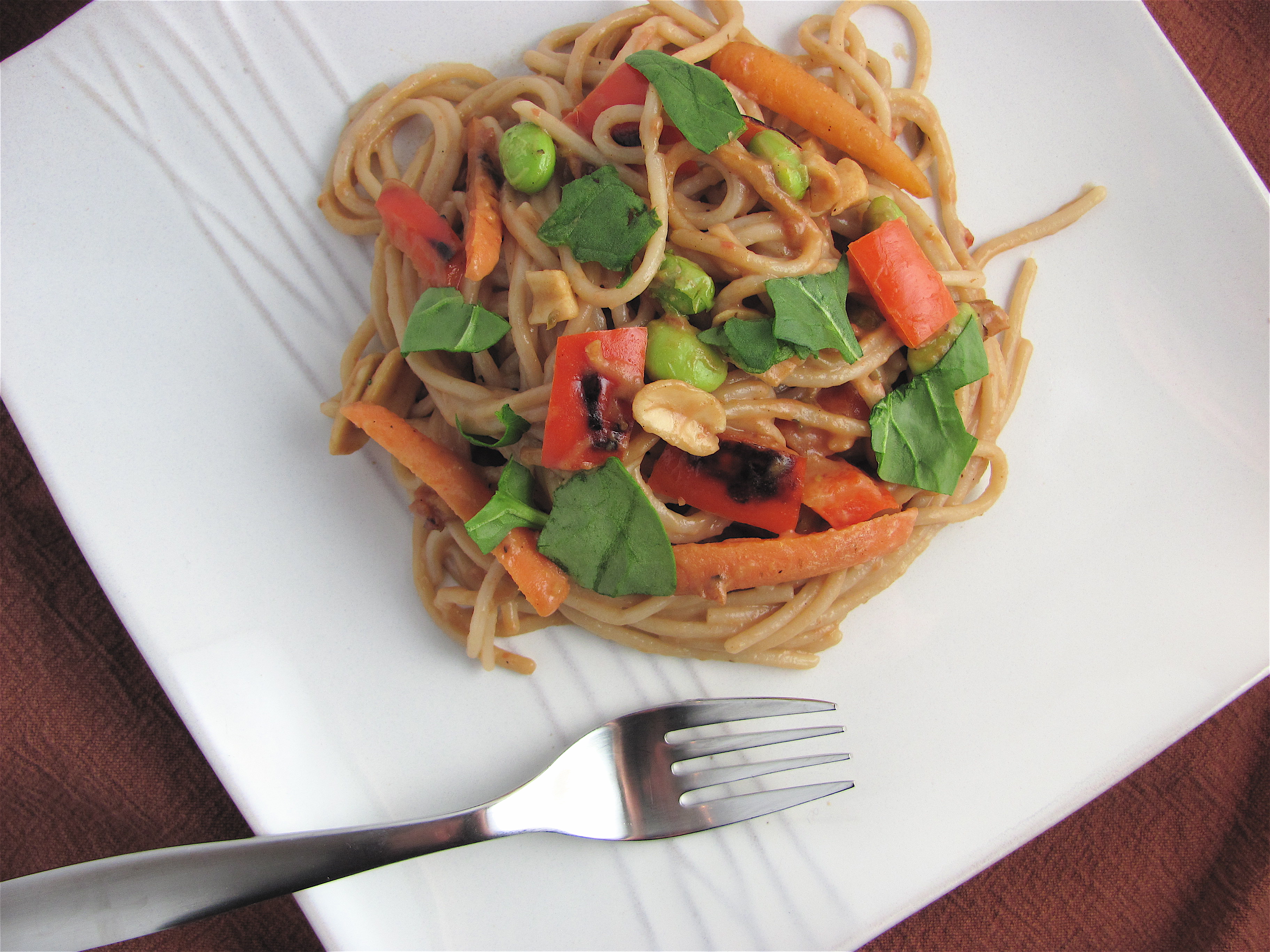
Ingredients
½ box of linguine pasta (or any spaghetti-like pasta)
½ cup shredded cabbage
2 carrots, thinly sliced
1 cup sugar snap peas, trimmed
1 cup bean sprouts
Sauce
½ cup smooth peanut butter (all- natural, peanuts only)
½ cup soy sauce, low sodium if you prefer
2 tbsp. rice vinegar
2 tbsp. fresh lime juice (approx. one lime)
2 tbsp. sesame oil
1 inch ginger, shredded
2 tbsp. garlic, diced
½ tsp. chilli powder (or to taste)
2 tbsp. brown sugar
Suggested toppings
fresh coriander, chopped
green onions
roasted peanuts
toasted sesame seeds
Makes 2 servings, and should take 30-40 minutes.
Method
1. The sauce
Combine the peanut butter with brown sugar and cook on low heat until just bubbling. Stir occasionally to prevent burning. Add more salt, pepper, chilli or sugar to taste. Keep warm, but not boiling, to let the tastes come together.
2. The noodles and veggies
Cook pasta according to package instructions. Steam the broccoli for three minutes in a steamer, or in a pot of boiling water with a steamer inside. After three minutes, add the cabbage, snow peas, and carrots, and steam for three minutes more. Alternatively, you can lightly stir-fry the veggies in a tablespoon of oil (sunflower works well) until done to your taste.
3. Assemble
Either lump everything together in one bowl, or be slightly more artistic, and mix the noodles with a little sauce to coat. Assemble on a platter or individual plates. Mix the veggies together and assemble on top. Drape the mountain of goodness with more sauce, sprinkle with the suggested toppings, and enjoy!
 Boundless: McGill Tribune Special Issue
November 30, 2016
The Sport Authority EP. 7: Looking back at Sam Hinkie and The Process
April 12, 2016
Rare books: The hard spine of the modern library
April 5, 2016
Boundless: McGill Tribune Special Issue
November 30, 2016
The Sport Authority EP. 7: Looking back at Sam Hinkie and The Process
April 12, 2016
Rare books: The hard spine of the modern library
April 5, 2016
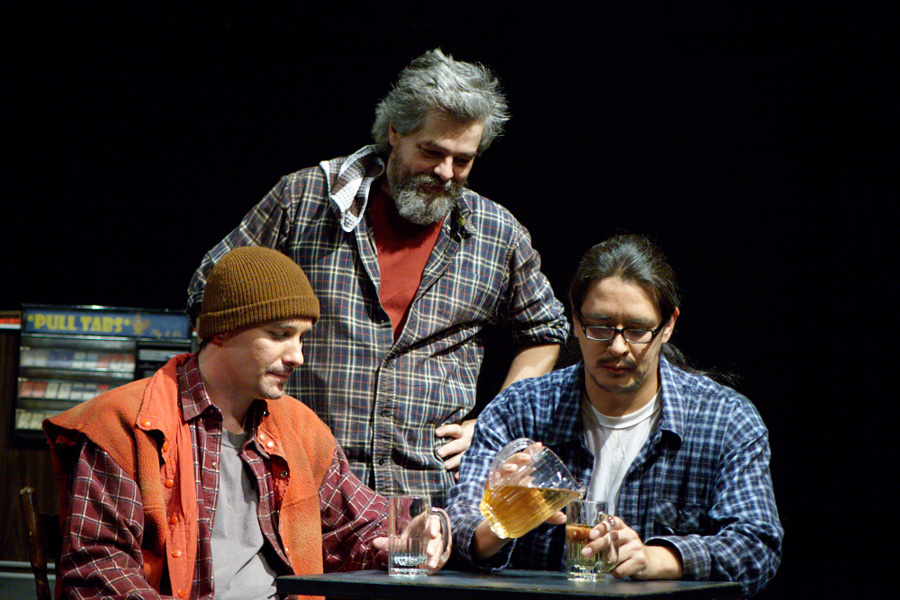
Kevin Loring’s Where the Blood Mixes, winner of the 2009 Governor General’s Literary Award, has an intriguing simplicity in its outlook. Although the Teesri Duniya Theatre production foregrounds a realism with its sharp humour, Lib Spry’s direction helps the performance segue into the poetic.
The sombre play about the haunting legacy of Canadian First Nations residential schools is gradually infused with poignancy, as it depicts the reality of what the first peoples have gone through—and continue to experience—as a community.
The story is set in a First Nations community “where the two rivers meet, where the wind sings songs of the dead,” and where in the local bar, Floyd (Jeremy Proulx) and Mooch (Charles Bender) also meet as old drinking partners. From what seems like an elegantly simple scene, the play proceeds to unveil a layered depth. We soon discover that both characters are residential school survivors—an experience which neither has outlived as they continue to lead troubled lives. Mooch regularly steals money from his girlfriend, June (Emilee Veluz), to fund his drinking habits, while Floyd’s bitter disposition manifests itself in his refusal to reminisce with Mooch, even about the few good memories that they once shared.
Although the play frequently moves backwards in time, the characters’ wounded past is never directly addressed. Paradoxically, a play driven by series of anecdotes is characterized by a reluctance to speak—or perhaps even a deliberate evasion of speaking—at least initially. This apparent stasis is finally broken when Floyd’s daughter Christine (Alarey Alsip), whom the state placed in the care of foster parents when she was still an infant, manages to get in touch with her father and decides to visit him. What follows is an outpouring of soul-wrenching confessions, a detailing of losses and reconciliations that are set off—with great surprise—by a deluge of tears from Floyd, who, prior to his daughter’s arrival, remained callously stoic.
This act of storytelling provides the platform for healing and connecting. If Floyd and Mooch were to stay silent, their stories would die with them, and so would history. Throughout the play, numerous instances of comic dialogue ease the audience into emotionally-wraught situations, while several heartfelt scenes provide the piece with a beauty that saves it from being all too distressing. Though the content of the play may seem like a melancholic endeavour to watch, it ultimately ends in hope as the community discovers the voice of common humanity.
Artistic Director Rahul Varma described it as a “message that needs to be heard over and over again.” The message is one that is both touching and valuable, highlighting Canada’s First Nations cultural heritage, one which should never be forgetten.
Teesri Duniya’s production of Where the Blood Mixes runs Wed-Sat at 8pm, with weekend matinees at 2pm, until Sept. 30th, Centre Culturel Calixa-Lavaleé (3819 Calixa-Lavaleé). Student tickets are $12.
 Boundless: McGill Tribune Special Issue
November 30, 2016
The Sport Authority EP. 7: Looking back at Sam Hinkie and The Process
April 12, 2016
Rare books: The hard spine of the modern library
April 5, 2016
Boundless: McGill Tribune Special Issue
November 30, 2016
The Sport Authority EP. 7: Looking back at Sam Hinkie and The Process
April 12, 2016
Rare books: The hard spine of the modern library
April 5, 2016
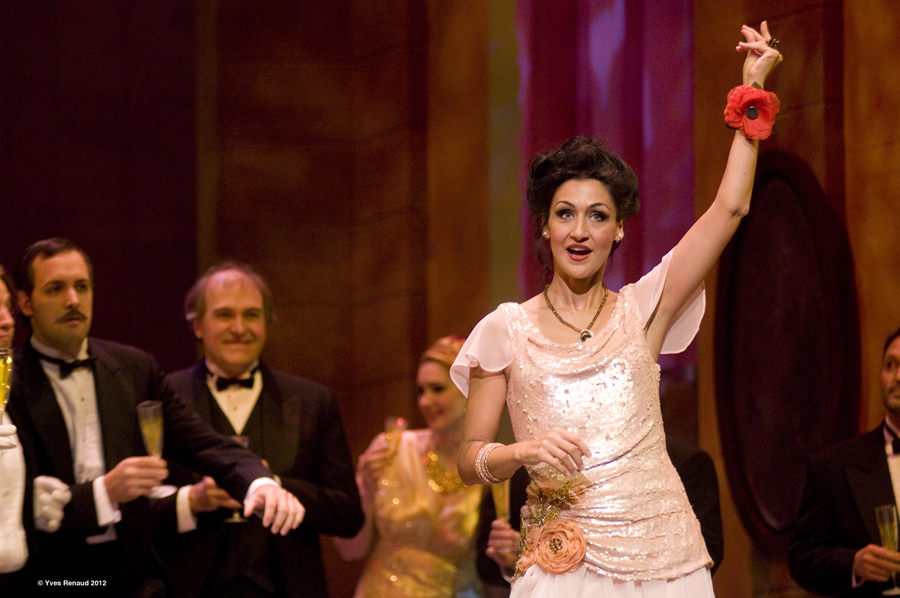
This past Saturday, Opéra de Montréal opened its 2012-2013 season with Verdi’s La Traviata. The opera tells the story of two lovers, Violetta and Alfredo, whose public love affair brings great shame to Alfredo’s family. After an unexpected visit from Alfredo’s father, Violetta realizes the detrimental consequences of her love affair on his family’s honour, and she leaves Alfredo. Alfredo mistakes her sudden departure for infidelity, and humiliates her in front of many close friends and family, including Alfredo’s own father. Some time later, Alfredo finally learns the truth about Violetta’s sacrifice, and rushes back to her side to apologize. Violetta, however, is dying from a serious illness, and Alfredo finds himself in a race against time.
“It’s really the story of a great love affair,” says Opéra de Montréal’s artistic director Michel Beaulac, “[It’s about] people who weren’t really meant to socially blend … to live together, to fall in love with one another, but they do, and … before she dies, all of the characters—the father, the son who is in love with Violetta—they all realize that finally, all of those social differences have no importance, and that this separation should have never taken place.”
La Traviata was written in 1853, during a phase in which Verdi wrote an opera approximately every nine months. This creative spree resulted in what is now known as his ‘popular trilogy’ of opera works—Rigoletto, Il Trovatore, and La Traviata. In the past two years, Opéra de Montréal has performed both Rigoletto (2010), and Il Trouvadore (2011), and concludes its presentation of Verdi’s trilogy with this week’s performances.
Few may grasp the amount of work required for such an elaborate production. “Before we go on stage, we start building the set; we mount the lighting equipment … and we start planning the sequence of when the set changes are going to take place, how they are going to take place, and how many members of the stage crew are going to be necessary to make this operation possible,” Beaulac said. “The most important roles are sung by artists who have done the roles several times, so they all know their parts.”
From the onset of the opera, the soloists were captivating in their roles. Grecian soprano Myrto Papatanasiu, playing Violetta, possesses vocal talent that not only allowed her to communicate the musical elements of the opera, but also to clearly express the complexities of her character, leaving audience members with a slight heartache after leaving the theatre.
In describing Opéra de Montréal’s process for choosing a soloist to play Violetta, Mr. Beaulac explains that “when you have something very specific in mind in terms of the characterization, the interpretation, the colour of voice, the stage presence … one must have the soloist in mind … and Myrto Papatanasiu is splendid in the role.”
Many of the choir members onstage are members of Opéra de Montréal’s apprenticeship program—a training program designed for graduate students wishing to pursue professional careers in opera. Beaulac describes the program as a “stepping stone and the final preparation for an operatic career,” in which the students “have coaching, language courses, movement courses, [and] acting classes.”
Italian tenor Roberto de Biasio flourished as Alfredo, and his humble stage presence allowed for a tasteful yet emotionally compelling performance. Luca Grassi’s performance as Giorgio Germont, Alfredo’s father, was the highlight of the evening. In comparison to Violetta’s often dramatic persona, Grassi’s simple acting style quickly grasped the audience’s attention. His sonorous, colourful voice, paired with this tasteful acting technique, briefly drew the spotlight away from Violetta and forced the audience to listen—truly listen—to what he had to say.
La Traviata will be showing at Place des Arts, Wilfred-Pelletier hall, Sept. 18, 20, and 22. Opéra de Montréal offers heavily discounted ticket prices for students that range from $20-$25
 Boundless: McGill Tribune Special Issue
November 30, 2016
The Sport Authority EP. 7: Looking back at Sam Hinkie and The Process
April 12, 2016
Rare books: The hard spine of the modern library
April 5, 2016
Boundless: McGill Tribune Special Issue
November 30, 2016
The Sport Authority EP. 7: Looking back at Sam Hinkie and The Process
April 12, 2016
Rare books: The hard spine of the modern library
April 5, 2016
World Press Photo, journalism’s most prestigious annual photography contest, is currently exhibiting 161 award-winning photos in nine categories at Marché Bonsecours in Old Montreal. The show is part of a travelling exhibition set to tour 100 cities around the globe, and can be visited in Montreal until Sept. 30.
“We exist to inspire understanding of the world through quality photojournalism,” reads a sign at the exhibit. This epigraph perfectly represents the overarching mission of World Press Photo—an ambitious undertaking that brings together an international set of contributing photographers, each with unique perspectives and stories to share.
A large part of the exhibition is devoted to photography depicting current affairs. The year 2011 was marked by political turbulence, humanitarian crises, and natural disasters, including the Arab Spring, the earthquake and tsunami in Japan, as well as the massacre at Utøya, Norway. Such emergencies reach us through daily news reports in the comfort of our homes, far from the chaos and devastation in which they originate. The award-winning pictures of World Press Photo are key to breaking down the barriers of distance and time that inevitably limit the urgency of these events, and bringing them to our immediate attention. Even more than the written word, the universal language of imagery gives direct voice to people who lack the means to tell their stories themselves.
Central to World Press Photo is recognizing the importance of photojournalism in documenting major events in conflict hotspots around the world, and the courageous efforts of photographers who work to do so. Nonetheless, it is not only politics, suffering, and devastation that the photos seek to bring to our attention.
In other award-winning categories, photographers are praised for their ability to open viewers’ minds by documenting the daily life of societies discrepant to those of the Western audience. Stories like those told by Pietro Paolini’s stunning photographs documenting everyday life in Bolivia may not make international headlines, but are nevertheless hidden and pristine gems of culture, tradition, and natural beauty of which we are otherwise unaware.
Finally, World Press Photo emphasizes that photojournalism, in addition to enhancing an understanding of the world by presenting us with its actualities, also achieves this through an artistic form. The award-winning photographers were not merely in the right place at the right time, but have a genuine artistic talent and feel for aesthetics, enabling them to find beauty in the mundane and trivial instances of life we tend to take for granted. Common to all photographs is their capacity to touch us by capturing something beyond the mere visual: an emotion or a story that strikes a chord, inspiring us to see things differently or notice things to which we have been previously blind.
Montrealers rarely get opportunities to experience such evocative arrays of photography—make sure you don’t miss your shot.
World Press Photo is on display through Sept. 30, at Marché Bonsecours (350 St-Paul Street East). General admission is $12. $8 for individuals 25 and under.
Boundless: McGill Tribune Special Issue
November 30, 2016
The Sport Authority EP. 7: Looking back at Sam Hinkie and The Process
April 12, 2016
Rare books: The hard spine of the modern library
April 5, 2016
Q: Why are you an asset to McGill?
A: If you come at me with your hand raised, I will confidently high five it.*
Q: If you could high five anyone, dead or alive, who would it be and why?
A: Andre the Giant, because he has big hands.
Q: What is your secret talent?
A: Yeah, I don’t have one of those…
Q: Mac or PC?
A: I have a PC, but I dream of having a Mac.
Q: If you were a city in Canada, which one would you be and why?
A: Missisauga, Ontario, because it has the most character and it is also the best one.
Q: Are you from there?
A: No. Maybe.
Q: What’s your go-to hangover cure?
A: Oh man. Eggs. Just eggs. Scrambled with rice.
Q: Name one song that reminds you of your high school graduation.
A: The song. You know the song.
Q: How many times have you been to Gerts?
A: Oh man. Like 10. I’m pretty cool.
Q: What’s your favourite Disney movie?
A: That’s tough. I’m going to say D2: The Mighty Ducks. I used to watch it every day when I was in grade five. Like I’d do my homework, watch MD2, and then go to bed. I didn’t have [part] 1 or 3, [but] they were good movies too.
Q: Football or hockey?
A: Football. Go Falcons!
Q: Name one actor from Friends.
A: Jennifer Aniston?
Q: Owen Wilson or Luke Wilson?
A: Owen Wilson is funnier, but Luke Wilson is better looking. I’m more into personality so, Owen.
Q: Name one fashion trend you’ll never try again.
A: None.
Q: What’s your favourite artist or band from the ‘90s?
A: Does Nelly count?
Q: What reality TV show are you perfect for?
A: I would do well on The Apprentice because those guys are idiots. Can I say that? Yeah.
Q: What’s your signature drink?
A: Oh… Diet Pepsi.
Q: What’s the first word you think of when I say Redpath?
A: Library. That’s boring. Redpath… Sugar.

Q: Describe McGill in 3 words.
A: Party, fun, YOLO.
Q: Which section of the McGill Tribune is your favourite?
A: Sports. And student living.
Q: Who would star in the story of your life?
A: Justin Bieber.
Q: If you could go back in time to any historical event, which one would you go to and why?
A: I would go back to… I’m not a history person… The one time I hit two home runs in my little league baseball tournament. That was the best day of my life.
*Editor’s note: In addition to being a high five professional, Sean works for Vision 2020 and the Office of Sustainability, is a Don at Royal Victoria College, and is a vice-president with SIFE McGill.