Latest News

Arts & Entertainment

Nicki Minaj: Pink Friday: Roman Reloaded

Though her 2010 debut Pink Friday was a ham-handed combination of rap lyrics mixed with pop hooks, Nicki Minaj’s latest release, Pink Friday: Roman Reloaded, is a more expansive look into her scatterbrained imagination, whose presence somehow feels even more abrasive this time around.

Starting with her hectic delivery on “Roman Reloaded,” which zigzags between short-of-breath word association and aggressive, maniacal faux-Brit vocals, the track introduces Roman Zolanski, her alter ego of sorts. Fearing that her persona lacked a certain element of mystique, the Zolanski character pops in and out briefly, yet the true mystery here is why Minaj would dedicate the album to such a minor and silly premise.

Minaj’s total embrace of her own wackiness means that songs similar in sound to her previous pop hits are given comparatively less attention here. The odds of radio-friendly filler tracks like “Starships” and “Automatic” achieving the same level of success as “Super Bass” and “Check it Out” are slim to none; her dance songs only go through the motions of synth-infused bubblegum pop and then dismiss themselves accordingly.

Her artistic focus rests solely on creating a hyperactive and wacky caricature of herself, and in doing so, she has essentially boxed herself within these confines. It’s a gimmick that gets old pretty fast, though perhaps in moderation it could be more tolerable.

Nicki Minaj has never cared much for profundity; nor should we expect any. If Roman Reloaded accomplishes anything, it will let the world know that, try as she may, her music is more fun when the wackiness isn’t forced.

-Nick Petrillo

Arts & Entertainment

Michael Glawogger’s Whores’ Glory delves into the abyss

www.docgeeks.com

Michael Glawogger’s documentaries have long demonstrated his fascination with the dark and gritty. The Austrian filmmaker has focused on the struggles of the impoverished who are forced to eke out a living, first examining how the indigent survive in the world’s largest cities (Megacities, 1998), before moving on to the study of the poorest, most desperate of manual labourers  (Workingman’s Death, 2005). Completing this trilogy with Whores’ Glory, Glawogger opts for even greater circumstantial misery, and documents the practice of prostitution in Thailand, Bangladesh, and Mexico.

Almost immediately, one is struck by the dissonance between the subject matter and the score. Glawogger shows us brothels and scantily dressed women in filthy, overcrowded landscapes. Songs by Cocorosie and PJ Harvey accompany these bleak urban scenes, brusquely snapping the viewer out of a reverie of instinctive sympathy and revulsive disbelief, and into an amalgam of film noir grittiness mixed with the painfully strained sentimentality of a poor script. The audience is repeatedly reminded of this inconsistency throughout the Bangladeshi and Thai portions of the film, as if a sales tag were slapped onto the gravity of the situation. The portrayal of torment and anguish is not made any more poignant with the addition of a clever soundtrack, and the movie ends up hobbled by the score’s cheap Hollywood sentimentality.

Much of Whores’ Glory also suffers from a lack of continuity. Throughout the filming in Bangladesh and Thailand, one has a palpable sense of being presented with a catalogue of life’s difficulties, disguised as art for art’s sake. Although there is some merit to depicting the events as they appeared-without any auxiliary judgment on the filmmaker’s part-I expect that Glawogger, who gave four years to this movie, would have received some insights worthy of sharing in return. Had he employed them to guide the audience’s understanding, much of the film would have felt far more cohesive.

The final part of the documentary, shot in Mexico, somehow avoids these pitfalls. The score almost wholly disappears, with the music provided by a mariachi band that plays outside the large, low building housing the sex workers’ rooms. In addition, Glawogger limits the number of women he speaks to, examining their lives in more depth. This alone makes Glawogger’s project worthwhile.

The great strength of Whores’ Glory, however, lies in the filming. At a recent Q&A, Glawogger explained that he spent many months in brothels in order to gain the trust of both the prostitutes and their regular “Johns.” Indeed, the film captures his subjects at a remarkable proximity. We not only see the array of human flesh through a panoramic pane of glass in an upmarket Bangkok brothel, where the customers make their selections, but we are also taken behind the glass, to hear the girls absentmindedly gossip as they wait for customers.  In Bangladesh, the camera descends into the dizzying maze of prostitutes’ rooms, each one competing with the others for their daily keep; forcibly pulling their customers into their rooms, berated by their madam, and collapsing from exhaustion, all while under the weight of human poverty. 

Glawogger gives us a wretched, pitiful sight to see. Be prepared.

Arts & Entertainment

Stop It, Madonna

Miami’s Ultra Music Festival is one of the biggest weekends on any electronic music fan’s calendar. The event brings together hundreds of the world’s most popular DJs and producers for three days of the best live sets electronic music has to offer, from A-Trak to Zedd. This year, the festival was livestreamed over YouTube, and more than 20,000 people tuned in. It was a huge success, and its popularity demonstrates electronic music’s growing appeal to a wider audience. It’s unfortunate, then, that a guest appearance by Madonna soured the experience for many.

Swedish DJ Avicii announced before his Saturday night set that he had a surprise guest lined up. Shortly after 11 p.m., an introduction video started playing on the main stage. The short clip detailed the inspiring rise of electronic music, with familiar faces like Avicii, David Guetta, and Carl Cox discussing its exploding popularity in America. Then, Madonna took the stage and proceeded to undermine almost everything that had just been said.

Madonna greeted the crowd, stating “I can honestly say a DJ saved my life.” She then asked “How many people in this crowd have seen Molly?”-an obvious reference to ecstasy. She was wearing a shirt with the letters MDNA-the name of her new album-spelled out across the chest, which can be interpreted as a thinly veiled reference to ecstasy’s clinical name, MDMA. Madonna hung out on stage while Avicii played his remix of her new track, “Girl Gone Wild.” Then, as if she hadn’t disrespected everyone enough already, she left.

It’s no secret that electronic music concerts are often incubators for drug use. However, it’s an image that many involved in the genre are trying to shed. As a fan, I don’t feel I need drugs to appreciate the music, and it’s upsetting to see people showing up to concerts with a bag full of pills but no idea what a 4/4 beat is. Drug usage at raves is a serious problem, and it should be treated as such by those who lead the genre.

What’s especially disappointing about Madonna’s overt drug references is that she is one of the artists who began building bridges between the underground house music communities and the mainstream, incorporating electronic elements into many of her songs in the 1990s and 2000s. After having such a positive influence on the genre, she’s now using it as a marketing tool. What’s more, Madonna is a mother of three.  I wonder if she would have acted the same way, urging people to buy her new album while making ambiguous comments about drug use, if her kids were in the crowd.

Canadian producer Deadmau5 picked up the ecstasy reference and blasted Madonna for it, calling her a “fucking idiot” via Twitter. The two settled their feud last week when Madonna tweeted a picture of herself wearing Mickey Mouse ears, with the text, “I was referring to the song called ‘Have You Seen Molly’ written by my friend Cedric Gervais.” Right, and I’d like you to meet my friend Mary Jane who I just smoked on the race track.

It’s painfully awkward watching Madonna attempt to rebrand herself to appeal to a younger audience. Her appearance at Ultra was clearly a marketing strategy, and a botched one at that. She needs to understand that while it’s possible to stay on top by continuously changing her image-something she has done in the past-she’s beginning to seem desperate. If a DJ really did save Madonna’s life, she owes them all a lot more respect.


-Iain Macdonald

Science & Technology

Microsoft’s UEFI is anti-competitive

The difference between software and hardware has long been somewhat blurry. Software is a vital part in any computer system, from supercomputers to smart phones, yet the software on a device can be largely independent from the hardware. For now, consumers have the freedom to choose the software they would like to power their devices. That might be about to change, though.

Almost all computers start up using a process which relies on the basic input/output system, or BIOS for short. The process involves a few steps. First, the processor must load a special program from non-erasable memory. This program describes how to load another program from a special place on the computer’s hard disk. The processor then loads the program from the hard disk, which describes how to continue loading the operating system.

The BIOS system generally works well. Users can install any operating system on their computer by simply altering the program stored on the hard drive. But because the BIOS system is so simple, the boot process can be the target of malicious programs. By modifying the contents of the boot program stored on the hard drive, viruses can load themselves before the operating starts, thereby gaining control of the operating system, while remaining invisible. This is a major security concern.

To try and resolve this issue, many vendors have agreed to phase out the BIOS system in favour of the Unified Extensible Firmware Interface firmware-to-software boot process, or UEFI for short. UEFI was developed years ago, and contains some impressive, though potentially restrictive improvements over its predecessor. One of the biggest changes is UEFI’s secure boot feature. With secure boot, the processor checks the program it loads from the hard drive before executing the second-stage loader. If the program is different from expected, the computer won’t start. This means that UEFI can be made to restrict which operating systems it will boot.

UEFI secure boot is a great improvement in the security of the boot process, but at great cost to user freedom. Secure boot makes it more difficult for users to install other operating systems and gives hardware vendors unreasonable control over what software runs on the device. Microsoft is one company that plans to take advantage of this by restricting the boot process on tablet computers they sell. Fortunately, they haven’t mentioned intentions to do this in the PC market.

Microsoft’s use of UEFI secure boot is an anti-competitive means of bundling their software with hardware. The company is familiar with piggybacking on near-monopolies. In 1998, Microsoft was sued and found in violation of antitrust laws for abusing their monopoly in the operating systems market to promote Internet Explorer.

Apple has had a similar experience in being over-restrictive with its software. In 2010, U.S. courts declared Jailbreaking iPhones legal, in spite of Apple’s objections. Jailbreaking refers to the process where a user’s privilege level is increased. This allows users to install applications through sources other than the App Store. The ruling effectively said that it was unreasonable for Apple to control which applications could and could not be installed on an iPhone.

When I buy a new computer or tablet, I want the freedom to run whatever software I like on my device. I’m not renting the device from anyone-it belongs to me, and as long as I’m not using it for anything illegal, what I do with it is entirely my decision. UEFI isn’t a bad idea; it’s a brilliant improvement in a long outdated system. However, there need to be checks in place to prevent unnecessary restrictions on the user. And, for now at least, regulation should keep hardware and software somewhat separate.

-Iain Macdonald

Student Life

Millions participate in sixth annual Earth Hour

ikedaspa.com, wikia.com

I bet that if you gave me three guesses, I would be able to tell you what you did this past Saturday night. Eat? Drink? Turned your lights off for an hour for Earth Hour?  I’m sure all of you were dedicated environmentalists, and made sure that no matter where you were, you turned the lights out, lit some candles, and contemplated issues such as melting glaciers and carbon emissions. 

But if that wasn’t the way you spent your Saturday night, you probably checked Facebook or Twitter at least once. So, let me tell you a little bit about what happened that evening, and what social media has to do with it. 

Saturday, March 31 at 8:30 p.m. was the sixth annual Earth Hour, which saw 150 countries and a staggering 6,494 towns and cities come together around the globe to embrace the darkness and raise awareness about climate change.

Starting in 2007, Earth Hour was organized by the World Wildlife Fund (WWF) in Sydney, Australia when 2.2 million individuals and 2,100 businesses participated in the hour of action. The following year, Toronto was the next city to join in the action, and shortly after an additional 35 countries and roughly 400 cities decided to tag along. Each year more and more cities and people have joined the global Earth Hour event. 

Scheduling it for the last Saturday of every March allows the event to occur around the equinox, meaning that as the hour ticks closer, it will be dark in most cities, making the blackout an effective statement. In addition, world-renowned landmarks such as the Sydney Opera House and the Eiffel Tower turn off their lights for a dramatic change of pace. Some notable additions this year included the International Space Station and the UN Secretary General’s office, according to Earth Hour website. 

511 cities participated across Canada this year and landmarks such as the CN Tower, Niagara Falls, and Montreal’s Cross on Mount Royal all shut off their lights for the hour.

 “Many of these iconic buildings, monuments, and places are lit up at night. People look to them as sources of identity, as touchstones of belonging and meaning. Turning lights off on Angkor, the Acropolis, or the Sydney Opera House among others is a strong symbol. A symbol to help us see the world differently,” UNESCO Director-General Irina Bokova said.

Across Asia, records have been broken and social media has helped play a crucial role in increased participation. Not only did ‘Happy Earth Hour’ become the world’s number one trend on Twitter by the time Southeast Asia turned off the lights, but in India an MTV Unplugged concert held in New Delhi was powered with alternative energy and owed its massive turnout to social media networks. In China, hundreds of university students gathered at the Great Wall of China to show their support for the environment, and according to the Twitter account of the U.S. Embassy in Seoul, 74,502 buildings in South Korea turned off their lights for Earth Hour.

“Social media is not just connecting the world but is becoming the primary organizing tool for citizens to take action. People from over 150 countries across the globe are harnessing the power of online platforms to physically care for the future of the planet,” Earth Hour Co-Founder and Executive Director Andy Ridley said in a press release on April 1, 2012. 

So, while some argue that turning off the lights doesn’t do anything substantial to fight climate change, the point isn’t just to reduce carbon emissions during that one hour. The global effort to band together and visually display commitment is a symbolic action, demonstrating that the world must act if it wants to preserve the environment for future generations.

“Turning off our lights is a symbol of our commitment to sustainable energy for all,” said UN Secretary General, Ban Ki-moon in a recorded public message. “We need to fuel our future with clean, efficient, and affordable energy. By acting together today, we can power a brighter tomorrow.”

Student Life

Reasons why you should study outside this spring

1. Sunlight is a proven mood enhancer. When you’re getting large doses of sunshine, your body creates vitamin D, which helps prevent osteoporosis, some forms of cancer, and depression, among other things. After months of winter cold and gloom, the sheer contrast of a warm, sunny day might be all that’s needed to cheer you up.

2. Fresh air helps improve focus and concentration. Campus libraries can get incredibly stuffy when the temperature soars outside, leaving you overheated and drowsy. Even if it’s a humid day outside, an occasional breeze will come along and perk you back up should you find yourself sliding into a heat induced stupor. 

3. Studying outdoors is more social. It’s way easier to get together a group of friends to head down to lower field with some books than it is to round up a library contingent. Once you get to the library, it can be difficult to study as a group, given the atmosphere.  

4. You can work on your base tan while you study. What better way to multi task than to soak up some rays while analyzing the philosophical and moral implications of the meat industry? Throw on your favourite pair of shorts, grab your flip flops, sunscreen, and sunglasses, and give a classic beach day a productive twist. 

5. It’s more interesting to people watch outside than in the library. In a library, everyone is so absorbed in their own work that they really aren’t doing anything interesting. Outside, the scenery is ever-changing, as people constantly walk past, absorbed in a myriad of interesting conversations. So when you need a break from studying you can watch people throwing around a Frisbee, or sitting down to eat. No matter what little distraction you prefer, it’s a much more dynamic environment than the library.

6. You can eat outside; you can’t eat in the library. All that studying is bound to work up an appetite, which in the library means you’re out of luck. Unless you have superior food sneaking skills, or you’re willing to take a break from studying, working outside is your best bet. You can munch on fruit or a granola bar while still working through your readings, therefore maximizing efficiency. Who doesn’t love a picnic?

7. You don’t feel as overwhelmed by your work because you keep your perspective when you study outside. It’s easier to take small breaks to keep your focus from completely giving out rather than suffering a burn out from working five straight hours in the library. There’s nothing better than taking a quick snooze in the sun! 

8. Studying outside provides you with natural light. Studies have shown that natural light is better to read by than artificial light, and results in fewer headaches. We all know that gross feeling when you’ve been staring at the same computer screen for hours, and think that you couldn’t possibly read any more. Studying outside gives you all the light you need, and keeps your attention from fizzling too quickly. 

9. You can sit or lie in more positions outside than you can in the library or at a desk (unless you’re a bed studier). All you need is a simple blanket and a tree to lean against, and you have a whole new world of possibilities. You want to lie on your stomach? No problem. Or on your back and balance your books on your knees? Go ahead. After all, creative sitting positions equal creative essay ideas. You can’t argue with that logic.

10. You don’t have to fight for space outside as much as you do in a library. There is more of the outdoors to go around than there are desks in a library. Sure, everyone else might want to study outside too, but there are plenty of great spots all around campus and downtown to set up shop. You could try Forbes field, the Redpath museum steps, or the patio space at the Second Cup on Parc, just to name a few. 

Sports

Top Ten Canadian Hopefuls for London 2012

1. Adam van Koeverden Kayaking

Likely Canada’s strongest Olympic hopeful, van Koeverden is the reigning world champion in the K-1 1000m, and is a candidate to win a medal in the K-1500m as well.

2. Carol HuynhWrestling

Huynh is the defending Olympic gold medalist in the 48 kg freestyle wrestling division, and heads to London as the 2011 Pan Am Games champion. 

3. Dylan Armstrong – Shot put 

Canadian shot putter Dylan Armstrong will aim for his first Olympic medal, after earning a silver medal at the 2011 IAAF World Championships. 

4. Mary Spencer – Boxing

Women’s boxing will make its inaugural appearance as an Olympic event in London, and Spencer is considered the favourite, having already won three past World Championship titles. 

5. Tara WhittenCycling

Whitten is a former cross-country skier, and specializes in the Omnium cycling event, winning the gold medal at the 2010 UCI Track Cycling World Championships.

6. Karine SergerieTaekwondo

Since winning the silver medal at the 2008 Beijing Olympic Games, Sergerie took home bronze in the lightweight division at the 2011 Wold Taekwondo Championships.

7. Annamay PierseSwimming

The 2008-2009 CIS female athlete of the year, Pierse is the current world record holder in the 200m long course breaststroke.

8. Emilie Heymans – Diving

Heymans is Canada’s strongest women’s diver, and looks to repeat her 2008 Beijing silver medal performance in the 10m platform.

9. Alexandre DespatieDiving

One of Canada’s most successful male divers, Despatie has won silver medals in the 3m springboard at the past two Olympic Games.

10. Priscilla Lopes-SchliepHurdler

While she is often cast under Perdita Felicien’s shadow, Lopes-Schliep gives Canada its best chance to earn a medal in the 100m hurdles, after winning a bronze medal at the event in Beijing.

Sports

Around the Water Cooler

In case you were too busy trying to reclaim the Iron Throne, here’s what you missed this past week in the world of sports …

NCAA BASKETBALL – March Madness wrapped up this past weekend, as New Orleans played host to the Final Four. The favoured Kentucky Wildcats took care of business on Saturday by defeating Louisville 69-61. The game was closer than many expected, but Kentucky received huge contributions from national player of the year, Anthony Davis, who finished the game with 18 points, 14 rebounds, and five blocks. By being awarded the nation’s top player honour, the Wooden Award, on Saturday, Davis became only the second freshman to earn the award after Kevin Durant won it with Texas in 2007. In the other Final Four matchup, Kansas came back from a 13-point deficit to defeat Ohio State, who crumbled down the stretch of the second half. Thomas Robinson led Kansas with 19 points and eight rebounds, while Ohio State standout Jared Sullinger was neutralized, hitting only five of his 19 attempted shots. The two storied programs met on Monday night in the championship game. (Results were not released before publication). 

FIGURE SKATING – Figure skating rarely makes its way into the Water Cooler, but we felt it necessary to highlight Canadian Patrick Chan’s incredible performance this past weekend in Nice, France. Chan ended an unbeaten skating season by successfully defending his second-straight world figure skating championship title. With the gold medal, Chan continues to ride his wave of momentum after having won almost every male-athlete-of-the-year honour Canada offered in 2011. Moreover, it’s becoming clear that he is the best male figure skater on the planet. Canadians will hopefully take notice of Chan and watch the 21-year-old leading up to the 2014 Sochi Winter Olympic Games. Who knew figure skating could get us this hyped up?

NBA BASKETBALL – The NBA playoffs became that much less exciting after news broke Saturday that Knicks guard Jeremy Lin tore the  meniscus in his left knee guaranteeing that his breakthrough season is over. The “Linjury” is devastating news to many basketball fans, as Lin became one of the most popular athletes in the world in a matter of weeks after coming out of nowhere and igniting the Knicks’ season. In basketball news across the sea, former NBA All-Star Stephon Marbury led the Beijing Ducks to their first-ever Chinese Basketball Association title by defeating last year’s champions, the Guangdong Tigers 124-121. The 35-year old Marbury scored 41 points in the clinching game, and seems to have reinvented his career in China. He averaged 26.2 points per game during the season, but as for any NBA comebacks, Marbury seems very happy in Beijing. With his reemergence, we think it’s time to lace up the old “Starbury” sneakers … remember those?

FOOTBALL – New Orleans Head Coach Sean Payton and General Manager Mickey Loomis are set to meet at the NFL’s New York offices today with NFL commissioner Roger Goodell. The meeting is  on the topic of their hearings about their appeals of suspensions resulting from the Saints’ bounty program. Goodell agreed to give them a chance to state their case. We hope Goodell welcomes Payton and Loomis into the meeting with a nice cheap shot from behind. In other news, Nike won a temporary restraining order last Wednesday that will prevent Reebok from selling or manufacturing any Tim Tebow-related products. Nike, which begins its five-year run as the NFL’s licensed apparel manufacturer this season, claimed that Reebok used Tebow’s name on New York Jets’ merchandise without permission after Tebow had been traded to the Jets. The Tribune advises the two companies to take this rift to the big man upstairs … or Tebow, because he has a direct line.

Sports

Major League Baseball Season Preview


American League

East

1. New York Yankees

The Yankees bolstered their pitching rotation this year with the additions of Michael Pineda and Hiroki Kuroda. Although Pineda is slated to open the season on the disabled list, the Bombers hold a slight advantage over the Red Sox rotation because of their ace, CC Sabathia. Despite the declining play of Derek Jeter and Alex Rodriguez, the Yanks have a few big bats with Curtis Granderson and Mark Teixeira, who hammered 41 and 39 HRs, respectively, in 2011. 

2. Boston Red Sox

Forget about the collapse, this team is loaded with talent and is poised to make Fenway’s centennial memorable. The lineup features several power hitters in Adrian Gonzalez, David Ortiz, and Jaccoby Ellsbury. A healthy Carl Crawford should regain his All-Star form and put this team over the top. While not extraordinary, the starting rotation is respectable and enters the season with a chip on its shoulder. The same can’t be said about their mediocre bullpen, which will ultimately cost the Sox the division title.

3. Toronto Blue Jays

The Blue Jays won’t reach the post-season, but they will be in the thick of the wildcard race leading up to the final games of the season. Jose Bautista is a wonderful player but this team needs to surround him with some big name talent to stay competitive within this division. Brett Lawrie is set to become a household name by the end of the 2012 season and his success will be a testament to the depth of the Jays’ farm team. 

4. Tampa Bay Rays

Contrary to popular opinion, the Rays will take a major step back this season. Their demise will be their season opening schedule, which features three series against powerhouses: the Yankees, Tigers, and Red Sox. Also, their matchup against the emerging Blue Jays shouldn’t be overlooked. If they falter early, the Rays will have a difficult time surmounting losses at the hands of divisional opponents. 

5. Baltimore Orioles

The laughing stock of the AL East, the Orioles have done little to give their fans even a sliver of hope. This team will undoubtedly miss out on the playoffs yet again as they concentrate on rebuilding for the future. They have some nice pieces in Matt Wieters and Adam Jones, but those two aren’t enough to survive in this uber competitive division. 

Central

1. Detroit Tigers

The Tigers are coming off a solid season in 2011 and are the defending AL Central division champions. After scoring the fourth most runs in the AL in 2011, the team brought in big slugger Prince Fielder to further strengthen their batting. Look for Max Scherzer to compliment reigning AL MVP Justin Verlander in a young and talented pitching rotation.

2. Kansas City Royals

After more than twenty years of heartache, the Royals have assembled what may become one of the most dangerous offensive teams in the league. Billy Butler, Eric Hosmer, and Mike Moustakas form the young core of their offense. Don’t be surprised if the Royals are playing meaningful games come September.

3. Minnesota Twins

The Twins are coming off a horrible year that saw them finish 13th (out of 15) in the AL in both earned runs and runs scored, but a bounceback year isn’t out of the question. A healthy Joe Mauer and Justin Morneau will provide a much-needed offensive boost to an anemic offense. 

4.  Cleveland Indians

The key to any success for the Indians in 2012 rests squarely on their pitching rotation. Justin Masterson is a legitimate number one, and the additions of Ubaldo Jimenez and Derek Lowe should help lower the earned runs against. Their offense boasts pretty good power, and catcher Carlos Santana is a bona fide star.

5. Chicago White Sox

An aging offense and a mediocre pitching staff should place the South Siders at the bottom of the AL Central for the first time since 1989. The biggest question marks are in their rotation, most notably Jake Peavy’s health and Chris Sale’s move from the bullpen, while their batting order is decrepit. 

West

1. Los Angeles Angels of Anaheim

The off-season additions of Albert Pujols and C.J. Wilson make the Angels a World Series favourite heading into the 2012 season. Wilson joins a pitching rotation that already includes All-Stars Jered Weaver, Dan Haren, and Ervin Santana. Albert Pujols will solidify the offense, but the healthy return of Kendrys Morales may be equally as important.

2. Texas Rangers

After losing C.J. Wilson to the Angels, Texas signed Japanese phenomenon Yu Darvish to be the ace of the pitching staff. Their offense is incredibly powerful, but Josh Hamilton, Ian Kinsler, Nelson Cruz, and Adrian Beltré all carry injury concerns. The Rangers will likely make the playoffs as one of the wild card teams, but a third consecutive trip to the World Series may be wishful thinking.

3. Seattle Mariners

The Mariners traded rookie of the year finalist Michael Pineda to the Yankees in exchange for catcher Jesus Montero. Though Seattle now has a middle of the lineup bat to pair with their ace pitcher Felix Hernandez, the rest of the roster looks very weak. Ichiro Suzuki is on the decline and sophomore Dustin Ackley may not be ready to make an impact.

4. Oakland Athletics

The A’s may have had the busiest off-season in the division, but with much less fanfare. Oakland signed exciting Cuban prospect Yoenis Cespedes, while they also traded starting pitchers Trevor Cahill and Gio Gonzalez for a haul of prospects. The A’s are desperate for a new stadium, potentially in San Jose. Until then, they will be one of the worst teams in baseball.


National League

East

1. Atlanta Braves

With a lot of up and coming youngsters, the Braves were content to stay put this off-season. However, with a balanced rotation, bullpen, and lineup, the team should be able to ascend to their familiar place at the top of the NL East. A rejuvenated Jason Heyward and the continued dominance of the Braves’ flame-throwing pitchers should see the Tomahawk Chop performed late into October.

2. Philadelphia Phillies

When healthy, the Phillies are the best team in the division, but star sluggers Ryan Howard and Chase Utley are battling injuries. Combined with other aging veterans, the Phillies are looking vulnerable on offence, with Hunter Pence expected to carry the load. The Phillies’ playoff chances will rest on the dominance of top three pitchers-Roy Halladay, Cliff Lee, and Cole Hamels. Winning is possible whenever any of these three pitch, so expect the Phillies to comfortably make the playoffs.

3. Washington Nationals

The Nationals are poised to make a playoff push this season. With a three-headed pitching attack led by Gio Gonzalez, Jordan Zimmerman, and Stephen Strasburg, the Nationals seem ready to shut down their opposing offences. A full season of Ryan Zimmerman and a bounceback year from Jayson Werth should also help place the Nationals in position to finally play meaningful baseball in September.

4. Miami Marlins

Yes, the Miami Marlins made a big splash this offseason, getting a new stadium, jersey, and some needed talent in the form of Jose Reyes, Mark Buehrle, and Heath Bell. With the big bat of Giancarlo Stanton and a returning Josh Johnson, there is a lot to be hopeful about. However, let’s not forget that this team was horrendous last year, winning just 72-games, and that a few splashy free agent signings won’t make up all the difference. Expect the Marlins to squeak over the .500 mark.

5. New York Mets

If there is any certainty in the NL East, it is that the Mets are going to struggle mightily this year. Their rotation is a mess led by a beat-up Johan Santana, who is expected to be the ace of the staff, and beside Ike Davis and David Wright, their offence is much below average. The only bright spot may be Lucas Duda, who should put up better than expected numbers in RF. The Mets will be lucky to crack 75 wins.

Central

1. Cincinnati Reds

The Reds offense looks to be loaded with Joey Votto, Jay Bruce, and Brandon Phillips providing the power. Youngsters Drew Stubbs and Zack Cozart should make an impact as well, but it’s the addition of starting pitcher Mat Latos that makes the Reds the division favourite. As long as Latos can stay healthy, the Reds should be division champs.

2. Milwaukee Brewers

With the departure of Prince Fielder and the distractions surrounding Ryan Braun, most fans have dismissed the Brewers heading into this season. Their pitching remains very strong, led by Zack Greinke and Yovani Gallardo, and the addition of Aramis Ramirez at third base should help alleviate the departure of Fielder. At the end of the day, this is still one of the most balanced teams in the NL.

3. St. Louis Cardinals

The World Series champions lost their future Hall of Fame Manager Tony La Russa and future Hall of Fame first baseman Albert Pujols. However, not all is lost in Missouri. The addition of Carlos Beltran, the healthy return of starter Adam Wainwright, and the emergence of playoff hero David Freese provide hope for the Cards. They are still a good team, but they won’t match their magical 2011 campaign.

4. Chicago Cubs

The Theo Esptein era is underway in Chicago, as the former Red Sox GM tries to end baseball’s longest World Series drought (103 years). The rebuilding process will be long, but Epstein knows what he is doing. Starlin Castro, Matt Garza, and Geovany Soto provide a decent core, but years of bad management have ruined this ball club for the short term.

5. Pittsburgh Pirates

Signing outfielder Andrew McCutchen to a long-term deal was the first step towards becoming a legitimate franchise, but the Pirates have had 19 consecutive losing seasons and appear to be heading towards a 20th. Pittsburgh has a very weak starting rotation and has no offensive threat after McCutchen

6. Houston Astros

The Houston Astros will be one of the worst teams in baseball in 2012. Trading Hunter Pence last season signaled the team’s commitment to a long-term rebuilding process, but there isn’t a lot of Major League talent on this roster. Second baseman Jose Altuve has some promise and pitchers Wandy Rodriguez and Bud Norris are dependable, but the Astros are a long way from the post-season.

West

1. San Francisco Giants

The Giants of 2012 resemble both their championship squad from two years ago, and the team that failed to make the playoffs last season-great pitching combined with mediocre hitting. While this problem still remains, the team should get a boost from a returning Buster Posey and an emerging Brandon Belt. They have the ability to win 90 games, which should be enough in the weak NL West. 

2. Arizona Diamondbacks

Last season’s division winners should regress somewhat this season, although they will remain in the division hunt. Ian Kennedy and Ryan Roberts had uncharacteristically strong seasons last year, so don’t expect them to light it up once again. With a major star in Justin Upton and a slugging catcher in Miguel Montero, however, the D-Backs can’t be counted out.

3. L.A. Dodgers

Fresh off a new $2 billion ownership deal, the Dodgers are hoping to catch some ‘Magic.’ An offence bolstered by Matt Kemp and a healthy Andre Ethier should see them scoring runs in droves, however their playoff chances could be hampered by the lack of quality starters behind the amazing Clayton Kershaw. The X-Factor is their high-octane bullpen. If this strikeout-throwing crew can help the team pull out some close games, the Dodgers will vie for the division crown.

4. Colorado Rockies

There isn’t much to like about the Rockies this year. They were a poor team last season, and did not do much to improve in the off-season. Although the addition of Michael Cuddyer, along with proven stars Troy Tulowitzki and Carlos Gonzalez may help the club score some runs, the club’s awful pitching depth may ensure a lot of losses at hitter-friendly Coors Field. Expect the Rockies to struggle in this rebuilding year.

5. San Diego Padres

The Padres find themselves in the same boat as the Rockies-a weak team looking to rebuild for the future. The Padres have a laughably bad offence, with no real potential to generate any runs. Chase Headley, Cameron Maybin, and Nick Hundley don’t exactly scream Murderer’s Row. While the massive confines of Petco Park can help the Padres decent pitching crew keep the game close, the Padres will be lucky to crack 70 wins this season.

Arts & Entertainment

Prémices/Open-Ended clever but vacant

Manuel Mathieu

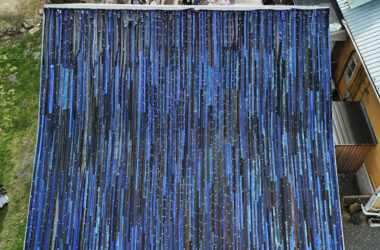
Manuel Mathieu’s Prémices/Open-Ended, the solo exhibit by the young Haitian-born Montreal resident, comprises some dozen paintings dealing with the organic and mental reconstruction that follows a cataclysmic event.

Mathieu’s paintings depict scenes of a world violently squeezed into primordial swirls of aggression, inchoate shapes and forces, sometimes in an extension of the old, sometimes in conflict with their antecedents. This transmutation is not a step towards anything evil-from a frenzied clapperclawing creature, to what seems a somewhat lost hodgepodge of unformed will, passion, and nascent power.  In one of the more memorable paintings, an anthropomorphic swirl of greens, reds, and blacks, with bared vice-teeth, melts into a whirlpool of dark swathes. No surprise, from a man who has been compared to Francis Bacon.

In another, Mathieu cleverly plays with perspectives, depositing a humanoid figure on a large plot of stark white, tilted below the perfunctory desert backdrop of the painting. The shape seems to ooze unctuously down the canvas in a curious, and, perhaps unintentional manner.

The majority of the paintings, however, neither galvanize one’s thoughts, nor spur emotions, nor help find any hint of truth. Despite my repeated attempts to engage with the pieces, I felt like I was approaching glib prints, as evocative only as the confusion within first few moments of seeing them, before I fully grasped what I was staring at. The swirls and eddies of paint lie silently on the canvas, as paint is wont to do before it is given a voice through some artistic enterprise. This is all the more unfortunate since Mathieu seems to possess something worth saying. While I may be wrong, I suspect the devastation left by the recent Haitian earthquake is the source of his thick, resolutely applied brushstrokes.

Without the exhibition’s obligatory description, distributed to the public in a pamphlet upon entry, it is difficult to orient oneself enough to get much from the paintings. Thankfully, the show focuses on the description to a lesser degree than what has become the norm. The practice of describing the artist’s litany of intentions and thoughts subsumed by the creative process is now ubiquitous, and robs the gallery attendee of a singular pleasure. It is through this pleasure, which we acquire through visually tasting and digesting the work offered, that we achieve some manner of understanding and camaraderie with the artist. In reading a formulaic description, we are rewarded with a vacuum-sealed, ersatz satiety in regards to the piece, forgoing the necessary mental labour.

I am curious to see Mathieu progress over the next few years. In the meantime though, give me Bacon.


Prémices/Open-Ended runs from May 5 (Tuesday-Saturday, 12-6 p.m.) at the MAI (3680 Rue Jeanne-Mance, Local 103)

Read the latest issue

Read the latest issue