Latest News

Editorial, Opinion

Support workers against the collapse of the public sector

Since the end of September, public-sector employees unionized under the Centrale des syndicats du Québec, Confédération des syndicats nationaux, the Alliance du personnel professionnel et technique de la santé et des services sociaux and the Fédération travailleurs et travailleuses du Québec, in Quebec have been marching to demand better pay and working conditions amid negotiations with the provincial government. With salaries that have fallen behind rising inflation and the increasing cost of living, public-sector workers have been consistently neglected by the provincial government. Quebec has the highest unionization rate in North America, and the common front has made a historic 95 per cent vote in favour of striking action, with some in favour of rotating strikes and others for full-fledged walkouts. While Quebec’s anti-scab legislation prevents the provincial government and companies from calling on “replacement workers” to substitute those on strike, the law also means that a workers’ strike would completely disrupt social services in the province, causing an urgent need for the reception of the public’s demands. As Quebec workers fight for their rights, citizens must stand with them against the government’s neglectful behaviour or face the collapse of the public sector. 

The COVID-19 pandemic particularly intensified problems within public services. While we celebrated nurses for their hard work, no action was taken to mitigate their material conditions. Administrators expected educators to transition to new styles of teaching with little to no aid or support. Despite acknowledging these issues, the province faced a massive teacher shortage with upwards of 8500 missing just weeks before the start of this school year. This shortage, paired with the consequences of the pandemic, has caused many students to fall behind and contributed  to mental health issues for many others. The lack of interest in those qualified to enter the public education workforce is a clear sign that this system is no longer sustainable. This burnout epidemic echoes in other social services such as healthcare, considering the loss of nearly 21,000 health workers in Quebec in less than two years. The provincial government continues to have an inadequate and weak response. Instead of allocating resources to those who actively contribute to the betterment of society and ensure the wellbeing of others, Premier François Legault has chosen to increase the salary of Members of the National Assembly, which would make them the highest-paid politicians in Canada. As the  public sector employee shortage worsens, the province refuses to recant the discriminatory Bill 21 and allow for wrongfully-terminated teachers to return to the classroom. 

The Quebec government does not value public sector workers. The redirection of blame to the workers in Premier Legault’s responses demonstrates a greater political agenda to increase private sector services. In a province where the socioeconomic gap continues to grow, further privatization, especially within the health and education sectors, will increase inequality to devastating levels. If the government continues to ignore public sector employees, the small number of those who can afford private schools and healthcare will reap the benefits, while lower-income communities who lack access to basic services continue to suffer. With even less opportunity to access needed care in a discriminatory healthcare system, immunocompromised people, communities of colour, and disabled people will suffer Quebec’s disregard. 

Informal and fugitive networks of care such as protests and peaceful demonstration are crucial for those in power to hear the demands of workers. McGill students must join these networks and stand with Quebec’s public sector workers. The “McGill bubble” has prevented students from demonstrating solidarity with the rest of the province and tying the university’s lack of regard to teaching assistants, floor fellows, and workers to broader social transformation. The common front’s action reminds us that strikes bring negotiations outside the private arena to the public sphere—giving workers power over the ruling class. Students have the chance to make their voices heard and change the narrative at McGill, and supporting the strike is essential to protecting workers’ rights in the future.

Features

Bad guys with good vibes: Why I will always love the villain

Exploring the relationship between animated villainy and queer culture

Light spoilers for Avatar: The Last Airbender and She-Ra and the Princesses of Power

Growing up, I was always drawn to the villains when watching animated shows. I wasn’t rooting for them per se (I’ve always condemned Team Rocket’s Pokémon-snatching antics), but something intrigued me about how villains always went against the grain of whatever fictitious society they were aiming to collapse.

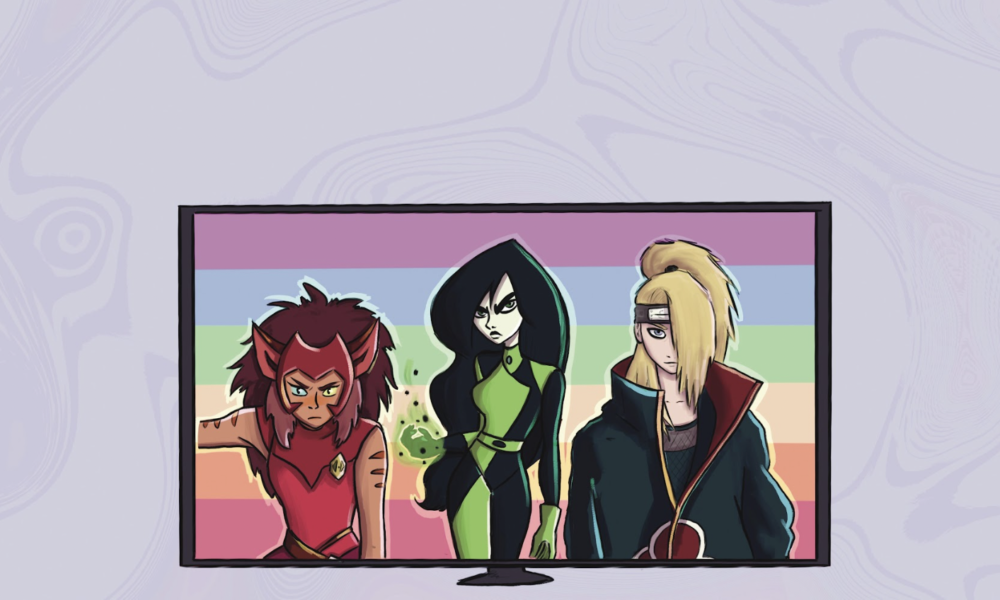
Whether I was idolizing Ursula’s flamboyant, larger-than-life eyebrows and vivid eyeshadow in The Little Mermaid, James play with ‘feminine’ disguises in Pokémon, or Shego’s sole loyalty to herself in Kim Possible, villains have always held compelling characteristics to me. While these traits are separate from what makes these characters ‘villainous,’ the phenomenon that I was mostly drawn to anti-heroes was no mere coincidence. Why were only the ‘bad’ characters given these attributes? Throughout my tween to teen years, I couldn’t seem to put my finger on why I preferred these characters to their hero counterparts, but I recently—finally—figured it out: Their sense of subtle queerness. 

Negative depictions of queer ‘villains’ in media

Many of these character subtleties in media stem from the radical Christian, nationalist, and repressive censorship ban in Hollywood that lasted from 1934 to 1968, known as ‘The Hays Code.’ The code banned several topics, such as homosexuality, in their goal of enforcing ‘appropriate’ media production. Although homosexual characters didn’t disappear from screens, they were pushed into villainous categories—implying that queer people were ‘bad’ based on their sexuality or gender and allowing the hero characters to be more ‘presentable’ to general audiences. Naturally, these emerging queer type-casts stayed on the side of evil after the motion picture industry abandoned the Hays Code, replacing it with aged-based ratings that are still in use today. 

For animated shows in the ‘90s and ‘00s, like The PowerPuff Girls and Pokémon, 2SLGBTQIA+ plotlines still connected queerness with inherent malintent. Take Ursula from Hans Christian Anderson’s fairy tale, The Little Mermaid. In the original story, Ursula is merely a sea witch who acts as an enabler to Ariel’s whims. But Producer Howard Ashman (a gay man) supported animator Rob Minkoff’s original sketches that were based on Divine, a legendary drag queen whose high-arched, thin eyebrows define Ursula’s face. Divine is a lesser known figure now (which is honestly criminal), but she was a cult figure during the height of her career—People Magazine once called her the “Drag Queen of the Century.” Contemporary audiences may not immediately relate Ursula’s garish performance in “Poor Unfortunate Souls,” low voice, and stark wig-like hair to Divine, but she still carries the qualities of an ‘othered,’ queer villain. While some people, myself included, appreciated Ursula’s distinctive appearance as an enhancement to her character, the unfortunate reality remains that she lacks depth or redeeming qualities beyond a superficial ‘gay’ portrayal. In the heteronormative mainstream, this can perpetuate a harmful stereotype suggesting suggesting that drag queens, and by extension all queer individuals, are exclusively bent on causing harm.


Transgender characters faced a similar fate. Futurama’s 2003 episode “Bend Her,” for example, depicts a male main character—and arguably complex anti-hero—Bender, who dresses up as a fembot to deceive and cheat other competitors during female events in the robot olympics. Not only does this narrative reinforce the longstanding (and false!) idea that men are physically ‘better’ at sports than women, it also supports the biologically-essentialist narratives that trans women only want to compete with cis women to ‘defeat’ them—when in reality, trans athletes just want to be included.

Seeing yourself in the dynamic villain 

Alongside these negative depictions are villains with nuance. Each character has a backstory, fears, hopes, and—ultimately—depth besides their (admittedly occasionally stereotypical) queer traits that defies the flat label of ‘queer villain.’ These are the villains that I—and other queer people—love. 

One of my favourite characters is Zuko from the show Avatar: The Last Airbender. Although a prince, he is scarred and cast out of his family at the age of thirteen due to his father perceiving him as weak—a classic misogynistic stereotype associated with gay men. His initial goal in the series is to capture Aang (the titular Avatar) to win back his father’s favour. While Zuko spends three seasons antagonizing the heroes, he simultaneously forges a new path, showing that he doesn’t have to fit into his family’s expectations to be loved and accepted. That’s the exact thing that makes him so redeemable to queer audiences. Queer youth don’t have the luxury of fitting into the assigned boxes that are deemed ‘acceptable’ by a cishet society. We don’t even have the language or the knowledge most of the time that other identities are possible. Gabs Gaston (BA ‘23), a trans-masc self-described villain lover, said it eloquently when explaining why they relate to characters like Zuko. 

“I not only see myself in [these characters in] how I’m othered by society as a queer person, but also with the inner turmoil that you have,” they said in an interview with The Tribune. “That’s part of the queer experience is trying to figure out your identity—whether it’s sexuality or gender. […] And going against the grain is [really] hard. It’s painful and it’s difficult, and it’s like everything is against you.”

Growing up cis and quite feminine meant that I consumed mainstream narratives about how I was going to grow up and marry a man. There’s always been such a binary about how—in my experience—women should and shouldn’t act. So when I started to realize I wasn’t attracted to guys like my peers were, it made me feel like there was something wrong with me. I didn’t know there were other ways to live. Seeing these characters who were ‘outsiders’ helped me feel like I wasn’t alone. The villains’ mere existence was enough to show me I didn’t have to follow every social expectation. 

Gaston agreed and said that while they didn’t like every choice the ‘villains’ made, they could understand how a lifetime of vilification could persuade characters to lean into it.

“When you are someone who has been confronted with needing to detangle and deconstruct that [binary] because of how you personally identify, […] that allows you to see nuance beyond binaries of good and bad as well,” Gaston said. “You can hold in tandem relating to this character who has been rejected from society and has been othered and who has gone through a difficult situation, while at the same time understanding that not all their actions [are good].” 

How villains help queer people discover how they identify and present 

Villains stand out from their hero counterparts: Why shouldn’t they? They’re powerful, confident, and defiant—counterculture personified in terms of style and ethics. So when queer people see themselves represented in villains, there’s a natural desire to embody them. These embodiments are not to replicate their wrongdoings: Instead, they aim to embrace their interpretation of the villain-aesthetic

Oona Avery-Jeannin, a queer 3D animator whose work includes the short Hex Boyfriend, discussed with the The Tribune over Instagram how cosplaying as Deidara, a villain from Naruto, helped them to understand their relationship with gender.

“While I was portraying [Deidara] I really got in touch with acting more masculine, and feeling euphoria for the first time. I wouldn’t say he’s queer-coded per se, but having a more feminine appearance yet acting super masculine is what really resonated with me,” Avery-Jeannin wrote. “I still don’t have a clear idea on what gender I can relate to, but through cosplay I was allowed to experiment with being a boy in a socially acceptable way. For costumes, I was able to lower my voice, wear a binder, and contour my face without anyone suspecting that I might be queer.”

Although some 2SLGBTQIA+ people discover their queer identities at a young age, many take years of self-discovery to articulate who they are. And some never feel the need to label themselves—but this self exploration happens nevertheless. Dressing up or even emulating these villain characters gives a lot of queer people the space to safely explore means of presenting outside their assigned gender at birth, or outside what society has regulated as acceptable. 

Ultimately, your body is a means of physically presenting how you feel on the inside. And this isn’t an experience unique to queer people. We’ve been told all our lives to fit in with whatever status quo governs our social sphere, when in reality, your appearance is how you express how you feel on the inside. I think Judith Butler, a legendary modern philosopher on gender, says it best.

“‘The body’ appears as a passive medium on which cultural meanings are inscribed,” Butler writes in their impactful 1990 book, Gender Trouble: Feminism and the Subversion of Identity. “These limits [of gender] are always set within the terms of a hegemonic cultural discourse predicated on binary structures that appear as the language of universal rationality.”

Sure, other people will always make assumptions about you based on how you look. But because these villain characters are visible in mass media, the discourse widens within the binary structures that many of us queer people still feel impacted by. 

“A lot of cis people only see transness as fitting into the same cis binary of gender, where it’s like, if you are a trans man, then your goal is automatically to transition and look like a cis man,” Gaston said. “What a cis man looks like isn’t necessarily what a man is, in general. And there are so many grey areas in between that people might want to live in. I find a lot of freedom and self love in that grey area.”

Even people like me, who are cis and dress femininely, can take these villains as inspiration. Think of Poison Ivy, originally a DC comic character, but who’s been adapted in so many franchises since. While she may have been created to pander to heterosexual male audiences, these same viewers simultaneously vilify her for using her sexuality and femininity to her advantage. She is feminine, smart, and doesn’t exist to be eye candy to men. For many queer women, there is a struggle with accepting their femininity while shedding the patriarchal social expectation that they mould their femininity for the male gaze

Gaston emphasized this, saying that they know several butch lesbian friends whose relationships with femininity have changed since embracing their sexuality.

“[These butch lesbians] were actually able to embrace their femininity more as a butch lesbian because their femininity was not for male consumption. It was not within the male gaze,” they said. 

Deconstructing the ‘good’ vs ‘bad’ character binary

Besides Zuko, the majority of characters I saw fell amidst a stark binary of ‘good’ and ‘evil.’ And while queer people find camaraderie in these anti-hero characters, it is frankly exhausting to only be portrayed as the villain. It teaches both queer and straight people a single narrative: That 2SLGBTQIA+ people are bad, and nothing more. 

But lately, I’ve been noticing more storylines where the villain has similarities to the heroes. The 2018 show She-Ra and the Princesses of Power showcases the majority of conflicts between the hero Adora (who magically turns into She-Ra with a sword—it’s complicated) and the villain Catra. Despite growing up together as cadets for an evil Horde army, their relationship fractures when Adora chooses to fight against the army alongside rebels while Catra says they may as well use their Horde power for self-indulgence. While the two leads are on opposite sides of this war, their underlying (homoerotic) friendship reinforces the notion that both are more than the ‘evil scum’ or ‘princess’ label that their respective friends call the other. And Adora understands Catra’s motivations—her feelings of otherness, her fears of rejection, and her queer undertones—despite Catra’s actions. In the end, Catra changes sides, but doesn’t change her personality. Her queerness still exists, and she is loved and accepted for it. 

“As someone who had to learn to love themselves, growing up in a situation where [I was] told not only from society but by family members that these parts of who you are are unlovable […] it’s appealing to see a character who is ‘othered’ and then reintegrated into a different family,” Gaston said. 

Villain characters have long been a sign that queer people can exist outside of society’s gendered expectations. However, these newer storylines that explicitly depict queer-coded villains finding love and acceptance without changing their physical presentation or personality shows 2SLGBTQIA+ people that their identity is not inherently evil. Villains persist to demonstrate that in an exclusive culture, disrupting the social norm is the way to make space and look good doing it. 

Off the Board, Opinion

Green spaces tend the roots of ecological justice

This summer, I had the privilege of visiting my family in the Democratic Republic of the Congo for the first time. We stayed in Kinshasa for the duration of our trip, but part of me wished to see what was beyond the capital city. Deep down, my true desire was to see the nature the country has to offer, the little pockets of life that embody what the Cradle of Humankind could have resembled without Western colonialism. Taking time in nature has always been of great importance to me. But after my trip, I realized that almost all of the outdoor recreation and education I’d received––outside of that received from my own family––along with the value I found in nature had come from white-dominated spaces. 

Kinshasa is a fantastic city, and I can’t wait to go back. But I was struck by the lack of green spaces. The government is currently prioritizing other issues like preventing Rwandan aggression, strengthening the economy, and unlinking the country from Western aid and implication. These concerns, paired with the city’s foundations of Belgian colonial infrastructure, explain the limited focus on green urbanism and environmental liberation. However, the busyness of the city made me think of my love of nature, and how, while only living in major cities my whole life, finding some refuge among flora has consistently bolstered my mental health. The connection with nature and the sense of community that comes with it has led me to meet like-minded individuals and opened my mind to new perspectives and realities. I continued to wonder if exposure to green spaces could help alleviate the stress of living in a busy city and offer even more health benefits to Kinshasans. And perhaps, it would be able to unite a people and further foster community, something that is key to decolonization, by placing the drivers of change in the hands of locals. 

During my stay, I had the chance to drive outside the city centre to visit a privately-owned park. There, I was faced with some of the most breathtaking natural scenery that I had ever seen. After seeing the mountainous terrain paired with agba trees and animals roaming free within the lush plant life, my cousins who have lived in Kinshasa their whole lives were in equal awe, expressing that they had never encountered such natural beauty either. At that moment, I thought of how unfair it was that they had never had the chance to see the nature of their own country. A lack of exposure to nature for people of colour is not a new phenomenon, and research shows that the majority of people who participate in outdoor activities and recreation are white middle-class men who live in affluent areas. 

This experience led me to recall my summers as a kid at a sleep-away camp in Northern Ontario, and later working there as a counselor. I pondered the cherished canoe trips I took with friends in my teens and the numerous hikes I’d enjoyed with my family. The feeling of being free and connected to nature characterized my childhood, and gave me many chances to feel completely reflective and at peace. My trip this past summer showed me how much of a privilege and rarity this is. 

People of colour in Canada are three times more likely than white people to live in places that have no immediate access to nature. This inaccessibility shows how legacies of exclusion due to colonialism continue to plague communities of colour. Particularly in Canada, marginalized communities are unable to access the trails and activities that exist on the already stolen lands of Indigenous peoples. Why is it that mainly white people get to bear the benefits of spending time in nature? 

My experience in the Democratic Republic of the Congo and my life in Canada reminds me that people of colour worldwide continue to be excluded from spaces stolen from them in the first place. Black communities, Indigenous peoples, and people of colour need to reconnect with nature, but the objectives of this go beyond just enjoying the environment: All marginalized people’s cultural identities, communal health and healing from intergenerational trauma depend on returning to nature, and the time to start is now.  

Arts & Entertainment, Pop Rhetoric

An ode to the fall film

There is so much more to October film-watching than scary movies. While viewers may inevitably crave the grotesque in the lead-up to Halloween, autumn simultaneously evokes a search for comfort in the TV catalogue as viewers shy away from the frigid outdoors. I found this sense of warmth during the past reading break when I had the unexpected pleasure of watching the 1998 film You’ve Got Mail for the first time. It’s a charmingly dated rom-com where Tom Hanks and Meg Ryan fall in love over email, and I was delighted by every minute of it. I can attribute my delight largely to the gratuitous autumnal imagery that enveloped the film, panning over a yellowing New York City with the warm and wistful film grain of the late-90s. The fall aesthetic is ubiquitously dreamy, and it’s something that I pointedly search for in the media that I consume this time of year.

Just as I am overtaken by the annual urge to rewatch Gilmore Girls the moment a cooler breeze passes by, my roommates settle in to watch Fantastic Mr. Fox because “it’s just so fall.” “Fall” is not generally considered a genre of media in the way that “Christmas” might be. However, the mass production of Christmas movies reveals a collective need to indulge in seasonal charm through the media we consume. What most people fail to realize is that the “Fall” genre does exist and has been begging to be acknowledged for years. You’ve Got Mail made me realize that I have obliviously been a die-hard “Fall” fan all my life.

A quick Google search of “Fall movies” delivers all the usual suspects of outwardly spooky films like Hocus Pocus and The Addams Family. These movies fit into the “Fall” genre simply through their connection to Halloween. They gather together through common motifs like ghosts, witches, and pumpkins. However, Halloween movies come up amidst a long list of other movies that are tied to one another in a different way. These films don’t feature ghosts or witches, but they do share an affective atmosphere. In concept, these films range from romances like When Harry Met Sally…, to psychological dramas like Good Will Hunting. Yet, they are all shrouded in the reds and oranges of the season, as well as an undeniable sense of coziness and familiarity. 

Coziness is a nebulous criterion to define a whole genre, but it’s one that could not possibly be removed from “Fall.” This cozy viewing experience integrally forms the genre’s ability to provide comfort as the weather grows harsher and we grow more reclusive. Similarly, nostalgia is profoundly intertwined with the “Fall” genre. Only a very small portion of the movies that my Google search produced were released in the last decade. This could very well be signalling a declining quality of fall-related movies over the past few years, but, nevertheless, this uncovers an autumnal desire to go back in time. Nostalgia makes these movies so re-watchable and serves as markers in time that we can’t help but come back to, over and over. 

Tom Hanks and Meg Ryan in You’ve Got Mail exchange emails throughout the year, and yet they fixate on how much they love New York in the fall. As I watched the film, I couldn’t help but think that I was only so dazzled by its charm because it was a “Fall” movie, although the events of the movie are not limited to the season. “Fall” movies are not about fall in the way that Halloween movies are about Halloween or Christmas movies are about Christmas. “Fall” is not about anything except a feeling, but it’s a feeling that’s as recognizable as the conventions of any other genre. Defending the existence of a genre on the basis of an indefinable feeling may seem far-fetched, but when my roommate says that something is “just so fall,” we understand exactly what she means. 

Laughing Matters, Opinion

For lack of heft, crumb, and flavour: A manifesto against the Montreal bagel

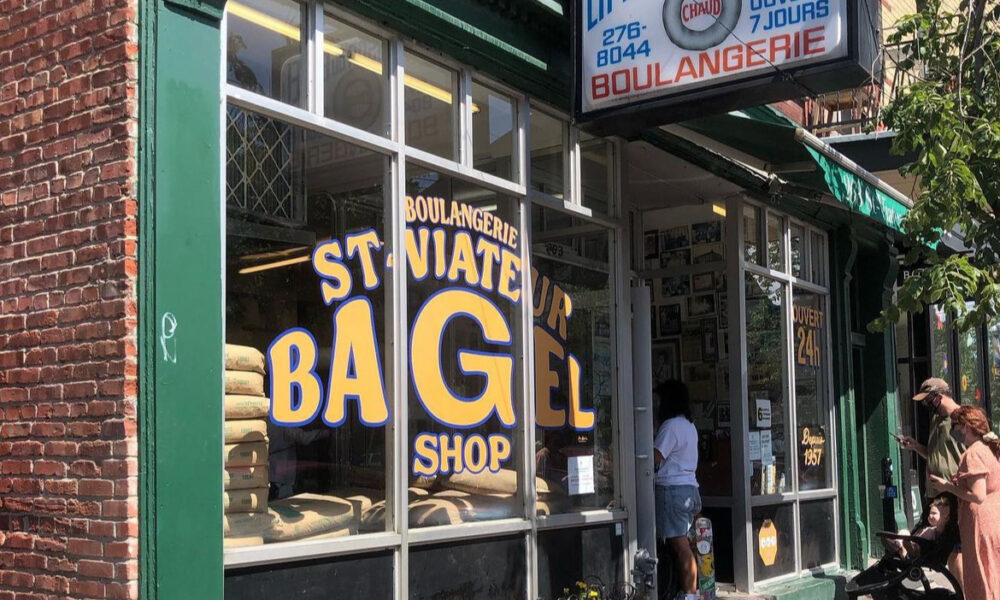
I still remember my first morning in Montreal, when I found myself in a hungry queue that extended out the door of the St. Viateur bagel shop in Mile End. The line moved fast––unlike those in New York––and I watched hopefully as the freshly-rolled bagels slid into the oven just behind the counter. Could this new bagel outdo the Manhattan one I held so dear? Perhaps, I mused, I am a bagel convert in the making.

I was snapped out of this daydream, however, when charged with the task of choosing my preferred cream cheese from the refrigerator along the wall. My roommate grabbed a tub of Philadelphia plain and I bewilderedly did the same. It was then our turn at the counter where we ordered six bagels, which were tossed in real time––uncut and untoasted––into a brown paper bag and handed to us in haste for the next in line.

Back on the sidewalk, we opened our bag. The bagels were, for lack of a better word, wimpy. They sparked in me the image of a baking day gone wrong; perhaps the yeast had expired. Could they, I gasped inwardly, be gluten free? 

“You’re supposed to dip the bagel in the cream cheese,” my roommate said sceptically. We chuckled. That was absurd. Almost sacrilegious. But we obligingly ate our bagels, like a resigned congregation mourning what was lost.  

In the weeks since that morning at St. Viateur, I have continued what I have grown to call my “Bagel Research.” I have come up with three essential characteristics that prove, with incredible resolution, the inferiority of the Montreal bagel in comparison to its New York counterpart––namely: Heftiness, crumb, and flavour.

The Montreal bagel is worryingly thin. The only synonym that comes to mind beyond

“wimpy” is simply “malnourished.” A bagel is a glorious comestible invention, and should therefore be nothing short of satisfying—a satisfaction that manifests in a New York bagel so beefy that its centre hole has sealed completely shut, and if a hole does still exist, it is packed almost brutally with cream cheese. The Montreal bagel lacks the proper heft in both its physique and in its scant attitude towards cream cheese.

As if its slender French frame is not deficient enough, the Montreal bagel does not deliver

the chewy, springy bite of a well-poached New York Bagel. It tastes—if I may—diluted, like it has passed the expiration date and been hurriedly revived with some tap water and a toaster.

I have found, time and time again, that when defending their home bagel, Montreal locals claim that their bagel has the best crust. But the Montreal bagel, I find, has a crust disproportionately crusty for its sparse bready innards, and whose required baking conditions are partially to blame for these innards’ neither here nor there nature. 

Probably the most off-putting of its three shortcomings is that, frankly, the Montreal bagel tastes bad. On the spectrum of baked goods, there is on the far left, the tang of a good sourdough, and on the far right, the sweetness of a muffin. A good bagel should fall very far left, providing a distinct bready flavour that contrasts its cream cheese stuffing. When I ate my first— and second and third—Montreal bagel, I felt perplexed by what on Earth was wrong with it and why it brought to mind the vivid image of cardboard.

Upon reflection, I realized that its flavour landed on the border of sweetness, though not sweet enough to taste the sweetness, just enough to cancel out the proper bready flavour. It fell grotesquely in the middle of the baked-good spectrum, where nothing should ever fall, leaving its consumer in a state of perturbing cognitive dissonance.

And so I stand loyally at the side of the New York bagel, which holds all the opulence, flavour, chew, cream cheese, heft, and satisfaction that the Montreal bagel lacks. Anyone can try to convince me otherwise but on this, my mind is made and sealed better than a New York bagel—I will not budge.

Football, Men's Varsity, Sports

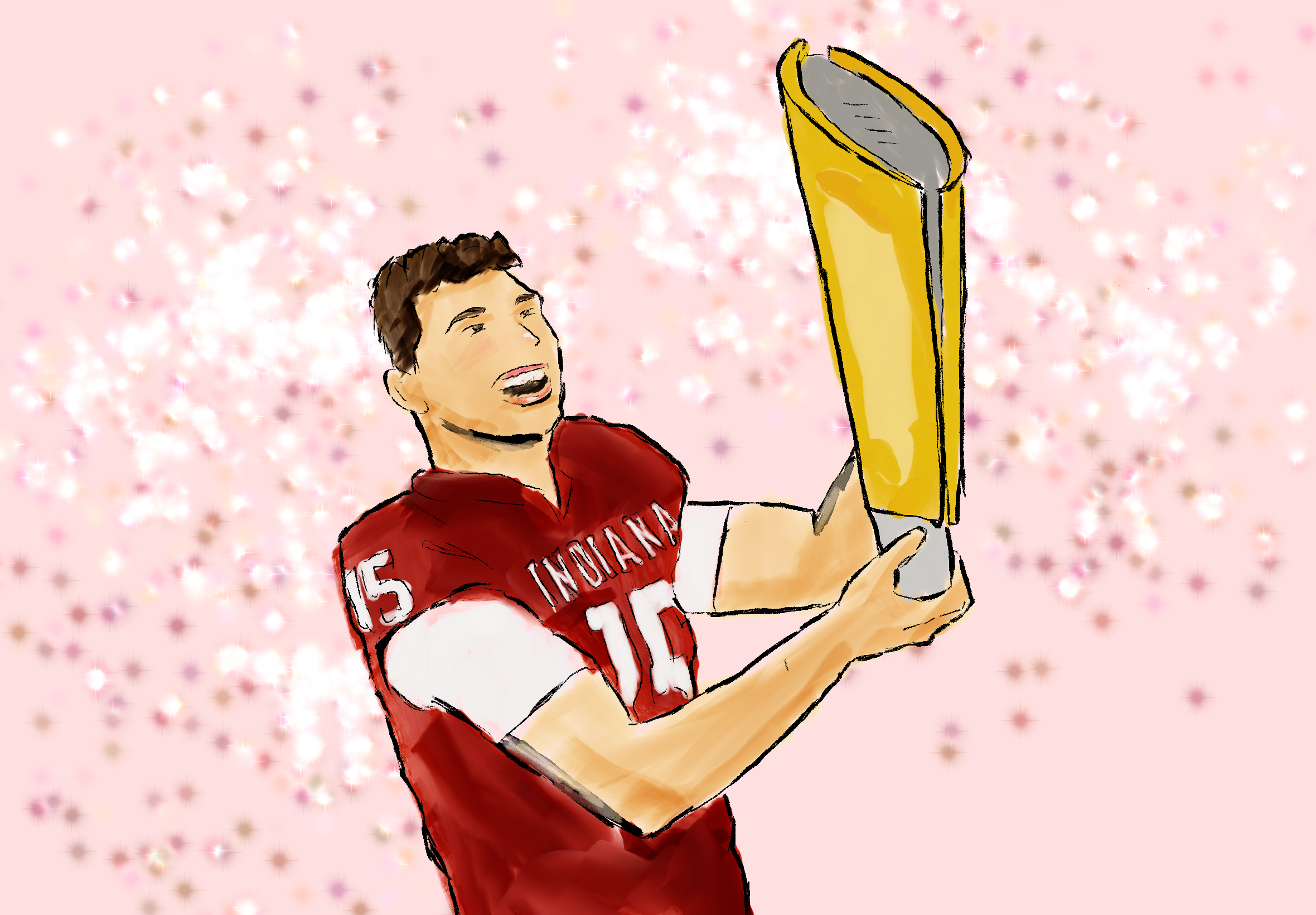
Redbirds unphased after Shaughnessy Cup homecoming game loss

On Oct. 20, McGill Redbirds Football (1–6) played in their 54th Annual Shaughnessy Cup homecoming game against the Concordia Stingers (4–3) with the hopes of snapping a five-game losing streak. However, the Redbirds were unsuccessful, falling 40-23 to the Stingers in front of a sold-out homecoming crowd.   

Concordia set the game’s pace early with a touchdown just over eight minutes into the first quarter. The Redbirds responded with a touchdown from running back Brandon Ciccarello with just two minutes remaining in the first to tie the game 7-7. However, with 48 seconds on the clock, the Stingers snagged their second touchdown to end the quarter up 14-7. 

With 3,500 fans in the stands, the enthusiasm and spirit were high, despite an overwhelming number of Concordia supporters. On the sideline, the McGill cheerleading team performed stunts and led the crowd in chants, generating a lively atmosphere for the players and fans to enjoy.   

“We were excited because [homecoming] games are always jam-packed with lots of fans, so we were expecting a huge turnout,” slotback Daunte Rowe said. 

The second quarter began similarly to the first, with Concordia scoring another touchdown and making the field goal with eight minutes to go, widening the gap to 21-7. 

Despite the scoreboard, the Redbirds kept up a hard fight and sustained their high energy levels. In the seventh minute, the offence was able to make a play that initially looked like a second touchdown for McGill. The brief moment of excitement from the crowd was dulled as the play was called as a dropped pass, hindering hopes of a McGill comeback. 

“The dropped pass was tough,” Rowe told //The Tribune//. “We had the energy, so, if we got the touchdown, we would have had more momentum.”

Concordia then scored yet another touchdown, leaving McGill to fight back from 28-7 at halftime. 

The third quarter saw the Redbirds struggle to take possession and secure much-needed points. Concordia closed the quarter with a touchdown and last-second field goal to make it 40-7. 

“We made good plays, but too many mistakes and missed opportunities,” quarterback Eloa Latendresse-Regimbald said, referring to the second and third quarters.

Although this looked like a tough loss for McGill, the team continued to push through the final fifteen minutes and scored two touchdowns from slotback Darius Simmons and running back Cedric Dabady. The Redbirds’ defence managed to shut down a strong Concordia offence, allowing no points in the fourth,  making the game’s final score 40-23. 

Simmons’ touchdown was particularly rousing for the crowd. After walking off in the first quarter due to what looked like a head injury, he made a quick comeback on the field.

“The last quarter felt good, we finished strong and we still had a lot of energy,” assistant coach Kenny Charles said. “We still have one more game to go, so we’re gonna use the fourth quarter to take us where we want.” 

The Redbirds will play against Université de Sherbrooke (0–6) on Oct. 28, which will decide whether they make it into the Réseau du sport étudiant du Québec (RSEQ) playoffs. Despite the loss against Concordia, the Redbirds are optimistic. 

“I think we’re fine,” Rowe said of the game against Sherbrooke. “We showed a lot of heart at the end so I’m super excited for next week.” 

Moment of the Game: At halftime, members of the 1969 Redbirds Football Team were inducted into the McGill University Sports Hall of Fame. 1969 was the inaugural year of the Shaughnessy Cup. 

Quotable: “Scoring is always going to give us momentum. Defensive plays are great, but we also have to capitalize and keep scoring to bring the fight back.” 

––Quarterback Eloa Latendresse-Regimbald

Stat corner: After having a mere 3:36 possession time in the third quarter, McGill took over in the fourth with a 9:19 possession time for a final 29:13 to Concordia’s 30:47.

Commentary, Opinion

Will Montreal resurge as Montreal 2.0?

A recent article published in the Financial Post titled “Montreal 2.0: Could it challenge Toronto for Canadian economic supremacy?” describes how Montreal could regain its position as Canada’s business capital. Montreal was Canada’s largest and wealthiest city until the 1970s, when the rise of Québécois nationalism during the Quiet Revolution drove most English-speaking businesses to move to Toronto. In the article, the Montreal of today comes off as bursting with entrepreneurial spirit, a city of immigrants and hustlers aided by a “pro-business” government and an early advantage in artificial intelligence. However, a realistic comparison of the two cities reveals that Montreal is unlikely to overtake Toronto anytime soon. 

For many Montrealers, the city’s constant measuring against Toronto is draining. For Torontonians living in Montreal, the comparison may seem outlandish. Economic growth is not a zero-sum game, and the context of Montreal’s loss of prominence to Toronto in the 1970s must be acknowledged when weighing the two against one another. However, while Montreal’s era of business dominance may evoke fond memories for anglophone Montrealers and former residents, this is certainly not the case for the rest of Quebec, particularly Francophones. In Quebec, this period, when the Anglo business elite colluded with the Catholic Church and the government to control the province, is known as “la Grande Noirceur” or “the Great Darkness.” French-speakers in Montreal were second-class citizens in a city where they were the majority, and English-speakers held disproportionate economic and political power. These historical tensions exist today, where Quebec’s government prioritizes protecting the French language through policies such as Bill 96 rather than trying to attract English-speaking business, at the expense of potential economic growth.

The Financial Post touts Quebec’s “pro-business” government as a potential growth driver. However, Ontario too has a self-proclaimed “pro-business” government under Premier Doug Ford—although the effectiveness of either of these governments is debatable. More distinguishing is that Quebec’s government is anti-immigration, while Ontario is not, at least in terms of its policies, which include doubling the number of economic immigrants it selects in 2025 to over 18,000 . In 2021, Toronto welcomed nearly 30 per cent of the country’s new immigrants, while the Montreal area welcomed only 12 percent. Montreal’s surprisingly small share of the country’s immigrants reflects the government’s attitude that high immigration levels would be “suicidal,” in the words of Premier François Legault, for French culture in Quebec. As a result of strict immigration measures imposed by Quebec’s government, Toronto enjoys a burgeoning labour force while Montreal suffers from a labour shortage which costs the province billion CAD annually in lost manufacturing output. In all, Toronto’s GDP per capita is 25 per cent greater than that of Montreal, and Toronto also has a considerably larger and faster growing population. Montreal’s historically lower housing and childcare costs can make it more liveable for families, but employment and business opportunities remain scarce compared to Toronto. 

The recent doubling of tuition imposed on out-of-province students by Quebec’s government exemplifies their reluctance to attract English-speaking Canadians to the province. Their strict immigration policies and language laws, such as Bill 96, will also ensure that the labor shortage persists. As Québécois voters mull the next election, there should be no illusions as to the impact of such policies on Montreal’s economy. 

However, Montreal doesn’t need to be or beat Toronto. Montreal 2.0 has been in the making since the Quiet Revolution. The proudly French-speaking, cosmopolitan, beautiful, and chaotic city that has sprung up is something to appreciate, warts and all. Accepting that economic growth is, and will likely continue to be, slower than in Toronto is accepting reality. But there are so many things to appreciate about living here. It’s better to focus on sustaining the wonders of Montreal—the excellent architecture, parks, nightlife, restaurants, bicycle infrastructure and art scene that make this city special. 

Lacrosse, Rugby, Sports, Varsity Round UP

Redbirds’ lacrosse and rugby teams fly past Gaiters and secure wins for their seasons

Redbirds Lacrosse vs Bishop’s University: W 11-7

Madigan McMahon

McGill lacrosse (6–2) returned to Percival Molson Stadium on Oct. 18 against Bishop’s University’s Gaiters (2–6) in their final home game of the season. 

The first quarter started with midfielder Dylan James assisting midfielder Joshua Jewell’s goal in the second minute of play. Midfielder John Miraglia foiled Bishop’s attempts to pierce McGill’s defence as he intercepted the ball and passed it to James, allowing attacker Massimo Thauvette to score another goal. Bishop’s tied the score up by netting a goal from the doorstep and another goal with just under three minutes left in the quarter. 

The second quarter opened with a couple of saves from goalie Joseph Boehm before he brought the ball up the field. The Gaiters intercepted the lobbed ball as they unsuccessfully attempted an open goal from the midfield line. Midfielder Louis-Antoine Habre brought the ball to midfielder Rowan Birrell, who scored a goal, and was quickly followed by Miraglia. The Gaiters scored three more goals, leaving McGill down 6-4 at the half. 

The second half saw Bishop’s score three minutes in, while the Redbirds came back with a goal from midfielder Owen Howard making the score 7-5. 

“When you’re down in that momentum, that first goal means everything,” head coach Nicolas Soubry said, crediting Howard.

James scored two minutes later before attacker Isaiah Cree netted another goal with 30 seconds left. With just 18 seconds left, midfielder Luke Dawick put the team in the lead 8-7.

“Once you get the chemistry to click, this team is just on fire. It’s really beautiful to watch,” James told //The Tribune// in a post-game interview. “I’d say the turning point was in the third quarter and then we got seven straight.”

Carrying on their momentum, the Redbirds won the face-off and attacker Mark Symon scored. Thauvette netted another goal and Birrell scored the last goal of the game, ending 11-7.  

“We really battled back as a team, and it makes the coaching staff really proud,” Soubry expressed his final thoughts

The Redbirds won against Ottawa (0–10) on Oct. 21, in one of their final two games in the regular season. 

Moment of the game: Redbirds come back from a three-point disparity, scoring seven consecutive goals in the second half of the game.

Quotable: 

“It was a rough start, but we really picked up the energy and the mentality in the second half. It was a real mental fight towards the end of the game and we won it in the second half.”  

– Midfielder John Miraglia on key points from the game.

Stat Corner: McGill moved to third place in the Canadian University Field Lacrosse Association regular season standings. 

Redbirds Rugby vs Bishop’s University: W 25-15 

Julie Ferreyra 

On a misty Friday afternoon, the Redbirds’ rugby team (4–2) took the field against Bishop’s University’s Gaiters (3–3) in front of an enthusiastic homecoming crowd. 

The Redbirds set the tone early in the afternoon, as inside centre Alexander Armstrong buried a try in the third minute. The first half saw significant efforts on both sides, as the Gaiters closed the gap with a successful penalty kick. After missing the first two penalty opportunities, outside centre Martin Laval successfully set a first penalty. The Gaiters quickly equalized with a converted try in the 32nd, bringing the scoreboard to 10-10 at half-time. 

The second half saw increased intensity, with Laval successfully setting three more penalties amidst attempts to break through the Gaiters’ defence. As the Gaiters buried an unconverted try and a penalty, the pressure mounted on the Redbirds’ defensive line. The referees’ final whistle at the end of the additional time saw the Redbirds erupt in joy, celebrating their last win of the regular season. 

“We went in today with a game plan in mind, we stuck to our game plan for the most part. […] We knew what we had to do to beat them and we went out there and did exactly what we had to,” Loosehead prop Nicholas Smith said in an interview with //The Tribune//. 

The Redbirds clinched the third spot in the Réseau du Sport Étudiant du Québec (RSEQ) standings and will face the University of Ottawa’s Gee Gees (4–2) in the semi-final on Oct. 27. 

Quotable:

 “ÉTS and Ottawa are the two squads that have beaten us, and they’re strong squads too [….] We’ll have to work on our planning and make sure we get how we want to play structurally sorted out; give ourselves the best opportunity.” 

— Head Coach Ian Baillie, on the semi-final the team just secured a spot for.

Stat: This win constituted the sixth victory in a row against Bishop’s University, who last won this face-off in 2018.

Moment of the game: Right before halftime, after a kick, the ball went into the stands amongst the supporters. A child caught it and threw it back to the team on the field.

Arts & Entertainment, Film and TV

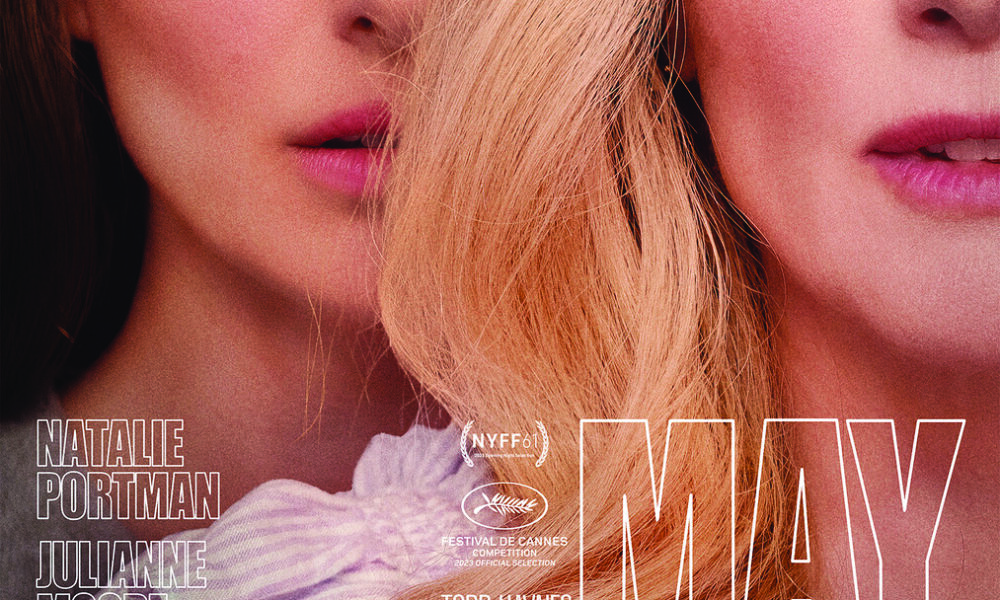
Todd Haynes’ ‘May December’ exposes exploitation in the public eye

Mentions of sexual abuse

At the Cannes Film Festival in May, Todd Haynes premiered his new film, May December, an immediate fan favourite. Known for his work on the critically-acclaimed Carol (2015), the director diverges from indie romance to a campy drama focused on Hollywood exploitation. The film draws parallels with real-world events, presenting them through a satirical lens to enhance the complex sentiments woven into the narrative. The story centres around Joe (Charles Melton) and Gracie (Julianne Moore), a couple with a shocking 23-year age gap. The couple is now married with two children, but they are still haunted by the controversy of Gracie’s sexual abuse conviction for her relationship with then-seventh grader Joe, who is the same age as her children from a previous marriage. Despite the occasional fecal hate mail, the family seems relatively happy. However, the pair finds themselves overwhelmed as actress Elizabeth (Natalie Portman) approaches them to conduct research for a movie delving into their relationship’s illicit history. As familial tensions rise, Joe and Gracie are forced to re-examine their relationships with each other and their extended family. 

The movie does a fantastic job of getting into the characters’ heads with the actors’ visceral portrayals, and subtle changes in cinematography. Viewers begin to see how Elizabeth and Gracie are both so calculating in their own actions that they begin to almost merge as characters. Melton’s performance intensifies the film, bringing conviction to an already fantastic turn from both actresses. Joe’s character feels extremely honest and unvarnished, leaving the audience feeling guilty for witnessing the manipulation he undergoes.

While the movie intially addresses sexual abuse, it expands its lens to exploitation as a whole. Elizabeth initially seems to observe the couple with unique compassion, but ultimately manipulates them both in a futile attempt to achieve her fullest artistic expression. Unbothered by the family’s reaction to her depiction, Elizabeth treats Gracie and Joe as playthings to fulfill her character analysis rather than as real people. The film skillfully portrays the pervasive and far-reaching consequences of unresolved trauma. These impacts, then, ripple through Joe and Gracie’s children. 

What sets this movie apart is its willingness to fully embrace its own absurdity. It doesn’t shy away from poking fun at itself and maintains a level of self-awareness that its characters continuously lack. The film calls out the glamorization of true crime, both by filmmakers and viewers, who treat victims as commodities. This distinctive approach blurs the lines between comedy and drama, extracting genuine human emotion from the very material of tabloid sensationalism. As viewers, we are thrust into a deeply uncomfortable space, encouraged to question our intrigue of the story and the morality of our viewership. The 23-year age gap between Joe and Gracie becomes a central point of intrigue and scrutiny, challenging our preconceptions about love, relationships, and social expectations. In doing so, the film elevates itself beyond a mere exploration of a sensationalized story and invites us to reflect on the intricacies of human relationships and the mediation of reality and fiction.

May December is a profound and unconventional film that reflects the human condition in all its absurd and uncomfortable glory. As the characters grapple with their scandalous past and an intrusive filmmaker’s lens, the movie pushes us to question not just its own logic but the very fabric of our own relationships and societal norms. All of the film’s actors bring their roles to life, forcing the viewer to look beyond tabloid sensationalism to a deeper exploration of exploitation and the profound, long-lasting effects of trauma.

May December is available on Netflix on Dec. 1st

Art, Arts & Entertainment

Marisol’s revolutionary art opens in Montreal

The artist Marisol was a 1960s pioneer, with Warhol-like pop art and sculptures that highlight the role of women in society. Open as of Oct. 7 at the Montréal Museum of Fine Arts (MMFA), Marisol: a retrospective highlights works from Marisol Escobar, a Venezuelan-American artist known for her massive, striking wooden sculptures. After its run in Montréal, the Marisol exhibit, organized by the Buffalo AKG Art Museum in New York, will travel to the Toledo Museum of Art, the Buffalo AKG Art Museum, and the Dallas Museum of Art.

The exhibit follows Marisol’s life’s work, starting chronologically from the 1950s to the end of her career in the mid-2010s. Her artwork fills an entire floor and is sectioned into six rooms—Material Experimentations, Mutable Forms, Mutable Selves, Self and Society, Into the Swim, Troubling Doubles, and Portraiture, from the Personal to the Political—that showcase the unique focuses of family, connection, and marginalization in her sculptures. 

“I want people, even if they’ve never heard of Marisol before, to come away with a sense that [Marisol] is a truly visionary artist whose work is deeply relevant to us today,” Cathleen Chaffee, the Chief Curator of Buffalo AKG Art Museum, said in an interview with The Tribune.

After climbing the MMFA’s elegant staircase, the first sculpture one sees is Mi Mama y Yo (1968), which depicts an 11-year-old Marisol and her mother, Josefina Hernández Escobar. This piece introduces the viewer to her art style, which combines bold colours with cubic wooden people—each person connected by their geometry and symmetry. Huge geometric wooden blocks and bronze faces form both figures. Marisol’s body has a slightly lighter shade of pink paint than her mother, but their faces could be of the same mould. This creates a duplicate effect which echoes within her portrayals of people throughout the exhibit. Her mother tragically passed away when she was eleven, which inspired the sculpture of them side-by-side. This first look is raw and authentic, establishing the poignant and devastating themes that Marisol explores within her work.

Another striking sculpture, Baby Girl (1963), depicts a six-foot-tall wooden baby, adorned with a white bow and fringe. Minute in comparison, a small wooden mannequin standing on the baby’s thigh represents Marisol. Most of her sculptures are taller than those viewing them, the baby being a prime example of this distortion. The enormous infant reflects the immense pressure on mothers, the responsibility of raising children towering over them just as the baby comically towers over the mannequin. Marisol used this sculpture to foster empathy with caregivers and families. It visualizes the pressure on women to have children, which Marisol faced herself: She never had children but would often be asked when she would. Baby Girl epitomizes Marisol’s intent to bring light to women’s struggles, and similar feminist themes can be seen throughout the exhibition.

“Looking from our position today, when we think so much about women’s roles, understanding of self, feminist issues, and ecological issues; [Marisol is] approaching all of those concerns and questions through her own subjectivity,” Chaffee said. “She makes herself vulnerable as a way of understanding the tropes we need to address.”

Journeying through each room, the larger-than-life wooden sculptures form a garden of statues, making the visitor feel humbled and small. The exhibit also includes sketches and drawings from Marisol’s childhood to her later years, providing viewers a glimpse into her growth as an artist throughout her life. There are films, also, one of which she made with Andy Warhol, that give the exhibit a fuller, dynamic experience. Additionally, quotes from Marisol pop up along the walls, giving context to her pieces. With each sculpture that highlights issues we still face today, she urges people to find solace in one another, and have empathy and meditation for the struggles of marginalized people. 

Marisol: a retrospective runs at the MMFA until Jan. 21, 2024.

Read the latest issue

Read the latest issue