

Latest News

Commentary, Opinion

Black in business: The consulting field needs more Black mentorship

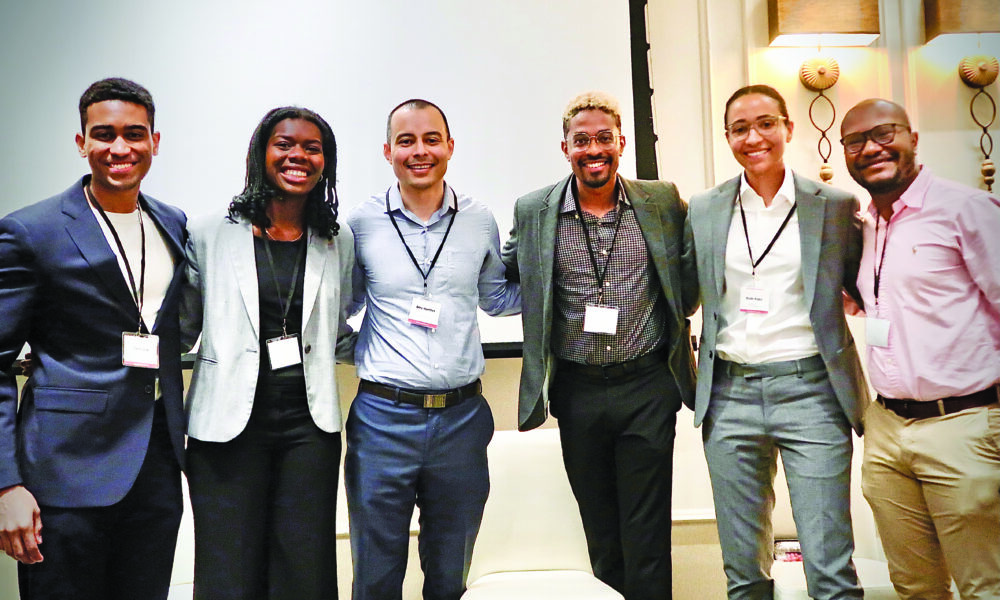
On Sept. 12, JED Consulting, McGill Social Business Network (MSBN) Consulting, and the McGill Black Students’ Network (BSN) held their second annual “Being Black in Consulting” event. A four-person panel of Black consultants from some of the world’s top consulting firms shared their journeys, tips, and challenges. This was followed by a two-hour networking session where Black students from various Montreal universities had the opportunity to connect with 25 Black consulting professionals. While looking around at the 75 students in attendance, all dressed up in their business attire and eagerly conversing with Black consultants, two things were very clear. It is rare to see so many Black business people in one space, and Black role models are integral to furthering Black success. We need more of them, both in the business sphere and on campus.

Desautels, McGill’s Faculty of Management, has a history of abhorrent treatment toward its Black students. In 2020, in an open letter addressed to the faculty, writers detailed the ongoing issues at the faculty. The letter, which received hundreds of signatures, alleges that institutionalized racism at Desautels is entrenched in every level of the faculty. This sobering statement illustrates a systemic issue within the management faculty, and there are tangible steps and changes that must be taken to address these issues and give Black students at McGill the opportunities they deserve. 

Dr. Yolande E. Chan, a Black woman and former Associate Vice Principal at Queen’s University, was appointed as Dean of Desautels in 2021—a step forward that still did not suffice to bridge the distinct racial gap in the staff. Most Black students are still likely to graduate without ever seeing a Black professor at the front of the room. This alienates Black students, sending them the message that they are not welcome. 

Students who are unable to see people who look like them represented in their academic institutions struggle to identify with professions in the field and have a much harder time pursuing those paths. Providing Black students with Black role models helps to foster a sense of belonging that is necessary for them to thrive. Currently, there are two Black student groups in the Faculty of Management: The Desautels African Business Initiative (DABI), founded in 2014 with the aim of educating people about growing business opportunities in Africa, and the Black Students’ Financial Society (BSFS), that promotes Black businesses and financial literacy in Montreal. While the work these groups do is irreplaceable, students cannot bear the sole weight of providing Black students inspiring role models. The McGill administration and Desautels must do more. 

Networking is often touted as one of the most important things students can do in university. But while it is important for most students, it is a necessity for Black students who often lack the intergenerational, nepotistic connections that white students might be able to leverage when looking for summer internships or job opportunities. A recent Harvard study found that nearly one-third of Americans will work at the same firm as a parent, earning almost 20 per cent more than they otherwise would. This puts Black students at a further disadvantage, as generations of discriminatory employment practices have destroyed Black futures—that which will allow them to build the same kind of generational wealth as white families. Facilitating Black advancement in industries such as consulting is crucial for breaking down the racial wealth gap. The management consulting industry in Canada was valued at 24.2 billion CAD in 2022, and has been growing at an average rate of 5.4 per cent annually since 2017.

To eliminate classist and racist barriers, organizations must provide Black students with mentors who can help identify obstacles and build collectivity in overcoming them. Through “Black in Consulting,” JED and MSBN Consulting may have taken an important first step in collaborating with BSN to hold an annual Black-focused networking event. But in order to make meaningful change in the field, other groups, and the faculty itself, must use their abundant resources to follow suit. In doing so, Desautels will not only be setting an important precedent for other faculties to follow, but it will be opening doors for generations of Black students to come.


Off the Board, Opinion

All That Jas

My name is Jasjot.

In Punjabi, Jasjot—pronounced “Jus-joth”—has a beautiful meaning: Light, radiance, fame, glory. In English, however, the name Jasjot—pronounced “Jazz-jot”—bears no significance. 

Growing up, I hated hearing my name. It was a blaring symbol of my Indian identity that excluded me from the dominance of whiteness. From the school lunches perceived as “smelly” by my peers, to the hair on my arms, being Punjabi haunted me. Despite living in a city with an abundance of Indian immigrants, I hated not conforming to the same beauty standards that white girls epitomized. 

Moving to Montreal marked a new era—I’d never lived in a city quite like it. Indians were in the minority, and to my chagrin, at the time I knew only one person in the entire city. Now, when I look back, I see the bright side: It was a fresh start. 

For the first time in my life, I felt truly different from my peers. I realized that being the loud, sassy, confident girl I had been was one thing—but all of that on top of being the only person of colour in a room was another thing entirely: In every way possible, I was set apart. In my head, this combination rendered my identity indigestible. I was deeply afraid that due to the differences in my surroundings, I would be rendered an insufferable, rambunctious person of colour.

So I tried to change everything about myself. My style, hair, personality, and taste in music, men, and even friends—I wanted to transform all the distinguishing aspects that had once made me unique. Most importantly, I began to introduce myself as Jas—pronounced “Jazz.”  Until this point, Jas was a name only spoken by my dad and brother. It made me feel like I was at home, and that I was safe and loved regardless of who I was. Now, it became a tool to fit into the confines others had created for me. Jas was a name that was far more digestible than Jasjot. Jas was a name that allowed me to take up as little space as possible.

I now realized how unbelievably misguided I was. The parts of my identity that I attempted to conceal—my loudness, my quick wit, my race—are the traits that make me, me. These traits not only define who I am, but who I want to be. So, after a spiral of identity crises, I decided enough was enough: I deserved to take space in others’ lives. Jas became a girl who didn’t want to fit into the box of whiteness, nor change the core characteristics that made up her identity. She wanted to remain true to her adolescent self. 

However, some habits are hard to break. Truth be told, I should be telling people that Jas is pronounced “Jus,” not Jazz. But growing up Punjabi in Canadian society impeded my connection with my racial identity. I wasn’t nearly as “cultural” as some of my other second-generation immigrant friends, yet hints of my Punjabi identity leaked into every aspect of my life, from an inability to wholly articulate my thoughts in merely one language, to my years of competitive Bhangra. Not being Punjabi enough secluded me from my Indian friends, and being too Punjabi left me isolated from my non-Indian peers.

This struggle is part of what compelled me to reinvent myself. I didn’t fit into any box, and on top of that, I felt that I had too big of a personality. While I still occasionally use the name Jasjot in professional arenas because it symbolizes the Punjabi girl that my parents created, Jasjot is someone I was never quite able to connect with. She is a melancholic memory of deep unhappiness and confusion. 

Jas, however, is able to accept and embrace her flaws. She realizes that you can never entirely fit into the bounded ideals others create for you. 

I am Jas, and I’m the most authentic version of myself that has existed.

Art, Arts & Entertainment, Film and TV

The Massimadi Foundation’s festivities cherish Afroqueer culture

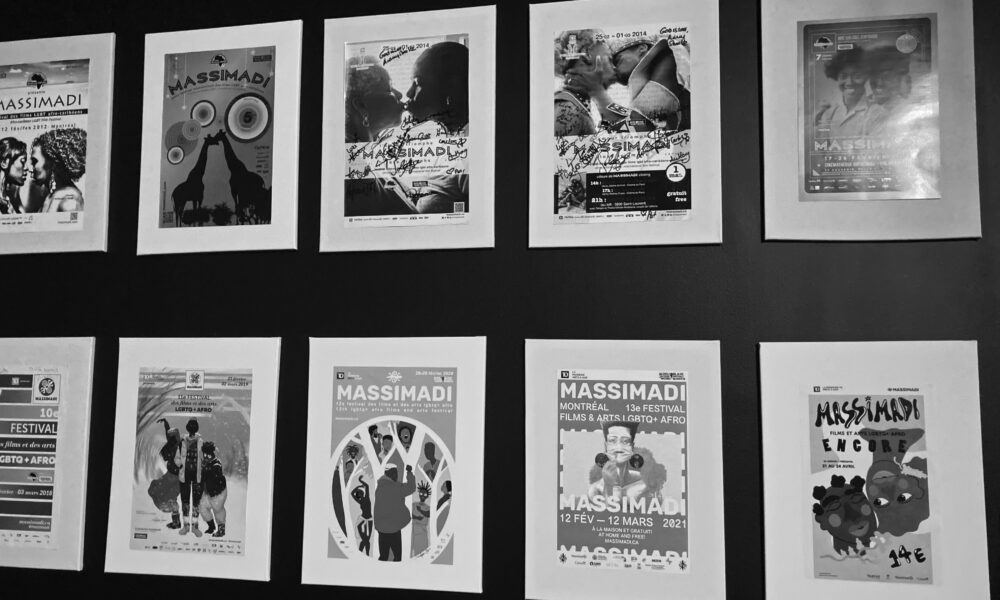
The Massimadi Afro LGBTQ+ Arts and Film Festival celebrates its 15th anniversary with an explosion of light, music, and vibrant hues. 

Since its inception in 2009 within the classrooms of Université du Québec à Montréal (UQÀM), the Massimadi Foundation has been orchestrating a series of events throughout September. These gatherings encompass parties, panel discussions, captivating photography exhibitions, and compelling film screenings, all aimed at promoting the work of Black queer artists. 

On Sept. 15, the organizers kickstarted this year’s festival with a party at the Ausgang Plaza, hosted by drag queen Barbada. At the event, members from the whole Massimadi Foundation, Momentum Project (an initiative for young Afroqueer screenwriters), and from all corners of Montréal, danced, chatted, and celebrated another year of honouring Afroqueer culture.

“This is so important for the Massimadi Foundation because it is the emotion, the future of the Black LGBT community. But it’s not just for the Black queer community, it’s for everybody,” Wanderson Santos, Project Manager for Massimadi, said in an interview with The Tribune.

The Massimadi Festival is one of the few festivals in Quebec dedicated to Black queer culture. Among this year’s events is Identities, skins, and faces—a photographic exploration of Afroqueer Identities, showcased at Daisy Peterson Park. With showings on Sept. 14-17, 22, and 29, the exhibition highlights portraits from Black queer photographers. There are also screenings of Manscaping (2022), a documentary directed by Broderick Fox that chronicles three queer men as they transform the barbershop experience to be more inclusive and accessible. Among those featured in the documentary is Devan Shimoyama, a Black queer artist whose collection Mighty Mighty: The Barbershop Project partnered with the nonprofit organization CulturalDC to build a reflective and social space where one could view his collection while getting a fresh haircut. The documentary’s next showing will be outdoors on Sept. 29 in The Village.

Besides the festivals, the Massimadi Foundation also offers programmes that provide professional opportunities to Montréal’s Black queer artists. This year, Massimadi initiated Momentum, a program to champion and mentor Afroqueer screenwriters, helping them succeed in the broader Canadian filmmaking industry. Over the next six months, eight Black queer screenwriters will participate in classes, workshops, and conferences to build their skills in screenwriting and filmmaking. On Sept. 19, they launched the program with a conference at Studio L’Inis, an event for the selected eight to pitch their ideas to film industry professionals and network with the mentors who will guide them throughout the program. After the success of this year’s cohort, Massimadi intends to implement the program annually.

“Momentum is very important for the writers. They are queer and Black—sometimes inside their communities they don’t feel like they can project themselves. Here, they can do that,” Santos said.

By screening films, showcasing photography, and supporting Black queer artists, Massimadi strives to give Afroqueer people a voice and to show the world that their stories matter. 

“We aimed to inspire other individuals from Black communities to assert themselves by showcasing diverse people and characters that reflected their identities and questions,” Laurent Lafontant, President of the Massimadi Foundation, wrote in a message on the Massimadi website.

On Sept. 30, Massimadi will end its festival with a pride parade at the Place du Village—a final flourish after a month of festivities. 

The Massimadi Foundation and Festival demonstrates how promoting art from the Afroqueer community helps communicate Black queer artists’ feelings and reality. It encourages people to reflect about these vital perspectives, which challenge homophobia, transphobia, and racism in Montreal.

“We have to be strong,” Santos said. “We have to be proud. Not because we are different, but because we can be the identity we need to be. Everyone has a place, they just need to take it. We can make a change.”

Commentary, Opinion

Progressives must remain aspirational

Sept. 16’s Global Progress Actions Summit in Montreal was one of the largest gatherings of progressive politicians in the last 15 years. Current and former heads of state Tony Blair, Jacinda Ardern, Jonas Gahr Støre, Sanna Marin, Magdalena Andersson, and Justin Trudeau shared their assessments of the state of the international progressive movement. However, much to the distaste of anyone hoping for international progressive policies, few observations were of note. 

From Prime Minister Trudeau, one claim warranted consideration: He claimed that everyday people and “aspirational” politics are not compatible. Trudeau’s alternative to the aspirational, however, leaves a dangerous gap for a conservative populist movement to fill. The Liberals need new policies that will allow them to pedal the transformative rhetoric fundamental to the progressive movement while remaining in touch with the everyday concerns of citizens. 

Ultimately, Trudeau is right. The electorate will not tolerate passive policies, packaged to appease donors such as those he has provided during his almost eight years in power. Consider Trudeau’s pusillanimity in approving the Trans Mountain pipeline extension and allowing himself to be pressured by his chums at McKinsey & Company. His aspiration to funnel a projected 500 million CAD/year in 2019, is now set to yield no cash for green investments––a complete and utter failure for bold futures for our climate. However, important to note, under immense media backlash, even successful progressive policies often fail in the eyes of voters. The United States’ Inflation Reduction Act (IRA), the leading component of President Joe Biden’s environmentally-minded industrial strategy, funded by a progressive taxation scheme, is absent in the minds of Americans.

While this electoral apathy toward progressive policy is due in part to a lack of felt consequences of these policies, the loss of narrative on the economy to sly conservative messaging plays a significant role. Yesterday’s progressive promises are ineffective against today’s right-wing messaging, which is bolstered by economic uncertainty and conservatism’s flirtatious dance with right-wing, reactionary populism. If Trudeau’s distaste for the aspirational persists, his policies will act as fodder for a populist Conservative groundswell.

At the end of his tenure, Trudeau knows his unfulfilled promises of a better, fairer Canada will not resonate with the electorate again. Therefore, he feels his bid to the country must propose piecemeal, un-aspirational policy as an electoral strategy. The logic of his claims are far from ubiquitous among commentators inside Canada, and are certainly not generalizable outside of it, which is why his positioning seems slightly misplaced at a summit of international leaders. 

However, the problem is not so much that aspirational policies are not attractive to voters––they are. The problem is that no Western progressive government has managed post-pandemic to successfully turn progressive policies on immigration, climate, or industrial strategy into votes, as they might have been able to in previous election cycles. The air is crisp with a skittish, Western insecurity where politicians cannot communicate or reconcile the need for harsh but ambitious decisions in the short term to the benefits brought in the long term. 

What, though, is a progressive movement without aspiration? In what feels like an increasingly fragmented Canada, any form of collectivism––whether that be tackling climate change, defending the Western democratic model, or radically addressing Canada’s housing shortage––is aspirational. Unlike conservatism, progressive movements cannot redefine themselves on every election cycle around different parameters––a coherent and aspirational ideology that brings tangible change to the lives of voters is a necessity for a successful progressive movement.

What progressives need to contend with is that their leaders are currently incapable of being aspirational and specific, clear and practical. Take as proof the remarks of New Zealand’s former Prime Minister, Jacinda Ardern, when asked how about communicating progressive policy to an electorate facing a panoply of problems, Ardern asks politicians to acknowledge the dumpster fire. Truthfully, the electorate doesn’t need this acknowledgment. They can see it. The global progressive movement needs to find a policy fire hose, imbued in aspiration, that addresses the dumpster fire––which may yet burn down the house of democracy.

Arts & Entertainment, Pop Rhetoric

AI in Music: Revolutionary or Robotic?

In recent years, the term artificial intelligence (AI) has become part of our everyday vocabulary. The emergence of ChatGPT in the fall of 2022 sparked both curiosity and concern for AI’s future across industries. Just four months later, Spotify introduced its AI-powered DJ robot which uses generative OpenAI technology to customize song queues for users. Spotify’s DJ marks a milestone for the tech world: AI’s entry into the arts. As technological innovation and musical creativity continue to rapidly evolve, we find ourselves at a critical juncture for AI and the music industry. 

In a recently uploaded video, Recording Academy CEO Harvey Mason Jr. confirmed that the AI-generated song “Heart on My Sleeve” would be ineligible for a Grammy award. Earlier this year, the track gained significant viral attention for its AI-generated vocals mimicking Drake and The Weeknd. Streaming platforms later removed the song following legal action by Universal Music Group, the record label representing the artists. Despite this setback, anonymous artist Ghostwriter submitted “Heart on My Sleeve” for consideration in two categories at the 2024 Grammy Awards. Although technically written by a human creator, the music used illegally-obtained vocals that prevented it from having legitimate commercial availability, thus rendering it unsuitable for submission. 

Regardless of recognition from award ceremonies like the Grammys, “Heart on My Sleeve” proves the musical success that creators can achieve using AI technology. But does this song hold the same validity and authenticity of a song sung and written solely by human artists? That answer continues to be up for debate.

One of the most exciting aspects of incorporating AI in music and the arts is its potential to enhance the overall creativity and practicality of the landscape. Incorporating AI in music production allows established artists like Paul McCartney to explore new creative frontiers, such as using AI software to re-record an unreleased Beatles song, and applying modern music production technology to the voices of deceased members Lennon and Harrison. 

Additionally, as AI becomes more accessible as a music production tool, it can help aspiring musicians break into the industry. For instance, Canadian musician and former McGill student Grimes launched ElfTech in April 2023, an online AI-employing software that enables music creators to incorporate her voice into their compositions for a royalty fee. AI-powered software tools like ElfTech hold the potential for an infinite number of new songs and scores, inspiring artists to push boundaries that cultivate a diverse and exciting artistic landscape. 

AI’s ability to create aesthetically pleasing melodies is undeniable. However, whether it can truly capture the heartfelt emotions that human artists infuse in their work remains controversial. Music carries extreme personal significance, offering comfort by expressing our innermost feelings when we struggle to articulate them ourselves. It serves as a means for connection—hence why many view sharing songs as a love language. Yet, what transpires when algorithms gradually assume this role? AI will never be fully able to replicate the passion and raw emotion that artists put into their music. Apart from the emotional dimension, there are also questions of authorship. Who should be recognized as the creator of AI-generated art? Should credit be given to The Weeknd and Drake, or to Ghostwriter? Another aspect that proves polarizing is the issue of appropriation and bias. What happens when AI begins profiting off songs that depict the struggles others experience?

In the evolving realm of artificial intelligence, the debate surrounding “Heart on My Sleeve” raises crucial questions about creativity’s essence. AI has the potential to revolutionize creativity by reviving legends and empowering newcomers but falls short of providing the emotional depth and human connection that is so valued in art. As AI’s presence grows, navigating authorship, appropriation, and bias becomes increasingly complex. While the future holds endless possibilities for AI in music, the extent to which it should be present remains up for debate.

McGill, News

“Some of us are traumatized”: McGill student pleas over asbestos exposure

Hiba Kamel, a third-year McGill PhD student, stood up poised and palpably angry at McGill’s asbestos town hall on Sept. 22. “Some of us are traumatized. Some of us have actually interacted with the dust,” she said.

Kamel is a researcher in the Agricultural and Environmental Sciences department. She is also married and a mother of a young daughter. Now she is reckoning with the worry that she was exposed to asbestos dust fibres in the winter of 2023 and may have brought it home on her clothes—potentially exposing her family. 

The trauma voiced by Kamel along with other concerns from students and staff at the Macdonald campus town hall comes as the latest development in McGill University’s unfolding asbestos problems. Earlier in the week, McGill released an internal report that revealed that leading up to the Winter 2023 Macdonald campus building closures, McGill breached asbestos protocols and Quebec regulators intervened three times between 2021 and 2023. 

McGill Principal Deep Saini weighed in on the situation at the town hall and called it a “broad-scale process failure.” 

Asbestos is a carcinogen that can cause deadly cancers like mesothelioma when inhaled. It was widely used as an insulator across Canada from the 1930s to the 1980s due to its heat-resistant properties. Many McGill buildings on the Downtown and Macdonald campuses contain asbestos. In the last year, McGill has faced asbestos exposure risks on both campuses, with building closures disrupting classes and research.

McGill organized the town hall, which was in-person with a subsequent virtual town hall also taking place in the afternoon, as an opportunity for the McGill community to discuss the report’s findings and recommendations with key management stakeholders—with an on-stage panel answering questions.

The panel consisted of the Executive Director of the report, Pascal Théoret, and members of the newly formed task force on asbestos—Deputy Provost (Student Life and Learning) Fabrice Labeau, Associate Dean of Graduate Education in the Faculty of Science Laura Nilson, and Director of Master Plan Logistics Anne-Marie Huynh. The panel also included the Interim Vice-Principal (Administration and Finance) Diana Dutton, Dean of Agricultural and Environmental Sciences Anja Geitmann, and independent asbestos expert Paul Demers, who joined over Zoom. The three task force members are not part of the Macdonald community, nor do they specialize in asbestos research. 

Members of McGill’s senior administration were also present in the front row, including Principal Saini and Provost and Vice-Principal (Academic) Christopher Manfredi, who both gave opening remarks.

After a presentation from the members of the panel highlighting the report’s findings, the town hall went into a question-and-answer period open to the 40-something attendees. Students and staff raised concerns from personal health and stalls in research to demands about accountability and apprehension about the future. 

One professor shared that with the building closures, many faculty members in the Plant Science Department have been moved to temporary offices with little clarity from the administration about what will come next.

“Some of us don’t have labs, […] some of us have moved three or four times [….] What is the plan? When are we going to be back exactly?” the professor said, eliciting a round of applause from the attendees. 

Another professor, who stated that they are in the Plant Science Department, said that their lab is still closed and that the space closures are continuing to impact their research—forcing them to delay a million-dollar-plus project. 

Graduate student Kamel told the panel that she was regularly at a one-metre distance from construction workers, as where she was doing her research was on the construction site. In an interview with The Tribune, Kamel said finding out about dangers of asbestos dust was traumatic and caused her to have a panic attack for which she had to go to the emergency room. 

“I [had] never heard of asbestos, and I didn’t know what it meant or what it was and I never was told that there was any risk of that,” Kamel said. “I’m someone who’s really careful about safety and had I known that there was anything to do with asbestos on this campus, I would have probably reconsidered McGill altogether.”

“It’s nothing short of criminal to not even tell people that ‘hey, this building has asbestos,’” Kamel later added.

The Tribune has been unable to verify if McGill specifically warned students about the asbestos risks at the Raymond building. The internal report confirms that construction workers working with materials that contain asbestos shared the same space with students. 

Frédérique Mazerolle, McGill media relations officer, commented on Kamel’s incident and said that McGill’s top priority will always be the safety of the community. Mazerolle also cited the response from Demers, the independent asbestos expert on the panel at the town hall, who said “From what we know, [health risks to short-term exposure to asbestos] should be very, very low.”

McGill provides information to the university community and workers about asbestos in each building through its Asbestos Web Database, which documents the presence and condition of asbestos in each room of every building. However, the panelists at the town hall said this database is mainly for workers. Members of the audience highlighted how the database is now mostly out of date. 

McGill professors and staff members also raised issues about the lack of risk management and clarity regarding construction projects, as highlighted by the report, with others at the town hall questioning the accuracy of the events detailed. 

In one instance, when the panel was unsure of the answer to a concern about a lack of a risk management plan for a specific project, they looked at the senior administration members in the front row. Denis Mondou, Associate Vice-Principal of Facilities Management and Ancillary Services, did not know the answer.

In an interview with The Tribune, Professor Mark Lefsrud explained how the Macdonald campus asbestos problems have forced him to relocate several times, and that it was only last week that some of his colleagues were able to restart their research properly. He also reflected on the town hall and expressed how more needs to be done.  

“I do like our Principal [….] I like the fact he is trying to solve a lot of these problems, but I still think there are a lot of problems,” Lefsrud said. “The report is pretty vague and it needs to be hammered out.” 

At the end of the town hall, Principal Saini, noticing the frustration in the room, addressed the attendees with his reflections.

“I fully hear your comments about accountability,” Saini said. “I can assure you that I take that responsibility; that, should something like this happen in the future, once we put robust processes in place, […] heads will fall.”

Saini emphasized that, as a scientist himself, he could relate to the concerns and stories of researchers and students in the room, and that while changes will be made, they will not happen overnight.  

“Stories like that take away the pride I feel for McGill,” Saini said. 

This piece was updated at 2:45 p.m. on Sept. 26 to include that McGill has since removed the internal report from its website.

This piece was updated at 6:50 p.m. on Sept. 26 to indicate that the internal report is once again available on McGill’s website.

Research Briefs, Science & Technology

Analysis finds COVID-19 has now infected three-quarters of Canadians

Although the Omicron COVID-19 variant emerged in November 2021, scientists are just beginning to trace how the massive surge of infections unfolded by testing blood samples from throughout the pandemic. This is because antibodies against COVID-19 can be detected in blood for months after an infection.

The analysis was led by Bruce Mazer, professor in McGill’s Department of Pediatrics, and David Buckeridge, professor in McGill’s School of Population and Global Health. They explored the evolution of COVID-19 seroprevalence—the number of people with antibodies left over after an infection—between May 2020 and March 2023, using blood samples from a variety of sources, including the Canadian Blood Services and Hema Quebec.

Their main finding was striking. In late 2021, before Omicron was widespread, less than ten per cent of Canadians had been infected with COVID-19. 

“[But in December 2021,] it went crazy,” Mazer said in an interview with The Tribune. “There was this steady increase upwards from the winter of 2021 […] until it peaked around late summer 2022, hitting around 70 per cent.” 

As of March 2023, the most recent month analyzed, this number was 75 per cent.

Differences between age groups were another major trend in their research. Over 80 per cent of people in the 17-to-25 age group, the youngest one included, had been infected, above the national average. For each subsequent age group, infection rates decreased, with the oldest age group, 65 years and older, lingering around 60 per cent.

“We really have a population age breakdown,” Mazer said. 

The study also established that provinces displayed distinct infection patterns. 

“We covered the geographical areas of Canada, showing that [cases in] the Atlantic provinces were […] the lowest among all provinces,” Mazer said. “And then they caught up quickly during Omicron.”

Many of these findings will not be a surprise to anyone who kept track of Canadian case counts during the early years of the pandemic. In fact, one of the most surprising conclusions for Mazer was that preliminary case estimates were relatively accurate. 

“When we started serosurveillance [the testing itself of blood samples], one of the predictions was that there was going to be a lot of under the radar infections […] [but] in the first two years of the pandemic, there was no hidden tip of the iceberg,” Mazer said.

However, seroprevalence offers additional information that positive polymerase chain reaction (PCR) tests alone cannot provide. Since antibodies remain in the blood for months after infection, they can be used to estimate the total number of infections over time. Relying on test data also became impossible later in the pandemic. 

“[Around the time of the Omicron wave], we lost the ability to do PCR […] once provinces decided to stop funding [it].” Mazer said, “Broadly, there was no way to track the numbers at all.” 

This study is therefore the first to accurately measure Canadian infections during the later part of the pandemic.

Despite its advantages, studying seroprevalence still has its challenges. Developing a reliable test for antibodies was the biggest obstacle, as it required researchers to find differences between antibodies against COVID-19, and those from colds and other minor respiratory illnesses caused by other coronaviruses. Constant monitoring is also necessary to ensure the tests can detect antibodies against new variants.

However, the technique still provides a powerful understanding of infection patterns. In addition to evidence of prior infections, the antibody testing also showed that elderly people in long-term care lost their antibodies rapidly after vaccination. 

“We brought that data to the government,” Mazer said.

“We said, if you’re going to roll out boosters, you [need to] roll them out really quickly in long-term care because they’ve already lost their protection […] And the government listened.”

Despite the many applications for the data, the huge number of people who were infected with COVID-19 remains the most significant fact for Mazer. 

“[In the past 100 years,] there’s never been an infection that’s infected 80 per cent of a population in a year,” Mazer said. “This is unprecedented. […] Everybody would say to each other, oh, everybody’s got COVID. Well, we really have the data to prove it.”

Hockey, Sports

First of many to come: PWHL Draft Recap

On Sept. 18, the Professional Women’s Hockey League (PWHL) held its first-ever draft in Toronto. Following 15 rounds and 90 players selected, The Tribune breaks down how the leagues’ original six fared. 

Montréal 

After a successful bout during the free-agency period where they signed Marie-Philip Poulin, Laura Stacey, and goalkeeper Ann-Renée Desbiens, Montreal capitalized on their opportunity to build out an even stronger roster during the draft. Selecting sixth overall in round one, Montreal took national team defender Erin Ambrose (6) as their first pick. 

Ambrose, who is from Ontario, represented Canada in multiple renditions of the IIHF world championships, and was also rostered in Canada’s gold-medal performance at the 2022 Beijing Winter Olympics, where she played nine games and recorded four goals and five assists. 

Other notable picks for Montreal were McGill hockey alumnus Ann-Sophie Bettez (79), who recorded 46 goals and 44 assists over five seasons with the Martlets before going on to play for the CWHL’s Montreal Stars and then the Canadiennes. With their final pick of the draft, Montreal selected Lina Ljungblom (90) who scored eight goals––the most of any Swede in a single tournament––at the 2023 women’s world championship.   

Minnesota

Winning the lottery, Minnesota had the privilege of the historic first overall pick. The first pick was devoted to 23-year-old Minnesotan centre Taylor Heise (1), previously playing for the U.S. national team. With their second round pick, they drafted WC gold winner goaltender Nicole Hensley (12).

As part of their inaugural squad, Minnesota also selected two-time Isobel Cup champion Amanda Leveille (61) alongside one of the latest Isobel Cup champions Michela Cava (72). 

Toronto 

After signing Olympic-gold winner Sarah Nurse to their team during free agency, Toronto took defender Jocelyne Larocque (2), a 35 year old shut down defender with their first pick. With Olympic winner Renata Fast, who the team signed during free agency, as her likely defensive partner, Toronto will have one of the best defensive pairings in the league. Toronto also drafted forward Emma Maltais (11), who played on the Canada national team alongside two-time Olympic gold-medalist Natalie Spooner (23) who the team took in the fourth round. 

Other notable picks for Toronto were Jesse Compher (26) who won a silver medal with the U.S. Olympic Team at the 2022 Olympics and Brittany Howard (47) who led the PHF’s Toronto Six in scoring last season. 

Boston 

After capturing future hall of famer Hilary Knight and two-time Olympic gold-medalist Megan Keller in free agency, Boston looked to build on an already strong roster. With the third overall pick, Boston added phenom centre Alina Müller who was a top 10 finalist for the Patty Kazmaier Award all five seasons with Northwestern and became the youngest ice hockey player to win an Olympic medal, scoring the winning goal in the bronze medal game for Switzerland in the 2014 Winter Olympics. 

Boston also selected Sophie Jaques (10), one of the best offensive defenders in the game and Loren Gabel (22) who has one of the most deceptive shots in women’s hockey.

New York

With their first-round pick, New York selected former Clarkson University captain Ella Shelton (4). Martlet alumni Jade Downie-Landry (52), who previously played for the PHF’s Montreal Force was drafted in the ninth round.

New York built up the rest of their roster with strong picks including Cornell alumnus and national team member Jaime Bourbonnais (9). They also selected two goaltenders with ties to  Boston: Corinne Schroeder (33), formerly of the Boston Pride, and Boston College alumnus Abbey Levy (64).

Ottawa

With the signing of forwards Brianne Jenner and Emily Clark in free-agency, Ottawa looked to fill out their defence drafting one of the best two-way defenders Savannah Harmon (5). Their second round pick was devoted to Olympic gold-winner Ashton Bell (8).  

With their remaining picks, Ottawa also selected two-time World Champion Hayley Scamurra (29), alongside recent Isobel Cup champion Daryl Watts (32) and Olympic silver-medalist Jincy Dunne-Roese (17) to strengthen their defence.

Arts & Entertainment, Music

The intimacy of Black Country, New Road at Le National

On Saturday, Sept. 16, Black Country, New Road donned their denim shorts, jackets, and shirts, and played their first ever Montreal show in full Canadian tuxedo. This set of North American shows is the first following the release of their latest record, Live at Bush Hall, which features songs written and sung by individual members of the band—a departure from their previous albums. Each stylistic contribution shines through in the diversity of their voices, challenging traditional ideas of what it means to be a musical outfit. The band has further proven themselves impressive musicians by building complementary soundscapes through atonal improvisations and avante-garde song structures. 

The line to enter Le National wrapped around the venue’s side, anticipation adorning the formation. Once inside, the venue swelled with excitement as the opener, Daneshevskaya, took the stage. Previously the solo project of New York City-based musician Anna Beckerman, she played alongside six others—who toured with her in anticipation of a new album featuring some of their contributions, Long Is The Tunnel. Drummer Joey Mains stated to The Tribune after the show that they had only been playing together since July. Still, the chemistry of their playing was a testament to their skill as a band. The echoing vocal lines and harmonics of the piano and violin moulded perfectly to create an ethereal and multidimensional sound.

Loud cheers erupted through the venue as Black Country, New Road strutted on stage to Van Halen’s “Jump.” Anticipatory silence soon plagued the crowd, then glazed saxophone notes resonated in the air as Tyler Hyde entered, crooning, “Look at what we did together…” When the band’s piano, violin, drums, and guitar entered, energy aggressively dispersed and a chorus of joyful fans chanted their lyrics back at them. There was something unadulterated and about the band’s passion for their musical output that created a chamber of vitality and authenticity in the crowd. 

The set’s most powerful moment occurred during the intimate track “Turbines/Pigs.” It began with pianist May Kershaw wistfully singing to the venue’s sky, feeling nothing but the music beneath her fingertips. The band sat in a circle on the opposite side of the stage, giving space to the sentiments of her musical story, only approaching their instruments as the song’s journey emerged into its climax. The juxtaposition of the performance’s slow, ballad-like commencement against the powerful entrance of building sound only reinforced the emotional repetition of Kershaw’s final lyrics, “Don’t waste your pearls on me, I’m only a pig.” The band highlighted each other’s skills through their playing: Every tonal choice they made uplifted the musical intentions of another. The lyrics’ sincerity and personality tore down any facade of an artistic spectacle. 

“The performance felt very focused on their abilities and playing rather than focusing too much on showmanship. You get a real appreciation for the music and the musicians,” concertgoer Ethan Holm stated in an interview with The Tribune. “It was the same kind of vibe you get when you see a local show or a really small band. Even though this was a fairly popular band’s show, I felt very comfortable.”

With the concert swiftly finished at 22:30, my friend and I found ourselves sitting on the venue’s curb, watching the bands load up their vans and engaging in casual conversations with passersby. About an hour later, still unwilling to cope with the show’s end, we stumbled into a conversation with Black Country, New Road’s saxophonist, Lewis Evans. In our fragile emotional states, we asked the first question that came to mind: “What’s your favourite ice cream flavor?” Cautioning us with the risk of sounding pretentious, Evans answered “Pistachio”, later adding chocolate to his answer. As the last few members approached their van, we repeated our question from across the street. “Pistachio!” they both yelled. We responded, restating Evans’ similar answer from before, to which Hyde remarked back, “That’s not true, it’s chocolate.”

Black Country, New Road perfectly taps into the intimacy they have as friends to produce something so personal and authentic to their musical background. It’s incredibly special for a band, high on the pedestal of a stage, to perforate the emotional depths of the crowd below them. 

Black Country, New Road’s music can be found on all music platforms

Research Briefs, Science & Technology

“Seeing” viruses in real time

During the height of the COVID-19 pandemic in January 2022, when thousands of people were getting sick every day, healthcare professionals were worked to the bone. One particularly difficult task in preventing the spread of COVID-19 was contact tracing. In other words, finding out who was sick and how they got sick. 

The challenge in detecting COVID-19, as well as other pathogens, lies in their size. Rapid COVID-19 tests are finicky partly because they require a large quantity of the viral spike protein to detect a positive case. Often, this viral protein may not show up in a large enough quantity until days into an infection. And, of course, we cannot spot viruses with the naked eye due to their incredibly small size—COVID-19 is approximately 100 nanometres in diameter or 0.00014 millimetres. 

However, a new study from McGill’s Department of Atmospheric and Oceanic Sciences details new technology that allows for the tracking of airborne viruses, in effect enabling us to ‘see’ viruses. The technology, known as Nano-Digital In-Line Holographic Microscopy (Nano-DIHM), uses artificial intelligence in conjunction with a laser to visualize small particles in real time. 

Although the exact method and machinery underlying Nano-DIHM is under wraps, as the research team waits on patents, Parisa Ariya, professor in McGill’s Department of Chemistry and Atmospheric and Oceanic Sciences, shared some information in an email to The Tribune.

“Using several optics operations, we broke the diffraction barrier, allowing us not to need to use expensive lasers or do particle trapping,” Ariya wrote. 

The diffraction barrier refers to a microscope’s limit in resolution, or the size at which images begin to blur. By breaking their diffraction barrier, the research team could view smaller particles with greater resolution.

This improved the performance of the microscope, but still did not allow them to get accurate observations on the scale of an individual COVID-19 particle. For this, the team had to upgrade their software as well, prompting them to incorporate machine learning into their method. 

“We developed additional AI codes to enable us to go below 100 [nanometres],” Ariya wrote. 

Since 100 nanometres is the approximate size of a COVID-19 particle, this enhanced resolution allows the visualization of these particles. However, these are not just any photos. According to Ariya, each particle can be observed in four dimensions. 

“We see viruses four-dimensionally, i.e., follow the 3-dimensional (length, width, height) virus changes as a function of time (i.e., 4-dimensionality),” Ariya wrote in an email to The Tribune

With polymerase chain reaction (PCR) testing, there is a turnaround time of multiple days. Rapid COVID-19 tests take only 15 minutes, but their efficacy is questionable. In contrast, this technology can identify and track dangerous pathogens, including COVID-19, in a matter of seconds. Although not yet in use, healthcare facilities and other high-risk areas could inexpensively implement a small, camera-like application of this technology to detect infected individuals. 

While still in the early stages of development, the team’s techniques have potential for diseases beyond COVID-19. They could track a number of different viruses, bacteria, and other forms of microorganisms, which according to Ariya will be of critical need in the near future. 

“The World Health Organization has warned that other pandemics will come, regrettably. This technology can serve rapid detection and forecasting to save lives.”

Read the latest issue

Read the latest issue