Latest News

Campus Spotlight, Student Life

The Tribune’s declassified midterm survival guide

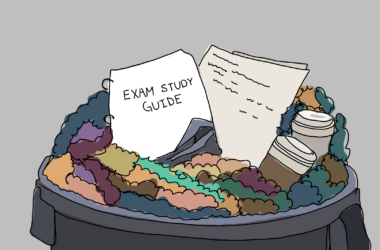
As the days get shorter and the leaves change into varying shades of auburn and crimson, fall midterm season has snuck up on us. This time of year can feel like an all-encompassing mass of anxiety for McGill students as they work away at McLennan until the wee hours of the morning. Midterm season’s heavy workload sometimes leads students to neglect personal care in favour of spending a few more hours hitting the books. There are tons of ways, however, to incorporate self-care into your fall midterm routine without sacrificing your GPA. 

Spend time outside

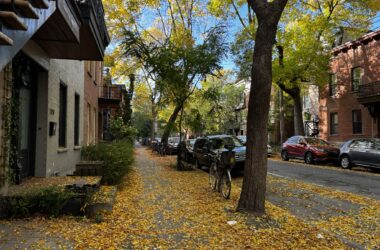
Going out for a walk in nature is one of the best ways to clear your mind and take time for yourself during exam season. Luckily, Montreal is home to many parks and hiking trails that will help you get lost in nature without veering too far from the library. The quintessential Mount Royal is a mere five minutes from McGill’s downtown campus and offers a variety of trails to suit your specific hiking abilities. The stunning backdrop of the city amid the colours of the trees is sure to make you forget about that calculus exam for a few hours. If you are looking to get away from the McGill bubble, try a walk along the Lachine Canal or a stroll through Parc La Fontaine.

Practice mindfulness

Mindfulness is a regulation and meditation technique that has exploded in popularity in recent years—and for good reason. This method involves using breath and meditating techniques like ​​body scan meditation to allow yourself to be fully focused on the present moment instead of stressing about what lies ahead. Particularly during midterm season, mindfulness is a great way to help you remain grounded and calm your nerves. 

Study shorter and smarter

Instead of spending countless hours at your desk and burning yourself out, study in shorter bursts and increase your productivity by attempting to accomplish one task at a time. Break down each big task—studying for a midterm, for example—into a step-by-step process and tackle an individual, small step on its own. You can do this by dividing a midterm syllabus into equal parts, splitting the word count for an essay due, or distributing practice problems of certain chapters, and work through each chunk independently and sequentially. 

By honing in on smaller tasks, you will feel more focused, avoid being overwhelmed by the large amount of assignments on your plate, and have a more concrete idea of the end goal you are working towards. As an added bonus, accomplishing the small tasks will give you the extra motivation you need, as compared to being daunted by larger assignments. If you still feel swamped, try organizing your tasks into a to-do list, for which Notion and Microsoft have great digital options, and perhaps inculcate the Pomodoro Technique into your study plan

Spend time with friends

In the midst of all this midterm season chaos, disconnecting from work and hanging out with the people close to you can be the perfect recharge. Not only will it take some stress away and help relieve some of your mental burden, but studies have found that spending time with friends can be good even for your physical health. Having a trusted circle of friends has been linked to lower risk of heart disease and longer life expectancy. 


So grab your closest friends and head to Randolph Pub for a board game night, go for a bike ride on one of Montreal’s most scenic bike trails, or simply order takeout and watch a movie at home. Any of these activities will do wonders in helping manage your stress levels and will give you a much-needed break from the long hours buried deep in academics.

Art, Arts & Entertainment

‘Seeing Loud’ showcases Basquiat like never before

After his untimely death in 1988, Jean-Michel Basquiat rose above his hard-earned fame to become one of the most celebrated neo-expressionist artists of the 20th century. His works grew in popularity, and now, Basquiat’s designs can be found around the world, from sneakers to album covers

His fame has also meant the simplistic reduction of his image to that of a primarily visual artist, when in fact, he was also a musician and performance artist. Yet, Seeing Loud: Basquiat and Music, a new exhibition at the Montreal Museum of Fine Arts (MMFA), synthesizes the many creative aspects of Basquiat into an unprecedented portrait of the artist himself.

Seeing Loud is a collage of drawings, paintings, performances, music, and more that tracks Basquiat’s artistic career in seven sections. There is special emphasis on Basquiat’s involvement in the experimental, multi-genre band Gray, which he co-founded with filmmaker Michael Hoffman in 1979. 

The exhibition focuses mainly on the essential connection between Basquiat’s fine arts and music, highlighting both the music he created and that which inspired him. Many of his pieces include written words and onomatopoeia; the forms depicted capture and mirror elements of his musical aspirations. 

As guest curator Dieter Buchhart said in a press release, “Basquiat’s works appear like a ‘language of rupture,’ a concrete poetry of hip-hop created in a copy-and-paste technique and jazz improvisation. Music thus forms the decisive link in his art.”  

The visitor’s experience begins in a room displaying many of his paintings, drawings, and a film of various underground music performances in New York City, where Basquiat grew up and cultivated his artistic career. The raw, rebellious sounds of punk shows work in perfect dialogue with his pieces that challenge the status quo, making the connection between Basquiat’s vision and music immediately evident. As the exhibition continues, it becomes clear that music and the themes of Basquiat’s works, many of which speak on various aspects of the Black experience, are not only connected but inseparable. 

After a trip to the Ivory Coast in 1986, Basquiat acquired many traditional instruments, such as water drums, castanets, and rattles, which greatly inspired his work. The legacy of the African diaspora and its connections to the “American” forms of Creole and jazz music are central to many pieces in section six of this exhibit, Basquiat and the Music of the Black Atlantic. Basquiat understood jazz music in its greater historical context, demonstrated by the motifs he employed. He often painted African-American jazz musicians who faced racism in the industry to reflect the racial, social pressures he faced after becoming a public figure.

The last section of the exhibit is dedicated to just two of Basquiat’s paintings: Eroica I and Eroica II, created in the last year of his life. They stand out as the perfect example of theme and music converging in Basquiat’s work. They are based on Beethoven’s Symphony No. 3, which shares the same title, Eroica, meaning “heroic” in Italian. With Basquiat’s choice of words and design, the paintings are a poignant monument to the perils and complexity of Black celebrity and commodification.

A great deal of thought was put into this exhibition’s curation, down to the smallest detail. It has a uniquely immersive atmosphere thanks to the constant presence of music, whether it be punk, jazz, hip-hop, or opera. The MMFA collaborated with a Montreal-based studio to create an interactive app that allows the user to experience Basquiat’s art in concert with augmented-reality stage reconstructions and specialized musical selections. In addition, there is extensive associated programming, with events such as film screenings, themed evenings, and concerts being offered throughout the exhibition’s stay

It is amazing to witness Basquiat’s legacy being remembered in its full scope. This is truly an exhibition whose ingenuity matches that of the artist himself.

Seeing Loud: Basquiat and Music is on display at the Montreal Museum of Fine Arts until Feb. 19.

Research Briefs, Science & Technology

McGill researchers use drones to collect volcanic samples

Gasses emitted from volcanoes can provide crucial insight into their activity and eruptions, but gas samples are difficult, and often dangerous, to collect by hand. McGill scientists are among the first to overcome this issue by employing drones to collect samples remotely by piloting them into the crater of a volcano and filling containers with volcanic gasses. 

Using commercially available drones at the Poás volcano in Costa Rica, a team of researchers led by McGill PhD candidate Fiona D’Arcy collected gas samples and analyzed them for carbon isotopic content—the ratio between two versions of carbon, 12 and 13, found in the sample. 

The researchers determined that fluctuations in isotopic concentrations were a good indicator of eruption patterns at Poás.

During dormant periods, carbon-13 built up inside the Poás volcano, increasing the ratio that D’Arcy’s team measured in the gas. But during periods where Poás was erupting, they observed a shift towards more carbon-12, resulting in a lower isotopic ratio.  

“When we start to see [the ratio] dropping, it’s a bit of a warning signal, like, maybe there’s a break in the seal, maybe something is gearing up to […] explode through,” D’Arcy said in an interview witThe McGill Tribune//

If this pattern holds true across volcanoes with different characteristics in different regions, it could be a powerful tool for predicting eruptions. D’Arcy has already done work applying this method to the island volcano of Stromboli in Italy and found similar results that she hopes to publish later this year. 

“On the one hand […] we definitely need to keep confirming this and go elsewhere,”  D’Arcy said. “But on the other hand, you’re just like, wow, this is amazing. We have to publish this and get this out.”

The subtle fluctuations in carbon isotopes that D’Arcy monitors would have been extremely difficult to measure as recently as 10 years ago, but have been made possible by several technological innovations. Using drones to collect measurements was a key improvement, but, as John Stix, who worked with D’Arcy to collect and analyze this data, explained, advances in portable lab equipment were equally crucial.

“The study was beautiful for two reasons: A, the drones, and B, the fact that we had this instrument with us in the field, and we were making these same-day measurements, almost real time,” Stix, a professor in the Department of Earth and Planetary Sciences, said in an interview with the Tribune

Innovations like these are currently revolutionizing the world of volcanology, especially the use of drones to collect measurements where it would be dangerous to send humans. 

“If everything’s going well, you fly it in, you make your measurements, and you come out. And that’s really the beauty of it,” Stix said. 

While incorporating these new technologies is a huge asset to researchers, it also entails a lot of trial and error.  D’Arcy constructed the instrument package used by the drone herself, and had to figure out the process as she went along. 

“I spent a lot of time on forums online and on YouTube picking out how the batteries plug in and what are the best ways to use this one sensor, and going to hobby shops and ordering parts from all over and figuring out how the wires fit,” D’Arcy said. 

Ironing out these wrinkles and determining best practices is a key part of using new drone technology, and others are already looking to build on D’Arcy’s work. In February, she will participate in a workshop at IACVEI 2023, an international conference with the goal of developing the most effective practices and standard protocols for the use of drones to study volcanic activity. Observatories monitoring local volcanoes for prediction and evacuation purposes are also interested in using this technology.

As more volcanologists incorporate the use of drones for remote controlled sample collection, we can expect to see more exciting discoveries like this one.

Chill Thrills, Student Life

Donating clothing, dressing the community

Say you’ve decided to clean out your closet and you find yourself staring at a pile of clothing, realizing you don’t wear most of it. According to the Pareto principle, you probably wear 20 per cent of your clothing 80 per cent of the time. Maybe some of it is outdated, old, threadbare, or just not your style anymore. Before you throw these clothes in the trash, consider the many local thrift stores that accept donations. 

It’s great for the environment

Have you ever thought about what happens to your clothes once you throw them away? In Montreal, clothes that get thrown away end up in landfills. The dyes and fibres from these fabrics pollute groundwater, release high levels of harmful methane as they decompose, and wreak havoc on the air quality when incinerated. Donating your clothing will not only repurpose these items for someone else, but it will also reduce the harmful impacts of the fast fashion industry.

Many students on campus have already started their journey to help those in need, such as Prune Broudehoux, a member of the Commerce and Administration Student Charity Organization (CASCO) at McGill. Broudehoux recently organized a clothing donation event to collect funds for the Montreal Children’s Hospital. 

“Financially, donating clothes can help support vulnerable groups that cannot afford to buy new clothing,” Broudehoux said. “Environmentally, I find it very important to give clothing a second life instead of throwing them away.” 

It helps those in need

Many organizations will sell the clothing you donated at a lower price (or even give it out for free) to those who cannot afford them. Lost in a pile of sweaters, shirts, and pants stacked in your bedroom, an old piece of clothing you no longer wear could help unhoused people or lower-income individuals who are in dire need of affordable clothing.

Cassiopée Laugier, a third-year political science student at Concordia University, is passionate about giving back to her community. In an interview with the Tribune, she explained why she started donating clothing. 

“Today, I am trapped in a culture that relies on overconsumption,” Laugier said. “Having accumulated many items of clothing over the years, the more I buy, the less I wear each item. I would rather give this clothing to others in greater need than see them lying unworn around my closet.” 

It’s easily accessible to give

Some charitable organizations in Montreal collect clothing, sell it to those in need, and use these funds to provide assistance to economically marginalized groups through food donations, housing, and counselling. A great place to drop off your clothes is the Chaînon. Located on St. Laurent, the Chaînon is a thrift store that sells clothing donated from the community at affordable prices.

In an interview with the Tribune, store manager Patrice Mongeau explained the organization’s mission: “Our goal is to welcome women in difficult situations by offering safe housing and assistance to tailor their needs. The funds generated through our clothing sales then help our association.”

The Chaînon remains an ecologically sound organization every step of the way. If the clothing they receive is too damaged to sell, it gets recycled—so all items are welcome. 

“Although the clothing we sell in the store needs to be in good condition—that is, no stains, holes, or broken zippers—we will accept anything handed to us because we recognize that there is always a good intention behind a donation,” Mongeau told the Tribune. “The damaged clothing will go to recycling companies.” 

Other great options to donate your clothing are donation centres such as Big Brothers and Sisters, le Support, and Renaissance Quebec which offer a variety of accessible drop-off sites.

Whether you see donating clothing as an opportunity to lend a helping hand to the planet like Broudehoux or wish to fight overconsumption like Laugier, donating clothing is a great way to give back to the community. Try spending an afternoon sorting through the items of clothing in your wardrobe, and fish out the handful of shirts, pants, or sweaters that you never wear to give them to someone who will make better use of them. 

Science & Technology, Student Research

Teaching an old enzyme new tricks

Blue-green algae are a common sight at summer swimming holes and lakes. Also known as cyanobacteria, blue-green algae are a class of bacteria capable of using sunlight as an energy source through photosynthesis. Despite being well-known and well-studied, a group of McGill researchers uncovered an unexpected and surprising activity in an enzyme made by these microbes in a recent study: The enzyme can make its own primers, and therefore self-produce biopolymers.

Cyanophycin synthetase (CphA1) is an enzyme used by cyanobacteria to make an amino acid polymer—a chain of amino acids, the same molecules that make up proteins—called cyanophycin. The cell uses this polymer to store energy, amino acids, and nitrogen that can be later accessed when nutrients become scarce. CphA1 has been harnessed by scientists for the industrial production of cyanophycin, which can be used to make plastics found in acrylic nails and paints—polyaspartic acid, a biodegradable alternative to polyacrylate

In an email to The McGill Tribune, Itai Sharon, McGill PhD student and lead author of the paper published in Nature, detailed the complex relationship between cyanophycin and CphA1.  

“CphA1 needs a primer, ideally a short cyanophycin chain, to be active, and this creates a bit of a chicken and egg problem,” Sharon wrote. “The enzyme needs cyanophycin to make cyanophycin.”

Sharon works with peptidases, enzymes that cut up proteins. Upon comparing enzyme structures, Sharon noticed that CphA1 had an active site, a region on an enzyme that interacts with other proteins, with a similar structure to the peptidases—suggesting that CphA1 may also have the ability to cut up proteins, like molecular scissors. Sharon also discovered that this active site in CphA1 had binding sites for cyanophycin—an unexpected finding for a well–studied enzyme like CphA1. 

“Even though at the time we did not know where those results would lead us, we decided to perform more experiments to determine whether this peptidase-looking part of CphA1 really does have this kind of [cutting] activity,” Sharon wrote. “To our surprise, we found that it did.”

CphA1’s ability to make its own primers allows the enzyme to use cyanophycin already present in the cell to make new polymer chains. This means the amount of cyanophycin CphA1 can make isn’t limited by the available quantity.

This finding has important considerations for CphA1’s use in industrial production of cyanophycin as a water softener or in plastics. As cyanophycin production is cheaper and more environmentally friendly than trying to chemically synthesize polyaspartic acid or polyacrylate plastics, scientists have been working to improve the biological production of the polymer. In order to optimize production, cyanophycin synthetase is often expressed in bacterial or fungal hosts that grow rapidly and are easy to work with. But these hosts don’t naturally produce cyanophycin, and thus don’t have suitable primers for CphA1, limiting the amount of polymer that can be made.

“That is why it’s important that CphA1 can create its own primers, to ensure that primer availability does not limit the amount of cyanophycin that can be produced,” Sharon said.

CphA1’s ability to make its own primers was an unexpected discovery that could reduce the cost and environmental impact of cyanophycin production. Scaling up cyanophycin production would allow for widespread use of the environmentally-friendly polymer in nail polish and paint, as well as its use as an eco-friendly water softener. No matter how much research has been done on an enzyme or how many labs have worked on it, enzymes like CphA1 will always have surprises in store.

Off the Board, Opinion

Loving my Black hair back

Last April, I attended a birthday party for a friend. Rather than looking back at the shared laughter and happiness of this gathering, I remember this night for a white person who, after complaining at length about their “difficult” straight hair, gestured toward me and my “easy” curls. Without my consent, they touched my hair. After two years of COVID-19 measures that kept us all physically apart, this interaction almost seems funny. Veering into old stereotypes, this encounter relies on direct, imposing, and racializing contact. More seriously, it reminds me of my childhood, where countless non-Black people would touch my hair––invading my space and reducing my humanity to that of a spectacle. I don’t share stories like these often. I’m too culpable of forgetting, of giving second chances, of rolling my eyes (later). That said, this is the brief history of my relationship with my hair. 

I was born in Toronto in the early 2000s with curly hair budding off my head. I have stark hair-related memories of kindergarten and elementary school, especially those that involved a carpet, a shared and “open” space for learning. I’d sit, ever the keener, closer to the front. Had I learned about economics, I would have charged people for touching my hair, like a zookeeper would do for pesky tourists who itch to pet goats or play with monkeys. What I intuited, but didn’t have the words for as a child, was that embodying Blackness in spaces not designed for Black people would always be challenging, soul-destroying. The mental and physical toll of racism takes up time that should be devoted to self-love and broader transformation. I’m in recovery.

Comments about my “easy” hair pile up, they recycle in mutant forms. Classmates begged me: “Straighten your hair!” Upon hearing that I played tennis, a teacher oddly remarked, “Aren’t you wearing a wig?” I don’t ignore the off-the-cuff adjectives either: Messy, exotic, ethnic, unprofessional, distracting, crazy, clown-like. I must be glad that these people are actually just jealous. That’s why they get perms, right?! That’s why they––you know who you are––appropriate Black women’s hairstyles! If I read Scottish and Irish history more closely, maybe I’d realize that dreads are common across cultures.

This will not be the first reflection on hair discrimination. School boards in Ontario are only now starting to move away from their outdated dress codes that included, for example, bans on durags––or as they used to call them, “gang-related” attire that “incites violence.” Black women worldwide specifically face misogynoir for their hair, with dangerous economic implications in the workplace. In 2014, Lettia McNickle’s boss sent her home from her job at a Montreal steakhouse because of her cornrows: Only in 2018 did she receive justice from the Quebec Human Rights Commission. Canadian politicians are still considering bills like Ontario Member of Provincial Parliament Jill Andrew’s “Protecting Our Crowns”, seeking to mandate “culturally-responsive” training for Black, Indigenous, and racialized hair, in hairstyling programs.

Both sides of my family have natural curls. My grandfather often speaks of how back in 1950s Italy, barber shops didn’t have running water so he would have to douse his hair with ice-cold fountain water to care for it. Today, the most valuable currency between me and my siblings is compliments on each other’s hair. My sister has tried variations on her classics: Her fantastic locks are now dyed so brightly that they light up the streets of Kingston, Ontario. My brother uses infinite amounts of Black hair products that can only be found at our suburb’s one Walmart on the other side of town. He takes forever to do his hair that is fully grown out––adding a few inches to his height. In full-day endeavours punctuated by patties and oxtail, we drove 30 minutes to Brampton to get our hair done. I’ve flirted with continuing to grow my hair––I loved my Afro days––and with keeping a consistent fade. What I would prefer is to make this decision in a world that wasn’t anti-Black, and in everyday spaces that don’t tinge every comment with racial pretension, prestige, and power.

McGill, News

Rising prices are making on-campus eateries too expensive for students

CW: Discussion of disordered eating

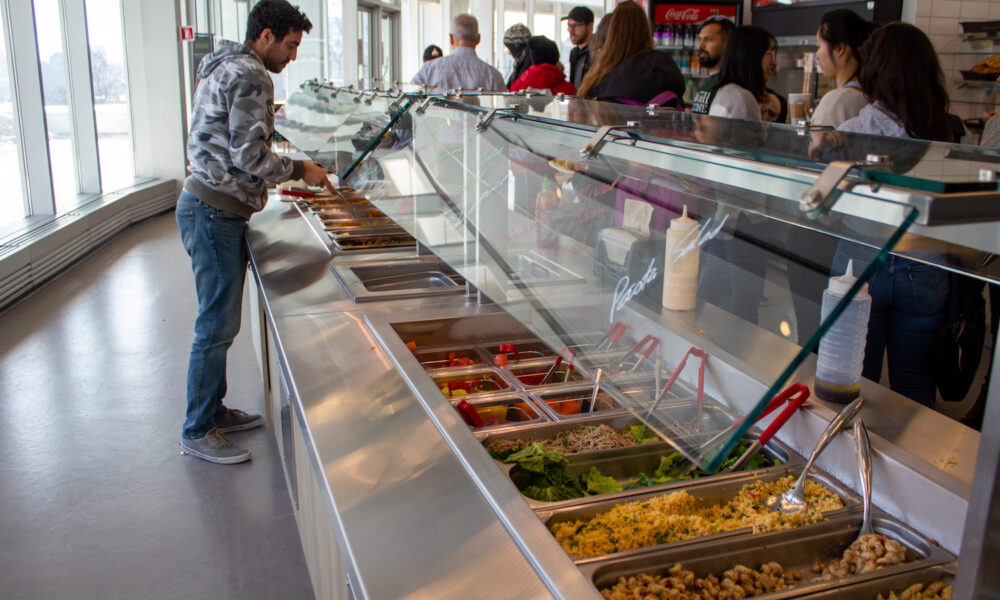
Thanks in part to the rising costs of consumer goods driven by inflation, the price of McGill’s mandatory meal plan has increased by 35.5 per cent over the last five years.* Many students are feeling the financial squeeze when it comes time to purchase meals at on-campus dining locales and find McGill’s meal plan—which costs almost 90 per cent more than eight months’ worth of groceries—to be unaffordable. For some who spoke with The McGill Tribune, the lack of affordable options is manifesting as disordered eating, skipping meals, and a generally unhealthy diet.

McGill’s meal plan, which amounts to $6,200 per year including administration fees and $500 on oneCard, is compulsory for all first-year students living in residences, with the exception of those in Solin Hall. The fund is a declining balance plan that can be accessed for in-residence dining, flex dollars, and oneCard money at select locations. In 2017, this total was $4,575. 

In an email to the Tribune, McGill media relations officer Frédérique Mazerolle noted that in order to keep up with the effects of rapid inflation, McGill’s food and dining services must operate the same way as any “retail operation.” 

“McGill Food and Dining Services is a self-financing unit with the mandate to break even at the end of the fiscal year,” Mazerolle wrote. “In addition, it is a mixed model, which means that they run self-operated units as well as units managed by a food provider and as well, some of the retail locations are run by tenants.”

Although Mazerolle describes the meal plan as “budget-friendly,” not all students agree. In an interview with the Tribune, Grace Pacette, U1 Arts and current meal-plan user, expressed her dismay at the prices in McGill cafeterias.

“I am honestly so far very disappointed with the pricing,” Pacette said. “I have run the numbers with my friends a couple of times, and to eat three proper meals a day would put you between 30 to 45 dollars per day.”

She also expressed concern that, because the costs of nutritious foods are so high, students are forced to eat unhealthily in order to properly budget their meal-plan money.

“If I am looking at fresh fruit or something like that, I see a lot of the more nutrient-dense foods are more expensive,” Pacette said. 

In an interview with the Tribune, Lily Silverman, U1 Science, explained that she would simply rather skip lunch than pay the campus cafeteria fees.

“Since I kind of live far away […] it is nice to have the cafeteria option, but it is rather expensive,” Silverman said. “A lot of times, I will just eat breakfast, and then I will not eat lunch and I will just go home and cook dinner.”

Pacette, too, has witnessed students skipping meals in order to stretch their meal-plan money to the end of the school year.

“I will hear a lot of people within a day talking about which meal they have skipped,” Pacette said. “It is creating a lot of disordered and problematic eating habits for people because they are trying to be frugal and ration their money. That is very concerning to me, personally.”

Pacette believes McGill ought to take action by cancelling the mandatory meal plan and lowering prices to help its students navigate the rising cost of living. 

“I don’t think [the meal plan] should be mandatory,” Pacette said. “But I also definitely […] would hope that the university would try to take action to bring those prices down to make food a little bit more accessible to everyone.”

*This figure was calculated by The McGill Tribune using data collected from McGill’s Food and Dining Services’ website.

Out on the Town, Student Life

Dispensaire Microbrasserie: Brilliant beer by locals for locals

Microbreweries have exploded in popularity in recent years. Not literally exploded, of course, that’d be horrific—we’d all be covered in yeast. According to the Association des microbreweries du Quebec, there’s been a 50 per cent increase in the number of microbreweries in the last four years. And so it follows: Our new generation is driven by experiences and sustainability. Thrifts are the new Abercrombie, dirty Docs are the new Air Jordans, healthy is the new sexy, drugs come in doses, not surfeits, and in this new era, microbreweries are pouring the drinks. 

I skipped class to go for a midday pint at the Dispensaire Microbrasserie, a microbrewery at the intersection of Prince Arthur and Coloniale. “Beer instead of school, Harry! Is this really the path you want to go down?” Hey, I’m on research, I’m on research! I’m Louis Theroux, I’m Louis Theroux! Who knows, maybe a midday pint stimulates productivity!

It’s all happening on Prince Arthur these days: Vegan and gluten-free restaurants, Japanese and instagrammable cafes, Café Campus and the lesser-known Petit Campus, which hosts gigs from local artists and bands. There’s also the cabaret Vol de Nuit and a restaurant called Onoir that only hires servers who are visually impaired and where you eat completely in the dark. 

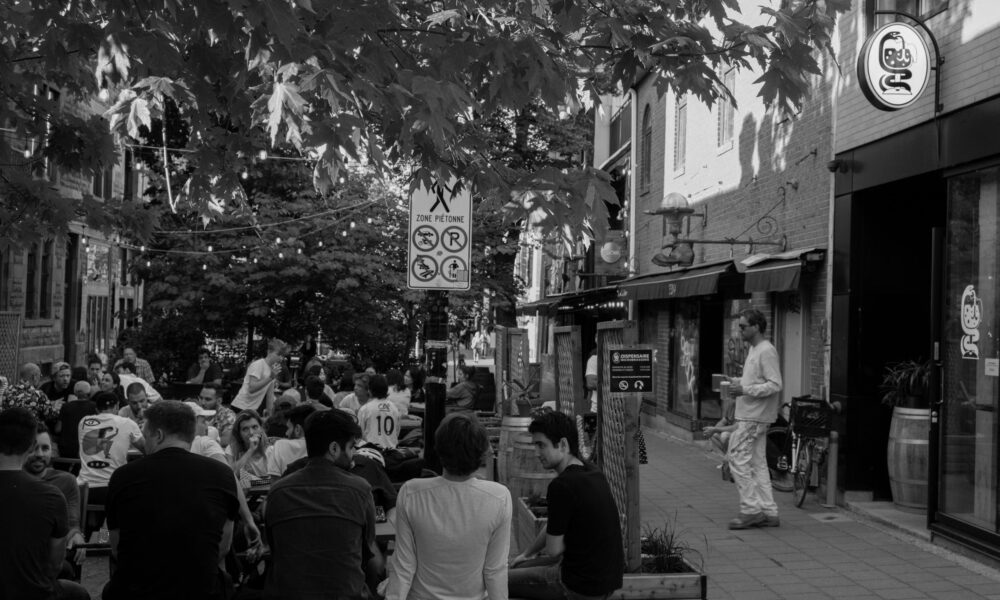
Dispensaire Microbrasserie is right in the thick of it, too. It was started by four mates in 2018 and it’s a small operation—but busy work. You can see the ginormous fermenting tanks through the glass from afar. There’s a seating area outside with benches and tables that is very popular during the patio season. 

I went inside and sat by the bar. Inside is split into two areas: The serving counter and a small seating area tucked behind. Both have a gastronomic feel, like you’ve just come off MasterChef. The serving area features black brick against white-contrasting walls and a strip of glass that peers into the fermenting room. The small seating area behind has a couple of high standing tables and metal stools. 

They had six beers on tap—all with funky names like “Elephant Velvet” or the “Schmoutz”, and all brewed in their 700-litre in-house tanks. They had the same six in cans to take away, plus an extra four. The cans were designed by local artists as well, which I bring up because it seems that most McGill students these days have an Instagram page dedicated to their doodles. The menu changes frequently, with one or two brews being replaced each week, and they also have a tasting tray with small glasses to sample each of the beers on tap.  

I got the “SMaSH #3”, a non-hazy Indian pale ale with a 6.8 per cent alcohol content. This brings me to beer jargon—it’s an absolute nightmare, like talking to a Desautels kid about Bitcoin. An essential thing to know is the difference between an ale and a lager, the former being fermented at a warmer temperature and the taste being typically fruitier.  

Anyway, the SMaSH #3 is made with centennial hops, which gives it a crisp fruity finish. My, it was tasty, and balanced, too, with hints of bitterness that keep you on your toes without stretching a muscle. All the pints are $8.50 and half pints are $6.50, with taxes included. And it’s worth its buck. Each sip was filling but bloody moreish! 

Dispensaire Microbrasserie really does offer an object lesson in how to run a sensible establishment. No funny business, just shrewd mother wit. Say, for example, you want to bring a curry to have with your beer—a perfectly sound idea. Well, no problem—you can bring any food you want. Or say you’re tired of your friends nattering on—they have board games to change the conversation. What if you’re outside and getting cold? Don’t fret, they have blankets. And if you don’t know what type of beer you want, they let you have a taste test. This is a business by locals for locals. Oh, and their beer is absolutely hoppingly brilliant too. 

Score: 5 / 5 stars

Features

Leaving the starving student behind

Content Warning: Eating disorders

Every McGill student has likely trekked to the library for a study session, and emerged five hours later, stomach grumbling, head aching, needing food close and quick. But not every McGill student can afford a $13.56 salad from Redpath or a $6.37 cup of fruit from RVC. Food options for students on campus are largely limited and inaccessible. McGill residence mandatory meal plans are $6,200 and only provide access to a limited array of pricey options that quickly eat up this budget. With such high costs of food piled onto the high costs of living, as well as the cost of tuition, many students struggle with finances and find themselves undergoing malnourishment in order to save money.

Food insecurity is when someone does not have adequate resources to properly feed themselves nutritiously or at all. While, according to a study by the Hungry for Knowledge, Quebec reportedly has the lowest rate of household food insecurity of any province, nearly 40 per cent of Canadian university students report facing some degree of food insecurity. The study also found that the cost of food, tuition fees, and housing costs were the most common contributors to food insecurity. Food insecurity disproportionately impacts Black, Latinx, and 2SLGTBQIA+ individuals that are already underserved on university campuses and creates barriers to student success and general wellness. McGill has done little to support students after their tuition spike for certain programs in 2020 and a rise in inflation. Food prices at McGill are only increasing and McGill Dining Services has no real options for students who may not be able to shoulder these hefty costs. And McGill’s completely student-run food bank, the Midnight Kitchen Collective (MK), no longer serves daily lunches after just returning from a two-year shutdown due to the COVID-19 pandemic. 

MK is a nonprofit collective that serves to combat food insecurity among students and in the broader Montreal community. They offer biweekly free prepackaged meal pickups and free catering for events that align with their political mandate of anticapitalism. But the program only has enough resources to provide 50 meals for each meal service, which is not enough to meet their community’s high demand. 

At Concordia, Le Frigo Vert is a collective that offers healthy, fresh, culturally diverse, and affordable food, as well as a safe space to relax, work on community projects, or host events. One of their main goals is to combat the stigma associated with using food services on campus. 

“I see people struggle to feel okay accessing [Frigo Vert], so we try to reassure people and remind people that everyone goes through different times of need. We are an antipoverty organization so we think a lot about that kind of thing,” Hunter Cubitt-Cooke, a Frigo Vert employee and organizer, said. “I personally grew up poor, and there is definitely class shame.”

Cubitt-Cooke spoke about Aramark, a greenwashing food company contracted by Concordia and McGill dining services to provide food for students. The quality of their meals is notoriously poor: They service multiple prisons in the U.S. who have reported rotten meals and food crawling with maggots, or partially eaten by rodents. Hunter emphasized the importance of putting pressure on both universities to provide high-quality, affordable food to students.

McGill media relations officer Frédérique Mazerolle summarized the options open to students struggling financially in an email statement to The McGill Tribune

“For those looking for budget-friendly meals, many options prepared in-house are available, including the healthy and well-balanced hot meal of the day,” Mazerolle wrote. “Additionally, various meal plans are available, including the Saver Meal Plan, a tax-exempt meal plan best suited for those who plan to eat often on-campus.”

In reality, though, students have few choices if they want to save money on food. Mazerolle’s response ignores the high cost of food on campus, as well as the outrageous $6,200 cost of the meal plan enforced on first-year students in residences. Even if these students wanted to cook their own meals, resources are sparse. In New Residence Hall, for instance, there are only communal kitchens on two floors out of 12. 

The mandatory meal plan is not only financially costly, but can also be harmful to students who struggle or have struggled with disordered eating habits. U0 Science student Alexandria Taylor experienced this firsthand at New Residence’s dining hall. 

“My biggest complaint about New Rez’s dining hall specifically is that they seem to serve people based on their looks,” Taylor said. “I often see tall, muscular guys with mountains of food on their plates—my roommate even heard one of the staff ask a guy which cut of meat he wanted—while I’m usually given the smallest portion automatically. This is upsetting not only because I’m paying the same price for my food, but because I also suffered from anorexia in the past and I’m familiar with unhealthy portion sizes.”

Outside residence cafeterias, students have to feed themselves, often for the first time. When compounded with the significant financial and academic stresses of university, this responsibility makes them especially vulnerable to disordered eating habits. 

“It is easier to engage in restrictive eating or binge eating if you have these tendencies when you have the freedom of cooking for yourself, or you don’t have structured meals with family,” Ege Biçaker, a PhD student in psychology, explained in an interview with the Tribune. “Structured meals, having three meals in a day, dispersed within four or five parts so that you won’t feel extremely hungry is the first plan of action in eating disorder treatment.”

Structure is difficult or impossible for many food-insecure individuals. They are often thrust into a cycle of “feast-or-famine” in which food intake oscillates in correspondence with food availability. When one attempts to restrict food, whether voluntarily or not, it can cause various cognitive, emotional, and behavioural changes, such as preoccupation with food-related thoughts, increased emotional reactivity, and a tendency to binge once restrictions are lifted. Food insecurity among adults has repeatedly been associated with a greater likelihood of binge eating as well as other specific eating disorder diagnoses. 

In the university setting, financial and academic pressures intersect to contribute to disordered eating. Students working more than 20 hours a week to pay the costs of living and tuition were found to struggle more with academics than students who worked less than 20 hours or not at all. Equipped with a newfound freedom over their diets, students might forgo the time-consuming practice of cooking nutritious meals to prioritize studies, work, or social activities over health. 

“When people are going off to university, making ends meet is a huge stressor in general. This might be the first time that you’ve had to pay your rent and pay your bills and buy your own food,” Allison MacNeil, a PhD student in clinical psychology at McGill, told the Tribune

“A lot of food insecure youth who are in undergrad have said that […] if they had enough time, they could go buy lower cost things at the grocery store and prepare a meal and that would maybe stretch their money further [….] But they just don’t have the time to, and time is money in a way, right?” 

The starving university student who just eats ramen or other cheap, instant meals every day is a trope that should not be normalized. Instead, we need to look at the reasons why universities foster an environment where mental health disorders run rampant. In 2019, the National College Health Assessment found that almost 70 per cent of students at Canadian postsecondary institutions felt “overwhelming anxiety” in the previous 12 months. Similarly, a survey in the United States found that 73 per cent of university students experience some sort of mental health crisis during university. Rates of eating disorders, in particular, rose significantly during the COVID-19 pandemic. Among university-aged women, the rates rose from just over 30 per cent to 51.8 per cent in 2021. For men, the prevalence rose from 13 to 31 per cent. Biçaker explained that the high volume of stressors on campuses can lead to disordered eating, which in itself is a stressor, causing a vicious cycle.

“Eating itself reduces the activity of the system that is responsible for managing stress in our body [….] So it is natural that we turn to food when we are distressed,” Biçaker explained. “When one [has] strict rules about what to eat or not to eat, it is inevitable that they will break them. And once they break them they might feel especially stressed and especially guilty.”

Dr. Salah El Mestikawy, a professor in psychiatry at McGill, explained that the pathology of eating disorders also makes them more prevalent in environments with high-achieving cultures like McGill. 

“What I know from this pathology is that it amplifies your ability to learn. So that’s why very often anorexic patients are what we call overachievers. They learn very quickly, and they can learn anything [….] So my guess is that not only McGill but everywhere in this society where you have difficult challenges, you must have a lot of people with this genetic vulnerability.”

Actual diagnoses for eating disorders are often rare cases compared to the prevalence and promotion of disordered eating habits commonly on display at McGill. I hear classmates and friends bragging daily about not eating. Remarks like “Wow, it’s 5 p.m. and all I’ve eaten today is a banana” are familiar refrains. 

“Diet culture is prevalent in all settings, but it’s especially pertinent in universities,” Liam Fowler from Safely Connected, McGill’s Eating Disorder Resource Centre, said in an interview with the //Tribune//.  “Not only is it in an environment that perpetuates a lot of that toxic culture that is harmful to both our mental and physical wellbeing, it’s also an age where we’re very susceptible to societal influences. And so the combination of those two factors creates this space that’s super fostering of disordered habits and disordered eating.”

For me, after moving to Montreal, finding the balance of eating healthy and eating enough, all while dealing with the stresses of university and living alone for the first time, was extremely difficult. While I am in the privileged position of food security, seeing food as an ally rather than an enemy has been challenging. Battling feelings of internalized fatphobia and fear of weight gain poisoned my relationship with food and exercise for much of my university experience. 

In terms of next steps for McGill, MacNeil believes it is imperative to recognize the multiple societal and systemic contributors to this issue. 

“There’s a lot of elitism at McGill, and that it might not be sort of socially acceptable for someone to access a resource like [a food bank],” MacNeil said. “I think broadly, subsidizing or lowering the cost of foods on campus would make a huge difference. There’s issues with housing [as well], food doesn’t exist on its own [in a vacuum]. So if someone has to pay double what they would have paid in rent five years ago to live near school and go to school, that’s cutting into their food budget.”

Because of the intersections of food insecurity with other systemic failures like the housing crisis, we must shatter the common misconception that eating disorders predominantly affect young, white upper-class women, so that solutions for food insecurity do not leave marginalized groups behind. White individuals, in fact, have the lowest rates of food insecurity compared to other racial groups. Indigenous peoples in Canada are most greatly affected, with almost 31 per cent living in food insecure households, just among those surveyed. (Indigenous peoples are historically underrepresented in national surveys, meaning this number is likely much higher.) 

“The reality is that the folks who are often really struggling are from different cultural communities or marginalized groups where mental health is [not] discussed as much,” MacNeil said.

Fowler believes that having conversations about the harms of disordered eating and normalizing such dialogue on campus is an important step in ensuring that solutions are inclusive. 

“Not taking away from the severity of the experience, but I think accepting the degree to which [disordered eating] is occurring, is one way that will open up the space,” said Fowler. “And within that, ensuring that the space is representative of everyone and inclusive and inviting to everyone, as the ones that are most susceptible are oftentimes the ones that are at least represented.”

Dr. El Mestikawy also noted that learning the biology behind eating disorders may help patients feel less responsibility and shame, as they cannot help their pathology. 

“If people know this mechanism, it will not cure them, but will probably help them. Knowing that it’s your putamen, and your habits that are pushing you to [restrict food] because anorexic [people] are not stupid. They know that something is really wrong and they know what’s going on in their brain [….]  Be better with yourself, know that you’re not guilty. This is something beyond your control.”

It is important to recognize the numerous financial and academic stressors that we, as students, endure. McGill’s failure to provide accessible and healthy food wreaks a devastating impact on our mental and physical wellbeings. Just like how learning about pathology can help students rid feelings of guilt, critiquing the roots of food insecurity and disordered eating on campus can be a way forward to bringing in nutritious, more affordable dining options in our campus buildings and fostering a healthier culture amongst students surrounding food.

Collective groups like Midnight Kitchen and Frigo Vert have proven that high-quality, nutritious foods do not have to be out of reach. With environmental conditions that foster mental health disorders such as disordered eating, McGill needs to prioritize student health over profit to make sure food insecurity doesn’t exacerbate already critical issues.

For those looking for support, Safely Connected offers several resources for students struggling with disordered eating, including a peer to peer support forum, as well as virtual support groups on the weekends.


McGill, News

Downtown students report difficulty securing seats on inter-campus shuttle

Overcrowding on the inter-campus shuttle bus to McGill’s Macdonald campus has left commuter students feeling frustrated and underserved. Many students depend on the free service to attend classes at the Sainte-Anne-de-Bellevue campus—the commute without the shuttle would cost at least $7 both ways and take a minimum of one hour in each direction. As midterms loom near, downtown students are questioning whether they can rely on the service to attend their exams at Mac campus.

Students in the Faculty of Agricultural and Environmental Sciences use the buses for a direct, 45-minute commute to and from Macdonald campus. Each bus can transport a maximum of 60 passengers per journey. But since McGill’s transition to full in-person learning this fall, the shuttle has become an unreliable travel option. Those taking the bus at peak times face a long line outside of 688 Sherbrooke, where the Macdonald-bound bus departs. Most have no choice but to join the queue—public transit fails to offer a competitive alternative, as it requires multiple bus and metro transfers and off-peak schedules do not align with class times. 

Kamryn McCallum, U2 Agricultural and Environmental Sciences, believes buses departing early is one reason for overcrowding. With class ending at 10:25 a.m. in the Maass Chemistry building, McCallum is just able to make the 10:30 shuttle, but early bus departures have forced her to miss shuttles and delay her journey until 10:45 a.m. 

“Usually I am crossing Sherbrooke, right out front of [the Roddick] Gates at 10:27, and I watch it leave,” McCallum said in an interview with The McGill Tribune. “I think that is another reason why the next one gets crowded, because I know I am not the only one running for that 10:30.”

Shayla Santucci, U1 Agricultural and Environmental Sciences, believes that overcrowding is a consequence of buses not showing up at their scheduled times. When fewer buses are circulating—such as between 8:00 a.m. and 9:00 a.m.—there can be a backlog of students who spill over into later time slots.  

While Santucci, who lives downtown, has adjusted her journey by taking earlier buses to make it to her classes on time, she notes that not everyone has this flexibility. Students with interdisciplinary concentrations, for example, have classes on both campuses, and there is often only one shuttle they can take which will get them to class on time. 

When Santucci contacted McGill to express these concerns, she was told by the inter-campus shuttle service that the bus is intended for those with inter-campus obligations, implying that those with Macdonald campus concentrations should not reside downtown. The email, which was shared with the Tribune, stated that the shuttle operates on a first-come first-serve basis, and that not every student can expect to be accommodated. Santucci found this response unsatisfactory and believes that McGill intends to wait out the complaints instead of finding a more permanent solution.

In an email to the Tribune, McGill media relations officer Frédérique Mazerolle explained that ridership is influenced by the return to in-person classes and students choosing to live downtown whilst being enrolled at Macdonald Campus.

“To ensure rider safety, most buses carry a maximum of 48 seated passengers—though some buses allow for standing room, bringing the total to 60 passengers,” Mazerolle wrote. “Additionally, we must be respectful of drivers’ mandatory rest periods.”

Santucci’s professors have helped her catch up when she was unable to get to class, but she believes that the difficulty securing a spot on the shuttle disincentivizes students from attending their in-person classes. 

“I would say that students now see the shuttle as an obstacle and decide whether they have to go to class based on it,” Santucci said.

For Santucci and McCallum alike, this sows a deeper anxiety as to what will happen come exam-time, when all students will be forced to attend class.

Read the latest issue

Read the latest issue