Latest News

McGill Recommendations, Student Life

How to make the most of your fall break

Reading Week is fast approaching, and while this is a much-needed break for McGill students to catch up and relax, it is also the perfect opportunity to get to know our temporary (or permanent) home––Montreal. Whether you plan to stick around in the city or take a trip nearby, Montreal offers an expansive variety of activities and events to enjoy this fall. With summer tourists long gone, the city has taken on a new cozy atmosphere as the air turns crisp and the leaves crunch underfoot. Treetops are bursting with colour, and the social calendar is packed with fun holidays and artistic spectacles. 

Local festivals and events

To kick-start your weekend, try an evening activity at the Botanical Garden. The Light & Lantern Festival offers “An Ode to the Moon” sensory experience. Grab a friend and discover the majestic Chinese garden filled with glowing lanterns and autumnal light displays.  

Continue your discoveries against a colourful backdrop with the fourth edition of “Carnaval des Couleurs”, hosted in Montreal’s downtown core from Oct. 7-9. This event gathers and celebrates multicultural and LGBTQ+ communities with free music shows in the Quartier des Spectacles near Place des Arts metro.

Keep an eye out for the last day of Piknic Electronik on Oct. 9 this year. Located in Parc Jean Drapeau, a mere 20-minute metro ride from downtown, Piknic has established itself as a flagship event on the Montreal summer calendar. DJs come every weekend over the summer and set fire to the dance floor. Partying, music, dancing, and human connections are at the heart of these events, and a vibrant, unforgettable experience awaits.

Eating and relaxing

After the parties and festivals, get your cozy on and recharge with promenades around Montreal’s vast natural parks and trails. From a casual stroll around Parc La Fontaine to an energetic hike to the top of Mount Royal, take the time to breathe in the fresh air, observe the colourful explosion of orange and red foliage, and let your mind reset. 

Try riding your bike or an easy-to-rent Bixi to a nearby Farmer’s Market––this is harvest time for fall’s best fruits and vegetables and the bike ride makes the experience all the more enjoyable and ecological. Montreal’s rich history of urban markets provides a wonderful opportunity to get a taste of the province’s cheeses, pastries, and fresh produce that come straight from Quebecois farms and artisans. 

The city’s biggest public market is Jean-Talon. Nestled in the heart of Little Italy, the market boasts an enormous variety of Italian specialties, fresh produce, bakeries, and much more. Next, situated along the Lachine Canal bike path, the Atwater Market offers high-quality, seasonal products from local producers. This market is a great place to walk around and get to know the farmers, butchers, fishmongers, and cheese-makers who help make the city thrive. 

Once you have returned home with a basket filled with unique finds, get into the Canadian Thanksgiving spirit and cook a warm holiday meal. This year, Thanksgiving lands on Oct. 10, so take this opportunity to experience the age-old tradition of friendsgiving through a culinary experience. On the menu: Roasted turkey with gravy, creamy mashed potatoes, roasted Brussels sprouts, and a timeless apple pie. Invite a couple of friends, wear something nice, and spend a terrific evening eating and laughing. If cooking isn’t the way to go, plenty of the city’s restaurants offer traditional holiday meals for lunch and dinner. 

Looking to get away from the city? Quebec’s Oka National Park has a new boardwalk with 360° fall foliage views. Located just a 45-minute drive from downtown Montreal, the national park offers a great variety of trails, observation towers, and walks through maple groves. For $9.25 a day (tax included), grab a picnic basket, find a spot, and spend the day at Oka for the most magnificent views and a calming environment. 

Hockey, Sports

La Force de Montréal is the newest addition to the Premier Hockey Federation

The Premier Hockey Federation (PHF), previously known as the National Women’s Hockey League (NWHL), unveiled the league’s latest expansion team, La Force de Montréal on Aug. 30. 

The new team will compete against the Boston Pride, the Buffalo Beauts, the Connecticut Whale, the Metropolitan Riveters, the Minnesota Whitecaps, and the Toronto Six.  These seven teams, now including La Force, will compete for the coveted Isobel Cup in the 2022-2023 PHF season.

Despite holding the Montreal name, La Force will transcend the city’s boundaries, playing home games in seven cities throughout Quebec. With Gatineau, Montreal, Quebec, Rimouski, Rivière-du-Loup, Saint-Jérôme, and Sept-Îles all given the opportunity to showcase the team, there is hope that women’s professional hockey will grow throughout the province. 

In an interview with The McGill Tribune, La Force assistant coach Katia Clément-Heydra emphasized the value of having the team play all over Quebec. 

“With more visibility comes more fans,” said Clément-Heydra. “Their motivation, for now, is to build something bigger than just a championship team.”

On Sept. 13, Peter Smith was announced as head coach of La Force. His impressive track record includes 21 seasons as head coach of the McGill Martlets, leading the team to four national championships between 2008 and 2014, and holding the title of the winningest coach in the history of McGill hockey. Smith boasts numerous accomplishments at the international level, too, serving as head coach of the Canadian National Women’s Hockey Team from 2007 to 2008, and as an assistant coach with Team Canada under Melody Davidson. 

Former Martlets’ assistant coach Clément-Heydra will join Smith while continuing to assist McGill with recruiting and player development. In addition to her impressive young coaching career, Clément-Heydra played five seasons with the Martlets, four seasons with CWHL’s Montréal Canadiennes, and one season in the Swedish Women’s Hockey League (SDHL). 

To round out the staff, the former head coach of the Carleton Ravens women’s hockey team, Pierre Alain, will also join La Force as an associate coach. 

Like the coaching staff, the team includes several McGill Martlets’ hockey alumni, with forwards Ann-Sophie Bettez and Jade Downie-Landry, and goaltender Tricia Deguire named to the inaugural roster. 

This new team and the newly restructured PHF, however, raise questions about the unstable reality of professional women’s ice hockey. 

Currently, two professional women’s leagues exist in North America: The PHF and the Professional Women’s Hockey Players Association (PWHPA), which is a hybrid between a league and players’ union. The two leagues remain divided in their abilities and demands, with the PHF unable to meet the PWHPA’s demands for health benefits, living salaries, and professional hockey infrastructure.

But this past summer, the PHF created a new policy that raised the salary cap to $750,000 per team, including a minimum salary of $13,500, an extension on contract length, and an increase in signing bonuses. While this new policy relieves some of the financial burdens of playing at such an intense level, it is important to note the stark contrast with men’s professional hockey as the minimum National Hockey League (NHL) salary stands at $750,000 per player excluding bonuses.  

This progress, in addition to the NHL’s statement that they would only support a united women’s league and the PHF’s deal with ESPN+, leaves many hopeful that the two leagues will come to an agreement that would bring them together in creating a viable future for the sport.

The addition of La Force as a seventh team in the PHF offers more roster spots and playing opportunities for current and future players at the professional level. 

“We may have lost an entire generation of athletes due to the fact that Montreal and Canada didn’t have the right structures,” said Clément-Heydra. 

There is hope that the PHF will open doors for women to pursue their passion for hockey and provide a real opportunity to earn a living playing the sport they love. La Force ushers in a new era for professional hockey, and the determination of the team leaves fans eager to witness their inaugural season.

Features

McGill’s greenwashing machine

Walking onto campus for the first time in months this September, my eyes were immediately drawn to the blue banners now adorning the Arts building and along the Y-intersection. These banners advertise the university’s Sustainability Projects Fund, featuring illustrations like bees, plants, bikes, and electric cars, along one of the most traversed and photographed paths on campus. They immediately rubbed me the wrong way. 

It isn’t that I have something against the Fund—in fact, I think it’s an amazing resource for those looking to do research and projects in the field of sustainability at McGill—but rather, I’m wary that these banners deceptively portray McGill as a haven of environmental sustainability and innovation. Admittedly, I am not an unbiased source: As a member of Divest McGill, I am hyper-critical of McGill’s attempts to paint itself in a positive environmental light. Despite this, healthy skepticism is necessary whenever one is accosted by such advertising.

‘Greenwashing,’ a term coined by ecologist and environmentalist Jay Westerveld in 1986, is the now widely-recognized practice of a company, organization, or, in this case, a university marketing itself or its products as environmentally sustainable while failing to live up to these claims. Analysis conducted by the International Consumer Protection Enforcement Network  shows that a staggering 40 per cent of the nearly 500 websites randomly reviewed from across the globe hosted false, vague, or misleading environmental claims, thus potentially breaching consumer law. 

The problem with greenwashing is that it leads to dangerous complacency. When the university obscures and misrepresents its environmental record, it is only pretending to care about accountability to the public. Effective solutions are bound to be lacking, and we do not have time for this: Greenhouse gas emissions are at a record high. Without a drastic and swift reduction of our emissions, limiting global warming to one-point-five, or at most two, degrees Celsius above pre-industrial levels—the ‘safe’ threshold established by the Paris Agreement of 2015—will prove impossible. Globally, almost 80 per cent of human-caused greenhouse gas emissions come from burning fossil fuels and industrial plants. Per capita, the United States, Russia, Japan, China, and the European Union, in that order, have the greatest emissions. Just like it isn’t equally engendered, the effects of climate change aren’t equally felt: Racialized people in the Global South face rising tides, air pollution, natural disasters, and other impacts of global warming first and most severely

Dror Etzion, an associate professor of strategy and organization at the Desautels Faculty of Management and an associate member of the Bieler School of Environment, studies how businesses can become more sustainable while staying financially viable. Etzion explained that McGill’s actions on sustainability mimic those of corporations.

“I think McGill […] is kind of following the lead of the corporate world. I think a lot of the corporate world is busy with burnishing its image on sustainability,” Etzion said. “It is really trying to portray a lot of positive activities and rarely being honest and transparent and authentic about the challenges that it faces, the failures that sometimes it experiences, the learning that’s happening, you know, the positive and negative examples on this journey.”

While McGill does some important work—most notably through its Office of Sustainability which oversees the Sustainability Projects Fund and the university’s sustainability and climate goals––greater transparency about its shortcomings are desperately needed. The press releases, tweets, and videos that McGill releases paint a picture of innovation by zeroing in on the positive changes occurring on campus: The continued “outstanding” results of decarbonization initiatives, successful educational festivals, professor and student spotlights, and high rankings on climate and sustainability action.  

Organizations’ greenhouse gas emissions are broken down into three scopes for analysis in Etzion’s line of work. Scope 1 emissions are direct and often the most obvious, like the fuel burnt to operate campus vehicles and McGill labs. Scope 2 emissions are indirect and encompass the energy bought for things like lighting, heating, and cooling university facilities, and operating computer labs. Scope 3, which Etzion describes as “where a lot of the action happens,” includes all other indirect emissions, such as professors’ air travel, the food supply chain, and the university’s investments

Greg Mikkelson was a tenured professor at McGill, but stepped down in 2020 after the Board of Governors (BoG) refused to divest from fossil fuels. He thinks the university’s so-called ‘decarbonization’ efforts to reduce the carbon-intensity of the McGill Investment Pool (MIP) are a smokescreen and a clear example of greenwashing. Mikkelson points out that McGill selectively measures the carbon emissions of its portfolio. During an April 2020 open session meeting of the BoG, it was mentioned that McGill uses the MSCI index carbon footprint metrics when assessing its investments. MSCI only considers the scope 1 and 2 emissions of companies; in the case of fossil fuel companies, this means the actual burning of the fuel, which can account for 75 per cent or more of these companies’ emissions, is ignored.

“As long as the bosses keep investing McGill’s money in the companies ripping out forests, poisoning rivers, overheating the climate, and trampling Indigenous land rights to wring oil from tar sands, forcing the Coastal Gas Link pipeline through Wet’suwet’en territory with the help of the RCMP, and as long as so-called ‘decarbonization’ does not count the scope 3 emissions that occur when fossil fuel companies’ customers burn their product; they will continue McGill’s sad tradition of climate laggard-ship,” Mikkelson wrote. 

The university’s continued investment of the roughly $1.9 billion endowment fund in the fossil fuel industry is likely the environmental faux-pas that generates the most controversial public traction. Despite universities like Harvard, University of Toronto, and Concordia pledging to divest, McGill remains invested in companies like Canadian Natural Resources Ltd, Suncor Energy Inc., TC Energy Corp., Pembina Pipeline Corp., and Cenovus Energy Inc. The Climate Accountability Institute’s groundbreaking Carbon Majors research shows that 20 fossil fuel companies are responsible for an alarming 35 per cent of the CO2 and methane released since 1965. It had $18,266,470 worth of holdings in the five companies listed above as of Dec. 31, 2021, and the amount has only increased to $24,027,260 as of June 30, 2022.

The McGill Senate, comprised of over 100 representatives from across the university, voted to divest in 2018, but the BoG ultimately struck down the motion, which was submitted by Mikkelson. The BoG has 25 members, 12 of whom are appointed by the Board itself. The membership is rife with conflicts of interest—its Committee to Advise on Matters of Social Responsibility, which makes recommendations regarding divestment to the Board, is currently chaired by former longtime Petro-Canada executive Cynthia Price Verreault

In lieu of divesting, the university launched the Green Century Fund in 2020. The fund, reportedly valued at $10.8 million as of May 2022, allows donors giving over $100,000 the option to keep their money out of fossil fuels. While the university ensures that large donors can feel morally secure about their investment portfolio, students are given less agency––both over the ramifications of their tuition money on the climate and the messaging they receive about McGill’s environmental impacts. Further, the fund divests a mere half a percentage point of the endowment—this should not be the bragging point it has become. 

The university advertises that its decarbonization initiative is more fruitful than divestment from the Carbon Underground 200, the top 200 publicly listed coal, oil, and gas companies, and is yielding fast results. The administration declined to answer questions about how it actually measures the carbon emissions of its endowment, or to provide examples of the companies it has stopped investing in as part of its decarbonization initiative. 

According to Frédérique Mazerolle, a media relations officer for the university, “[t]he latest figures show that the University continues to accelerate the effective decarbonization of the approximately $2-billion MIP [McGill Investment Pool], including the reduction by 42 [per cent] of carbon emissions of the endowment portfolio vs benchmark (up from 30 [per cent] in December 2021), further reducing its exposure to large users of oil, gas, and coal, as well as fossil fuel producers.”

Etzion believes the bar should be higher. “We have tons of brilliant people [at McGill] who are excited to work on sustainability. We have wide latitude to experiment and innovate. So we have basically the best possible toolkit to try to be more aggressive and ambitious in these types of efforts,” he pointed out. “I think the McGill administration has kind of fallen short on […] setting an agenda that would be much more meaningful and inspiring that we could all rally around.” 

“It’s not nearly as ambitious as it could be. And that they’ve let us down in that regard, but not really urging us to do as much as we can on this very important matter.”

At a sustainability review in 2020, known as the Sustainability Tracking, Assessment & Rating System (STARS), McGill received a score of 76.69, earning the university a well-publicized gold designation, one step below platinum. The university then gave itself a leisurely 10 years to gain the nine additional points it needed to achieve a platinum STARS rating of 85 or above by 2030. While it is a good sign that the university scores relatively well on the self-reported assessment, it could have set a much more ambitious goal and timeline. Ultimately, failing to reach a publicly stated aim and, therefore, shattering the image of quick and linear progress it has established, is likely a risk McGill is too afraid to take. 

By 2035, McGill plans to divert 90 per cent of its waste away from landfills to become ‘zero-waste.’ It is currently at a diversion rate of 45 per cent. Landfills exude toxic substances, threaten the health of lower-income and marginalized communities who are more likely to reside nearby, and release methane. In fact, 23 per cent of Canada’s methane emissions come from the country’s landfills. Just like the STARS rating, this is a conservative goal that follows others’ lead. In fact, the city of Montreal plans to be zero-waste by 2030, five years before the university. (The city, however, is aiming for a 70 per cent diversion rate.)  

The university plans to be carbon neutral by 2040. This goal, in particular, is too little, too late. In 2017, a report put out by the Intergovernmental Panel on Climate Change announced that we could reach one-point-five degrees Celsius of warming by 2040 if we continue our current levels of greenhouse gas emissions. McGill, both as a font of scientific scholarship and as a well-endowed institution, should be ahead of the curve on carbon neutrality before it becomes the absolute last resort in 2050.

These three main objectives—a platinum STARS rating by 2030, becoming zero-waste by 2035, and achieving carbon neutrality by 2040—like the decarbonization of the endowment, have been heavily publicized. Such initiatives, while important, are not “ambitious” like the university claimed in a statement to the //Tribune//.

“Sustainability is an institutional priority at McGill as evidenced by the ambitious goals we have set out for ourselves,” Mazerolle wrote by email. “We have shown leadership in sustainability and climate activities relating to operations, governance and administration, and research and education. Adopting a more carbon-conscious investment approach complements McGill’s far-reaching climate change and sustainability goals.”

While it is important to acknowledge the challenges of propelling institutional change, Etzion believes the only way to fix the greenwashing culture within universities is to call it out. When an employee from the Office of Sustainability working on a sustainability report for McGill came to Etzion for advice, he confronted this discomfort firsthand.

“I think she was aware of the greenwashing issue,” Etzion said. “But she had her boss and her boss wanted a nice report [….] I said, well, let’s just be honest […] because that’s the point of reporting. It’s like, you know, we don’t want all report cards to be full of A’s. No, we want report cards to say, ‘Are you doing okay? You’re not doing okay, you’re failing, [or] you’re succeeding.’”

The information that McGill releases on its sustainability efforts conceals the truth of the university’s commitment to the issue, leading the casual observer to believe that the institution is doing all it can to address the ever-worsening environmental crisis. Greater transparency about McGill’s need for improvement and its strategic neglect of scope 3 emissions are desperately needed. 

This, of all times, is a moment for honesty: Hurricane Ian’s rampage last week through a huge swath of Florida has destroyed countless homes and infrastructure that will take years to rebuild, and the record-breaking floods that swept across Pakistan earlier this month have displaced more than 33 million people, its death toll now nearing 1,700. The university’s focus on selling itself as a leader of environmental innovation to students and donors while veiling its negligent behaviour will only contribute to the culture of avoidance within the institution’s decision-making rooms—decisions which have a direct impact on the increasing severity of climate disasters. We cannot wait to enact bold, new, and sometimes scary, changes that give this crisis its due.  

McGill, Montreal, News

Internal dispute over by-law destabilizes AMUSE

Only one member remains on the executive team of the Association of the McGill University Support Employees (AMUSE), the union that represents McGill’s casual and temporary workers. Due to the short-term nature of these workers’ positions, article 5.2 of the AMUSE by-laws states that “an employee whose contract or working period has ended can keep their rights and responsibilities as member of the [union] for a period of 12 months.” AMUSE’s parent union, the Public Service Alliance of Canada (PSAC), permitted this practice despite its divergence from the PSAC’s constitutional requirement that “members in good standing” be under an active contract with their employer. 

Former AMUSE Internal Affairs Officer Sebastian Villegas explained in an interview with The McGill Tribune that the lax enforcement of this policy was integral to AMUSE’s operations.

“This has been working for 10 years perfectly fine,” Villegas said. “We were working within the margins of our special deal with PSAC. Otherwise, [because] our turnover rate is incredibly high, it would be impossible for anyone at AMUSE to complete a whole year as an executive or a board member.”

On Aug. 29, PSAC chose to overrule article 5.2 for the first time and called for the immediate dismissal of all executives who were no longer “in good standing” under PSAC’s constitution. As a result, AMUSE’s six-person Executive Committee became a party of one. Currently, AMUSE President and current McGill staff member James Newman is the only executive officer at the union. 

“We were really happy for [Newman] to take over AMUSE in February,” Villegas said. “The thing is, I noticed a pattern in his behaviour very quickly after he was elected as president, especially after he went to the PSAC convention. AMUSE has never worked in a hierarchical manner […] but [Newman] started acting unilaterally and communicating with PSAC one-on-one and doing a lot of stuff behind our backs.” 

Linden*, a former executive at AMUSE, also told the Tribune that PSAC’s national triennial convention, held in May and June, preluded Newman’s noticeably “corporate and systems-based” actions. Over the summer, PSAC exclusively contacted Newman, who, in turn, did not share his communications with PSAC to AMUSE’s Board of Representatives (BoR). 

By late August, PSAC had reached a decision. Aliya Frendo, one of the few Board members remaining, described her experience on Aug. 29 in an interview with the Tribune

“I check the Slack and there are 250 messages, which is very uncommon,” Frendo said. “It’s basically all of the execs; [Newman] had just forwarded them this email that PSAC sent that says ‘you’re immediately dismissed,’ which is insane because unions literally fight against that type of firing. And [Newman] was saying, ‘it’s not really a job, so it doesn’t matter that we immediately fired you.’”

According to executives interviewed by the Tribune, by failing to disclose his discussions with PSAC to the BoR, Newman violated AMUSE’s democratic governing principles. Newman also allegedly disregarded a BoR mandate that executives should remain on the payroll for the transition period until their replacements are elected and trained. Those who tried to continue performing their roles or to speak out about perceived injustices received a cease-and-desist letter from PSAC’s legal team on Sept. 14. 

Several AMUSE members are concerned that being unable to retain experienced executives would threaten the future union operations, but expressed their faith in AMUSE and its enduring significance for McGill employees. A Special General Meeting to fill the vacant seats was held on Sept. 26, but it failed to meet the quorum of 15 members in good standing.

“If anyone reads this, I hope they are able to step up and help fix the situation,” Linden said. “Because as of right now, 1,700 people are being disserviced by a union that [does not have] the ability to help them based on the [unilateral] actions of someone.”

The Tribune reached out to Newman and PSAC for a statement on the internal issues at AMUSE. Newman declined to comment at this time. PSAC did not respond.

*Linden’s name has been changed to preserve their anonymity.

McGill, Montreal, News

Tweet encouraging violence against Iranian protestors allegedly posted by McGill community member

Content Warning: Mention of hate speech and violence

Several students launched a petition on Sept. 24 after a tweet allegedly posted by McGill PhD student and course lecturer Soroosh Shahriari garnered immediate backlash. The tweet, which was written in Persian and has since been taken down, translates to “How good and heartwarming it will be to experience the execution of hundreds of Mojahedin leaders arrested in the recent riots. Oh God, it is sweet!”

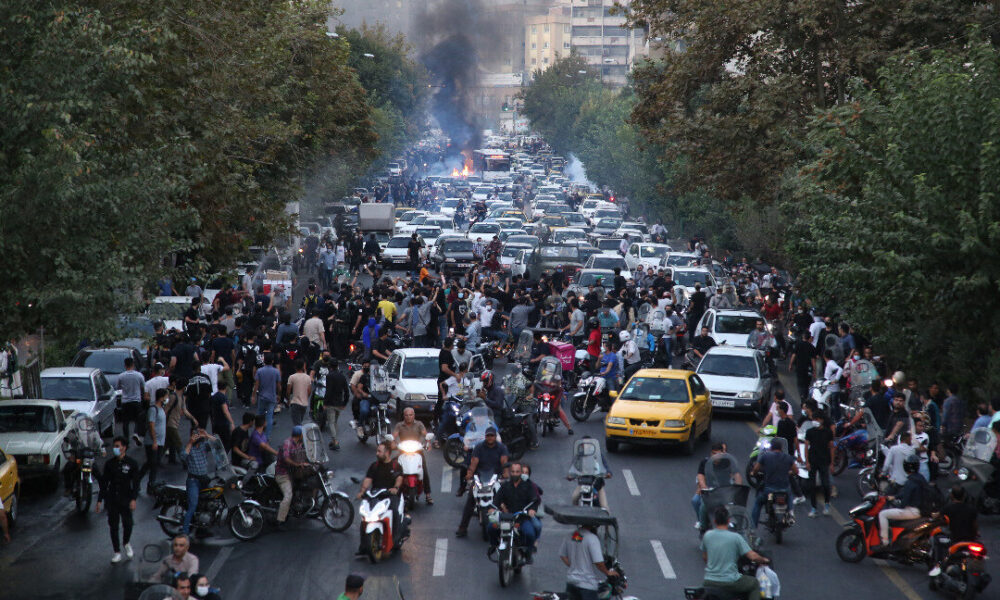
Protests have erupted in Iran and around the world against the Islamic regime following the death of Jina (Mahsa) Amini, who was detained and beaten by Iran’s ‘morality’ police forces for ‘improperly’ adhering to Iran’s mandatory hijab laws

The petition has now garnered over 23,000 signatures and demands that McGill investigate the identity of the user who posted it and calls for the university to take adequate disciplinary measures.

Ryan*, who helped launch the petition, found the content of the tweet to be distressing. Ryan believes the tweet, along with other posts by Shahriari’s alleged account, violates  principles of free expression and raises concerns about public safety for both Iranians and Canadians. 

“This individual not only openly backs up the Islamic Republic of Iran in killing its own people but calls the demonstrators ‘rebels,’ ‘beast,’ ‘leech,’ and ‘[Mojahedin] members’ and consequently hopes for their mass execution,” Ryan wrote in an email to The McGill Tribune. “He […] hopes for the protestors’ mass execution and finds this ‘sweet.’ We believe this shows that this person is radical, and we find this extremely disturbing.”

The petition states that the tweet violates section 319(1) of the criminal code of Canada, as it uses hate speech to target an identifiable group. Víctor Muñiz-Fraticelli, associate professor of law and political science at McGill, explained that these claims are difficult to prove and that it is unlikely sec. 319(1) will apply.

“Sec. 319(1) requires that the statement be ‘likely to lead to a breach of the peace.’ Whether this applies only domestically or also internationally might be relevant, as might also be the causal effect that the statement may have on the actions of the Iranian government,” Muñiz-Fraticelli wrote. “The section requires a likelihood of a causal link which may be difficult to prove.” 

Muñiz-Fraticelli further acknowledged that academic freedom can protect individuals against disciplinary action in these circumstances.

“The university community may also consider this inappropriate, although the protections of academic freedom applicable not only to professors but to other scholars would presumably shield the speaker from direct reprimand.”

McGill media relations officer Frédérique Mazerolle stated that the university is aware of the petition and the claims against Shahriari.

“We are looking into the matter very closely and we have reached out directly to Iranian students at McGill to offer support at this difficult time,” Mazerolle wrote in an email to the Tribune. “We encourage all students, whether Iranian or not, who require support to seek out the resources available at McGill.”

On Sept. 30, Fabrice Labeau and Angela Campbell, co-acting Provosts and Vice-Principals (Academic), sent out a university-wide email addressing the tweet. They condemned the message while reminding the McGill community to consider that freedom of expression provides “wide protection.” 

Shahriari declined the Tribune’s request for comment on the allegations.

*Ryan’s name has been changed to preserve their anonymity.

Off the Board, Opinion

Sarah Koenig is not perfect and neither is ‘Serial’

On Jan. 13, 1999, Hae Min Lee, a senior at Woodlawn High School in Baltimore, disappeared. On Feb. 9, 1999, her body was discovered in Baltimore’s Leakin Park, and on Feb. 25, 2000, her ex-boyfriend, Adnan Syed, was found guilty on charges of first-degree murder. Fifteen years later, Rabia Chaudry—an attorney, advocate, best-selling author, and childhood acquaintance of Syed’s—reached out to Sarah Koenig, a producer on This American Life, and, from there, Serial was born. 

Over the course of the 12-episode podcast, Koenig re-investigates the disappearance and murder of Hae Min Lee. She picks apart inconsistencies within the prosecution’s case against Syed, uncovering new information and putting a plethora of chronic issues within the American justice system on display. Koenig’s narration, however, blurs the line between straight-up reporting and something more opinionated. Serial is not only about Syed and Lee—it is about Koenig’s storytelling, an unconventional structure that lands Serial in an ethical grey area revealed by Koenig’s relationship with Syed, tendency to withhold information, and neglect of Lee’s family. 

After maintaining his innocence for 22 years, Syed’s conviction was vacated on Sept. 19, 2022. As a former listener, I had spent endless hours puzzling over Syed’s innocence. Koenig’s dulcet tone was a constant in my life, a hallmark of my walks to class and morning coffees. I was all too happy to have Serial back in my life with an emergency episode addressing Syed’s release— but this time, something felt different. With eight years having passed since the podcast’s release, those complicated ethics were no longer in italics, they were in bold. 

Koenig’s bizarre relationship with Syed is cause for concern. The personal nature of their conversations forces me to question how this relationship factored into her reporting. When Koenig encountered red flags that may have countered her narrative of Syed’s innocence, such as inconsistencies with his alibi, she tended to play them off as stray details that she didn’t know what to make of. Why not follow the lead?

Koenig’s provocation of arm-chair detectives to speculate about the case alongside her invades the privacy of all those involved. In turning Hae Min Lee’s murder into a dramatized whodunit, Koenig transforms the real people involved into characters who no longer have agency over how their story is told, as is often the case with true crime. Koenig’s reporting of an investigation she had not finished, along with her tendency to withhold information for the sake of cliffhangers, further provoked listeners to conduct their own research at the cost of Lee’s privacy. She allowed millions of listeners to justify poring over a dead girl’s diary, speculating about Lee’s relationships, and posting outlandish conspiracies all over the internet. 

Although this wasn’t Koenig’s intention, Serial catalyzed a never-ending nightmare for the Lee family. The podcast has served as a constant reminder of the horrors of Lee’s death, and her family has been clear that they did not want Lee’s story plastered all over the internet. The innumerable flaws of the justice system not only failed Syed—they failed Lee as well. With Serial’s intended narrative revolving around finding justice for Syed, this sentiment seems to be lost not only on listeners, but on Koenig, too. 

My last point of criticism is directed at Koenig’s career post-Serial. Although she was well into her journalistic career, the podcast skyrocketed Koenig into a whole new level of fame. Following the success of season one, Serial was renewed for a second season, developed into a four-part HBO documentary, and bought for $25 million by the New York Times in 2020. Koenig has benefitted financially and professionally from Serial’s success, while the friends and family of Syed and Lee have little to show from the podcast’s success. 

I don’t want to discourage anyone from listening to Serial. I’m just saying that Koenig was not perfect in her execution of the podcast. She missed details and crossed lines that should’ve never been breached. She did not bring justice for Adnan Syed, or for Hae Min Lee, but that’s not what she set out to do. She told an enthralling yet flawed story because that is who she is. A storyteller. And a damn good one at that.

Montreal, News

“Woman, Life, Freedom” echoes through streets as Montreal rallies in support of Iranian protests

Content Warning: Mentions of misogyny, police brutality, and violence 

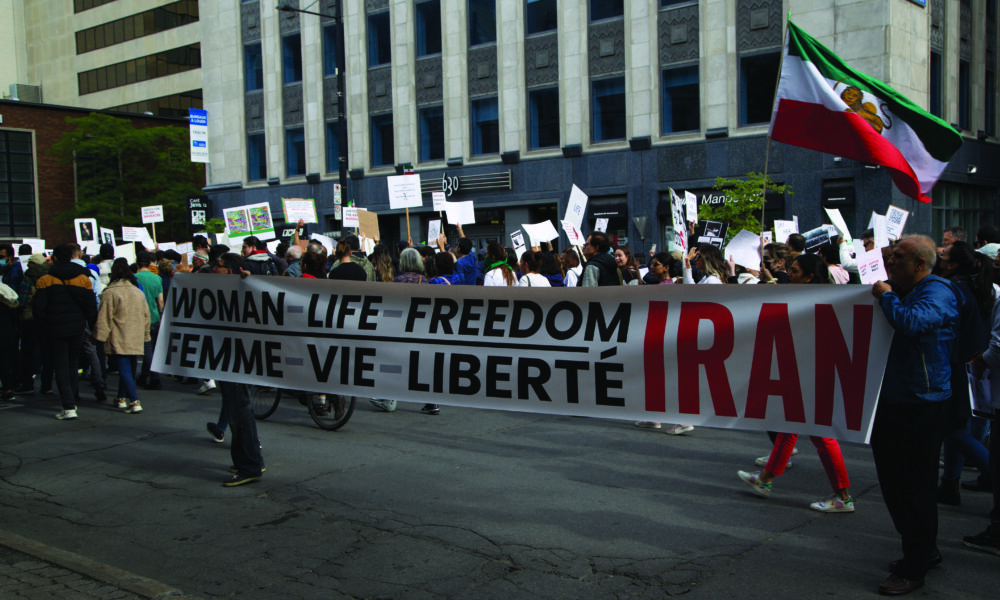
Hundreds of demonstrators gathered in the streets of downtown Montreal on Sept. 27 and Oct. 1, rallying in solidarity with the protests in Iran against the country’s current Islamic regime. The ongoing protests were sparked by the murder of Jina (Mahsa) Amini who died in custody of the country’s morality police for violating mandatory hijab laws. As civil unrest and violent clashes between protestors and Iran’s police forces erupted, a wave of demonstrations followed across Canada and the world to honour the lives lost for speaking out against the government.  

The demonstration on Sept. 27 saw hundreds of protestors holding hands and chanting “Woman, Life, Freedom,” in several languages as they formed a human chain that stretched along both sides of McGill’s Roddick Gates on Sherbrooke Street. Shayan Asgharian, President of the Iranian Student Association of Concordia University (ISACU) and an organizer, felt that the event added the voices of members of the Iranian diaspora to the protests in Iran amidst the government’s internet blackout.

“The point is to amplify the voices that have been shut down as the internet is cut,” Asgharian said in an interview with The McGill Tribune. “Iranians have no access to the outside world. We are supposed to be their voices here, to […] raise awareness for non-Iranians to know what our plight is. Last time the Internet was shut in Iran, around 1,500 people were killed in less than four days. So it is more crucial than ever for us to speak up.”

Waving her cut hair as if it were a flag, an Iranian McGill graduate and research assistant Homa Fathi, MSc ‘22, stood by the Roddick Gates. On the back of her jacket, the words “For Mahsa Amini” were printed below an arrow that pointed towards Fathi’s shaved head. Cutting or shaving one’s hair represents an ancient Iranian tradition of grieving that has become a symbol of the recent protests. Fathi emphasized, however, that while women are at the forefront of the uprisings in Iran, the movement is fighting for all human rights that the Iranian regime has violated.

“This round of protests is full of feminine manifestations,” Fathi said in an interview with the Tribune. “We cut our hair, we shave it, we might throw our hijab […] in the air or just burn it. We sing, we dance […] to highlight the core of the movement, but it includes much more than that. What we want is regime change. We want to restore our dignity. We want freedom, basically.”

Fathi also condemned the presence of Iranian President Ebrahim Raisi on the world stage—Raisi addressed the United Nations (UN) General Assembly on Sept. 2—and criticized the lack of support from social media companies for the Iranian population amidst the protests. 

“We are not asking [Westerners] to save us. We are perfectly capable of restoring our dignity and freedom. We just want them to stop protecting [the regime],” Fathi said. “Western companies and politicians […]who run to save our regime should stop that.”

Sonia Nouri, U1 Arts, echoed Fathi’s sentiments and urged McGill to take action and support Iranians.  

“I think it needs to be a matter of supporting Iranian students, bringing in Iranian academics and activists to come speak at McGill to explain the situation in more eloquent and legitimate language, so that people are actually aware of what’s going on in formal terms,” Nouri told the Tribune

Downtown Montreal saw a sea of demonstrators again on Oct. 1 for the Global Day of Action for Iran, along with 150 other cities around the world. The march began at the Roddick Gates and travelled toward Jeanne Mance Park where protestors blasted Shervin Hajipour’s song “Baraye,” which means “For” in English. Hajipour was recently arrested by the Iranian government for the song’s lyrics. United echoes of “Down with dictators”, and “Your silence—the regime’s violence” reverberated through the streets, following the marchers’ footsteps.

“Your silence—the regime’s violence”

protestors on oct. 1, 2022

“Oppression doesn’t know borders. Tyranny and actions of a theocracy will spread,” Fathi said as she encouraged non-Iranians to take action. “Like just a few months ago, people in America lost their legal right for abortion, so this is not your perfect world. We constantly should fight and, for that, we need solidarity. So please stand with us in solidarity.” 

McGill, News, SSMU

Gerts Café reopens for its second year of business, hopes to make live music a weekly feature

Gerts Café opened for its second year of business on Sept. 20 after being closed since May. The café, the daytime counterpart of Gerts Campus Bar, is located in the basement of the Students’ Society of McGill University (SSMU) University Centre at 3480 McTavish Street.  

Ben Hack, BA ’21 and a Gerts Café supervisor, explained that the café’s closure over the summer and delayed reopening were due to broken appliances and staffing issues. But since the bar’s opening on Aug. 24, the staff decided to open the café a week early as they felt it was wasteful to only use the space after 4 p.m. 

“It’s been going fairly well,” Hack said in an interview with The McGill Tribune. “We’ve pretty much been reaching the sales that we had consistently last year. It’s been very popular based on that alone so we’re very excited.” 

Hack, who worked in food preparation at Gerts last year, prioritizes affordability, nutritional value, and variety when creating the menus for both Gerts Café and Bar by offering vegan, vegetarian, and gluten-free options. Despite inflation, Gerts has kept the same prices as last year for drinks from the espresso bar and grilled cheeses.

“Nobody has any predictions [about] how things are going to go, but again, the goal is to always keep the cheapest and most affordable [prices] for the students.” 

Arin Yaffe, U1 Engineering, prefers Gerts to other coffee shops around the city. Yaffe finds the drinks to be fairly priced for students and believes that the live music makes Gerts a refreshing space for studying.

“I feel like [at] most cafés I go to, it’s definitely not as lively a feeling,” Yaffe said. “If I’m at a library all day, it’s too much for me so I like to change it up.”    

On opening day, Gerts Café invited local music collective Barney & Friends to play live jazz from 12 p.m. to 3:30 p.m. Barney & Friends is a collective of McGill musicians who typically perform at Dépanneur Café every Saturday at 2 p.m. On the day of Gerts Café’s opening, Jeremy Roffman, a graduate student in the Department of Earth and Planetary Sciences, and Violet Massie-Vereker, U3 Arts, took the stage on behalf of the group.

Rachel Kalmanovich, BA ’22 and a café supervisor, revealed that Gerts Café is hoping to invite more local musicians to perform as a weekly feature this year.

“The top things that we all care about here are making sure we are a safe and accessible place for students, that this is a fun place to work for employees, and that we’re always doing something interesting,” Kalmanovich told the Tribune.

To spread the word around campus, Gerts has also announced a Tote Bag Design Contest. The contest winner will receive a $50 gift card, and the two runner-ups will receive smaller prizes. All three winners will receive a tote bag with the winning design. The café will take submissions until 11:59 p.m. on Sept. 30.

Editorial, Opinion

Say her name—Jina Amini

Iran is experiencing its second week of protests following the murder of Jina (Mahsa) Amini, a 22-year-old Kurdish woman tortured and killed in Tehran by ‘morality’ police forces for improperly wearing a hijab. Since Jina’s death, dozens of protesters have been killed, thousands more have been arrested, and the government has enforced a nationwide internet blackout. While solidarity with Iranians against the regime is crucial, Western onlookers must be critical of the lens through which they view the protests in Iran. Popular narratives in Western media ignore the significance of Jina’s Kurdish identity, propagate islamophobic rhetoric used to justify forced secularism in places like Quebec, and fail to address the harms of U.S. and Canadian sanctions on Iranians.

The one-dimensional narrative of women’s oppression in Iran obscures its intersectionality with Kurdish oppression. Jina Amini was a Kurdish woman who, like many Kurds in Iran, was forced to revoke her name and instead go by an Iranian name. Referring to Jina as Mahsa erases Jina’s Kurdish identity from her legacy and perpetuates structural racism in Iran. The Kurdish phrase that has become the slogan of the movement—‘Jin Jîyan Azadî’ (‘Women, Life, Freedom’)—originates from the efforts of Kurdish women in the Kurdish freedom movement. The protests in Iran may be focused on women’s emancipation, but when discussing Amini’s legacy, we must be mindful of the significance of  Kurdish liberation and Rojhelat’s (Iranian Kurdistan) struggle for self-determination. The inability to locate Jina’s story in a broader, multi-faceted liberatory framework is a symptom of Western feminism

Islamophobic rhetoric in the West has created an oversimplified narrative where hijabs equal oppression. The issue is one of women’s choice, not the hijab itself. The popular circulation of videos and photos of women burning their hijabs suggests that the religious garment is the focal point of the women’s liberation movement in Iran, and that all Iranian women are necessarily in favour of secular feminism. This sentiment is also exemplified by the reactionary and misleadingbefore and after photos’ of the Iranian Revolution. The nature of a woman’s clothing is not indicative of her freedom—this notion denies Iranian women their voices in framing their own emancipation against patriarchal violence. 

Further, such representations are dangerously used to justify secularism in Quebec and France, prompting support for laïcité and the enforcement of discriminatory policies such as Bill 21. But one common thread uniting Iran, Quebec, and France is the repressive infringement on women’s bodily autonomy. Reducing the situation to religious emancipation falls into an Orientalist and severely misrepresentative perception of Iran, Islam, and SWANA countries more broadly.

Western onlookers must oppose U.S. sanctions and confront how Western governments and media benefit from painting Iran as an evil and repressive regime. North American governments are not interested in a democratic and prosperous Iran. Since 1953, their interests have lain in the oil industry and a subservient government. U.S. and Canadian sanctions against Iran have had devastating effects on Iranians. The country is facing extreme economic inflation, limiting access to health care and critical medical equipment, and restricting agricultural and humanitarian imports. Further, sanctions on Iran actually reinforce domestic power structures and cement the influence of authoritarian leadership. Ultimately, the most vulnerable Iranians—women, ethnic minorities, and the working class—are hit the hardest. Sanctions are unjust, ineffective, and anti-feminist, and are far from an appropriate Western response to the protests in Iran.

Western powers tend to project themselves as champions of human rights. Yet across Iran, Quebec, France, and the U.S., women’s rights are under attack. Framing women’s liberation movements in the East within the lens of Western feminism dangerously misrepresents the problem and fails to account for intersectional struggles. This framework propagates harmful rhetoric and leads to discriminatory legislation. We must situate our ideologies in a global economic and political context, and be wary of the interests of Western powers in their approaches toward Iran. Jina deserves more than to be carelessly inserted into one-dimensional and self-serving narratives of institutional failure.

A previous version of this article stated that all Kurds in Iran are forced to change their names and go by Iranian ones. In fact, it is not in every province that Kurds must change their names. The Tribune regrets this error.

Arts & Entertainment, Fashion

Influence and upheaval at New York Fashion Week

Held bi-annually, New York Fashion Week (NYFW) is one of the biggest opportunities for designers to present their new collections to critics, buyers, and the broader public. While always hotly anticipated, this month’s NYFW was particularly special as it saw a return to in-person runway shows for the first time since February 2020. Over the course of five days, guests viewed designers’ Spring-Summer collections, attended raucous after-parties, and showed off their own eccentric street styles. Yet amidst the chaos of Fashion Week, one particular subset of attendees was hard to miss—armed with vlog cameras and decked out in Revolve, social media influencers were present in unprecedentedly large numbers. 

Though influencers have previously attended NYFW, invitations were typically only extended to bloggers with established ties to the industry, which included the likes of Chiara Ferragni, Chrishelle Lim, and Lauren Conrad. In recent years, however, Fashion Week’s audience has expanded significantly as brands aim to attract a newer and younger generation of consumers. 

On the one hand, this has led to a greater sense of accessibility within the fashion sphere; increased social media coverage and more inclusive guest lists have granted up-and-coming creatives and minority-owned labels, such as House of Amma and Chuks Collins, more exposure and networking opportunities. Brands have learned the importance of prioritizing diversity, not just in the models they choose to cast, but in who they extend invitations to. In turn, this has created greater space for people of colour and queer and trans people at events previously dominated by white executives and socialites. But the expansion of Fashion Week has also resulted in an excessive amount of media coverage on event attendees. While celebrity sightings have always been cause for buzz, certain influencers have begun to use NYFW purely as an opportunity for publicity

So, why do fashion houses continue to invite influencers, many of whom have zero design knowledge or expertise? In theory, these partnerships are highly strategic: Designers can leverage influencers’ platforms to bolster brand exposure, particularly amongst a younger consumer base. And because of their perceived exclusivity, influencers are, in turn, keen to advertise a brand’s clothing and events. 

The issue, however, lies in designers’ frequent inability to select influencers who align with their brand image. At this year’s NYFW, for instance, several labels chose to invite TikTokers to their events. Notorious for promoting fleeting microtrends and the consumption of fast fashion, these influencers stand in striking contrast to high fashion’s artistic integrity and creative values. 

With that being said, influencers aren’t going anywhere anytime soon. Thus, it is unfeasible—and ultimately unfair—to discount them from the fashion world altogether. Designers, however, must make an effort to be more selective when deciding who to partner with during events like NYFW. This means learning to prioritize meaningful engagement over name recognition. 

Take Emma Chamberlain, a YouTuber who shot to fame in 2017 for her refreshingly authentic YouTube vlogs. As Chamberlain’s base grew, so did her identity as an influencer, enabling her to transcend the sphere of YouTube and break into the world of fashion, garnering partnerships with both Louis Vuitton and Cartier along the way. A style icon in her own right, Chamberlain has also worked to adopt a careful approach to sustainable fashion by embracing thrifting and inspiring her followers to do the same. Despite her immense following, Chamberlain’s genuine interest in fashion set her apart from other content creators, making her a more authentic liaison between high fashion brands and the younger consumer base they are trying to capture. Influencers like Chamberlain are exactly who brands should seek to invite to New York Fashion Week.

There is no doubt that NYFW, one of fashion’s most time-honoured traditions, is in the midst of an upheaval. To keep up with social media’s influence, brands have no choice but to connect with a new generation of consumers and creatives. Yet, in doing so, they must prioritize their artistic integrity and pursue meaningful influencer partnerships with an emphasis on diversity, inclusion, and broader access to the world of fashion. While the most recent NYFW revealed gaps in certain brands’ approaches, it also reaffirmed the importance of substantive partnerships with dynamic individuals—something we must see more of in future iterations.

Read the latest issue

Read the latest issue