Latest News

Research Briefs, Science & Technology

Excavating Earth’s history through ancient rock formations

Scaling mountainous terrain or keeping an eye out for grizzly bears and moose while wading through the flowing rivers of the Yukon may not seem typical of academic work. But these were only some of the many challenging conditions McGill researchers endured while conducting a recent study looking at  oxygen levels on Earth before they started rising roughly 2.43 billion years ago.

Maxwell Letche, a postdoctoral researcher in Earth sciences at McGill and lead author of the study, explained that the redox state of iron-rich sedimentary rocks can tell us about atmospheric composition long ago. 

 “When the earth first formed, we didn’t have photosynthesizers around, so the atmosphere must have been anoxic,” Letche said in an interview with The McGill Tribune. “We’re trying to look at the transition from no oxygen to lots of oxygen on the earth.”

Nearly all of the life on Earth owes its existence in part to oxygen. If a human doesn’t receive enough oxygen, they will die. If the grizzly bear currently stalking that human doesn’t receive enough oxygen, it will also die. Understanding the oxygen levels at different points in the Earth’s history, coupled with the evolutionary timeline of life on Earth, provides valuable insight into the development of life as a whole.

“When you’re looking at sedimentary rock, you’re looking at a collection of minerals and rocks that have accumulated in a depositional environment that has been influenced by a number of different surface processes, like weathering, transport, and changes that can occur as that sediment was converted […] into rock,” Letche said.

This aggregated collection allowed Letche and his team to simultaneously study a variety of different minerals and their reaction to oxygen levels at their time of formation. Such an analysis required gathering a variety of samples, which is why Letche found himself in remote, untarnished parts of the world such as the Eastern Yukon.

The study gives us a more accurate understanding of the relationship between oxygen levels across the planet and the formation of early life forms. One finding was that the Earth experienced a period of low atmospheric oxygen levels. Previously, scientists had assumed that the Earth either had no oxygen or a large abundance of oxygen later on, in response to photosynthesis.

“What we argue is […] if the earth was capable of maintaining a small but non-zero level of oxygen, this could be completely consumed by surface reactions [and] these oxygen levels could be below what is detectable by telescopes,” Letche said. “Another potential suggestion being made is we could instead look for ozone. We only need a small amount of oxygen in the atmosphere in order to produce ozone.”

As ozone is more detectable than oxygen, searching for this compound could allow scientists to screen more planets for potential signs of life. Understanding of the relationship between the development of life on Earth could even prove useful in the ongoing search for life on other planets.

McGill, News

Student-led Week for Solidarity Against Authoritarianism in Asia aims to inform and mobilize McGill community

A group of McGill students held a “Week for Solidarity Against Authoritarianism in Asia” from March 7 to March 11, aiming to raise awareness and foster discussions about the realities of ongoing authoritarianism in parts of Asia. Students, activists, academics, journalists, artists, and more convened to discuss the many ways authoritarian regimes can disrupt and endanger lives, and to stand in solidarity with those resisting it. The first three events, which were held on Zoom and streamed on Facebook, navigated anti-authoritarian activism, the intersections of gender and migration, and the role of media and threats to press freedom, respectively. The final event, a screening of the student films “Naglalahong Pamana” and “Women for Yangon,” was held in person in the McCall MacBain Arts Building. 

Two of the organizers, Pratik Mahajan and Kai Scott, both U3 Arts, explained in an interview with The McGill Tribune that the team made a conscious effort to platform individuals from a variety of professions and backgrounds—as opposed to solely centring academic voices. By inviting guests across diverse domains, they hoped to engage discussions about the wide-reaching, often intersecting consequences of authoritarian governance.

“There’s no way you can throw around these really abstract terms like ‘authoritarianism.’ And it can be quite hard to pin down what exactly that looks like,” Scott said. “The goal was [to] see each [of the events] as anchors, where we will get a bunch of people […] with lots of different angles focussed on this one particular manifestation. Then from there, hopefully, we can have really interesting discussions about what actually getting actively involved with that looks like.”

During the “Journalism and Freedom of the Press in Authoritarian Contexts” round table, Naw Hsa Moo spoke to the sobering realities of reporting in Burma. Hsa Moo, a journalist, a human rights, peace, and environmental activist, and member of the Karen ethnic minority, spoke to the heightened terror and danger she faces reporting on the ground.

“The situation for journalists in ethnic areas, especially in the conflict zone, is even worse,” Hsa Hoo said. “In Karen State, I witness first-hand experience of Burmese military attacks against Karen civilians with heavy artilleries and air strikes. When I travel to report in areas of Karen State […] I have to tell the stories of what the Burmese military is doing. The world needs to know. But there is constant fear. Fear of an airstrike. Fear of being shot. Fear of being arrested.”

In line with the ethos for the week, many of the speakers provided calls to action. Mahajan found social activist, politician, and academic Yogendra Yadav’s notion of creating a “truth army” to combat misinformation particularly compelling. 

“A lot of authoritarian regimes are relying on social media manipulation, especially with their troll armies […] engaging with activists and opposition leader politicians, just [having] debates in bad faith​,” Mahajan explained. “Yogendra Yadav’s suggestion was that in our own capacity we try to stick up for the truth, take that pledge.”

Throughout the week, many speakers and organizers mentioned financial support as a way for students to support resistance against authoritarianism. At the “​​Intersections of Gender, Migration, and Authoritarianism” round table, which took place on International Women’s Day, attendees were encouraged to donate to the South Asian Women’s Community Centre, a Montreal organization that aims to support and empower South Asian women and families. And at the “Journalism and Freedom of the Press in Authoritarian Contexts” roundtable, independent media outlet Harbour Times and the Karen Environmental and Social Action Network—where Hsa Moo works—were also spotlighted.

Niranjan Takle, an Indian journalist who has worked to expose corruption and injustice throughout his career, noted that critical thinking, especially on the part of students, is crucial in combating authoritarianism. 

“I would say that since you are all in your youth, and the youth do not have a fixed frame of thinking, they can think out of the box,” Takle said. “After working for a number of years, we kind of developed a frame within which we tend to think and imagine. But, since you don’t have a fixed frame of thinking, or you can think out of the box, probably you will be more helpful in suggesting innovations or innovating our stories.”

Yadav stated that those interested in getting involved can reach out to him directly by email at [email protected].

Arts & Entertainment, Books, Pop Rhetoric

The young adult dystopian genre is too close for comfort

When many think of the young adult (YA) dystopian genre, both in literature and in film, The Hunger Games immediately comes to mind as one of the defining trilogies of the category. The Hunger Games hit the big screen 10 years ago and made nearly $700 million in worldwide sales. In the late 2000s and early 2010s, the YA dystopian genre reached peak popularity, and as a young tween in its target demographic, I remember just how captivated my friends and I were with tales of teenagers sparking revolution.

Books like The Hunger Games caught our attention for more than just their flashy book covers. For one, the protagonists were young kids and teenagers, just like us. But they had the power, through ability or circumstance, to change the world. As young people who just wanted to find a place where we fit in, we looked up to these characters who played vital roles, who were heroes that saved society from injustice. The characters were brave in their dangerous fictional worlds: While Katniss Everdeen competed in a deadly competition in the Hunger Games, Tris from Divergent jumped out of trains for thrills, and Thomas from The Maze Runner sprinted for his life through a murderous maze. Each protagonist found themselves in life and death scenarios, which kept young readers and adults alike flipping the pages in suspense. 

Despite the surge in YA dystopian novels during the 2010s, the genre is nothing new. Novels such as Aldous Huxley’s Brave New World (1931), George Orwell’s 1984 (1949), Ray Bradbury’s Fahrenheit 451 (1953), and Margaret Atwood’s The Handmaid’s Tale (1985) laid the groundwork for this 21st-century fad. All of these stories follow protagonists navigating oppressive systems that use systems such as surveillance and social pressures to force conformity.

Unfortunately, many YA dystopian books that capitalized on the success of their more thoughtful predecessors dumbed down their dystopian elements to attract young readers. This surface-level writing in terms of world, plot, and character-building caused the genre to lose what little critical respect it had. Series such as Divergent copied the idea of splitting society into groups called “factions” from The Hunger Games’“districts” and Harry Potter’s “houses,” where characters belong to a group based on a single value or skill.  Main character Tris leaves her family’s faction, Abnegation, to enlist in the exciting yet dangerous faction, Dauntless. Unlike The Hunger Games, where Katniss’ involvement with war is a result of self-sacrifice and need for rebellion, Tris has little motivation or character development throughout the series. The Hunger Games challenges young people to question the systematic oppression around in a way that realistically explores corruption and injustice – a domain these copycat novels tend to gloss over. 

The YA dystopian genre now seems less far-fetched, with young people becoming more politically active in the face of real threats of climate change, tyrannical politicians, and global conflict. These activists are applying the original YA dystopian message—that young people have power to change the world they live in. Novels have always incorporated political messages, whether to destigmatize mental illness, challenge racial biases, give voice to 2SLGBTQIA+ characters, and more. Nonetheless, YA dystopian literature so clearly reflects social oppressions in the world that it becomes difficult to enjoy the “fiction” as we could when we were younger and more ignorant. Fantasy no longer sugarcoats these books; the similarities between fact and fiction are more obvious. 
The YA dystopia genre may be less popular than it was 10 years ago, but it truly shaped what my generation was reading in adolescence. Now older, we can no longer see The Hunger Games as fantasy—oppressions endorsed or even enacted by governments around the world are an inherent part of the world we live in. Yet young adults can still look to literary figures, like Katniss, as inspiration in the fight against injustice in our world.

Science & Technology

Six McGill undergrads win UofT international artificial intelligence competition

A team of six undergraduate McGill students placed first in the International Artificial Intelligence Competition ProjectX, which ran from Sept. 1 to Jan. 31. Hosted by the University of Toronto, the annual competition challenges students to develop new models of machine learning with practical, real-world applications. Of the three categories open for submissions, including clinical practice, epidemiology, and genetics, the group placed first in clinical practice and received $25,000 in prize money. 

The team worked to create DeepVent, a patient ventilator model that operates through reinforcement learning (RL)—a type of artificial intelligence (AI) that aims to recognize patterns in data to improve subsequent decision making. 

Reinforcement learning is a small, yet rapidly developing subfield of AI and machine learning. When provided with a dataset the algorithm can begin to recognize patterns so that it can learn which decisions are more beneficial to reach a certain goal, similar to the way humans learn a new skill. Reinforcement learning is the same type of AI which now holds the title of best chess player in the world.

“It’s really impossible to [teach] all the different moves in chess,” Flemming Kondrup, U4 Science student and member of the winning team, said in an interview with The McGill Tribune. “So what you do instead is you play the agent against itself, and […] it learns a general pattern of how to play. That’s how humans learn as well, [because] they develop an intuition of what’s a good move and what’s a bad move.” 

With this type of ‘intuitive’ analysis, RL can be used in medicine to learn from historical health data so that doctors can find the best, most personalized long-term treatment for individual patients. 

“RL also looks into the future, and predicts how the treatment it’s going to give now is going to affect future treatment options,” Kondrup explained. “A really good chess player doesn’t just do a move that’s good now, but sometimes they might sacrifice a move now for a better move later. And the same thing applies to health care.” 

The DeepVent team plans to use their model to regulate the dynamic ventilation needs of patients in hospital intensive care units. ICU doctors, who are often overworked and overwhelmed, may find it difficult to monitor the ventilation settings of multiple patients at once. DeepVent provides a solution to this through its personalized ventilation system that would adjust to changes in a patient’s breathing. Their results have shown a 59 per cent expected enhancement in overall treatment quality. 

“As a disease evolves, you need to adjust the settings on the ventilator,” Kondrup said.“Doctors have to constantly monitor patients and adjust these settings, and that can be pretty challenging.”

The average hospital ventilator settings include functions to manage the fraction of oxygen inhaled from the surrounding environment (FIO2), the expiratory pressure when a patient breathes out (PEEP), and the volume of air inhaled (tidal volume), all of which can impact a patient’s respiration—and as a result, their overall health. DeepVent envisions a ventilator with a built-in feedback mechanism that self-adjusts the settings without doctors having to intervene.

Another challenge the team addressed is the extensive training and experience health-care professionals need to effectively manage ventilated patients. 

“In order for a health-care practitioner to treat patients well, they need […] years of experience,” Kondrup said. “You can train AI on data of tens of thousands of patients [and] on what a real human being would need years to experience.”

As ventilators have been so central during the pandemic, it will be important to continue advancing the field of respiratory technology, both to help our intensive care units now, and into the post-pandemic future. 

“The idea of DeepVent is that instead of just focussing on the present, it tries to promote long-term health and survival,” Kondrup said.

Science & Technology

Socio-economic factors affect a country’s ability to cope with extreme temperatures

With the steady rise of global temperatures on Earth, many countries are experiencing more intense and frequent heatwaves—periods of extremely high temperatures that can last from several days to several weeks.

A new study conducted in collaboration with researchers from McGill found that people in low-income countries are more likely to be exposed to heatwaves, and in turn, will likely suffer worse consequences in the years to come. Although it is known that heatwaves impact various communities differently, this study is the first to quantify these effects by analyzing historical data and using climate models to project future temperatures. Different socio-economic factors, such as the availability of electricity needed to cool buildings down, were incorporated into the estimate of how well a country can adapt to heatwaves.

In an interview with The McGill Tribune, Mohammad Reza Alizadeh, a McGill PhD candidate in bioresource engineering and lead author of the study, explained that heat exposure is unequally divided between countries with different socio-economic statuses. While some countries with more resources are able to combat the heat, many lower-income ones lack the infrastructure necessary to do so.

“Water supply, housing technologies, and cooling systems […] all compound and exacerbate the difficulties associated with heatwaves,” Alizadeh said. 

The researchers found that in the last decade, countries with lower per capita gross domestic product (GDP) had more than 40 per cent higher exposure to heatwaves compared to countries with higher individual economic output. This is largely due to a comparative lack of resources—including capital, infrastructure, and policies—all of which can be put toward mitigating climate change risk. Looking ahead, the study projects that many of these lower-income nations will experience up to five times more exposure to heatwaves by 2060.

It comes as no surprise that countries with more access to water and electricity to power fans and air conditioning are better-situated to deal with heatwaves. In contrast, many developing countries lack these resources, resulting in higher mortality rates during extreme weather events.

High temperatures can cause heat exhaustion and heat strokes—conditions that can damage major organs in the body. During this past summer alone, nearly 600 people died in British Columbia from heatwaves, and countries like Argentina and Paraguay experienced temperatures rocketing up to 45 degrees Celsius. Sustained periods of exposure to extreme temperatures can also cause the loss of crops and livestock, further straining food security. Moreover, hot and dry conditions often encourage wildfires, which impact air quality with their release of ash and smoke—irritants that can damage the lungs and exacerbate heart conditions.

Although lower-income nations are most affected by heatwaves and other natural disasters produced by climate change, wealthier nations such as China and the U.S. are responsible for the majority of greenhouse gas emissions. To address this inequality, developed countries have pledged to provide $100 billion USD a year to help developing countries. These funds could help low-income nations invest in the infrastructure and technology needed to adapt to extreme temperatures such as cooling systems. But so far, this goal has not yet been reached—most developed countries have failed to meet their own emissions targets, let alone implement measures elsewhere. 

“We need to reconsider the infrastructures, urban design, systems, policy options […] to be adapted to the pace of climate change that is getting faster and faster,” Alizadeh said.
According to Alizadeh, solutions such as heatwave warning systems can allow communities to prepare for extreme heat events, thereby minimizing their harmful effects. Because early season heatwaves in particular are hard to predict, it is essential that governments raise awareness and design systems to allow those in high-risk areas to prepare for extreme weather conditions.

McGill, News

QPIRG-McGill’s panel on labour exploitation at McGill discusses ongoing contract negotiations and unionization efforts

The annual Social Justice Days event series, organized by the Quebec Public Interest Research Group at McGill University (QPIRG-McGill) and the Students’ Society of McGill University (SSMU), was held from March 7 to 12. Centred on themes of harm reduction and sustainability, the series featured interactive workshops and panel discussions such as “Building care into anti-violence advocacy that sustains us” and “Supporting prisoners and parolees in their transition as returning citizens” with the purpose of engaging McGill students in community activism.

The labour crisis at McGill” panel on March 9 underscored key issues that McGill’s labour unions have faced throughout the COVID-19 pandemic. The panel brought together Evan Fox-Decent, McGill law professor and interim president of the Association of McGill Professors of Law (AMPL); Simon Deverson, chair of the McGill University Non-Academic Certified Association (MUNACA) solidarity committee; and Christian Tonnesen, U4 Science and vice-president (VP) for the floor fellows at the Association for McGill University Support Employees (AMUSE) Unit B. The featured guests each gave 10-minute speeches highlighting the changes their respective organizations are rallying toward, among them contract negotiations and unionization.

Fox-Decent kicked off the event with a presentation detailing the ongoing effort of many law faculty professors to unionize. He traced the origins of the movement to the memo Provost and VP (Academic) Christopher Manfredi sent to faculty deans and department heads on Aug. 29 requesting the names of professors who did not want to return to in-person teaching. The memo came after a group of law professors penned an open letter demanding that the university implement a campus-wide vaccination mandate soon before the Fall 2021 semester. After receiving the memo, law professors agreed that they wanted a union to represent them in their relations with the administration moving forward—which would be a more specific unit than the broader, non-unionized McGill Association of University Teachers (MAUT) currently representing them.

“The most difficult part of this for us so far has been that unfortunately, McGill is fighting us tooth-and-nail,” Fox-Decent said. “They’re challenging our bargaining unit, saying with a straight face that it should be all professors who unionize at McGill […] and that it should not be a single faculty, the Faculty of Law.” 

Quebec’s Tribunal administratif du travail (TAT) will determine whether the union will include all professors at McGill or solely law professors, with two days of hearings already completed and two more hearings dates set for this coming May.

Following Fox-Decent’s presentation, Deverson spoke about MUNACA’s contract negotiation standstill with McGill. MUNACA is a union that represents non-academic workers, such as clerical workers, librarians, and technicians. Deverson explained that the union’s contract expired in Nov. 2018, and that since Sept. 2019, MUNACA has met with McGill representatives a total of 48 times, which Deverson noted was “a large number” for such negotiations.

Some changes MUNACA would like to see in the new collective agreement include a retroactive wage increase—since employees are still being paid the salary scales stipulated in the expired 2018 agreement—pay increases that keep pace with inflation, and the maintenance of the top of workers’ salary scales. 

Deverson also mentioned that McGill did not provide MUNACA workers with a COVID-19 bonus, despite the gesture becoming commonplace in Quebec throughout lockdown periods.

“Given the labour crisis that exists in Quebec, wouldn’t it be better to have a fair and just collective agreement for its workers?” Deverson asked. “Wouldn’t that retain staff? I mean, we have people at McGill whose job title is talent acquisition advisor, wouldn’t it make their lives easier if we had good working conditions?” 

The panel then turned to Tonnesen for his presentation on AMUSE. Tonnesen explained that AMUSE comprises two units: Unit A, which represents front desk staff workers, library workers, and other similar positions, and Unit B, which represents floor fellows. While Unit A’s new collective agreement is set to be signed soon, it has been 18 months since Unit B’s previous collective agreement with McGill expired. Tonnesen explained that the money floor fellows make is insufficient as a living wage, so among other requests, AMUSE is bargaining for a pay increase. 

“As it currently stands, the money we make is not enough to cover the rent in taxes, so floor fellows are essentially working for free,” Tonnesen said. “So, the next steps as we go are to attempt to get some sort of a better pay and get our collective agreement hopefully signed such that we have full retroactivity […] and also to bring in hazard pay for those that worked during covid.” 

During the question and answer period, when asked about how McGill students can support the workers in the various ongoing campaigns, Tonnesen suggested that speaking to those with financial influence to induce change.

“McGill very much loves money,” Tonnesen said. “So, if you are dissatisfied with the way things are running, talk to someone who is paying the bill and McGill will […] respond to you [much faster].”

News, SSMU

SSMU Board of Directors hear property proposal for Affordable Student Housing Plan, approves stipend for Divest McGill occupation

During the March 10 meeting of the Students’ Society of McGill University (SSMU) Board of Directors (BoD), vice-president (VP) External Sacha Delouvrier presented an update on the Affordable Student Housing Plan

Adopted by the Legislative Council in February 2020, the plan includes a partnership between SSMU and L’Unité de travail pour l’implantation de logement étudiant (UTILE) to create an affordable student housing development with units at costs 15 to 30 per cent lower than market rates. The Affordable Student Housing Plan as a whole represents SSMU’s efforts to advocate for its constituents who, according to a 2019 report by UTILE, pay the highest rent amongst students on the island of Montreal. 

“[The project] fits into our constant combat against landlords and the exploitation of a vulnerable student population,” Delouvrier said. 

After a two-year search, UTILE has landed on a potential site for the project. The plot at 1635 Saint Laurent Boulevard––a 17 minute walk from campus––would cost around $7.6 million, with current zoning laws allowing buildings erected on the property to reach a maximum of 15 metres, or five storeys high. These restrictions would allow for the creation of 115 rooms, rather than the 200 to 300 originally agreed upon. Delouvrier said there was potential to submit a special building, renovation, and occupancy project request to the borough, which could allow for the creation of an extra 75 rooms. Otherwise, UTILE would look for another site to create a second building, allowing them to fulfill the agreed upon room numbers. 

Should the request not be submitted, or not be granted, UTILE estimates that construction would finish by the end of 2024. If the request for modification is submitted and accepted, construction would extend to the end of summer 2025. 

Delouvrier explained that the project would be similar in design to Concordia’s Woodnote housing cooperative. 

“[The project is] aimed at maximizing the space and maximizing the amount of initiatives we can put in place to benefit the students and foster a community environment not only between McGill students, but really between McGill students and this part of downtown Montreal,” Delouvrier said. 

While the presentation was part of the BoD’s public session, Delouvrier noted that the motion to approve the purchase of the building would be voted on as part of the confidential session, which lasted over four hours. The results of this vote have not yet been released. 

Moment of the meeting:

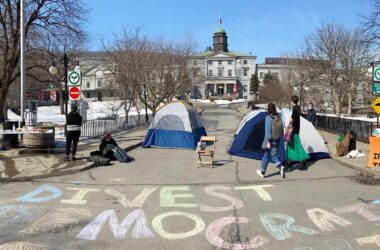
Legislative Council representative Yara Coussa proposed a motion to provide Divest McGill with a $500 stipend to help cover costs related to food and hygiene during the group’s ongoing occupation of the Arts building. During the surrounding debate, several directors questioned whether the BoD was the most appropriate venue for a “political” motion. Emphasizing the urgency of the motion, Coussa argued that it was an appropriate matter for BoD to discuss given the SSMU’s mandate to support Divest McGill. The motion passed with only VP Student Life Karla Heisele Cubilla and Council representative Wan in opposition.

Soundbite: 

“The training materials and presentations that we give to new employees like casual staff and full time staff need to be a lot more comprehensive and touch on a variety of topics, including your avenues for making complaints and […] the little details that people really don’t understand until they’re in an urgent situation where they need to understand them. Because you shouldn’t work here for two years and not know how your accrued vacation works.” 

  • VP University Affairs Claire Downie during a discussion regarding the potential for SSMU to organize trainings to help employees know their rights.
Off the Board, Opinion

Changing the norms of university instruction

One year into my degree, in Fall 2021, I became aware that I spent more time studying at the university of YouTube, or the university of free online textbooks, than McGill itself. 

I woke up at 5:30 a.m., a despicably early time, to watch my 8:30 a.m. lecture all the way from Vancouver Island. As I crawled out of bed and logged into the Zoom session, I made a resolution to myself that I would get my life together and start paying attention to class—unlike how I spent most of my time in previous educational institutions. I did not even make it through the first lecture of the day before I exited the class so that I could watch the lecture later at 2.5x speed.

This pattern of trying to attend lectures endured—an endless loop of getting bored watching a professor ramble on, interspersed only by two or three tidbits of information that I would actually need to pass the class.

I realized that it was McGill’s efforts toward my education that were lacking, not mine. Since there has not been a concerted effort by the university to update its outdated method of teaching, if McGill wants its students to succeed, it will need to reevaluate the actual functionality of its pedagogy rather than rely on the prestige associated with its image.

By the beginning of the following semester, I felt frustrated, overworked, and confused as to how I should be learning at McGill. This sort of frustration is common amongst many arriving at university, a transition made more difficult since it coincides with many pivotal moments of personal growth. Everyone has already spent over a decade in the school system and learning feels like it should be easy. Instead, arriving at university feels like you’re repeatedly rolling a boulder over a large mountain, only for the boulder to disappear into the aether of MyCourses.

The attachment to systems that prioritize profit and prestige over student interest makes no sense as the technological landscape has completely changed since then. We do not need to be reliable on typical techniques of in-person instruction when other methods are viable as a result of new technology. Although we received a taste of what education could be during the global pandemic, most professors seem adamant in keeping their teaching format as close to the original as possible.

This inability to adapt is not necessarily professors’ faults. A PhD does not always come with a teacher’s college diploma. Yes, they know the material in and out, but they may not necessarily have the skills to adequately share that content with other people. 

Since professors have a responsibility to disseminate their research to the public, having good public relations skills is doubly important. This means that the environments that emphasize research skills over teaching abilities in which they were able to become professors are to blame, not the professors themselves.  

McGill should perhaps consider putting more emphasis on the support component of professors’ jobs as opposed to the teaching component. One way to achieve this might be to use standardized videos or curricula for the general instruction of a course and allow professors to focus on providing tutorials. 

I am sure some people enjoy lectures and I believe that the teaching materials are extremely important. As a second-year science student, I do not need to sit in a room for an hour. Arts students, please do not harass me, as the need for in-person lectures may vary from faculty to faculty.

Instead of radically rehauling the system, steadily improving pedagogical methods would push universities in the right direction. The pandemic made us slow down and recognize what education strategies work, and which do not. Let’s hope that instead of returning back to normal, we embrace a future that prioritizes student success, rather than the model perception of success that McGill attempts to exude.

News, SSMU

SSMU presidential candidates discuss plans to address structural issues at virtual executive candidate debate

The Students’ Society of McGill University (SSMU) hosted their executive candidate debate virtually on March 9. Each candidate presented their platforms and took questions from the current SSMU executives, the SSMUnion, the audience, and an online form. While there are three candidates running for president and vice-president (VP) Internal and two candidates running for VP Student Life, the remaining positions––VP External, VP University Affairs, and VP Finance––are uncontested. After a tumultuous year for SSMU, presidential candidates drew particular attention to themes of transparency, accessibility, equity, and accountability during their responses.

All three SSMU presidential candidates emphasized the need for structural change within the student government. The first, Risann Wright, U3 Arts, who currently serves as the SSMU Student Rights Researcher and Advocacy Commissioner, Black Affairs Commissioner, External Affairs Commissioner, and Faculty of Arts Senator, explained that addressing deep-seated systemic issues is a focus of her platform.

“The structural and systemic issues that I can identify [within the SSMU] include structural and systemic misogyny and racism that runs rampant within our student government and is frankly unacceptable and makes the student government unsafe for all of its students,” Wright said. “I have built my platform on concrete actions, including the development of an equity, diversity, inclusion plan, and also a comprehensive HR and governance review at the SSMU for a new conflict-resolution process and complaints process and bolstering other students within it.”

Julian Guidote, BA&Sc ‘21 and 1L Law, believes that the reason behind the SSMU’s workplace tensions lies in a fundamental lack of empathy and understanding among the entire community.

“I think that one structural issue that currently exists at SSMU is that it’s very easy for us to lose touch and connection with each other, to demonize the problems that are going on, and to villainize the people behind the politics,” Guidote said. “And what this does is it creates an atmosphere so tense that we’re tempted to take down everything and rebuild from the ground up.”

Bryan Buraga, 43 Arts and Science, who served as SSMU president in 2019-2020, highlighted a different structural problem: The lack of student representation on the McGill Senate and Board of Governors.

“I’ve seen how debates go in those positions and very often administrators already have their minds made up,” Buraga said. “[…] In addition, McGill student services are very underfunded. So as president it would be my top priority to […] ensure that students get what they need and deserve.”

Buraga stressed the urgency of repairing the relationships and structural issues within SSMU to maintain a united front against the university’s administration.

“Now more than ever, it is clear that our student unions are broken,” Buraga said. “Our university doesn’t give a damn about us and our landlords raise rents for mediocre housing year after year. That’s why I’m running to democratize SSMU and faculty associations, to democratize university governance, and to create a McGill tenants’ union […] Let’s stop the bullshit, together.”

A previous version of this article stated that Bryan Buraga was a U3 Arts student. In fact, Buraga is a U4 Arts and Science student. The Tribune regrets the error.

Arts & Entertainment

National Theatre School of Canada stuns with production of ‘Cabaret’

Content warning: mentions of fascism, antisemitism, and genocide.

From Feb. 22 to 26, the National Theatre School of Canada (NTS)’s graduating class of 2022 put on an outstanding production of the 1966 musical Cabaret. Choreographed by award-winning director Matjash Mrozewski, the play featured a cast of graduating acting students and a production team composed of students, teachers, and alumni.  

Based in Montreal since 1960, the NTS is a theatre training school of international repute. Their annual production, put on by graduating students in the acting program, showcases the skills learned during their school years.

For the graduating class of 2022, Mrozewski chose the musical Cabaret to reflect on the importance of experiencing pleasure during dark historical periods—something he believes is particularly relevant today.

“Life in Weimar Berlin was chaotic, stressful and turbulent, how could we not want to seek out joy, transcendence, euphoria and escape?” Mrozewski wrote in the play’s program.

Cabaret is set during the late 1920s, in the Jazz Age of Berlin. In search of inspiration for his next novel, young American writer Cliff (Henry Beasley) travels to the city, where he befriends German smuggler Ernst Ludwig (Charles Brien) and British cabaret singer Sally Bowles (Kira Chisholm).  

From the fictional Kit Kat Klub cabaret to Cliff’s rented room at a boarding house, the play explores the political tension in Germany following the rise of the Nazi Party, while touching on themes of antisemitism, feminism, and gay rights. 

Mrozewski fully embraces Cabaret’s queerness, unapologetically celebrating the characters’ fluidity in their sexuality and gender. Although Cliff is explicitly bisexual in the original text, some productions of Cabaret have shied away from openly portraying his sexuality. Mrozewski, however, fully dives into this aspect, not only with Cliff, who experiences romance with Bobby (Blake Pyne) but also with the Emcee (Brandon Lee Carabin) and Herr Schultz (Anaka Sandhu). In the NTS’s production, the song Two Ladies, sung by the Emcee about his polyamorous lifestyle, now features a cabaret boy and a cabaret girl instead of the usual two girls. The character of Herr Schultz also challenges gender norms through a fantastic performance by Sandhu, who is also nonbinary.

Costume designer James Lavoie expertly related the musical’s social issues through its stage visuals. The outfits of the cabaret members remain monochromatic throughout the play, except for Sally’s, whose extravagant wardrobe perfectly highlights her extroverted and diva-like personality. The use of black and white costumes made the eventual revelation of Ernst’s bright-red swastika armband even more striking. In the closing scene, Lavoie dresses the Emcee in a uniform worn by concentration camp prisoners hidden under his coat, a twist that gives the musical a chilling conclusion. 

To support a minimalist decor composed of two concrete-like walls, students put on a mesmerizing show of lights and projections, using projectors to showcase archival footage of 1930s Berlin. The parallel between the performance and the stage art adds a touch of realism to the play’s narrative. 

Overall, Cabaret was incredibly well done. With the talents involved in the NTS’s student-led production of Cabaret, the Canadian theatre scene will certainly not be short of remarkable performers or producers any time soon.

Read the latest issue

Read the latest issue