Latest News

Conferences

Journalism In Crisis

March 22nd is The Tribune’s annual conference at Thompson House 3650 McTavish Street! Don’t miss out on industry focused panels, a practical workshop, and an inspiring keynote, all for free with catering.

Features

Under the neon lights: The paradox of Montreal’s nightlife

Freedom or a culture of harm?

Author: Malika Logossou, Student Life Editor

Recently, the news of Muzique closing its doors sparked public outcry. The club cited the change in the party scene as the reason for its closure; John Gumbley, one of the club owners, told CTV news that young adults drink and party less, a trend supported by statistics. Many lamented the club’s closure, fearing that the loss of the long-time Montreal staple would negatively impact the rest of the city’s club scene. Others felt indifferent, citing the club’s longstanding unsafe reputation. As Gumbley admitted to CTV news, “Muzique was like, I think, the last ‘boy scout’ of clubs where it was anything goes, and it was a bit on the raunchy side.”

Testimonies from undergraduates echo the consequences of the ‘boys’ club’ atmosphere.

 “From what I remember, almost every girl I know that has gone to Muzique has had some sort of bad experience with the guys there,” Anastassia Haidash, U2 Arts, wrote in a written statement to  //The Tribune//. “It has really been forever since I have heard of anyone I know going there for a night out because of bad experiences in first year.” 

Josephine Morchoisne, U3 Arts, who regularly goes clubbing, expressed similar sentiments.

“Even if we were with two guys, it wasn’t safe at all [….] I have never felt unsafe in a club except for Muzique,” she told //The Tribune//. 

Muzique’s reputation for being an unsafe club is well-documented, with countless negative reviews circulating on online forums and social media. Yet, often missing from these discussions is a deeper examination of why so many nightclubs—Muzique included—stay open until financial struggles, not safety concerns, force them to shut down. 

Reasons for going out

Clubs like Muzique follow an outdated model, where quality music, good service and decent drinks are not the primary mechanisms of attracting customers. Instead, policies like free or discounted entry for women are used to attract men partygoers, who are more likely to spend big on tables and bottle service. Not only does this create an environment within the club where men behave creepily, but this approach reinforces the idea that women clients exist to attract men, reducing them to commodities rather than clubgoers in their own right. Clubs also fail to enforce strict anti-harassment policies and remove known offenders. This reflects a nightlife industry that prioritizes profit over people by objectifying women and treating harassment as an unfortunate but unavoidable consequence. 

Thousands of women go clubbing every night. Many enter these spaces with excitement, seeking a fun night out with friends. Others are influenced by the romanticization of nightlife or the desire to fit in.

“It is most definitely for social reasons [that I went clubbing],” Haidash wrote. “At the beginning of first year, I had this picture in my head of what clubbing was like (definitely because of movies), and I was excited to go, but after maybe a week of university starting, I only went out to try and fit in and make friends.”

For some, clubbing represents a step into adulthood.

“Two years of pent-up COVID solitude made clubbing sound like the purest essence of going out. As downright corny as it sounds, going to Café Campus truly felt like a sign of no longer being a teenager who relied on house parties and siblings to get drunk,” Gilad Maianski, BA ‘24, explained in an interview with the //Tribune//.

The cost of participation

The cost of clubbing extends beyond entrance fees and overpriced drinks. For many women, it requires a constant state of vigilance—an unspoken understanding that harassment is not an anomaly but an inevitability. 

“Women getting taken advantage of and disrespected on a night out is disgustingly common,” Haidash wrote. “From getting repeatedly spoken to to getting grabbed, touched, etc, it happens pretty much every night out.”

Elise Holbrook, U2 Music, has had similar experiences, and highlighted how blurred the concept of consent becomes in a club setting.

“You just make eye contact with [men] and maybe start dancing with them, and then they think they can grind on you and bite your neck—like, that happened to me,” Holbrook recalled. “Even with the women, there wasn’t always consent exchanged. I never felt uncomfortable, but it’s still something to be aware of.”

“I don’t think I’ve ever gone out without being harassed at least once. Just last month, I had to jab a guy under the ribs on the Barbossa dance floor because him and his friends kept kicking us and trying to mosh,” Estora Marshall, U2 Arts, wrote to //The Tribune//. “I think at a certain point you get used to it: You’re never going to have fun in Montreal without getting a thick skin and sticking up for yourself.”

Over time, the frequency of this persistent objectification fosters a more subtle, tacit problem: A troubling sense of resignation as women begin to perceive harassment as an unavoidable aspect of nightlife.

A search for safer venues

Growing intolerance for the handsy men on dark dance floors has led to a shift in club demographics, with young adults going to lesser-known clubs to escape harassment. 

“The places that I tend to go are a little bit smaller, [which] means that there’s not as many creeps, but maybe they don’t have as many resources and you don’t get that full clubbing, Charli xcx experience,” Holbrook said. “So you lose a little in the wildness, which is too bad, but sometimes it’s a compromise you have to make if you don’t wanna be creeped on.”

Morchoisne, who goes out two to three times a week, favours smaller clubs for the music and more welcoming social atmosphere. 

“I love house music, so my favourite club would be Flyjin [….] [I love Le Bar Baby] because […] it’s really well decorated, and just the vibe is nice to have drinks with friends and go dancing. And the most important thing is that the entrance is free in most places; even if you are on a budget, you can go out.”

Many queer spaces also offer alternatives to traditional clubs, creating a safer, more inclusive environment for 2SLGBTQIA+ partygoers. Venues like Club Chez Mado, Champs or raves like Latex provide diverse nightlife experiences, celebrating queer expression without fear of judgment or exclusion. However, queer spaces, often assumed to be safer alternatives, can also be sites of harassment. Many straight people seek refuge in these venues to escape predatory behaviour in mainstream clubs, inadvertently undermining the purpose of these spaces. As queer clubs become more widely attended, their original intent can become diluted, and the very people seeking “refuge” are met with the same dangers they hoped to avoid.

The clubs I feel safest in are those that are not advertised as gay but are frequented by gay people,” Marshall wrote to //The Tribune//. “Unfortunately, people now treat “gay clubs” as safety centres or “themed” experiences. I think all the straight girls started going to gay clubs because they thought that there wouldn’t be any creepy guys, causing the creepy guys to infiltrate the gay clubs in order to find the straight girls.” 

The current commercialization of gay clubs strips them from their original intent of providing a safe space for queer individuals. In doing so, it undermines their importance as inclusive spaces for self-expression and diminishes the authentic gay club experience.

Holbrook highlighted another troubling aspect of this shift: The objectification of queer women within these spaces.

“I’ve been to a few different clubs and had queer experiences at them and every single time I was perved on by old men who sometimes I had to push off by force […] and they thought that what I was doing with another girl was a spectacle for them.”

She also noted that harassment remains prevalent even in queer spaces, particularly when she is unaccompanied by men friends.

“Most people have experienced harassment,” Holbrook said. “I noticed a difference when I go with my male friends or not, regardless of the sexuality of my male friends. If they’re away from me, I’ll get harassed, especially in places like Unity.”

Despite this, many queer women still find gay clubs to be an improvement over more mainstream venues.

“I still feel safer in gay clubs, though, because it still does not compare to the risks of the bigger straight clubs. Protecting you and your friends from a couple creepy people is easier than trying to avoid hundreds of them,” Haidash added.

Where reporting mechanisms exist, they are often ineffective, placing the burden of safety on those most at risk to defend themselves.  This leads to a shift in the club scene with many patrons, in particular women and queer people, avoiding larger, mainstream clubs.

What can we do?

Overall, Muzique’s closure is a sign that young people are less willing to compromise on an uncomfortable or unsafe clubbing experience—they are willing to sacrifice a crowded dancefloor for better music, stylish venues, top-notch service, and a safer experience. Clubs should take note, and curate unforgettable experiences or cater to unique niches rather than continuing to use women to funnel as many men as possible into a massive venue. 

While clubbing remains a vital pastime for socialization and escapism, it should not come at the expense of personal security. If the nightlife industry is to be truly safe and inclusive, it must implement meaningful reforms. Club owners must enforce zero-tolerance policies, train staff to handle harassment appropriately, and ensure that safety takes precedence over profit. 

Beyond institutional accountability, social attitudes must shift. Students and young adults play a critical role in reshaping club culture—not just through public discourses or online reviews but by making intentional choices in where they spend their money. Voting with your dollar sends a clear message: If you don’t appreciate the environment or values of clubs where people are routinely harassed or mistreated, don’t give them your business. Instead, find places that align more closely with your values and support those venues so they thrive.


Hockey, Sports

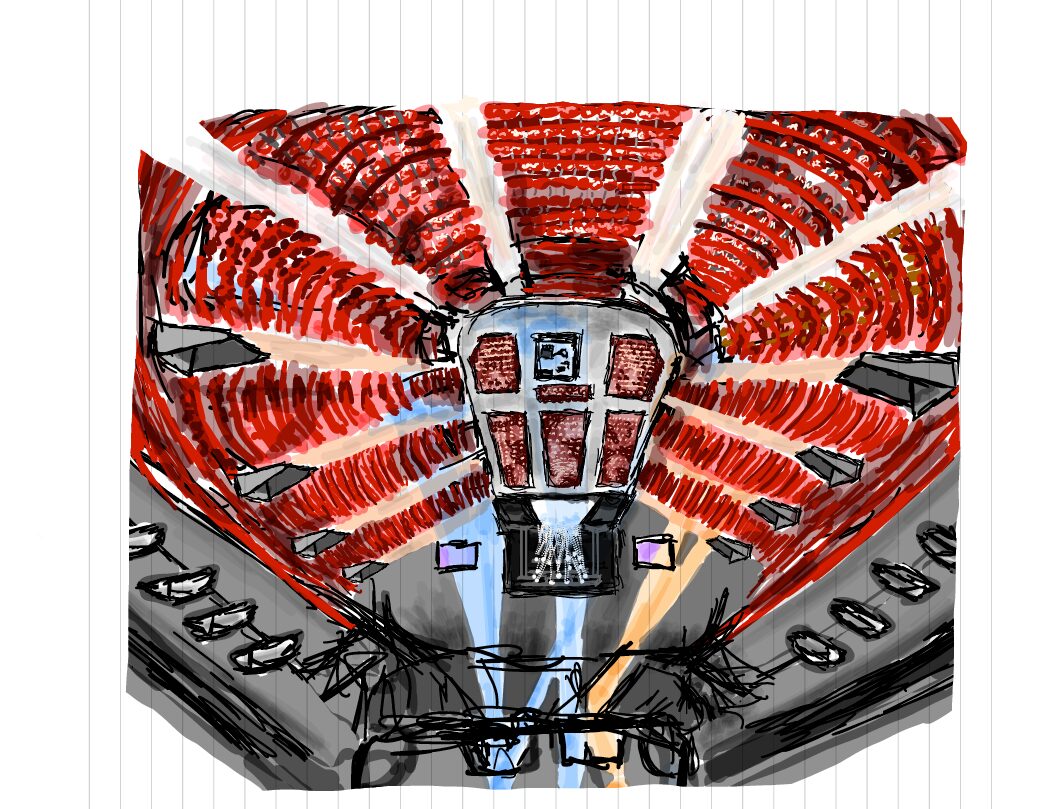
Stadiums and sponsorship: insights drawn from Bell Centre

The Montréal Canadiens have shown flashes of improvement this season but remain on the cusp of making playoffs. While the team evolves, one thing remains unchanged—the heart of Montreal hockey beats strongest at the Bell Centre. As both a historic landmark and a commercial asset, the Bell Centre exemplifies the current intersection of tradition and economics in modern sports.

The Bell Centre (originally the Molson Centre, named after its founding sponsor) was an approximately $270 million CAD project in 1996. It boasted improved sightlines, new premium seating options, and a significantly larger capacity than the Montreal Forum, the Canadiens’ previous home. Before they settled there, the team had played in an assortment of venues, beginning with Jubilee Rink between 1909-1910, followed by the Montreal Arena from 1911 to 1918 and the Mount Royal Arena until 1926. The Forum hosted the team from 1926 to 1996 and was the site of some of the franchise’s greatest triumphs, including numerous Stanley Cup victories.

However, by the early 1990s, the Forum’s limitations had become apparent. It was aging, smaller than the modern standards, and it lacked the amenities expected in contemporary sports venues. To meet the growing demands of the sport and its fanbase, the Canadiens moved into a state-of-the-art facility in 1996: The Molson Centre.

The home of the Habs has since undergone changes and renovations, including a naming rights change. The Molson Centre (1996-2002) was named after Molson Breweries, a company deeply intertwined with the team’s history. Molson, which held a long-standing ownership stake in the Canadiens, used this sponsorship to solidify its branding within the sport in the early 2000s. 

In 2002, telecommunications giant Bell Canada acquired the naming rights to Molson Centre, renaming it to the Bell Centre later that same year. Since then, the Bell Centre has remained the official name of the arena, despite shifts in minor stake team ownership landscape; Bell never owned a controlling share of the Canadiens.

The Bell Centre is one of many major sports venues that have undergone corporate sponsorship-driven name changes. Similar examples include Scotiabank Arena in Toronto (formerly the Air Canada Centre), Crypto.com Arena in Los Angeles (formerly the Staples Center), Mercedes-Benz Stadium in Atlanta, and for a glimpse across the pond, Etihad Stadium in Manchester, U.K.

The increasingly common trend of selling stadium naming rights is clear. Teams seeking financial stability and additional revenue streams see this as an unobtrusive way to bolster their margins. For corporations, these agreements provide unparalleled branding opportunities in high-visibility environments. For fans, however, such rebranding can be an embarrassing abandonment of authenticity and spirit. The shift from historic, community-rooted stadium names to generic corporate branding can be a severing of emotional ties for supporters. While clubs justify the practice as a financial necessity, many see it as yet another reminder that modern sports prioritize profits over passion.

Looking ahead, stadium sponsorships are likely to continue evolving. More technology firms are entering the sponsorship space, as seen with Amazon’s Climate Pledge Arena in Seattle. Some teams are also opting for shorter-term agreements to maintain flexibility in sponsorship revenue. For example, FC Barcelona signed a four-year sponsorship with Spotify in 2022, much shorter than traditional stadium agreements which usually range between 10 and 20 years.

Given the Bell Centre’s longstanding partnership with Bell Canada, it remains to be seen if a new company will eventually take over its naming rights. However, what remains certain is that corporate sponsorship in stadiums is not just a trend but an economic necessity in modern sports. As the Canadiens strive to rebuild and reassert themselves as Stanley Cup contenders, the Bell Centre stands as both a symbol of tradition and as an ever-evolving commercial entity—a testament to the fusion of sports and business in the modern era.

Off the Board, Opinion

My thoughts on femininity as a so-called 900-pound grizzly bear

For years, boys at school called me “Boog.” When I asked what they meant, they said that it was a character from the movie Open Season: “A nine hundred-pound bear,” they would say. So, naturally, I thought I was fat.  I developed an intense anxiety about eating in front of men that persists to this day.

I know many other women with the same fear. Women are taught to shrink, physically, emotionally, even ideologically. We are praised for smallness and delicate features and soft skin and gentle voices—and shamed for having an appetite for anything more than we’re given. Consume little and demand even less so that men have more room to expand. 

In case you’re curious, it turned out the nickname was never about my weight—it was about the hair on my body. I’m not sure which is worse, but the fundamental problem was the same either way:  I was nauseatingly afraid of being perceived as unfeminine.

I have since learned that trying to prove your femininity will shrink you to death by design. For a long time, I thought that if I could control how men perceived me, I could win. I imagined that by conforming to the expectations they set for me, I would unlock some version of femininity that would give me power. But when all of those boys who made fun of me slid into my DMs later on (true story), I didn’t feel the satisfaction I thought I was supposed to—I felt worse. I conformed to their standards. Should I be pleased with myself for that? 

I believe choice feminism—the idea that any choice a woman makes is inherently feminist simply because she made it herself—is a myth. I think the male gaze permeates women’s actions more than we’re even conscious of, and I do, uncomfortably, believe that giving into it contributes to the oppression of other women. I realize this when the makeup that I claim to wear “for myself” goes untouched on days that I don’t leave my apartment. The act of adorning myself makes me feel good, yes, but not in a vacuum. It feels good because it makes me think that others will find me more attractive (and those standards of attractiveness by which I judge myself didn’t fall from a coconut tree). 

Still, there is no force on Earth that can separate me from my MAKEUP FOREVER Artist Colour Pencil Longwear Lip Liner in the shade “Wherever Walnut.”  I love femininity, and I don’t think we should be at war with it. But I believe that there’s some freedom in recognizing the male gaze, the “ever-present watcher.” Maybe that’s the first step to figuring out which parts of our femininity actually belong to us.

I don’t have a solution. Some believe that overcoming the male gaze means gazing back—judging back, objectifying back. Others argue that we should only care about our self-perception. But I think it’s human nature to see ourselves through the eyes of others. The question is, whose eyes will I choose to see myself through? 

When I find myself fixated on this question and terrorized by the “ever-present watcher,” I think about Nawal El Saadawi, an Egyptian writer, doctor, and radical feminist.

In Woman at Point Zero, Saadawi tells the story of Firdaus, a woman who searches for the warmth of her late mother in every woman she meets. Her last memory of her mother is from when she was a baby. She recalls struggling to learn to walk, feeling as if something was always pushing her over; the only thing that held her up was her mother’s gaze.

 “They were eyes that watched me,” she writes. “Even if I disappeared from their view, they could see me, and follow me wherever I went, so that if I faltered […], they would hold me up.”

As she searches for her mother, she finds her, to some extent, in every woman around her. Herein might lie the solution, I think—to realize that the gaze that steadies us, the one that truly sees us, has always belonged to other women.

McGill, News, PGSS, SSMU

AGSEM member still awaiting recourse for McGill security alleged assault in December

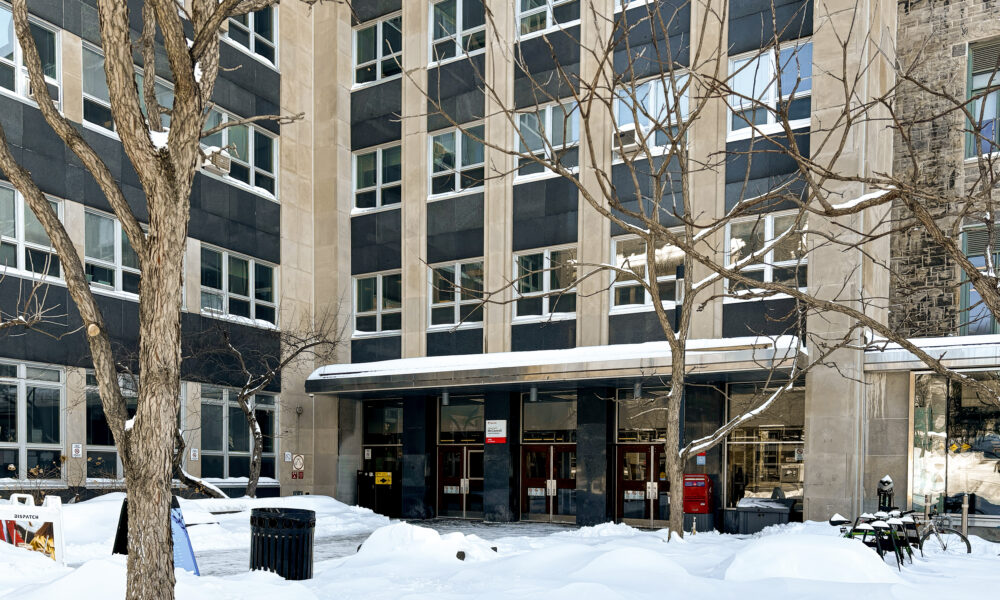
On Dec. 11, a member of the Association of Graduate Students Employed at McGill (AGSEM) alleges security officers forcibly detained her in the McConnell Engineering Building for taking a picture of armed agents there. Reportedly, the member has yet to receive communication from McGill about recourse.

In a written statement to The Tribune, the AGSEM member, Asa Kohn, explained that she has a job with the Students’ Society of McGill University (SSMU), with a scope that includes addressing the increased presence of security officers on McGill campus. When she saw two private security guards in McConnell that afternoon, she snapped photos of them to show her colleagues. One of the guards then approached Kohn, yelling at her to delete the images while placing his hand on his weapon. 

“I tried to leave, but he grabbed my arm, dragged me to the wall by the door of the porter’s office, and forcibly held me there,” Kohn wrote. “He continued to yell, sometimes in English but mostly in French even when I told him I don’t speak French. He demanded several times that I delete my photos, give him my camera, and stop recording him. He threatened to break my camera and said that he had a gun.”

Kohn reported that a man identifying himself as the building porter then arrived and pushed her to the side to access his office door. When she tried to record this incident, explaining her reasons for photographing and asking what law or McGill policy she was violating by doing so, neither the porter nor guard responded.

Kohn explained that McGill security guards then arrived to prevent her from leaving McConnell, even after the private security guard had released her. According to Kohn, the guards also told bystanders to “back off” while they detained her for approximately 50 minutes.

“When the police finally showed up, they immediately told me that I hadn’t broken the law and was free to go,” Kohn wrote.

In a written statement, the McGill Media Relations Office (MRO) claimed that the events of Dec. 11 provoked external security involvement.

“The initial incident did not involve McGill Security agents,” the MRO wrote to The Tribune. “As we understand, it relates to an individual recording the movements of a couple of armoured truck guards. We understand that [the guards] had safety concerns about being filmed, so they contacted the Montreal police for assistance [….] That puts into motion McGill protocols that focus on avoiding escalation and waiting for police to arrive to determine if they think a crime was committed.”

The MRO also commented on McGill security’s role in the events at McConnell.

“The work of Campus Security was complicated by the intervention of other community members who, despite what one assumes were good intentions, fuelled tense exchanges,” the MRO wrote.

Kohn expressed that the hostile behaviour she alleges experiencing from security on Dec. 11 has occurred multiple times since she began documenting their campus presence in Summer 2024, with security “arbitrarily” demanding her student ID and addressing her by her name when encountering her on campus.

“This sort of intimidation might be expected from a body designed to impose order on behalf of McGill,” Kohn wrote. “What is more disheartening is that other parts of the university have not helped me.”

Kohn also alleged that McGill “has done nothing to rectify the situation,” since she filed an internal complaint with McGill Security Services eight weeks ago, but has not received a response. She also submitted a request for information with the SPVM on Dec. 16. 

SSMU Vice-President University Affairs Abe Berglas confirmed Kohn’s difficulties accessing support from McGill in a written statement to The Tribune, reporting that they met with a representative from Campus Public Safety a week after Kohn’s alleged assault.

“[The representative] couldn’t tell me what Asa had done wrong for the security guard to grab her,” Berglas wrote. “I asked him what he would do about it, and he said that without a formal complaint, he would not take any action.”

In their statement about the events of Dec. 11, AGSEM affirmed the need to seek non-administrative support at McGill in situations like Kohn’s.

“There are ways we can look out for each other on an individual level,” the union wrote. “Bystanders on [Dec. 11] prevented worse abuse of the staff member. Their presence provided accountability.”

Behind the Bench, Sports, Volleyball

Know Your Coach: Rachèle Béliveau

After 34 remarkable years at the helm of McGill’s Women’s Volleyball program, Coach Rachèle Béliveau has just completed her final season. Her journey from Olympic athlete to one of Canada’s most accomplished university coaches offers valuable lessons in dedication, adaptation, and passion for the sport.

Béliveau’s volleyball career began in her early years in Sherbrooke, QC, playing from age 12 and included a varsity career at Université de Sherbrooke. Her talents as a setter earned her a spot on Canada’s national team from 1980 to 1986, appearing at both the 1984 Los Angeles Olympics and the 1986 World Championship

“It was tough to make my place on the national team because of my height, but my sense of the game and my tactical awareness covered the lack of height,” Béliveau recalled in an interview with The Tribune. “That skill has transferred to my coaching.”

Her most treasured playing memory came not at the Olympics, but when Canada defeated volleyball powerhouse Cuba in the North, Central America and Caribbean Volleyball Confederation (NORCECA)—a qualifying event for the Junior World Championship

“We won the final against the best team in the world, which was Cuba at the time,” Béliveau recounted, smiling. “So that was a surprise, and is why that was the most rewarding victory in my professional career.” 

The transition to coaching came naturally. While completing a master’s degree in Kinesiology at Université de Sherbrooke—taking some classes at the national team centre in Regina—and obtaining her coaching certifications, Béliveau realized she had a talent for guiding fellow players. After Beliveau gained experience coaching 14- and 15-year-olds, McGill hired her in 1991 when she was just 30 years old, beginning what would become a coaching career for the ages.

Under Béliveau’s leadership, Martlets Volleyball has made five appearances at the U Sports national championship level, securing a bronze medal in 2012. Her coaching philosophy emphasizes technical development and tactical understanding, qualities that have earned her six Conference Coach of the Year awards

“What my players appreciate is the way I can teach them,” Béliveau explained. “They see the progress very quickly [….] As an athlete, if I give advice, you will see a change. Once I have their confidence in my abilities to help guide them, my strength is the tactical and technical part of the game. That’s how I build these successful teams.”

Volleyball has transformed dramatically across her tenure at the forefront of the Martlets franchise. Today’s players are taller, fitter, and more athletic than ever, and the game itself has evolved from a controlled style to a more forceful approach.

“The game was more controlled long ago,” Béliveau said. “Now it’s more powerful. Sure it has more mistakes, but it’s more explosive and intense with spectacular moves and physical prowess on display.” 

Originally planning to retire three years ago at age 60, Béliveau postponed her departure when the pandemic interrupted competition. She returned to lead McGill to its first Réseau du sport étudiant du Québec provincial title and a fourth-place finish at Nationals, before guiding a young squad through her final transitional season this year. Across her career, she has coached “78 conference all-stars, 19 All-Canadians, 21 league award recipients and eight major national awards honourees,” according to McGill Athletics.

Post-retirement, Beliveau plans to move to Sherbrooke to be closer to her family—including her son and daughter, who both work as volleyball coaches for local teams in Sherbrooke. While she expects to stay connected to the sport, she looks forward to stepping back from her current intense schedule. As Béliveau hangs up her whistle, she leaves behind not just a victorious legacy, but a community of athletes who carry forward her technical knowledge, tactical wisdom, and enduring passion for volleyball.

“The time goes really, really fast,” Béliveau said. “While you’re there, appreciate it. Sometimes we train hard, we play a lot of volleyball. People are tired, we have school. But appreciate it when you’re in the moment, because it goes fast.”

Hockey, Sports, Winter Sports

From Gretzky’s legacy to Ovechkin’s triumph

In the grand theatre of hockey history, few stories have captivated fans quite like Alexander Ovechkin’s relentless pursuit of Wayne Gretzky’s all-time goal-scoring record—a chase that feels like a question not of ‘if’ but ‘when.’ As the torch prepares to pass from the Great One to the Great Eight, it has ignited what has come to be known as ‘The Gr8 Chase’. This chase is more than just one legend pursuing another—it’s a testament to the evolution of hockey itself.

Gretzky holds the record for most goals in National Hockey League (NHL) history with 894, after an illustrious 20-year career. Entering the 2024-2025 season, Ovechkin needed just 42 goals to break the Great One’s record and cement the Washington Capitals’ sniper’s place in history. A broken fibula in November threatened to derail the 39-year-old’s pursuit, sidelining him for 16 games, but now, against all odds, Ovi sits a mere eight goals away from breaking what was once considered the ‘unbreakable’ record.

Ovechkin might surpass Gretzky in the exact same number of years Gretzky played—20—but in entirely different eras of the sport.

The 1980s and 1990s featured high-scoring, free-wheeling hockey, with some players even exceeding 200 points in a single season. Gretzky achieved this feat four times. Goaltenders relied on a stand-up style with smaller equipment, defensive structures were less refined, and rule changes favoured a more offensive style of play. During this era, Gretzky’s legendary vision and hockey IQ allowed him to dominate at an unprecedented rate. Remarkably, even if he had never scored a single goal, Gretzky would still hold the record for the most career points, due to his incredible number of assists. Let that sink in.

He was a once-in-a-generation hockey mind. His greatness is unquestioned, but the era he played in likely factored into his record-shattering totals.

Fast forward to the 2000s—the Ovechkin era of hockey. Dubbed the ‘Dead Puck’ era, the early 2000s was defined by highly structured defensive systems and physical play, making scoring far more difficult. Goaltenders embraced the butterfly style, allowing them to cover the bottom of the net more effectively, and with advancements in elite training and video analysis, they got better every year. Players have also become more willing to sacrifice their bodies, blocking shots and finishing checks, making every inch of the ice a battleground. The NHL has since tightened penalty enforcement and introduced rule changes like hybrid icing and shootouts, altering the game’s flow. Yet, despite playing in an era designed to suppress offence, Ovechkin continues to score. His electrifying slapshot, unleashed against some of the best goaltending the sport has ever seen, cements his case as the greatest pure goal-scorer in hockey history.

Scoring in hockey is one of the toughest feats in sport, requiring a perfect storm of skill, timing, and perseverance. Unlike the high-scoring nature of basketball, elite hockey players get only a few chances per game—battling never-ending obstacles, physical play, and relentless pressure—to capitalize. Unlike football, where plays are strategically planned, today’s hockey is more exciting than ever, driven by incredible speed and the need for split-second decision-making. Goals can be a result of an unpredictable bounce, a screen, or an individual moment of brilliance. 

As Ovechkin inches closer to surpassing Gretzky’s legendary record, the significance of the Gr8 Chase extends far beyond mere statistics. It represents a celebration of resilience, skill, and evolution in the sport of hockey. While the game has transformed over the years, with new challenges, rules, and dynamics, one thing remains constant: The pursuit of greatness. 

As Ovechkin draws nearer to this historic milestone, the hockey world holds its breath, witnessing a legend rewrite history in real time. With just under 20 games left in the season, will Ovi do it?

McGill, News

Students express concern over changes to future Frosh schedule

McGill Campus Life and Engagement (CLE) recently opened leader-volunteer applications for freshmen orientation events. With the university’s decision to delay the Fall 2025 move-in date for first-year students in the downtown campus by one week to Aug. 23 and Aug. 24, many McGill students have expressed concerns over the schedules for Frosh, a set of student-run orientation activities, and other orientation events.

On Nov. 13, McGill Arts Undergraduate Society (AUS) Senators Anzhu Wei and Vivian Wright raised questions to the McGill Senate concerning this move-in delay, as it limits possible dates for orientation events for first years. In particular, Frosh events will now coincide with the first week of classes, which according to Wei and Wright, may affect the transition to university for incoming students.

In an interview with The Tribune, Wei explained that difficulties in scheduling Fall 2025 Frosh may be attributed to two reasons: McGill’s term length, and its finances.

“In order to have a [week-long] reading week, [McGill has] to push back the start of school earlier […] to have the same number of school days,” Wei said. “For the 2025-26 school year, [school would have] to start before Labour Day.”

Wei described how McGill’s decision to postpone the first-year move-in date leaves only a few days before classes begin for Frosh to take place, in an effort for the university to cut residence costs.

“The reason that [McGill provided] is that they didn’t have the resources […] to open residences earlier,” Wei said. “They needed the time to train resident workers. It is a financial reason that they’re not opening [residences] earlier.”

In addition, the McGill Media Relations Office (MRO) wrote to The Tribune that the adjusted move-in dates will allow for maintenance and renovation in residences.

Elisha-Grace King, U1 Arts & Science, expressed concerns about the potential new timing of Frosh.

“Frosh being before classes started gave me a lot of time to meet new people and explore the McGill area,” King said. “The extra free time [was] good downtime as Frosh is super exhausting with the amount of walking and late-night events that [took] place.”

Both Wei and King speculated how the shortened period between move-in, Frosh, and the start of classes may be harmful to incoming students.

“I think it’s going to have a really big negative impact on first-year students,” Wei said. “To not give them that time to be able to adjust and be able to find their foothold in Montreal, I think it’s just pretty horrible.”

“Starting first year and adjusting to the university pace can be quite overwhelming,” King said. “If Frosh happens [alongside classes], new students might not have a strong foundation of friends to lean on when things get stressful at school.”

Wei noted that the AUS has discussed their concerns with Deputy Provost (Student Life and Learning) Angela Campbell and Dean of Students Tony Mittermaier. He reported that while Campbell and Mittermaier acknowledged the AUS’s concerns, the University remains unwilling to reverse the change in Frosh timing.

In a written statement to The Tribune, the MRO affirmed that Campbell, members of CLE, and student leaders have had discussions regarding the well-being of first-year students.

“Our Student Life and Learning units have always worked with student leaders to provide the best student experience at McGill and will continue to do so,” the MRO wrote. “Student leaders were understandably concerned about Frosh overlapping with classes, so the group explored a number of options.”

The MRO concluded its statement by announcing a tentative decision on the Frosh schedule.

“Frosh would start on Aug. 29, after the start of classes, and run through Labour Day weekend to Sept. 1, with the possibility of some Sept. 2 events, to be determined in the coming months,” the MRO wrote. “The final Frosh schedule will be communicated to students during the summer.”

King suggested that McGill should ensure there are no scheduling conflicts between Frosh events and classes.


“Making sure students have time to settle into both the academic and social aspects of McGill are key to setting them up for success,” she said.

Campus Spotlight, Student Life

Gerts Café’s leave of absence is finally over

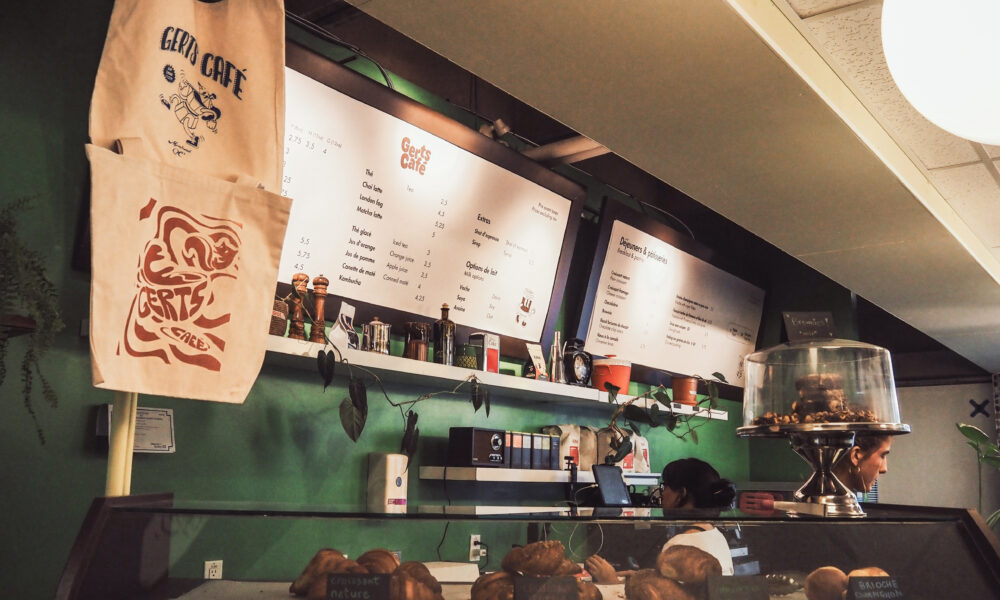
On Feb. 24, Gerts Café made a glorious comeback in the University Centre. While Gerts Bar reopened its doors at the start of the Winter semester, its café counterpart was not ready to welcome students again until right before Winter Reading Week. Now open Monday to Friday from 8:30 a.m. to 5:30 p.m., the café provides a large selection of drinks and pastries, with breakfast and lunch options coming soon. The current menu is largely based on the café’s previous one, with modifications pertaining largely to pricing and the addition of gluten-free options. 

Relocated to the first floor of the University Centre, Gerts Café also allows students to stop by for a quick study sesh in between classes. While seating is limited, it sits across from the SSMU lounge, allowing students to relax on nearby couches while enjoying a well-deserved coffee break. 

Tali Ioselevich, Gerts Café manager, explained why they decided to change location from the basement to the main floor in an interview with The Tribune.

“One, you can’t enter Gerts Bar unless you’re over 18, so even if you wanted to just go and have a coffee and you’re 17 years old, you can’t enter that space,” Ioselevich said. “Also, the space constraints. Before, there was [preparation], serving, everything was happening in a very small location and now we’re using that space for the café just to do the prep and we’re doing all the service upstairs.” 

Compared to nearby on- and off-campus options, Gerts Café remains competitive enough price-wise to attract a vast student clientele. 

“When I was creating the menu and doing the pricing for it, I was really [determined] to have subsidized pricing because we’re part of the SSMU, we don’t have to pay for the space,” Ioselevich said.  “I really wanted to make things as affordable as possible for students.”

According to Paul-Hugo Arcand, U2 Science and barista at Gerts Café, it is a good compromise. 

“The prices are cheaper than basically all of the bougie/good coffee options (Dispatch, Second Cup, Humble Lion),” Arcand wrote in a statement to The Tribune. “I think the drinks are reasonably priced, though I’m not sure about the food. For the quality, the prices are excellent. However, if you really are on a budget and aren’t looking for such a nice sweet treat, you can’t beat the 75 cents General Store coffee.”

Kittel, a local Montreal roaster, provides the coffee beans, while Boulangerie Guillaume is responsible for the pastries. 

Gerts Café has the chill and inviting atmosphere you’d expect from a local café in Montreal, offering a change of scenery from typical McGill buildings.

“Aesthetically, the vibe I was going for is very 70s, and I really like colorful geometrics [….] I wanted it to feel cozy and warm and welcoming,”  Ioselevich said. “I want people when they come in to be greeted with a smile and to have a good time.” 

And this seems to be working. For Arcand, working at Gerts Café is more than a regular student job.

“My daily coffee/tea is always a highlight in my day, so I’m glad I get the opportunity to make the day of my fellow members of the McGill community. It’s a win win,” he wrote to The Tribune. “I’m [also] getting better at making latte art, which is something I’ve always wanted to be able to do.”

Gerts Café is a nice stopping point for people on their way to and from class, a community space that attracts students from all faculties. In the long run, Ioselevich hopes that they will even be able to offer catering to different student groups.

Campus Spotlight, Private, Student Life

How P[h]assion weaves creativity with activism

Fashion has long been more than just clothing—it is a language of identity, activism, and community. For Montreal’s queer youth, style serves as a powerful form of self-expression, allowing individuals to navigate their identities while participating in a larger cultural dialogue. This intersection of fashion and advocacy is at the heart of P[h]assion, a student-run charity that has integrated clothing with activism to raise awareness about HIV/AIDS for over 15 years. 

Like many urban landscapes, Montreal hosts an eclectic fashion scene where bold self-expression flourishes. Fashion is not only worn, but lived: Designers, artists, and everyday trendsetters turn the streets into runways, showcasing a spirit of individuality, adaptability, and resilience.

In the 1980s, Montreal’s 2SLGBTQIA+ community grappled with the HIV/AIDS epidemic, which disproportionately affected queer individuals. As they dealt with both the health crisis and social stigmatization of the disease, many turned to fashion, art, and activism to channel feelings of grief and uncertainty. 2SLGBTQIA+ grassroots activism in Montreal also paved the way for organizations like AIDS Community Care Montreal (ACCM), which emerged to provide crucial support, advocating for healthcare access and social services while fostering solidarity within the community. In recent years, P[h]assion has built a close partnership with ACCM, using fashion as a medium for empowerment and visibility. 

“Together, [we have] created spaces where queer youth and others can explore their creativity while accessing the support and resources they need to thrive,” shared Lucy Kaskie, U3 Arts and the club’s Director of Communications, in a written statement to The Tribune.

One way P[h]assion achieves this is through its annual spring fashion show, which provides a space for students to showcase their creativity while advocating for social change. The theme of its 2024 show was “Disrupt,” setting the stage for an evening of bold, daring fashion, and encouraging students to push boundaries. Nicole Lazarovici, U3 Management and co-president of P[h]assion, explained why fashion is such a powerful medium. 

“A people’s culture is woven into every stitch and fabric that shapes a garment,” Lazarovici said. “This garment then becomes a visual narrative tool, telling the stories of both the joys and the hardships of our people’s past, present, and future. At its very root, fashion has always been a collaborative effort to […] create community.”

Beyond advocacy, P[h]assion encourages students to embrace their identities while contributing to a broader conversation about inclusivity and empowerment. The organization achieves this through various initiatives, including mentorship programs and creative workshops, ensuring that young designers, models, and organizers feel seen and valued. 

One key example of this integration is their work with local designer Oscar Mendoza, whose designs incorporate bold colors and intricate patterns. In Fall 2024, P[h]assion worked with Mendoza on a photoshoot that highlighted his vibrant pieces, embodying the city’s spirit of diversity and pride.

“Above all, we hope students walk away with a sense of community and belonging,” wrote Taryn Stibbe, U3 Arts and the other Co-President of P[h]assion. “Whether as designers, models, or organizers, everyone plays an equally important role in shaping our impact, and we hope students carry that sense of purpose beyond the club.”

Through creative partnerships and advocacy, P[h]assion works toward a future where self-expression is embraced and celebrated. By integrating fashion with activism, they provide students and community members with opportunities to connect, create, and support causes beyond the runway. Their efforts cement fashion’s capacity for change, helping individuals find confidence in their identities while contributing to a larger movement for equality and representation.

Read the latest issue

Read the latest issue