Latest News

a, Research Briefs, Science & Technology

Research Briefs — Mar. 25

Drugs and Down syndrome

For the past 25 years, Roger Reeves, a professor and researcher at Johns Hopkins University, has been growing brains—in particular, the cerebellum. By targeting this area of the nervous system, Reeves hopes to develop a treatment for Down syndrome, a condition caused by inheriting a third copy of chromosome 21. Down syndrome is responsible for a variety of symptoms experienced by affected individuals, including cognitive delays, birth defects, and behavioural problems.

Reeves decided to target Down syndrome during his post-doctorate studies because of its complexity and the challenges it posed. Down syndrome patients have a significantly smaller cerebellum than the majority of the population—40 per cent less in many cases—that contributes to some of the developmental and behavioural problems experienced. In response, Reeves has been investigating compounds that promote growth of this portion of the brain.

Recently, the team discovered a small molecule that mimics growth factor, a hormone capable of stimulating cellular proliferation. Using mice engineered with a reduced cerebellum, the team injected this chemical on the day of their birth and observed as the affected part of the brain was entirely restored.

However, the team was surprised that in addition to the restored cerebellum, the mice improved their learning abilities. Three months after the treatment, they could successfully find their way to the end point platform of a water maze. This type of learning is associated with another aspect of the brain known as the hippocampus, which is responsible for memory formation. Although the researchers are unsure as to the exact effects of the drug on this part of the brain, they plan on conducting further research to better elucidate this observation.

“The possibility of actually giving Down syndrome people the ability to improve learning and memory significantly—that’s something that I never thought I’d see in my entire career,” said Reeves to Scientific American. “And it’s now happening. The game has changed.”


Google Glass improves medical care

The doctors in the emergency room of Boston’s Beth Israel Deaconness Medical Center beg a second glance—glaring above the sea of white lab coats are neon tinted Google Glasses.

Google Glass was developed in February 2013 and fits over the eyes like any pair of eyeglasses. However, unlike regular glasses, they are equipped with a camera and software that allows users to connect to the Internet, upload video, and open files, among other applications.

While Google Glass has many applications, groups of doctors are trying to integrate this technology into the medical workplace. One such doctor is Van Lancker, an orthopedic surgical resident at the Montreal General hospital. Two years ago, he wrote a letter to Google after learning about its Google Glass Explorer program.

As one of 10,000 individuals accepted into the program, Lancker is trying to push the boundaries as to how Google Glass can be used in hospitals. Rather than focusing on patient care, he is currently trying to determine its application in the operating room.

To date, Lancker foresees glass playing a critical role in mobile medicine. The technology would allow medical specialists in Montreal to assist doctors in remote communities, providing instructions in real time on how to perform more difficult procedures.

Lancker also envisions Google Glass as a key teaching tool. One of the problems faced with training medical residents is a lack of space in the operating room. Google Glass would provide students with the opportunity to view a video from the doctor’s perspective without being in the examination room—a valuable tool that would allow them to better visualize the procedure.

a, Opinion

Both a right and a responsibility

This question of the role of the anglophone students’ vote in Quebec provincial elections comes in the wake of accusations against the Parti Québécois for trying to bar anglophone participation in the upcoming elections.  Students are being turned away this year for insufficient proof of being “domiciled” in the province. While in the 2012 provincial election students were eligible to vote by showing up with photo ID and proof of residency for six months or more, they are now being asked for proof of permanent residency (a health card, driver’s license, etc). Though the details around these new rules remain unclear, this could mean that a large majority of out-of-province students will be systematically barred from voting in the upcoming election.

For the past week, I have had several conversations about whether out-of-province students should be able to participate in the provincial elections. Quite a few people have argued that because many anglophone students are out-of-province, and because many out-of-province students will only be staying in Quebec for four years and then leaving, they should not be entitled to the vote. While this is true, and while many of these students are not invested in Quebec’s future after their studies, I can’t help but think back to the 2012 election and how drastically that has affected students in the past couple of years.  People who were students in 2012 and are still studying have been directly affected by the results of those elections, including decisions the PQ government has made on university funding.

Given the nature and fluidity of political change, I think that it is imperative that any student residing in another province for school has the opportunity to have their voice heard. If the decision made in this election has anywhere as drastic an impact on students as it did in 2012, I would argue that it is the right and responsibility of every student to go out and vote.

Amina Moustaqim-Barrette is the SSMU VP External elect.

a, Baseball, Basketball, Hockey, Soccer, Sports

Around the water cooler – March 25

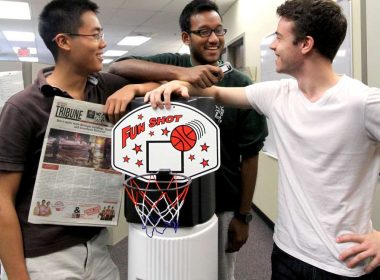
In case you were too busy not voting for the SSMU Building fee question, here’s what you missed during the opening rounds of the NCAA Tournament:

Duke Blue Devils — Duke’s outstanding ‘One-and-Done’ forward, Jabari Parker, shot a putrid 4-14 from the field as his Blue Devils were one-and-done in the tournament, falling 78-71 to the Mercer Bears. After the game, ambulances arrived at PNC Arena when Duke’s Mike Krzyzewski was found gasping for air in the men’s locker room appearing to be grabbing his own throat. Rumour has it that paramedics found an empty Bear Paw wrapper beside the choking coach. For the winningest coach of all time in college basketball, Coach K sure has figured out how to lose NCAA tournament games against lowly opponents.


Virginia Commonwealth Rams — Shaka Smart’s VCU squad looked Shaka Not-So-Smart on Friday night when, up by four with just five seconds remaining, they fouled SF Austin’s Desmon Haymon, who had already thrown up a prayer from behind the arc. Haymon hit the shot and converted the and-one, which sent the game into overtime where the Lumberjacks chopped down the Rams 77-75. While VCU’s ‘havoc’ style of basketball got them into the tournament, it seems like a little bit of poise in the final seconds could have helped them advance to the round of 32.


Harvard Crimson Because being the smartest school in America just wasn’t enough, the Harvard Crimson advanced to the round of 32 after scheming their way past the Cincinnati Bearcats 61-57. The round of 64 was just another easy standardized test for the Crimson, who pulled off their second consecutive upset in as many years. Their Cinderella run—yes they are a underdog despite having an endowment that dwarfs the GDP of some countries—came to a halt against a powerhouse Michigan State team. Maybe a non-Ivy League education has more value than previously thought?


Dayton Flyers —  The Dayton Flyers opened up March Madness by wreaking havoc onto millions of brackets as they beat Aaron Craft and the Ohio State Buckeyes 60-59 in the Battle of Ohio. After driving to the lane late to put the Buckeyes up 59-58, Craft couldn’t stop Dayton’s Vee Sanford, who hit a clutch layup with four seconds remaining to ice the game for the Flyers. The state of Ohio hasn’t seen a battle this close since Clinton took down Dole in the 1996 presidential election.


Kentucky Wildcats — The Kentucky Wildcats shocked the world, taking down Witchita State 78-76 on Sunday afternoon after Shockers guard Fred VanVleet missed a crucial last second three pointer that would have sent his team to the Sweet 16. Kentucky’s freshman star Julius Randle recorded a double-double with 13 points and 10 boards, just enough to earn a little bit of extra money from Coach John Calipari. While the Shockers proved that anyone can win in the Missouri Valley Conference, Calipari showed the nation that winners never cheat, but cheaters sometimes win.

a, Opinion

In election, it’s common ground that matters

With the latest poll from Ipsos Reid showing a decline in support for the Parti Québécois, it is clear that voters are turning away from politicians who seek to divide the people of the province and rely on the fear and fervour created by wedge issues.

The question of the anglophone role in the Quebec elections is more than just a question of how to vote; it is a question of what kind of politics we want to see both now and in the future. To some extent, we should reject the question “What should the anglophone role be?” Politicians have been content to play off of linguistic divisions in order to score cheap political points. While it is not unreasonable to use these electoral cleavages to analyze voting tendencies, asking what the anglophone vote should select presupposes that it should be a bloc.

The risk then is that we, instead of thinking of ourselves as varied individuals defined by a variety of political interests, choose to pit ourselves against each other by the sheer assumption that we care more about our language than the issues that we all face together.

The Liberal Party of Canada has been, is, and always will be a federalist party. This means we support a country that celebrates our differences, unites multiple interests into a national vision, and seeks to enable the achievement of those interests through a strong economy that supports Canada’s middle class. As far as what the role of the anglophone vote should be, it should be to do more than just vote. It should be to have a voice that speaks out against the divisive politics of fear that leaders perpetuate. It should be a voice that demands to hear solutions, not just problems. It should be a voice that seeks to reach out to other communities, and not just shrink within itself in fear of discrimination. For while fear is a powerful motivator, the solutions it provides are often not sustainable.

We do not want to divide our nation. Relying on an anglophone identity performs a disservice to all Quebecers—regardless of their primary language—who have the hope to pursue their ideas for a sustainable future, a strong economy, and are willing to devote the hard work needed to achieve those goals. It’s time we demand an environment that allows us to put those ideas forward.

a, Recipes, Student Life

Fiesta feast

(blissfullydomestic.com)

Spicy Chicken and Guacamole Wrap

A warm wrap filled with spiced chicken, pico de gallo (fresh tomato salsa), guacamole, cheese, and lettuce. Makes a lovely and filling lunch or dinner.

Ingredients:

½ cup corn

2 avocadoes, mashed

1 shallot, finely chopped

1/2 jalapeño pepper (seeds and ribs removed)

1/4 cup fresh cilantro, chopped

Black pepper

Juice of 2 limes

1/2 red onion

1 large tomato

1 boneless, skinless chicken breast

Seasonings (black pepper, cayenne pepper, dried cilantro, and all-purpose seasoning to taste)

Tortillas

Shredded cheese (preferably pepper jack)

Romaine hearts

Directions:

1. In a bowl, combine corn, avocados, lime juice, shallot, jalapeño, cilantro, and black pepper. Make sure the avocados are mashed well.

2. To prepare the pico de gallo, combine diced red pepper and tomato in another small bowl. Include all seeds and juice from the tomato.

3. Slice the chicken breast into one-inch thick strips and coat with seasonings.

4. On a non-stick pan over medium heat, cook chicken strips approximately 2-3 minutes per side until chicken is cooked through.

5. Take chicken off the heat and sprinkle shredded cheese over warm chicken to allow the cheese to melt.

6. Place chicken and cheese in the centre of a wrap. Place romaine hearts on top of chicken.

7. Put the guacamole, then pico de gallo on top of the lettuce in the wrap. Close wrap.


Churros

(theologygaming.com)

This lightly fried dough tossed in cinnamon and sugar makes the perfect sweet snack.

Ingredients:

Vegetable oil (enough to fill a deep pot 2 inches or a deep fryer)

1 cup water

2 tbsp brown sugar

1/2 tsp salt (optional)

1/3 cup unsalted butter

1 cup all-purpose flour

2 eggs

1 tsp vanilla

1/4 cup granulated sugar

1 tsp ground cinnamon

Directions:

1. Add oil to a pot or deep fryer and preheat to 375 oF.

2. In a separate pan, combine water, brown sugar, salt, and butter. Let ingredients come to a boil. Once boiling, remove pan from heat and stir in flour. Mix in eggs and vanilla.

3. Let the dough sit for about 10 minutes to cool, and during that time, prepare an icing bag with star-tip or a ziplock bag with a cut corner.

4. When the oil has come to temperature, pipe a 4-6 cm long churro into the pot of oil and use a knife to disconnect the dough from the piping bag. Make sure not to overcrowd the pan. Fry no more than four at once.

5. Fry churros for two to three minutes, or until you observe at once.

6. While churros are frying, mix together granulated sugar and cinnamon.

7. Use tongs or a slotted spoon to remove churros from pot and place them on a paper towel to remove excess oil.

8. Wait one to two minutes and toss churros in the pre-prepared cinnamon-sugar mixture.


(seriouseats.com)
(seriouseats.com)

Mexican street corn

Typically served from street carts in Mexico, this corn rubbed in mayonnaise, cheese, and cayenne pepper provides an excellent side dish or party snack.

Ingredients:

4 cobs of corn

2 tbsp unsalted butter

4 tbsp mayonnaise

½ cup Cotija cheese (can substitute with feta or parmesan cheese)

1 lime (cut into wedges)

Cayenne pepper, to taste

Directions:

1. Preheat oven to 350°F and cook corn in the husk for 25 minutes.

2. Let corn cool for 5 minutes before peeling, leaving the husks attached to the bottom of the corn. The husks will serve as a handle for eating.

3. While the corn is still warm, spread ½ tbsp butter and 1 tbsp mayonnaise on each cob.

4. Sprinkle ⅛ cup of cheese on each cob.

5. Add cayenne and a squirt of lime juice to taste.

a, Student Life, Student of the Week

Student of the Week: Maria Zamfir

This is the first year Maria Zamfir has not been involved in student politics in her five years at McGill.

In all four years of her undergraduate neuroscience degree, Zamfir was involved in all manners of student politics, including the McGill Freshman Undergraduate Science Society (FUSS), the Science Undergraduate Society (SUS), and the Neuroscience Undergraduates of McGill (NUM).

This year, Zamfir is in her first year of graduate school, where she is a part of the Integrative Program in Neuroscience (IPN) at McGill. Her competitive neuroscience rotation PhD program places her in three labs over the course of the school year. As such, Zamfir decided to make the difficult decision not to take on any student council commitments while undergoing this transition.

“I was trying not to be involved, which was kind of hard,” Zamfir said. “I really love getting involved in student council because it’s a great environment to learn about yourself and how you are able to work with others. Every council I’ve been on has been [a] different experience; but, overall I had to challenge myself to do as much as possible for the students I represented during each of my semesters as an undergrad at McGill.”

Zamfir has reconciled her participation in student politics with her interest in the brain. During her time working on NUM council, she created the first Touching Human Brains event, which raised nearly $600 for AMIQuebec, a grassroots organization assisting families and individuals through the effects of mental illness. The event gives guests the opportunity to touch human brains.

Zamfir is still finding ways to be involved, if not as much on campus, then through community outreach programs. She is currently involved in two student-based organizations—the Brain Awareness Campaign and BrainReach—both of which aim to promote the benefits and progress of brain research to the general public.

Brain Awareness Week, an initiative started by the Dana Alliance Foundation, hosts events during the third week of March to increase public interest in brain research, giving workshops to school-aged children. BrainReach is a community outreach program managed by IRN students, where graduate students conduct workshops to the same classroom over a longer period of time.

“Neuroscience isn’t something that is taught in the regular school system, and it is something that most children are somewhat aware of,” Zamfir said. “I think raising awareness about neuroscience is important because its great to have some idea about how your body and brain work together to result in your everyday life.”

Zamfir also writes for UsefulScience.org, a website one of her friends started and launched in October. The site aims to condense research papers into a useful, single sentence. Even in her work with the website, she appreciates the soft skills she has gained through her varied participation over the years.

“Everything I’ve learned from student council still applies to my life in the lab now as a grad student and working with the UsefulScience.org team, so it was well worth it,” she said.

McGill Tribune: What’s your hidden talent?

Maria Zamfir: Drawing.

MT: Are you a hunter or gatherer

MZ: I need to dissect mice in my labs sometimes, so I think I’d be more of a hunter.

MT: Favourite ice cream flavour? 

MZ: Mint chocolate chip and Dairy Queen ice cream cakes!

MT: What’s your dream job?

MZ: I’m still trying to figure out what that would be so I can do it.

MT: If you could go anywhere in the world where would it be? 

MZ: Egypt, because of the nice winds and beaches—I get to go kite surfing.

a, Opinion

Voter suppression must be stymied at all costs

One would expect voter suppression and the arbitrary application of electoral rules to be the exclusive hallmark of states like North Korea, Syria, or perhaps Russian-controlled Crimea. The reality is we might have more in common with those regimes than we would like to believe.

Official voting policy for Quebec reads as follows: one must be 18 years of age, and a Canadian citizen. One must also have been “domiciled” in the province for at least six months and have proof to back up this claim. It is this policy—and the arbitrary interpretation by a three person board of revisors—that are being used to deny students like myself the right to vote in the general election.

I am a Canadian student who has resided in Quebec for four years. I have moved between apartments, but have not left the province for any substantive amount of time. I have held several jobs in the province and recently had my driver’s licence transferred. Though my family resides in British Columbia, for all intents and purposes, the whole duration of my adult life thus far has been invested in Quebec.

Unfortunately, these qualifications did not satisfy the three-person board of revisors. Yes, I was a Canadian citizen. Yes, I had reached 18 years of age. Yes, I had resided in the province for at least six months. All these facts and their supporting documents were not disputed. Yet, the panel saw fit to pronounce their judgment upon me: I was not enough of a “citizen”; I did not “have the proper profile.”

What is a proper profile? Apparently, it consists of some nebulous combination of Medicare card, driver’s license, tax records, bank account location, and the arbitrary opinion of the three panelists on whether you ‘belong’ to the province. When pressed, the board could not provide a substantive minimum requirement to establish a “profile”—apparently, this concept is so confusing, that each case must be judged separately, rather than by substantive legal criteria. It is worth noting that the most commonly cited piece of documentation that establishes this “profile” is the possession of Régie de l’assurance maladie (RAMQ) Medicare card, which also happens to be explicitly prohibited for out-of-province students.

It also apparently matters which school you attend. On presenting my letter of enrolment, the three panelists gave it one look of haughty disdain, before summarily stating that nine out of 10 students from English universities don’t stay in the province.” While the veracity of this fact is debatable, I am more outraged that the arbitrary opinions of three people, each with their own biases and blind spots, are able to deny me the right to vote in the general election.

This was the summer of 2012 during the registration period for the elections leading to the victory of a minority Parti Québécois (PQ) government. Since then, I have been registered on the provincial voter’s list by virtue of a municipally sanctioned board of revisors’ interpretation of “domicile.” Same application, same qualifications, but different people, and different politics.

As hundreds of other students are documenting the same experience, it is time that we take a stand. While the suppression is primarily gripping students, the bitterness of identity politics that fuels the necessity of these requirements commands all of our attention. The choice of whether we wish to welcome those who are different into our body politic once a reasonable criterion is met is a central question for any democracy.

There are those who would agree that such rigour is required in order to maintain the integrity of a voter’s list comprised of individuals with the intention of staying and investing in Quebec. Even though out-of-province students tend to have whimsical plans about everything from courses to the next meal they might cook, these are not grounds for such obstructionism. Intention is only known by the individual, and is certainly not connoted by how many bureaucratic hoops one is able to jump through.

Even more important are the intentions of the potential governing parties themselves. The right to vote is one derived from the power of the state to affect the life of the individual voter. It is not solely derived, as some have argued, from the contribution of labour, taxation, and the intention to continue to contribute to this province (even though some if not all of these are already demonstrated).

A government that intends to obtain a mandate to shape the very fabric of society in Quebec requires a rigorous election. A party that has declared its intention to regulate the religious garb of public university students cannot be elected by a process that has been repeatedly shown to exclude these students. Wherever we might stand on various political issues, it is imperative that we challenge these unjust electoral practises and interpretations. Our democracy is only as strong as we defend it, and we have no business promoting these values abroad unless we properly govern our own.