Latest News

a, Men's Varsity, Sports

Hockey: McNicoll, Rose pile on the goals in Redmen’s sweep of Stingers

The McGill Redmen put their best-of-three OUA East quarterfinal series to an early close last week with back-to-back wins against the Concordia Stingers. The series ran the gamut both on the scoresheet and on the ice; while the first game was unusually quiet for the two rivals, the second was punctuated with an abundance of goals and frequent trips to the penalty box for both teams.

Wednesday night’s matchup at McConnell Arena got off to a subdued start, and remained that way until sophomore forward David Rose opened the scoring early in the second period. Although Concordia struck back less than a minute later, another goal by Rose and an insurance marker from third-year Marc-Olivier Vachon sealed the deal by the end of the period. Along with Rose’s two-goal effort, the game featured a spectacular playoff debut by freshman goaltender Jacob Gervais-Chouinard, who recorded 30 saves in the 3-1 Redmen victory.

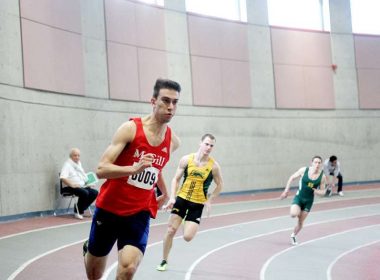
Game 2 on Friday opened to a markedly different atmosphere. In front of a lively home crowd, the Stingers brought the desperation of a team facing elimination. However, Concordia played catch-up through the first half of the game before the Redmen finally pulled away for good, posting a resounding 8-4 victory. Sophomore centre Cedric McNicoll led the charge with a hat-trick, while winger Neal Prokop tallied two of his own, including the game winner. Both are in their first seasons as Redmen, and have had a profound impact on the team’s success this season.

“Prokop is a 6’4” forward, and he has been able to bring [a] big, physical, rangy presence that we lack,” Redmen Head Coach Kelly Nobes said.” McNicoll played three years of pro hockey […] in the American Hockey League. He’s clearly a star in the league. He has exceptional vision, and he makes guys around him better.”

The McGill offence has been explosive of late, averaging 6.6 goals per game in its last five matchups and registering a hefty 41 shots on the Concordia goal on Friday. Much of the Redmen’s success came courtesy of their special units, which received no shortage of opportunity with both teams combining for a total of 42 penalty minutes. McGill capitalized on their opportunities, burying four goals.

“Special teams are a factor in the playoffs,” Nobes said. “In terms of our power play, it has been real good since Christmas [….] It’s good to have a power play that works for you because it keeps the other team honest in terms of taking penalties.”

This dominant showing in the first round is sure to come as a comfort to the Redmen, who suffered a shocking early exit in the first round of last year’s playoffs. The team fell at the unlikely hands of the Nipissing Lakers, despite having won the University Cup at the CIS National Championships the year before. Last year’s squad was marred by injuries, an issue that the current team has been able to avoid so far.

“Last year we had 150 man games lost to injury, [and] we had eight regulars sitting in the stands in the playoffs,” Nobes explained. “When we have had injuries, we’ve had a very deep bench that we’ve been able to use, so we haven’t had to play shorthanded. ”

The Redmen now travel to Trois-Rivieres, where they will face off on Wednesday, Feb. 26 against UQTR in the OUA East semifinals, and will be back at McConnell on Mar. 1. The no. 2 seeded Patriotes are fresh off a series sweep of their own, having faced little resistance from the seventh-place UOIT. They can expect McGill to provide stiffer competition; so far, the two teams have split their season series 1-1.

a, Opinion

Voter ID laws: Disenfranchisement under dubious justification

On February 4, the Harper government unveiled its proposed Fair Elections Act, which, among other things, claims to simplify regulations, give law enforcement more autonomy, and increase the donation limit to campaigns. One of the more notable provisions would significantly strengthen voter identification requirements and dispose of the previous provision that allowed for voters to take an oath and present a witness in lieu of a government-issued document. These events have attracted controversy, with a lawyer from the American Civil Liberties Union (ACLU), Witold Walczak, warning that the reforms could pose a serious threat to the civil rights of many Canadians. Last month, Walczak helped to overturn a similar law in Pennsylvania, where a judge declared the reforms unconstitutional.

Walczak’s comments are best understood in context of America’s long history of conflicts over voting rights. In the U.S..suffrage was not effectively realized until 1965, with the implementation of the Voting Rights Act. In the months leading up to the November 2012 presidential election between Barack Obama and Mitt Romney, several states enacted new, more restrictive voter ID laws allegedly aimed at combating voter fraud. However, many observers, especially those on the left, interpreted these measures as a thinly veiled attempt by Republican lawmakers to depress turnout among certain demographic groups; after all, those most greatly impacted by the laws were students, recently naturalized citizens, and those in poverty—all of whom are crucial elements of the Democratic voter base.

Now, similar accusations are being made against the Conservative Party in Canada. It’s important to note, however, that the proposed changes in Canada are far less restrictive than those of their American counterparts. Under the Canadian version, voters will still be allowed to present 39 different forms of official identification, including phone bills or bank statements. By comparison, the Pennsylvania law required a document issued by the State Department of Transportation, making obtaining acceptable proof of identity significantly more difficult.

In assessing the necessity and appropriateness of these measures, it is crucial to consider the prevalence of voter fraud in both countries. In the United States, the question of whether voter fraud is a real issue is widely disputed, but most sources claim that there is little evidence of significant deception by voters themselves. In fact, one study even claims that from 2000 to 2012, there were only 10 documented cases of voter impersonation, a microscopic number in a country with average voter turnout of more than 100 million. In Canada, there has been at least one documented event involving voter impersonation; during the 2011 Canadian federal election, a polling division officer and clerk in Ontario knowingly vouched for several voters illegally.

While reforms like the Fair Elections Act have the potential to bring about marginally cleaner elections, they also may yield damaging effects that must not be brushed aside or discarded. These include a likely decline in turnout, as indicated in an analysis published in the Harvard Law and Policy Review, and a general sense of alienation among targeted minority groups.

One of the groups most directly impacted by these reforms in Canada is Aboriginal Peoples—particularly those who live on reserves and lack government-issued documents proving their place of residence—as well as seniors who reside in nursing homes and students, who often relocate seasonally. For these groups, the changes will be significant, and may cause logistical problems for interested voters, as well as loss of interest in political participation for many others.

Despite the fact that Canada’s reforms are milder than those passed in the United States, it is always better to err on the side of caution than run the risk of denying hundreds of thousands of people a basic right, enshrined in Section 3 of the Charter of Rights and Freedoms. Strengthening electoral laws will not increase the integrity of elections if it disenfranchises specific groups of people. Because of the relative lack of conclusive evidence that voter fraud is a major problem, pursuing this cause so forcefully is a misguided step for the Harper administration. Ultimately, any democracy that celebrates its commitment to the protection of civil rights should recognize that nationwide voter suppression is a far greater threat to liberty than voter fraud has ever been.

a, Montreal, News

Demolition of historic Montreal mansion halted by QC culture minister

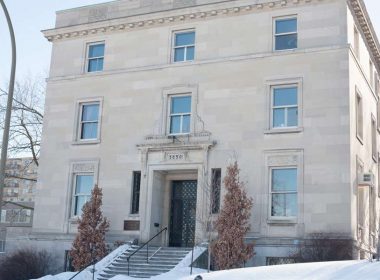
The scheduled demolition of the historic Redpath Mansion has been suspended, following the intervention of Quebec Culture Minister Maka Kotto on Feb. 17.

Built in 1886, Redpath Mansion is a 128-year-old building located west of campus. A four-storey student residence was scheduled to replace it.

To stop the construction, Kotto invoked the Law on Cultural Heritage.

“If the minister is of the opinion that there is a perceived or real threat of significant degradation of a property that may have heritage value, the Minister may make an order […] directing that work or an activity be terminated,” the law reads.

The suspension can last for no more than a 30-day period. In the interim, the ministry will conduct an assessment of the mansion’s condition, which will determine its fate.

According to Heritage Montreal, Redpath Mansion is one of the rare remaining examples of Queen Anne architecture in the city. Located at 3457 Avenue du Musée, the building is one of the structures listed on a “threatened emblematic sites” list by Heritage Montreal.

Heritage Montreal has expressed support for Kotto’s intervention.

“This exceptional gesture will allow us to reflect on this long—neglected case,” their press release reads. “Heritage Montreal celebrates this action and is pleased to offer its collaboration with the minister and with the Mayor of Montreal in order to encourage a quality project, uniting heritage and new architecture.”

Owner Amos Sochaczevski and his son, Michael, have tried to develop the site for several decades. A seven-storey condominium project had been proposed before the Ville Marie borough council ruled against it for exceeding the area’s height limit.

Michael Sochaczevski, who planned to demolish the building, obtained a construction permit from Ville Marie borough on Dec. 19, 2013.

Anik de Repentigny, communications officer of Ville Marie, said the borough had no power to stop construction once the permit was issued. She also noted that the Redpath Mansion had never been declared a provincial heritage site, nor included in an area of protection for historical monuments.

“There are urban planning by-laws that both the borough and the City conform to; the project that was presented was consistent with them [and] there were no grounds upon which to refuse,” de Repentigny said. “The consultative committee for urban planning at [the] borough, looked at it […] and were in favour of [the plan].”

Mario Polèse, research professor at the National Institute of Scientific Research Urbanization Culture Society, said the dilapidated state of the building would make it difficult to preserve.

“The owner basically let it deteriorate, but part of the blame also goes to current government policy, which doesn’t in any way discourage owners from doing so,” said Polèse. “It’s probably too late to save the building at this point. The best outcome given the situation is for whatever new [building] to keep the essential architectural in place, so at least we don’t lose the heritage.”

Polèse cited the Saint-Jacques Cathedral at Université du Québec à Montréal (UQAM) and many skyscrapers downtown as examples where the old facade is integrated into the new structure.

“It is more costly to integrate the old building with the new one, but on the other hand, if it comes out considered as a success, you will get your money back in the end, as the resale price on the building will also be greater,” he said. “It really depends on the imagination of the architect who is going to redo it. Old structures are not contradictory with modernization.”

a, News

Management plagiarism and admissions policies under discussion

Qualitative assessments for admissions and a new plagiarism policy are currently under discussion between the Management Undergraduate Society (MUS) and the faculty’s administration.

Admission’s Policy

The MUS is discussing adding more qualitative measures to the current admission requirements for prospective BCom students.

Currently the Faculty of Management only considers incoming students’ transcripts. MUS Vice-President Academic Affairs Ross McDonach said proposed changes were being researched by a working group— including six professors, the associate dean of student affairs, the admissions policy secretary, and himself, due to the increasingly widespread use of qualitative assessment methods in schools across Canada.

“We’re one of the only schools in Canada with a purely quantitative admissions policy; we only look at transcripts and numbers,’’ McDonach said. “Hopefully we’ll have some small additional [qualitative measures] to [the proposal].”

Hussam Maqbool, U3 Management, said the use of qualitative measures would be beneficial in revealing a student’s capabilities to both the university and future employers.

“They should put more emphasis on extracurricular [activities] when it comes to admissions because grades don’t always reflect someone’s potential,” Maqbool said. “Employers are now demanding well-rounded students, so it doesn’t make sense to take on students just based on academic prowess.”

Methods that other universities use that could potentially be implemented by the  Faculty of Management include admissions essays and interviews.

While no details have been confirmed as to when these changes could take place, McDonach said he hopes to present a proposal to the Faculty Council by next year.

Plagiarism Policy

A new plagiarism policy under discussion could reintroduce the use of “Turnitun”—a software program designed to detect plagiarism. The program was previously used by the faculty, but was cancelled for this year due to budget cuts.

McDonach also expressed interest in mandating that students submit a statement of originality with all assignments.

“A statement of originality […] basically wants [students] to put [their] name on it and say that […they] did not use any unacknowledged sources,” McDonach said. “[It is] taking the student code of conduct, condensing the points relevant to essays and assignments, and putting it on a paper so students understand what they’re responsible for.’’

Jamie Kawkabani, U3 Management, said both measures would act as disincentives for plagiarism.

“Provided it’s effective, I see no reason not to adopt [the software],” Kawkabani said. “As for the signed document, I feel that it would not be taken seriously unless there were serious legal ramifications of failing to abide by it; but ultimately it would be more of a deterrent rather than a detector, of plagiarism.”

The plagiarism policy is currently in its discussion phase. McDonach said he intends to create student surveys on the ideas prior to presenting them to Faculty Council sometime next year, though this has not yet been confirmed.

“The plagiarism policy has already been to Council for discussion purposes only,” Donach said. “We’re just taking advice [….] I do want to see what students think and then next year, I think it will be ready for presentation.”

a, Arts & Entertainment, Music

William Fitzsimmons—Lions

For the past 10 years or so television has served as a springboard for a number of artists making the leap to wider recognition. It’s been just over seven years since William Fitzsimmons’ “Passion Play” was  featured on the medical drama Grey’s Anatomy, and his sound remains largely the same. On Lions, Fitzsimmons has made a conscious effort to return to his folk roots. Practically every song revolves around a picked acoustic guitar and softly sung, personal vocals. Though his style of lyricism allows for some bright moments on the album, it mostly falls short of being truly relatable.

This brand of lo-fi folk is Fitzsimmons’ bread and butter, but Lions’ best moments come on songs such as “Fortune” and “From You,” which add much needed flavour to the album. It is on these songs that the influence of producer Chris  Walla—guitarist in Death Cab For Cutie—is most obvious. Simply left acoustic, “Fortune” would be a fine song, but the low drums and backing guitar are what make it stand out. Likewise, the title track helps give the album some much-needed variation.

What  Fitzsimmons delivers is a fairly solid, safe album, but one that is a little too even. Early in his career, Fitzsimmons was often compared to Sam Beam (Iron & Wine), but rather than alter his sound as Beam has, Fitzsimmons has stayed the course. Though Lions should satisfy his existing fans, it is unlikely that it will create many new ones.

a, Arts & Entertainment, Film and TV

The Lego Movie reminds us that it’s good to be a kid

“Everything is Awesome,” the song heard at the beginning of The Lego Movie, sets the mood for the film right away: it’s fun, hilarious, and unapologetically zany. Remarkably, writer-directors Phil Lord and Christopher Miller—known primarily for their work on Cloudy with a Chance of Meatballs and 21 Jump Street—sustain this tone throughout the film, and their exuberance prevents it from being the drab product placement that the very concept of the film would appear doomed to be.

The story they tell concerns the fate of Emmet Brickowski (Chris Pratt), a construction worker whose approach to life revolves around conformity. He drinks expensive coffee, enjoys popular music, and roots for the local sports team, all with the same blasé acceptance and blissful ignorance. His life takes a drastic turn when he meets Wildstyle (Elizabeth Banks), a mysterious woman convinced that he is fated to stop President Business (Will Ferrell) from destroying the world with a powerful weapon known as “the Kragle.” She brings him on an adventure that takes him through numerous LEGO® locales, and introduces him to a myriad of beloved figures, most notably Batman (Will Arnett). Car chases, encounters with villains, and narrow escapes ensue.

If all of this sounds incredibly simplistic and child-like, it’s because it is—and that’s precisely the point. Like Spike Jonze’s under-appreciated 2009 adaptation of Where the Wild Things Are, The Lego Movie beautifully represents the wonder and free-spiritedness of a child’s imagination. Whereas Jonze’s film uses a slow, languid approach to evoke nostalgia for childhood and symbolize a child’s restlessness, Miller and Lord use their giddy style and frenetic pacing to depict the joy of a child at play. The shallow, archetypal nature of the characters and plot allow the audience to enter the mindset of a child experiencing the thrill of creativity (through a toy—as the film wants us to remember—like LEGO®). Seeing this feeling represented on screen reminds us of why the simple block toys have endured for so long and been a childhood fixture for so many.

The film falters a bit when Lord and Miller make this all a bit too explicit through the film’s final plot twist. They tell us what we, having experienced childhood, already know implicitly without needing to have the point shoved down our throats by the filmmakers. Not only is the twist redundant, but it puts a damper on the spell the film casts. Though their explicitness broadens the age range to whom the film will appeal by explaining to children exactly what they’re doing, it’s ultimately a futile gesture. Children don’t need to go to a movie to have the joy of childhood preached to them—they’re often living it.

Despite this misstep, Lord and Miller redeem themselves by injecting the movie with a political message which gives it implications beyond being merely a fun journey inside a child’s mind. They suggest that one must use his strengths and individuality in conjunction with others in order to achieve the best possible results for everyone. Only by cooperating with one another, the movie says, can we truly utilize ourselves to our maximum potential. The movie’s message is a welcome antidote to the fascistic undertones that have plagued Hollywood action movies since Dirty Harry, and have been seen on the big screen recently in Christopher Nolan’s Batman trilogy. Lord and Miller’s decision to make Batman an antagonist for Emmet and a frequent target of derision further positions their message as a mockery of the politics of Nolan’s work. Unlike those films, The Lego Movie  explores the problems of placing power in one person and extols the virtues of uniting and working together. The movie shows the value of institutional structures to guide individuals and use them in a way that most benefits everyone.

None of this is to suggest that The Lego Movie amounts to a dry political statement. Any socio-political commentary which one can read into the film’s subtext is overshadowed by the overall whimsical tone which it carries on throughout. A child’s mind is a fun place to be, and The Lego Movie gives us the pleasure of spending time back inside of one. 

a, Science & Technology, Student Research

Defining a new pathway to the study of mucosal immunity

At first sight, Irah King looks like your average yoga teacher: long hair, cool bracelets, and a warm smile. However, you’d be surprised at the story behind this new member of the Department of Microbiology and Immunology.

King has a diverse background—a bachelor in psychology, a master’s in physical therapy and a PhD in neurology.

“I always knew what I wanted to do, but it kept changing,” he said. “[Today], I’ve found what I [really] love to do, [which] is immunology.”

King explains that it was only through exploring multiple fields that he discovered his passion for his research.

“I [initially] wanted to become a physical therapist, but a class in clinical neuroscience opened my eyes to the field of basic research,” King added. “I pursued graduate studies in the department of neuroscience, [where my supervisor] was a classical immunologist.”

Now, 12 publications later and a laboratory later, King hopes to foster his students’ success.

“My father was an attorney, and he sat behind a desk, [so] I always thought I wanted to do something very active because I was into sports,” King said. “[Today], I get a lot of enjoyment from doing research, but it’s also very exciting to witness my students’ excitement when they generate their own data.”

In mentoring his students, King keeps his own experiences of exploring science close to heart. He advises students to have a well-rounded education and not to be afraid to browse around until they settle on a discipline they enjoy.

“[Don’t] take life too seriously too early on, because your priorities and interests are going to change,” King said. “Try to do your best to expose yourself to a number of different areas—not only sciences, but arts as well. [This] can inform your decision about what you really want to do as you get older, and you may end up using that information in whatever career you chose to pursue; [but] you do need to work hard to play hard.”

With 10 to 12 hours of his day spent in his lab, King is definitely passionate about his work. Located in the Duff Medical Building, King’s laboratory focuses on how individuals make antibodies that protect them from infection. The team is also looking to understand how the gut microenvironment can impact our susceptibility to diseases, such as allergy or auto-immunity.

In the few hours he has to himself, King finds his escape with his wife and two daughters.

“You find yourself doing things as an adult that you didn’t think [you’d be] interested in doing,” King explained. “[I find myself] figuring out the best princess tutu to put on my daughter—not myself—but it’s really enjoyable.”

Through all of his experience in multiple fields, King has developed a clear direction of where he wants to go with his work.

“I want to be thought of as somebody who does very good science—science that’s reproducible and has an impact beyond our laboratory.”

a, Martlets, Men's Varsity, Sports

Sports Briefs — Feb. 25

Swimming

Swimming in front of friends and family at the 2014 Speedo CIS Championships, Toronto native Simone Cseplo broke five McGill records. The freshman capped an outstanding rookie season by earning second team All-Canadian status and a silver medal in the 50m backstroke (28.24)—McGill’s only podium finish of the weekend. Cseplo spearheaded the Martlet squad to a seventh-place finish out of 22 teams competing, which was one place higher than what the women achieved last year. On the men’s side, however, the team took a step back as the Redmen dropped from last year’s eighth-place finish to a disappointing 12th in this year’s final standings. Redmen captain Pierre-Alexandre Renaud, who was named RSEQ Swimmer-of-the-Year, broke a school record in the 200m butterfly (1:59.29), while junior Michael Luck broke the 50m breaststroke record (28.79).  Other standouts included Taryne Landry and Katie Caldwell. Landry, who will be graduating in the spring, aided Cseplo in breaking 4x100m freestyle (3:47.93) and the 4x100m medley relay (4:13.81), while Caldwell, last year’s CIS rookie-of-the-year, was instrumental in the 4x100m freestyle, 4x100m medley, and the 4x200m freestyle (8:12.04). The McGill swimming program is expected to lose only six graduating seniors, and should be primed to return a bevy of athletes to next year’s national championships.


Track and Field

The Redmen and Martlet track and field teams disappointed in the RSEQ Championships this past weekend in Quebec City, placing third on both the men’s and women’s sides. This year’s Martlet squad took a significant step back from last year, in which they won their first banner since the 2007 season. The Redmen plateaued compared to last year but saw their point total drop from 84.5 to 82.

There were multiple individual standouts as McGill athletes won five gold medals. Maxime Beaumont-Corteau, Hao Xu, Caroline Tanguay, and Scott Hancock all continued their strong seasons and all have garnered multiple medals in previous competitions. In addition to this, the Redmen 4x200m relay team (1:30.84) also topped the podium.

a, Opinion

The moral hazard of Birks

I was sitting in a conference in the basement of the Birks building, staring through the floor as the TA mumbled something about critical thinking… and I suddenly noticed that one of my classmates was still wearing his boots.

As a rule-following person in general, I’ve followed the Birks rule of removing my shoes upon entrance since hearing about it in first year. I had assumed it was to protect what look to me like nice marble floors in a beautiful building, but it wasn’t until earlier this year that I noticed the posters about the risk of slipping on wet stone floors and the ambulance ride that might follow. “Ah,” I thought to myself, “how sensible! If all of us wear our boots inside, the floors will be slippery from the snowmelt, and someone could break their neck while coming down the stairs. What smart staff we have.”

The risk of slipping and the clearly-displayed posters about it make the decision to remove my boots obvious, to me. So, why hadn’t my classmate? There, in my political science conference, the economics side of my brain switched on and delivered the answer: moral hazard.

After the 2008 financial collapse, everyone was talking about moral hazard. Technically speaking, moral hazard is the “lack of incentive to guard against risk where one is protected from its consequences.” In other words, if I’m gambling with someone else’s money, I will care less about the risk of losing it than I would if it was my own.

This is especially true where there is a cost to caution. Taking off your boots takes effort and time, two things not easily parted with for a harried student late to conference. There are also the risks of theft and of stepping in someone else’s icy snowmelt while protected by nothing but soft, absorbent cotton.

At the same time, my still-shod classmate is guarded against the consequences of leaving his boots on. Because few people do so, there isn’t much snowmelt for him to slip on, and slipping on his own wet footprints would require a walk of Monty Python-esque silliness. The discomfort of squelching through cold water in socks is also avoided, as is the risk of theft. So, he saves the ‘costs’ of caution and experiences none of the consequences by clunkily tip-toeing around the rules.

This idea, call it moral hazard or whatever else you will, explains why there are always a few that work against the interests of the whole in group settings. Whether it’s leaving an insured car unlocked in a sketchy parking garage, taking up smoking after taking out health insurance, or selling bundles of worthless loans to elderly pensioners, moral hazard is everywhere. It is enabled by global commerce and perpetuated by self-interested hunter-gatherer brains mismatched with collectively-minded societies—though to be fair to capitalism, it also makes communism unworkable.

To solve moral hazard, we need to catch transgressors, whether red-handed or red-booted, and punish them to dissuade further offences. Monitoring can be tricky; thankfully, punishment is quite easy. Legal measures may spring to mind first, but public shaming is sometimes even more effective—hence historical combinations like stockades and tomatoes. Modern forms of shaming exist as well, though usually in more whimsical forms. For example, the aptly-named Antanas Mockus, former mayor of Bogota, hired mimes to ridicule jaywalkers and litterers. His program was a massive success, dramatically improving traffic flows and tidiness in the city.

Once we have that sorted out, maybe we could take off our boots without fear once again.

a, Science & Technology

This month in science @ McGill

Seashells inspire shatterproof glass:

The intricate patterns of waves on the surface of seashells serve more than a decorative purpose. These tiny cracks are actually the secret behind the incredible strength of the shell.

Thanks to a technique developed by Francois Barthelat­—a professor in the Department of Mechanical Engineering at McGill—and his team, the researchers modeled a type of glass similar to the structure of seashell and is 200 times more durable than normal.

The team derived its concept from nature. By looking at the mechanism of natural structures, such as seashells, the researchers came up with hypotheses to significantly increase the toughness of glass.

“Narcre, or mother-of-pearl, which coats the inner shells, is made up of microscopic tablets that are a bit like miniature LEGO building blocks, [and] is known to be extremely tough and strong, which is why people have been studying its structure for the past 20 years,” Barthelat said in an interview with the university.

The team studied the ‘weak’ edges found in natural, flexible materials, such as narcre. The researchers then used lasers to engrave three-dimensional networks of micro-cracks into the glass slides.

“What we know now is that we can toughen glass, or other materials, by using patterns of micro-cracks to guide larger cracks, and in the process, absorb the energy from an impact,” Barthelat said.

In the future, his team hopes to scale up this technique to any size of glass sheet, working towards the production of shatterproof glassware.

Nutritional costs of food-secure future:

Purchasing products of large-scale agriculture may save you a couple dollars; however, Timothy Johns, professor of Human Nutrition at McGill University in Montreal, cautions that these products have a cost in terms of nutritional health.

In his presentation at the annual meeting of the American Association for the Advance of Science in Chicago, Johns demonstrated how diets are becoming increasingly limited in biological and nutritional diversity as a result of large-scale farming.

“Products of biodiversity within culturally-based diets provide essential micronutrients and lower prevalence of diet-related chronic disease,” Johns said to the McGill Reporter. He is worried about the health consequences of single-crop farming, since it lacks the agrobiodiversity of smaller farms.

While large-scale farming efforts are directed towards feeding the globe’s increasing population, Johns explained how carbohydrates produced by such efforts, like cereal, sugars, and potatoes often result in malnutrition due to overconsumption of calories—a contributing factor to obesity and chronic diseases like diabetes and cardiovascular disorders.

Johns proposes that food-policy decisions should be directed towards supporting smaller scale agriculture. Brazil’s National School Feeding Law and Program is one example of such an approach. Since 2009, the law has required at least 30 per cent of food in the program come from family agriculture. By embracing smaller scale agriculture, this program is working towards better nutrition for the overall community.

Training  your brain:

Looking at a display screen, participants changed a coloured disk from dark red to bright yellow or white all by simply manipulating their own brain activity thanks to a non-invasive imaging technology magnetoencephalography (MEG).

The study, which was recently published in the journal NeuroImage, strongly suggests MEG can be used as a therapeutic tool to control and train targeted brain regions. While patients of epilepsy show the most promise, scientists suspect it could also be used to treat stroke, dementia, and chronic depression, among other neurological disorders.

MEG is a technology that measures magnetic fields generated by neuronal activity in the brain. These measurements allow scientists to localize the sources of activity and record these images. This helps people view their brain activity in real time—a millisecond time scale across the entire organ—and allows them to control and adjust a function of their brain in pre-determined regions.

MEG’s therapeutic advantages include its potential to reveal the dynamics of brain activity involved in perception, cognition, and behaviour. It could also provide unique insight on neural dysfunction, such as movement disorders and chronic pain.

Sharing is caring—even when it comes to diabetes:

Unlike the flu, you can’t catch diabetes from someone coughing next to you. However, a research team from the McGill University Health Centre (MUHC) has shown through combined analyses of several studies that you may be more susceptible to developing diabetes from living with someone with the disorder.

The findings were published in the journal BMC Medicine this February and were based on six selected studies conducted in different parts of the world. According to the McGill Reporter, the studies assessed outcomes such as age, socioeconomic status, and the way in which diabetes was diagnosed in a total of 75,498 couples.

“We found a 26 per cent increase in the risk of developing type II diabetes if your spouse also has type II diabetes,” Kaberi Dasgupta, senior author of the study and researcher at the Research Institute of the MUHC told the McGill Reporter.

One reason for this increase is that many of the risky behaviours that lead to diabetes are often shared within the household. These include poor eating habits and low physical activity.

Future studies will hopefully indicate how closely interwined the relationship is between living with someone with diabetes and developing the disorder yourself.

Read the latest issue

Read the latest issue