Latest News

a, Arts & Entertainment, Music

William Fitzsimmons—Lions

For the past 10 years or so television has served as a springboard for a number of artists making the leap to wider recognition. It’s been just over seven years since William Fitzsimmons’ “Passion Play” was  featured on the medical drama Grey’s Anatomy, and his sound remains largely the same. On Lions, Fitzsimmons has made a conscious effort to return to his folk roots. Practically every song revolves around a picked acoustic guitar and softly sung, personal vocals. Though his style of lyricism allows for some bright moments on the album, it mostly falls short of being truly relatable.

This brand of lo-fi folk is Fitzsimmons’ bread and butter, but Lions’ best moments come on songs such as “Fortune” and “From You,” which add much needed flavour to the album. It is on these songs that the influence of producer Chris  Walla—guitarist in Death Cab For Cutie—is most obvious. Simply left acoustic, “Fortune” would be a fine song, but the low drums and backing guitar are what make it stand out. Likewise, the title track helps give the album some much-needed variation.

What  Fitzsimmons delivers is a fairly solid, safe album, but one that is a little too even. Early in his career, Fitzsimmons was often compared to Sam Beam (Iron & Wine), but rather than alter his sound as Beam has, Fitzsimmons has stayed the course. Though Lions should satisfy his existing fans, it is unlikely that it will create many new ones.

a, Arts & Entertainment, Film and TV

The Lego Movie reminds us that it’s good to be a kid

“Everything is Awesome,” the song heard at the beginning of The Lego Movie, sets the mood for the film right away: it’s fun, hilarious, and unapologetically zany. Remarkably, writer-directors Phil Lord and Christopher Miller—known primarily for their work on Cloudy with a Chance of Meatballs and 21 Jump Street—sustain this tone throughout the film, and their exuberance prevents it from being the drab product placement that the very concept of the film would appear doomed to be.

The story they tell concerns the fate of Emmet Brickowski (Chris Pratt), a construction worker whose approach to life revolves around conformity. He drinks expensive coffee, enjoys popular music, and roots for the local sports team, all with the same blasé acceptance and blissful ignorance. His life takes a drastic turn when he meets Wildstyle (Elizabeth Banks), a mysterious woman convinced that he is fated to stop President Business (Will Ferrell) from destroying the world with a powerful weapon known as “the Kragle.” She brings him on an adventure that takes him through numerous LEGO® locales, and introduces him to a myriad of beloved figures, most notably Batman (Will Arnett). Car chases, encounters with villains, and narrow escapes ensue.

If all of this sounds incredibly simplistic and child-like, it’s because it is—and that’s precisely the point. Like Spike Jonze’s under-appreciated 2009 adaptation of Where the Wild Things Are, The Lego Movie beautifully represents the wonder and free-spiritedness of a child’s imagination. Whereas Jonze’s film uses a slow, languid approach to evoke nostalgia for childhood and symbolize a child’s restlessness, Miller and Lord use their giddy style and frenetic pacing to depict the joy of a child at play. The shallow, archetypal nature of the characters and plot allow the audience to enter the mindset of a child experiencing the thrill of creativity (through a toy—as the film wants us to remember—like LEGO®). Seeing this feeling represented on screen reminds us of why the simple block toys have endured for so long and been a childhood fixture for so many.

The film falters a bit when Lord and Miller make this all a bit too explicit through the film’s final plot twist. They tell us what we, having experienced childhood, already know implicitly without needing to have the point shoved down our throats by the filmmakers. Not only is the twist redundant, but it puts a damper on the spell the film casts. Though their explicitness broadens the age range to whom the film will appeal by explaining to children exactly what they’re doing, it’s ultimately a futile gesture. Children don’t need to go to a movie to have the joy of childhood preached to them—they’re often living it.

Despite this misstep, Lord and Miller redeem themselves by injecting the movie with a political message which gives it implications beyond being merely a fun journey inside a child’s mind. They suggest that one must use his strengths and individuality in conjunction with others in order to achieve the best possible results for everyone. Only by cooperating with one another, the movie says, can we truly utilize ourselves to our maximum potential. The movie’s message is a welcome antidote to the fascistic undertones that have plagued Hollywood action movies since Dirty Harry, and have been seen on the big screen recently in Christopher Nolan’s Batman trilogy. Lord and Miller’s decision to make Batman an antagonist for Emmet and a frequent target of derision further positions their message as a mockery of the politics of Nolan’s work. Unlike those films, The Lego Movie  explores the problems of placing power in one person and extols the virtues of uniting and working together. The movie shows the value of institutional structures to guide individuals and use them in a way that most benefits everyone.

None of this is to suggest that The Lego Movie amounts to a dry political statement. Any socio-political commentary which one can read into the film’s subtext is overshadowed by the overall whimsical tone which it carries on throughout. A child’s mind is a fun place to be, and The Lego Movie gives us the pleasure of spending time back inside of one. 

a, Science & Technology, Student Research

Defining a new pathway to the study of mucosal immunity

At first sight, Irah King looks like your average yoga teacher: long hair, cool bracelets, and a warm smile. However, you’d be surprised at the story behind this new member of the Department of Microbiology and Immunology.

King has a diverse background—a bachelor in psychology, a master’s in physical therapy and a PhD in neurology.

“I always knew what I wanted to do, but it kept changing,” he said. “[Today], I’ve found what I [really] love to do, [which] is immunology.”

King explains that it was only through exploring multiple fields that he discovered his passion for his research.

“I [initially] wanted to become a physical therapist, but a class in clinical neuroscience opened my eyes to the field of basic research,” King added. “I pursued graduate studies in the department of neuroscience, [where my supervisor] was a classical immunologist.”

Now, 12 publications later and a laboratory later, King hopes to foster his students’ success.

“My father was an attorney, and he sat behind a desk, [so] I always thought I wanted to do something very active because I was into sports,” King said. “[Today], I get a lot of enjoyment from doing research, but it’s also very exciting to witness my students’ excitement when they generate their own data.”

In mentoring his students, King keeps his own experiences of exploring science close to heart. He advises students to have a well-rounded education and not to be afraid to browse around until they settle on a discipline they enjoy.

“[Don’t] take life too seriously too early on, because your priorities and interests are going to change,” King said. “Try to do your best to expose yourself to a number of different areas—not only sciences, but arts as well. [This] can inform your decision about what you really want to do as you get older, and you may end up using that information in whatever career you chose to pursue; [but] you do need to work hard to play hard.”

With 10 to 12 hours of his day spent in his lab, King is definitely passionate about his work. Located in the Duff Medical Building, King’s laboratory focuses on how individuals make antibodies that protect them from infection. The team is also looking to understand how the gut microenvironment can impact our susceptibility to diseases, such as allergy or auto-immunity.

In the few hours he has to himself, King finds his escape with his wife and two daughters.

“You find yourself doing things as an adult that you didn’t think [you’d be] interested in doing,” King explained. “[I find myself] figuring out the best princess tutu to put on my daughter—not myself—but it’s really enjoyable.”

Through all of his experience in multiple fields, King has developed a clear direction of where he wants to go with his work.

“I want to be thought of as somebody who does very good science—science that’s reproducible and has an impact beyond our laboratory.”

a, Martlets, Men's Varsity, Sports

Sports Briefs — Feb. 25

Swimming

Swimming in front of friends and family at the 2014 Speedo CIS Championships, Toronto native Simone Cseplo broke five McGill records. The freshman capped an outstanding rookie season by earning second team All-Canadian status and a silver medal in the 50m backstroke (28.24)—McGill’s only podium finish of the weekend. Cseplo spearheaded the Martlet squad to a seventh-place finish out of 22 teams competing, which was one place higher than what the women achieved last year. On the men’s side, however, the team took a step back as the Redmen dropped from last year’s eighth-place finish to a disappointing 12th in this year’s final standings. Redmen captain Pierre-Alexandre Renaud, who was named RSEQ Swimmer-of-the-Year, broke a school record in the 200m butterfly (1:59.29), while junior Michael Luck broke the 50m breaststroke record (28.79).  Other standouts included Taryne Landry and Katie Caldwell. Landry, who will be graduating in the spring, aided Cseplo in breaking 4x100m freestyle (3:47.93) and the 4x100m medley relay (4:13.81), while Caldwell, last year’s CIS rookie-of-the-year, was instrumental in the 4x100m freestyle, 4x100m medley, and the 4x200m freestyle (8:12.04). The McGill swimming program is expected to lose only six graduating seniors, and should be primed to return a bevy of athletes to next year’s national championships.


Track and Field

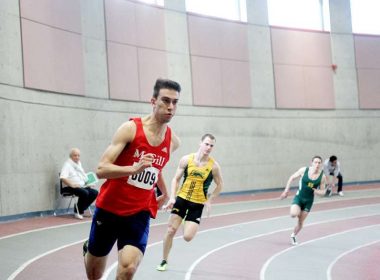
The Redmen and Martlet track and field teams disappointed in the RSEQ Championships this past weekend in Quebec City, placing third on both the men’s and women’s sides. This year’s Martlet squad took a significant step back from last year, in which they won their first banner since the 2007 season. The Redmen plateaued compared to last year but saw their point total drop from 84.5 to 82.

There were multiple individual standouts as McGill athletes won five gold medals. Maxime Beaumont-Corteau, Hao Xu, Caroline Tanguay, and Scott Hancock all continued their strong seasons and all have garnered multiple medals in previous competitions. In addition to this, the Redmen 4x200m relay team (1:30.84) also topped the podium.

a, Opinion

The moral hazard of Birks

I was sitting in a conference in the basement of the Birks building, staring through the floor as the TA mumbled something about critical thinking… and I suddenly noticed that one of my classmates was still wearing his boots.

As a rule-following person in general, I’ve followed the Birks rule of removing my shoes upon entrance since hearing about it in first year. I had assumed it was to protect what look to me like nice marble floors in a beautiful building, but it wasn’t until earlier this year that I noticed the posters about the risk of slipping on wet stone floors and the ambulance ride that might follow. “Ah,” I thought to myself, “how sensible! If all of us wear our boots inside, the floors will be slippery from the snowmelt, and someone could break their neck while coming down the stairs. What smart staff we have.”

The risk of slipping and the clearly-displayed posters about it make the decision to remove my boots obvious, to me. So, why hadn’t my classmate? There, in my political science conference, the economics side of my brain switched on and delivered the answer: moral hazard.

After the 2008 financial collapse, everyone was talking about moral hazard. Technically speaking, moral hazard is the “lack of incentive to guard against risk where one is protected from its consequences.” In other words, if I’m gambling with someone else’s money, I will care less about the risk of losing it than I would if it was my own.

This is especially true where there is a cost to caution. Taking off your boots takes effort and time, two things not easily parted with for a harried student late to conference. There are also the risks of theft and of stepping in someone else’s icy snowmelt while protected by nothing but soft, absorbent cotton.

At the same time, my still-shod classmate is guarded against the consequences of leaving his boots on. Because few people do so, there isn’t much snowmelt for him to slip on, and slipping on his own wet footprints would require a walk of Monty Python-esque silliness. The discomfort of squelching through cold water in socks is also avoided, as is the risk of theft. So, he saves the ‘costs’ of caution and experiences none of the consequences by clunkily tip-toeing around the rules.

This idea, call it moral hazard or whatever else you will, explains why there are always a few that work against the interests of the whole in group settings. Whether it’s leaving an insured car unlocked in a sketchy parking garage, taking up smoking after taking out health insurance, or selling bundles of worthless loans to elderly pensioners, moral hazard is everywhere. It is enabled by global commerce and perpetuated by self-interested hunter-gatherer brains mismatched with collectively-minded societies—though to be fair to capitalism, it also makes communism unworkable.

To solve moral hazard, we need to catch transgressors, whether red-handed or red-booted, and punish them to dissuade further offences. Monitoring can be tricky; thankfully, punishment is quite easy. Legal measures may spring to mind first, but public shaming is sometimes even more effective—hence historical combinations like stockades and tomatoes. Modern forms of shaming exist as well, though usually in more whimsical forms. For example, the aptly-named Antanas Mockus, former mayor of Bogota, hired mimes to ridicule jaywalkers and litterers. His program was a massive success, dramatically improving traffic flows and tidiness in the city.

Once we have that sorted out, maybe we could take off our boots without fear once again.

a, Science & Technology

This month in science @ McGill

Seashells inspire shatterproof glass:

The intricate patterns of waves on the surface of seashells serve more than a decorative purpose. These tiny cracks are actually the secret behind the incredible strength of the shell.

Thanks to a technique developed by Francois Barthelat­—a professor in the Department of Mechanical Engineering at McGill—and his team, the researchers modeled a type of glass similar to the structure of seashell and is 200 times more durable than normal.

The team derived its concept from nature. By looking at the mechanism of natural structures, such as seashells, the researchers came up with hypotheses to significantly increase the toughness of glass.

“Narcre, or mother-of-pearl, which coats the inner shells, is made up of microscopic tablets that are a bit like miniature LEGO building blocks, [and] is known to be extremely tough and strong, which is why people have been studying its structure for the past 20 years,” Barthelat said in an interview with the university.

The team studied the ‘weak’ edges found in natural, flexible materials, such as narcre. The researchers then used lasers to engrave three-dimensional networks of micro-cracks into the glass slides.

“What we know now is that we can toughen glass, or other materials, by using patterns of micro-cracks to guide larger cracks, and in the process, absorb the energy from an impact,” Barthelat said.

In the future, his team hopes to scale up this technique to any size of glass sheet, working towards the production of shatterproof glassware.

Nutritional costs of food-secure future:

Purchasing products of large-scale agriculture may save you a couple dollars; however, Timothy Johns, professor of Human Nutrition at McGill University in Montreal, cautions that these products have a cost in terms of nutritional health.

In his presentation at the annual meeting of the American Association for the Advance of Science in Chicago, Johns demonstrated how diets are becoming increasingly limited in biological and nutritional diversity as a result of large-scale farming.

“Products of biodiversity within culturally-based diets provide essential micronutrients and lower prevalence of diet-related chronic disease,” Johns said to the McGill Reporter. He is worried about the health consequences of single-crop farming, since it lacks the agrobiodiversity of smaller farms.

While large-scale farming efforts are directed towards feeding the globe’s increasing population, Johns explained how carbohydrates produced by such efforts, like cereal, sugars, and potatoes often result in malnutrition due to overconsumption of calories—a contributing factor to obesity and chronic diseases like diabetes and cardiovascular disorders.

Johns proposes that food-policy decisions should be directed towards supporting smaller scale agriculture. Brazil’s National School Feeding Law and Program is one example of such an approach. Since 2009, the law has required at least 30 per cent of food in the program come from family agriculture. By embracing smaller scale agriculture, this program is working towards better nutrition for the overall community.

Training  your brain:

Looking at a display screen, participants changed a coloured disk from dark red to bright yellow or white all by simply manipulating their own brain activity thanks to a non-invasive imaging technology magnetoencephalography (MEG).

The study, which was recently published in the journal NeuroImage, strongly suggests MEG can be used as a therapeutic tool to control and train targeted brain regions. While patients of epilepsy show the most promise, scientists suspect it could also be used to treat stroke, dementia, and chronic depression, among other neurological disorders.

MEG is a technology that measures magnetic fields generated by neuronal activity in the brain. These measurements allow scientists to localize the sources of activity and record these images. This helps people view their brain activity in real time—a millisecond time scale across the entire organ—and allows them to control and adjust a function of their brain in pre-determined regions.

MEG’s therapeutic advantages include its potential to reveal the dynamics of brain activity involved in perception, cognition, and behaviour. It could also provide unique insight on neural dysfunction, such as movement disorders and chronic pain.

Sharing is caring—even when it comes to diabetes:

Unlike the flu, you can’t catch diabetes from someone coughing next to you. However, a research team from the McGill University Health Centre (MUHC) has shown through combined analyses of several studies that you may be more susceptible to developing diabetes from living with someone with the disorder.

The findings were published in the journal BMC Medicine this February and were based on six selected studies conducted in different parts of the world. According to the McGill Reporter, the studies assessed outcomes such as age, socioeconomic status, and the way in which diabetes was diagnosed in a total of 75,498 couples.

“We found a 26 per cent increase in the risk of developing type II diabetes if your spouse also has type II diabetes,” Kaberi Dasgupta, senior author of the study and researcher at the Research Institute of the MUHC told the McGill Reporter.

One reason for this increase is that many of the risky behaviours that lead to diabetes are often shared within the household. These include poor eating habits and low physical activity.

Future studies will hopefully indicate how closely interwined the relationship is between living with someone with diabetes and developing the disorder yourself.

a, McGill, News

i-Week panel examines relationship between migrants and Indigenous communities

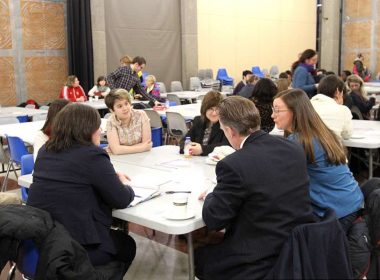
Building relationships between international students, migrants, and Indigenous peoples was the focus of a panel discussion hosted by the Social Equity and Diversity Education Office (SEDE) on Thursday.

According to Juhi Sujan, administrative coordinator at SEDE, the event was coordinated to address an unique subject matter.

“In envisioning the event, we considered how we could best incorporate voices from the community and how we could prioritize the perspectives of Indigenous people and migrants who have lived the experience of building relationships between these two groups,” Sujan said.

The event began with the screening of Mohawk Girls, a short film on the cultural challenges faced by three Mohawk teenagers during their critical transition between high school and university.

Following the film, two speakers—Tiffany Harrington a member of the Indigenous Student Alliance, and Radney Jean-Claude, a member the Rapprochement des Spiritualités Indigènes-Haïtiens collective—led a panel discussion on relations between migrants and indigenous groups.

Harrington, who spent the past semester on an exchange in Argentina, spoke about her experience abroad and the treatment of Indigenous peoples there.

“[In] the community I was living in, the colonial name they were given was ‘Toba,’ and ‘Toba’ is a derogatory term which means the ‘front of your head,’” Harrington said. “A lot of the names that the Indigenous people have here are also not the names of the people themselves, but names that were given to them by the enemies when there was first contact.”

Harrington noted that her experience abroad reflected the importance of engaging with Indigenous communities.

“That’s definitely a unique opportunity when you move to a new place, or you’re visiting a new area—you have available resources to take advantage of and [should] always [be] respectful,” she said.

Jean-Claude, a former McGill student, emphasized the importance of migrants engaging with the Indigenous community in the Montreal area.

“I think it’s really important to have [these events], because when you come to a new environment, it’s good to know their history,” Jean-Claude said. “It helps create a certain sense of belonging in the long run [….] As a newcomer, it’s important to bridge and to create bonds with people from Indigenous communities.”

The event ended with a session where audience members asked the panelists questions about the relationship between immigrants and Indigenous peoples, such as how to become more involved in the community.

“A great way on campus is the First Peoples’ House, right here on Peel,” Harrington said. “And also off-campus, there are a lot of opportunities—lots of things [for which] you can volunteer.”

Reception of the event was positive, with attendees like Emily Boytinck, U2 Science, praising its original content.

“It’s a topic that isn’t usually covered,” she said. “It’s wonderful to see that immigrants are taking interest in Indigenous communities [….] And I think that’s just really inspiring.”

The panel was part of International Student Services’ (ISS) first i-Week—a series of events coordinated by individual organizations such as student clubs, McGill’s Career Planning Service (CaPS), and advising services.

Caroline Guay, International Student Advisor at ISS, explained that i-Week was established to promote a sense of community within McGill.

“We were looking for ways to create a campus-wide inclusive event that would bring everyone together,” Guay said. “  It’s more than just a display of international culture. It’s a chance to […] have a dialogue that is community-wide and inclusive and that gets everyone involved.”

a, Baseball, Football, Sports

Around the water cooler – Feb. 25

In case you were too busy voting for democracy over anarchy as you watched Twitch play Pokemon, here’s what you missed in the 2014 Winter Olympics…

MEN’S HOCKEY —After the gold medal game—a 3-0 dismantling of Sweden—it was clear that Mike Babcock really is better at his job than the 35 million other hockey coaches in this country. Prior to the tournament, the spotlight was on the star power that manned the forward position for Team Canada—11 of the NHL’s top 25 leading scorers were at Sochi wearing the red-and-white. However, Babcock’s plan was to squeeze the life out of opponent after opponent, as the squad also put on a defence and goaltending clinic throughout the tournament. Let’s hope that Gary Bettman lets the pros take the ice in Pyeongchang so that fans can have another shot at questioning every decision that the Hockey Canada brass make.

WOMEN’S HOCKEY—Marie-Philip Poulin played her way into the hearts of Canadians everywhere for the second time in four years, scoring two goals in the gold medal game of the 2010 Vancouver Olympics, and more recently, in the final of the Sochi Games. The 22-year-old from Boston University was instrumental in the comeback, which was heard around the world and sent daggers into the hearts of our American neighbours. The only thing more shocking than the the American squad choking harder than the Toronto Maple Leafs was the fact that Poulin wasn’t named the first star in the game. That honour was reserved for none other than the right goalpost at the Bolshoy Ice Dome.

WOMEN’S BOBSLEDDING—Canadians really do like saving their best for last. Look no further than bobsledders Heather Moyse and Kaillie Humphries, who put up three straight second-place runs before catapulting past the American squad in their fourth and final run. Moyse, a native of Summerside, Prince Edward Island, is also the brand ambassador for PEI Potatoes. Sadly Humphries, who is from Calgary, Alberta, is not the brand ambassador for Triple A Grade Canada Beef. However, this combination of meat and potatoes has managed to handle the test of time—this gold medal was the second straight for the duo, who became the first Canadian women to win bobsled gold at the Vancouver 2010 Games.

MEN’S CURLING—Russia may have the best chess players in the world, but the 2014 Winter Olympics have made it safe to say that Canada lays claim to the best on-ice chess players. Brad “The Grandmaster” Jacobs skipped the Canadian curling squad to the gold medal in Sochi. Jacobs and crew posted a 7-2 record in the round robin stage and recorded victories over China in the semifinal and Great Britain in the final to clinch Team Canada’s second consecutive gold medal in men’s curling. The team bested the Brits in every single statistical category en route to a dominant 9-3 victory.

a, Editorial, Opinion

Concordia opt-out controversy carries lessons for McGill

The issue of student group fee opt-outs has returned to a university campus, but this time not McGill’s. On Feb. 12, a representative from Concordia’s John Molson School of Business (JMSB) presented two completed petitions to hold referendum questions on student group fees.

One of the questions, as reported in the Link, seeks to automatically opt-out JMSB students from fees for a number of student organizations, including the Concordia arm of the Quebec Public Interest Research Group (QPIRG), Concordia’s Cinema Politica, and Concordia University Television (CUTV), the university’s video media outfit. The other question, meanwhile, would force student groups that are not fully managed by the Concordia Student Union (CSU)­ to seek fees on a faculty-by-faculty basis rather than simply winning a single referendum of students across the faculties. Both of these provisions, were they to go into effect, represent a fundamental and ultimately negative shift in the relationship student organizations have with the student association.

While the issue of student group opt-outs hasn’t loomed large at McGill in the past year, it was once a reliable annual showcase of polarized rhetoric. The majority of these controversies focused on the McGill chapter of QPIRG. Opponents of the group, which receives an opt-out able fee, ran “opt-out” campaigns highlighting QPIRG’s political stances  on issues like the Israel-Palestine conflict and the legitimacy of the Canadian state. QPIRG generally countered by noting the valuable programs the group supports, and accusing the “opt-out” campaigns of misinformation. Even though the QPIRG controversies have been dormant for the past two years, as existence referenda run on five-year cycles, these issues will likely return to our campus.

While student group fees like the one mentioned in the CSU petition should remain accessibly opt-outable, both referendum questions have serious problems. First, forcing requests for funding from groups not under the direct umbrella of the CSU to go through a faculty–specific process could create additional administrative costs without necessarily increasing groups’ responsiveness to particular faculties or issues. Even though groups would have to expend the resources to tailor campaigns to the specific faculties, day-to-day oversight would not be at the faculty level, thus preventing any real exercise of accountability outside of election periods. Rather, forcing a student group campaign to disparate faculties would obviate the point of the group even operating under the administrative framework of the CSU as opposed to a faculty-specific organization.

The second provision—the one that would have students in the JMSB automatically not pay for these student groups—is not only worse because it represents a significant cut to the budgets of these groups, but also because it eliminates choices for future students. Even if the referendum was a 90-10 vote in favor of severing the fees, the result would leave new students at a disadvantage, as they would be automatically opted out of paying for groups that could provide services they deemed useful. Furthermore, these students could easily contribute to a “free-rider” problem of using services to which they are not contributing resources, in cases of student groups that lack the resources to check if students have paid the fee.

Passage of the referendum question would, at its core, remove the inertia that allows for groups to collect critical funds from students who don’t necessarily care to take any action. While the right—if one has moral or political objections—to not pay for a student group does and should exist under the status quo, the burden of effort ought to fall to the one opting out.

Given an accessible and publicized opt-out system, student organizations that don’t serve the interests of the student body would be given more than enough of an incentive to change their ways by way of students voting with their dollars. To demand anything beyond the opt-out option would not only be unworkable, it would be to the broader detriment of student life at the university, choking off worthy entities of funding.

a, Opinion

A nuanced approach to equity

Having spent much of my life growing up in the American South, I have experienced a number of events that have made me question my faith in human decency. In middle school, I was called a faggot, a fairy, and a queer—all in the derogatory sense. My classmates had parents and grandparents who were involved with the Ku Klux Klan. My synagogue had no windows facing the street to deter bombings, and we had to hire police officers to guard our Yom Kippur services due to threats from neo-Nazis.

Two years ago, I stood in front of my polling place urging my fellow North Carolinians to vote against a constitutional amendment that would ban same-sex marriage, depriving me of the right to marry the person I love. The amendment passed with over 60 per cent of the vote. So believe me when I say that I fully understand the need for equity, both on university campuses and larger society.

However, the recent controversy over Brian Farnan’s much ridiculed apology underscores a problem of alienation with the Students’ Society of McGill University’s (SSMU) approach to social justice. While fostering an environment free of discrimination and violence is certainly a worthwhile endeavour, our penchant for nitpicking and righteous indignation serves as an obstacle in addressing the systemic problems that impede the progress of historically marginalized groups. In a previous article that I wrote in these pages, I mentioned how policies such as policing costumes at 4Floors fail to rectify the lack of visible minorities on McGill’s faculty and within the student body.

Quick fixes such as these, whereby we avoid offence at the expense of combatting persistent forms of oppression, encourage criticism and contribute to an image of micromanaging and oversensitivity on the part of “the PC police.” The same holds true for Farnangate. By insisting on a belated apology for what many perceive as a minor, or even non-existent, offence, SSMU’s Equity Commissioners elicited an enormous degree of pushback which delegitimized their original intent. This insistence on publicly shaming every occurrence of even the most remotely offensive or inappropriate conduct can alienate supporters of initiatives that actually affect positive change. But through inclusive consultation and action, genuine success can be achieved.

Take, for example the student led initiative to establish a minor in Indigenous Studies. Proponents of this measure didn’t focus on abstract symbols of discrimination or divisive rhetoric. Instead, they chose to work closely with Indigenous leaders and to emulate successful programs at other universities in order to create a viable academic program. As a result of their diligent and well researched advocacy, students at McGill will be further educated and empowered to tackle the challenges facing aboriginal communities, such as unequal access to healthcare and the exploitation of native land for tar sands development.

In applying this principle to SSMU’s well-intentioned but overbearing equity policy, we can create a more transparent and inclusive process that protects the confidentiality of claimants and promotes equity while engaging students in dialogue. Right now, there are four Equity Officers, leading to a diffusion in accountablity; and participants in a complaint are forbidden to speak about the proceedings, even to those who are already involved. This prevents individuals and groups with a vested interest in a case from contributing relevant information that could lead to a more just and better informed outcome for all parties, in the same way that amicus briefs help Canadian courts render decisions on any number of divisive issues. By opening up the conversation and abandoning exclusive ideological purity, we can make McGill a more equitable environment and avoid future national embarrassments.

Read the latest issue

Read the latest issue