Latest News

a, News

Principal Fortier, panellists talk student involvement in QI

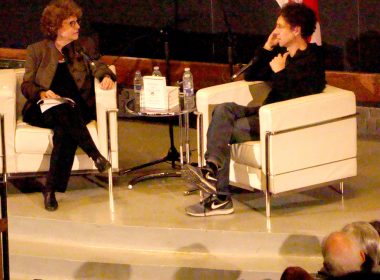
Opportunities for student engagement in the Quartier de l’Innovation (QI) development project were a topic of a Nov. 6 webcast that allowed professors, alumni, and students to pose questions to a panel of experts on the project.

Launched in May 2013, the QI is an initiative that aims to turn Griffintown, a Montreal neighborhood, into a hub of research and innovation. Panellists at the event included McGill Principal Suzanne Fortier and three other representatives from École de technologie supérieure (ÉTS) and McGill.

McGill Vice-Principal (Research and International Relations) Rose Goldstein said students have contributed to the QI from its beginning and will continue to be an important factor in the development of the project. For example, last month’s Community Engagement Day events included activities to inform students about the QI project and the Griffintown neighbourhood.

According to Goldstein, certain QI projects will offer more opportunities for student engagement—for example, the Montreal Creativity Hub facilitates meetings between professionals, companies, and professors with a focus on generating innovative ideas and management strategies.

However, some students questioned the ability for them to become involved in QI due to travel limitations. Justin Leung, a McGill student, drew attention to the physical distance between the QI and the university.

“What different strategies, procedures, or different projects will McGill be undertaking in order bridge that gap?” Leung asked.

According to Fortier, the distance between the campuses is not necessarily a disadvantage.

“The challenge is because we’re not quite in an environment that is totally familiar to us,” Fortier said. “That distance from the McGill campus to the QI in fact can be a real opportunity, a real advantage, because we are going to get out of our campus and into this quartier [….] We want to offer our students this opportunity to learn outside of campus.”

As part of its initiative to promote creative solutions, the QI has already brought artists from the Montreal community together with small businesses and students to contribute to its goal to infuse the arts and creativity into all sectors of the project.

“Students are already involved and this is a platform where anyone can come­—including students—to use creativity tools to solve problems,” Goldstein said.

Goldstein also spoke on a project named the Centre for Culture and the Arts, which is led by Will Straw, an art history professor at McGill. According to Goldstein, the project aims to bring artists together with other artists, students, and creative small businesses, to develop creative solutions to issues businesses may face.

“So they’ll be looking at kind of a creativity hub—an urban culture hub where artists will also come together with other actors in the area to problem solve and to work with our students,” Goldstein said.

Fortier said the QI will be integrated into student life and academic curricula by implementing it as a learning platform.

“There will be a whole spectrum of activities, from research projects to bringing what students learn in the classroom into practice in the QI,” Fortier said. “Let’s make it as dynamic as possible.”

a, Arts & Entertainment, Music

Cowboy Junkies – The Kennedy Suite

The Kennedy Suite, an All-Canadian collaborative album written by Scott Garbe and produced and arranged by the Cowboy Junkies (Margo Timmins, Michael Timmins, Peter Timmins, and Alan Anton), as well as Andy Maize and Josh Finlayson of Skydiggers, is an ambitious song cycle centred around the assassination of former U.S. President John F. Kennedy. It chronicles the tragedy through the personal narratives of a number of interconnected characters all somehow implicated in the event through a combination of songs, excerpts of recorded news, and speech clips from the incident.

As the time-frame (in relation to the assassination) and the emotional tone of the songs shift throughout the album, so too does the musical style. Harlan Pepper’s “Secret Spy Decoder Ring” is a cheeky upbeat rock song told from the perspective of a young boy who accidentally witnesses Lee Harvey Oswald preparing his assassination rifle, but who is not taken seriously when he tries to tell authorities. “Disintegrating,” the only track featuring Margo Timmins’ iconic sleepy voice at the fore, is narrated as Jacqueline Kennedy Onassis, post-assassination, and takes on the Cowboy Junkies’ usual hauntingly beautiful tone. When the Skydiggers sing “every girl and boy can grow up to be the President/ Or grow up to be the President’s killer,” in the folk-rock ballad “The Truth About Us (The Ballad of Lee and Marina),” the mixed sense of hope and hopelessness is reflective of the album’s overall message.

The resulting effect is a diverse musical range, masterfully woven together throughout the narrative. In the album’s epilogue, Sarah Harmer sings with tender vitriol “World won’t change if he don’t look/ He’s got his hand over his heart/ And his head stuck up his hole;” we are forced to wonder if these words are not even more relevant to today’s population than they were in 1963.


a, Arts & Entertainment, Film and TV

Blue is the Warmest Colour: more than just a blue film

Blue is the Warmest Colour has attracted a lot of critical attention. This could stem from its accolades at Cannes this summer for its seven-minute long sex scene. What I found interesting were the comments that arose from the portrayal of the women in the film.

Manohla Dargis, writing in The New York Times, takes issue with the film because of its ìpatriarchal anxieties about sex, female appetite and maternity that leach into its sights and sounds and the way it frames, with scrutinizing closeness, the female body.î This conclusion, however, misses the complexities of the other social and political anxieties in the film, such as class conflict, relationships, and true happiness. Blue, or its original French title La Vie díAdele: Chapitres 1 & 2óis the story of a womanís life through love, food, and sex. The film takes you from 15-year-old Adeleís romance with Emma, an older art student, to Adele becoming a schoolteacher and finally, to the end of her long-standing relationship with Emma.

Director Abdellatif Kechiche focuses on Adeleís body throughout the film, especially her mouth. Adeleís mouth, ever open and ready to consume, is constantly in frameódemonstrating her characterís ìvoraciousness,î as Emma says. Adeleís openness, and the closeness of the camera, imply that Kechiche is going deep under the protagonistís skin to explore her by physically placing the viewer in a position to do so. The focus on Adele is intense and constant, and it achieves its purposeóto condition the viewer to Adeleís experience.

Dargis mentions the amount of time that Adele’s ìderriereî was shot, alone and center on the screen. I counted three times within the first 20 minutes of the film. Undoubtedly Adele’s rear end gets a lot of attention, but what does this mean? Dargis uses the attention given to Adele’s rear-end to cement her argument on the patriarchal representation of women in this film. I think the film points us elsewhere.

The most obvious source of tension in the film, besides the patriarchal one that Dargis discusses, is the difference in class between Adele and Emma. The two scenes of the women meeting each others parents mirror their discomfort. Emma’s family reflects her more cultured inclinations they eat oysters and question Adele’s desire to be a teacher because of the job’s economic security. Adele’s parents similarly question Emma about her art, wondering what she will do to make money with such a career, while they eat a simple pasta dish. Kechiche’s focus on the food they served framing the actresses’ faces as they eat is another way for him to show the conflicting reality of their social positions.

What does this have to do with Adeleís backside? Kechicheís focus on the female body from a distance, in scenes such as where Adele is sauntering down a hill towards her bus stop, is an objectification of her body, but perhaps not a solely patriarchal objectification. Adeleís face is constantly framed on the screen in a way that makes you feel as if you could delve deep into her mind. Pairing this with her bodyóopenly and without obstructionógives a full image of Adele: body and soul. What could be called a superfluous exhibition of Adeleís body is rather a purposeful display of her own anxieties about her lifestyle, her appetite, and her body image.

Blue depicts an internal struggle of living and loving. The film loses its impact when one focuses solely on the film’s images of the beautiful women in it. As a viewer it is a struggle in itself to watch Blue, with its constant focus on Adele pushing us to empathize with her unique life. That’s what makes it so relevant–struggle just as Adele does, trying to wrap our heads around what is happening around us.

a, Opinion

Owning the medium: media consolidation in Canada

Canada has the most concentrated media ownership of any liberal democracy in the world—more concentrated than America’s, or even Britain and its Murdoch empire. In 1999, our five largest newspaper chains accounted for 93 per cent of all daily circulation. Today the number is 82 per cent—lower, but still very high.

Just how pervasive is this concentration? In print, Postmedia (formerly CanWest) controls 31 per cent of total newspaper circulation, while Quebecor takes up 23 per cent, and holds 27 of Ontario’s 38 daily newspapers. Also involved in telecom, Quebecor has dominated the market in Quebec since buying Vidéotron in 2000.

Bell sold its common share in the Globe and Mail in 2010, but acquired the CTV network in the same deal. It grew even larger this past July when it bought Astral Media for  nearly $4 billion. Rogers, the largest communications company in Canada, has diverse interests from wireless service to Maclean’s and other magazines. Shaw bought the broadcasting arm of CanWest in 2010, and now operates Global TV in addition to its distribution infrastructure.

The biggest casualty of centralization is editorial independence. In 2001, CanWest, owned by the Asper family, ordered all its papers to publish editorials written at its Winnipeg headquarters. This led to a byline strike at the Montreal Gazette, in which reporters refused to allow their names to appear in print. This ended when the reporters were threatened with termination. In 2002, an Halifax Daily News editor resigned due to interference from CanWest headquarters. That summer, Russell Mills, veteran publisher of the Ottawa Citizen, was fired after running an editorial calling for the resignation of Jean Chrétien, an old friend of Israel Asper. In 2003, the Globe and Mail reported on a leaked CanWest memo that laid out plans for a centralized news desk in Winnipeg—they called it “this country’s most aggressive attempt to centralize editorial operations across a newspaper chain.” But not even the clearest violation of journalistic independence in contemporary Canadian history would lead to more regulation. The 2006 election brought Stephen Harper to power—his heritage minister,  responsible for media regulation, was a former CanWest executive named Bev Oda.

The Citizen debacle was a big missed opportunity. Political appetite to even discuss media regulation is seldom present, because controversies like the Asper disaster rarely happen. Given the firestorm that ensued, similar realizations will only be rarer in the future. However, editorial control still happens—it has just taken on subtler, more insidious forms. Executives have moved from overt statements of editorial policy to indirect control through hiring, firing, and promotion. Stories that go against policy are no longer pulled, but are ‘slanted’ through omission and preferential placement. The result is what academics call social control, where a journalist’s perks and career chances depend on writing to the company line. Ultimately, this leads to self-censorship and avoiding stories contrary to corporate interests.

Why is this a problem? Across the country, corporate media gives ‘free rides’ to those it likes, and no ride at all to those it doesn’t. In New Brunswick, for example, the Irving family holds all of the English-language daily newspapers. Like most media families, the Irvings have other large interests—they own, among other things, the largest oil refinery in Canada, forestry operations, and a frozen foods company. Their papers are known for failing to report on the sometimes-questionable activities of their sister companies.

On the West coast, look at the example of former BC premier Gordon Campbell. In January 2003, when Campbell, Premier at the time,  was caught driving with a blood alcohol content more than double the legal limit while vacationing in Hawaii. In confidence, a Vancouver Sun reporter called Campbell’s grinning, rosy-cheeked mugshot the scoop of the year—but the Vancouver Sun, known for running massive headshots, ran a tiny thumbnail. Later that year, when the provincial NDP released its environmental policy, only one paper carried the story, and even then it was buried in the middle. All of these papers were owned by CanWest at the time.

So, is editorial independence likely with media concentration? Absolutely not. As the 1981 Kent Commission on newspaper ownership wrote, “For the heads of such organizations to justify their positions by appealing to the freedom of the press is offensive to intellectual honesty.”

The only body with the power to restore the freedom of the press is the federal government. After a Royal Commission and two Senate investigations, we know the problem and the solutions. The Harper government must act before our media—and our democracy—slip further towards oligarchy.

a, Arts & Entertainment

A supernatural force in the natural world

The Orenda, Joseph Boyden’s long-anticipated book on the 17th century indigenous peoples of Canada, is a sweeping epic that deals with the birth of a nation—a time when Jesuit missionaries arrived on the shores of Canada. This novel succeeds not in its strength of device but rather, its impact in altering the landscape of understanding of indigenous culture through its accessibility and connection to mainstream audiences.

The Orenda tackles the dynamics of the shifting relationship between the Huron (Wendat) and Iroquois (Haudenosaunee) peoples as settlers from Europe began to arrive in droves of missionary and trading groups. Boyden weaves the cultural history of the Huron into the narrative, using the community as an anchor for the novel’s conflicts. Missionaries arrive from Europe to spread Christianity into the lives of the natives—an ideal that is foreign to the native concept of the “orenda,” the life force that, according to the Hurons, belongs to everything that exists in the natural world.

The traders bring with them technology, most notably the musket that topples the balance of power and destroys the symbiosis between different tribes. Both missionaries and traders also carry diseases that wipe out entire longhouses and villages. Arguing that the book deals with the loss of identity is a gross understatement; The Orenda is about the devastation of a culture.

The narrative is revealed through the eyes of three characters: Bird, a war leader in the Huron community; Snow Falls, a fiery young Iroquois girl adopted by Bird; and Christophe, a French missionary who lives among the Huron. It is clear that Boyden attempts to draw a net of similarities around the three characters despite their clashing roles within the conflict; the voices of the protagonists blur between chapters, often leaving the reader struggling to identify the point of view behind the passage. Contrary to expectation, this achieves a rare feat in literature, as the book manages to maintain a gap that separates the known from the expected. The readers are kept off-balance enough that they stumble into a run to devour and make sense of the story.

And yet, despite his success in establishing multivocality,  the depth of Boyden’s characters is superficial at best. We are first introduced to Bird and follow the warrior through his grief at the loss of his family and culture. Snow Falls’ wild and unpredictable nature shines in her battle for identity, while the intentions of Christophe Crow, a name the Huron people refer to the missionary by for his black robe and tendency to swoop in on dying natives, are delivered through his journals of religious reflection. These emotions and desires are portrayed with the subtlety of a blunt club. It feels like Boyden uses his characters grudgingly as a necessary vessel for his story, thus missing the chance to provide nuanced accents to an otherwise spectacular narrative.

Boyden writes The Orenda in a lyrical and rhythmic prose, signature to the style of his highly acclaimed Three Day Road and the Giller Prize-winning Through Black Spruce. The book dazzles in the breathtaking landscape of the beautiful Georgian Bay region, drawing upon the scope of Boyden’s own childhood experiences in visiting his Anishinabe mother’s relatives to create a vivid backdrop that is evident at every turn in the story. Boyden emphasizes native culture by weaving in traces of organic magic to create a subtle layer of the supernatural that hums along throughout the narrative. It is obvious that he has conducted extensive research for this novel, weaving in threads of cultural character that travel with the timeline of the story: the Feast of the Dead, the wampum belts, the importance of the three sisters (corn, beans, and squash), and the role of community. These all come together to paint a clear image of daily life for the indigenous peoples described.

“What’s happened in the past can’t stay in the past for the same reason the future is always just a breath away,” Boyden writes. This is why The Orenda has the power to evoke change. Canada carries the weight of a tumultuous history with the land’s original inhabitants, and this novel brings the origins of that conflict to the forefront of the public mind, behind an accessible narrative and well-known author. Boyden has crafted this masterpiece of Canadian fiction with the intention of not only dilating native history, but underlining the presence of indigenous people.

a, News

Rethinking the role of the academic senate

As hearings concerning Canadian Senate reform begin today, McGill has begun a process to consider the  reform of its own academic senate.

Across Canada, academics, students, and professionals alike are engaging in discussion about the Senate’s role at universities.

At McGill, these concerns may soon lead to change; at the Oct. 16 Senate meeting, debate on the topic of Senate reform led Principal Suzanne Fortier to form a special subcommittee to identify solutions to issues concerning Senate’s purpose and structure.

Academic Senates are governing bodies in charge of a university’s academic affairs. One of the first comprehensive explanations of the purpose of an academic Senate in Canada comes from the 1906 Report of the Royal Commission on the University of Toronto, which identified Senate as a necessary body, despite its flaws.

“Much of [the Senate’s] work has, in practice, been relegated to committees,” the report reads. “Experience has shown that the reports of these committees must, in general, be adopted without debate, if the transaction of business is not to be unduly delayed.”

Over 100 years later, many academic senators have criticized Senate for very similar reasons. At the most recent meeting, senators criticized a lack of debate on motions and inefficient use of time due to lengthy informational presentations.

Joey Shea, senator and VP university affairs of the Students’ Society of McGill University (SSMU), emphasized the need to reform the schedule of the agenda to address this issue.

“If we could have that time period set aside at the beginning of every Senate, I think it would make senators much more engaged and willing to speak about things, instead of knowing they’re coming to Senate to simply raise their placard and approve things that have already been slated for approval […] or to just passively listen to reports,” she said.

However, information sessions are necessary for senators to gain an understanding of the issues at hand, according to biology professor and Faculty of Science Representative Graham Bell.

“The sessions for information are sometimes a bit dry, but on the other hand that’s what makes the university business transparent,” Bell said. “If those information sessions are not included in Senate meetings, we really don’t know what’s going on.”

Senate’s power in decision-making is at the core of many contemporary questions about the academic Senate in Canada, according to a 2004 study by Glen A. Jones, Theresa Shanahan, and Paul Goyan.

“Our study suggests that Canadian Senates have an important traditional and symbolic role, but that their practical and meaningful participation in important, defining university decisions is limited and perhaps even diminishing,” their report reads.

In response to similar problems, other Canadian universities have revised their Senate structure. For example, the University of Guelph reduced its Senate from 215 to 162 seats in 2011 to promote active participation, according to University of Guelph Secretariat Kate Revington.

“[Senators] expressed a wish to see if the size could be reduced proportionally—while still respecting the need for representation of the constituent groups—in order to increase opportunities for Senators for engagement,” Revington said.

Political science professor and Faculty of Arts Representative Catherine Lu said Senate plays more of a participatory role in academic affairs, rather than being directly involved in decision-making.

Lu cited McGill’s decision to offer Massive Open Online Courses (MOOCs) last year. Although the topic of MOOCs was discussed at a Senate meeting in January 2013, the Senate was not involved in making the decision to implement them.

“[Senate] had a very wide-ranging discussion with many divergent views about whether or not MOOCs would be a good thing; but the fact is that Senate was never asked to make a decision about whether or not in principle we should pursue this,” Lu said.

Lu suggested that committees provide written recommendations that must be debated and endorsed by Senate before action is taken by the senior administration.

Despite the governing body’s flaws, Shea said Senate is still a necessary component of university governance to properly represent all members of the university.

“I think it’s very important to have a senate because Senate is the only time and place where all parties in the university are [together] and are represented,” Shea said. “So I see a lot of potential for Senate, but right now the way it’s structured is not as efficient.”

a, Opinion

A word for the liberal arts

With budgets being cut left and right, and students worrying about their employment prospects after university, Liberal Arts degrees have come under siege. The question—or accusation—on people’s minds is whether the Liberal Arts are truly relevant to life post-graduation.

In recent years, budget cuts have been a serious concern for universities, including McGill in the past year. While a variety of faculties have seen resources cut, an emphasis on revenue generation means that arts disciplines often fall to the cutting board first. The stated reasons are simple; Arts students, courses, and faculty, don’t make as much money in research or carry as much prestige. New innovations and discoveries are more often the domain of the sciences—at least in terms of tangible progress. Humanities exist more in the realm of hypotheses that are harder to confirm and exploration of topics that often don’t create a profit in the ‘real’ world. For this reason, sciences seem like a better investment for the future.

Another challenge facing the humanities is a drop in interest among students. While there are many ways to look at this decline, an oft-cited reason is the poor economy. This line is the same every time: we’re in a serious recession, as we have been since 2008, and life will not be easy for students leaving the safety of the university cocoon. The joy of learning for the sake of understanding the world around us, it seems, is no longer the goal of university; it is soley an investment towards our future and job security.  While on some level, university is too expensive to not be an investment, it has gotten to the point that many have dismissed the idea of learning for its own sake outright.

The perception that Arts degrees aren’t applicable to real-world jobs is false. While Liberal Arts students don’t often come out of university with a working knowledge of the Higgs boson, they do graduate with the ability to think critically and creatively, and to communicate their ideas in a  clear and concise way. These skills help in the workforce for a variety of tasks and are something employers are looking for. They take a lifetime to teach, but are infinitely applicable, no matter the job.

Certainly Science degrees are lucrative, and a safer choice for employment. While one area of study isn’t better than the other, the Liberal Arts are—and always will be—relevant. They foster an appreciation of learning and provide the basic skills for broad careers. They can be risky in terms of employment, but they’re incredibly rewarding in terms of learning and appreciation of humanity.

a, News

Student groups claim McGill’s sexual assault policies insufficient

Both the Sexual Assault Centre of the McGill Students’ Society (SACOMSS) and the Union for Gender Empowerment (UGE) have condemned McGill’s lack of a sexual assault policy following the publicizing of a case involving the alleged sexual assault of a former Concordia student by three McGill football players.

The case, which appears in court next month, involves an alleged incident that took place in 2011. While McGill officials say they only learned of the case in May 2013, the players in question continued to play for the team in both the 2012 and 2013 seasons.

Released Nov. 6, SACOMSS’ statement points to the incident as evidence that McGill lacks adequate policies, support services, and awareness campaigns for sexual assault.

“While SACOMSS is proud to offer its many services and is committed to continuing its valuable work, we believe that the responsibility to offer these essential services should not fall solely to our volunteers,” the statement reads. “McGill needs to take responsibility for addressing the harms caused within its community.”

UGE issued a statement of a similar nature on Nov. 5, as well as an online petition demanding that McGill reform its current sexual harassment policies. The petition draws attention to past occurrences, such as a case of sexual assault at a football hazing incident in 2005.

“In light of these and past events, we demand that McGill sports teams have mandatory consent workshops and training,” the petition reads. “We demand more effective accountability procedures on the part of the McGill administration, as well as greater transparency in those existing [procedures].”

UGE is a service of the Students’ Society of McGill University (SSMU) that provides access to resources, such as anti-oppression workshops. Kai O’Doherty, U3 Arts and one of the collective members of UGE, said the union will continue to pressure McGill for change.

“It’s not just a petition getting enough signatures, and then presenting it,” O’Doherty said. “It’s more like getting solidarity around our statement and to continue to put pressure on McGill, but mostly to bring awareness to the issue and keep rallying around it.”

The petition currently has over 1,100 signatures out of its listed goal of 5,000.

David McCusty, U2 Arts, said  he disagreed with the demand by the UGE for mandatory consent workshops.

“I don’t see the sports culture here as perpetuating rape culture, misogyny, [or] homophobia […] any more than anything else does,” McCusty said. “If the sports teams have to go through consent workshops, it just seems to me that they’re being unfairly targeted in that situation [….] Are the sports teams perpetuating this any more than 4floors does, or that Carnival does, or that frosh does?”

Allison Murphy, an Arts alumnus and UGE collective member, responded to critiques that the petition considered the alleged attackers to be guilty until proven innocent.

“Being pro-survivor, we think it’s important that you always believe the survivor, not just in this specific case, but in all cases of sexual assault,” Murphy said. “So often [in] the legal system […] the onus is on the survivor to prove what happened to them. That can be a very traumatic experience, and often doubt and shame placed on you publicly can stop people from coming forward with these things.”

UGE plans to hold an open forum regarding rape culture in the upcoming weeks.

a, Men's Varsity, Sports

McGill waits until the 11th hour to topple Guelph

It was a weekend against the West as the no. 5 ranked McGill Redmen (7-1) took on the Guelph Gryphons (5-5) and the Western Mustangs (5-3) in a Hype Week double-header at McConnell Arena. The Redmen matched-up against the Gryphons for the first time in four years, beating Gueph 3-2. Rookie goaltender Jacob Gervais-Chouinard was tremendous for McGill, turning away 19 shots against Guelph.

The team has come together well after losing key players to graduation last year. Beyond the great play in net this season from Gervais-Chouinard and masters student Andrew Flemming, McGill’s ability in the penalty kill is nearly unrivaled across the OUA. The talent in shorthanded situations was on full display Friday night.

“If you look at the game tonight, our penalty kills were 100 per cent,” Head Coach Kelly Nobes said. “[Benoit] Levesque had probably his best game so far this year tonight, and a lot of that […] was on the penalty kill [and] the back end […] did a great job.”

The Redmen struggled out of the gate to begin the game, turning the puck over a number of times at the Guelph blue line before finally settling into a rhythm. However, despite its late period surge, McGill finished the stanza with a paltry seven shots on net—an uncharacteristic output for a team that has shown a love for forcing the puck up the ice. McGill ended up finishing the game with a lopsided 43-21 shots on net differential.

According to Nobes, McGill has focused its offence on pushing the tempo of the game.

“We want to get pucks in to the goalie—at his feet—[so] we get to certain places in front of the net,” he said. “Guys are going to different places in front of the net, and that’s how we’re looking to score goals. A lot of our goals are off of rebounds [….] Goalies are so big; they take up so much net, and they’re so good [….] I think it also shows the fact that we’re carrying the play.”

(Laurie-Anne Benoit / McGill Tribune)

It was a different team that started the second period, as sophomore Cedric McNicoll immediately netted a goal for McGill just 50 seconds out of the locker room. The team managed to maintain their rhythm for the remainder of the period, registering 18 shots on net. Sophomore left-winger Patrick Delisle-Houde added to the Redmen total at 17:25 to help the Redmen close out the period on top, 2-0. The Redmen quickly called a timeout to compose themselves after Guelph scored two quick goals in the span of one minute. The last 10 minutes of the game were filled with anxiety on the Redmen bench as the momentum was swinging in the direction of the Gryphons. Delisle-Houde saved the squad from an upset as he netted the game-winning goal on a power-play with 27.4 seconds left on the clock, sending the crowd into a frenzy.

This year’s team looks very different from last year’s squad, with multiple rookies in the fold and other players ascending into more important roles. If the team remains focused, the Redmen have the chance to improve upon last season’s disappointing finish.

“We learned early in the season that this team, with as many young players as we have, can’t take anybody lightly,” Nobes said. “We went into Ryerson, and we took them lightly. We weren’t sharp. We didn’t execute well, and it cost us the game in overtime. I think that lesson was learned in the first game of the regular season. Anybody can beat you on any given night.”

The hosts followed up this win with a tight 5-4 victory against no.  7 ranked Western Mustangs. McGill now sits in first place with a one-point lead over the Queen’s Gaels in the OUA East. The Redmen will go on the road to play against Brock and York on Nov. 15 and Nov. 16, before returning home to McConnell Arena to face Laurier and Waterloo in back-to-back matches on Nov. 22 and Nov. 23.

a, News, SSMU

SSMU Council endorses funding for anti-oppression training

Last Thursday’s Council also endorsed funding an anti-oppression training program that would teach students and floor fellows in McGill residences how to deal with issues of discrimination, oppression, and harassment. The project was presented to Council by Emily Clare, an alumnus and former vice president of University Affairs.

“The 2011 McGill Diversity Survey found that 20 per cent of students stated that they had experienced ‘somewhat to very much’ discrimination on any basis, whether due to language, race, ability, [or] gender,” the motion reads.

If its application for funding is approved through the SSMU Sustainability Projects Fund, the Anti-Oppression Programming Project would run as part of Rez Project—a mandatory information session on the subject of consent and sexual identity that is required for all students living in McGill residences.

SSMU President Katie Larson expressed support for the project, and the use of the sustainability fund to provide students with a different form of a sustainable service.

“I think it’s really great that you are applying to the Sustainability Fund for something that’s outside of environmental sustainability,” Larson said.

Read the latest issue

Read the latest issue