

Latest News

a, Arts & Entertainment

Criminally blonde: Red, white, and dead

Blondes around the world, natural and bleached alike, are attacking strangers for no reason. The cause is unknown, but it only affects women.  Hazel Hayes, a brunette Toronto native, witnesses the first attack in New York City, right after she finds out she’s pregnant from an affair with her married professor. Thus goes the premise of The Blondes by Emily Schultz.

As the mass hysteria known as the Blonde Fury ensues, Hazel writes a PhD thesis in ‘Aesthetology,’ the study of looking. More specifically, she writes an essay on “what women look like, and what we think they look like.” The story interweaves a social commentary on vanity and our ideals of female beauty, but as Hazel strives to dismantle blonde stereotypes and false preconceived notions about women, it’s difficult to say whether the book will attract blonde readers or alienate them.

With some derisive undertones, Hazel is articulate and conversational, speaking to her unborn child to push away the loneliness of being isolated in a cottage in the woods during a relentless winter—all in an attempt to avoid an ill-researched virus linked to hair colour. As she talks to her kicking bundle of joy, she shows herself to possess an incredible memory, recalling with great accuracy the places she has been, the people she has met, and the conversations she has carried with them. Her first encounter with the professor reads as if it happened yesterday. The reader can conjure vivid images from her accounts, increasing the believability of the story, but at the expense of questioning Hazel’s mental capabilities, which exceed that of an average human being.

She speaks to her unborn child directly, referring to her baby in the second person. This gives the illusion that she is speaking to the reader, when she’s actually having a one-sided conversation with her swollen abdomen. Because the narrator is 25 years old, this gives the impression of being talked down to by someone as old as your sister, who thinks you’re no bigger than a football. The narrative style is personal, but it’s too close for comfort.

Hazel is an observer, exhibiting minimal reactions compared to other characters in the book when the pandemic occurs. She is no superhero, but then again, you can’t ask too much from a woman filled with pregnancy angst.

The premise of the book is original enough, externalizing the character’s competitive nature in subtle but knifing ways—the brewing of a poison these women might keep hidden inside. However, The Blondes is born from a mix of admiration and fear of beautiful people, bundled together with a deep rage at their heightened social status and privileges.

The book is well written for avid readers of women’s literature, but it doesn’t pick up until page 40, when a teenage Thai school girl dies from the first recorded blonde attack. If the initial pacing of the novel can be overlooked, Emily Schultz’ story can be decent fare, following Hazel’s voice and her seamless flashbacks.  While Hazel’s often sardonic inner dialogue with her unborn child is arguably strange but understandable, what can be certain from this book by an author who was a finalist of the 2010 Trillium Book Award is the following: don’t mess with blondes.
a, Music

Flux Pavillion: Blow the Roof

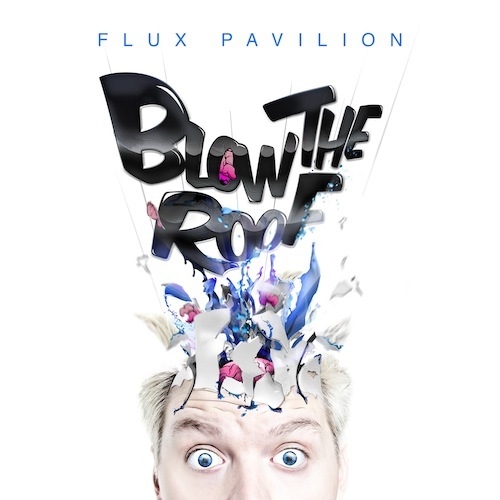
Today, some listeners are voicing concerns that dubstep is a dying genre—a fad that existed solely as an exciting, contrarian alternative to the growing popularity of catchy electronic pop. Likewise, they argue that with new mainstream acceptance, the genre is floundering—the limelight brings the destruction of a genre that can only succeed as a counter-cultural movement. Listening to new albums like Flux Pavilion’s Blow the Roof lends begrudging merit to these words.

The album is average; of the eight tracks, six deliver the anticipated blend of pulsing bass and electronic melodies which “make your body wanna bounce,” as the first track invites. A producer like Flux Pavilion, however, coming off of celebrated singles such as “Bass Cannon” and “I Can’t Stop” as well as collaboration work with the likes of Major Lazer and Jay-Z, should not remain content with generic, and ultimately, forgettable beats. “Double Edge” and “Do or Die” feature rappers who only serve to irritate the listener and distract from the main event: the beat. The lyrics on other tracks, especially “The Scientist,” are wholly nonsensical and only contribute the bare minimum of another sound layer. The most disappointing track, “I Still Can’t Stop” sounds like a lazy attempt at remixing Flux Pavilion’s own “I Can’t Stop.” With the same sample and structure, it adds nothing to the original, but serves as an attempt to stir up more appreciation for an old hit.

The album is like Boreale beer: it accomplishes its intended intoxicating goal, and most people wouldn’t deny a bottle if offered—but few actively seek it out. This is in no way a bad record (your reviewer caught himself humming “Starlight” today); it’s simply music that any dubstep fan will have already bounced to.

a, Music

Hollerado: White Paint

The 2009 release of Hollerado’s breakthrough debut, Record in a Bag, uprooted the band from small-town beginnings and propelled them into the indie limelight. The band’s sophomore effort, White Paint, is the culmination of the ensuing four years—more than a thousand live shows and several tonnes of confetti later.

The title track “Pick Me Up” closely matches Hollerado’s signature sound, reminiscent of the 2011 single, “Good Day at the Races.” Just as catchy as its predecessor, the album is filled with snappy melodies (“Fresno Chunk”) and punchy hooks (“Pure Emotion”), complete with Hollerado’s whimsically nonsensical lyric-writing (“When I’m giving an encore, my north pole expedition, where I claim to see the flashes far from the window in our kitchen”). From the pop-infused “Too Much to Handle”, which artfully blends vocal harmonies with syncopation, the music progresses to “Lonesome George,” which begins on a contemplative note, but quickly builds into a full-blown lament over an extinct tortoise. With much of the songwriting inspired by lead singer Menno Versteeg’s grandfather, White Paint pays its respects through “So It Goes,” an echo of lessons learned during WWII.

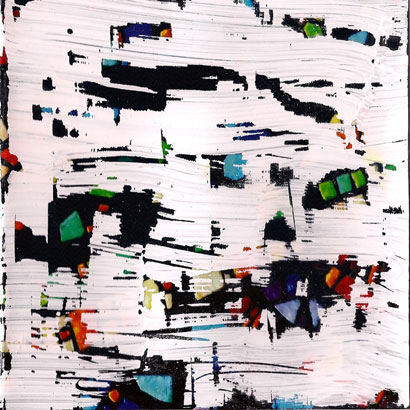
The album reveals a mature side to the band; but that isn’t to say they’ve forgotten how to have fun. Quirkier than ever, the band handpainted 10,000 copies of the album with—of course—white paint. This stunt rivals their debut album, which came in ziplock bags packed with confetti. White Paint is a promising second release, one which adds fuel to the fire left burning after Record in a Bag. Although the two albums are similar enough, White Paint is yet another step in the right direction.

a, Music

PVT: Homosapien

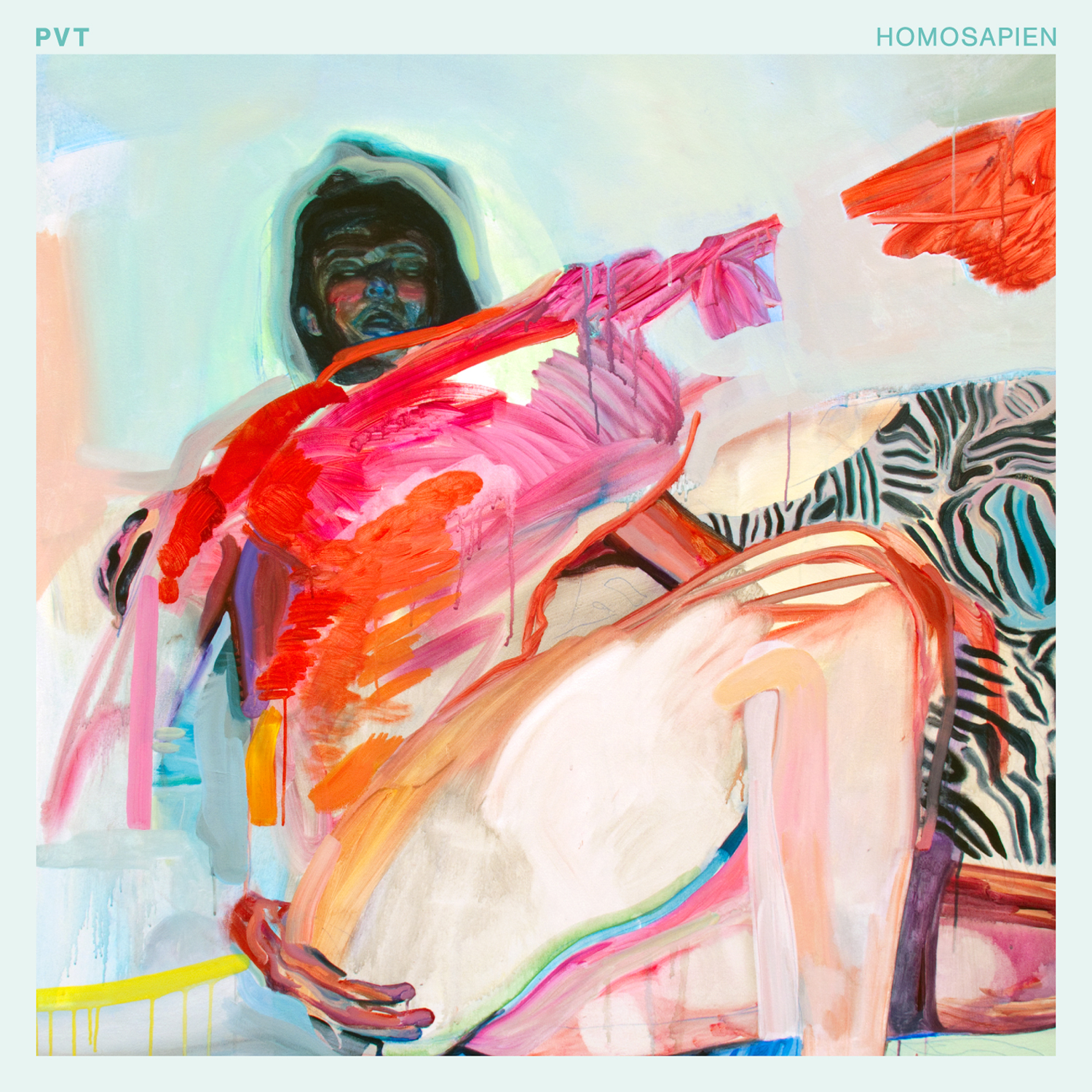
 The title of Australian trio PVT’s fourth effort Homosapien sheds light on the band’s perspective on sound. With its scientific tinge, the title alludes to the electronic infrastructure of the album. The band’s progression from instrumental electronic rock to a more electro synth-pop sound began with their last album, Church with No Magic (2010)—a direction which they pursue more extensively in Homosapien

For the first time, PVT crafts songs with real vocal tracks, albeit with simplistic lyrics. Though not all the vocals are intelligible, such as the mumbling warbles in the psychedelic “New Morning,” they add a human touch to their songs. Layered vocals are chopped up, and digitally processed, as exemplified by the album’s title track, providing a haunting fusion of man and machine. The album opens with the floating “Shiver,” which sounds like a whimsical score for an ’80s video game. The soft beeping noises reappear on the closing track “Ziggaraut.” In between the two plinking bookends, however, a darker, more industrial sound pervades. Typical of this harsher sound is the standout, “Electric,” with its heavy mechanical synth bass, and ominously swelling distorted guitars. A mixture of live and syncopated drum programming creates dynamic percussion, driving the songs along and inducing head-bopping along the way.

As with most experimental music, Homosapien is an idiosyncratic album that becomes more fascinating over multiple listens as the different sonic layers sink in.

a, Arts & Entertainment

Music journalism: you’re doing it wrong

Last week, the New York Times’ credibility was called into question when reporter John Broder’s negative review of the Tesla Model S, an electric car, was challenged by none other than the company’s CEO, Elon Musk. The story caused a stir in the press, simply because the subjects of mainstream critics’ appraisal rarely critique back, or at least not with such vitriol—Musk called the story “fake,” published data logs that contradicted Broder’s account of his test drive, and accused him of changing facts to suit his opinion. In a failed attempt to re-direct the resultant public backlash, the Times’ public editor linked a discussion on Reddit, but its commenters eventually accused Broder of being influenced by oil lobbies.

It’s common, and easy to bash old media these days; and publishers of ‘new media’ are eager to oust their predecessors as the final word in criticism. While there has been a certain democratization of commentary, with Twitter opinions abounding, people still enjoy reading an authoritative take on pop culture. Recognizing this, publishers such as VICE and Pitchfork are willing to pander to the skeptics. VICE co-founder Shane Smith summed up this strategy, recently stating: “I think that its[sic] a changing of the guard in media and its about time … f**k the mainstream media, we can tell our own stories now.”

Unlike car reviews, music criticism doesn’t receive much fact-checking. Alternative cultural journalists get away with a good deal. When weighing in on topics that have been thoroughly digested by the opinionated blogosphere, there is an incentive to write in extremes, or at the very least employ disjointed metaphors to add spice to a review. VICE’s music channel Noisey has recently given up on serious album reviews, and instead, publishes crude, juvenile rants by a guy named The Kid Mero, who was likely hired to shake up a bland catalogue of middling reviews occasionally punctuated by an A plus (for Frank Ocean’s Channel Orange “Finally, an album with the deserved weight to make the music industry cave in on itself”), an F minus, or sometimes both simultaneously (for DJ Khaled’s Kiss The Ring). Pitchfork Media, another influential cultural commentator, has lately been manufacturing its own little controversies by publishing reviews that give Childish Gambino’s Camp a 1.6 out of 10 and Chief Keef’s Finally Rich a 7.5. Both rappers, with opposite personalities and styles, were exploited by Noisey in an awkward ‘back and forth’ interview, where the more articulate Gambino tried to elicit more than a few words from the mumbling Keef. Pitchfork, however, took the exploitation to an extreme, by taking the quiet 17-year-old to freestyle at a gun range, while he was on probation for gun related charges. This culminated in a 60-day jail sentence for Keef, and an eventual retraction by Pitchfork.

One might defend these outlets by saying that they need controversy to attract views—after all, both provide free content, and have a proudly anti-corporate stance. But while no one is accusing them of being influenced by Big Oil, VICE has its own record label, VICE Records, which is affiliated with acts such as Justice and Snoop Lion, and holds a partnership with CNN. Pitchfork, meanwhile, moonlights as a concert promoter for its Pitchfork Music Festival. In a cutthroat moment for media, reviews may not pay the bills, but in conflict of interest cases like these, I’ve lost just as much faith in their critics’ opinions as Musk has lost in those of the Times.

One critic that stands out in the sea of noise that is online music commentary is Anthony Fantano, who runs the video blog The Needle Drop, and calls himself the internet’s “busiest music nerd.” He reviews a variety of genres, consistently churns out thoughtful reviews, and most importantly, is prevented by the blog’s video format from employing flowery metaphors with a straight face; instead, he comments in depth about the structure and pace of an album, the context of its release, and ultimately, whether or not he found it entertaining. In a media atmosphere cluttered with commentary fluff, the no-nonsense approach appeals to Fantano’s 100,000 YouTube subscribers. The independent and personal nature of the reviews lend to Fantano’s credibility, while the legacy, professionalism, and broad reach of the New York Times supports theirs. Ultimately, the consistency and quality of both types of commentary are strong points. Where criticism falls apart, however, is when an outlet attempts to combine personal candor and humour with professional weight, when neither is present in their writing.

(Remi Lu / The McGill Tribune)
a, Arts & Entertainment

McGill’s Savoy succeeds with uproarious comic opera

As senate reform once again makes its awkward, halting round through this country’s public consciousness, it is perhaps timely to reflect on this peculiar institution’s elder brother: the British House of Lords. No longer a bastion of the hereditary aristocracy—though they still hold a seventh of the seats—the upper chamber of peerage and privilege is nevertheless as ‘undemocratic’ as it has ever been. Many wonder what it is the little Lords do. They check power, review bills, and conduct research? Wonderful! Do they need 800 of them just for that?

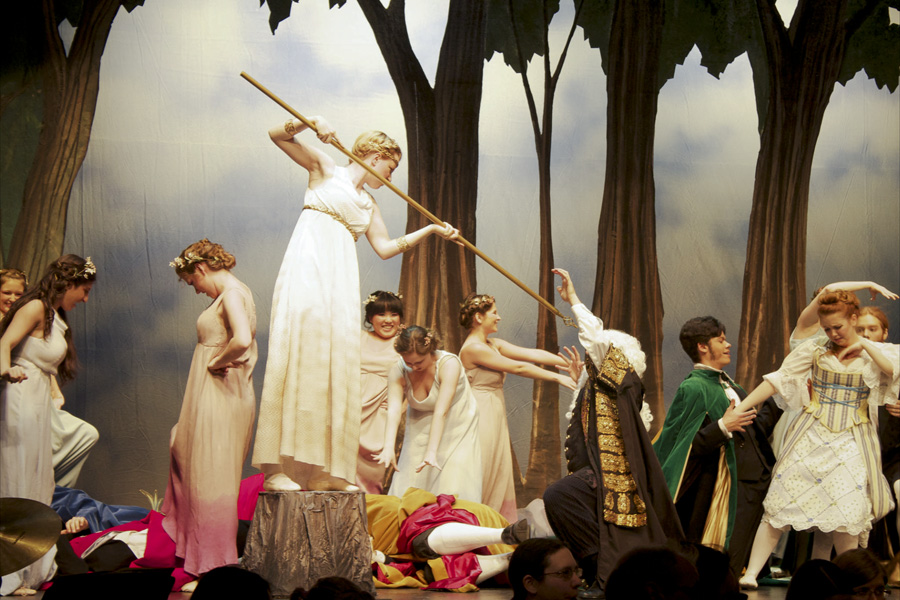
Phyllis seems discomforted by her popularity with the Lords. (Remi Lu / The McGill Tribune)
Phyllis seems discomforted by her popularity with the Lords.
(Remi Lu / The McGill Tribune)

With the (at last) creation of the UK Supreme Court in 2009, this critic maintains that the idea of a ‘useful Lord’ is best regarded as a flight of fancy, a magical creature of fairy dust and imagination. Iolanthe, the comic opera by Gilbert and Sullivan, does exactly that. Esteemed peers consort with fairy maidens, and by the end it is impossible to say which group is more absurd. The McGill Savoy Society’s production is delightful, acute, and assuredly accomplished, helping the sharp political commentary go down smoothly with the ambrosia of satire.

Though the aristocracy is a target of ridicule, Iolanthe is at its heart a story of love. Strephon, a lowly shepherd, must contend for the hand of Phyllis with the Lord Chancellor and several Lords of Parliament. An ostensibly unfair fight, Strephon is, in theory, assisted by his half-fairy heritage and his fairy mother, Iolanthe—though this causes significant confusion and turmoil in itself.

Under Emma McQueen’s direction, the impressive cast is notable for their excellent grasp of character. Performers aren’t simply waiting for their turn to speak, but fully take on their roles, frequently charming the audiences with subtle quirks that nevertheless do not distract. Volume is occasionally a problem, and the technical equipment which aims to remedy this appears to only have sporadic effectiveness. However, the actors are mostly able to compensate with clear and nuanced articulation.

As the Queen of the Fairies, Claire Rollans is a staggering presence on stage, one worthy of a true monarch. Rollans’ speech is mesmerizing, evincing both commanding power and soft allure, sometimes in the same sentence. Stefano Saykaly’s Lord Chancellor displays impressive comedic sensibilities, and while sometimes struggling with the challenging patter characteristic of Gilbert and Sullivan, possesses an otherwise radiant voice. The sprightly stepped Strephon, played by Scott Cope, easily wins hearts with his amiable and quirky demeanour.

(Remi Lu / The McGill Tribune)

Led by the bold conductorial gesticulations of music director David Matthew Brounley, Savoy’s orchestra is supremely accomplished, breathing life into Sullivan’s light and melodious score. Maria Mejia’s choreography is intricate, inventive, and often peculiar in the best of ways. Though Alan MacMillan’s lighting is curiously staid and static, Jean Claude Olivier’s set design features impressive paint detail, and successfully conveys the fairy-tale setting. Elizabeth Barter’s costumes range from the ornate robes of the Lord Chancellor to the perhaps-too-barren outfits of the fairies, but all are rightly rich in colour, with the cloaks of the Lords an outright sumptuous visual feast.

Through memorable music and healthy doses of humour, Savoy Society’s Iolanthe turns the often bitter pill of political debate into an immensely pleasurable experience.

The McGill Savoy Society’s production of Iolanthe runs Feb. 21 to 23 at Moyse Hall, 7:30 p.m. with an additional 2:00 p.m. matinee on Feb. 23. Student tickets $12.

a, Arts & Entertainment

Picks for the 2013 Oscar Winners

The Academy of Motion Picture Arts and Sciences has a reputation as tame, dust-covered fossils that shirk from innovation and gravitate towards the crowd-pleaser. This was true for the Best Picture winners of the last two years—both The Artist and The King’s Speech are fine, but not spectacular, eulogies for a golden age lost to time—and results are likely to be the same this season.

Still, if there is anything to be learned from Meryl Streep’s (Iron Lady) surprise win over Viola Davis (The Help) last year, it’s that there is no such thing as a sure-thing with the Oscar races. With that in mind, the Tribune tries its hand at some Oscar prognostications.

Best Actress

Will Win: Jennifer Lawrence (Silver Linings Playbook)

Could Win: Jessica Chastain (Zero Dark Thirty)

Should Win: Chastain or Emmanuelle Riva (Amour)

Lawrence has been praised for her role as a troubled nymphomaniac in David O. Russell’s self-consciously unorthodox rom-com. Chastain, however, is nipping at her heels, as the CIA operative who found Osama bin Laden—an understated performance that belies formidable talent. Riva seems unlikely to win, but her crushingly poignant portrayal of mortality is both terrifying and mesmerizing.

Best Actor

Will Win: Daniel Day-Lewis, Lincoln

Could Win: n/a

Should Win: Day-Lewis

Not many are daring enough to bet against Day-Lewis’ win at this point; even fewer are able to make a compelling case for another. Nominees are strong of course, particularly Joaquin Phoenix (The Master) and Hugh Jackman (Les Misérables). But Day-Lewis’ magnanimous portrayal of America’s 16th President is on a plane of virtuosity all of its own.

Best Supporting Actress

Will Win: Anne Hathaway (Les Misérables)

Could Win: n/a

Should Win: Hathaway

All the nominees have memorable moments in their respective films, such as Jacki Weaver’s “crabby snacks and homemades” from Silver Linings Playbook, Sally Field’s Mrs. Lincoln and her fierce tongue-lashings, and Amy Adams’ now-infamous bathroom handjob in The Master. But no moment is as memorable as Hathaway’s “I Dreamed a Dream,” a devastatingly raw swan song that leaves one reeling from its power.

Best Supporting Actor

Will Win: Tommy Lee Jones (Lincoln)

Could Win: Robert De Niro (Silver Linings Playbook)

Should Win: Lee Jones

Lee Jones and De Niro are more or less neck-and-neck at this point, though the former began as the early favourite, playing the delightfully scathing congressman Thaddeus Stevens. De Niro gives his best performance in years in Silver Linings Playbook—but is that really saying much? Sadly overlooked is Philip Seymour Hoffman (The Master), whose commanding performance would be a strong contender were it not for the juggernaut that is Lincoln.

Best Picture

Will Win: Argo

Could Win: Lincoln

Should Win: Zero Dark Thirty

Smart money was on Lincoln, Spielberg’s glowing tribute to the eponymous emancipator, until Argo—Ben Affleck’s white-washed but thrilling portrayal of Iranian history—began picking up key awards. The clash of these two historical dramas have sidelined Kathryn Bigelow’s Zero Dark Thirty, an accomplished and masterful telling of “history’s greatest manhunt” that is easily the strongest of this year’s bunch.

Best Director

Will Win: Steven Spielberg, Lincoln

Could Win: Ang Lee, Life of Pi

Should Win: Michael Haneke, Amour

Spielberg seems poised to add to previous wins for Schindler’s List (1993) and Saving Private Ryan (1998) with a third statuette come Sunday. Though unlikely, some have pondered whether the Academy might feel guilty for snubbing Lee’s Brokeback Mountain in 2005. The only true auteur of the nominees, however, is Haneke, whose Amour continues in his tradition of uncompromising, brutal portraits of human frailty.

The 85th Academy Awards will take place Sunday, Feb. 24, 7 p.m.

Best Original Screenplay: Zero Dark Thirty
Best Adapted Screenplay:
Argo
Best Animated Feature:
Wreck-It Ralph
Best Foreign Film:
Amour
Best Documentary Feature:
Searching for Sugar Man
Best Cinematography:
Life of Pi
Best Editing:
Argo
Best Score:
Life of Pi
Best Song:
Adele, “Skyfall”
Best Visual Effects:
Life of Pi
Best Sound Editing:
Life of Pi
Best Sound Mixing:
Life of Pi
Best Production Design:
Anna Karenina
Best Costume Design:
Anna Karenina
Best Makeup and Hairstyling:
The Hobbit
Best Animated Short:
Paperman
Best Live Action Short:
Curfew
Best Documentary Short:
Open Heart


Naturally, DNA stores all the information to create a multicellular organism from a single cell. (images-forbes)
a, Science & Technology

A sonnet stored in DNA would sound as sweet

DNA has an incredible capability to store information. Now, thanks to a simple cipher, DNA can be manipulated to act as a storage system for digital data.

The importance of archiving data holds significantly more relevance in today’s world, where information is generated at an increasing pace. From GDP economic trends to classical compositions like Shakespeare’s sonnets, there is a surplus of information that needs to be stored and preserved, and the list keeps growing every day.

However, there are two fundamental issues with archiving huge amounts of data: first, the sheer volume of information, and second, storing data in a format that will remain universal over long periods of time.

This is where DNA comes in. The idea of storing information in DNA struck scientists Ewan Birney and Nick Goldman of the European Bioinformatics Institute, over a few beers at a pub. They were discussing the issue of trying to cut down the costs associated with maintaining a vast archival unit of hard drives, which takes up a lot of space and electricity.

Nature has an easy answer to this problem. DNA stores information to create a multicellular organism from a single cell; it performs this task using a minimum amount of space, and in a manner that preserves the information in a universal format for long periods of time.

Computers store information using a binary number system, which encodes a series of 0’s and 1’s. DNA stores information in terms of nucleotide bases known as Adenine, Thymine, Cytosine, and Guanine—abbreviated A, T, C, and G respectively. Just as the combination of 0’s and 1’s leads to a myriad of images, games, sounds, text, and videos, the combination of the four bases A, C, T, and G leads to a set of instructions for the formation of every single cell in the body.

To store digital data in the bases of DNA, Birney and Goldman used a system that stored a byte (a sequence of eight 1’s or 0’s) as five DNA letters. To create an encoding pattern with zero error, they constructed strings of DNA letters that had no adjacent repeats. Every stream of data was encoded in exactly 117 letters, each with indexing information that would indicate where this stream belonged in the overall code.

Another advantage of DNA storage is that it avoids the problems caused by rapidly changing technology. Recall the Floppy Disk, once the most efficient portable storage media. If any important data were to be found stored on these disks today, it would essentially be lost.

On the other hand, DNA will always hold importance—even if the mechanisms to access information change. One could leave a vial with DNA in a time capsule, and 500 years later, it would still be readable and accessible by future generations.

A research team led by George Church and Sriram Kosuri from the Harvard Wyss Institute set a world record in data storage, by storing 700 terabytes (Tb) of information in a gram of DNA. To put that in perspective, one would need 151 kilos of three Tb hard disks to store the same amount of information. Essentially, they had smashed the previous information storage density record by over a thousand times.

Currently, the costs associated with DNA storage are estimated to be fairly high—$12,400 to write the storage system and $220 to read it—but these costs are falling significantly faster than those of other electronics. The benefits of this system, such as the single writing cost, drive the increase use of DNA storage systems.

This technology has one more interesting application: the DNA used to store data could very well be the DNA in your skin. Due to the short lifespan of skin cells, data stored within this DNA survives for only a short duration of time. This would allow secure transmission of sensitive information, with the assurance that it would be destroyed soon after the recipient had seen it.

Looking to the future, DNA may no longer play just a biological role in our lives. Soon it could be cheaper for companies to keep DNA archives, rather than a warehouse full of hard drives.

a, Science & Technology

Does chocolate make you smarter?

As it becomes increasingly difficult to find a seat at McLennan, it’s clear midterms are fully underway at McGill. Although these tests make up less of our grades than finals, many students will do whatever it takes to perform well. Tactics range from taking up residence in the library to therapeutic baking to provide nourishment—and stress relief—while studying. While we’ve heard plenty of tips to improve both our study habits and test scores, a 2012 paper in the New England Journal of Medicine suggests an interesting solution to boosting your GPA: chocolate.

youngster.com
youngster.com

The study investigated the link between cognitive ability and flavanols—a type of antioxidant present in foods such as chocolate, green tea, and red wine. Essentially, the researchers plotted chocolate consumption per country against the number of Nobel Prize Laureates produced by each in order to see if there was any correlation.

Surprisingly, the plot revealed a strong correlation of 0.79, with Sweden as the only anomaly. Take Sweden out of the picture, and the correlation improves to 0.86, suggesting a positive correlation between chocolate and intelligence.

“I attribute essentially all my success to the very large amount of chocolate that I consume,” joked American physicist Eric Cornell in an interview with Reuters, who shared the Nobel Prize in 2001. “I feel that milk chocolate makes you stupid. Now, dark chocolate is the way to go. It’s one thing if you want a medicine or chemistry Nobel Prize. But if you want a physics Nobel Prize, it pretty much has got to be dark chocolate.”

Although it’s a jest, Cornell makes a good point. The correlation between chocolate and Nobel Prize Laureates may be strong, but caution should be exercised before ordering Juliette & Chocolat’s entire dessert menu in the name of your grades.

The figures for chocolate consumption only came from two sources, Caobisco and Chocosuisse, and cover only four years of chocolate consumption. In comparison, the data for the Nobel Prize winners takes into account laureates from 1900 to 2011. This difference in time periods from which the data was taken is experimentally problematic.

While the correlation is interesting, it should be taken with a grain of salt. McGill chemistry professor Karine Auclair points out that countries who consume a large amount of chocolate also consume large amounts of milk, suggesting that it is a healthy and balanced diet that leads to improving cognitive abilities. Others attribute this correlation between chocolate and intelligence to socioeconomic factors. Scandinavian countries appear at the top of the graph, and are known to score high both on the Human Development Index (HDI) and in terms of per capita income. Likely higher chocolate consumption simply relates to greater affluence and an improved lifestyle.

It seems that while eating a few pounds of chocolate the night before an exam will do nothing more for your grades than induce  a sugar rush, leading a balanced lifestyle can in fact help improve your cognitive performance. This fact is not a mystery; with the stress of midterms over these next few weeks, it serves as a healthy reminder.

a, Science & Technology

Tiny, immortal jellyfish: Scientists discover immortality in pinky-nail-sized jellyfish

From the philosopher’s stone to Voldemort and his horcuxes, humans have long been fascinated with the concept of immortality. However, scientists have found that one pinky-nail-sized jellyfish species has the remarkable ability to live forever. 

Turritopsis nutricula, which originated in the Caribbean, is biologically immortal; its mortality rate doesn’t increase with age, although it remains vulnerable to death through injury.

These jellyfishs’ immortality makes them an apt invasive species. T. nutricula are transported in the ballasts of ships and  have been found in various corners of the world, including Spain, Florida, and Japan.

The secret to T. nutricula’s infinite life is a phenomenon called transdifferentiation. This is a process whereby sexually matured jellyfish revert back to their juvenile form through a conversion of their cell types. The embryonic stem cells of animals, including humans, are able to undergo a similar differentiation process during embryonic development and tissue repair. Pluripotent cells (starter cells that become other cell types) are turned into cells with specific functions by controlling which genes are on or off in that cell.  What is unique about T. nutricula, is that already differentiated cells (cells that have a particular function, like brain or cardiac cells), have the ability to differentiate again, especially in times of environmental stress.

Transdifferentiation can be thought of an ongoing Benjamin Button complex, in which these jellyfish revert from their old state back to a juvenile one. The sexually matured stage—with its bell shaped body (known as the umbrella) and tentacles—is the most commonly known of the jellyfish’s multi-stage lifecycle. In their juvenile stage, the polyp, jellyfish are fairly stationary and live in colonies attached to the sea floor. In the transdifferentiation process, the umbrella inverts, and the tentacles are reabsorbed. The jellyfish then attaches to a suitable substrate, and the cells undergo transdifferentiation to form a new polyp colony.

Along with being an enigma of the natural world, T. nutricula provides many opportunities for diverse human medical applications, such as organ reproduction and potential cures for cancer. Much like the jellyfish’s life span, the possibilities are endless.

Read the latest issue

Read the latest issue