

Latest News

Science & Technology

When feelings don’t care about the facts

The rise of the Information Age has enabled widespread public access to scientific research, but it has also disseminated a dazzling array of misinformation. Distinguishing fact from fiction during a pandemic can be difficult, particularly for the significant number of Canadians that struggle with literacy.

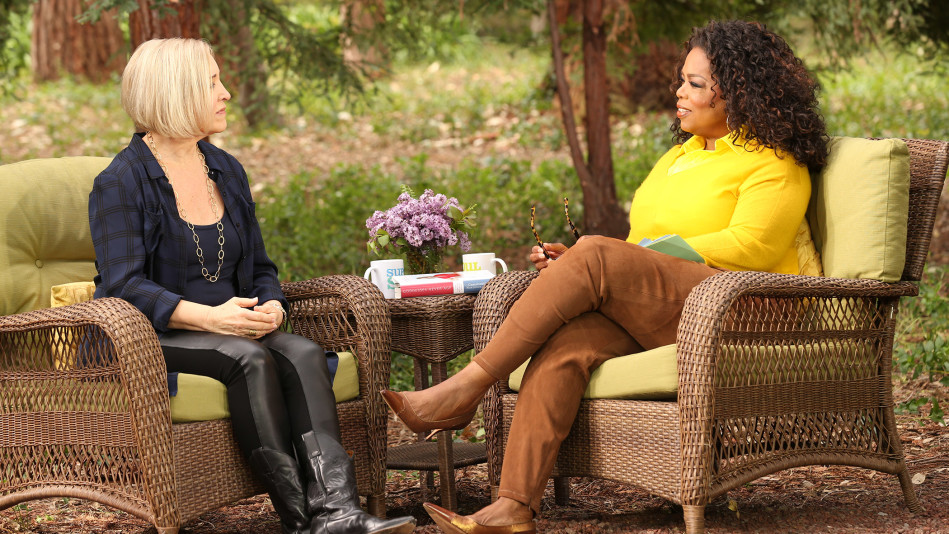
Dr. Christiane Northrup is one of many health-oriented online presences that has capitalized on social media’s wide reach. Despite a steadfast commitment to astrology and vaccine denialism, she has successfully leveraged her training as an obstetrician-gynecologist into a career focussed on women’s health spanning multiple decades. Her Instagram posts alternate between advertisements for her ebooks and short videos, during which she casually chats about her cats, fan mail, and harmful pandemic misinformation.

In a recent article for McGill’s Office for Science and Society, science communicator and M.Sc. Jonathan Jarry described how people tune out scientific experts in favour of influencers like Northrup.

“As science and technology become more and more complex, when we lose touch with it, it’s very easy for us to fall back to our intuitions, to believing things because they make us feel good, not because they are true,” Jarry said in an interview with The McGill Tribune.

When scientific information is poorly communicated, people tend to fall back on the assumptions they already hold, often confusing personal experiences and compelling falsehoods with proven facts. The human tendency towards irrationality is only furthered by modern media distrust and times of crises that decrease trust in public authority. 

Northrup’s platform was initially built on her bestseller Women’s Health, Women’s Bodies, which combines relatively accurate health information with more dubious mysticism. Her straightforward advice about dealing with hot flashes and the proven issues with mammograms is easily accessible to women with doubts about the medical system. 

However, Northrup is no stranger to dangerously inaccurate health information. Her recent content resolutely ignores reality, actively discouraging people from getting vaccinated, spreading unfounded claims about the danger of the COVID-19 vaccine, and going so far as to brazenly deny the reality of the COVID-19 pandemic. 

Northrup has carefully crafted her persona to target female audiences, focussing on keeping her audience engaged rather than providing factual insight or analysis. The impressive social media following that she has garnered shows that health beliefs are often grounded in emotion rather than reason. 

“Feelings don’t care about facts,” Jarry said. “If somebody’s irrational beliefs are based in emotions, in values, no amount of saying [that] the science is true whether you believe in it or not […] will really make a difference if you’re trying to […] change their mind about something.” 

Although Northrup’s talk of intuition and vitamin supplements may seem relatively inconsequential, other messages she spreads have the potential to cause significant harm. Efficient and widespread vaccination against COVID-19 is essential to halting the spread of the disease. Misinformation on social media can have damaging effects on trust in health institutions and can affect people’s likelihood of getting the vaccine. 

Scientists and policymakers have a duty towards society to disseminate science in an accurate and accessible way. Developing a vaccine is important, but educating people, reducing transmission, and preparing our society for future risks are also crucial to maintaining public health. Accomplishing these goals cannot happen without establishing reliable communication and public trust.

“The first thing that I think we should do is to listen to these concerns, because by listening to them, we can better understand where this person is coming from,” Jarry said. “It also shows that we care about their anxieties and their fears, and this is how you build a relationship of trust.” 

Among the proliferation of untrustworthy sources, there is a growing movement of science communicators striving to deliver accessible and accurate health information. Through online initiatives such as ScienceUpFirst, they aim to reclaim the social media narrative surrounding COVID-19 and to help people understand scientific information. Effective science education is fundamental to public health, and it can only be achieved through the dedication and compassion of scientists and educators.

Science & Technology

McGill research study finds fisheries may save humans after nuclear war

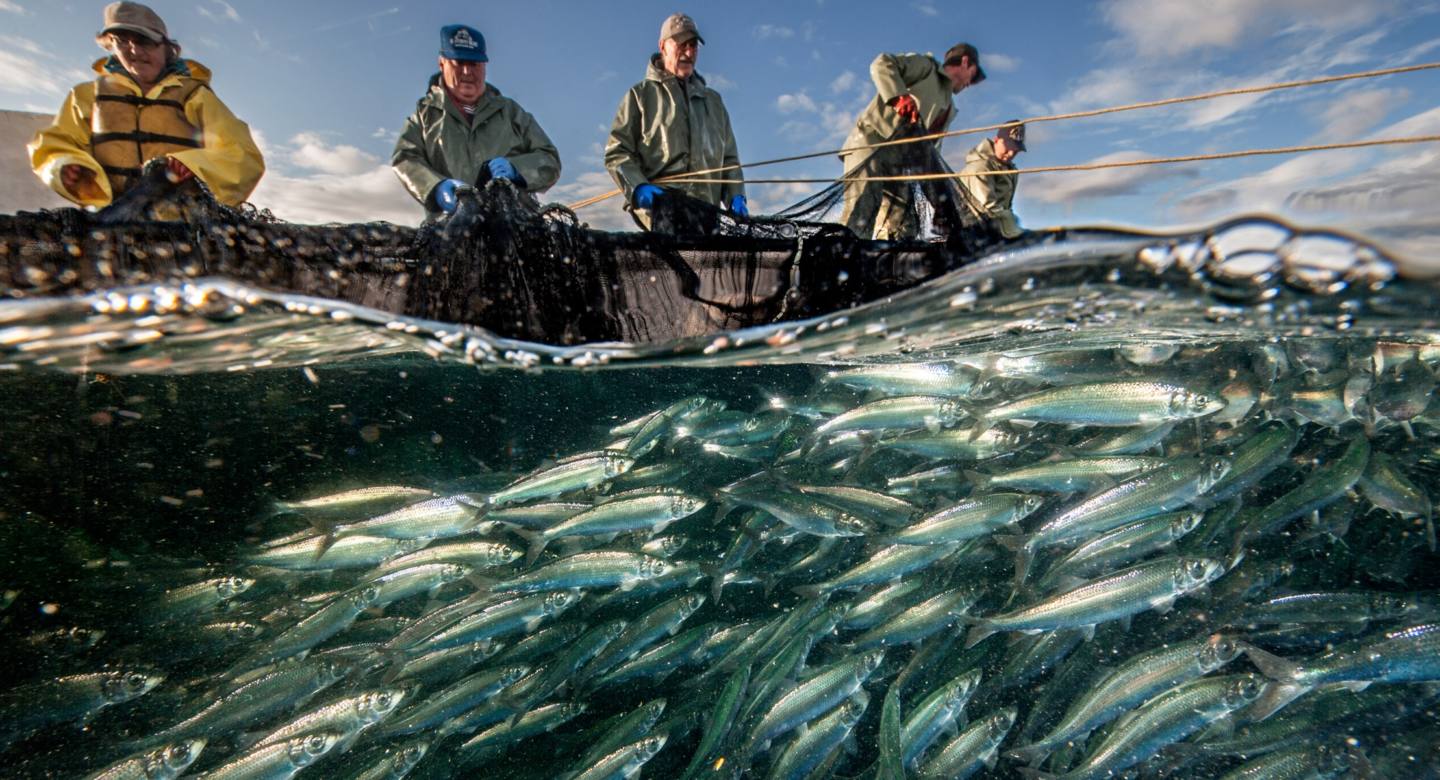
When thinking about the aftermath of a nuclear war, fisheries are not the first things that come to mind. However, in a recent study published in Proceedings of the National Academy of Science (PNAS), a team of McGill researchers revealed that marine fishery supplies could be vital to sustaining human life by providing food security after a nuclear war or other abrupt climatic shocks. 

Among other catastrophic effects, such as immediate destruction of cities and firestorms, nuclear war would result in the release of soot into the atmosphere, blocking out sunlight and leading to a plunge in atmospheric temperature. Consequently, there would be an unprecedented reduction in agricultural production, posing a risk to worldwide food security. 

“I think it’s very important to study what the potential effects of a nuclear war could be so that we are well informed when we, or our decision-makers, decide rules for whether or not we should have these weapons,” Kim Scherrer, a PhD student in McGill’s Department of Earth and Planetary Sciences, said in an interview with The McGill Tribune.

Alongside Scherrer, a team of researchers evaluated the effects of nuclear war on the worldwide food system through six “war scenarios,” modelling how fishing worldwide would change depending on rapidly increased fish demand or decreased ability to fish. These were done through the state-of-the-art Community Earth System Model. Each scenario simulated a war-like event, followed by the socioeconomic response of the fishing industry, pertaining to the simultaneous fishing demands. 

Based on existing global tensions, the study simulated five conflicts between India and Pakistan with increasing quantities of soot release, and one substantially larger U.S.-Russia war injecting 150 teragrams of soot into the atmosphere. The industry responses included a range of fishing demands, from business-as-usual, or no change, as a control scenario to very large increases or complete collapse. 

The main findings from these climate models showed that well-managed fisheries are key to maintaining fish and seafood as stable food sources. In practice, this means implementing strict quotas on fish catches. While fisheries may appear as a short-term solution, they can be instrumental to global nutrition in the immediate years following a nuclear war, especially as the climate restabilizes itself in the following five to 15 years.

“It’s a good idea to monitor gear types and details of the fishing to prevent destructive practices, but the most important thing is simply to fish less,” Eric Galbraith, a professor at McGill’s Department of Earth and Planetary Sciences, wrote in an email to the Tribune. “This ends up giving us more fish to eat, [being] more profitable, and producing [fewer] emissions.” 

According to Scherrer, while the research revolved around the potential outbreak of a nuclear war, the findings are equally applicable to other possible climatic shocks, such as volcanic eruptions. The results are also relevant to more subtle changes, such as unmitigated climate change, which has already started to put pressure on the fishing industry. 

“I think that’s a really important finding, that being prepared for the worst should be the same as just avoiding overfishing and maintaining abundant fish stocks, so it’s not like [we] have to do something completely different,” Scherrer said. 

The study found that the U.S.-Russia war scenario and business-as-usual fishing would be closest in predicted magnitude to the end-of-century fishing declines under unmitigated climate change. 

In the future, Scherrer hopes to uncover the links between other food sources that might be important in a climate disaster resulting in a food emergency. In particular, she hopes to gain a better understanding of the relationships between the farmed crops and the animals that we eat.

“We can’t run our lives or societies thinking that nuclear war would happen tomorrow,” Scherrer said. “The urgent thing that we find in the study is that when it comes to fisheries, you don’t have to be doing something very different to be prepared.”

Know Your Athlete, Sports

Know your athlete: Dylan Havelock

As co-president of the McGill Men’s Rugby Team and a Dean’s Honour List scholar, Dylan Havelock, U4 Engineering, is the true embodiment of a student athlete. The fifth-year winger, who is passionate about both rugby and engineering, has strived for excellence both on the pitch and in the classroom.

“I think when you genuinely enjoy what you’re learning or doing, it’s easy to throw yourself in that and get invested in it,” Havelock said in an interview with The McGill Tribune.

Havelock first played rugby in his freshman year of high school in Ottawa, Ontario. Since then, he has succeeded in the sport in more ways than one. 

He received a $2,000 academic excellence award at the annual Quebec Foundation for Athletics Excellence gala in December 2020. Havelock was also a recipient of the 2019 Jean Béliveau Athletic Award, which recognized his academic achievements and leadership in his community. As a former hockey player, winning this award was particularly special for him. 

“I’m a huge NHL fan, so to win the Jean Béliveau Award, which is in the name of a legendary Montreal Canadiens player, was a really big honour,” Havelock said. 

As he looks back on his university rugby career, Havelock reminisces on the good times he has had with his team. His favourite memory was when his McGill team beat Harvard in the 2019 Covo Cup

“We really went all out for it in 2019. We played at Molson Stadium and there were nearly 1,600 people out for the game,” Havelock said. “It was a really special moment to have such a great win against a school like Harvard, and in front of a huge crowd too.”

Havelock attributes his accomplishments to hard work, discipline, and the supportive environment of the rugby team. 

“Our coaches are so supportive of us,” Havelock said. “We really try to focus on having a well-rounded player, not just someone who can perform on the field [….] Our players are still focussed on school and can keep up with that while still being able to make time for rugby.” 

Although he is invested in his studies and has achieved exceptional grades, Havelock emphasizes the importance of taking advantage of the full university experience. He believes that university is not just about being a successful student, but also finding interests outside of the classroom, being involved, and forming meaningful relationships. 

“The friends and the connections I’ve made from fellow players, with my coaches, with rugby alumni, that’s what’s going to last me long after university is done,” Havelock said. 

Although Havelock fostered strong friendships and experienced many victories as a part of McGill Rugby, there were also disappointments. The team suffered a tough loss in the 2019-20 RSEQ league finals, and was determined to have their chance at redemption in the 2020-21 season. With the cancellation of the season due to COVID-19, however, their plans changed. 

Instead, the team doubled down on community involvement, channeling their energy into fundraising for important causes. Havelock, who plays a big role in community work as the team co-president, proudly reported that they raised over $5,000 for the CHU Sainte-Justine Hospital and $7,150 for Movember in two back-to-back virtual fundraisers. 

“Doing some of these charity events and trying to be active in the community still allows us to feel connected, even though we don’t get to necessarily see each other in person,” Havelock said. 

Graduating during a pandemic is definitely not what Havelock hoped for, but he looks forward to starting his new career as a software engineer at RBC and plans to stay involved with rugby in the future. 

“It’s definitely bittersweet, especially on these terms since it’s not a regular graduation,” Havelock said. “There will be good things ahead too, but I’ll definitely always look back fondly at my time at McGill.” 

Havelock, who has certainly made the best of his time at McGill, expresses his encouragement to younger athletes. 

“To any first-year player, it may feel tough trying to balance everything, but it’s honestly all worth it in the end,” Havelock said. “There’s definitely going to be tough times at university [and] it’s definitely very demanding, but hang in there.”

Off the Board, Opinion

Retracing my steps

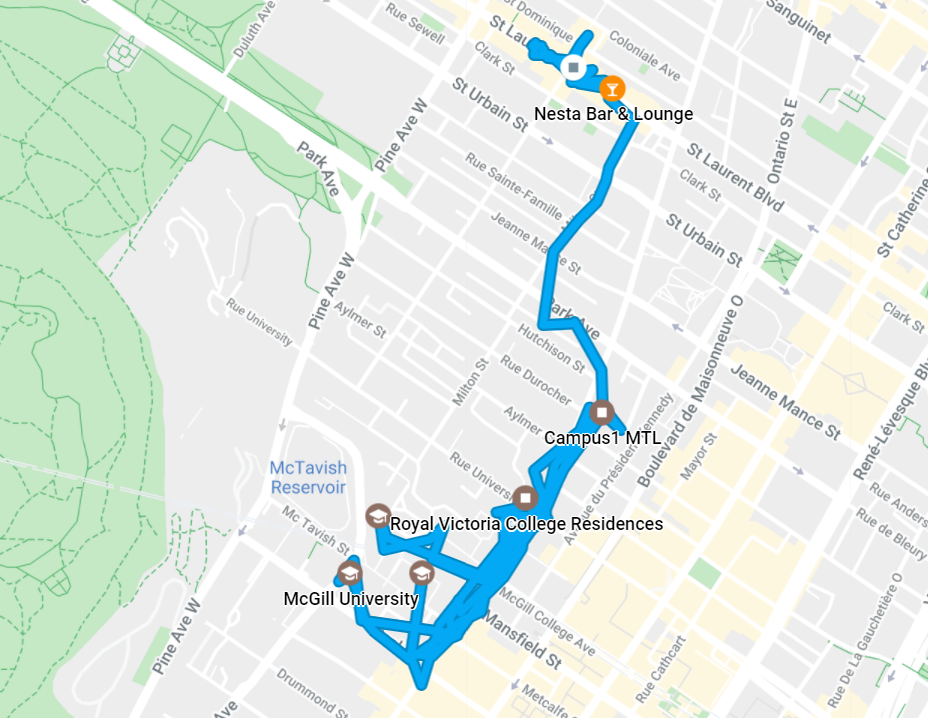
If you have been online in January, you have probably seen a Spotify Wrapped against your will. Candy-coloured and set to a nondescript background beat, the Wrapped roundup satisfies our collective desire for life stats while spawning countless imitations. One of these, as I discovered recently while knee-deep in my inbox, is from the unsettling Google Maps Timeline, which has been faithfully tracing my every move since 2015. As the daughter of an internet security devotee, I was initially horrified to realize that I had failed to safeguard my location data for the better part of a decade. Then, I was fascinated. 

Holed up in my apartment over a grim, drizzly winter, I ached for escapism and found it in hour-by-hour logs of my own pre-pandemic life. Through birdseye maps of my daily travels, I watched high school me move in a circuit between home, school, and the public library—still my sixth most visited place, the timeline tells me. After moving to Montreal for university, I watched myself explore the city before falling into a rhythm. Every mishap is chronicled, from mediocre dates to only lasting an hour into what was meant to be a marathon library session. As my past converged on my present, my map stretched across the ocean as I settled myself in a new city for exchange, and then within months I found myself back in my hometown, motionless. 

Reliving the past, whether by watching yourself grow up via Google Maps surveillance, paging through old diaries, or revisiting text threads, invites both regret and nostalgia. Amid a stagnant year, I yearned for the freedom found in my old maps. Every night spent in a dimly lit crowd and afternoon in a busy coffee shop took on an outsized emotional weight. The places you go, as Google Maps shows in its slick commercials, are of profound importance.

Despite the lessons within, seeing my everyday movements broken down by hours felt like an encroachment by the digital lurker in my pocket. The timeline falls somewhere between the gamified personal data favoured by fans of the quantified self and a startlingly transparent view of what information we as internet citizens willingly exchange for convenient, personalized services. Gen-Z is notoriously lax about online privacy: Among digital natives, it’s taken almost for granted that personal data is being used to inform the algorithms that deliver our content. Tacit acceptance of compromised privacy is often considered necessary to benefit from new technology. 

On the data-driven web, presentations of user data like the timeline obscure the very real security concessions that users make as they traverse the internet. In 2019, I went to a talk by theorist Neema Githere on data healing as a response to data trauma, the compounded weight of being counted and sorted by impersonal yet prying technologies. This concept raises a difficult question: As digital natives who recognize the flaws in our internet immersion, from algorithmic racism to political data mining, how might we break free—especially when there’s a sleekly designed reason to stay?  

New counter-mapping projects like Montreal’s own Queering the Map both disrupt the mapping status quo and satisfy my fascination with narrative location data. The community-generated map invites users to drop pins on their own experiences, capturing the spatiality of 2SLGBTQIA+ life. Inherent in counter-mapping projects is an optimistic view of data as powerfully personal and integral to the stories of our lives, reinforced by the invitation for users to contribute to a collective geography.  

Obeying the luddite voice of reason my mother embedded in my brain, I finally switched off location tracking and put an end to the everchanging map that was six years in the making. My old map remains, though—partially because I cannot figure out how to scrub it from the web and partially because I like to return to it. Perhaps the Google powers that be have me figured out, but the chance to retrace my steps is difficult to pass up.

Commentary, Opinion

Don’t worry about your weight during a pandemic

At the start of last year, I decided to better myself. I resolved to study more, interact more with student organizations, and most importantly, lose weight. After all, during the first year of university, I had gained a significant amount of weight, as many students do. But while I have succeeded in my first two goals, weight loss has admittedly been a failure. Between the social isolation caused by COVID-19 and my bad habit of stress-eating, I think I have come to understand how Sisyphus felt, struggling to push the boulder up the mountain. In retrospect, the task I gave myself looks somewhat absurd now, as COVID-19 is simultaneously a stressor and a cap on outdoor exercise. Still, from WebMD to The New York Times, multiple sites are strangely focussed on tackling weight loss during this pandemic. This emphasis on weight during an unprecedented point in global history is fundamentally misguided and shows how much society overemphasizes weight as an aspect of health. 

Society has not always prioritized weight as a determination of health. The body mass index (BMI), a common measurement that determines obesity using a table of height and weight, is a relatively modern concept. The creator of said index, Belgian mathematician and statistician Adolphe Quetelet, developed it in the mid-1800s simply as a formula to link weight and height. Moreover, it was not popularized until the early 1970s, when it was proposed as the best formula relating those two values.

There are a plethora of issues associated with BMI. Because BMI as a model came from data taken from Belgians, it does not apply to all people equally and is Eurocentric in nature. The original index misrepresents most ethnicities. Furthermore, it is most useful when studying populations as opposed to individuals, as it does not distinguish between fat and muscle. Despite this, many doctors still use BMI as a measure of individual obesity. More disturbingly, the vast majority of funding for obesity research goes towards genetic studies, which echo eugenics instead of focussing efforts on human behaviour.

Society overemphasizes weight’s role in health culturally as well. The fat acceptance and body positivity movement has some reasonable arguments regarding how weight is viewed in the West. Advocates believe that the perception that overweight people are laughingstocks or even pitiable has led to a social stigma against them, one that can lead to psychological problems such as eating disorders (EDs) as a result of self-loathing. A markedly feminist critique also calls out diet culture’s role on Western women, which idealizes a Eurocentric, perfect body that is not attainable for most. Though not without its critics, who view it as promoting a dangerous lifestyle choice, the movement brings to light several problems with how Western society regards weight and weight loss. 

For example, while ED rates have increased in non-Western, developed countries in recent years, Western countries still have higher rates overall. Likewise, a comparison of EDs along gendered lines shows that EDs are far more prevalent in women, indicating that the cultural link is quite possibly present. Thus, while it is fair to criticize a small niche of the body positivity movement if they seek to normalize obesity due to the health problems that can accompany it, it is unfair to dismiss all of the points they wish to make.

While focussing on weight loss, as in my case, is nothing to be ashamed of, there is also nothing wrong or shameful about your body changing during what is sure to be an extremely trying period in the lives of many. In a time of great stress, there is something to be said for taking a step back and being more lenient on oneself. I, for one, am happy to stop rolling the boulder for now in order to wait for the burden to shrink to a more manageable size. 

Editorial, Opinion

Residence exclusions highlight McGill’s negligence

On Jan. 25, between 15 and 20 students were temporarily excluded from McGill residences due to alleged violations of COVID-19 residence safety protocols. They were given less than 24 hours notice and were stripped of their meal plans and student IDs, leaving them without access to McGill buildings, including cafeterias. The administration justified its actions by referencing a change in the residence handbook which eliminated the three-strike policy that had previously been in effect until Jan. 13. In excluding its student tenants, the university sent a message to the McGill community: First-year students are nothing more than a source of income to be managed as efficiently as possible. 

The past several months have seen the worst of the pandemic thus far in Quebec. Although red zone restrictions have been in place since Sept. 28, several new measures were implemented in December and January, including the closure of non-essential businesses and, most notably, a curfew between the hours of 8 p.m. and 5 a.m. To exclude students now, without allowing them time to find alternative living arrangements, is morally reprehensible. Merely being outside in the evening can lead to police intervention and severe fines—not to mention that January is one of the coldest months of the year in Montreal. Rather than taking concrete actions to curb the spread of COVID-19, this approach only allows McGill to disregard the systemic problems within their residences and leave students to fend for themselves. 

Students have been criticizing the Residence Life guidelines since the beginning of the 2020-2021 academic year. McGill Student Housing and Hospitality Services (SHHS) initially instituted a three-strike system to limit unsafe social gatherings to curb the spread of COVID-19 in residences. However, many floor fellows have alleged that beyond mask mandates in common areas, rules were few and far between and, above all, poorly enforced. Gatherings and small parties in residences continued with minimal consequences and have now resulted in over 40 cases of COVID-19 in Royal Victoria College residence alone. 

To an extent, these violations are to be expected. Students often elect to live in residence in their first year to make friends and experience the social aspects of university. Once there, immediately surrounded by other people and subject to peer pressure, it was inevitable that some would ignore guidelines. Thus, in opening residences—a move almost surely driven by financial incentives—McGill chose to enable risky behaviour. This decision should have only been made with sufficient planning and resources. For example, McGill could improve its system to allow students to isolate should they have symptoms and more clearly define the consequences for violating public health measures. 

The university’s negligence has also put floor fellows at risk. Some have reported a lack of proper training, personal protective equipment, and adequate support from their employers. Because their jobs require them to interact with students face-to-face, it is crucial that SHHS properly equip them to simultaneously enforce safety measures and protect themselves. Students must support the work of the Association of McGill University Support Employees (AMUSE), which has been working to defend the labour rights of its floor fellows.  

All of this said, McGill’s poor decisions do not justify or excuse some students’ unsafe behaviour. Ignoring COVID-19 safety protocols exemplifies a clear lack of respect for one’s peers and the broader Montreal community. There should undoubtedly be punishments for those who place their own enjoyment over others’ safety, which may include fines issued by law enforcement. But excluding students on short notice during a pandemic does nothing to remedy the situation and ultimately puts students at even greater risk.

The pandemic has posed unprecedented challenges that even large institutions such as McGill were unprepared to overcome. But 10 months since the onset of the pandemic, there is no longer any excuse for such irresponsible management of the situation. 

Science & Technology

How precision medicine and artificial intelligence can reshape cancer care

Cancer treatment is one of the most intricate challenges of contemporary medicine. One complication that often arises is the trial and error prescription of drugs that are often ineffective against a given type of tumour or for a particular patient. Moreover, these treatments often produce exhausting side effects

The ability to identify the type of tumour and develop targeted treatment unique to each patient can dramatically increase both their survival rate and quality of life. This approach to treating patients based on individual characteristics is called precision medicine

A recent initiative by the Research Institute of the McGill University Health Centre (RI-MUHC) and MEDTEQ, a major Canadian medical technology organization, aims to integrate current treatment methods like immunotherapy and chemotherapy, precision medicine principles, and artificial intelligence to achieve a personalized approach to cancer treatment. 

“Cancers of all types are heterogeneous,” Dr. Peter Metrakos, head of the Cancer Research Program at the RI-MUHC, said in an interview with The McGill Tribune. “Every tumour [has] a unique set of mutations and a unique set of drivers. If we want to be successful, we are going to have to be able to stratify them and uniquely target them.” 

To achieve this, researchers are looking for biomarkers in patients’ blood that are linked to specific types of tumours. Cancer cells release extracellular vesicles into the bloodstream that contain proteins and genetic material such as DNA and RNA. Examining the content of these vesicles can indicate tumour identity and help doctors develop targeted treatment plans. 

However, once the components of these vesicles are extracted from the blood sample and their protein and genetic content is sequenced, a significant challenge arises. Protein, DNA, and RNA sequences, in addition to a patient’s medical history, constitute a tremendous amount of data to be analyzed. No scientist presented with this amount of information could detect patterns, but a computer can. This is where developments in artificial intelligence come into play. 

“The algorithm sees trends and is able to call them out,” Dr. Anthoula Lazaris, a scientist at the RI-MUHC who co-leads the project, said in an interview with The McGill Tribune

My Intelligent Machines (MIMs), a Montreal-based leader in artificial intelligence, plans to use machine learning algorithms to perform a high-level analysis of protein and genetic sequences combined with clinical information. This method may uncover links between specific tumour types and biochemical signatures in the blood. Then, CellCarta, a company specializing in biomarker development, will develop tools to identify the presence of these signatures from a simple liquid biopsy taken from the patient. 

This collaborative research initiative could transform cancer care by reducing precious diagnostic time and ensuring more targeted treatment.

“The patient walks into the clinic [where] we take a blood sample, run an assay, find a signature and identify the unique features of the tumour,” said Lazaris. “Combined with the patient’s clinical profile, [we use this information to] tailor the treatment accordingly,” Lazaris said. 

It would seem the current process of trying different drugs and readjusting prescriptions based on the outcomes will soon become obsolete. Doctors will be able to better identify the most effective treatments based on signatures identified in the patient’s blood, increasing the chance of successful treatment and making cancer care less debilitating for the patient.

Metrakos explained that the findings of their study represent an important milestone towards a major shift in cancer treatment strategy. 

“What we should go towards is a tumour-agnostic approach, which means that you don’t care where the tumour comes from,” Metrakos said. “You look at its mutations, you look at its drivers, you look at its protein makeup, and you target that, rather than where it comes from.”

Art, Arts & Entertainment, Film and TV

Caroline Monnet welcomed as McGill’s first Indigenous Artist in Residence

On Jan. 28, artist Caroline Monnet presented a virtual Artist Talk as McGill’s first Artist in Residence. Co-organized by the department of Art History and Communications Studies (AHCS) and the Indigenous Studies and Community Engagement Initiative (ISCEI), the event marked not only the beginning of Monnet’s residency, but also a momentous step towards including Indigenous voices in the university’s academic context and community. 

In conversation, Monnet is friendly and humble. In the art industry, she is an incredible, almost intimidating force to be reckoned with, boasting numerous accolades, residencies, and exhibitions—both local and international. Part Algonquin and part French, the visual artist and filmmaker largely focusses on the Indigenous experience in her artwork: Monnet edifies audiences on historical and contemporary Indigenous issues and reflects on her own lived experiences with biculturalism. One of her goals as an artist, Monnet suggests, is to examine society, and highlight what she sees.

“I see artists a little bit like sociologists, because our role is to respond to the world around us,” Monnet said.

With nearly 100 people in attendance, Monnet discussed her inspiration and motivation for her work, and walked the Zoom attendees through some of her films and visual artwork. She began with a viewing of Ikwé (2009), her first officially released film. Translating to “woman” in Cree, Ikwé is a personal reflection on the importance of connection to one’s past, showing interspersed images of Monnet and of a moon, representative of Monnet’s eldest grandmother. Monnet explained her interest in the moon’s control over the tides of bodies of water, and how it affects environments and migration patterns. 

“I was interested in how we physically shape and impact our environment and how [it] influences the people that we are,” Monnet said, referencing the motif of both physicality and metaphor that is so often present in her work.

A skilled multidisciplinary artist, Monnet’s work extends beyond film. Like ships in the night—her art installation that features video, concrete, copper, and a triptych of photographs—details a 22-day journey across the Atlantic that Monnet took in 2012, in which she left a Dutch port on a steel-carrying cargo ship and traveled to Montreal. Monnet documented her journey with a video camera, examining the emotions of fear and serenity as she traveled, while also noting the Atlantic Ocean as a medium for colonial trade.

“I wanted to challenge colonial organization of land, body, and time by exploring how communication and the cycle of the moon and tide can actually bridge physical and psychological divides,” Monnet said.

In an interview with The McGill Tribune, Monnet spoke on her new position as Indigenous Artist in Residence, noting the importance of artists and Indigenous voices in academia.

“I think institutions like McGill are starting to see the role they can play in giving more space to Indigenous students and Indigenous representation within their institution,” Monnet said. “ I believe this type of initiative can be a transformative experience, expanding knowledge, nurturing critical thinking and inspiring new ideas, creativity and innovation. It is surprising that it took this long, until 2021, to have such initiatives, but it’s better late than never.” 

Despite the virtual nature of her position at the moment, Monnet hopes to actively engage with the McGill community. 

“I’m hoping to exchange as much as possible with faculty and students [and] to be able to share as much as possible, to be available for students or anyone that wants to talk to me or learn more about my practice,” Monnet said. “I’m starting to see a few people reaching out and wanting to chat about art or Indigenous issues and I just think that’s what’s important right now, [to] have conversations.” 

While also working on her first feature film, Monnet has an upcoming exhibition that will be presented at the Montreal Museum of Fine Arts in April 2021. Office hours can be found here.

Commentary, Opinion

Finding fulfillment beyond the podium

The show makeup plastered on the faces of figure skaters often hides more than just cosmetic imperfections. While figure skating is frequently associated with elegance and agility, the world of competitive skating can be just as harmful as movies like I, Tonya make it out to be. Over the course of my nine years as a skater, the ongoing pressure to work harder, look better, and finish stronger turned my love for the sport into a complicated “love-hate” relationship. It was not until this past week, however, when I laced up my skates for the first time in over a year in Montreal’s iconic Parc La Fontaine, that I realized just how many of these negative feelings were towards the environment in which I skated rather than the sport itself. Although the world of competitive figure skating must reduce the pressure it places on its athletes, prioritizing recreation and enjoyment requires a greater cultural shift beyond the realm of sports, and starts at an individual level. 

Despite my love for skating, the constant pressure and intense commitment pushed me to retire from the sport fairly early. I had hoped that hanging up my skates would also eliminate my propensity for pushing aside other interests to match my achievements and physique to those of the athletes around me, but this was not the case. My final curtsy on the ice did not signal a farewell to the “no pain, no gain” mindset. After coming to McGill, I quickly realized that the self-induced pressure was not a product of the figure skating environment alone: The figure skating culture, which led me to believe that pressure and intensity were necessary to achieve success and fulfillment, dominates academia as well.

It would be wrong to say that figure skating is a toxic sport in its entirety. The hours I spent training both on and off the ice taught me valuable time management and social skills while fostering my ongoing love for fitness and sports. Nevertheless, the constant pressure to maintain a specific weight and skill level, which intensified with each medal I earned, is a product of the sport’s tendency to prioritize skill and athletic ability over mental health. By conditioning skaters to believe that success in the sport can only be achieved at the expense of their other hobbies and overall well-being, figure skating contributes to the notion that pursuing something for the sake of sheer enjoyment is pointless and a hindrance to personal achievement. 

More professional skaters are shedding light on the harmful dynamics of the sport, which have been glossed over by the idea that specific body standards and rigorous training schedules are necessary for maximizing performance. However, prioritizing unattainable standards over personal contentment goes beyond the walls of the rink, and it cannot be combated by the testimonies of celebrity skaters alone. 

Focussing on recreation and enjoyment does not mean throwing away the dedication that characterizes both figure skaters and McGill students alike. Similar to landing a new jump, the process of earning a degree from a prestigious university demands grit and determination. Yet, too often, students think they must push the courses and extracurricular activities that actually spark their interests to the academic backburner for the sake of getting As on their transcripts. Students should realize that not everything worthwhile and fulfilling needs to be accompanied by stress, pressure, and unwavering focus. Sometimes, pursuing something for the sake of pleasure is just as crucial to personal success as coming out on top.

Instigating a widespread cultural shift, both within and beyond the skating community, is unlikely to happen overnight. In the meantime, athletes and students should work to protect their love for various interests and hobbies from environments prone to fostering intense competition. For me, this meant dusting off my skates and stepping onto a frozen pond to rediscover my love for the ice.

Arts & Entertainment, Film and TV

‘Forbidden’ fights for intersectional justice

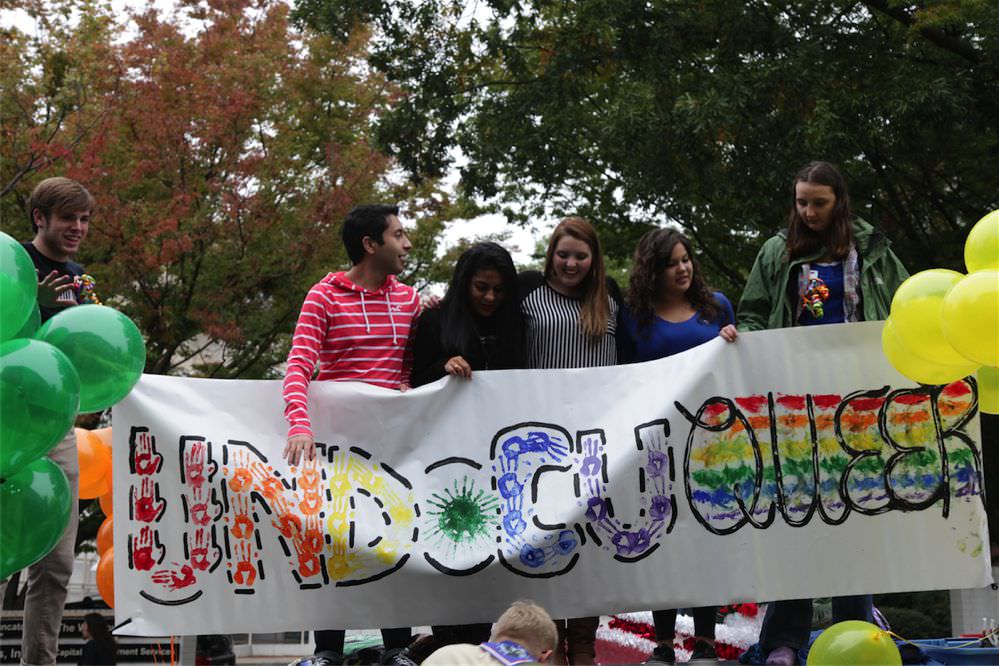
On Jan. 27, the Union for Gender Empowerment (UGE) at McGill hosted a virtual screening of the documentary Forbidden: Undocumented and Queer in Rural America, which follows Moises Serrano, a young, undocumented, gay man. Directed by Tiffany Rhynard, Forbidden’s 88 minutes immerse viewers in Serrano’s life and his grapple with the various socio-political tensions underlying his identity. Released on July 12, 2016 and screened one week after President Joe Biden’s inauguration, the film is a historical marker of the impact of recent discriminatory legislation in the United States.

The film opens with the provoking cries from a familiar face. He rallies the crowd, persuades them, and calls for a solution to a shared “issue.” His audience cheers, enthralled with the seemingly new possibilities. The familiar face was then-candidate and now-former President Donald Trump, uniting his supporters around building a wall at the Mexico-U.S. border. The frame then shifts to a large group of undocumented immigrants, Serrano among them, at a pro-immigration demonstration in Greensboro, North Carolina, where a pastor recalls a main tenet in the Bible: Treat others right. One minute into the movie, the audience witnesses the uneven war where one side wants “their” country “back” while the other side wants freedom and humanity. Rhynard’s opening draws battle lines between politics and reality, and in continuing to mix major political decisions with Serrano’s impassioned speeches and snippets from his life, she situates Serrano and others’ stories into a broader context.

The son of Mexican, undocumented immigrants, Serrano grew up in Yadkinville, North Carolina, a rural farming town an hour outside of Charlotte. Despite its diversification as part of the “New South,” North Carolina has been a bastion of cultural conservatism, recently under scrutiny for the now semi-repealed 2016 Bathroom Bill. At the height of the conservative mid-2000s, Serrano was in high school, hiding the fact that he was gay and undocumented. Yadkinville was especially hostile, with some townspeople connected to the Klu Klux Klan, often staking out white crosses on porches. The camera rolls over the open lands, sprawling and without trees, prompting the question—where can minorities hide? But, as immigration attorneys relay details about legislation, the second question is—why should they have to hide in the first place?

The film follows Serrano’s life up until the 2016 election. He starts a relationship with Brandon, a kind-hearted guy from town. Serrano’s activism extends to sit-ins, speeches at council meetings, and openly embracing his identity. After graduating from high school, he works to apply to university. 

The audience grows up with Serrano as he hardens in the face of political injustices and its discontents. In recalling a meeting with Congresswoman Virginia Foxx, Serrano informs the audience of her repeated use of the slur “illegals.”

“She said, ‘I don’t support immigration reform, but I do support you personally,’” Serrano said, questioning whether that would make any difference.

The most gripping moments of the documentary occur when Serrano takes the camera into his own hands: In one powerful scene, he videotapes his reaction upon learning of the legalization of same-sex marriage in the U.S. 

On the way, Serrano and other undocumented immigrants face the 2007 Real ID Act, the threat of mass deportations by the Bush and Obama administrations, and the introduction of the Deferred Action for Childhood Arrivals program. The pathway to citizenship for undocumented immigrants was—and still is—bleak and lengthy.

As the documentary ends, viewers are left empathizing with Serrano’s and others’ stories while watching the overarching reach of government first-hand. Four years of increased alienation due to Trump’s enabling of xenophobia and bigotry shows how much more progress needs to be made for queer and undocumented immigrants. With a new administration that promised to restore the country’s soul, the film asks its audience to hold its governments accountable, to push for humanity alongside concrete changes, and for inclusivity in the American dream.

Read the latest issue

Read the latest issue