

Latest News

McGill, News

Sex & Self webinar discusses pleasure during a pandemic

The non-profit national organization Sex & Self hosted a webinar on Nov. 1 to discuss a myriad of topics including sex, masturbation, contraception, relationships, sexuality, gender identity, and dating responsibly during COVID-19. The seminar was moderated by Sex & Self’s founder and president, Felicia Gisondi.

The panel featured Jessica-Marie Tsounis-Barone, a U3 Nursing (Integrated) student, Dr. Laurie Betito, a clinical psychologist and practicing psychotherapist who specializes in sex therapy, and Dr. Angela Li, a resident physician at the University of Toronto’s Department of Obstetrics and Gynaecology.

Tsounis-Barone advised the audience how to have safe relationships during the pandemic. As a student, she empathized with those who feel isolated under social-distancing limitations while also stressing caution regarding socialization.

“While I do understand that this pandemic has put a halt on everything socialization-wise […], I do want to [emphasize] that [COVID-19] is a really serious health concern,” Tsounis-Barone said. “Together, we all must take the precautions [seriously] to stop the spread of the virus and get back to our normal world.”

Tsounis-Barone emphasized the danger of asymptomatic carriers of COVID-19 in order to caution those who think they aren’t at risk.

“Why risk your own health, the health of others, and the health of vulnerable populations?” Tsounis-Baron asked.

Discussing the discovery of individual gender and sexuality, Betito drew attention to more recent understandings of gender identity, which include space for non-binary individuals.

“We have to remember that we are the ones who get to decide how we express our gender,” Betito said. “Gender identities that are other than male or female are considered to be non-binary. Gender is not binary. It isn’t just male or female. There are a range of biological, mental and emotional traits that exist on this continuum.”

Betito encouraged listeners to explore and learn about their bodies through masturbation to overcome shame and have more physically pleasurable relationships with future partners.

“Getting to know your body is important because it’s also how you’re going to translate that information to a partner,” Betito said. “Each of us […] like[s] different things, and we might experience not-so-great sex if we’re not in touch [with ourselves].”

Explaining the difference between the internal vaginal canal and the external vulva, Li also drew attention to the centre of vaginal sexual pleasure.

“[The clitoris] is essentially responsible for the vast majority of sexual function and sexual pleasure in those with vulvas and vaginas,” Li said. “I think it’s good to give some perspective as to what organs we rely on during intercourse and during any kind of sexual stimulation.”

Most individuals with vulvas and vaginas experience menstruation and monthly bleeding. Li shared insights on managing the uncomfortable symptoms of premenstrual syndrome.

“We generally advise patients to try regular exercise, drinking lots of water, and also just some sort of stress-reduction strategies as well,” Li said. “But if you […] have these symptoms consistently, and they’re getting to the point where they’re quite debilitating, I would recommend that it’s probably time to see [your doctor].”

Gisondi recognized that events such as this one are often unable to address every topic related to sexual education and therefore cannot hope to be exhaustive. 

“We understand and acknowledge that the realm of sexual education […] is extensive,” Gisondi said. “But [due to the] time constraints of this particular seminar, we hope to […] emphasize information pertaining to vulva owners so as to not […] include brief and incomplete segments of education pertaining to non-vulva owners or [those] on [hormone replacement therapy].”

She also shared the overarching goal of the seminar, and what her organization hoped to provide to the audience.

“The goal of this seminar is to encourage open and honest conversation about sex and sexuality in universities [in order] to help eliminate stigma often associated with the open and forthright discussion of [sexuality],” Gisondi said.

Creative

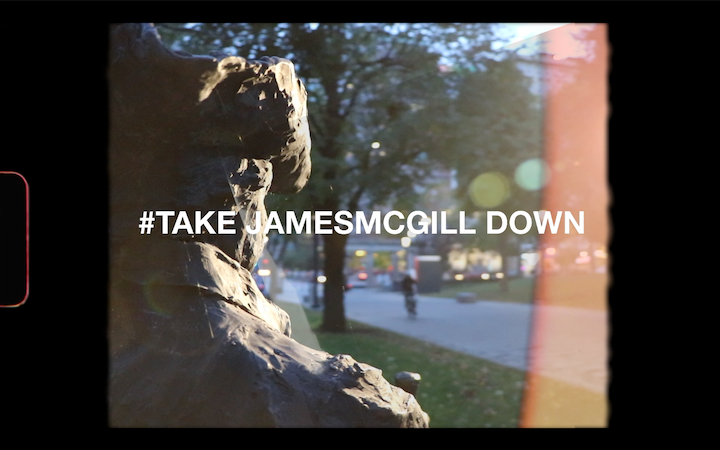
The #TakeJamesMcGillDown movement


The petition #TakeJamesMcGillDown gained thousands of signatures this past summer. Multimedia Editor Alex Hinton spoke with some of the organizers of the movement to dive into its history and the response it has received.

Science & Technology

The mental gymnastics of mid-semester motivation

McGill students are tired. Slouching into the tenth week of online classes in tandem with the flurry of midterm essays and assignments, many students are struggling to maintain their academic motivation amid the COVID-19 pandemic, and it shows.

Motivation is the process that initiates and maintains goal-oriented behaviours. There are two kinds of motivation: Intrinsic and extrinsic motivation. Intrinsic motivation comes from a place of personal gratification and arises from within the individual. Extrinsic motivation arises from outside the individual, powered by external validations, such as praise, or by fear of punishment.

During a time of heavy social restrictions, many rewards, like taking breaks from online studies or spending time with friends, are absent or diminished.

Dr. Richard Koestner is a clinical psychologist and professor in McGill’s Department of Psychology whose research focusses on goal-setting and self-regulation. In an email to The McGill Tribune, Koestner explained the pandemic’s effects on students’ behaviour and their ability to learn and retain information. 

“[We have seen] very high rates of anxiety and depression among 18-24 year olds during the pandemic,” Koestner wrote.

Anxiety drains energy and the ability to think logically. Anxious students can also succumb to the temptation of various distractions present in their homes, which further undermine motivation during this difficult period. Indeed, people can be easily distracted when working from home both because of boredom and because of overindulgence in activities that they are more intrinsically motivated to participate in, like baking or watching Netflix. For many students, it can be difficult to find a balance between schoolwork and fun breaks, which can relieve stress in the short term, but over time may become distractions.

“[The pandemic] disrupted many goals, particularly ones related to being independent from home and connecting with friends,” Koestner wrote. “Disruption of goal pursuits leads to frustration of basic needs for autonomy, relatedness, and competence.”

Despite the many factors during lockdown that can undermine motivation, there are still several ways for students to boost their motivation from the confines of their apartments. One of the best ways to increase motivation is to set new, fun, and worthwhile goals.

“[The] best goals are ones that come from you, that are interesting and meaningful,” Koestner wrote. “Personal goals give shape and meaning to our lives.”

Students need to set goals that are important to them and that they see as adding value to their lives. Setting goals related to their priorities, such as completing schoolwork or engaging in hobbies, can improve students’ ability to work efficiently and effectively. However, setting goals is only an effective motivator when you follow through. 

“We fail at most of our personal goals—think of your [New Year’s] resolutions,” Koestner wrote. “[We fail] mostly because we lack self-control resources. We fail because many of the personal goals we set are actually not self-endorsed and volitional. Instead, they reflect things we feel we should do. We need less self-control if a goal is volitional.”

Another great way to boost motivation is finding a daily routine. Creating and maintaining a routine helps people regain a sense of control and lends predictability to the day. 

Maintaining social relationships also helps boost motivation, as having peers keep to one accountable can help individuals achieve their goals. Some great ways to stay connected during the pandemic include calling friends or joining a digital support group

“Personal goals are also interpersonal,” Koestner wrote. “Having others support our goal pursuits helps us overcome self-control limitations.”

Features

McGill’s dirty, oily secrets

Content Warning: Physical violence, sexual violence

For years, campus environmental activist groups, such as Divest McGill and Climate Justice Action McGill, have been vocal about their demands: McGill must stop coddling extractive industries, namely fossil fuel and mining companies. From gold mining tycoon and heavy fossil fuel investor Seymour Schulich’s $20 million donation to McGill in 2005, to McGill’s own asbestos industry propagandist, Professor J. C. McDonald, to whom the Quebec Asbestos Mining Association gave one million dollars to produce phony research in 1997, the ethical baggage of McGill’s extractive past and present weighs heavily on students’ consciences and futures. There’s a reason that an environmental ethics professor resigned from his post at McGill over McGill’s embarrassing failure to divest three times in a row—the ethics of investing in industries that perpetuate environmental colonialism and slowly drag us towards a looming climate crisis, far outweighs any argument, financial or other, in their favour.

Science & Technology

An update on the GNL Quebec-Saguenay pipeline project

Environmental degradation, loss of endangered species, increases in greenhouse gas emissions—these are just some of the negative effects that the GNL Québec-Gazoduq Énergie Saguenay Project is predicted to have on Canada’s natural environment. The project, which proposes the construction of a 782-kilometre pipeline to carry natural gas from Northern Ontario to Quebec, is the final link in a series of transportation networks connecting Albertan oil fields with a planned natural gas liquefaction complex in Port Saguenay, Quebec. The McGill Tribune breaks down the current state of affairs and potential risks the pipeline poses to Canada’s environment and wildlife. 

Liquefied natural gas (LNG) is a form of natural gas that has been chilled to extremely low temperatures to cause a temporary phase transition from a gaseous to a liquid state. Once in liquid form, the volume of natural gas shrinks to 1/600th of its initial volume, rendering it economically feasible to transport over long distances. Although fossil fuel industry proponents claim that LNG is a form of “clean-energy” when compared to coal and traditional fossil fuels, environmental advocacy groups are not convinced that this is the case.

Since its proposal in 2014, the GNL-Saguenay Project has been met with overwhelming pushback from scientists and conservation authorities. Still, Quebec’s Minister for Regional Economic Development, Marie-Eve​​ Proulx, touted the project’s potential for increasing fiscal growth. GNL estimates that the project will create some 7000 jobs, at an approximate construction cost of $14 billion. 

The Government of Quebec’s upcoming decision on whether to approve the project, expected sometime in 2021, follows years of condemnation of similar pipeline projects across Canada.

In 2015, TransCanada abandoned a plan to build a port in Cacouna, Quebec due to concerns regarding its potential impact on local wildlife. The port was proposed to serve the Energy East pipeline and was slated to carry one million barrels of oil over 1,500 kilometres daily. The project was later cancelled altogether amidst strong pushback from a number of Indigenous and environmental groups. 

In British Columbia, an extension of the Trans Mountain pipeline through coastal waters near Vancouver has prompted nearly three years of legal challenges by environmental activists and First Nations communities. Among the most common concerns is the pipeline’s impact on endangered marine species

In Quebec, administrators behind the GNL-Saguenay Project have yet to clarify how they plan to implement their alleged compliance with provincial and federal environmental protections. Although GNL has declared that they will abide by government regulations, estimates that the project would contribute 7.8 million tonnes of greenhouse gases to the atmosphere annually, increasing Canada’s net natural gas exports by 27 per cent, have questioned the sincerity of their promise. Although Énergie Saguenay has disregarded this claim as false, the corporation’s environmental impact report—which dedicates only one page and a half to the environment, out of a total of 90 pages—makes no mention of this, nor provides a factual basis to refute scientist’s claims. 

Elsewhere in North America, pipelines have been shown to have other catastrophic environmental effects. Pipeline projects in Alaska and rural Pennsylvania have led to habitat destruction and forest fragmentation, with adverse consequences for native wildlife. The most recent 2019 report from the Intergovernmental Science-Policy Platform on Biodiversity and Ecosystem Services suggested that such changes in land use could place up to one million species in danger of extinction. 

In June of 2019, a group of 150 scientists from across Quebec signed an open letter calling for Prime Minister Justin Trudeau and Quebec Premier François Legault to reject the GNL-Saguenay Project on the basis of protecting the natural environment.

“In this era of climate emergency and collapsing biodiversity, we believe that scientists have a duty to speak out on the major projects that will determine the future of our civilization,” the scientists wrote in the letter, published in Le Devoir. “Taken as a whole, this project would therefore further alter the terrestrial and marine ecosystems on which life on Earth depends.”

Sports

CrossFit Games crown “Fittest on Earth”

Opinions on CrossFit range anywhere from people who think it is a fantastic way to work out to those who see it as seriously sketchy. Others have raised concerns about CrossFit’s ties to the U.S. military. The fitness regimen combines weightlifting, aerobics, and calisthenics for a high-intensity workout that has reached international popularity in the two decades since its founding, even developing into a competitive sport.

The CrossFit Games, which have been held annually since 2007, bring together the world’s best CrossFit athletes to determine who is the “Fittest on Earth.” Thousands of fans have attended the games, and millions have streamed them on services like ESPN and CBS. This year, the Games were streamed on YouTube where they amassed over one million views.

The peculiarity of the event names, like “Nasty Nancy,” “Damn Diane,” and “Swim ‘n’ Stuff,” is one aspect that illustrates the unique nature of the CrossFit competition. These events include challenges like the “2007 Reload,” a 1,500-metre row followed by weightlifting, and the “Ranch Loop,” a five kilometre run through unforgiving terrain. Each activity demands all-around peak performance from athletes. The Games are also set apart by their method of relative scoring, where athletes earn points based on how they rank among their peers.

The leadup to this year’s Games was, as one might expect, different. It was announced in April that spectators would not be allowed at the event due to concerns regarding COVID-19. The Games were then pushed from August to a two-stage competition held from Sept. 18 to 19 and Oct. 23 to 25. The team and age group divisions of the Games were cancelled outright. The top five athletes from the men’s and women’s divisions then traveled to Aromas, California, the site of the first Games. In accordance with the Crossfit Access Protocols, they were required to present a negative COVID-19 test before and after travel.

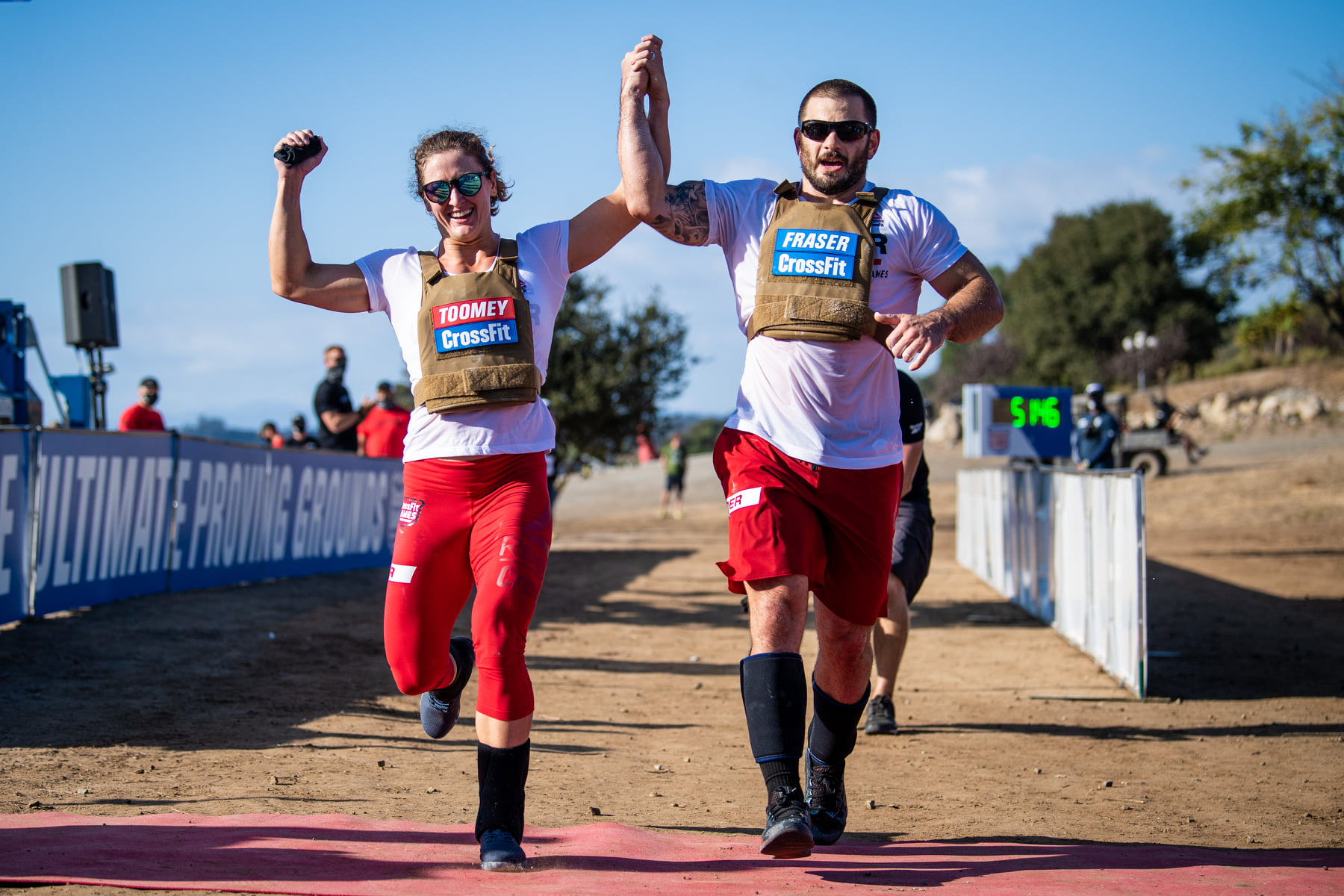
After all of the buildup, two athletes emerged victorious. Canadian-born American Mat Fraser earned his fifth consecutive title. Fraser placed first in every men’s event except two. His first defeat came in the “CrossFit Total,” where athletes have three chances to lift their one rep max in a strict press, a back squat, and a deadlift. Fraser’s second loss was in the “Swim ‘n’ Stuff,” a four-round gauntlet of air bike, a 50-metre swim, 10 GHD sit-ups, and 10 60-pound ball slams. Australian Tia-Clair Toomey claimed her fourth victory in a row, losing only three events in the women’s competition. American Kari Pearce took first in “Atalanta,” which consisted of a one-mile run followed by 100 handstand push-ups, 200 single-leg squats, 300 pull-ups, and another one-mile run while wearing a 14-pound vest. Jeffrey Adler, the only Canadian to qualify for stage two, finished fifth. Adler did, however, reach an impressive second place in the “Snatch Speed Triple,” timed lifts of 265-, 275-, and 285-pound barbells, and the “Bike Repeater,” 10 rounds of a 440-meter bike sprint and 15-foot legless rope climb. Adler was also one of only two people to beat Fraser in an event, winning the “CrossFit Total” with a combined weight of 1244 lbs across the three lifts.

Fraser and Toomey have never placed below second in any of the Games they have competed in; Fraser placed second in the 2014 and 2015 Games before taking the winner’s podium for the next five years. Toomey, who is also an Olympic athlete, was the runner-up in the 2015 and 2016 Games. The pair have trained together since 2019.

Despite COVID-19 and a change in leadership after the former CEO made offensive comments following the murder of George Floyd, CrossFit continues to thrive, and new CEO and owner Eric Roza hopes to reach out to new communities and continue expanding the sport.

All this raises the question of whether the Games are worth watching. If your favourite thing about sports is teamwork or strategy or a perfectly-executed play at a climactic moment, you may be better off skipping the Games. But if you enjoy watching athletes test their limits with mad dashes and impossibly heavy deadlifts, the Games may be the thing for you.

Toward survivor-centric justice in Quebec
Editorial, Opinion

Toward survivor-centric justice in Quebec

The Students’ Society of McGill University (SSMU) announced on Oct. 29 that it had formally signed a petition calling on the Quebec government to amend Bill 64, an Act to modernize legislative provisions as regards the protection of personal information. According to the petition, which was launched in early October by students at UQAM, the bill must be amended to allow universities and CEGEPs to inform survivors of any sanctions imposed on their perpetrators. The current legislation prevents survivors from receiving this information, which creates an inherent flaw in Quebec’s approach to addressing sexual violence reports on university campuses. 

In 2017, Quebec passed Bill 151, a law that defined the legal parameters for post-secondary institutions’ sexual violence policies. In many cases, however, existing privacy laws prioritize the safety of the accused over that of the survivor by prohibiting CEGEPs and universities from informing the survivor(s) about any disciplinary action taken against their aggressor, even after an investigation has taken place. Quebec must make amendments to establish a survivor-centric approach to addressing sexual violence, and McGill has a responsibility to take a stand against harmful impediments that undermine survivors’ safety. 

Reporting incidents of sexual violence is incredibly difficult for survivors, both emotionally and procedurally: It can be both intrusive and traumatizing for a survivor to have to repeatedly recount their experience to strangers. Many feel ashamed or are afraid of being victim-blamed should they come forward. Additionally, survivors often have to jump through many hoops to even be able to file a report in the first place. 

Quebec’s rules exacerbate these difficulties. Knowing what punitive action will be taken against one’s aggressor can, in some cases, provide a sense of security or closure to the survivor. When survivors are denied this, it can make them even less likely to come forward for fear that their aggressor will face no repercussions and that the emotional burden of filing a report will not be worth it. The current approach removes accountability from the institution, as universities are under no obligation to disclose their responses. 

McGill’s sexual violence policy also fails to adequately address the needs of survivors. The university’s Policy Against Sexual Violence, revised in 2019, did see some important improvements, including the establishment of an external Special Investigator. However, the policy still poses barriers to survivors with its highly legalistic jargon, which can further dissuade survivors from coming forward. 

Where McGill continues to fail, SSMU and other student-led groups have tried to intervene. Ratified in 2019, SSMU’s inter-faculty Involvement Restriction Policy aims to protect survivors by implementing restrictive measures against aggressors. Survivors are given the autonomy to outline which measures they want to see taken, which can even include banning the aggressor from attending campus-wide events. Though not perfect, this approach prioritizes the survivor, and implementing a similar policy at the university-wide level would allow the administration to better support survivors. Above all, current university and provincial policies require more revision in order to effectively protect survivors and not aggressors. 

Quebec must make amendments to its privacy laws that establish exceptions for cases of sexual violence in universities. If McGill is serious about taking action against sexual violence, as it often claims, then it must stand up to this harmful legislation and demonstrate leadership on this issue. Given the university’s shameful track record on sexual violence issues and concern for its reputation above all else, students are key in keeping the university accountable. As such, they must also sign and share the petition in solidarity with survivors. 

Sexual violence is traumatic and often life-altering. Survivors should not have to feel isolated from their communities and institutions, nor should they have to fear returning to their educational spaces without knowing whether necessary action has been taken against their aggressors. It is up to the government to amend its laws, but McGill must take the lead in enshrining survivor-centric justice in its policies and response processes. 

Science & Technology

Takeaways from the 20th annual Trottier Public Science Symposium

Oct. 26 marked the second day of the 20th annual Trottier Public Science Symposium, hosted by the McGill Office for Science and Society (OSS). Scientists presented talks on a variety of topics of public interest, all within the scope of this year’s theme: “In Whom Do We Trust?” 

How we know what we know—and what to do when we don’t

Wendy Zukerman is a science journalist and the host of the Science Vs podcast. She researches and reports on scientific topics ranging from orgasms to nuclear war, providing her listeners with a nuanced take on how science affects the daily lives of people. 

Like many academic scientists, Zukerman has faith in the peer-review process, the system of anonymous review used to assess the quality of a manuscript before it is published. 

“This is your gold standard of science,” Zukerman said. “I love peer-reviewed research […] because it not only has the stamp of approval of the team of researchers who actually did the paper, but it’s got these other independent researchers saying ‘yeah, this is good.’”

Yet, the peer-review process has a much harder time keeping up with the work of researchers when the dissemination of information can mean life or death. In a time of crisis, such as the COVID-19 pandemic, there is not always enough time to wait for peer-reviewed studies to become available. In these circumstances, Zukerman turns to pre-prints for her research, papers that have yet to be officially reviewed and are published in their manuscript form. 

Throughout the pandemic, many scientists have been sharing their research as quickly as possible, which allows for the efficient communication of information as it is discovered. However, this onslaught of new research leads to the inevitable retraction of many studies.

“The absence of evidence is not evidence of absence, which is all to say that not having really any evidence […] just literally means we don’t know,” Zukerman said.

Overall, Zukerman believes that science is trustworthy, but it often requires time to come to concrete conclusions.

“While science is working out the facts, […] we need to be honest with our audience and tell them that we don’t know,” Zukerman said. “Science takes time.”

Anthony Warner’s beef with ‘biased’ diets

Anthony Warner is a chef and food writer known by the moniker “The Angry Chef.” He investigates how people choose what food to eat and how and why this decision-making process can go awry. Warner contends that the three main causes for ignoring scientific evidence when it comes to dieting are related to what he calls complexity, tribalism, and the appeal to antiquity. These biases can affect everything from someone’s choice of breakfast to their opinions on the widespread environmental impact of agriculture.

Humans tend to reject complexity in favour of simple, easily understood explanations—and food is no exception. For example, some vegans often decry the North American and European tendency to eat an excessive amount of meat. However, raising animals can be useful in working toward a circular agriculture system, where waste is seen as a raw material to cultivate new valuable products, and the practice is essential to the livelihoods of many farmers. Moreover, meat consumption plays a large role in improving the nutritional status of people suffering from malnutrition. 

What Warner refers to as “tribalism” leads people to strongly identify as part of a group based on criteria that are often arbitrary. When it comes to nutrition, people often tie their trendy new diet to their identity and invest themselves in the surrounding online communities. This conflation of identity and diet can prevent them from rejecting preconceived notions when presented with contradictory evidence. 

Finally, the appeal to antiquity glorifies the dietary past, despite the fact that previous centuries often saw a very poor quality of life and nutrition for most individuals.

“We need to actually challenge some of the deeply held assumptions that underpin our systems of food production, and the way we consume food, and our culture of eating, which [are] going to be very difficult transitions to make,” Warner said.

Sports

Covering the odds and ends of sports in 2020

When the COVID-19 pandemic brought sports leagues across the world to a screeching halt in March 2020, many sports journalists were faced with job losses, while those who remained employed were left scrambling for content. Broadcasters and writers continued reporting on current developments in sports, such as leagues’ responses to the pandemic and the reactions from within the world of professional and collegiate sports. Without new games and events to report, however, sports journalists quickly ran out of new material to analyze. 

With spots to fill in print and programming, sports journalists were forced to get creative. While fans certainly missed seeing their favourite teams and leagues in action, the pandemic presented a unique opportunity for alternative content. In March 2020, The Guardian began releasing retrospective pieces in a series titled “My favourite game,” in which writers reflected on their most cherished memories of matchups from across a variety of sports. The series highlighted the value of something often overlooked in sports journalism: Hindsight. In a regular season, multiple games need to be covered and broken down in a single week, leaving little time for discussion and reflection on anything outside of ongoing games, trades, and injuries. “My favourite game” is an illustration of experiences that most sports fans have had; it is a collection of instances that remind readers and writers alike why they love the sports and teams that they do. It is also a series that would likely have never been published in a regular season. 

Alongside reflections on the past, some reporters began writing stories about the more obscure elements of their favourite leagues, and media outlets gave attention to sports that rarely receive mainstream coverage. Sports Illustrated’s Jake Fischer released a story on NBA halftime performer Red Panda, highlighting the work that goes into the spectacle that is modern sports viewing. ESPN offered airtime to the American Cornhole League, moving the league up from ESPN3 where the games were first broadcast in 2016. Again, the pandemic offered an unusual opportunity to delve deeper into the stories that make up modern sports as we know them, but that often remain forgotten, unknown, or are simply taken for granted. 

In some cases, the pandemic has allowed the business model of sports media to be completely rethought. When the entire staff of Deadspin quit in October 2019 after interim Editor-in-Chief Barry Petchesky was dismissed for refusing to “stick to sports,” they began brainstorming new ways to bring their coverage and work back to the public. They wanted a platform that would provide them with the editorial freedom that they sought, so they began the process of creating their own site. However, the pandemic’s effects on the economy led major investors to pause negotiations on deals with the former staff of Deadspin. With traditional funding paths and business models no longer viable, the idea of a co-operative mutually-owned organization that would hopefully not fail its employees in the way that other media outlets had was put on the table. In July 2020, 18 of the 20 staffers who had left Deadspin launched Defector Media, bringing politics, sports, and all of the quirky stories that are intertwined in those worlds to their new blog. 

The negative impacts of the COVID-19 pandemic on jobs and lives both within the sports industry and elsewhere are undeniable and should certainly receive media coverage. However, the temporary absence of live sports did not hinder the sports journalism and storytelling that continued. A global crisis has forced writers, reporters, broadcasters, publishers, and fans to adopt a new lens for enjoying sports, allowing for more diverse stories from across the sporting landscape to be showcased. 

Sports

Behind the mask: Marty the Martlet

As McGill University’s mascot, Marty the Martlet holds a prominent position in the eyes of the school’s student body. Not only is Marty seen around campus and at sports games in its kilt, it is also prominently featured in numerous McGill-centric meme pages and accounts. 

With all its notoriety, it is hard to remember that there’s somebody inside that giant vest-wearing bird costume. In an exclusive interview with The McGill Tribune, the performer behind the Marty mask answers questions about what it is like to don that costume, and shares tips on becoming a successful mascot.

Marty began mascotting after an open house at their high school, when they had the opportunity to don a full costume for the first time.

“I got picked for it first when all the people were there,” Marty said. “I honestly had a stupid amount of fun, just […] walking around, high-fiving [….] I could be as goofy as I wanted to. It was perfectly acceptable, if not expected of me. Being able to do that for an hour was awesome.”

After that experience, there was no looking back for Marty. They immediately signed up to be their high school’s mascot and eventually earned their spot as Marty the Martlet when they arrived at McGill. As a seasoned mascot, Marty notes that it takes a particular type of energy to get into this line of crowd-work.

“I’d say to get into mascotting, you need a lot of energy,” Marty said. “You can have introverts who like to be able to be part of a crowd and like not to be recognized. You can have extroverts who like being the center of attention […] and just making people happy [by] taking photos. It’s a good outlet to let loose very goofy, extroverted sorts of energy, and all sorts of different people can have that within themselves.”

On the surface, it appears that Marty’s job is easy, but considering the ground that they have to cover and the social situations they have to navigate, mascotting is a lot more than smiling and taking pictures.

“Time management is a very important part of what I do,” Marty said. “I have to think about questions like ‘When I am going to find a chance to go to this side of the stadium?’ and ‘When am I going to interact with these people?’ In a football game when the ball is in between downs, I might, like, scoot to one side, wave to a bunch of people, give some high fives, and maybe take a picture. And then 30 seconds later, when the game’s back on, I have to find a place to sit down without blocking anybody’s view.”

Marty said that mascots have a certain mystique surrounding their presence that makes for interesting reactions from the crowd.

“A lot of people are very unsure of how to act around you because you can’t speak,” Marty said. “But, at the same time, there’s a type of allure of like, ‘Oh, it’s a mascot.’ It’s like the physical manifestation of what our school and its spirit and essence is supposed to be. So there’s something cool about just getting a picture with that.”

Since McGill sports stopped in March, Marty has been out of work and has not been able to take pictures, offer high-fives, or dance. They look forward to the resumption of in-person sports matches, no matter how long it takes for games to come back.

“Being Marty was probably the most fun thing I did at McGill,” Marty said. “Sports games are something that so many different types of people come to to purely have a good time. To have the opportunity to be the person who stands out in front of the crowd and is there to entertain everybody is a very enticing idea to me and I miss it a lot.”

Read the latest issue

Read the latest issue