


The climate crisis, painfully familiar and distressing, continues to demand our attention. Some researchers are devoting this attention to analyzing the number of frozen land surface days—days when the ground surface is in a frozen state.
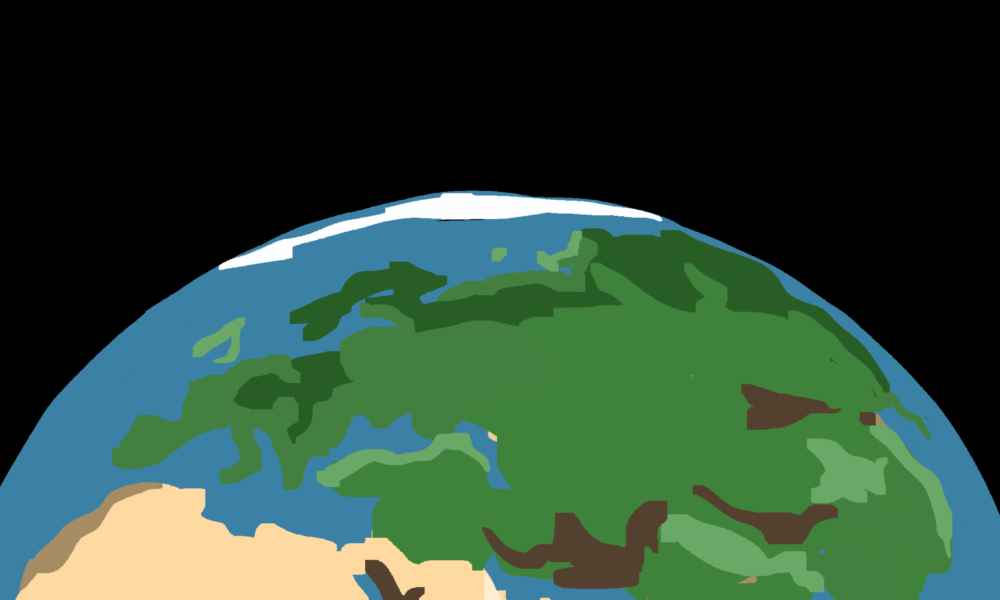
A recent paper led by Shadi Hatami, a hydrologist and climate scientist at the University of Calgary and a former postdoctoral fellow at McGill University, exposes a concerning trend: Warming temperatures and diminishing snow depths are causing fewer frozen land surface days every year.
“We used satellite observation and climate data over a period from 1979 to 2021, and we found that the [number of] frozen days are declining across a major part of the northern hemisphere. This decline is found to be strongly linked to warmer temperatures, and in many regions, it’s linked to thinner snowpacks and snow depths,” said Hatami, in an interview with The Tribune. “We are observing, and we will observe, fewer days each year with a frozen state.”
While this metric does not capture details about the depth of the frozen soil or the transitions between frozen and thawed ground states, the number of frozen days in a year serves as a helpful, large-scale measure of how long the surface remains frozen.
The study found that over the course of 40 years, 85 per cent of the studied ecoregions experienced a significant increase in annual temperature and a decrease in annual snow depth. This resulted in a significant decrease in the number of frozen days in over 70 per cent of ecoregions. The researchers predicted that these trends would only continue. By the end of the century, northern ecoregions may see an average of 30 fewer days of frozen land surfaces—assuming that the rate of climate warming does not intensify.
“We should, for sure, be worried about the rate of the change [….] Just one degree centigrade of warming temperature corresponds to roughly six fewer days with the frozen state, and just one centimetre decrease in snow depth corresponds to roughly three fewer frozen days on average,” Hatami said.
While the trends are concerning, Hatami addressed a few considerations to keep in mind.
“Our frozen day metric reflects the satellite-observed surface condition, so no information about the deeper soil freeze, or the permafrost conditions, for instance,” Hatami clarified. “Another [limitation] is that future-looking estimates are based on the linear extrapolation of historical trends. They should be read as the first-order benchmark, rather than the precise future forecast.”
The paper further discusses its effects on local infrastructure. Permafrost, which refers to soil below the surface which remains frozen throughout the year, is impacted by declining frozen land surface days. As these soils thaw, roads destabilize to the point of being unusable, limiting the transport of resources and services to northern communities.
“The Indigenous communities in the northern regions are closely tied to the land. Shorter frozen season and less days with the frozen condition over a year or over a specific season can affect them in several connected ways,” Hatami said. “Their access to the natural resources would be impacted, the hydrology of the region that they are living in will be impacted, and also the broader environmental system that supports their livelihood will be impacted.”
These findings add to the mountain of evidence pointing to the urgency of climate change. Alongside advocating for government action and corporate regulation, it is crucial to acknowledge one’s individual responsibility. Change will come from those who see these disheartening times for what they are: A status quo overdue for upheaval.
“I would just want to encourage people from engineering backgrounds to look into the environmental side of things,” Hatami said. “Future climate and environment will play a very important role in all of our lives, because we can see already the impact and we can see it in our day-to-day lives. I would like to encourage people to try to look at the environmental side of things and sustainability in their future career goals.”