
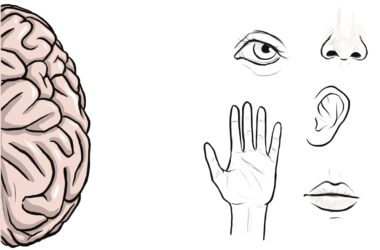
If you are as curious as the rest of this Tribune special issue, then this article will hopefully answer some of your burning questions about two topics that merge neuroscience and student life seamlessly: Alcohol and human senses. In this second round of myth debunking in our Neuroscience myths and[Read More…]
Tag: neuroscience

Making scientific data accessible to all
On Nov. 30, neuroscience and data-sharing experts came together for a day of insightful talks at The Neuro’s fifth annual Open Science in Action Symposium. Kicking off the event, Annabel Seyller, CEO of the Tanenbaum Open Science Institute (TOSI), emphasized the growing prevalence of open science across scientific institutions in[Read More…]

Neuroscience myths and facts: What is going on up there?
Several regions of your brain, such as Wernicke’s area and the left temporal region, are currently hard at work as you read this Tribune article. With its approximately 86 billion neurons, the adult human brain fascinates not only neuroscientists, but all sorts of individuals, including students, artists, and writers. This[Read More…]
Unlocking the brain’s potential through neuroplasticity and amblyopia treatment
The term ‘neuroplasticity’ never fails to incite intrigue. It involves structural and functional transformations within the brain as a way to adapt, often in response to interactions with the environment. Over the past decades, the concept of neuroplasticity has gained substantial traction in neuroscience, offering novel insights and opening up[Read More…]
Call off the search for a “normal” brain
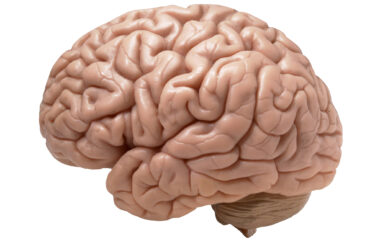
A “normal” brain—also termed “neurotypical”—has long been used in cognitive science research as a benchmark for brain activity comparisons. But this distinction between brains actually limits neuroscience research and has long escaped the notice of experts. Jakub Kopal, a postdoctoral fellow in neuroscience at McGill, researches the effect of genetic[Read More…]

Copy–pasted nucleotides found to cause neurodegenerative disease
Neurodegenerative diseases such as Alzheimer’s, Parkinson’s, and ataxia are caused—as their categorization would suggest—by the degradation of nervous system cells. One to three individuals per 100,000 are affected by late-onset cerebellar ataxias (LOCA), a disease characterized by impaired muscle control that worsens over time. While most types of ataxia set[Read More…]
NeuroLingo breaks down neuroscience jargon during TED-talk-like event
On Nov. 26, NeuroLingo hosted a free public neuroscience event during which researchers shared their ongoing projects. Founded in January 2020 by four graduate students in McGill’s Integrated Program in Neuroscience (IPN), NeuroLingo is a neuroscience outreach initiative with the goal of demystifying complex topics in neuroscience. The six speakers[Read More…]
Introducing neuromaps, a Python toolbox for neuroscience research
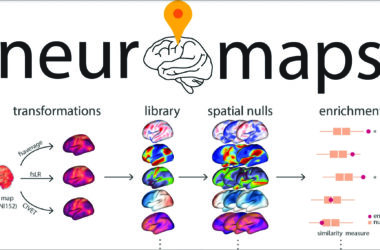
A team of McGill researchers published a paper in Nature Methods showcasing neuromaps, an open-source Python toolbox that allows neuroscientists to analyze brain imaging data using a consistent set of tools and compare it with a curated brain-map database. PhD candidate Justine Hansen, one of the paper’s first authors, spoke[Read More…]
Demystifying ARSACS, a rare neurodegenerative disease concentrated in Quebec
Autosomal recessive spastic ataxia of Charlevoix-Saguenay (ARSACS) is a rare neurodegenerative disease first identified in the Charlevoix-Saguenay region of Quebec. The disease affects muscle control, making a range of activities, from swallowing to speaking to walking, more difficult. Brenda Toscano Marquez, a postdoctoral researcher, and Alanna Watt, a biology professor[Read More…]
Sex bias in pain research leads to failed studies, inequity in pain management
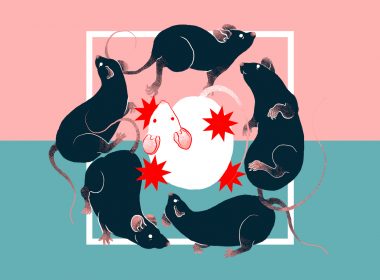
It is a well established fact that men and women experience chronic pain differently. By the late 1990’s, the findings of various review studies on pain research were clear: Women are more likely than men to experience a variety of recurrent types of pain. It remains troubling, however, that most[Read More…]