

Being unsure of what to pursue after university is not an uncommon feeling among McGill students. A string of interests fostered by your academic pathway and environment does not always lead to an obvious next step. Most of the time that is the last thing it does; the endless course selections, varied student body, and plethora of clubs and activities that fill our campus broaden our prospective career interests every day.
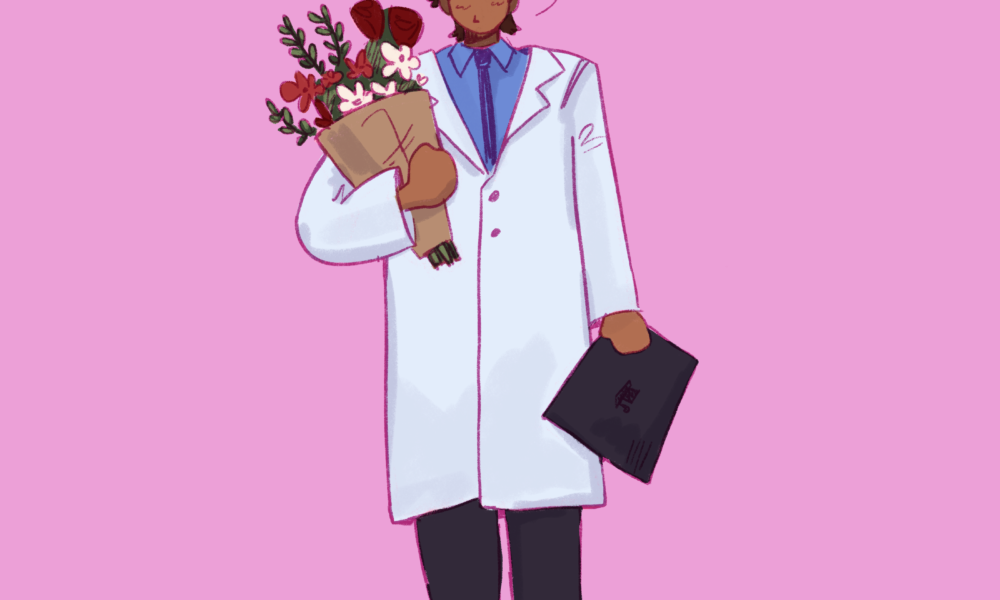
For those studying science, the pressure to solidify post-grad plans can often unidirectionally orient students towards a career as a physician. This path is an apparently straightforward one: A science graduate can complete their degree, write the necessary exams, apply, and begin their medical school program in predictable succession.
But what happens when that pathway does not feel so linear?
Annie Bernier completed her PhD in the Department of Microbiology and Immunology at McGill in 2018, her research focusing on microRNAs’ roles in hepatitis C viral infection. She later moved to work in cancer research at Institut Curie and in the biopharmaceutical services industry at CellCarta before transitioning into scientific project management at Consortium Québécois sur la Découverte du Médicament.
“I didn’t have a clear path at all [….] You don’t have to follow a single traditional path. You can have a very meaningful scientific career in a broad diversity of things,” Bernier said in an interview with The Tribune.
Bernier’s range of experiences, consistent curiosity, and desire to learn provided her with tools that ultimately transferred to her career progression. When beginning her PhD, she became the first student to join a new laboratory still establishing its flow and procedures. This unique circumstance gave her the unexpected opportunity to set protocols and to help hire new students, ultimately leading her towards a more administrative scientific career.
“My goal at every step was always, ‘How do I learn new things and keep feeling like I’m building something?’” Bernier said. “When you pick a position, always ask yourself, ‘What can I learn from it?’ and, ‘Am I interested [in learning] those things? Are they going to be useful to me?’ Always take what you know and then try to add something on top of it in your next position.”
Rather than pursuing the traditional postdoctoral route after her PhD, Bernier moved to Paris to work at Institut Curie. The position allowed her to continue doing research while building on the laboratory management skills she had developed during her PhD. During her time in Paris, she worked on understanding how cancer-associated fibroblasts can influence T-cell penetration in lung cancer. Bernier emphasized how this unique experience differs from her other professional progressions that resulted from making connections.
“Do not underestimate the power of networking,” Bernier said.
For Bernier, networking does not necessarily mean attending professional events or marketing yourself to prospective employers. Many of her career connections came from casual conversations that only became relevant months or years later.
Networking, she explained, also introduced her to an abundance of careers that are much less known to the typical science undergraduate.
“I wish students knew how many different careers exist in science beyond medicine, beyond academia [….] [There are also] biotechnology, pharmaceuticals, […] intellectual property, […] science policy regulatory affairs, […] project management, […] medical communications, […] government, […] [and] non-profit organization [jobs],” Bernier said. “The skills you develop during your scientific training are super transferable.”
While the number of possibilities might feel overwhelming, Bernier sees career uncertainty as an opportunity rather than a setback. Her own career path demonstrates how one experience can build on another in unpredictable ways, unveiling new interests and possibilities along the way.
“You don’t need to know exactly where you’re going, but every conversation is going to [add] another piece of the puzzle on the things that you like and the things that you might want to do later,” Bernier said.