

Before the price of coffee skyrocketed and the death of third spaces; before the tyrannical reign of Ticketmaster and the monopolization of the music industry; before we slipped into antisocial seclusion and let blue light mollify our beautiful brains, there was once an invaluable institution, home to art, community, and political activism: The glorious 1960s coffeehouse.
Even though coffeehouses were ubiquitous in the 1960s, they were popular long before the folk revival. The first coffeehouse opened in Constantinople in 1555 and became the centre of debate and business affairs. Coffeehouses then spread to Western Europe in the 17th century, evolving into the Paris salons essential to the French Enlightenment. In 1676, the coffeehouse reached Boston, and later permeated North America.
After World War II, Montreal welcomed an influx of Italian and Portuguese immigrants whose newly opened cafes became social and political hubs, much like the renowned literary cafes in Paris. In a grand melting pot of espresso, post-war counterculture, poetry, politics, and music, the illustrious coffeehouse was born. Several coffeehouses dotted the streets of Montreal, imbuing creativity and companionship into youth culture and the city at large.
Coffeehouses were a fusion of the jazz club, the beatnik poetry joint, and the espresso bar. Montreal had a web of coffeehouses in the 1960s, including Le Pot Pourri and the Flaming Ember Coffeehouse on rue Stanley, the neighbouring Café Andre, Finjan Club in Côte-des-Neiges, and The New Penelope, a famous venue on the corner of av. du Parc and Sherbrooke Ouest.
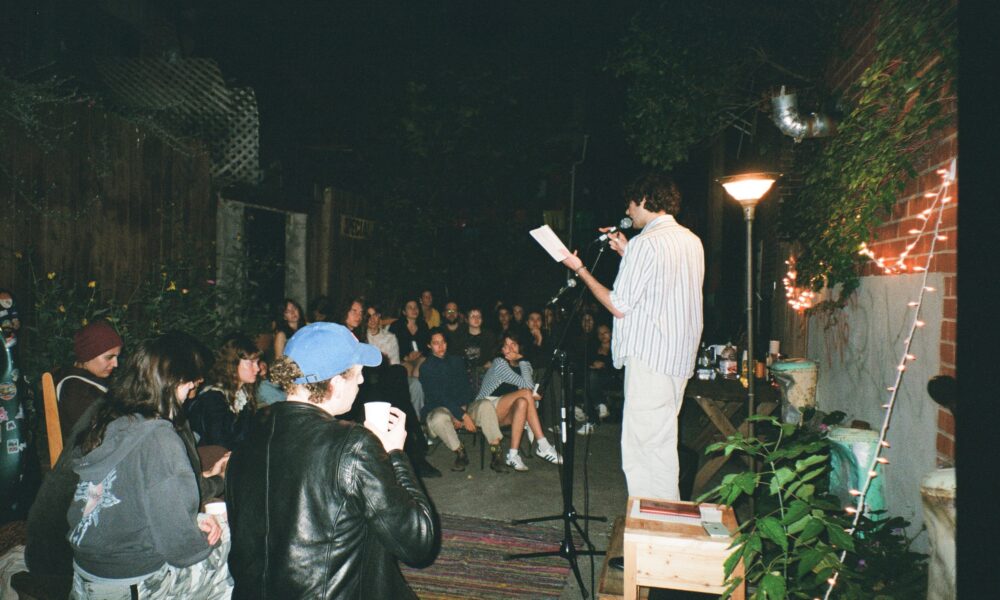
In dimly-lit cafes filled with the silver haze of smoke, people from all walks of life would gather to hear folk music, intimate jazz sets, and poetry readings. They would pack into basements and revamped Victorian homes, eating peanuts and sipping espresso; they would talk art and politics, meet strangers, make friends, and be inspired. Audience members were exposed to a range of talent and influences, while aspiring artists were given platforms and an entry into the arts scene. Montreal’s coffeehouses hosted famous performers like Muddy Waters, Frank Zappa, Joni Mitchell, and Bob Dylan, who gave his first-ever Canadian performance at Le Pot Pourri.
Performers would play to an eager, well-caffeinated audience, and without backstage areas in such small venues, they would mingle with cafe-goers after their set. Thus, the integration and accessibility of the coffeehouse circumvented many race and class boundaries of the 1950s and 1960s. At the intersection of art, coffee, and conversation, the coffeehouse was a democratizing institution that harboured political conversation and artistic collaboration. Supported by welcoming meeting places, 1960s youth were encouraged to be social, artistically integrated, and politically engaged.
However, by the end of the decade, many of Montreal’s coffeehouses shut their doors—except the long-standing Yellow Door Coffeehouse on rue Aylmer, which remains devoted to community service and social integration. Ever since the death of the coffeehouse, artistic collaboration and social interaction have plummeted. Without third spaces to foster affordable socialization, the loneliness epidemic will continue. As of 2022, only 19.3 per cent of Canadians meet a friend on an average day. Our generation parties less, socializes less, and even has less sex. This shortage of gathering spaces perpetuates our lack of cohesive aesthetics, sweeping political movements, and community. There will be no art in a world where artists cannot afford to pay venue fees—in a world where everything costs money, even the air we breathe.
We must rally the youth. We must revive the coffeehouse. If we do not actively defend the arts, if we do not seek company, inspiration, and human connection, we are at risk of losing them forever. We cannot forget the glory days of the Montreal coffeehouse, for the coffeehouse may just be the light at the end of a dark, socially deprived, artistically barren tunnel.
Author Kendyl Daley is the host of and a frequent performer at the monthly literary coffeehouse, Ninth Life Coffeehouse.