




Warning: This piece contains spoilers.
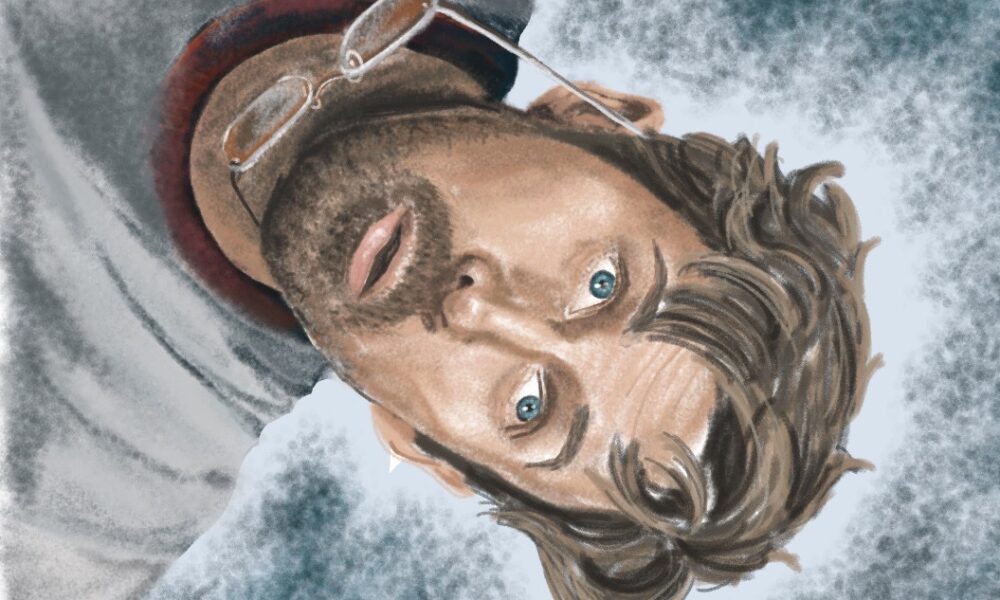
“Amaze! Amaze! Amaze!” sums up my experience watching thebiggest debut of the year: Project Hail Mary. Adapted from Andy Weir’s 2021book and directed by the duo who brought us 21 Jump Street and The Lego Movie, Phil Lord and Christopher Miller, Project Hail Mary shows us that “everything is awesome” when you give Ryan Gosling glasses and cast him as a molecular biologist-turned high-school teacher-turned astronaut, who wakes up in space with no memories of how he got in a space ship.
The premise is straightforward: The sun and stars in the galaxy’s solar system are dying because of an alien microorganism called astrophage—literally “star-eater” in Greek. These organisms threaten to drastically drop the Earth’s temperature and trigger global extinction within decades. Dr. Ryland Grace (Gosling) awakes as the sole surviving traveller on a spaceship, light-years away from Earth, with retrograde amnesia, and must carry out a mission to understand why the star Tau Ceti remains the only one undimmed. He soon learns, however, that he has been sent on this mission knowing he will never be able to come back.
Gosling is both swoon-worthy and endearing as Dr. Grace, who develops a close bond with the extraterrestrial Rocky (James Ortiz) and a team of puppeteers nicknamed “the Rocketeers,” whom he meets in space. The supporting cast includes Sandra Hüller as Eva Stratt, the morally grey character leading the international task force against the astrophage crisis. The movie explores themes of memory, friendship, duty, and bravery, with the protagonist sacrificing himself for humanity.
Coming from the Catholic Hail Mary prayer, the expression describes a last-ditch effort to rectify a hopeless situation. The film encapsulates this desperation. The spiritual themes of the story are not lost, but what is most striking is the optimism with which it approaches its difficult subject matter. Grace’s tale is supported by an enticing soundtrack by Daniel Pemberton and beautiful cinematography, with wide shots of space that lean into warmer tones and away from common representations of space in cold and desaturated colours.
The era that we currently live in has felt dominated by confusion, consumerism, the rapid growth of technology, and war. The movie industry is no exception, favouring big-budget blockbusters over original scripts. It feels like genuine passion projects are slowly replaced by extended trailers, with big explosions, empty declarations, and characters that lack depth. Project Hail Mary stands out with the love and care imbued into its soul, exemplified by Gosling and Ortiz’s acting. Instead of having Gosling work alone while talking to a tennis ball that stands for Rocky—as is customary for computer-generated imagery—the directors chose to work with practical effects and to have Rocky’s puppet built by the renowned special effects artist Neal Scanlan. This made Grace and Rocky’s relationship seem genuine and multi-layered, as the actors were developing a deep friendship over months.
Furthermore, with the recent launch of Artemis II, which holds four astronauts—including Canadian Jeremy Hansen, who will venture around the moon for 10 days—the importance of scientific discoveries in space exploration cannot be forgotten. Project Hail Mary calls for much-needed optimism about the good faith of humanity after this year has shown us how unsettling it is to be human in the 21st century. Watching Grace save humanity in space reminds us why scientific discovery and missions like Artemis II are important: they help us gain knowledge, foster international cooperation, and inspire next generations of scientists. If there is one thing that I encourage you to do, it is to go watch Project Hail Mary in theatres to experience the magic firsthand. If you need, be like Rocky and borrow “Ryan Gosling money” to go see Project Hail Mary; you might even catch a rendition of Harry Styles’s Sign of the Times or fall in love with an adorable alien proudly stating, “Grace Rocky save stars.”