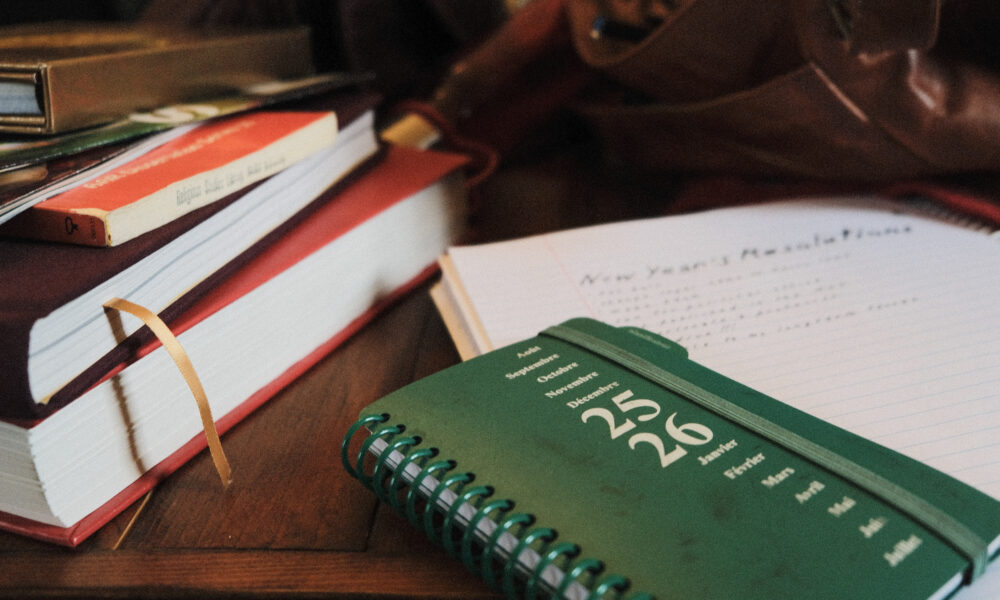


January, colloquially known as the month of new beginnings. Planners for the calendar year fill the bookshelves, wellness advice on how to ‘improve’ flood TikTok and Instagram For-You-Pages, and even McGill sends out communications encouraging students to return to campus with better habits and a renewed zest for academia and discipline.
New Year’s resolutions are often framed as an introspective exercise that positions personal change as both the source and solution to any issue. Nevertheless, self-improvement culture encourages students to internalize burnout as a personal failure, allowing institutions to avoid accountability for the structural conditions that make exhaustion inevitable. In this understanding, stress and fatigue become problems to be corrected individually rather than predictable responses to the collective institutional pressures students are expected to navigate.
Responsibility for burnout is increasingly individualized within academic environments that normalize constant productivity and self-regulation. Studies consistently show high levels of stress and burnout amongst post-secondary students: Nearly 90 per cent report feeling overwhelmed by their responsibilities, and 66 per cent report overwhelming anxiety—numbers far above what one would expect if stress were simply a ‘personal weakness.’ Research also consistently associates academic stress with diminished well-being, as students who report higher academic pressure also report declining mental health outcomes.
Although there is a plethora of reputable research proving burnout to be structurally and contextually driven, institutional responses disproportionately emphasize individual behaviour change. A 2023 World Health Organization report identifies burnout as an occupational phenomenon driven by chronic workplace stress, explicitly rejecting framings that solely describe it as a personal medical condition. Despite this, universities respond to stress-related risks by promoting time-management strategies and resilience training, effectively evading their institutional responsibilities to provide support and accessibility to students and staff alike.
In Canada, one in three students report that mental health resources do not meet their needs due to long wait times and limited availability. Academia on mental health in higher education shows that students are far more likely to be offered coping tools than material accommodations, which further reinforces the idea that distress reflects insufficient self-management. In this, burnout is framed as a failure to adapt to neoliberal demands of efficiency, rather than the manifestation of systemic pressure compounded by inadequate institutional support.
The institutional benefit of framing burnout as an individual issue is also well documented. A 2022 survey by the American College Health Association found that although over three-quarters of college students reported moderate to high levels of stress, few campuses have made corresponding investments in material support services such as reduced course caps or expanded academic leave. Instead, many institutions offer limited counselling and wellness programs while broader comprehensive structural support remains absent. At McGill, this gap is apparent in the limited accessibility of mental health care: Student reporting shows that appointments at the Wellness Hub can require weeks-long wait times during peak periods such as midterms and final exams. Official university responses continue to emphasize self-help guides and stress-management resources.
The aforementioned framing is intensified by the timing of the New Year itself. January marks the start of the winter semester, which is characterized by limited daylight and the lingering exhaustion of the fall term and exam period; yet students are expected to return to full productivity almost immediately. While practices of self-discipline and routine can be genuinely supportive at the individual level, they cannot compensate for structural conditions that remain unchanged. Without corresponding reductions in workload or expanded institutional support, self-care risks becoming a means of endurance rather than relief, asking students to adapt indefinitely to environments that continue to demand more than they can reasonably sustain.
So this January, before reaching for another productivity planner or doom-scrolling through content promising personal transformation, it is worth considering that the problem may not just lie in individual habits, but in a system designed to make them appear as the only thing that can change.


