Latest News

The Super Bowl can be fun for everyone. (www.superbowl2013live.com)
a, Recipes, Student Life

Super bowl recipes

If you’re feeling traditional: The classic ‘seven layer nacho dip’

Ingredients:

1 oz. taco seasoning

16 oz. refried beans

8 oz. cream cheese, softened

16 oz. sour cream

1 cup guacamole

16 oz. salsa

1 large tomato, chopped

1 green bell pepper, chopped

1 stalk chopped green onions

½ red onion, chopped

Finely chopped hot peppers (to taste)

6 oz. canned, sliced black olives

2 cups shredded cheddar cheese


Method:

Mix the taco seasoning with the refried beans in a bowl and spread evenly in a large dish. Mix together cream cheese and sour cream, and spread in a second layer on top of the refried beans. Next, add the layer of guacamole, followed by a layer of salsa, and then a layer of veggies, excluding the hot peppers and black olives. Now, add the layer of shredded cheese, and garnish with the black olives and chopped chili peppers if you like it hot. Serve with your favourite nacho chips, and a frosty drink!


If you’re feeling ambitious: Crunchy Asian snack mix

Ingredients:

½ cup unsalted butter, cut into 8 pieces

2 tbsp. sugar

2 tbsp. soy sauce

2 tbsp. hoisin sauce

1 tbsp. Asian sesame oil

¾ tsp. garlic powder

2/4 tsp. ground ginger

¾ tsp. cayenne pepper

8 cups popped popcorn

6 cups shreddies

1 can Chow Mein noodles

1 package Asian rice cracker snack mix

2 cups salted, roasted cashews or peanuts

1 cup wasabi peas or dried peas


Method:

Preheat the oven to 250 degrees Fahrenheit, with two racks evenly spaced. Melt butter in a medium saucepan and whisk in sugar, soy, hoisin, sesame oil, garlic powder, ginger and cayenne. Combine the popcorn, shreddies, Chow Mein noodles, Asian snack mix, cashews and peas in a very large bowl. Drizzle with butter mixture and stir well to coat. Spread evenly on 2 large baking sheets. Bake for one hour, turning every 15 minutes to heat evenly. Cool completely, and serve.


The Super Bowl can be fun for everyone. (www.superbowl2013live.com)
a, Student Life

Why everyone should watch the Super Bowl

This Sunday marks the 47th Super Bowl, which means everything to some of us, and absolutely nothing to others. For those in the latter category, here is a list of reasons to enjoy the upcoming festivities. If you’re still unconvinced by the end of this article, there’s always the Puppy Bowl.


1. Everybody else does: We’re all taught that caving to peer pressure shows a lack of character, but I prefer to look at this as ‘going with the flow.’ Most of us will be watching the Super Bowl this Sunday, and if you don’t, you will quite simply be left out. Come Monday morning, whether you’re in class or at work, you’ll hear countless conversations about that one incredible play, or ridiculous call, or wardrobe malfunction – and you will have no context.

2. The half-time show: On that note, the Super Bowl half-time show always offers astounding musical acts to keep us entertained at intermission. Two words: Janet Jackson. Rumour has it this year’s show will see the (temporary? I hope not!) reunification of Destiny’s Child, which is reason enough to tune in, even if the rest of this list does nothing for you. If that doesn’t come together, we’ll still have Beyoncé. I don’t know about you, but that alone is reason enough for me.

3. The commercials: Usually, commercials are annoying, and get in the way of whatever it is you’re trying to watch, but hear me out on this one. The Super Bowl is a big undertaking; depending on your level of enthusiasm, it can even be a day-long commitment. You need those commercials to pace yourself. Whether it’s a bathroom break, a nacho run, or, heaven forbid, needing to talk to your Baltimore Ravens-obsessed companion about something important – commercials provide your window of opportunity.

4. Eye Candy: Whether you’re looking at the players or the cheerleaders, there are some pretty attractive people to watch at the Super Bowl. I don’t have much more to say about this one; do with it what you will.

5. Quality time with your friends, roommates, family etc.: Whatever your reason for watching the Super Bowl, it can certainly bring people together. It provides a great backdrop to sit and hang out with people you haven’t seen in a while. Catching up is great, but there’s something to be said for just being together – even if you’re not really doing anything.

6. The opportunity to shout at the screen along with actual sports fans: I love shows like Community and Mad Men, but they’re not really the kind of programming that gets me yelling. I may engage in a spirited debate or two with friends over them, but I’d feel a little weird screaming at Don Draper to get his life together. When watching sports, I get to shout right along with my dad at Ray Lewis to step up his game. And that’s actually pretty fun.

7. The food: Okay, let’s be honest, one of the best parts of ‘Super Bowl Sunday’ is the food that accompanies it. We’ve got a few recipes in this section to get you started, but the possibilities really are endless.

8. Pre-gaming: What goes better with football and food than beer? Not much, in my opinion. While Sundays are usually stressful and laden with schoolwork, take the opportunity to break routine, get psyched up for the game, and kick back with a cold one. Just make sure you don’t have anything too important to do that night.

9. The opportunity to make new friends: Going out to a bar whenever there’s a significant sporting event taking place guarantees a higher level of camaraderie and hilarity, especially if most patrons have followed number eight on this list. Anyone you meet who’s cheering for your team is automatically your new best friend; and celebrating a touchdown with thirty people is way more fun than celebrating it with two.

10. It beats studying: What sounds like a better Sunday to you? Hanging out with your friends, eating some good food, and grooving to Beyoncé, or getting caught up on your readings? That’s what Saturday afternoon is for.


a, News

Students and staff protest protocol in James Square

On Jan. 23, a group of McGill students, staff, and members of campus unions congregated at James Square to protest the provisional protocol regarding demonstrations, protests, and occupations, as well as any protocol the university might implement to regulate peaceful assembly on campus.

The protest comes after Provost Anthony Masi and Vice-President (Administration and Finance) Michael Di Grappa announced on Jan. 16 that the current provisional protocol will be replaced by a statement of values and principles concerning freedom of expression and freedom of peaceful assembly, rather than the draft permanent protocol that McGill released on Nov. 30.

According to Di Grappa, the provisional version of the protocol will likely remain in effect until April’s Board of Governors’ (BoG) meeting, at which point the BoG will vote to adopt the statement of values.

The first draft of a permanent protocol generated criticism due to its restrictive clauses, lack of clarity, and absence of student input.

“We’re hoping to get the message across to both [the] administration and the Board members, that the population of McGill is not in support of this protocol,” Kevin Whitaker, president of McGill University Non-Academic Certified Association (MUNACA), said. “We believe that it is a violation of the Quebec Charter of Rights and Freedoms, and we will not support this.”

According to protesttheprotocol.com, dissenters are particularly concerned that McGill plans to launch a new operations management policy regarding protests on campus, that does not require approval from either Senate or the BoG. This will be released in tandem with the statement of values, which will require approval from both Senate and the BoG.

Although McGill withdrew the draft of the permanent protocol on Jan. 16, participants in last Wednesday’s protest said they wanted to remain vigilant, and to continue communicating their discontent in hopes of receiving a more acceptable proposal from the next round of consultations.

“We already consider that there is victory on our party’s part, because the [draft of the] permanent protocol has been removed,” Julian Menezes, mobilization officer for McGill’s Teaching Union (AGSEM), said.  “But … we’re just out here to make sure that McGill knows that all protocols [and] all statements of values that restrict freedom of expression and association … on campus are not acceptable. They do not reflect the democratic values of this institution, [nor] the people who built this institution.”

Jaime MacLean, president of the Association for McGill University Support Employees (AMUSE), expressed similar sentiments.

“We don’t need any protocol because the city of Montreal has its own protocol,” she said. “If anything, we need to be freer on campus.”

Baptist Rownir, a U2 arts student who attended the demonstration, expressed his support for the protest.

“[This protest is] basically another episode of administration and student conflict,” Rownir said. “I don’t think it’s great for the atmosphere [on campus], but we need it.”

“I definitely support the protest,” Bita Eslami, U2 social work, said.  “[The] McGill administration is infringing [on] our freedom of assembly and expression. I don’t think it’s good for campus.”

a, Student Life

Keep your body heat up and your heating bills down

In case you hadn’t noticed, it was incredibly cold last week. With temperatures reaching an average of minus 27 degrees Celsius with windchill, this weather seems to mean repayment for the warm beginning to January lulled us into a false sense of security. At temperatures that seem to freeze your nose and the tips of your ears, going inside should be a respite; and Montrealers tend to crank up the heat at home.

Energy consumption in these conditions is reaching increasingly high levels every year. Last week outstripped 2011’s record consumption level with a peak of 39,000 megawatts according to the Montreal Gazette. HydroQuebec is asking the province’s households to cut their consumption of electricity. According to an email by McGill to all students, the firm shut off the iconic logo on their building in an effort to lower this consumption, and “avoid overloading the grid, which could—” here, the email cuts off, inadvertently, but ominously.

So, how can you stay warm sustainably?  You can make changes to your apartment to make sure that the heat you do use stays in, according to several do-it-yourself (DIY) sites like ApartmentTherapy.com, WikiHow, and even Pinterest.


In your apartment:

1. Keep heat in and cold air out by sealing up your windows and doors. Your  best bet is to pick up some plastic window film or foam weather stripping from a hardware store. You can also use packaging tape or stuff a towel around leaky doors and windowsills.

2. Keep the curtains open in rooms that get a lot of sunlight, and allow the sunshine in as much as possible. Install heavy curtains (or pin up some extra blankets) in other rooms to keep the heat inside your house.

3. Keep doors closed, especially to unoccupied rooms—air circulates less.

4. Lay down rugs or carpets, or at the very least, wear slippers.

5. Clean your radiator—dustless radiators allow conduct heat more easily.


If you’re really desperate:

1. Space heaters, humidifiers, and even lightbulbs can keep your room hot, but they also expend electricity, so weigh the pros and cons before springing for one. In a moment of desperation, hair dryers also work wonders.

2. After baking anything, leave your oven door open so heat can escape; make use of the energy that you’ve already expended and paid for. Take caution with this technique if you have a cat.

3. Wear tights or long underwear underneath your clothing.

4. Put on moisturizing lotion after a warm shower, locking in some of the heat and moisture that will otherwise be stripped away by the wind within seconds.  Think of it as a second skin!

5. Buy an electric blanket to snuggle up with in bed. Fleece blankets are also a cheap way to keep warm overnight.

6. Keep your head covered. And hands. And feet. According to the old adage we’ve all heard a million times, heat escapes through extremities.

7. Shower at the McGill gym—for free!


It’s cold in Montreal (www.geosmontreal.com)
a, Student Life

Weathering the windchill entails more than extra mittens

Montreal’s recent cold snap saw students bundling tighter than the kid from “A Christmas Story,” and crowding campus hotspots like the Redpath basement well past capacity. Hopefully we’re out of the woods now, but just in case temperatures plummet again before this winter’s through, the Tribune has compiled some tips to help you ward off frostbite, as well as a monster heating bill.


This season, more is more:

Layers are your new best friend. To give you an idea of how far you can take this idea, last week, I repeatedly wore two pairs of socks (one of them extra thick), leggings under my jeans, a shirt, and a sweater, along with my winter coat and boots. During one trip to the gym, I found that sweatpants over yoga pants were the first combination to keep my legs totally warm. Some people have their reservations about the appropriateness of sweatpants in certain situations—I say, ‘Let them freeze.’ There’s a certain point at which staying warm is more important than looking cool; and after this week, I’ve realized that for me, that point is somewhere around minus 20 degrees Celsius.

Furthermore, such cold weather makes accessorizing essential, even if you think you’re too macho to use that word. The name of the game is ‘no exposed skin,’ which means that gloves, mittens, scarves, balaclavas, toques, and hoods are vital. For some, this is an excuse for a shopping trip, which is never a bad thing. For others, it means digging into your closet and finding that ridiculously huge scarf you swore you would never wear, but now that gigantic amount of coverage suddenly seems to make perfect sense.


Stay warm with Tim’s:

A little silver lining to this incredible cold is that all your favourite coffee shop drinks suddenly become a necessity. It’s not extravagant to buy a vanilla latte everyday if you’re walking through frigid temperatures to get your classes, right? And who’s to say that your double-double isn’t what’s staving off frostbite? I would rather err on the side of caution­—or more coffee. The only downside is that your favourite coffee joints will likely be crawling with equally frozen McGillians—but hey, body heat.


Shortcuts:

Another way to keep your limbs as toasty as possible is to learn all the campus shortcuts to get to your classes in the warmest way possible. Did you know McGill has a tunnel system? You can leave your Leacock 132 class and study in McLennan just minutes later, all without having to put your jacket on. For a comprehensive look at which tunnels can get you where, check out unofficialmcgillguide.squarespace.com or just wander through them yourself, and see where you wind up! Additionally, you can cut through other buildings on your way across campus. For example, you can duck into McConnell at the Milton Gates on your way to the Maas Chemistry building, or through the Arts building and Leacock if you’re heading for the SSMU building.


Don’t blow your electricity bill:

This type of weather forces us to worry about more than just our core temperatures. Montreal winters can wreak havoc for our hydro budgets, so be sure to check out our partner article below, with money saving tips to keep your apartment warm and your wallet happy.

(Elizabeth Flannery / McGill Tribune)
a, News

Highlights from the Jan. 24 SSMU Council

Motion Regarding Support for Indigenous Peoples and Allies

Heated debate occurred between councillors over a motion calling for SSMU to “adopt a position in support of the Idle No More movement, and in support of the struggles of the Society’s First Nation and Inuit members and allies.”

Senate Caucus Representative Max Zidel expressed discomfort with Council stating support for the Idle No More movement as a whole. Other councillors said that adopting a position in support of Idle No more was external to Council, and that the motion should be committed to the next SSMU General Assembly (GA).

Council voted on the clauses individually, in order to allow councillors to commit the clause that was considered external to the GA,  it also allowed them to while vote on the other two clauses, which were considered to be within Council’s purview.

Ultimately, Council voted to send the first clause—that SSMU adopt a position in support of the Idle No More movement—to the Feb. 4 GA, where it will be put to a student vote. Council passed the other two clauses, which concerned lobbying the McGill administration to divest its holdings in companies that do not engage in consultation with First Nations groups when conducting business on Indigenous land.

Motion Regarding a McGill Free from Fossil Fuels

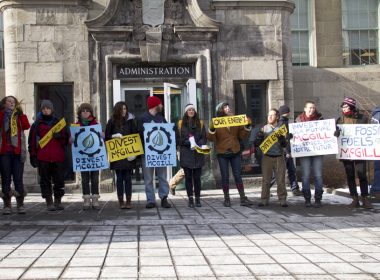
A motion calling for SSMU to lobby the university to “divest its holdings in companies engaged in fossil fuels and from financial institutions that invest in or give loans to companies engaged in fossil fuel production” provoked debate between councillors.

Science Representative Devin Bissky Dziadyk asked the movers of the motion why specific actions were not included in it. Others councillors then called for the motion to include specific actions, so that the movers would have something concrete on which to follow up.

The motion was ultimately amended to mandate that the Political Campaigns Coordinator draft a plan, detailing and proposing ways in which SSMU can lobby McGill, which would be presented to Council at a later date. The motion passed after being put to a vote.

Council endorses Daily Publication Society

Following guest speeches from The McGilly Daily Coordinating Editor Queen Arsem-O’Malley and Le Délit Editor-in-Chief Nicolas Quiazua, councillors voted in favour of endorsing the Daily Publication Society (DPS)’s existence referendum, with 21 votes in favour—none against—and six abstentions.

“As much as I disagree with [some things] The Daily runs, I do think that it should exist, it offers such a good platform for students to … share ideas,” Music Representative Katie Larson said.

Announcement: New student space

SSMU President Josh Redel announced that the end of SSMU’s sublease with the student travel agency Voyage Campus would allow student space in the building to expand for the first time in several years.

Redel said that the area, located on the main floor of the SSMU Building and spanning 115 square metres, represented “potential for just about anything.” He explained that a consultation process with McGill students on how to transform the vacant space would commence shortly, starting with a Strategic Summit on Student Space in the Madeleine Parent Room on Feb. 1.

SSMU Vice-President Finance and Operations JP Briggs later suggested that the area could be a “potential place” for the long-awaited student-run café.

a, Student Life

Newly opened Indian restaurant does it right

There are few places in Montreal that will satisfy your cravings for wholesome Indian food, and fewer still that are competitively priced, and right in your own backyard. Namaste Montreal – a new Indian restaurant on Milton – meets all three of these requirements.


Healthy recipes:

All of Namaste’s dishes are made fresh daily without preservatives, without artificial colours or flavours, and without cornstarch. Every dish is made with a healthy conscience by minimizing oils and maximizing flavour. All dishes on the restaurant’s menu is homemade, and offer satisfaction for vegetarians, carnivores, vegans, and those with a sweet tooth. Whether you’re a spice junkie, or prefer your Indian food slightly on the milder side, the conscientious staff will cater the dishes to your taste.


Cheap prices:

Namaste Montreal offers its fare at a reasonable price. A hearty portion of either Channa Masala (chickpeas cooked with onions, garlic and ginger in a tomato curry) for Dhal Makani (spicy lentils cooked in a rich creamy sauce) costs only six dollars; the non-vegetarian meals, including Butter Chicken and Lamb Curry, run for only seven or eight dollars. Or, try a Biryani—vegetables or chicken layered with basmati rice and baked to perfection.


Classic favourites:

The items on Namaste Montreal’s menu are limited but they don’t disappoint.Top off your meal with classic Indian breads like naan or roti, a healthy serving of rice, and or a serving of cooling Raita, a gently spiced yogurt dish with cucumber chunks. But make sure to save room for the grand finale! Finish your meal off with the sweet taste of traditional Rasgullas or Gulab jamun for just one dollar accompanied by a perfect cup of Masala chai. Namaste’s focus on these signature dishes ensures that you get the freshest meals, made with care.


Quick service:

Hungry and on the run? Try one of their amazing Samosas for only a dollar! Just don’t tell anyone in Bronfman that you’ve been straying. What’s more, you can always top off their samosa with a ladle-full of channa masala for only three dollars—the perfect snack on a busy day.


The final verdict:

Namaste Montreal opened just a few weeks ago and is ready to serve you. Let your senses be pampered with the delicate blend of Indian spices embellishing a warm and cozy atmosphere. The inviting red walls and friendly staff will make you and your friends feel right at home in this little pocket of authentic Indian culture, amidst the chill of the Montreal winter.


Located at 212 Milton, on the corner of Sainte Famille.

Hours: 11:00 a.m. – 9:30 p.m.

Telephone: 514-660-1822

https://www.facebook.com/NamasteMontreal

Pierre-Luc Bacon. (Alexandra Allaire / McGill Tribune)
a, Student Life, Student of the Week

Student of the Week

This week’s student was nominated for his tireless efforts to provide the city of Montreal with free Wi-Fi

Q: If you could change one thing about Montreal, what would it be and why?

A: [I would want to] make it friendlier for bikes, and make it easier in the winter. Some cities in Denmark and Norway are very friendly for bikes, and it’s just a normal thing to ride your bike in the winter. Here, car drivers are very aggressive, and [a cyclist is seen as] a weird guy.

Q: What kind of work do you do with the robotics research lab at McGill?

A: It’s called the Reasoning and Learning lab. So we don’t actually do robotics directly, but the stuff we develop can be applied to robotics. In my case, that’s my primary interest, but I work from more of a theoretical point of view.

Q: Where did you do your undergrad, and why did you decide to pursue your master’s degree at McGill?

A: I did my undergrad at McGill … because to me, they had the best computer science program. I wanted to focus more on the theoretical aspects of computer science rather than the practical side.

 Q: You work with a company called Ile Sans Fil; what is its main goal?

A: Really what we want to do is make the internet more accessible to people in the public space. We see Wi-Fi as a way of bringing people together as well, and even as a vector for art.

Q: What’s the nature of your involvement with the organization?

A: I’ve been the president [of Ile Sans Fil] since last April. It’s been in Montreal since 2003. The goal [is] basically to spread free Wi-Fi over the city. And initially, in 2003 up until 2010, it [was] entirely volunteer-based. The service grew quite quickly, up to a point where it was completely unmanageable for volunteers to provide support for [users]; so in 2010, we hired a director, and from that point, the organization changed quite a lot. And we’ve hired two more people, so now it’s a three person, non-profit company. We have pretty cool projects actually, that we’re going to announce. [Last October] we announced a partnership with the city to install WiFi hotspots in cultural places [like] museums and theatres.

Q: What kinds of places use Ile Sans Fil?

A: Ile Sans Fil is not in all the cafés, but I can say for sure that because Ile Sans Fil was there so early, it kind of made it the norm to provide free WiFi in Montreal. I think it’s because of Ile Sans Fil that now, you can get free WiFi. If you go to other cities in the world, most of the time, you have to pay crazy fees just to get basic internet access. Right now [in Montreal], it’d be impossible, I think, for a café to ask the users to pay for [internet], because of Ile Sans Fil.

Q: So Ile Sans Fil was basically the first organization to do this in Montreal?

A: Yes. Ile Sans Fil [also] developed our own technologies, and that set of technologies [is used] by other cities in the world. It was pretty early technological stuff; [in] 2003, WiFi was just starting.

Q: When did you get involved in the organization?

A: During my first year at McGill, in 2008. I became Secretary in 2010, and President in 2012.

Q: What’s your secret talent?

A: I’m very good at making circuit boards spark fire.

Q: Name one book you think everyone should read.

A: I think everybody should read “Le Monde du Sophie.” I think people tend to think that philosophy is not very useful. It’s a good book to make you realize that philosophy’s something you kind of need for everyday life.

Q: What’s your least favourite sound in the world?

 A: I hate the sound of cars. That’s an easy answer. I bike a lot, and I guess I kind of hate cars. I think that we should have fewer cars, especially in cities like Montreal. It’s a very bike friendly city, but it could get better.

Q: What’s your biggest pet peeve?

A: I don’t like the Bixis in the streets. They’re very unpredictable. I think it’s a nice project, but there are a lot of people that use those bikes who aren’t very careful about [other] people.

Q: What’s your go-to way to warm up on cold days like the ones we’ve had this week?

A: Just jump on my bike.

a, Science & Technology

Communication critical step in combating tropical disease

For Greg Matlashewski, a McGill professor and former chair of the department of microbiology and immunology, branching out from the lab and into the field had many positive results for his work regarding treatment for visceral leishmaniasis.

Visceral leishmaniasis, transmitted by sandfly bites, is one of many neglected tropical infectious diseases. Also known as ‘kala azar,’ it is characterized by high fever, substantial weight loss, enlargement of the spleen and liver, as well as anemia. The disease severely compromises the immune system, leaving patients with little resistance to fight off other infections. When left untreated, visceral leishmaniasis is almost always fatal.

There are an estimated 360,000 new cases of visceral leishmaniasis each year worldwide; and 70 per cent of all cases in the world are focused in northern India, Nepal, and Bangladesh. This concentration of visceral leishmaniasis is correlated to the extreme poverty of this area. Poverty has caused malnutrition, rendering locals much more susceptible to the disease. Sandflies, too, are highly common in the area and are attracted to these villages’ mud huts.

Matlashewski’s research on leishmaniasis was originally focused in the lab; however, he wanted to see to it that his work was both relevant, and had an impact on people’s quality of life . “Tens of thousands of people are dying from the disease,” he said, “and yet, there is an excellent treatment for it.”

Working with partners at the World Health Organization (WHO), Matlashewski discovered that although the best available treatments for visceral leishmaniasis may be present at the primary health care centres only several kilometers away in afflicted areas; these are of limited value if people with visceral leishmaniasis remain undiagnosed in the villages and uninformed of the available treatments.

“It’s not a matter of cutting edge science, but rather a question of getting into these villages, and identifying and treating the people to bring the case load down….We need to make sure people know about the available drugs.”

In order to address these problems, Matlashewski took a two-year leave of absence to work for the WHO, and lead a leishmaniasis elimination program as part of the Special Programme for Research and Training in Tropical Diseases.

The program focuses on actively finding cases of leishmaniasis in endemic villages through the use of Accredited Social Health Activists (ASHAs). ASHAs are women who live in the village and are largely responsible for maternal and childhood health. The program works to train these women to identify those with chronic fever and make sure they are diagnosed. Informative posters are also being placed in villages in order to increase community awareness of the disease, its treatment, and the diagnosis available.

Despite a need to improve communication within villages about this disease, the treatment available is very promising. The cure rate for visceral leishmaniasis is over 95 per cent, with a single dose of liposomal amphotericin B (AmBisome). What’s more, patients only require a single treatment—there is no need for a course of pills.

According to Matlashewski, eliminating the disease is a feasible target. It is no longer a question of developing or improving treatment, but rather one of improving communication and education.

“One of the largest problems that the program faces is the massive scale of this disease. The pilot project alone consists of up to 500 villages—to deal with the disease would require reaching tens of thousands of villages.”

Nonetheless, the work of the leishmaniasis elimination program has taken many positive steps towards eliminating the disease in the future.

“If we just stay in the laboratory, there is little impact. I wanted to make a difference; it’s as simple as that.”

a, Science & Technology

Fear of vaccination breathes new life into virus

Poliovirus has been eliminated in most of the developing world. Its eradication has been primarily due to the Global Polio Eradication Initiative (GPEI), a multilateral proposal passed by the World Health Assembly in 1988. However, three countries—Afghanistan, Nigeria, and Pakistan—stand between the GPEI and its goal of making polio the world’s second eradicated virus.

The Global Polio Eradication Initiative is an international health initiative 20 years in the making. The project involves tens of thousands of vaccinators scouting people door-to-door in villages in developing countries—many of which are highly inaccessible and dangerous. Equipped with little more than GPS systems, vaccinators must navigate the shifting political landscape of the developing world in search of the disease.

The biggest challenge ahead for the GPEI lies in the recent rise in local resistance to vaccination efforts. The gunning down of nine vaccination workers in Pakistan’s largest city in December 2012 resulted in the suspension of the GPEI’s vaccination campaign and its 225,000 workers—a tragedy for which Taliban-linked militants are largely thought to be guilty. As political pressures mount, vaccinators are missing key opportunities to improve the situation. The success of the campaign relies on the crucial dry season—the next two months— during which the virus is weakest and spreads least effectively.

Poliovirus primarily affects children under five years of age. The virus enters the body through the mouth and multiplies in the intestinal tract. It is then shed into its surroundings through feces. Once in the environment, polio can spread rapidly through communities, hitting those with poor hygiene and shoddy sanitation infrastructure the hardest.

Most infected people have little to no symptoms, so cases often go unrecognized. However, in its most severe occurrences, poliovirus can lead to infantile paralysis and degenerative crippling through inflammation of the spinal cord’s grey matter and the death of motor neurons.

While there is no cure for polio, the vaccination is over 90 per cent effective. If such efforts are halted, it will become increasingly difficult to contain the disease. The more time that is lost in the GPEI campaign, the more likely it is that polio will spread back out into other areas of the world—reversing any efforts made by this worldwide program. Furthermore, steps need to be taken on a global scale to prevent the re-emergence of mutated vaccine-derived polioviruses that may be prevalent in small numbers.

Resistance to vaccination efforts stems from a variety of reasons. Attitudes of distrust and skepticism towards Western immunization workers are prevalent among many Islamic militant groups and the general public following the CIA’s hepatitis vaccination campaign ruse. Last year, the CIA sponsored a widespread vaccination effort against hepatitis in a failed attempt to collect DNA from children living in Osama bin Laden’s compound in northern Pakistan as confirmation of his whereabouts. Not only did the CIA fail to obtain DNA samples, but it also fostered a lack of trust amongst Pakistanis and vaccination workers.

Extremist groups also crudely associate polio workers with the devastating U.S. drone strikes responsible for killing civilians, giving rise to anti-West sentiments that may continue to lead to violent attacks, like last month’s shootings.

Efforts are further impeded by widespread rumors adopted by parts of the Muslim community, such as suspicion that the vaccine contains pork or is being developed to sterilize Muslim girls. These rumors are based on inaccurate scientific information. For example, the sterilization myth was based on the vaccine containing trace amounts of estrogen, which they believed would have negative health impacts. However, the concentration of this hormone is too low in the vaccine to cause medical problems.

Yet the skepticism of the public towards these vaccination attempts is not unfounded historically. The chemical company Pfizer tested its meningitis antibiotic Trovan in remote communities in northern Nigeria in 1996, resulting in the death of 11 children. As a result, the Boko Haram, an Islamic militant group, has publicly opposed vaccinations in Nigeria.

Resistance among the public to vaccination has mounting consequences. Nigeria is presently the only country in the world for which the year-to-year incidence of polio is rising, but Pakistan could soon face a similar fate if its the vaccination program is not resumed.

Vaccination campaigns are trying to integrate the distribution of mosquito nets and vitamin supplements into their program in an attempt to regain favour with the general public; but a final eradication of Polio hot-spots in some of the poorest and most remote pockets of the developing world will prove no easy task.

Read the latest issue

Read the latest issue