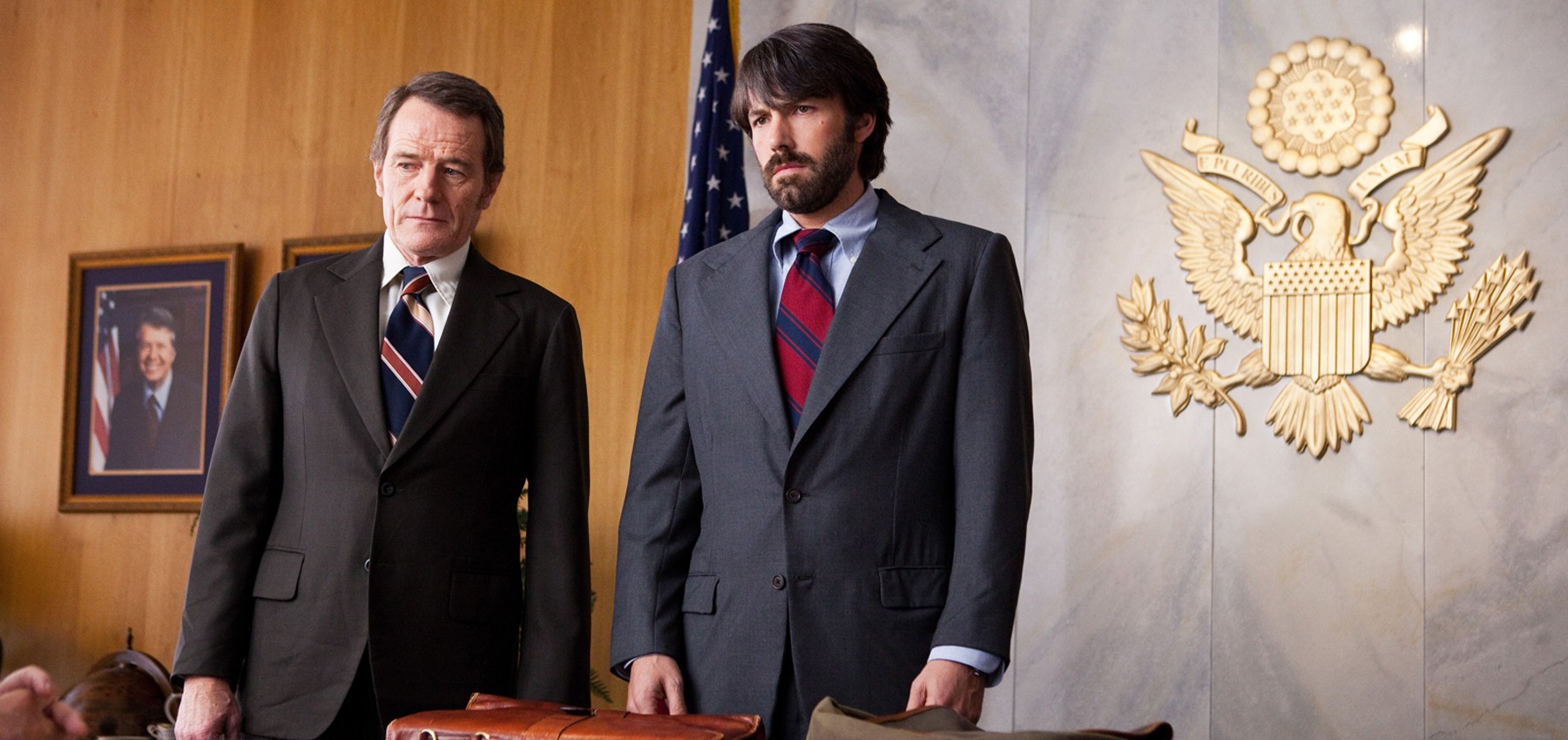
What does it take to fool the Iranian Revolutionary Guard? If Argo is to be believed, the answer lies in a little Hollywood magic. Director and star Ben Affleck excavates the human story that so often gets buried beneath the rubble of political turmoil. The result is a tightly-wound, deftly-scripted film that is less of a history textbook than a how-to guide on building cinematic suspense.
In 1979, Iranian students, aflame with revolutionary fervour, overran the American Embassy in Tehran, taking more than 60 American diplomats hostage. Before the Islamic Republic of Iran had even taken its baby steps, it picked a fight with an alpha dog of the international order. Unbeknownst to Iran, however, six Americans managed to escape, seeking refuge in the residence of the Canadian ambassador. The result is a tale almost too fantastical to believe. In the words of one CIA division head (played by Bryan Cranston), delivered in a deadly deadpan tone: “this is the best bad idea we have sir—by far.”
This idea involves CIA ‘exfiltration’ officer Tony Mendez (Affleck) sneaking into Iran to help the six Americans to pose as a Canadian film crew. They’re in Iran scouting locations for a film, ‘Argo: A Science Fantasy Adventure.’ Now they’d like to leave—please. What could go wrong?
Affleck’s last directorial effort was The Town (2010), and though it differs from Argo in key ways—the former an action-oriented heist film, the latter a slow-simmering political thriller—both are evidence that Affleck is a better director than actor. The Mendez that we see is no-nonsense, gets the job done, a man who sacrifices family for his work—in other words, the boring archetype that passes for antihero in the 21st century—and it doesn’t help that Affleck plays him with whatever is the opposite of charisma.
The true strength of the film lies in the cinematography, the editing, the script, and the interplay between the three. The skillful editing of historical reels, interspersed amongst filmed footage, endeavours to ground the film in historical reality. The selective use of the handheld camera makes its appearance, such as during the initial siege of the embassy, even more effective. Dialogue can be sharp and biting, and the screenplay’s adroit weaving of levity and tension, particularly in the hands of Cranston, is a pleasure to behold.
On to the politics. The script goes to great lengths to present the views of both ‘sides,’ but only during the moments that function as history lessons. The rest of the film is mostly stripped of this level-headedness. The fact that the ‘balanced view’ is seen during historical narrations, while the meat-and-bones of the film is replete with subtle (and not-so-subtle) bits of American triumphalism, reinforces a cognitive dissonance in the viewer. The result is an audience who can hold simultaneously a sympathy for the Iranian people and a self-righteousness for the Western endeavour, a contradiction reflected in the murmurs of the audience.
Nevertheless, Affleck’s focus clearly isn’t on the political. In fact, Argo is successful not despite, but because of this tactical decision. The taut, high-strung journey is fundamentally a tale of heroism, of human triumph through political machination. I cringe when thinking of how many high school teachers will be substituting a social studies class with this film in the years to come—but at least they’ll have good cinematic taste.
Cinema du Parc’s retrospective begins Friday, Oct. 12, and includes Take the Money and Run, Bananas, Play It Again Sam, and Sleeper. Tickets $8, show times can be found at www.cinemaduparc.com
Film
Kubrick’s Firsts
Friday Oct. 12 through Sunday Oct. 14, legendary director Stanley Kubrick’s first films (Fear & Desire; The Seafarers) are on display. This is a rare opportunity, with Fear & Desire recently restored piecemeal from strips in private collections. Tickets $8, show times can be found at www.cinemaduparc.com
Film
Classic Films That Must Be Seen
This Saturday and Sunday, catch Sofia Coppola’s Lost in Translation and Virgin Suicides as part of Cinema du Parc’s classic films series.
Tickets $8, showtimes can be found at www.cinemaduparc.com
Music
Montreal Ska Festival
The Fundamentals, Victor Rice vs. The M7, and The Planetsmashers are featured Thursday through Sunday at the fourth Montreal Ska Festival.
Tickets: $17.20-$20.20, and can be purchased at www.montrealskafestival.com
Comedy
Russell Peters
The renowned comedian plays the Bell Centre this Monday, Oct. 15, as part of his Notorious World Tour. Tickets $52.50-$99.50, and can be purchased at www.evenko.ca
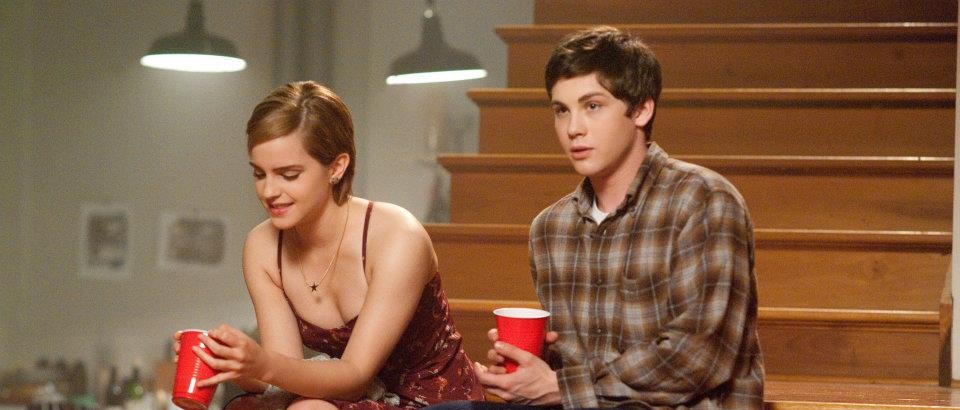
Though peppered with clichés like “we accept the love we think we deserve,” The Perks of Being a Wallflower is not a typical teen movie. Director Stephen Chbosky’s adaption of his own novel feels genuine—at times, heart-wrenchingly so. Fans of the book will welcome the film’s loyalty to the original.
Charlie (Logan Lerman), the film’s outcast protagonist, sends letters to an anonymous reader, searching for the outlet he lacks. These letters detail Charlie’s struggles to connect with a world outside of his family and overcome mental trauma. Rather than becoming a dreary plot-advancement device, the letters allow the audience to become his “dear friend,” to whom he turns to in his times of need. Lerman’s portrayal of Charlie is orchestrated to the last detail; his manner of speech and body language betray how lonely and anxious this wallflower is, even without dialogue.
During one high school football game, Charlie walks up to Patrick (Ezra Miller), a senior in his freshman woodshop class. Later that night he meets Patrick’s step-sister, Sam (Emma Watson), and Charlie begins to (quite literally) dance away from his wall as he connects with them.
While Patrick is the vibrant class clown, he also happens to be dating the high school football star Brad on the side, and he steals all of the attention away from Charlie, perhaps intentionally. While Miller handles Patrick’s range of emotions, from punchlines to despair, with ease, Watson falls flat. Her mediocre performance as a damaged music lover, with a line of awful boyfriends, is decidedly forgettable. Nevertheless, the three grow close; as Charlie is exposed to drugs, alcohol, and the Rocky Horror Picture Show, he finally experiences a world outside of his crippling depression.
The aesthetics of the film, especially the cityscapes, make it a pleasure to watch. The cinematography effortlessly depicts ‘90s Pittsburgh, from mix-tapes to walkmens. During one of their first encounters, Patrick and Charlie drive through a tunnel while Sam stands triumphantly in the rear, the city’s skyline emblazoned in the background. The skyscrapers, with their bright lights and monumental longevity are a tangible representation of how, in that moment, the trio “feel[s] infinite.”
The pacing translates well from the novel. Charlie’s experiences feel like snapshots of his life, and his perspective is told through his letters. However, the movie feels rushed and glossed over. There are several sub-plots that feel irrelevant because they are not properly fleshed out.
The Perks of Being a Wallflower isn’t really a boy meets girl story—more like boy meets lots of emotional issues. However, it never feels fake or forced. It’s definitely worth seeing for its rising stars or excellent soundtrack alone. Much like Charlie, the film thrusts the stuff of life—both happy and sad—onto view. The Perks of Being a Wallflower isn’t just comedy—rather, it’s humour interlaced with a sombre look at what it means to stand up and take part in life.
The Perks of Being a Wallflower is currently showing at Cineplex Scotiabank Theatres, 977 rue Sainte-Catherine.
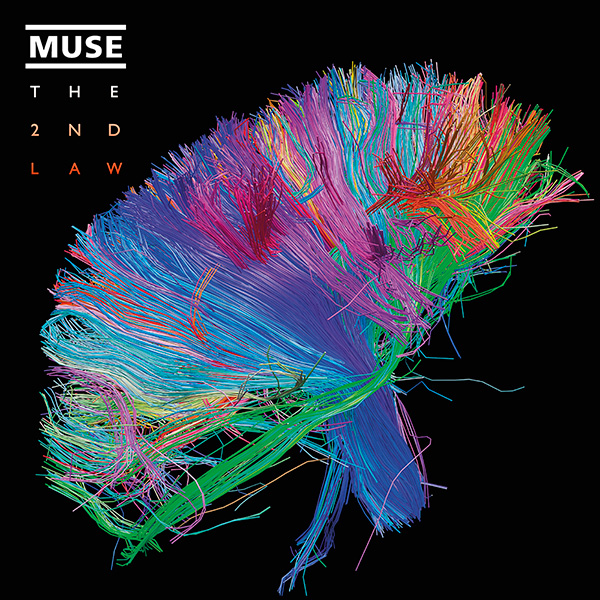
Muse was heard across the world this year with their official Olympic anthem “Survival.” Their sixth album, The 2nd Law, followed hot on its heels, and much like their Olympic debut, brought back the grandiose musicality and exuberant magnitude that Muse fans have been dying for the band to rediscover.
This album is incredibly adventurous and a little cheeky. While it doesn’t stray from the expected themes of political resistance and apocalyptic forecasts, some tracks, namely the standout number “Panic Station,” skirt the edges of funk, reminiscent of a mid-‘80s David Bowie. The band even ventures into ‘brostep’ territory, with Nero producing “Follow Me.” Strangely enough, these all come together under the banner of a quasi-sci-fi theme (the title of the album referring to the second law of thermodynamics) to form an epic, entertaining record. Unusually for Muse, The 2nd Law adds a second voice into the mix, as fans get to hear bass player Christopher Wolstenholme take vocal lead on “Save Me” and “Liquid State.”
It seems fitting then, that this album contains a minute-long instrumental “Prelude” in classic Baroque style, that segues into “Survival.” With its cacophony of operatic voices, bass heavy music, and thundering guitar that persist throughout, the album may perhaps be a modern take on the operatic form, based on an allegory including thermodynamics and the global economic crisis. Or, it could just be Muse doing what they do best: creating the kind of music that is meant to be played live in stadiums to enthralled audiences.
While this album is nothing like Muse classics (Black Holes; Revelations) The 2nd Law far outshines their last release—The Resistance—and sets the groundwork for a new spin on Muse’s well-oiled formula. The 2nd Law keeps the epic and adds the funk, and frankly, this new spin suits Muse well.
Oct. 5, 2012 proved to be a day of excitement for experimental-pop group Thus:Owls. Not only was it the release date of their most recent album Harbours, but it was also a day of positive response from devoted fans. Erika Angell, a Swedish singer/composer is to thank for gathering this fragile and ghostly concept-band which came into existence just over three years ago. Since then, Thus:Owls have not sat still, touring extensively throughout Europe and North America.
The Angells (Erika and her husband Simon), Cecilia Persson, Martin Höper, and Olga Hultgren spent long hours in the French countryside recording all nine compositions for Harbours, and finally arrived at an album that they believe “straddles the world of fragility with cinematic intensity.” Decorated accordingly, with strings, percussions, and horns, Erika Angell’s voice (reminiscent of Julia Stone) glides over memorable tracks such as “I Weed The Garden” and a personal favourite, “Farmers In Japan.”
Thus:Owls’ eerie, ethereal sound seems to be grounded in their international influence, stretching from Sweden to Montreal. Unfortunately, their signature sound was missing in a number of the songs (“Museum” and “Roots”), and the sense of melancholia characteristic of their work was absent in almost half of Harbours’ tracks. In spite of the hit-and-miss nature of the album, the few enjoyable songs work well to relieve one’s autumn blues.
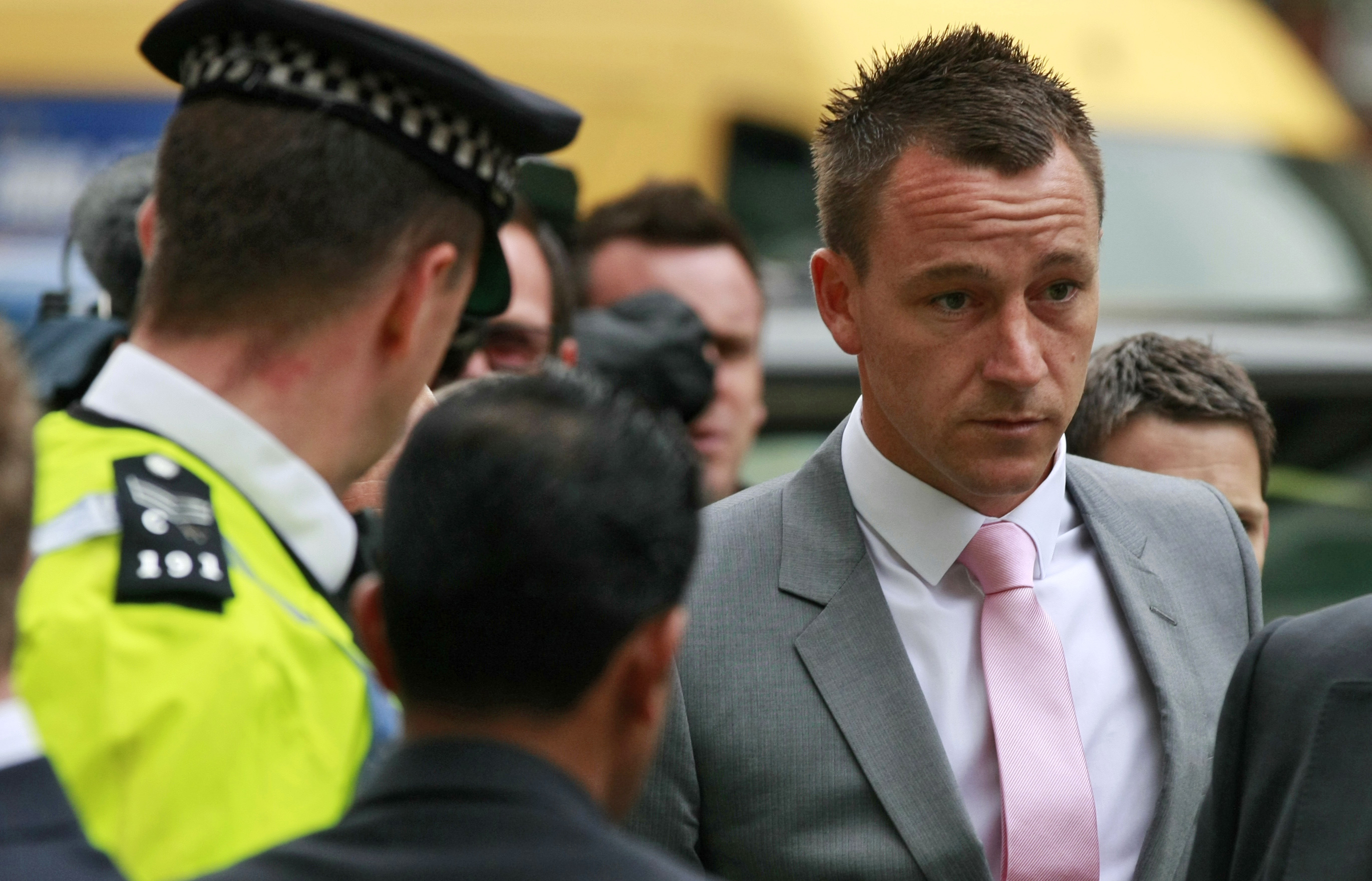
English soccer player John Terry resigned from further international matches this week. His retirement came amidst a hailstorm of controversy stemming from a well-publicised racial incident involving fellow Briton Anton Ferdinand in 2011. In his resignation statement, Terry announced that the Football Association had made the situation “untenable.” This is just one of the increasing number of occurrences of racism in soccer, highlighting the need for strong action against this unacceptable behaviour.
Click to see the full feature!
As Euro 2012 wound down, very little about the sport had changed; fans still loved soccer, and players were still diving. Spain remained the untouchable champions and kings of football; and the other elite nations—chiefly Germany and Portugal—had fallen in nicely as well. Of course, merciless England blundered another round of penalties, and returned home to their tea and crumpets prematurely. Unchanged was the brooding and ugly presence of racism in Eastern European soccer stadiums.
Realistically, to continually refer to soccer in its current state as ‘the beautiful game’ is to be willfully or woefully naïve. The days of the beautiful game are gone. Those inspiring pictures and videos of impoverished but united youth, kicking paper balls across compact sand pitches have been buried under a mounting list of scandals and hateful chants. Contrasting the superficial on-field failures like flopping, laziness, and contrived showboating—which merely cause the raising of a cynical eyebrow—the sweeping pandemic of racism damages soccer’s greatest asset: its ubiquitous worldwide appeal. It all but obliterates FIFA’s famous, but misleading mantra “My game is fair play.”
Quite simply, today’s fans neither live in the beautiful age of soccer nor relish its golden aura. Instead, soccer faces a legitimate threat to its global popularity and relevance—a threat made worse by the egregious shortcomings of its two principal governing bodies, FIFA and UEFA. FIFA seems far more concerned with threatening Canadian Olympians who disagree with suspect officiating, than with defending basic human rights by enforcing racism-free stadiums. It would appear a complete rethinking of the timeless sport is in order by fans, players and organising officials wishing to restore the game’s global pull.
When Poland and Ukraine were awarded the honour of hosting the 14th edition of the European Championships in mid-2007, many were skeptical of their capabilities to saddle the momentous cost such an international event demands. The doubt seemed well-founded: both are former Soviet-bloc states in different stages of social and economic development, and are the first of their kind to host the quadrennial tournament. After analyzing the figures, reported preparation costs soared to over $39 billion across the two nations and amassed a debt of $8 billion in Ukraine alone.
[pullquote]With increasing amounts of bigotry across the entire spectrum that is football, one must remember thatsoccer is the chosen ambassador of globalism in sport and thatracism affects not only those subjected to it, but the entire two billion fans worldwide who long for a prejudice-free medium.[/pullquote]
Yet, there is some benefit in allowing nations to host events like the Euro if they believe they have the capacity to afford it—inasmuch as they will not require long-term bailouts (think of the Big “Owe” here in Montreal). It is in the spirit of international events to enhance global awareness and equality, and instills national pride and wonderment. However it is up to these nations to operate under the umbrella of fair play and social justice. It is here that not enough scrutiny was placed. Nobody, much less the UEFA, seemed to be paying any attention to the increasing incidences of racism in that region since the early 90s, both related and unrelated to soccer.
Since the fall of the Soviet Union, most countries in the Eastern Bloc have seen a steady increase in ethnic tension as they struggle to forge identities following years of social oppression. The war in Yugoslavia at the conclusion of the 20th century provides a strong example of how deeply and fundamentally this feeling is rooted.
To put this specific European Championships’ region into perspective, an internal 2010 Ukrainian poll conducted by the Kuras Institute highlighted that 70 per cent of Ukrainians exhibited xenophobic behaviour and described ethnic outsider influence as disagreeable. In Poland, the European Values Survey revealed similarly disheartening numbers, despite an initial levelling out following Poland’s entrance into the European Union. Meanwhile, in Russia—the host of the 2018 World Cup—over 3,700 racially fuelled, violent attacks causing death or injury occurred between 2004 and 2011. Most disturbingly, however, is that all sources point to a high level of governmental ambivalence, which breeds this sort of behaviour.
But what does this all have to do with soccer? On the surface, nothing—as bigotry and intolerance are omnipresent cultural issues that affect every aspect of society, and can be separated from sport. However a hard line cannot be etched between sport and society. In fact, an 18-month bigotry exposé of the host nations, undertaken by the Warsaw anti-racism group ‘Never Again,’ found numerous instances of racism classified as “giving rise to concern” leading up to the games. Most abashedly, the study highlighted an incident in a 2011 Polish match where a massive anti-Semitic poster was put on display for most of the contest without any police or security groups intervening. The inquiry gave credence to 195 individual events occurring in each of the two countries before “Never Again” closed its study in mid-2011.
Racist soccer fans in Italy. (yfrog.com)
The build-up to the tournament was again sensationalist in bigoted misfeasance from its infancy. The BBC visited the region just prior to the opening match to comment on the progress of the grounds, but was instead shocked to discover the prevalence of anti-Jewish and anti-African chants that swept through the stadiums and post-match events. These chants were so widespread that British soccer officials recommended that families of black athletes on the English team remain at home, safe from persecution in the stadiums.
Mario Balotelli, an up-and-coming Italian star, threatened “to kill” anyone found throwing a banana at him and to “walk off the pitch at the first sign of trouble.” Although his sentiments were about as tactful as a bull in a china shop, they offer insight into the fear and resentment of many promising players towards racism in the sport specifically when it came to Euro 2012.
[pullquote]Open your ears. If you did hear it and don’t want to hear it, that is even worse. — Dutch Manager Mark van Bommel[/pullquote]
The actual event itself served to solidify pre-tournament trepidation and highlighted UEFA’s inadequate stance on racism. When the Dutch national team arrived for their first training session before the event, they were met with malicious singing from Polish spectators, leaving captain Mark van Bommel crestfallen. In an interview with the BBC, van Bommel said “Open your ears. If you did hear it and don’t want to hear it, that is even worse.” UEFA, who had cameras at the event, cited no offence and chose not to respond the incident.
Eventually, UEFA would fine three nations “for improper behaviour of [their] fans… racist behaviour and racist chanting.” First, Croatia was dinged with a fine of €80,000 for verbal assaults on the frightened Balotelli, €40,000 of which were actually for setting off fireworks in the stands. Russia and Spain were quickly slapped with additional €30,000 and €20,000 fines respectively, for similar for similar transgressions. On paper, this appears progressive, as if UEFA was actually taking a resolute stance on fighting racism in Europe. In reality, it is far from doing so.
Euro 2012 spectators may recall a different, though newsworthy altercation when gleeful Danish striker Niklas Bendtner pulled up his shirt and slightly lowered his shorts to reveal a green pair of “Paddy Power” drawers after scoring his second notch in his match against Portugal. The penalty for this obviously farcical display? Bendtner was fined €100,000 and earned a one-match competitive fixture suspension for the upcoming World Cup Qualifier. To reiterate, the harshest punishment handed out by UEFA during the Euro Cup 2012 was for a cheeky goal celebration, and not in response to insults and bananas being hurled at black athletes. It is as if the grey-haired heads of European soccer gathered in a conference room to discuss how they could appear to care about crucial problems facing their sport whilst not actually caring about them at all, proceeding to get completely sidetracked in order to uphold 20s’ indecency laws against exhibiting undergarments in public.
UEFA’s Executive Board is not diverse. First of all, there are 17 members. All of its members are Caucasian and all of them are quite old. Only one of them is under 50 (49 and eight months) and only four are younger than 60 years old. But, in a hip and defiant move, UEFA broke up the boys’ club by adding a single, relatively young (51) female… in 2012. Not surprisingly, these executives are either a little out of touch as to how to correctly run and police a sport dominated by youthful exuberance and multiculturalism.
These events are not occurring in Eastern Europe alone. It is often easy for fans in the “civilized” Western world to wrongfully dismiss the problems experienced in the “barbaric” East as a hangover from years of radicalism and irrelevant to our age-old democracies and equal-rights societies. In actuality, when the wrongdoings are scrutinized, the West is anything but chaste.
For instance, among the countries penalized for racism in the European Championships was Spain. The West is not immune to bigotry. Moreover, in some areas of Germany the problem has risen so substantially that in FC Cottbus’ stadium, racial epithets are considered the norm. England appears to be the worst offender of all, with at least five supporters ejected in the past year alone for racially abusing opposing players and fans. Anti-Semitism also runs almost rampant in football expositions in Britain. Most infamously, Chelsea and Arsenal have long persecuted members of Tottenham, a team with a significant number of Jewish supporters.
[pullquote]To believe the problem of racism in soccer and society stops at the fallen Iron Curtain, then, is as short-sighted as those engaging in racism to begin with.[/pullquote]
To believe the problem of racism in soccer and society stops at the fallen Iron Curtain, then, is as short-sighted as those engaging in racism to begin with. Again, it can be said that the organizing committees have been almost willful in their compliance. The British FA continually refuses to indict fans accused of racism. Instead, the FA chooses to slap them on the wrist with menial bans that are difficult to enforce. This all but nourishes a sense of appropriateness amongst the general public.
This is not to say that the offences and faults rest solely with soccer fans. In actuality, the principal and often repeat malefactors are the players themselves. The competing teams, leagues and countries have become somewhat of a hyenas den, mercilessly gnawing and biting at the foes’ race or creed until the spirit of competition is lost.
During an October 2011 match, Luis Suarez of Liverpool racially abused Patrice Evra of Manchester United repeatedly, which ultimately led to the Suarez’s suspension by the FA. Weeks later, amidst a media-fuelled fire, former England captain John Terry was cleared, by a court of law, of racial allegations against Anton Ferdinand, an English soccer player of African descent. Terry admitted to using “black” and “extreme sexual language” in the same sentence towards Ferdinand. Ferdinand’s brother, famous footballer Rio Ferdinand, was then accused of racism over Twitter, towards fellow African-Englishman Ashley Cole, who supported Terry throughout proceedings.
Russian fans unfurled this inflammatory banner at a Euro 2012 match against Poland in Warsaw. (yfrog.com)
The list runs on and on. Brazilian soccer star Roberto Carlos was frequently subjected to racial remarks by competitors after signing a contract in Russia in 2011, and German player Kevin Großkreutz was suspended twice over his career for using racially insensitive language. Whether or not this behaviour by players is waning remains to be seen. With many anti-racism campaigns in football cropping up across the continent, what is clear is that players too, need to realize their faults in the steady trend of racism and fall into the mould of social conscientiousness if football is to transcend racism in the immediate future.
Regardless of whether the blame is assigned to players, spectators, or governing officials, or if it is Eastern or Western Europe worthy of condemnation, the fact of the matter is something must change. With increasing amounts of bigotry across the entire spectrum that is football, one must remember that it is the chosen ambassador of globalism in sport. Racism affects not only those subjected to it, but the entire two billion fans worldwide who long for a prejudice-free medium. Unless UEFA chooses to abandon its archaic form of rule, fans are subjected to more austere penalties for hooliganism, and players are less acrimonious in their exchanges with fellow competitors. Then, soccer faces the risk of losing its global relevance and its title as ‘the beautiful game.’
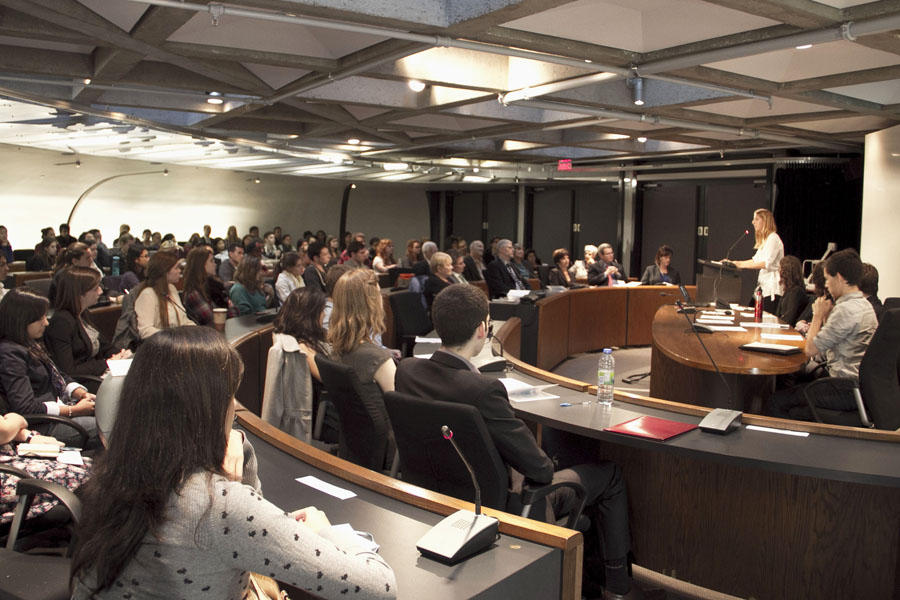
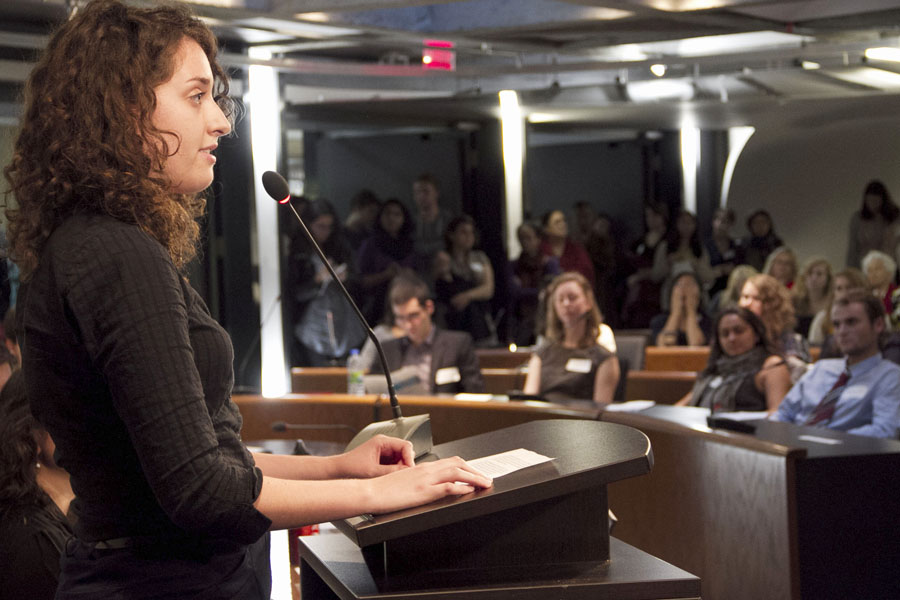
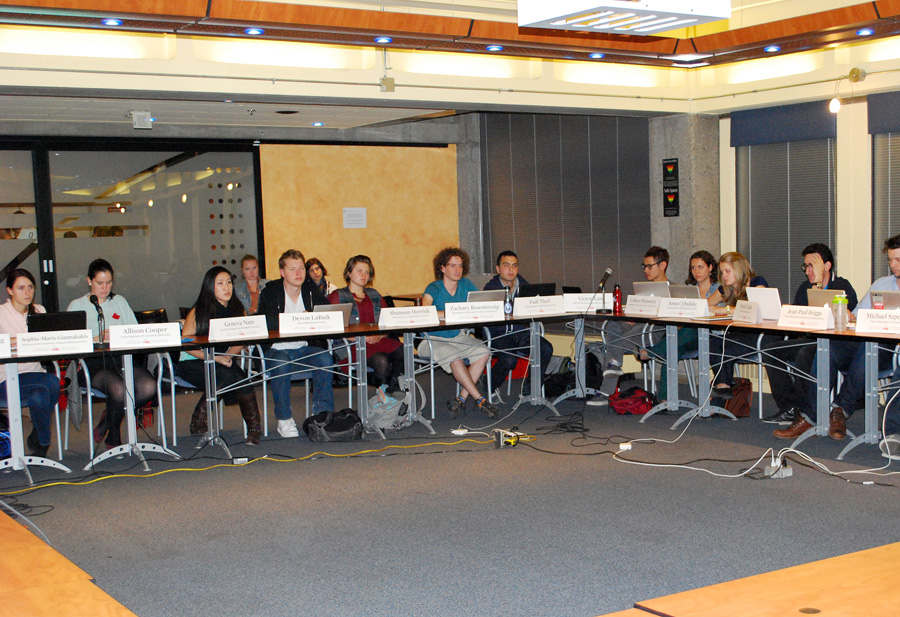
On Sept. 27, McGill’s Board of Governors (BoG) convened for the first time this fall to discuss the university’s goals this academic year.
Principal and Vice-Chancellor Heather Munroe-Blum opened the meeting with some remarks regarding enrollment strategies at the university.
“We got the year off to a good start,” Munroe-Blum said. “Our goal is to maintain the overall number of undergraduate students, but target some areas [like Macdonald Campus enrollment]. Then, in addition to maintaining the quality of our students, which is exceptional, [our focus will be] the proportion of graduate students to undergraduate students.”
According to the principal, around 25 per cent of the McGill student body are current graduate students. This ratio compares favourably to the average at other Canadian universities, where only 15 per cent of the student body is generally composed of graduate students, but is significantly lower than American universities, which often have 40 to 60 per cent in graduate school.
She added that it is difficult to determine whether there has been any significant change in graduate admissions this year, as graduate applications generally happen throughout the school year.
Munroe-Blum said McGill’s overall enrollment has increased by 2.6 per cent since last year. The geographical basis of the students has remained similar, with 55 per cent of students coming from Quebec, 25 per cent from the rest of Canada, and 20 per cent from other countries.
According to Munroe-Blum, McGill’s enrollment mix is just one of five core priorities outlined in the university’s Strategic Reframing Initiative. The other four are cost efficiency, performance enhancement, philanthropy, and transformative research and innovation.
She also stressed McGill’s commitment to pursue “technology-enabled, campus-based education,” saying that the administration is working to provide students with an applied experience wherever possible.
Jonathan Mooney, secretary-general of the Post-Graduate Students’ Society and one of two student representatives on the BoG, mentioned several topics that he hopes it will address this year. These include the potential establishment of fora that will allow the McGill community to engage with the governors.
“ I [also] think there should be a lot of discussion about the future of universities in Quebec and the role McGill and its students will play at the upcoming education summit,” Mooney said. “I think the governors will have a lot of insight and guidance for the university in approaching these crucial and far-reaching issues.”
Munroe-Blum also mentioned that the administration is considering several issues that arose from the previous academic year. McGill is looking to create an “open security approach” with a professional reception area in the James Administration Building, in order to improve student accessibility. According to Munroe-Blum, another issue is the adequacy of the McGill student disciplinary system, indicating that it is not a transparent procedure.
Dean of Arts Christopher Manfredi, who ran an open forum series last year on the topic of free expression and peaceful assembly, will submit his report on his findings in mid-October. Munroe-Blum expressed hope that the administration can use his findings to create a permanent protocol—to replace the current provisional protocol—by the end of the year.
Munroe-Blum also drew the BoG’s attention to the numerous recognitions and awards McGill has recently received, including Professor Graham Bell’s appointment as president elect of the Royal Society of Canada, and the 14 prestigious Vanier scholarships award to McGill graduates.
Mooney said he was generally impressed by the BoG’s first session.
“Several of the most pressing and concerning questions I had planned to ask on a few issues were actually asked by other governors before I could ask them,” he said. “I think [this] shows how discerning and sharp the governors are.”
On Sept. 28, Deputy Provost (Student Life and Learning) Morton Mendelson published a statement on the McGill Student Accounts website confirming that, in accordance with the Parti Québécois’ (PQ) recent cancellation of the tuition increases implemented by the former Liberal government, the university will return the difference in tuition fees to students.
Pauline Marois’ newly elected government repealed the tuition hikes by decree during its first cabinet meeting on Sept. 20. This move fulfilled a promise Marois made during her election campaign.
However, all Quebec universities had implemented the tuition increase for this fall semester. As a result of the freeze, McGill is expected to lose $90 million over the five years of the original tuition increase, according to a statement from Provost Anthony Masi.
In his statement, Mendelson explained that students’ Minerva accounts will be credited, and afterwards, “students will be able to request refunds according to established practices.” Currently, students may request other refunds through the Student Accounts’ menu on Minerva.
However, Mendelson added that McGill has yet to receive any “official written notification” from the provincial government. According to Mendelson’s statement, McGill is unable to undertake any further action on tuition refunds until the PQ informs the university of the amount of the new tuition rate.
“This is the third time this year that proposed tuition rates have changed,” Mendelson wrote in the statement. “We need to wait for the precise numbers from the government so that we are sure to reimburse students the proper amount.”
The online statement also mentioned the provincial government’s interest in creating “an alternative formula” for calculating tuition adjustments. Despite just having cancelled the tuition hikes, the PQ has recently demonstrated support for indexing tuition to the rate of inflation.
Marois has promised to hold a summit on education within her first 100 days in office, where discussion over the financing of universities will take place, and where the PQ government will suggest a policy on tuition indexation.
Mendelson’s statement also touched upon the slow communication between the PQ government and McGill throughout the past month. According to Mendelson, this delay in the transferring and confirmation of information is one that can be attributed to the current restructuring of the former Ministry of Education, Recreation, and Sport, which is being split into two ministries.
“A senior official in the new ministry responsible for higher education … noted that he understands our impatience to move forward with this matter as soon as possible,” Mendelson wrote. “When we receive our instructions from the government, we will inform students immediately and launch the process of credits and refunds.”
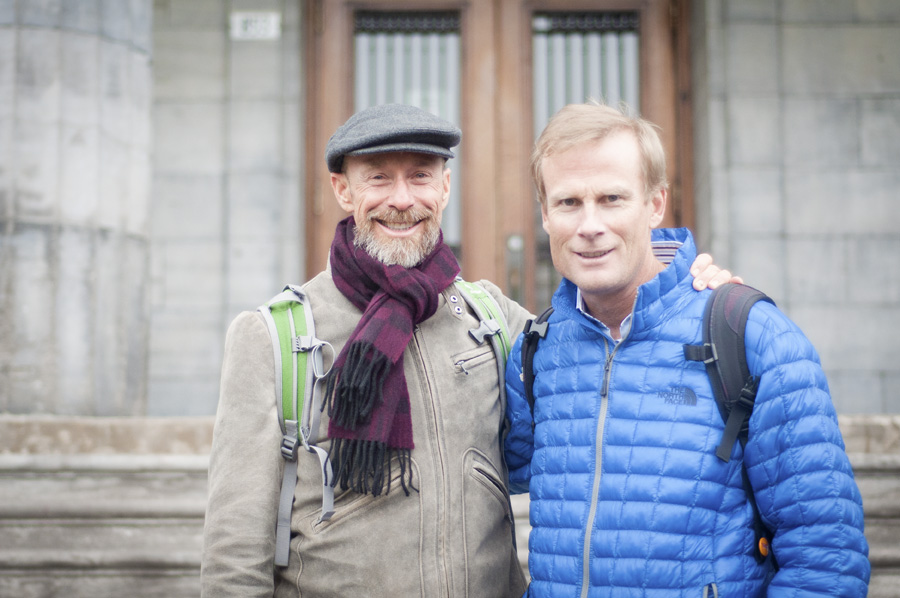
Conrad Anker and Kenny Broad are two explorers who have, respectively, scaled the highest peaks and dived into the deepest oceans on the planet. On Sept. 29, the two spoke at McGill in “An Evening of Field Research and Exploration,” a free public event hosted by the National Geographic Society. Before their presentation, Anker and Broad spoke to the McGill Tribune about their explorations and why exploration continues to be relevant today.
McGill Tribune: Can you briefly describe what you do?
Conrad Anker: I’m a mountain climber. I participated in research with the National Geographic Society in 2002, when we studied the chiru, a Tibetan antelope. I’ve also helped out climatologists studying glaciers.
Kenny Broad: I’m an environmental anthropologist. I look at the ecology and policies for human-environment interactions and decision-making. I’m mainly a diver, and I like to put together groups from different scientific disciplines because sometimes, you only get one shot to go to a remote area, so you try to work as much as you can in that one shot.
MT: How did you become interested in your field of exploration?
CA: I grew up in the mountains, so it was what my parents forced me to do … and I ended up loving it! I’m just hard-wired for a high-risk, high-sensory-input type of environment.
KB: I grew up in Miami Beach where, if you go outside, you’re almost in the water. Some people have this different feeling when they get to another environment, whether it’s the mountains or [in] water … it opens up your world, and all the problems that we feel on land kind of disappear.
MT: Describe your favourite exploration.
CA: It’s probably the trip in Tibet when we studied the chiru. We ended up producing a show for the National Geographic that lessened the demand for the Shahtoosh shawls that the animals were being poached for, so it had a good outcome.
KB: My best trip is probably the most recent, when I explored some underwater caves in Florida. We have real challenges with our water resources, so to be able to bring back information and really push for better use of water in my neighbourhood is what I love. It had the best of exploration and also some kind of societal outcome.
MT: Why do you think exploration is important?
KB: The question of ‘why do you do this?’ is not one we ask ourselves. It just feels natural. I heard there’s evidence that people have an ‘exploration gene,’ a certain genetic makeup where you want to push a little further into the unknown. And whether it’s for conservation, or better management of particular resources, or human health findings for a particular drug development … those are all great outcomes, but the core of it is that selfish desire.
CA: In the bigger picture, humans are driven by exploration and discovery. The next continents to be discovered are not the physical continents, because we’ve mapped everything, but how we feed, clothe, and shelter seven billion people today, and nine billion people in twenty years; and where do we do that? Addressing these questions that have concrete outcomes—that’s where exploration and discovery [have] gone. If we don’t keep that [exploration] gene alive and don’t get people excited, then we’re not doing society a favour. Universities are incubators of knowledge and thought—that’s why being able to share our adventures at a university feels really good for Kenny and I.
MT: What advice would you give to students about their aspirations?
KB: Follow your aspirations and go for it. Nothing comes easy, and don’t worry if you fail at something. You should worry if you’re not trying your hardest but don’t worry if you fail, and just keep trying.
CA: And do it because you want to, not because there’s some reward. Find out why you want to do it and be prepared for a lot of work and sacrifice. If it’s really something you love to do, the effort you put into it will come easy. We’re so diverse as humans, that when you find what you’re good at, and you can really excel at it, then you’re doing yourself and your fellow humans a great favour.
—This interview was condensed and edited by Karen Huang.