The owners are crying poor, the players are rebelling, and the fans are suffering the most. What else is new? Here’s an ingenious list of activities that are bound to keep you occupied and distracted in ways which Grapes’s flamboyant suits could never do.
#10. Wash your jerseys.
Sports fans cherish their jerseys. It shows their allegiance as well as the mustard stains from that ridiculous, but delicious, $7 hotdog bought at the game. We normally refrain from washing it, but an exception should be made as we usher in a new agreement. Everything should start fresh.
#9. Save your sick days at work for a real emergency.
Studies have shown a positive correlation between the use of sick days and games between divisional rivals. This is the perfect time to impress your employers and start an attendance streak that will make former NHL ironman Doug Jarvis proud.
#8. Learn to skate.
Practice what you preach and actually learn to play the game. See, it’s not that easy. There’s a reason they call hockey the fastest game on two feet—and why we love it so much. In addition, all of that time sitting around watching hockey has probably caused you to put on a couple of kilos … it’s never too late to put on a skate.
#7. Follow your favourite NHL stars in Europe.
The NHL season is not in play, but that does not mean your favourite players are on the sidelines. Many NHL stars have already headed to Europe, and more will surely join them. If the time difference bothers you, watch your team’s future stars play in the AHL or CHL.
#6. Go viral.
Make another YouTube lockout video, because there just aren’t enough of those already. Show that you care! However, be warned that using Nickelback as background music is justification to have your account banned forever.
#5. Free your mind.
Do something mind-numbingly boring, and direct your bottled up frustration and anger towards it. My suggestion: watch some soccer.
#4. Troll the Leafs.
Nothing is more enjoyable than bashing Toronto’s mediocrity. I’ll even get you started on a few topics: Kessel’s lack of physicality; James Riemer, the human sieve; or my personal favourite, the team’s 45-year cup drought.
#3. Troll the Habs.
If you thought making fun of the Leafs was fun, wait until you start targeting the Bleu, Blanc, et Rouge.
#2. Study.
Get that A you always wanted. Impress your friends and family with a sparkling 4.0 GPA.
#1. Get a new hobby.
You must be really bored if you made it all the way to #1. For your sake, I hope the lockout ends soon.
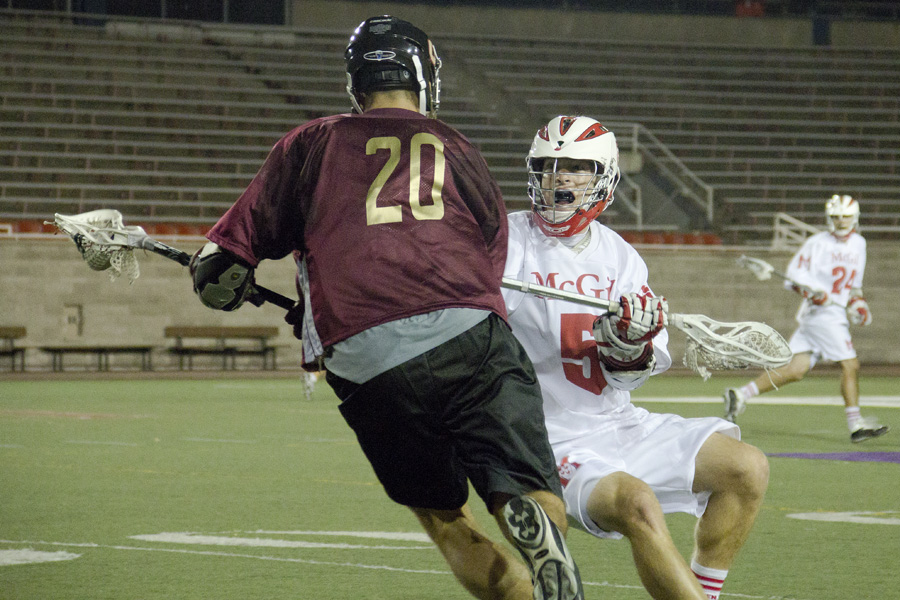
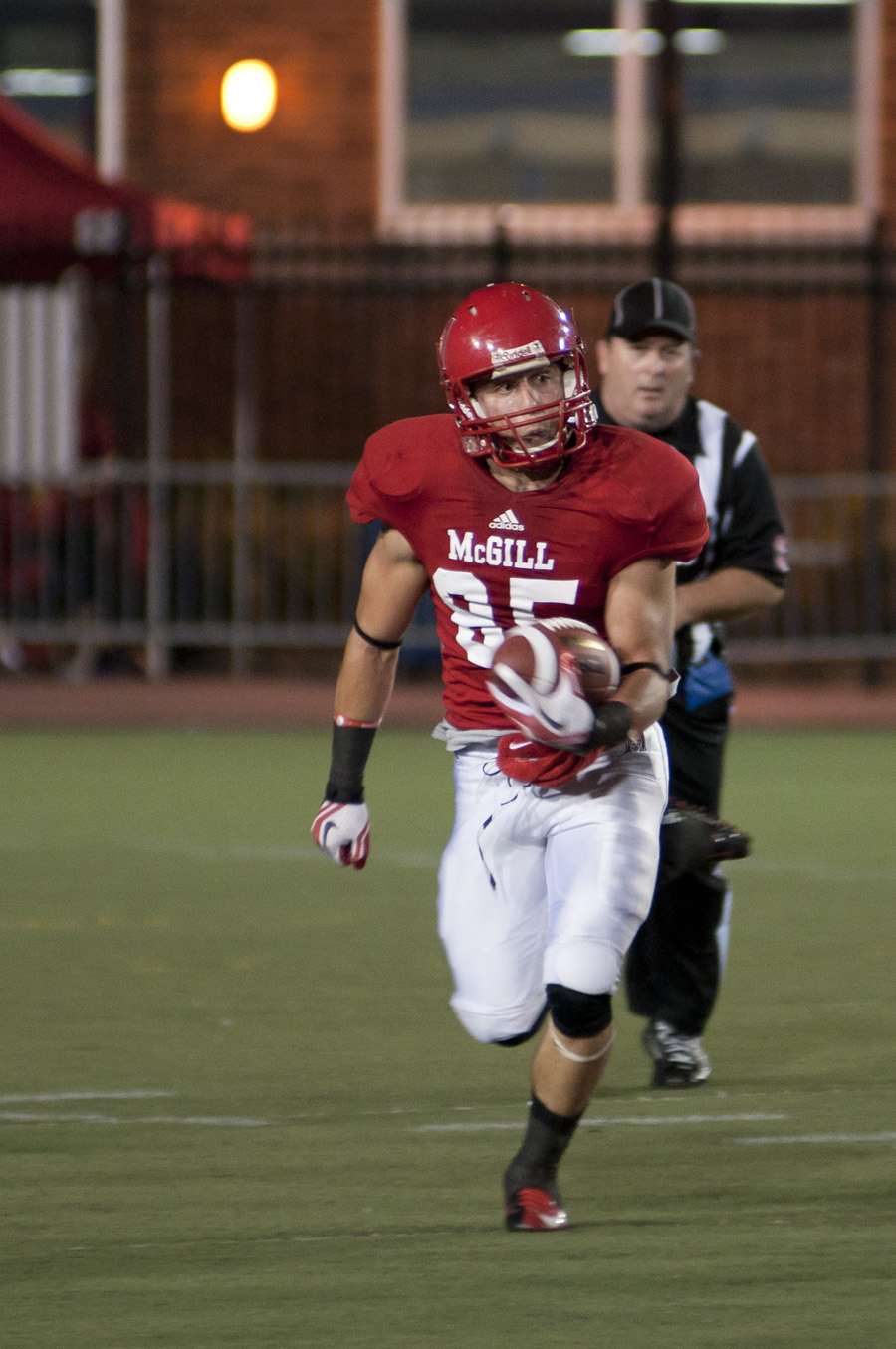
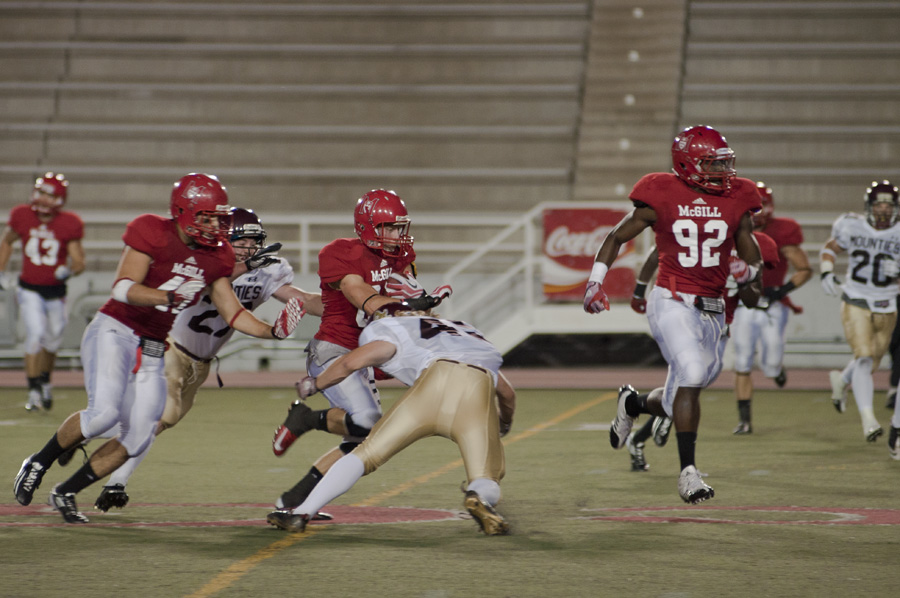
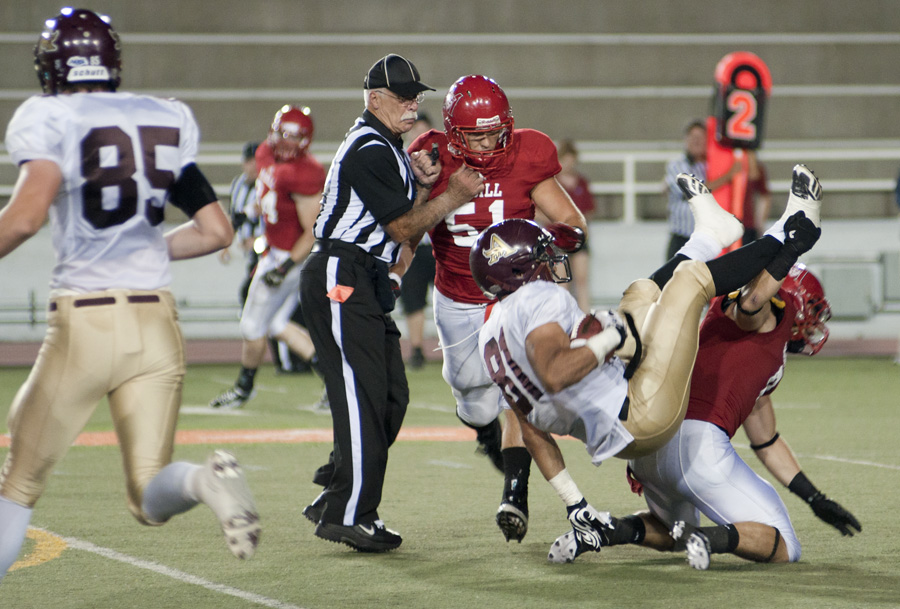
“Ugly, just ugly,” is how one Redmen fan aptly described McGill’s performance last Friday, when they played host to the Laval Rouge et Or in a rain-soaked match up at Molson Stadium.
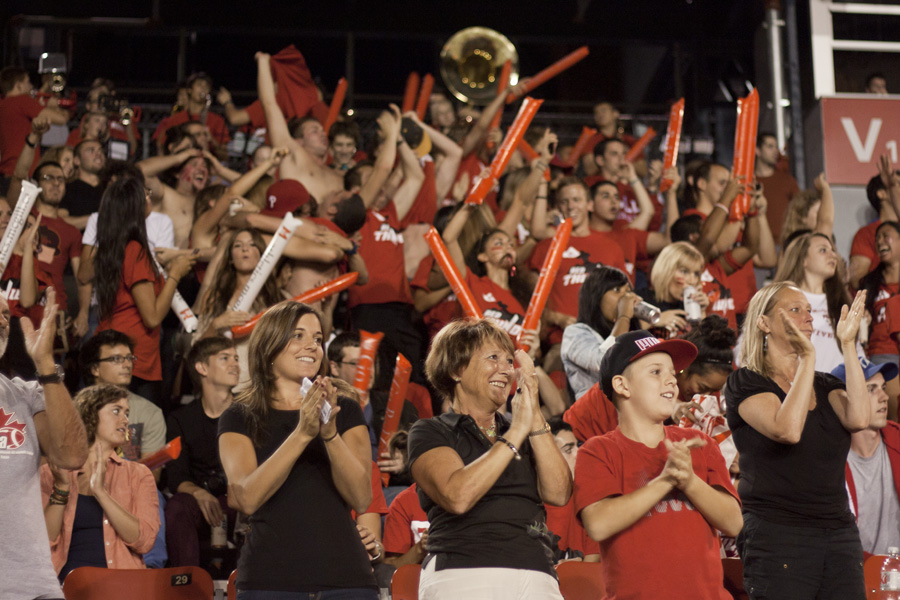
Riding high off their first win in almost three years, the McGill Redmen (1-3) failed to deliver a successful follow-up against the No. 4 ranked Rouge et Or (4-0), who proceeded to shut out the Redmen 69-0 in front of a crowd of just over 600, that quickly thinned out after half-time.
The Redmen managed to hold the Rouge et Or to three points in the first quarter, despite playing the majority of it in their own half of the field. McGill’s inability to cut down on penalties and careless mistakes, along with injuries to two linebackers and key offensive lineman Laurent Duvernay-Tardif, provided the necessary spark in the second quarter for a potent Laval offence.
The Rouge et Or opened the scoring flood in the second quarter with a 20-yard rushing touchdown. On the following possession, Redmen quarterback Ryne Bondy threw the first of his two interceptions—resulting in a 35-yard touchdown by a Laval defensive end. Bondy was anything but the offensive catalyst he’d proved to be the previous week, managing to only complete 12 of 32 attempts for 143 passing yards.
However, McGill’s lacklustre performance was a result of poor play by the entire team. Penalties, dropped passes, and poor defensive play continued throughout the second quarter, leaving fans wondering if the team had any intensity. The coaching staff echoed the frustration of the spectators. Defensive coordinator Mickey Donavan and offensive coordinator Patrick Boies pulled their lines aside multiple times throughout the game in passionate attempts to get their players to wake up and focus.
Head Coach Clint Uttley was quick to explain that the lack of effort that plagued the entire team trickled down from the senior leaders, who appeared to be demoralized and uninspired in the face of Laval’s domination and injuries to important players on the squad.
“There was [a] point where [Laval] put in four touchdowns in eight minutes and then [we] just [gave] up,” Uttley explained. “It’s unfortunate too, because we have a lot of young talented kids, but we need our seniors to not quit when they are challenged. They need to step up.”
Heading into the second half, Laval had the Redmen at a 33-point deficit and, much like the skies above, Laval scores continued to rain down on McGill.
Taking full advantage of the Redmen’s even worse second half play, Laval capped off its scoring run at the beginning of the fourth quarter, when a Laval linebacker trucked through almost all of the Redmen’s gassed offence for a 47-yard interception return, finalizing the score at a whopping 69-0.
At the conclusion of the match, McGill had lost nine players to injury. Ironically, the game’s opening kick-off was done in honour of a hundred years of Sports Medicine and Kinesiology at McGill.
Clearly disappointed in his squad, Uttley dismissed the team for the weekend in an attempt to allow the players—specifically the seniors—to “get over it and move on.”
After what will surely be an intensive week of practice, the McGill Redmen look to redeem themselves as they travel to Lennoxville to take on the Bishop’s Gaiters on Sept. 29.
I don’t order bottle service at clubs. Nor do I have ‘hook-ups,’ know ‘a guy,’ or am part of anything exclusive apart from opt-in emails regarding sales at The Gap. A media pass to POP Montreal was, therefore, a revelation. For those unlucky souls who have yet to step onto a red carpet, this consisted of an exquisitely laminated card with my name and press affiliation, beneath a powerful bold print: ‘MÉDIA.’ My VIP grab bag included some magazines, a keychain, a bicycle bell (a prerequisite which too many grab bags often lack), and a trucker cap (minimalist black). VIP, indeed.
Excitedly, with my lanyard adorning my heretofore-plebeian neck, I went off to see Grimes for my first show of the week. Arriving at Club Soda 15 minutes before the show, I walked up to the door and casually thumbed my pass at the bouncer.
“Media.”
Grimes (Anna Katycheva / McGill Tribune)
In reply, he feigned interest by tugging at my lanyard and glancing in the direction of my wristband before letting me through. I entered the empty club, and assumed a spot in front of the stage.
MYTHS, the opening act, immediately made me regret this cavalier decision. Cult-like moaning, which would have been appropriate at some form of religious ritual, shrill shrieks, and one of the band members’ warning of “We’re just experimenting on you guys!” proved for an excruciating set.
The second opener, a chubby young man with unruly hair who went by the nom-de-guerre of Elite Gymnastics, was little better. After coming out in a stupor (‘Drunk or High’ is rarely a fun game to play at concerts), Elite Gymnastics proceeded to smash a guitar on the ground following his first song, only to promptly sit down and tell us that he was uncomfortable in social situations—my apologies for gauchely coming out to see you, friend. By the time that Grimes came on, I was left with ten minutes before I had to go see another show. After a half-hour’s walk to the venue, I was so tired and frustrated at what I’d just witnessed that I decided to call it a night.
The next day, I awoke with a smile. Last night’s disappointments were no longer relevant—I was going to see St. Vincent and David Byrne perform at the Church of St. Jean Baptiste, a beautifully ornate venue. I walked along, soaked by the rain, my spirits high with the knowledge that I was about to immerse myself in a musical spectacle. When we arrived, I made sure to wonder aloud to the Tribune’s photographer: “Do you know where the press line is?”
Two girls turned around, and seeing the glint of the laminate, moved out of the way. I shot an apologetic, tight-lipped smile—one of those arrogantly sympathetic “Sorry love, duty calls,” types. Had I a hat, I would have tipped it. When we walked up to the ticketing table, I wearily flashed the pass again.
“We’re full.”
Tipsy with the ephemeral power of exclusivity, I pressed on. The man was clearly confused. I sympathized.
“We’re covering the show.”
“Yeah, we don’t have any more press spots. It’s full,” he said, with an alarming dose of lucidity. It seemed that I was the one who failed to grasp the situation’s finer points.
Supplicating with this gatekeeper got us nowhere. Impotent and dejected, my inflated ego feeling the pain of the proverbially hard fall, we slunk away through the rain. There were no more shows that I had time to see. At the church, St. Vincent began to play with David Byrne. Meanwhile, I sat—once more amongst the huddled masses—trying to sate my sadness with a plate of Romados chicken.
– Ilia Blinderman
[divide]
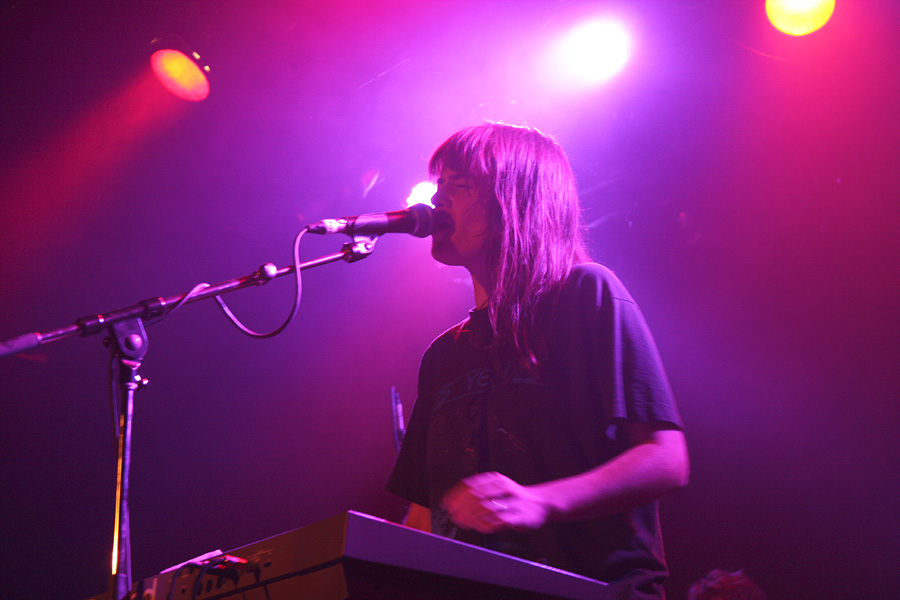
TOPS (Alexandra Allaire / McGill Tribune)
My POP Montreal this year had a slow start in two ways. One: I made the decision—in retrospect, a wise one—to spend Wednesday catching up on some work (sorry Wild Nothing.) Two: the Grimes show.
Not to say that Grimes herself had a poor performance. The ex-McGillian had the sold-out crowd at Club Soda roaring with approval and screaming for more. Crowd-surfing and mass-jumping ensued. The problem was with the two prior acts. Opener MYTHS employed a bewildering mix of shrill harpie screeches and meaningless synth drone, while Elite Gymnastics, who otherwise creates good music, made the perplexing decision that smashing and punching his guitar, then moping to the audience about it after, was a good idea. My fellow A&E editor texted me, suggesting that we had accidentally stumbled across not a music venue but performance art. I laughed, but he was more or less right.
On to Friday. I arrived at Cabaret du Mile-End, damp in both body and spirits; the former due to the drizzle, and the latter to the near-empty room before me. By the time TOPS started, only a small crowd had materialized, but the intimate setting suited the dream pop quartet just fine. Acts like TOPS remind me why I love live music. In person, the bass and the guitar sounded sharper; the vocals, while suffering minor pitching issues, were nevertheless more dynamic than their recorded counterpart. Overall, the performance was polished and confident—impressive, considering how recently the band formed.
I left the venue with high hopes for Austra—hopes which were quickly dashed upon sight of the line. Free shows are popular? Remarkable discovery, I know. Retreating glaciers move quicker than that line did. The only thing thicker than the cloud of cigarette smoke was the general sense of desperation. Entering the basement venue at Mission Santa Cruz at last was like entering a sauna—one filled with respiration and sweat. All these complaints dematerialized when Austra took the stage. A set that oscillated between electro-pop and the club-floor ready kept the packed crowd in a frenzy—although how much of that delirium could be attributed to the lack of oxygen remains unclear.
A breather was needed after that, which is what Saturdays are for. Despite the needed rest, I was kept breathless anyway, out of anticipation for Sunday’s show, the ‘Show I Would Commit Murder To See’: Grizzly Bear. The crowd at The Olympia—less jumpy than those at previous shows, but no less enthusiastic—had a healthy number of true Grizzly Bear fans. Opener Unknown Mortal Orchestra performed admirably, and clearly were having a great time themselves; but for whatever reason, their instruments had the unfortunate habit of bleeding together. The result was the trading of the crisp arrangements on their album for a set that lurched too-often towards drone.
Grizzly Bear, however, elicited the loudest and most sustained cheers of any of the shows I’ve seen at POP this year. The set balanced a mixture of songs across the group’s four albums, and every individual member also juggled a variety of instruments. Ed Droste and Daniel Rossen’s vocals were a wonder to experience live; the former haunting and piercing, the latter raw and multifaceted. Everything about the experience was nothing less than surreal.
Leaving Olympia that night, I consoled myself in regards to the mountain of work waiting back home with two thoughts. One: I have enough coffee. Two: I can sleep when I’m dead. But I should add one more, the most important sentiment of all: thank you POP Montreal.
– Chris Liu
[divide]
Rodriquez (www.lostinthemultiplex.com)
Ever heard of Rodriguez? I hadn’t, and if it hadn’t been for POP Montreal, I probably never would have.
‘Despair’ had been my initial reaction after looking over the line-up for POP Montreal—the prospect of choosing an act from the hundreds listed seemed a torturous task. Mustering my exchange-student-enthusiasm to experience as much as Montreal has to offer, I consulted the less extensive list of free events, and rather randomly chose to attend a screening of the documentary Searching for Sugar Man, directed by Malik Bendjelloul.
The film tells the remarkable story of American singer Rodriguez—praised as highly as his contemporary Bob Dylan by the 1970’s music elite, yet somehow failing to attract the attention of the broader American public. Despite his lack of North American recognition, Rodriguez’s albums were a massive success in South Africa—so much so that he became a mythical figure to the thousands of South Africans protesting against the apartheid regime, who used his lyrics as an anti-establishment anthem. Rodriguez himself, however, was unaware of his overseas popularity, and the South Africans, being unable to find any information on their American idol, soon believed him to have suffered a tragic rock-star death.
Following in the footsteps of two dedicated South African fans, the documentary relates their efforts to trace the life (and supposed death) of this mysterious character, reaching a spectacular finåale that will leave you itching to get your hands on the nearest Rodriguez album.
Thank you, POP Montreal, for introducing me to Rodriguez—one of my most enjoyable experiences in Montreal so far.
– Cecilie Jensen
[divide]
Ben Howard (Michael King / McGill Tirbune)
On the final evening of this year’s POP Montreal, one of Tribune’s Arts and Entertainment editors passed on the message that there was a ticket available for Ben Howard’s sold-out show that night—if I wanted it. I had been suffering from a bad cold for five days with no end in sight. However, when I was presented with such an opportunity, the only real choice I had was to go and have an absolute blast. I readily agreed.
Soon after, I arrived at Metropolis, ticket in hand, and began scouting for a slot in the front row. First came Nashville’s home-grown Gill Landry to warm the crowd. His blues beats and vocals were good—but my fever was kicking in, and I was fading fast. As they started changing the equipment for the main act, I was debating on heading home. Debating, that is, until Ben Howard stepped on stage. The audience ignited in cheers and whistles that shook the walls—we could tell Ben was ready. From his heartbreaking ballads which left the crowd in silent awe, to his soul-transforming acoustic numbers, Howard brought everyone to their feet. Involving the audience in the echoes of his lyrics, Ben constantly seemed amazed at every response, sharing his gratitude as he left the stage, saying he “will remember this night forever.”
I exited the venue with a set list in hand and a serene calmness after the moving performance. Ben Howard not only cured my cold; he made my POP Montreal.
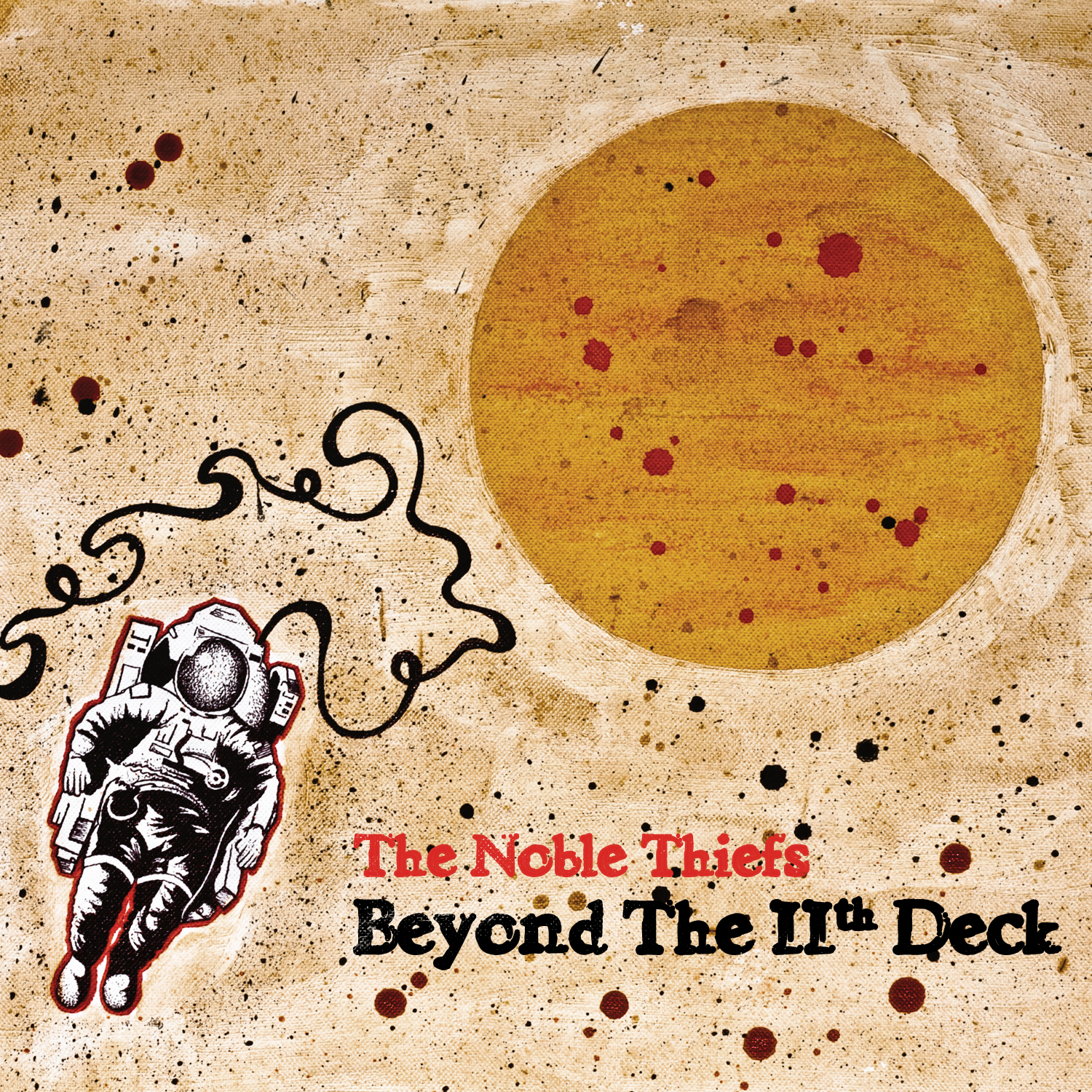
We live in an age of the retrospective—of Adele, sampling, and electro swing. The challenge for vintage-inspired artists is updating oldies to the tastes of the 21st century. The Noble Thiefs, a Winnipeg-based band, are foraying into vintage-modern territory by combining a gaggle of genres. Their debut album, Beyond the 11th Deck, mixes ‘50s/’60s era soul with reggae, rock ‘n’ roll, doo-wop, and punk.
In an ideal world, this would be a vintage music-lover’s dream: old favourite styles, in a single package, at a fabulous low price. But Beyond the 11th Deck leaves us longing for the originals. The Noble Thiefs’ tracks lack the vivacious spirit of mid-century music. Excepting the odd quirky riff and groovy solo, the guitar can be distractingly basic. The slower songs—would-be reggae slow burns—lack fire, and fizzle out. The Noble Thiefs are renowned for their galvanizing, punky live shows—their debut recording could have used a jolt of that electricity.
Still, the album holds promise. Standout tracks “Trapped Up,” “Drive In,” and “Rise Above It” are creative and spirited. Myron Dean’s tart yet smoky vocals are captivating, full of personality, and a total throwback to dynamic soul singers of the past. Dean’s voice, and the Noble Thiefs passion for eclectic jukebox hits brim with potential. If the stars align for their sophomore album, the Noble Thiefs will have something that makes you want to swing, twist, and slam dance all at the same time.
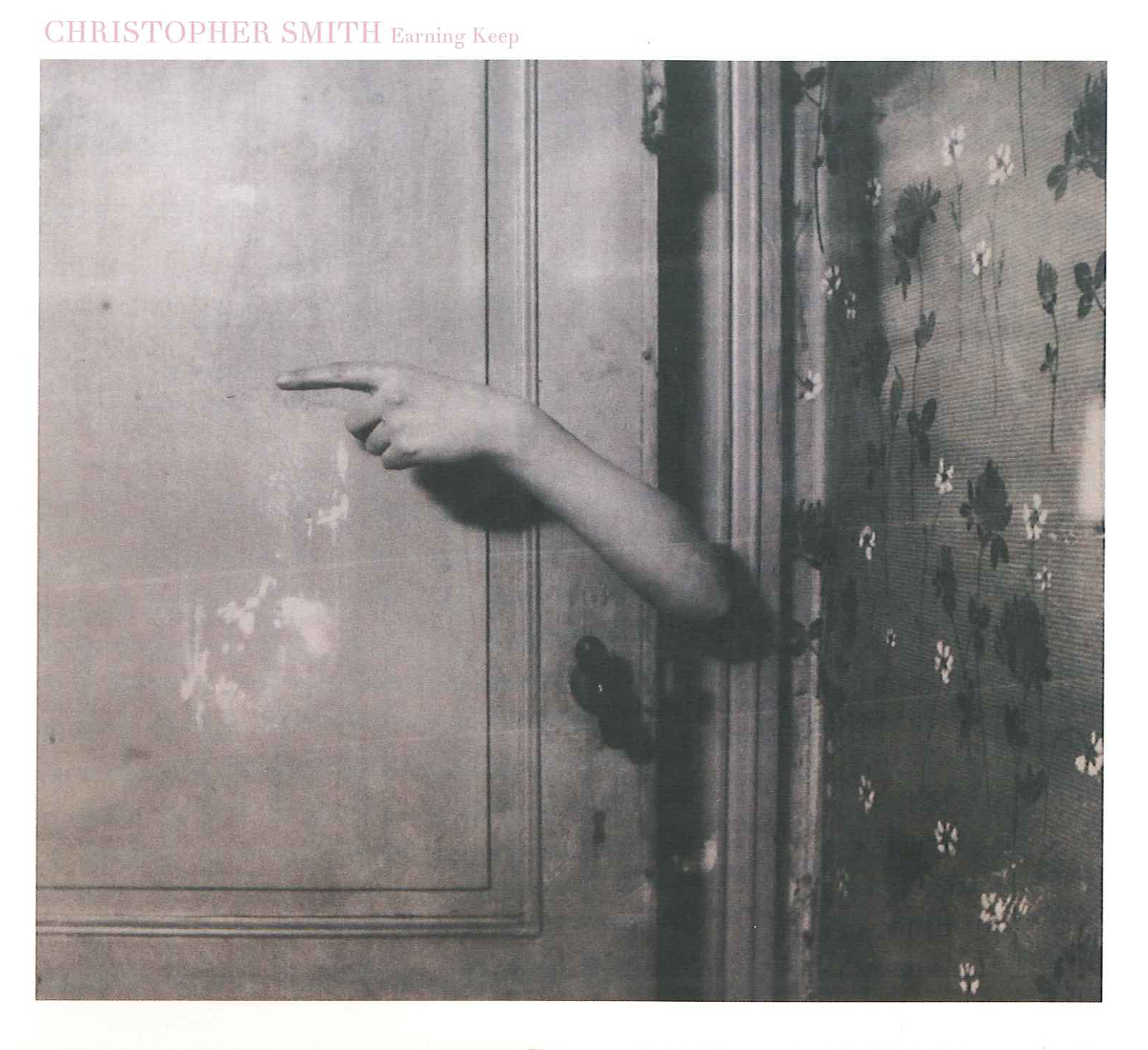
Christopher Smith is more than just a musician. Hailing from Vancouver, Smith began as a visual artist but found the the medium’s boundaries too constricting. Naturally, he transitioned to music, and now works as a singer-songwriter. Moving away from the sound of his previous album, The Beckon Call (2010), Earning Keep features an atmospheric, elegant assembly of neo-jazz tunes. Fans of Beirut, Patrick Watson, and Thom Yorke: pay attention.
Accompanying the expansive quality of Earning Keep are Smith’s haunting, angelic vocals. In standout songs such as “Pillars and Pyre” and “Samson,” they delicately combine with soft jazzy cymbals, trumpet, and mellow fingerpicking on the guitar. Playing around with pitch and harmony, the complexity of his songs isn’t noticeable; Smith conjures an air of nonchalance.
Although there seems to be a shared theme of affection and the notion of distance, a number of tracks seemed to be out of place. “Chapped Lips of the Mouth Breather” seemed reluctant to succumb to Earning Keep’s overall feel. However, this distinctiveness worked in the last song, “No Light Could Pass Through Me So I Have A Shadow,” as it perks the ears of electronica and dance fans with synths and distorted electronic effects.
With a few diamonds in the rough, one can tell that Christopher Smith is still trying to find his true sound among other up-and-comers. Earning Keep is almost there, but not quite.
Indie-rockers Paper Lions’ new acoustic EP, At Long Creek, is only one of the exciting ventures the Prince Edward Island band is embarking on this year. Other projects include the release of a full-length sophomore album this winter, and the video for their song “Travelling.”
At Long Creek is a cheerful acoustic album full of feel-good moments. The EP opens with “Ghostwriters,” a reflection on the relationships that engulf and define our lives; the song’s upbeat opening almost comes to a standstill with its poignant denouement. “Travelling” is a particular standout. The track tells the story of someone on “an open road with golden trees.” The palpable desire to explore is perhaps indicative of the experience of playing 1,300 shows around the world. At Long Creek ends on a more sombre note with “Polly Hill.” A softly strummed guitar and evocative singing demonstrate the bittersweet feeling of leaving a small town.
Overall, the album is enjoyable and incredibly catchy. Despite this, the six songs can seem incohesive, with no overarching theme. The EP demonstrates why Paper Lions are growing in popularity, but have yet to hit the mark. These songs encapsulate a sense of weightlessness, and are a definitely worth a listen while waiting for their upcoming album.
At first listen, Michael Passenger—who performs under his last name—sounds akin to a mix of Ray LaMontagne, Marcus Mumford, and Ed Sheeran. Even this comparison, however, fails to do justice to his unique musical style.
There’s something hauntingly familiar, yet unplacable about his vocals, which could lead you to spend an entire concert wondering exactly who he reminds you of. Although raspy and soulful, his voice is also higher-pitched and borderline nasal at times all of which contributes to his signature, accessible sound.
Passenger’s unique vocals are matched by a mastery of guitar that shifts from raucous and upbeat to slow and steady as his set progresses, creating an energetically folksy vibe that feels both like a campfire and a house party, all in one show. For songs like “Let Her Go” and “Travelling Alone,” Passenger asks the audience to dial back the noise with him, which creates an intimate atmosphere and gives him the space he needs to demonstrate exactly what he can do vocally—his switch to a cappella in “Let Her Go” was a show-stopper.
Like Ed Sheeran, who is headlining the tour, Passenger opts for crowd participation during his faster songs, and has everyone screaming along by the second chorus. The show was thoroughly enjoyable, performed by a truly professional talent who seemed genuinely excited and humbled to be on stage.
Passenger’s latest album, All The Lights, can be found on iTunes.
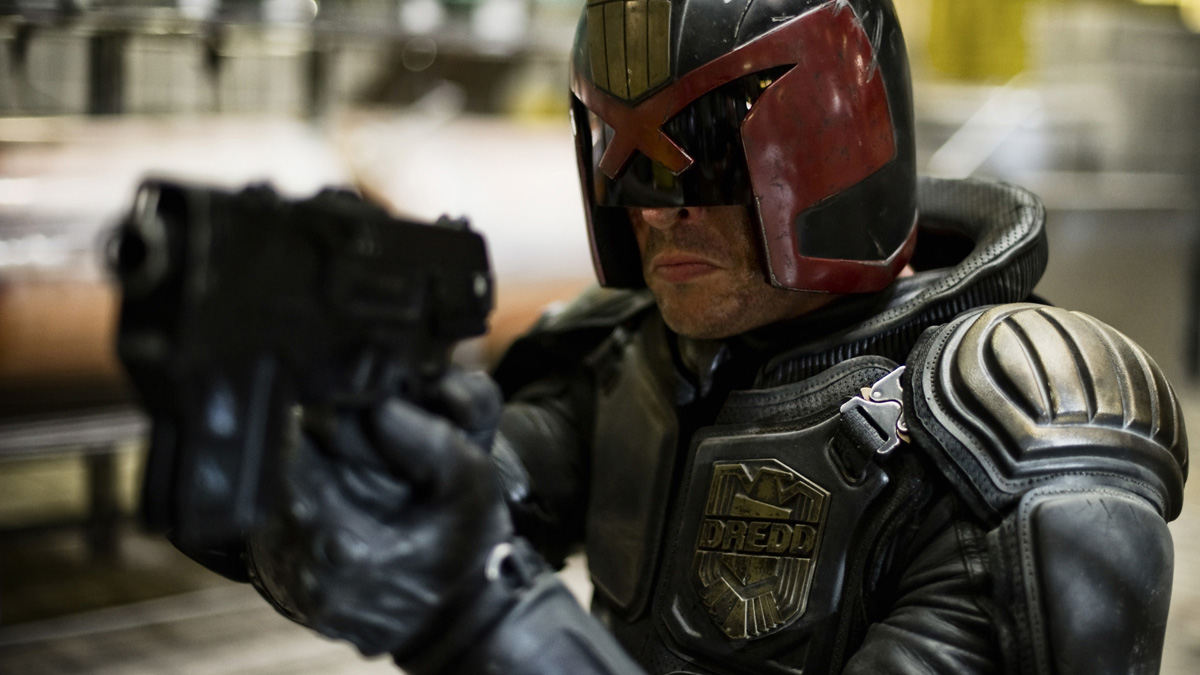
“It’s a fucking meatgrinder,” says one soon-to-be meat patty towards the end of Dredd. He is talking about Mega-City One, the dystopian cesspool of violence and despair in which the story is set, but he might as well have been referring to the film itself. At its best, the action scenes are dazzling, the closest that blood spatter will come to approaching the sublime. At its worst, the violence is disturbing and rather sad, an unenjoyable experience for any, save the sadomasochist. And if violence is not exactly your cup of tea, well, unfortunately, Dredd offers little of anything else.
An opening voice-over introduces the post-apocalyptic mega-city to the audience. The 800 million residents of Mega-City One suffer 90 per cent unemployment rates, constant and bloody gang warfare, and an urban hellscape that is surprisingly drab. The only semblance of justice, we are told, is in the form of Judges: a group of men and women tasked with dispensing law in the streets. In the opening scene, the titular Judge Dredd (Karl Urban) does exactly this, charging and convicting a criminal with “attempted murder of a Judge,” then delivering the associated sentence of death in fiery fashion. This is “judge, jury, and executioner,” interpreted in the idiom’s most literal fashion.
Undoubtedly, few people enter such a film expecting more than violence and gore, but given the premise of the story, one cannot help but sense a missed opportunity. Where do the Judges get their legitimacy? Where do the laws that they carry out come from? Where is the state? Is there a state? These are not difficult questions, yet they remain unasked. The comic series on which the film is based explores such political themes in detail; the film is stripped of such cerebral fancy, and what little elements do remain are either diluted or ham-fisted.
Most of the film locks Judge Dredd in a life-and-death struggle with Ma-Ma (Lena Headey), a psychopathic former-prostitute and current gang-and-drug lord. Headey creates a terrifying and enrapturing villain, one who rivals the role she is most famous for—Cersei Lannister of Game of Thrones—in her confident and callous brutality. Urban’s Dredd combines crisp enunciation with a delivery that is bankrupt of emotion. This passes as deadpan during a few of the screenplay’s one-liners (which fail as often than they succeed), but most of the time it adds to the monotony one feels toward the protagonist, a sentiment mostly rooted in the fact that Dredd’s face is perpetually obstructed by a helmet.
The use of the drug Slo-Mo (which allows the user—and the audience—to experience exactly what the name suggests) provides a golden opportunity for innovative action sequences, an opportunity the film takes full advantage of. It’s not every day that one can describe the slow eruption of blood from a bullet exit-wound as being beautiful. At the same time, the film’s utterly senseless violence can be incredibly sad. Ever wanted to see multiple Gatling guns used on the innocent and the poor? Dredd is for you.
The gratuitous 3D glasses, as always, dimmed everything on-screen, and added little perceptible effect outside of the slow-motion shots. The bordering-on-garish lighting would not be out-of-place in a Joel Schumacher Batman film. Drugs, violence, and death are the only means of escape available for the wretched citizens of this world, and after watching Dredd I can sympathize. Hobbes must be rolling in his grave.
Dredd is currently showing at Cineplex Scotiabank Theatres, 977 Ste. Catherine Ouest.
Paul Thomas Andersen is one of a handful of studio darlings whose films win big at both the box office and the awards circuit. Assuming dual roles of writer and director, Andersen is among an even smaller group that can weave a seductive story with absolute, creative precision. This control, when combined with Andersen’s uncanny sensitivity to nuance in virtually every aspect of filmmaking, allows him to craft films that combine the cerebral and the visceral. With The Master, Andersen artfully spins a web of subtle hints and cryptic allusions around a story which draws his viewers in with visceral intensity.
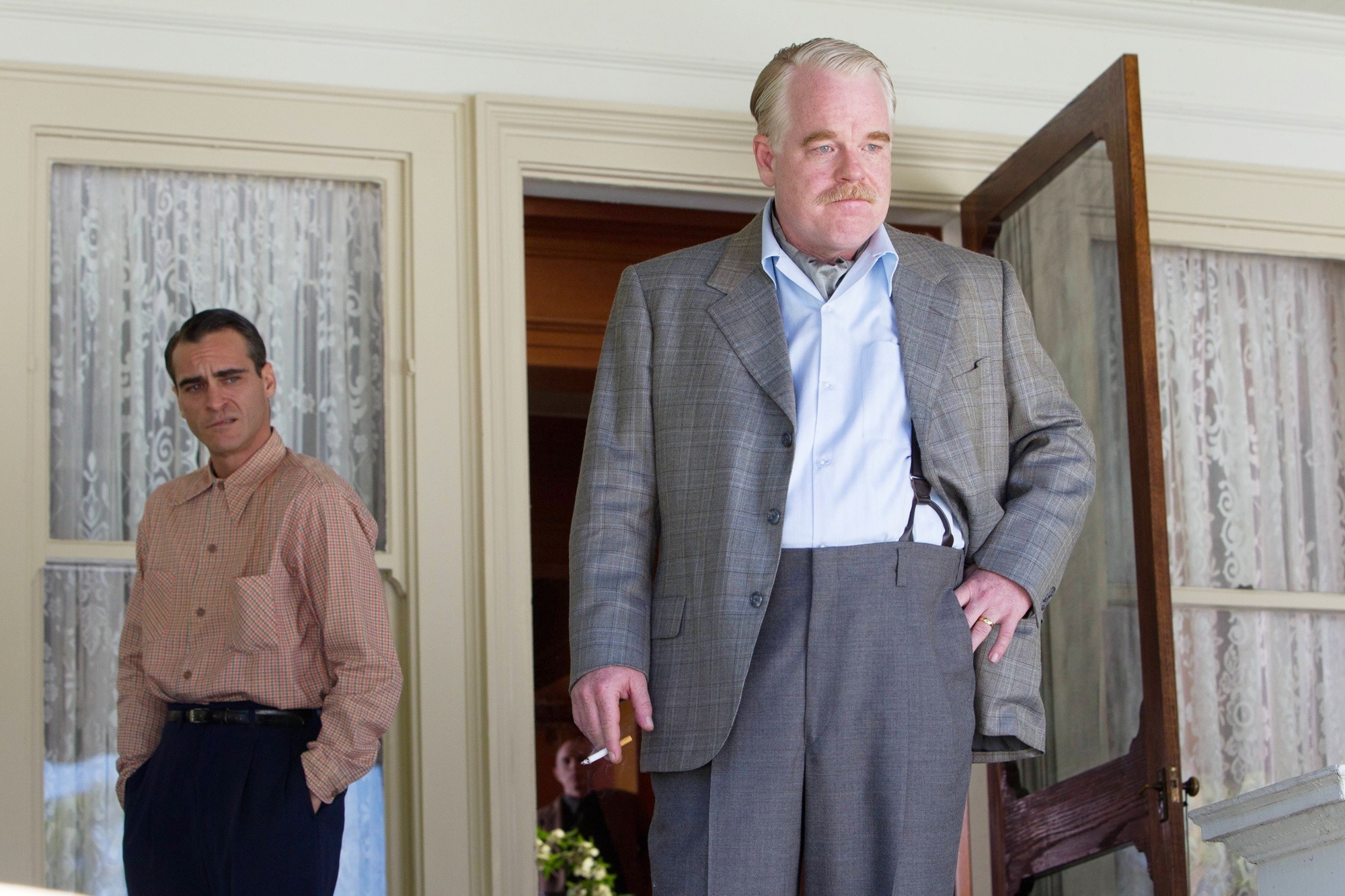
The Master begins with Freddie Quell (Joaquin Phoenix), a PTSD-riddled Navy veteran returning from WWII. After equivocating his way out of the psychiatric hospital, Quell begins his new as life as a department store photographer, while mixing viciously potent cocktails out of whatever chemicals he finds in the darkroom. Thanks to Quell’s instability, however, he quickly loses his job, and drifts aimlessly until he chances upon a ship, which he sneaks aboard, and passes out. Upon waking, he meets the larger-than-life cult leader Lancaster Dodd (Philip Seymour Hoffman), who immediately warms to Quell and offers him work.
The remainder of the film centres on the relationship between Dodd and Quell. The two men are, in many ways, ideal counterbalances. Quell, who Phoenix masterfully portrays with a jittery volatility, is a man buffeted about by the winds of his passions: his interest in women extends only so far as his lust; when upset, his spindly frame lashes out with volcanic fury. Hoffman, who shared Venice’s Best Actor award with Phoenix, plays Dodd with grandiose aplomb. Hoffman imposes his large frame on each scene, dominating all, save his wife (Amy Adams), with a combination of confidence and psychological insight. If Quell is the primal id, Dodd is the superego—slowly and forcefully repressing any animalistic notions in his followers with sheer mental strength. These two forces clash and grind, attempting to bend each to the other’s will. Whether it’s subjugation to our own nature or another’s will, Andersen skillfully uses the men to show that we are never really free—not even when we are the ones subduing others.
Like Andersen’s previous works, The Master is no less an exercise in cinematography than in storytelling. Mihai Malaimare Jr.’s camerawork invariably finds beautiful compositions in every shot; from Phoenix warily gazing from beneath a combat helmet, to him drinking moonshine below the decks of a Navy ship, one is struck by a pervading sense of visual weight and proportion. The lighting (which many directors woefully relegate to differentiating between night and day) is equally important to Andersen, who deftly employs the contrast between light and dark to underscore a character’s nature, or drastically increase a scene’s intensity.
The film’s symbolic elements are, perhaps, its most enjoyable aspect. The process of examining seemingly trivial remarks is, in itself, an exercise to be relished—Andersen is too meticulous a filmmaker to leave things to chance. It is rare for a film to approach its topics so adroitly, with such light strokes, as to abstain from walloping the viewer over the head with the point (I’m looking at you, Black Swan).
Good films are almost never a one-off encounter. The first watch tends to be too captivating to appreciate the details of its composition; it’s only on the second viewing that one can begin to appreciate the more delicate nuances. With The Master, Andersen offers a beautifully complex story crafted with rare skill—plan on watching this one again.