Latest News

Student Life

Smoke That Tumbleweed

University is a time for experimentation, and drugs can be the gateway to new sensations and experiences. Such experimentation, however, comes with both physical and social risks. This is the first in a series of articles on the facts and myths of certain recreational drugs. The Tribune is in no way advocating or dissuading you from trying any of these substances, but merely looking to help you make informed decisions.

According to the United Nations, marijuana is “the most widely used illicit substance in the world.” Although pot is illegal, it is the most easily accessible illegal drug in Montreal.


Background

Cannabis, the plant from which marijuana stems, has a long history of ritual and religious practices due to the state of relaxation it induces. It is thought to have been used as an intoxicant for the first time 5000 years ago in present-day Romania for ritual purposes. It has also been an integral part of Hinduism in India and Nepal for thousands of years.


Immediate Effects

The physical effects of marijuana on the human body include: reddening of the eyes, decreased intraocular pressure, dryness of the mouth, warm or cold sensations, increased heart rate, muscle relaxation, and lowered blood pressure. The cognitive effects include—but are not limited to—impairments in short-term memory, coordination, and concentration. Beware: not all trips are fun. You may fear you’re being chased by a plastic bag through the streets of Dublin.


Long-term effects

While the long-term effects of marijuana are not fully understood, the prolonged use of marijuana can cause damage to the immune system, lungs, and airways, and may result in various cancers. The potency of these effects depends on how the drug is taken: vaporization will cause less detriment to the respiratory system than smoking a joint.


Safety

Depending on how you absorb it, the time it takes for marijuana to have an effect on your body will vary. When first experimenting, it may take a large dose for the full effects to be felt. However, this could lead to unpleasant and uncontrollable bodily effects that only go away with time. Mixing the drug with other substances such as Vicodin can cause nausea or more intense short-term effects, and is thus not recommended.


Legal Issues

The recreational use of marijuana in Canada is illegal, but it is reasonably socially acceptable and can be easily purchased cheaply throughout the country. A number of other Western countries have similar bans, but do not tolerate use of the drug whatsoever. Some South Asian countries such as Malaysia have been known to even give the death penalty as punishment.

Features

Amtrak Blues: A Journey Across America

My second night in Denver, I skipped dinner in favour of a smooth $10 cigar. Crossing right leg over left on a bench in the 16th Street Mall—the city’s downtown commercial strip—I enjoyed a long smoke and listened to the music swell from one of the many painted pianos on the tree-lined central median. Lightheaded and  content, I watched hundreds of people pass by, often stopping to appreciate the music. I spoke to those people who, one after another, for whatever reason, sat next to me on that bench, people whose lives I wouldn’t have even been aware of if I had not ventured across the continent to find them.

This is the story of a two-week train trip across the United States, which I embarked on in August for a number of reasons. First, I had to be in Los Angeles at the end of the month, and I decided there was no better way to get there than by train, my preferred mode of long-distance travel. Second, I wanted to see my country, to meet its diverse inhabitants, and to participate in the East Coast rite of passage—recently so neglected—of traveling from one end of the country to the other, of projecting one’s soul over the immense spaces of the West, and of returning home, somehow more true.

I took a bus from my hometown in North New Jersey into New York City, where I slept on an airbed in my sister’s midtown apartment. I woke before dawn to watch the sunrise from the roof and to enjoy a last New York diner breakfast before setting off.

Having been all over this country by train, in cities large and towns small, I can with some authority declare New York’s Penn Station the ugliest in the land. The ceilings are low, the fluorescent lighting is blinding, and the whole place feels like a cheaply built bunker. Perhaps its only redeeming quality is the unmistakable stench of stale piss around every turn; after a long stretch in Montreal, it has often told me I’m finally home.

My first train, early on Friday, August 6, was to Washington, D.C., where I stayed with two high school friends, and spent days at the museums and explored the city on a loaned bike. The patriotic spirit in Washington and the presence of Americans from all over the country made me giddy to head west.

Sunday afternoon I left Washington on the Capitol Limited, which dips into Maryland before reaching Harpers Ferry, West Virginia, where the Potomac and Shenandoah Rivers carve into steep canyon walls, and which Thomas Jefferson considered perhaps the most beautiful place on earth. The train then runs through West Virginia coal towns before turning north for     Pittsburgh and Cleveland and then west for Chicago.

The Capitol Limited is a double-decker train, or a Superliner. The cars are mammoth things, perhaps 20 feet high, which only run in parts of the country where tunnels were built tall enough to accommodate them. I’d previously thought that these trains ran only west of the Mississippi, so after dropping my flannel on my reserved seat in coach, I walked excitedly to the observation car, trying in vain to suppress a big, stupid smile. I found a good spot under the expansive windows rising over the curve of the car, filling it with natural light, bought a cup of coffee, and watched the country pass slowly by. I hardly left it except to buy more coffee. At night, when Americans from all backgrounds, began to fill the coach car with the diverse tenors of their snores, I stretched out my back by lying on the carpeted floor of the observation car, using my backpack as a pillow, letting the gentle sway of the car rock me into a deep and satisfying sleep. In the morning there was a new state outside the window, and bleary-eyed, I waited for the café to open at 6 a.m. for that all-important first cup.

The train entered Pennsylvania and the afternoon faded away. I made a reservation for dinner, and went when the 8:30 p.m. guests were called. One quaint joy of train travel is eating in the dining car. The booths seat four, so the service staff combine parties of three or less at a single table. The food is expensive and bad, but hearing the stories of total strangers from around the country is incomparable.

In southwestern Pennsylvania I ate with a mother and son from outside Atlanta en route to Seattle. The woman told me she’d had a dream in which she was on a train watching wild horses gallop in the fields outside. She said it looked like paradise. Having never been on a train before, she decided it was something she had to do. I saw them a few more times on that train and on the one out of Chicago. Each time, even if only passing, we exchanged greetings and friendly smiles.

The next morning I was on the California Zephyr train heading west across the beautiful flatness of western Illinois, crossing the mighty Mississippi into Iowa. Named after Zephyrus, the Greek god of the western wind, it is the longest and most celebrated of the four main routes to the west coast. We went through some flooded areas in central Iowa, with water from the Des Moines River threatening to rise and overtake the tracks. Night came suddenly, and I fell asleep somewhere east of Omaha.

I woke to see the sunrise over the plains in southwestern Nebraska, just before approaching Colorado and the foothills of the Rockies. A mother cradled her crying baby at the other end of the car. Purely as a defensive measure, I donned my headphones for the first time on the trip. Sonny Rollins somehow worked perfectly. When the baby stopped crying I took off my headphones and watched the passengers filter into the car, patiently waiting for the coffee to brew. Entering Colorado, an Amish couple next to me pointed out the window and spoke in German about the distant mountains. I settled in for an early morning nap.

After a short delay just outside the Denver station (one of the engines slipped a few inches off the track), I set off to explore the city. My general practice upon arrival in a new city is to find somewhere I want to go and then walk to it, taking the most indirect route imaginable in order to see as much of the place as possible. I walked to the state capital, napped in the sun on some concrete steps, found a small creek to read by, and circled back downtown. The next day I went to a famous Beat bar, enjoyed the cigar for dinner and left the next morning, again on the Zephyr, delayed six hours after terrible floods in Iowa forced it to reroute through Kansas.

Everyone was trying to save seats in the observation car because an hour after leaving Denver, the Zephyr begins the long climb into the Rocky Mountains, widely considered the most scenic stretch of track in the country. The only other times I’ve seen this collective rush to the observation car was later on that train ride in the Sierra Nevadas, going through the infamous Donner Pass, and last summer passing through Glacier National Park in northwest Montana. I can’t think of another mode of travel capable of so definite and so satisfying a climax.

I found an open seat and talked for four hours to a poet from Ithaca and a girl from Ohio. I was distracted, however, by the stunning scenery of the Rockies’ foothills, the view of the open prairie and Denver on the horizon, and the sharp curves of the tracks weaving along the steep cliffs below. The foothills soon became immense mountains. With my neck sharply bent I looked through the ceiling windows up at the canyon walls reaching a thousand feet into the sky. The train eventually approached the Colorado River, barely yet a mountain stream, and entered a seven-mile tunnel in which we crossed under the Continental Divide. Everything darkened as we entered the Glenwood Canyon—not wide but very deep—with the sun gone from our view but still shining bright and red near the top of the canyon walls.

The poet got off at the next stop, the girl from Ohio went to eat in the dining car, and I enjoyed my last bagged sandwich and a bottle of wine from Denver. Later, one passenger with a guitar and one with a mandolin play
ed together,  while a dozen of us, from 8 to 94 years old, sang along. We had trouble with the lyrics of “Sympathy for the Devil,” so one grizzled father stepped in to show the way, the rest of us providing the backing  “whoo whoos.” A woman from Stockton, California, another poet, freestyled some interludes for “Stand By Me.” We improvised a song called “Amtrak Blues,” while the train rolled through the Rocky Mountains, invisible in the darkness surrounding our car.

I awoke the next morning on the floor of the observation car and watched while the train passed the Bonneville Salt Flats in western Utah. As the light grew, more people came into the car. Those of us who had been there were talking about how great the night before had been. The Utah-Nevada border was marked by the bright lights and paved lot of a single casino, breaking the otherwise unmarked landscape of desert, mountains, and arching blue sky. I told someone the mountains looked like dogs asleep under a soft blanket. He asked if I was high.

It took all morning and early afternoon to pass through northern Nevada. A gregarious New Yorker gave me money to run out of the train in Reno and across the street to a casino lobby to buy whiskey, but I was dissuaded from doing so by a recorded Amtrak announcement explicitly warning passengers not to do so, for people thereby missed trains all the time. We were stuck buying $6 bourbons from Johnny in the café car, with whom we were all by now good friends. After Reno everyone once again crowded into the observation car, in giddy expectation for the sharp rise into the Sierra Nevadas. Passing Donner Lake, I met a woman descended from the Donners, who pointed to a building in the nearby town of Truckee where there was a family reunion a few years back. The guy next to me jokingly asked if the group remembered to bring enough food.

After the Sacramento station, where many of my new friends were leaving the train, I was left only with Scott, the guy who had played the mandolin the night before. Amtrak offered us a complimentary beef stew for dinner as an apology for being six hours late. Scott and I enjoyed it with two beers each bought from Johnny. Scott told me about his months of travels and how his friends were going to get him very, very drunk when he finally got home.

I spent the next week in the Bay Area, around Monterey and the incredibly peaceful Big Sur. A final train took me from Salinas to Los Angeles, first through Steinbeck farm country then along cliffs above the Pacific shoreline for hundreds of miles. Los Angeles took my mind off the trip for a while, but afterwards, while touring Sequoia National Park with my parents, I was able to think about the places I had been, the people I had met, and the eventful days I had experienced. When alone, I would mentally run through the trip, day by day, vividly remembering it all.

It’s easy to see the plane I flew home on as the punch line to the long joke that was my two-week trip out West. Upon landing in Chicago I scanned for Montreal among the hundreds of cities crowding the departures board, cities all over the world which, for a price, I could have landed in within mere hours. The short plane from L.A. to Chicago covered territory I sat through for more than two days, watching the land go by, and not doing much of anything.

But I’m more inclined to view things conversely: on that absurdly inhospitable 757, in my cramped aisle seat, with a burly neighbour next to me, I suspended my entire existence. With no complimentary blanket, I was warmed only by a tiny cup of awful airline coffee and by the thought that somewhere, miles below, a westbound Amtrak train was lolling along the tracks, over mountains, deep into valleys, past rivers and lakes and villages and millions of lives, below cliffs and around tight bends,  filled with passengers who were still enjoying the ride.

Recipes, Student Life

DIY Seasoning

If you’re a fan of Mexican food, Montreal is not exactly a bueno place for la comida mexicano. That doesn’t mean you have to resort to brand-name sodium and MSG-based Old El Paso Mexican seasoning. You can make your own using spices from any local grocer. This mix makes about half a cup of seasoning for tacos, burritos, fajitas, or enchiladas.


Ingredients

•     ¼ cup chili powder

•     1 tbsp cumin powder

•     1 tbsp salt

•     1 tbsp ground black pepper

•     ½ tbsp garlic powder

•     ½ tbsp oregano

•     ½ tbsp paprika

•     Red pepper flakes, to taste


Directions

Combine the ingredients in a bowl and mix together with a whisk or fork. Store extra seasoning in a Ziploc bag for later use.

To use the seasoning, sauté half a pound of sliced chicken, ground beef, or cubed steak in a frying pan with vegetable oil. Once the meat is cooked, add the seasoning with half a cup of water. Allow the mixture to boil off the excess liquid before serving hot with tortillas and all the trimmings.

Opinion

Precious, Text-Free Moments

“Hey whats up”

I read those three simple words beaming at me from the screen of my LG Rumour. Punctuation-free, of course, these are some of the most used words in the texting world. Simple, friendly, and in dire need of a response.

Just as I hit “Reply” at the bottom left of my screen, I also turned a corner, stumbling into a lady in her mid-forties, proving my incapability at multi-tasking. As she cursed at me in French, I apologized pathetically and went to pick up my phone and broken battery. Looking down at this lifeless piece of technology, I thought back to the four months of summer I spent without a mobile.

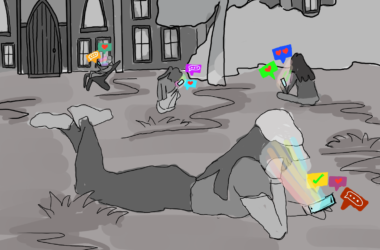
We live in an age where we’d rather check the Weather Network than step outside and we always have multiple windows open on our browsers. Lulls in conversation are filled by endless tapping on mobile phones, never missing a text or email.

“Send” is a task we do much too easily. Communication is instant. Billions of emails are exchanged daily: professional emails, friendly emails, breakup emails.

Technology is doing more and more for us, and although our efficiency is skyrocketing, we are losing some of our most basic skills. Microsoft Word does nearly everything for essay writers: it inserts apostrophes and capitalizes the first word of every sentence. Best of all, it spells for us. I’m embarrassed to admit to this, but it took me ages to learn how to spell “definitely” because I never needed to think about it.

But when I didn’t have a cell phone while waiting for the bus, I was just watching different kinds of people walk by, and was surprised at how refreshing it felt.

Recent studies have shown that the brain needs a certain amount of time everyday to simply rest—to ignore stimuli. Nowadays our brains are so blitzkrieged by information that they simply become exhausted, which impairs learning in the long run.

Call me old school, but I think it’s absurd to have two people halt conversation to send a text message. Since when is a person miles away from you more important than a person right in front of you?

Ultimately, I’m not naive enough to think the world would be better off without our technological advancements. I love that a sudden curiosity for where my roommate is can be satisfied within seconds, but then again, that information is not necessary to my existence. Technology should be used to do great things, not to replace social contact.Need and want are two very different things, and although more often than not we need technology, there are a few instances where perhaps a physical, face-to-face relationship should trump a cyber one.

Student Life

So You Want to Procrastinate on the Internet

The Daily Beast

The Daily Beast covers news, entertainment, books, art, and food, with both original content and through links to other news outlets.  Their “Cheat Sheet,” which summarizes top stories, is the best way to get news fast.


StumbleUpon

This website is a highly efficient procrastination tool. It will show you thousands of new websites you never knew existed, and keep you entertained for hours.


The Awl

You may not have time to read the entire Internet, but Awl does. With news, politics, opinion, culture, and YouTube videos, Awl covers both high and low culture under their stated goal: be less stupid.


Threadless

This website features neat designs on t-shirts and sweatshirts.


Look at this fucking hipster

Latfh.com features pictures of hipsters so alternative that you will quickly realize you don’t even know the first thing about being cool.


Get High Now

No, you cannot actually get high on the Internet. But you can browse through optical and audio illusions on this website that just might mirror an acid trip.


xkcd

A webcomic published three times a week featuring the perfect blend of math, humour, and romance.


FMyLife.com

If you ever want an ego boost, check out this website with tons of shocking blurbs that will make you feel better about your life.


The Cheezburger Network

Known for its cat humour and failblog.com, the Cheezburger Network has dozens of other subsidiary humour websites. Topics include awful tattoos, wedding disasters, and embarassing moments on Facebook.


Darwinawards.com

As if all humour websites aren’t already based on total failures in life, Darwin Awards are given to individuals who for the sake of humanity, removed themselves from the gene pool. Be prepared for laughter and a twinge of guilt afterwards.


peopleofwalmart.com

The epitome of negative American stereotypes have been spotted and photographed at Walmarts throughout the U.S. and then subsequently displayed on this website.


What the fuck should I make for Dinner

This website randomly generates dinner recipes from the recipe websites. If you don’t like the suggestion, click the “I don’t fucking like that” button for alternatives.


Smitten Kitchen

Julie Powell’s blog-turned-movie gave hope to thousands of mediocre cooks with typing skills. Trust us: Smitten Kitchen is the most reliable food blog out there. Deb will teach you how to cook, not just how to follow a recipe.


Sketchy Santas

Self-explanatory, but will induce a good chuckle out of you any time of year.


textsfromlastnight.com

It doesn’t really matter if these texts are fabricated or not, they’re still funny. Be careful when reading these in class because you might burst out laughing.


The Smoking Gun

This is the go-to website for legal decisions, stupid criminals, and just plain weird lawsuits.


Politico

Capitol Hill’s most trusted media outlet, Politico covers campaigns, Congressional gossip, and just about everything else you need to know about the U.S. capital.


PerezHilton

All the latest gossip about celebrities, with commentary by Perez Hilton.


Tastespotting.com

The original food porn. The founders roam the web for the best food blogs and photos.


This is why you’re fat

Not just food porn, but hardcore crazy food porn. The site features pictures of overloaded dishes that will make you both hungry and concerned for your cholesterol.

Recipes, Student Life

Mojitos

The mojito, a traditional Cuban cocktail, is not only one of the most refreshing drinks I’ve ever tried, but also one of the most versatile. The simple ingredients in the traditional version—rum, sugar, lime, soda, and mint—make it an excellent canvass for adding any variety of flavours. The blackberry mojito, however, is my favourite. The flavour in this drink comes not only from the fresh berries, but also from the crème de cassis, a blackberry flavoured liqueur. This drink is so delicious and easy to swallow that before you know it you will be on your fourth glass. Be warned, however, that each glass contains three shots of alcohol.


Ingredients

•    6 fresh mint leaves

•    Fresh blackberries

•    1/2 cup simple syrup

•    1 ounce fresh lime juice

•    2 ounces white rum

•    1 ounce crème de cassis

•    Club soda


Preparation

Muddle mint leaves, blackberries and simple syrup in a glass. For the simple syrup, boil equal parts sugar and water.

Add lime, rum, and crème de cassis, and stir.

Fill glass with ice. Top it off with club soda, and stir one final time.

Garnish with a sprig of mint or a few blackberries on a toothpick.

News

Speaker Addresses Limited Resources

Holly Stewart

When settlers arrived on Easter Island in the 14th century, statues were all that remained of a once advanced civilization. The former society had used wood for almost everything and eventually depleted the island’s resources, causing the demise of its people.

On Thursday, Timo Busch, a visiting professor from the Swiss Federal Institute of Technology in Zurich, used the example of Easter Island as a cautionary tale in a talk at Concordia University on the future of the global economy.

In his talk, Busch discussed the constraints on the supply of carbon, the limited supply of fossil fuels, and increasing greenhouse gas emissions.

Busch has conducted research on the effects of carbon emission levels on the economy that shows that companies with lower levels of emissions are more financially successful. Many companies, however, fail to invest time or capital into emission reduction.

Busch expressed concern that managers and CEOs were not willing to work on reducing their carbon footprints. He explained that due to the transient nature of their jobs, upper-level employees tend only to think from one financial quarter to another and fail to see the economic benefits of a long-term plan for carbon emission reductions.

“It’s an urgent call for companies to consider climate change and energy issues, especially given the outcome of Copenhagen,” said Busch.

The Copenhagen Accord, drafted in December, calls for international action to limit the global average temperature increase to 2 C between now and 2020. But at the current emissions rate, some studies predict that temperatures will exceed that 2 C limit. This temperature increase, Busch said, could lead to severe depletion of food supplies, damage to ecosystems, and increased likelihood of major natural disasters.

Busch suggested hesitant managers start with “the low hanging fruit,” such as turning off light switches or reducing fuel usage when possible. He also recommended carbon trading-where companies reduce CO2 emissions and sell their reductions to other companies incapable of reducing their own carbon output-as another useful method.

Companies often begin efforts to reduce carbon emissions by comparing themselves to their competitors. Busch suggested that these relative measurements are a good first step, but relative progress is not the same as real progress.

“For something to be green it has to be better for the biosphere, not better than the alternative,” said Alex Oster, Manager of Student Life relations at Concordia.

The talk was part of a lecture series hosted by the David O’Brien Centre for Sustainable Enterprise. The centre brings professors from around the world to Concordia to speak and collaborate with the university.

Pascual Berrone, another visiting professor in the series, attended the lecture and believes Busch has the right idea, but is concerned companies might not put Busch’s ideas into practice.

“My doubt is whether or not managers and CEOs are really keen to make this big investment or engage in highly risky endeavours,” he said.

Busch, however, argued for immediate action.

“Companies should act now, do the right things right now, and reduce the uncertainty of having a serious breakdown.”

Opinion

COMMENTARY: Equity and Social Justice on Campus

As the Students’ Society of McGill University’s Equity Commissioner, I will undertake multiple roles this year in order to fulfill my mandate as a resource person for students on their rights and responsibilities under SSMU’s equity policy. This document aims to “create a safe, discrimination-free environment.” My primary role will be to chair the Equity Board, a body composed of McGill undergraduate students and SSMU executives. We will work together to actively engage in student outreach and to stimulate dialogue and equity across campus. One of our main focuses will be establishing how Frosh and equity can coincide.

I will also serve as an equity officer, investigating complaints should they arise. Some of you may be aware of how the Equity Board was involved with a complaint against the campus club Choose Life last year. The Equity Board worked closely with the group to guarantee that their future actions fell in line with SSMU’s equity policy, while still allowing room for discussion on the topic.

In my three years at McGill, I have learned how diversity presents itself in both subtle and overt ways. While it is enriching to engage with people from varied backgrounds, it is important to acknowledge how these differences can disadvantage and privilege certain groups. Being a student at McGill isn’t only about academics; it is just as much about what we learn from the people with whom we socialize. This university is a unique microcosm of the world around us. SSMU has the ability to actively ensure that its members can espouse their own views and engage in dialogue without fear of discrimination or harassment.

There are extremely important resources already in place at McGill for students and staff members alike. Groups and services such as the Social Equity and Diversity Education Office and Quebec Public Interest Research Ggroup have a well-established history of engaging students and the greater Montreal community in dialogue about difference. I aim to establish healthy relationships with these groups and services. For the next couple of weeks, I will continue meeting with different clubs and services on campus to see how my predecessors have been involved with them, and to chart how we will establish an important working relationship.

Lynsey Grosfield, this year’s Social Justice Days Co-ordinator, will be working alongside me. She will be an integral part of our outreach to students. In addition to helping host events throughout the year, she is the primary organizer for McGill Social Justice Days, a week of events early in the winter semester. These events are committed to the discussion and deconstruction of equity issues and alternative political culture in an accessible setting. The tentative theme is social media and its role and influence in social justice.

University is a great learning experience, and, ideally, McGill should be a place that cultivates a mentality of understanding and respect throughout our time here.

Emily Clare is SSMU’s Equity Commissioner, and can be contacted at [email protected]. Lynsey Grosfield is SSMU’s Social Justice Days Co-ordinator, and can be contacted at [email protected].

Recipes, Student Life

Mojitos

The mojito, a traditional Cuban cocktail, is not only one of the most refreshing drinks I’ve ever tried, but also one of the most versatile. The simple ingredients in the traditional version-rum, sugar, lime, soda, and mint-make it an excellent canvass for adding any variety of flavours. The blackberry mojito, however, is my favourite. The flavour in this drink comes not only from the fresh berries, but also from the crème de cassis, a blackberry flavoured liqueur. This drink is so delicious and easy to swallow that before you know it you will be on your fourth glass. Be warned, however, that each glass contains three shots of alcohol.

Ingredients •6 fresh mint leaves•Fresh blackberries•1/2 cup simple syrup•1 ounce fresh lime juice•2 ounces white rum•1 ounce crème de cassis•Club soda

Preparation

1. Muddle mint leaves, blackberries and simple syrup in a glass. For the simple syrup, boil equal parts sugar and water.

2. Add lime, rum, and crème de cassis, and stir.

3. Fill glass with ice. Top it off with club soda, and stir one final time.

4. Garnish with a sprig of mint or a few blackberries on a toothpick.

Editorial, Opinion

EDITORIAL: Raising Quebec tuition – the least bad option

Last week, McGill Principal Heather Munroe-Blum travelled to Quebec City to report to the provincial government on the ups and downs the university has faced in the past three years. In her speech, Munroe-Blum repeated many of the standard talking points: she touted the university’s research, emphasized McGill’s international stature, and cheered the university’s intellectual contributions to Quebec.

But most importantly, Munroe-Blum once again lobbied Quebec to allow McGill to increase the amount of undergraduate tuition it can charge. That’s a position the Tribune ultimately supports.

Aside from specific grants from the federal government (such as Canada Research Chairs) and private philanthropy, McGill is funded by two main sources: tuition revenue and money from Quebec City. Unlike private universities in the United States, our university’s endowment provides only a tiny proportion of its operating budget.

Quebec’s monetary contributions to universities, however, have been declining for years, leaving McGill and other schools in the province underfunded and deeply in debt. McGill’s lack of money has kept classes large, created a paucity of student jobs on campus, and resulted in a huge backlog of maintenance projects, despite recent stimulus contributions from the federal and provincial governments.

No one, of course, wants to pay more tuition. But with Quebec City unwilling to increase its financial commitment to the province’s universities, the Tribune doesn’t see another practical option for addressing McGill’s financial problems.

Fortunately, Quebec students are better able than those of other provinces to absorb a modest increase in tuition fees, because they pay much less than students in most of Canada. The typical undergraduate in Quebec, according to Statistics Canada, paid just $2,316 in tuition last year. In comparison, undergraduates in Ontario, British Columbia, and Nova Scotia pay more than $7,500 per year.

Moreover, only Quebec charges in-province students a significantly lower tuition rate than it charges those from the rest of the country. A Quebecer at Queen’s University pays the same price as a student from Ontario, whereas an Ontarian at McGill pays more than double what Quebecers pay. Canadians at McGill from outside Quebec-who make up more than a quarter of the undergraduate student body-paid about $7,100 in tuition and ancillary fees last year. Their fellow students from Quebec paid about $3,500.

Faced with these numbers, the Tribune is endorsing a modest increase in tuition fees for Quebec students attending McGill. Because Quebecers pay more in taxes than the average Canadian, tuition should not necessarily rise to the amount students pay in other provinces. The government has a duty to shoulder a greater share of the education burden than, say, Nova Scotia does for its students. McGill may also want to consider increasing tuition for international students, for many of whom, especially Americans, the university is still a relative bargain.

The Tribune insists that a significant portion of the revenue generated by any tuition increases must be set aside for those McGill students for whom the rise in fees would be genuinely unaffordable. Furthermore, such aid should be provided on an equitable basis, taking care not to let students whose families earn middling wages fall through the cracks. The university should also dedicate a substantial portion of the additional income to expanding student employment on campus, enabling students to offset the cost of books and increasing general living expenses.

Though we recognize it is not the most popular position on campus, the Tribune believes that modest increases combined with better financial aid is the most practical solution to the university’s difficult fiscal situation.

Read the latest issue

Read the latest issue