

Latest News

McGill, News

AGSEM claims misinformation, unjust treatment from McGill amid TA strike

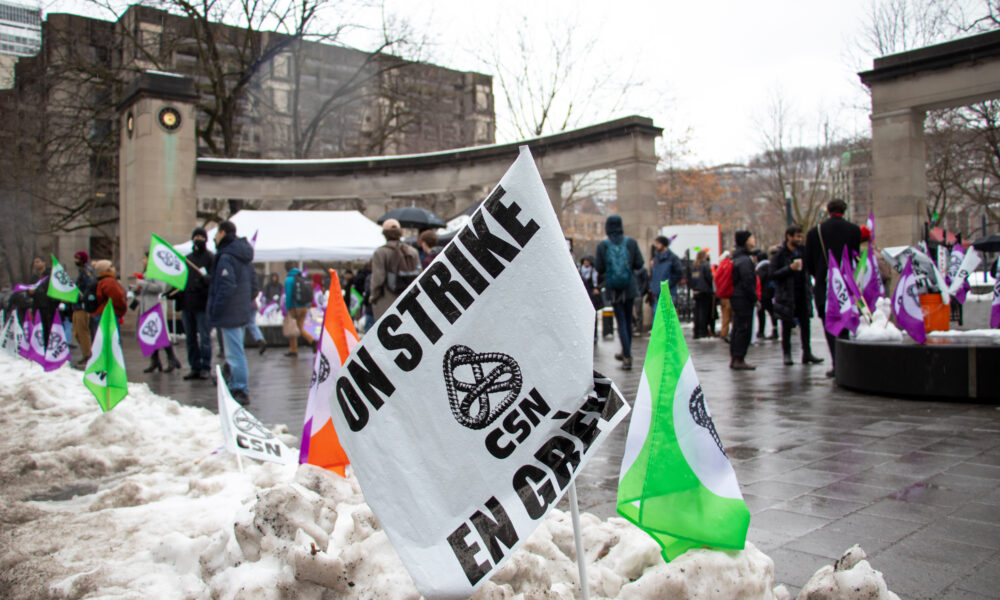
Chants and ringing bells, echoed by supportive honks from passers-by, can be heard daily at the Roddick Gates as teaching assistants (TAs) enter their third week of striking and picketing for higher pay, better working conditions, and healthcare. 

Since TAs’ previous collective agreement (CA) expired on July 31, 2023, the Association of Graduate Students Employed at McGill (AGSEM)—the union that represents TAs and invigilators—and McGill have been in talks to come to a new CA. After McGill failed to meet AGSEM’s demands, the union passed a strike mandate during the week of March 11 and TAs subsequently began an eight-week strike on March 25. 

AGSEM’s Mobilization Officer Emma McKay told The Tribune that the strike has helped AGSEM get concessions at the bargaining table after almost a year of unfruitful negotiations. 

“The point of a strike is to withhold labour and disrupt the actions of an employer,” McKay said. “We’ve gotten so much more movement at the table than we would have otherwise. So we know that what we’re doing is putting pressure on McGill  in a good way, and while we’re not yet at a deal that we deserve, we are way beyond what we would have gotten if we hadn’t gone on strike.”

In a newsletter published by AGSEM, its bargaining committee outlined their April 2 bargaining session with McGill. AGSEM presented a new proposal concerning harassment, discrimination, and sexual violence; indexed working hours to avoid a reduction of TA hours while class enrollment remains the same; a new letter of agreement (LoA) on protecting the rights of transgender TAs; and two options regarding rates of pay—14 per cent over three years or 21 per cent over four years. 

According to AGSEM’s newsletter, McGill’s counter-proposal incorporated only one item from AGSEM’s original proposal—to hold an annual meeting with all relevant parties to discuss teaching support budgets and the allocation of TA hours—but limited the attendance to one Union Delegate per faculty. 

In response to McGill’s proposal, AGSEM drafted another counterproposal, including the original LoA protecting transgender TAs’ rights; amendments to McGill’s proposal of annual meetings to discuss teaching support units, with the modification that attendance would be open to one Union Delegate per Hiring Unit rather than one per faculty; and an increase in wages by 8.5 per cent the first year and 3 per cent per year for the following three years, for a total of 17.5 per cent over four years. 

The two parties then entered a discussion about AGSEM’s counterproposal, beginning with discussing the LoA on protecting transgender TAs’ rights. The preamble of the proposed LoA states: “Whereas, transphobia is on the rise around the world.” According to the newsletter, McGill believed this phrase was controversial. 

“[McGill has] argued that misgendering and deadnaming are already implicitly included as forms of harassment in their policy. We presented this case to TAs in January, and asked: should we keep fighting on this? The answer was a resounding yes. The bargaining team works for TAs, so we continue to fight for this,” Nick Vieira, a member of the bargaining committee and former AGSEM delegate, wrote in an email to The Tribune.

AGSEM and McGill then discussed TA hour reductions, leading to a stalemate. After a brief recess, McGill presented a “final global offer.” McGill proposed allowing one Union Delegate per Hiring Unit to attend the  annual meeting; a letter of intent with goals of establishing an item on the agenda of the Labour Relations Committee to address TA workload and examine workload issues; no LoA on transgender TAs’ rights; and an increase in wages of 5.5 per cent the first year and 3 per cent per-year for the following three years, for a total of 14.5 per cent over four years. 

While this was lower than AGSEM’s original demands, the bargaining team was content to see that McGill proposed one Union Delegate per Hiring Unit, as opposed to one per faculty. 

“The inclusion of this amendment suggested that McGill might in fact be getting serious about a deal. We were still far away on many items, but it reflected movement that we were grateful to see,” AGSEM wrote in the newsletter. 

However, shortly after AGSEM convened to discuss this proposal, McGill sent the committee a follow-up email stating that they had made a typo and instead maintained their original proposal of one Union Delegate per faculty. 

“Their offer left much to be desired, but AGSEM was actively considering the proposal before we received McGill’s clarifying email. McGill’s mistake made it clear there was no more room for useful negotiations on Tuesday,” Vieira wrote. 

After this typo, AGSEM decided that they had lost the opportunity to find a deal that day and reaffirmed that TAs deserve to be taken seriously by McGill.

On April 5, McGill’s Director of Labour and Employee Relations Francis Desjardins sent an email about the ongoing negotiations with AGSEM to all staff and students. In the email, Desjardins addressed TA wages, the legal case AGSEM has filed over instructors doing TA work during the strike, TA hours, and access to McGill accounts for striking employees. 

In the email, McGill once again discussed picketing, reaffirming the  university’s stance that “while peaceful picketing is lawful, obstructing academic activities, intimidating students and instructors, and damaging property is not.” Desjardins claimed that members of the community have been “unnerved” by the disruptions caused by picketers and felt “intimidated” when going to class.

The email also addressed the safeguard order that AGSEM applied for with the Tribunal administratif du travail, which, if granted, would have forced instructors to stop performing the work of striking TAs in their absence, which McGill has told them to do, but AGSEM maintains is scabbing. The injunction was not granted, so instructors are able to continue doing this work for the time being. 

McGill’s email on the [safeguard order] was also misleading,” Vieira wrote. “The case is not resolved and there has been no ruling for [or] against McGill [or] AGSEM. Rather, the court did not see the urgency in resolving this issue when the case was heard [….] There will be further hearing(s) in the coming weeks [or] months. AGSEM maintains its position that professors and lecturers (except for department chairs) are not managers and that it is illegal scabbing for them to do work which was originally assigned to TAs.”

McGill did not answer questions about whether future hearings will take place.

Desjardins also compared TA wages across Quebec in the April 5 email, pointing out that while AGSEM believes their members deserve higher wages, TA pay at McGill is higher than the Quebec average of $26.50. McKay feels that McGill strategically compared TA wages across Quebec—where they are lower—rather than across Canada. AGSEM has printed out comparisons of TA wages across Canada and displayed them prominently while they picket.

“So we know that the average wage at York, UofT, UOttawa, Carleton, Western, McMaster, and Queen’s was recently $46.36. Now it’s higher because the TAs at UofT just won to raise to $53 an hour,” McKay said. “McGill was so threatened by our very legitimate comparison to other universities that they like to compare themselves to, that they had to say: ‘No, we think that the way that TAs are poor in Quebec is the right way. Look at how poor these other people are. And we want our TAs to remain that poor as well.’”

Desjardins further wrote that TAs “feeling the need to work beyond what is stipulated in their letter of offer should speak with their Course Supervisor to address the situation.” McKay thinks this, too, is not the full story. They said that TAs requesting additional hours is not the solution to the systemic problem that McGill has created by cutting TA hours and ignores the “complex supervisory relationships” that TAs are in. They also noted that course supervisors and McGill often reject valid requests for more hours, resulting in TAs doing unpaid labour.

Desjardins’ email additionally addressed TAs’ access to their McGill accounts, stating that “system accesses required for the performance of work, including work email, will only be restored once the strike is over.” However, he went on to say that TAs still have access to their student accounts and tax slips. According to McKay, while McGill’s statement is technically true now, it lacks context; AGSEM has heard from members who were locked out of their student accounts and unable to view their tax slips when the strike first began. 

“They locked us out of Workday immediately, including locking us out of getting our tax information […] which is an illegal thing to do,” McKay said. “We [also] can’t file for hours worked in other [McGill] jobs, even if those hours were worked before the strike.”

In an email to The Tribune, McGill Media Relations Officer Frédérique Mazerolle reaffirmed that TAs currently have limited access to McGill staff accounts, but claimed that they are still able to file for hours worked before the strike.

“Teaching Assistants still have access to their student accounts and to Workday to view their pay stubs, tax statements, and enter time for work performed prior to the beginning of the strike,” Mazerolle wrote. 

TAs who work multiple jobs at McGill have all been fired or suspended from their other McGill positions due to section 109.1c of the labour code, putting many TAs in financial peril. 

“We sent a letter of request for a negotiation for a letter of agreement between the union and McGill which would allow TAs to continue in their other work, which is an option in section 109.1 […] to allow for striking workers to maintain their other roles,” McKay explained. “McGill never even acknowledged that we asked them for this. So they continue their cruel behaviour, some people have lost their entire income, for no reason.”

McGill did not respond to questions about whether the university has responded to efforts to come to an agreement so that TAs with second jobs at McGill can keep working.

Vieira explained that since the April 2 bargaining session, there has been “radio silence from McGill,” excluding Desjardins’ email. He echoed McKay’s frustration toward the information presented in the email and hopes to get back to the negotiating table as soon as possible. 

“We hope that McGill will soon spend less energy on lengthy, misinformed emails and instead spend that energy on negotiations,” Vieira wrote. 

A previous version of this article stated that Nick Vieira was an AGSEM delegate. In fact, Vieira is no longer a delegate. The Tribune regrets this error.


All Things Academic, Student Life

Making the most out of your McGill degree

In two weeks, I’ll be submitting my last assignment of my undergrad. In two weeks, it’ll all be over. I can’t help but think back to the anxiety and the stress I had at the beginning of my first semester, four years ago. I was worried that I wouldn’t make friends, or that I would fail. Two years ago, I almost dropped out. But through all my ups and downs, I think I’ve finally grasped what university is all about, and more importantly, what I could have done differently to make the most out of it. 

There’s more to school than school

If there’s one thing I wish I had done, it’s saying yes to all the social events that came my way. The hardest pill I’ve had to swallow is that having a stellar transcript and a CV to match isn’t an entry ticket into my dream graduate program and that I might find myself thinking about the sacrifices I’ve made in my social life with sorrowful regret. If you’re starting your degree this fall, or even if you’re entering your last year, take advantage of the social scene at McGill. Befriend the people around you in class, and go to events in your department. It’s worth missing a few hours of studying. 

Find joy in your time here

The only thing that makes time go by more slowly is thinking about how slowly it’s going by. We have all had to take courses we don’t like—personally, I hated most of my prerequisites—but that doesn’t mean that everything else has to be dull. It took me seven and a half semesters to learn to get creative with the classes I take and get out of my comfort zone, but it was the best decision I’ve ever made. Joining clubs and student societies in your department can also give you a way to truly enjoy going to school. Choosing my classes based on pure interest and being part of a community is the part of my time here that I cherish above all. 

Your profs are your friends

I’m a keener. I’ve gone to random lectures for the pleasure of learning, I’ve crafted all my schedules to maximize my enjoyment, and I’ve written an honours thesis just because I wanted to. Above all, I’ve loved going to office hours, mostly to discuss assignments or class material, but sometimes simply just to chat with my professors. I’ve formed a rapport with people who are experts in their fields, which has helped me to understand what aspects of my field of study I want to explore. You don’t have to bury yourself in your books to succeed in college; sometimes, talking to your professors every once in a while is enough to guarantee you’ll do just fine. 

Find beauty in the mundane of your everyday life

Not every day is going to be good. Some mornings, you might wake up and feel like the last thing you want to do is go to your lecture. It’s normal to feel overwhelmed when you have to juggle the problems in your personal life, impending midterms, and assignments that won’t write themselves while the weight of the world feels like it’s resting on your shoulders. But sometimes it’s worth putting everything on pause if only to appreciate how beautiful life can be. I’ll miss walking around a foggy campus after leaving my 5:30 lectures in the fall or looking out the window during an intense study session just to see the first snow peacefully drifting by. I’ll miss the relaxing feeling of repotting my plants just because I didn’t feel like thinking about my midterm anymore. I’ll miss the small things about McGill that I took for granted. Romanticize your degree––you’re only here for so long. 

Science & Technology

Bored in Leacock 132? Prof explores student motivation at McGill

Navigating the dynamics and behaviours of a 200-person lecture hall presents an inherent challenge: How can profs effectively promote student motivation and academic success? As we approach the end of the semester, it is important to explore strategies that can increase student motivation and performance in higher education. 

Jessica Flake, assistant professor in McGill’s Department of Psychology, explored student success and motivation in university settings. In her recent paper, “Using Motivation Assessment as a Teaching Tool for Large Undergraduate Courses: Reflections From the Teaching Team,” Flake looked at the challenges of teaching large-format introductory psychological statistics courses, using motivational assessments as a teaching tool, and finding different ways to implement motivational assessments. 

“It’s a very non-traditional kind of paper to write as a research professor because it’s more about teaching and what we’ve learned about it,” Flake said in an interview with The Tribune. “It’s not a very formal kind of scientific study. It’s about our experience and sharing what works or doesn’t work for teaching.”

Teaching PSYC 204: Introduction to Psychological Statistics for her first time at McGill, Flake quickly learned about the course’s reputation. As a mandatory class for students majoring in psychology, this course is often at the bottom of the department’s popularity list. With the course’s dense and challenging content, students frequently find it dry and uninspiring, resulting in low motivation levels across the board.

Flake examined the various factors shaping achievement motivation to gain deeper insights into the students’ motivation within the Expectancy-Value-Cost (EVC) model—a psychological framework designed to model motivational factors. 

Rooted in individuals’ subjective evaluations, the EVC framework treats motivation as a function of expectations for success, subjective task value, and perceived costs associated with engagement. 

Prior research has consistently linked expectancy for success and value with academic achievement, highlighting its critical role in promoting performance and engagement. By using the EVC scale, Flake assessed the students’ expectancy for the course, their perceived value of the content, and the perceived costs associated with participation.

To learn more about student motivation levels, Flake created a questionnaire to track students’ behaviour throughout the semester. 

She administered the questionnaire at several points during the semester, which included questions such as: Did students expect to succeed in the course? Did they think that the material was interesting and valuable? Did they have psychological costs, burdens, or barriers they were worried about? 

Using this data, Flake reflected on teaching and evaluation methods used in class settings. She also reflected on the specific techniques that can boost students’ motivation and reduce their anxiety, such as using a means of evaluation that allows students to accumulate grades over the course of the term rather than having their grades determined by only midterm and final exams. This could be achieved by having students complete small weekly assignments, adding to their participation grade, or taking part in group projects.

Flake emphasized the importance of reassuring students and creating a positive environment during stressful times in the semester, such as during the exam season. She also recommended other professors to check in with students, ask them if coursework is too overwhelming, and consider granting extensions or pushing back due dates to aid those in need. 

“I think there’s this aspect of just being a person and seeing students where they are at. I don’t do the whole motivational survey anymore. But I do say, how are you feeling at this point in this semester? And just showing that you’re a person and understand that it’s stressful to be a student,” Flake explained. “I think those little things help, even if they’re just classroom announcements. They help students feel recognized.”

In navigating the challenges of promoting student motivation and academic success, Flake’s research offers valuable insights and practical strategies for educators teaching in high-volume classes. Her emphasis on providing empathy and support to students illustrates the potential for simple gestures to enhance student well-being and positive academic outcomes.

McGill, News

Queer McGill launches petition demanding removal of Provost and Executive Vice-President Christopher Manfredi

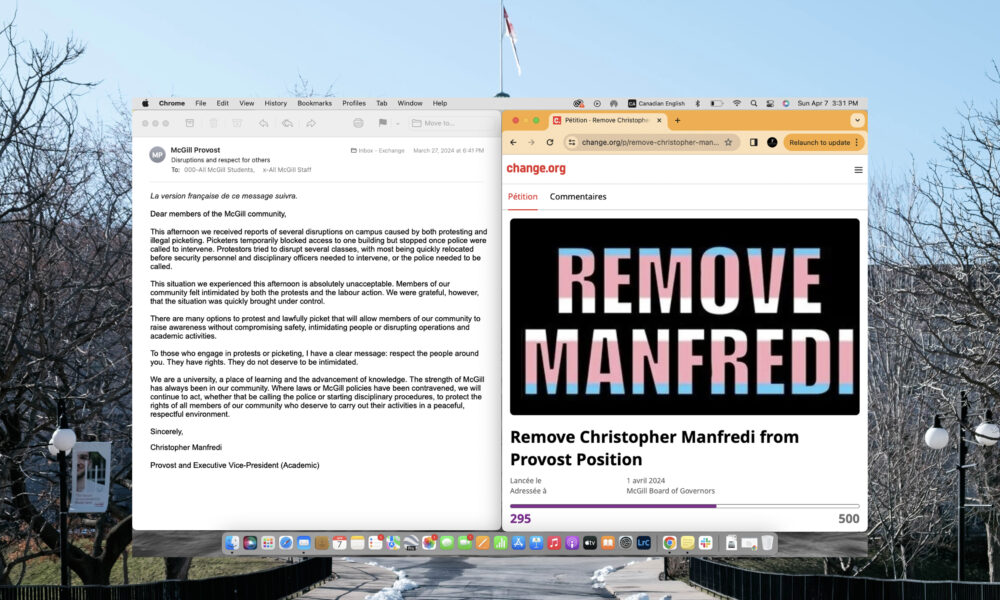
On April 1, Queer McGill launched a petition calling for the university’s Board of Governors to remove Christopher Manfredi from his position as Provost and Executive Vice-President (Academic). The petition came after Manfredi liked a post on X, formerly Twitter, which defended comedian Dave Chappelle for his use of transphobic jokes. He has since unliked the post. The petition also criticizes Manfredi’s recent email communications justifying police presence on campus in response to student demonstrations. As of April 8, the petition has over 290 signatures. 

Abe Berglas, the administrative coordinator of Queer McGill and the incoming Students’ Society of McGill University (SSMU) Vice-President University Affairs, told The Tribune that the group created the petition after several of their constituents asked them to do so. They spoke to the importance of the petition as a way of holding administrators accountable for systemic transphobia.

“The petition is important to me because we’ve seen so many instances of […] high-ranking people within McGill getting away with having blatantly transphobic beliefs, which I think is really dangerous,” Berglas said. “So you’re seeing […] institutional transphobia […] coming from so many different sources, and there are no repercussions for the people who are saying it.”

One example Berglas gave of institutional transphobia is that Associate Director of Residence Life Daniel Fournier prohibited Queer McGill from putting up posters regarding institutional deadnaming at McGill in the winter 2024 semester. 

McGill’s Media Relations Office wrote to The Tribune that the group’s posters violated the policy surrounding posters in residences by targeting university administration and that “Residence Life is sensitive to the issue of deadnaming.”

In a comment below Queer McGill’s Instagram post announcing the petition, Manfredi apologized for “any hurt that [the like] has caused” and stated that he had contacted Queer McGill to offer an apology in person.

“Recently, I became aware that my X account had ‘liked’ the post mentioned [by Queer McGill]. It is unclear to me how this happened, but I may have clicked it accidentally. No matter what happened, I sincerely apologize,” Manfredi wrote. “That action does not reflect who I am or what I believe. I take full responsibility for this error.” 

The petition also condemns the university’s choice to have police intervene in recent student demonstrations.

On March 28, students protested against McGill’s complicity in the genocide against Palestinians through actions such as blocking entrances to several classrooms. The same day, the Association of Graduate Students Employed at McGill (AGSEM)—the union that represents Teaching Assistants (TAs)—picketed in support of the ongoing strike

In the evening of March 28, Manfredi sent an email to staff and students stating that the university had called police to campus because some protestors and picketers had allegedly engaged in behaviour in violation of the law and university policies. Manfredi noted that the police made at least one arrest and that McGill will press charges. 

Dallas Jokic, a member of the AGSEM TA bargaining team, explained that TAs have reported feeling less safe on campus due to police presence on campus in an email to The Tribune.

“McGill’s attempt to intimidate picketers by calling the police on peaceful labour actions is deeply disturbing,” Jokic wrote, adding that “Provost Manfredi’s defence of calling the cops on your own students and workers in the name of ‘respect for others’ is insulting and reckless.” 

In a statement to The Tribune, McGill Media Relations Officer Frédérique Mazerolle emphasized that while the university supports the right to free speech and assembly, this must remain within the limits of McGill’s policies and the law. 

“No one wants to see situations where police must be called to campus, but if people choose to engage in unlawful activity, McGill will take the necessary measures to keep its community members safe,” Mazerolle wrote. 

Berglas also noted that Queer McGill plans on taking up Manfredi’s offer to meet in the hopes of improving the safety of queer students on campus.

“I think I’m going to continue to try to act in a way that is best for queer students,” Berglas said. “[I]n this case, that is going […] to meet with him […] to see what we can come up with to make this campus safer for the people I represent.”

Science & Technology

A potential powerhouse for curing mitochondrial diseases

On March 26, 2024, the Annual George Karpati Lecture invited Dr. Rita Horvath from Cambridge University to speak on mitochondrial medicine—to share her expertise on everything from mechanisms to treatments. Horvath has spent over 25 years studying genomics and biochemistry for the diagnosis and treatment of rare neurological disorders. 

The lecture series focuses on recent developments in neuromuscular disease research and treatment, honouring George Karpati, who was a well-respected clinical neurologist at The McGill Neuro. Horvath commenced her presentation by reminiscing about her first encounter with George Karpati in Montreal, which happens to have been almost exactly 30 years ago. 

The mitochondria, often referred to as the “powerhouse of the cell,” perform a large array of crucial cellular functions such as calcium ion storage for cell signaling activities and regulation of cell growth and death. Mitochondrial medicine is an umbrella term for mitochondrial diseases, including mitochondrial disorders and syndromes, along with their biochemical treatments. 

The deletions or low amounts of mitochondrial DNA (mtDNA) have a variety of causes, such as simply a low production of mtDNA, or other rare genes. The deletion mechanisms of mtDNA in mitochondrial diseases have been studied, including mitochondrial nucleotide salvage pathways, to better understand the causes. Dr. Stefanie Bulst, a Medical Centre of Genetics researcher, discovered alongside her research group that the supplementation of deoxyguanosine phosphate and deoxyadenosine phosphate (dAMP/dGMP)—DNA’s building blocks—leads to partial rescue of mtDNA copy numbers, to make up for its low supply, a potential treatment to mitochondrial depletion syndromes. 

Alpers’ syndrome is an example of a genetic neurodevelopmental disorder that Hovarth works with, caused by the depletion of mtDNA and which may appear without any genetic history. More specifically, the syndrome occurs as a result of mutations in the polymerase gamma gene (POLG), which encodes mitochondrial DNA polymerase. It typically manifests between the ages two and four, or between ages 17 and 24, causing symptoms like seizures and stunted growth.

Surprisingly, “not only the deletions or lacking of genes but also an excess of mitochondrial DNA can lead to issues, or develop symptoms,” Horvath mentioned in her lecture. 

Mitochondrial neurogastrointestinal encephalomyopathy, MNGIE in short, illustrates an example of diseases that arise from an excessive number of genes. As the name of the disease suggests, it is characterized by symptoms spanning the degeneration of muscles, affecting a variety of physiological systems, from the patient’s digestive tract to eye movements. The disease is progressively degenerative and has an average life expectancy of 37.6 years. 

Treatment approaches for mitochondrial diseases as well as the diseases themselves vary widely. Current research findings suggest that bacterial endonucleases, which are bacterial enzymes, can be used for mtDNA gene editing, meaning that they can cleave mutant mtDNAs. 

“They can robustly eliminate mutant mtDNA allowing the wild type [the normal form of the gene] to repopulate the cell. Using cytosine base editors, you can also edit mtDNA to correct mutations,” Horvath said.

Another effective treatment is through using cytosine base editors, which has enabled correcting the mtDNA mutations. Moreover, next-generation sequencing has been found to aid the diagnosis of mitochondrial diseases, with whole-genome sequencing offering insights into individual mitochondrial diseases. 

An experiment conducted at Horvath’s lab, led by research associate Denisa Hathazi, grows brain organoids—a lab-grown 3D tissue resembling human brain—with patient stem cells to study disease characteristics. 

“Though limited to 200 days of growth [and] thus not fully representing deep brain neurons, these organoids are still a valuable model for investigating various neuronal cell types together,” Horvath explained. 

Because of the rarity of mitochondrial diseases, there are challenges in research such as recruiting participants for clinical trials for treatment developments. However, some significant progress has been made in the past decade. Specialized clinics such as the LifeArc Centre in the UK are emerging to continue research on diagnosis and identification of disease progress for mitochondrial diseases. Horvath’s aspiration to establish a clinical database for rare neurodegenerative diseases emphasizes the unwavering efforts to improve patient outcomes.

Commentary, Opinion

McGill is a union campus

Alongside the consistent mobilization of students across university campuses, union activity at McGill regularly demanded the community’s attention this semester. The newly formed Association of McGill Law Professors had a one-day strike in February. McGill Arts Professors announced their successful unionization last week. Most prominently, the Association of Graduate Students Employed at McGill (AGSEM) has been on strike since March 25.  Despite the attention toward labour organizing at McGill, the quiet organizing drive of the university’s undergraduate and graduate graders, tutors, course assistants, and other Academic Casuals is often passed over. While it can be easy to overlook, the unionization of these Academic Casuals is instrumental to building labour power at McGill. 

Academic Casuals are short-term, part-time workers who help develop and deliver teaching programs. Often, this work involves grading, developing course materials, and leading tutorials. Why does McGill choose to employ academic casuals to do work that appears to be best suited for Teaching Assistants (TAs)? It is not because Casuals are uniquely qualified for the position, but rather because McGill pays academic casuals less than half what TAs earn. Currently, McGill TAs make an abysmal $33.03 an hour, yet, despite their comparatively low wage, McGill wants to limit their hours as much as possible. Enter Academic Casuals, whose hourly wage is marginally above the provincial minimum wage at $15.50 an hour. The Academic Casual position quite simply exists to keep McGill’s labour costs to the absolute minimum. 

As TAs continue their negotiations with McGill, unionizing McGill’s Academic Casuals is increasingly important. The TA strike has ramped up pressure on the administration, making it likely that AGSEM will secure substantial wage increases for its members. If the strikes achieve this pay increase, McGill is likely to further reduce TAs’ contract hours so that their total remuneration stays despicably low, and Academic Casuals will be tasked with picking up the reduced TA hours. Unionizing Academic Casuals not only increases their own labour power but TAs’ power as well, as McGill would no longer be able to substitute unionized workers for poorly paid undergraduates. 

Throughout the TA strike, the administration has pitted different groups on campus against each other. The administration has forced professors to scab on their TAs, undermining both their professional and academic relationships. Meanwhile, the Provost and Executive Vice-President (Academic) Christopher Manfredi sends almost daily emails condemning the labour action of graduate students and demonizing them to the undergraduate population. Despite acknowledging that the tasks of Academic Casuals often resemble those of striking TAs, McGill requested that they continue their work. In essence, Academic Casuals are being used by McGill as replacement workers. The Quebec Labour Code prohibits the use of replacement workers because it erodes the ability of either party to implement a meaningful work stoppage. Replacement workers are inherently at odds with striking workers because they undermine their bargaining power. Instead of being weaponized by the McGill administration as a tool to erode TAs’ labour power, unionized Academic Casuals would be able to stand in solidarity with them. 

Unity has proven successful in creating change at other universities. This January, the California Faculty Association (CFA) went on strike in response to the California State University’s refusal to pay their membership a fair wage. The CFA encompasses 29,000 professors across 23 universities, giving them a considerable amount of labour power. However, the CFA also had support from their university community, students overwhelmingly demonstrated against the administration and maintenance staff threatened to strike in solidarity. The strike ended in one day as the university capitulated in the face of united workers and students. The McGill community can use the CFA strike as a model for a productive unified struggle. Tangibly, this means all workers at McGill need to stand in solidarity against the tyranny of the administration. 

The AGSEM strike demonstrates yet again how the McGill administration prioritizes its profits over the well-being of its students and employees. The McGill community, however, does not lack agency to challenge the administration’s retrenchment. Together, staff, students, and faculty have the power to assert their right to a better education and a better workplace.

Kiran is currently employed by McGill as an Academic Casual.

Student Life

How to deal with the end-of-semester blues

Libraries are filled to the brim and dark circles are beginning to set in around students’ eyes: Finals season is almost here. Should we start studying or take some time to rest? It seems that even the weather can’t pick a side. Here are some tips to help manage stress and build a healthy study-life balance.

Maintaining healthy habits

During these tough times, it becomes tempting to eat whatever is most convenient—snacks, frozen meals, and take-out. But keeping your body healthy and happy is the first step toward better mental health. Filling your stomach to regain some energy is crucial, so eating frequently and enough should not be overlooked. Take time every day to have three consistent meals. One way to be efficient and save some money is to prepare meals ahead for the whole week so that you don’t need to spend time cooking every day. Budget Bytes gives wonderful tips on meal prepping.

Sleep is necessary to be productive; so, though it’s tempting, don’t pull an all-nighter. Instead, try to organize yourself with clear daily objectives and consistent sleeping hours in mind so that you have a game plan and don’t need to drastically disturb your sleep schedule. 

Taking a breath of fresh air

This time of the semester is particularly hard because there is so much on our minds, whether it be facing academic deadlines, deciding what to do for the summer, or dealing with how to sublet your apartment while you’re away. Whatever it is, letting go of the stress on your shoulders is important for your productivity and mental health. Going for walks has been shown to have many health benefits, including reducing stress. Your brain needs air to function, and so do you. You can also go jogging if raising your heart rate seems like it would help you let off some more steam. No matter if you’re running or walking, put on your favourite playlist and take your mind off of schoolwork for a little while. A healthy study-life balance requires doing things that are not school-related—you might as well kill two birds with one stone by doing something good for both your mental and physical health. 

Engaging with fellow students

Even though it might feel like you are alone, plenty of other students are in the same boat. If you start feeling overwhelmed with the amount of work you have while you’re sitting in the library, just take a look around. Talk to your friends who are undergoing the same struggles—it might not take anything off of your to-do list but at least it will make you feel understood. Don’t forget to chat about topics not related to your studies as well. 

If you’re feeling like talking to someone who you don’t know who has been trained to help, the Peer Support Centre offers confidential and non-judgemental guidance from fellow students. Regardless of what you decide is best for you, don’t be scared to reach out for help and reassurance that you’re not alone—your mental health matters, and talking about it is not a weakness. 

Looking ahead 

The only thing you probably see on the horizon right now is finals. However, you might want to look beyond that. Even though the sun is shy and sometimes hides behind the clouds, it still makes the occasional appearance, reminding us of the arrival of summer. Whatever your summer plans are, the change in season will offer a new start, warmer weather, and hopefully. some much-deserved rest.

Students in crisis should contact Suicide Action Montréal at 1-866-277-3553. For an appointment with a doctor, wellness advisor, or mental health counsellor, students can contact case managers at the Office of the Dean of Students, call the Wellness Hub at 514-398-6017 Monday through Friday, or go to the Hub’s website for more information. To consult with the SSMU mental health commissioner, email [email protected].

Science & Technology

How AI unlocks the secrets of proteins

Proteins are the workhorses of our cells, responsible for a vast array of functions that keep us alive and healthy. From building muscle to fighting disease, their intricate shapes determine their specific roles. Although the task has so far eluded scientists, they hope to ultimately incorporate lab-designed proteins into personalized medicine that anyone can take for any condition. 

For decades, scientists have been grappling with a fundamental mystery: How to accurately predict a protein’s folding pattern based solely on the string of amino acids that comprise it. This challenge, known as the protein folding problem, has long been a hurdle in developing new drugs and therapies, as experimentally determining shape costs labs considerable time, money, and effort. 

However, a revolution in protein-folding prediction is underway, driven by the power of artificial intelligence (AI). Pioneering tools are making significant strides in predicting protein structures with unprecedented accuracy. These tools include AlphaFold, developed by Google DeepMind, and RoseTTAfold, developed by the Institute for Protein Design (IPD) at the University of Washington. They use a combination of deep learning algorithms and advanced statistical methods to analyze vast databases of known protein structures, allowing for the identification of patterns and relationships that can then be applied to predict new proteins. This streamlines the initial process of developing protein-based medicines. 

For a more in-depth look at the software, Sebastian Kenny, a postdoc at the IPD, wrote about integrating different predictive software they have developed in an email to The Tribune

“We start with RFDiffusion generating protein backbones around a hotspot of our choosing,” Kenny wrote. “Following that, ProteinMPNN assigns amino acid sequences to the generated backbone. This sequence is inferred from other structures of proteins that have been studied in the past. Finally, we validate and score our designs using RoseTTAfold or AlphaFold to see the likelihood of our designed protein forming the complex we expect.”

Kenny explained that using this technique dramatically shortens the process of protein design and integration, as it now requires only a few weeks to a month to model and validate.

Paul Harrison, associate professor in the Department of Biology at McGill, highlighted the time-saving potential of programs like AlphaFold by explaining how predictive algorithms can accelerate experimentation.

“Firstly, predictive algorithms can cut costs, and secondly they help in generating experimental hypotheses, for example, structures predicted by the AlphaFold algorithm are often as good as an experimentally determined structure derived from X-ray crystallography,” Harrison wrote in an email to The Tribune

Lucas Elliot, U1 Science, is excited to see how these techniques could be integrated into the university’s curriculum.

“Computer science is something we’re now learning younger and younger, but it’s not standard yet. But I think it will become standard,” Elliot said in an interview with The Tribune. “That makes the way for understanding AI. And I would love to see work with AI tools in my curriculum, as soon as possible. I do think it’ll be a little slow. Especially with very established universities, everyone loves these new tools, and I’m sure all the professors are using them. But then incorporating them in a teaching class is slower.” 

It would be beneficial for McGill to strengthen its teaching by integrating open-source tools like AlphaFold and RoseTTAfold into the curriculum. Learning how to use these innovative techniques could significantly accelerate the development of life-saving medicines as graduates contribute to the world as new scientists and engineers. 

Jerome Waldispuhl, associate professor in McGill’s School of Computer Science, acknowledged the usefulness of tools like AlphaFold but highlighted the need for analytical thinking.

“It’s a catalyzer. It allows you to explore combinations, and [the] mixing of things you already know much faster, based on current knowledge, but it doesn’t replace human supervision,” Waldispuhl said in an interview with The Tribune.

Waldispuhl emphasized that these algorithms need to have their findings validated by scientists. AI in biology could shave off years of work with faster designs for potential medicines, but we need critical minds to make the best use of it.

Science & Technology

Digitizing African studies: The technical and ethical considerations

Computers have become essential to how we work and live. Digital humanities, a new and expanding field, takes on the challenge of rethinking the traditionally paper-based operation of storing, processing, and accessing research materials.

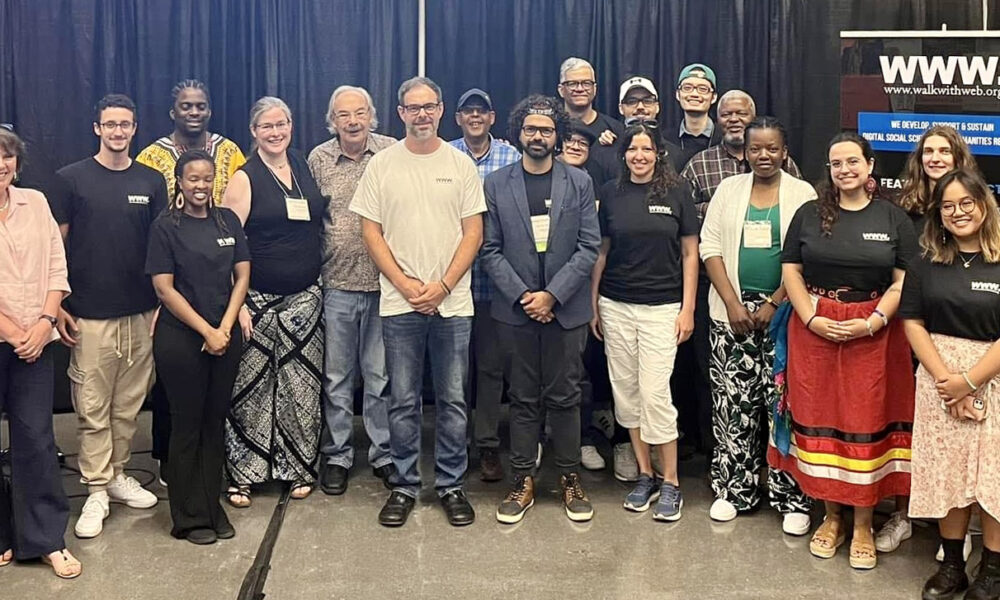
Kartikay Chadha, a McGill doctoral student in Information Studies and CEO of Walk With Web Inc., sat down with The Tribune to discuss the challenges and successes with helping researchers of African history digitize their databases. 

“Information Studies […] is a long-standing [field],” Chadha said. “There is so much work out there to know how to create these databases, how to organize them, how to manage them. All of this work is already done in library sciences [but] is missing in digital humanities.”

As research projects receive funding and start to grow, researchers frequently make new websites to contain their collected information. 

“Independent researchers […] go to different archival sources. They will go to courthouses, they will go to all these repositories, and they will do their own research. Eventually, they build these smaller data sets that are proliferated all over the place,” Chadha said.  

The technological support needed to keep these websites going is often either underestimated or unattainable once a research grant runs out. 

“Technology is evolving. There are versions that get upgraded, plugins that get upgraded. You need somebody to take care of those things down the line,” Chadha said. “That’s where Walk With Web is situated. We collaborate with many researchers and universities. I’m trying to centralize [datasets] together so that we can provide a collaborative platform for people to work.”

Chadha’s research focuses on the African diaspora and slavery, helping to launch and sustain websites that provide researchers with access to crucial documents and imagery. Throughout this work, he considers both the technicalities of running a credible website and the ethical implications of digitizing African history. 

A major concern in both traditional and digital African history is the tendency to sideline Black voices. 

“Why is African Studies so white? I recall there was a conference that was cancelled a few years ago because there were no Black individuals on any panels for an African studies conference. This is not a new discussion in the discourse—It’s time to walk the talk,” Chadha said. “I’m interested in understanding how historians, specifically of African origins, interact with multimedia websites, because it’s a lot of their data that is being put online. How are we presenting it? Are we ethically sound about it? Are we morally sound about it?” 

By keeping African historical data easily accessible online, the data’s relevance as part of the historical canon is honoured. Recently, Chadha helped to relaunch Slavery Images—a platform that allows researchers and professors to access historical imagery of slavery. 

Slavery Images, originally created in the 1990s, contained around 2,000 images. It was also in desperate need of revitalization.  

Chadha’s team worked on creating an intuitive interface and a usable website. Simultaneously, other researchers were responsible for verifying the historical validity of the catalogued images. 

“Henry Lovejoy is the principal investigator of the project. He is the director of Digital Slavery Research Lab at CU Boulder. He conducted the historical research on this project including data collection, making sure that the content is historically accurate, that [we’re] using the correct terminologies while organizing and tagging documents for the development of the website,” Chadha said. “That is the blend of digital humanities—he has the humanity side; we have the digital side.”

The relaunch of the Slavery Images platform was highly successful. 

“It’s fantastic. We have recorded over 20,000 unique users since the relaunch in January 2024,” Chadha said. 

Walk With Web and its 22 projects’ success comes from the team Chadha has put together, along with his strategic approach to programming. 

“[Programmers] have to think about error handling, right? What will my user click and break? The thought process goes towards the negative side. The approach needs to be that this [project] is possible, so let’s figure it out.”

Opinion

Open Letter to McGill Administration Regarding the Teaching Assistants’ Strike

On Friday, April 5, just before 2 p.m., a few signatories of the below open letter walked over to the James Administration building to deliver it in person, accompanied by about a dozen members of AGSEM. The plan was for three professors to walk in and deliver seven copies of the letter – one for each addressee. We did not really expect to meet with any of the addressees, but figured we would ask, and then simply leave the letters at the front desk, to be. To our surprise, our modest plan was quickly foiled: the door was locked. There was no doorbell, and no one inside to let us in. One of us tried the keycard entry reader. Red light, no luck. A security guard approached from outside and asked who we were. We explained the situation. “Do you have an appointment?” “No.” “You cannot enter the building without an appointment.” Perplexed that three McGill professors require an appointment in order to enter the administration building, we put our learned heads together and decided to try calling some members of the administration. Perhaps an administrative assistant would pick up, take pity on us, and come downstairs to collect our now rain-splashed letters. After a couple unanswered calls, we did finally really reach a member of the senior administration, who eventually authorized us to hand the letters to a security guard, who would carry them into the building for us. Perhaps the experience was just a fluke and if we had delivered the letter on a different day, it would have gone differently. But it certainly left us with a sinking sense of teaching at a university whose administration has walled itself off from students and professors alike, where collegial governance is so far gone that few can even remember its existence, if it ever had one.


To: Deep Saini, President and Vice-Chancellor; Christopher Manfredi, Provost and Executive Vice-President (Academic); Diana Dutton, Interim Vice-President (Administration and Finance) and Associate Vice-President (Human Resources); Angela Campbell, Associate Provost (Equity and Academic Policies); Fabrice Labeau, Deputy Provost (Student Life and Learning); Francis Desjardins, Director, Labour and Employee Relations; Étienne Clark, Labour and Employee Relations Advisor 


Dear Colleagues, 

We write as McGill professors who are deeply concerned about the university administration’s handling of negotiations with the Association of Graduate Students Employed at McGill (AGSEM). In the last two weeks, in response to the strike, the administration has resorted to intimidation of faculty and graduate students alike. We fear the campus climate will continue to deteriorate unless there is a change in attitudes and tactics. 

The administration’s communications to faculty have been heavy-handed and, in some cases, inappropriate. McGill has directed professors and other course instructors that they have no choice but to perform the labour of striking student-employees or be placed on unpaid administrative leave. McGill has justified its position by arguing that instructors are managers (despite the fact that we don’t hire, fire, or set the hours of TAs), as if this is settled case law, and not in fact the subject of an ongoing legal dispute before the Tribunal administratif du travail. Rather than acknowledging this dispute and awaiting a ruling, the university has doubled down on its narrative, while also promising to pay for any fines and legal fees we might incur for following orders and breaking the law. (One wonders which budget line can be so easily diverted to covering these costs.) 

Just as disturbingly, the McGill administration’s position pushes faculty to prioritize the needs of undergraduate students over the needs of graduate students. The TAs who are on strike are graduate student-employees. As professors, we care about the needs, learning, and wellbeing of our undergraduate and graduate students, alike. On this note, we are seriously troubled by the administration’s decision to revoke teaching assistants’ access to their work email addresses. Though officially TAs have “work” and “student” emails, in practice many TAs use their work email for a range of scholarly and professional correspondence. Cutting off access to these email accounts will likely result in McGill graduate students missing important correspondence related to publications, conferences, grants, and job applications. Also alarming is the administration’s unwillingness to allow AGSEM members to continue to perform non-TA jobs at the university for the duration of the strike, something that AGSEM has repeatedly requested. 

We are very concerned that the university’s tactics could undermine trust and relationships between graduate students and faculty within departments, and we resent being placed in this

position by the university. Sowing these divisions threatens to seriously poison the campus climate and our ability to do our jobs. 

Intensifying this divisiveness are the administration’s inflammatory campus-wide emails about picketing AGSEM members. These emails have exaggerated the disruption caused by striking teaching assistants, creating an illusion of disorderly and even violent chaos that has no basis in reality. Strikes are a normal occurrence in democratic societies, and participating in strikes is part of individuals’ Charter-protected right to freedom of assembly. Disruptions to everyday routines are an essential part of strikes. While it is always possible that individual strikers might engage in inappropriate behaviour, it is in turn grossly inappropriate for the administration to use individual allegations to paint all picketing workers as threats to campus safety. Whatever their stated intent, these emails are themselves intimidating. Unlike the administration, AGSEM does not have the ability to send campus-wide emails and cannot, therefore, correct the record. 

The cumulative effect of these activities is to pit faculty, undergraduates, and graduate students against one another. We believe that it is possible to resolve this conflict without further poisoning our relationships with one another. To do that, the administration must drop the hardball tactics and lowball offers, which have demonstrated a blatant disregard for the soaring cost of living over recent years. 

TAs play a vital role in undergraduate education at McGill, leading labs and tutorials, grading papers and exams, and mentoring students one-on-one. Many undergraduate students build stronger relationships with their TAs than with their professors. Many professors treat their TAs as colleagues with whom they collaborate as part of a teaching team. But TAs are not just graduate student workers. They are also junior members of our scholarly community. What sort of community treats its junior members with such lack of support and outright disrespect? 

We close this letter with an urgent request to the administration: refrain from the intimidation of its employees and instead focus its energies and resources on negotiating a fair agreement with AGSEM. 

Sincerely, 

1. Alanna Thain, Associate Professor, English 

2. Barry Eidlin, Associate Professor, Sociology 

3. Catherine Leclerc, Associate Professor, Littératures de langue française, traduction et création 

4. Daniel Schwartz, Assistant Professor, Languages, Literatures, & Cultures 

5. Darin Barney, Professor, Art History & Communication Studies 

6. Debra Thompson, Associate Professor, Political Science 

7. Derek Nystrom, Associate Professor, Department of English 

8. Don Nerbas, Associate Professor, History & Classical Studies 

9. Edward Dunsworth, Assistant Professor, History & Classical Studies 

10. Emily Carson, Associate Professor, Philosophy 

11. Emma Teitelman, Assistant Professor, History & Classical Studies 

12. Eric Lewis, Associate Professor, Philosophy 

13. Evan Fox-Decent, Professor of Law and Canada Research Chair in Cosmopolitan Law & Justice 

14. Hasana Sharp, Professor, Philosophy 

15. Ipek Tureli, Associate Professor, Architecture 

16. Jake Blanc, Associate Professor, History & Classical Studies 

17. Joshua Nichols, Assistant Professor, Law 

18. Kirsten Anker, Associate Professor, Law 

19. Kyle Kubler, Faculty Lecturer, McGill Writing Centre 

20. Louigi Addario-Berry, Professor, Mathematics & Statistics 

21. Malek Abisaab, Associate Professor, Department of History & Classical Studies and Institute of Islamic Studies 

22. Marianne Tarcov, Assistant Professor, East Asian Studies 

23. Marion Vergues, Senior Faculty Lecturer, French Language Centre 

24. Michael Hallett, Full Professor, Philosophy, Faculty of Arts 

25. Richard Gold, Professor, Law 

26. Robert Hasegawa, Associate Professor, Music Research 

27. Sandeep Banerjee, Associate Professor, English 

28. Stephen Menn, Professor, Philosophy 

29. Tari Ajadi, Assistant Professor, Department of Political Science 

30. Tassos Anastassiadis, Associate professor, History & Classical studies 

31. Victor M. Muniz-Fraticelli, Associate Professor, Political Science and Law 

32. William Clare Roberts, Associate Professor, Political Science 

33. Aaron Bartels-Swindells, Faculty Lecturer, McGill Writing Centre 

34. Michelle Hartman, Professor, Institute of Islamic Studies 

35. Subho Basu, Associate Professor, History & Classical Studies 

36. Francesco Amodio, Associate Professor, Economics and Institute for the Study of International Development 

37. Jorge Alonso Gamarra, Sessional Lecturer, Anthropology 

38. Michael Hendricks, Associate Professor, Biology 

39. Amy Janzwood, Assistant Professor, Political Science 

40. Dennis Wendt, Associate Professor, Educational & Counselling Psychology 

41. Kevin McDonough, Associate Professor, Integrated Studies in Education 

42. Aron Rosenberg, Faculty Lecturer, Department of Integrated Studies in Education 

43. Richard Janda, Associate Professor, Law 

44. Priya Gupta, Associate Professor, Faculty of Law 

45. Steven Jordan, Associate Professor, Integrated Studies in Education 

46. Allison Gonsalves, Associate Professor, Integrated Studies in Education 

47. Yves Winter, Associate Professor, Political Science 

48. Jill Hanley, Full Professor, School of Social Work 

49. Lynn Kozak, Associate Professor, Department of History & Classical Studies 

50. Nanre Nafziger, Assistant Professor, Department of integrated studies in education 

51. Jennifer Elrick, Associate Professor, Sociology 

52. Mela Sarkar, Associate Professor, Integrated Studies in Education 

‘53. Margaret Levey, Faculty Lecturer, School of Continuing Studies 

54. Jenny Burman, Associate Professor, Art History & Communication Studies 

55. Alia Al-Saji, Professor, Department of Philosophy 

56. Jonathan Sterne, Professor, Art History & Communication Studies 

57. Omar Farahat, Associate Professor, Law 

58. Nicholas Dew, Associate professor, History 

59. Jacob Errington, Faculty Lecturer, School of Computer Science 

60. Claude Crépeau, Associate Professor, School of Computer Science 

61. Ross Sundberg, Faculty Lecturer, McGill Writing Centre 

62. Alex Ketchum, Assistant Professor, Gender, Sexuality, & Feminist Studies 

63. Pedro Monaville, Associate Professor, History & Classical Studies 

64. Alex Blue V, Assistant Professor, Art History & Communication Studies 

65. Gustavo Ferreira, Faculty Lecturer, Art History & Communication Studies Department 

66. Sabeena Shaikh, Faculty Lecturer, Institute of Islamic Studies 

67. Lyudmila Parts, Professor, Languages, Literatures, & Cultures 

68. Camille Owens, Assistant Professor, English 

69. Alexis Dennis, Assistant Professor, Sociology 

70. Eugenio Bolongaro, Associate Professor, Languages, Literatures, & Cultures 

71. Isabel Pike, Assistant Professor, Sociology 

72. David Hensley, Associate Professor, Department of English 

73. Carrie Rentschler, Associate Professor, Art History & Communication Studies 

74. David Rolnick, Assistant Professor, School of Computer Science 

75. Narendra Subramanian, Professor, Political Science 

76. David Avis, Professor Emeritus, School of Computer Science

77. Shokry Gohar, Faculty Lecturer, Islamic Studies 

78. Adrian Vetta, Professor, School of Computer Science and Department of Mathematics & Statistics 

79. Robert Robere, Assistant Professor, School of Computer Science 

80. Jessica Ruglis, Associate Professor, Dept of Educational & Counselling Psychology 

81. Ara Osterweil, Associate Professor, English, Faculty of Arts 

82. Tania Islas Weinstein, Assistant Professor, Political Science 

83. Griet Vankeerberghen, Associate Professor, Department of History & Classical Studies 

84. Julie Charlotte Sénat, Faculty Lecturer, French Language Center 

85. Giulia Alberini, Faculty Lecturer, Computer Science 

86. Jayne Malenfant, Assistant Professor, Integrated Studies in Education 

87. Alison Laywine, Associate Professor, Philosophy 

88. Tim Hoheisel, Associate Professor, Mathematics & Statistics 

89. G. Eric Jarvis, Associate Professor, Psychiatry 

90. Armando Salvatore, Professor, School of Religious Studies 

91. Elaine Weiner, Associate Professor, Sociology 

92. Cristiana Furlan, Faculty Lecturer, Languages, Literatures & Cultures 

93. Bobby Benedicto, Assistant Professor, Art History & Communication Studies 

94. Bronwen Low, Associate Professor, Department of Integrated Studies in Education Programs 

95. Sarah Brauner-Otto, Associate Professor, Sociology 

96. Philip Howard, Associate Professor, Integrated Studies in Education 

97. Isabeau Prémont-Schwarz, Faculty Lecturer, School of Computer Science 

98. Pasha M. Khan, Associate Professor, Islamic Studies 

99. Diana Allan, Associate Professor, Department of Anthropology and Institute for the Study of International Development 

100. Mohamed El Sherbini, Associate Professor, Surgery 

101. Jeehee Hong, Associate Professor, East Asian Studies and Art History & Communication Studies 

102. Adrienne Hurley, Associate Professor, East Asian Studies 

103. Elizabeth Elbourne, Associate Professor, History & Classical Studies 

104. Wendell Adjetey, Assistant Professor, History & Classical Studies 

105. Edward Klorman, Associate Professor and Canada Research Chair (Tier II), Music Research 

106. Ahmed El-Geneidy, Professor, School of Urban Planning 

107. Anna Kramer, Assistant Professor, School of Urban Planning 

108. leslie sabiston, assistant professor, anthropology 

109. Daviken Studnicki-Gizbert, Associate professor, History & Classical Studies 

110. Nicole Biamonte, Associate Professor, Music Research 

111. David Austin, Lecturer, Institute for the Study of Canada 

112. Gwyn Campbell, Professor, Department of History & Classical Studies 

113. Daniel Douek, Faculty Lecturer, Political Science 

114. Marta Kobiela, Associate Professor, Department of Integrated Studies in Education 

115. Lucia Chamanadjian, Faculty Lecturer, Languages, Literatures, & Cultures 

116. Patrick Allen, Associate Professor, Mathematics & Statistics 

117. Lisa Barg, Associate Professor, Schulich School of Music 

118. Elizabeth Patitsas, Assistant Professor, Department of Integrated Studies in Education and School of Computer Science 

119. Rula Jurdi, Professor, Institute of Islamic Studies 

120. Linan Chen, Associate Professor, Mathematics & Statistics 

121. Jérôme Fortier, Faculty Lecturer, Mathematics & Statistics 

122. Zoe Thomas, Assistant Professor, Psychiatry 

123. Setrag Manoukian, Associate Professor, Islamic Studies and Anthropology 

124. Kaleem Siddiqi, Professor, School of Computer Science 

125. Rosalie Bélanger-Rioux, Faculty Lecturer, Mathematics & Statistics 

126. David Wachsmuth, Associate Professor and Canada Research Chair (Tier II), School of Urban Planning 

127. Sandra T. Hyde, Associate Professor, Anthropology, Faculty of Arts 

128. Audrey Coussy, Associate Professor, French Language & Literature 

129. Fiona Ritchie, Associate Professor, Department of English 

130. Peter McMahan, Assistant Professor, Department of Sociology 

131. Jean-Christophe Nave, Associate Professor, Mathematics & Statistics

Read the latest issue

Read the latest issue