


Latest News

Editorial, Opinion

Canada’s AI strategy risks further propagating anti-Black racism

In September 2025, Minister of Artificial Intelligence (AI) and Digital Innovation Evan Solomon created the federal AI Strategy Task Force to provide recommendations on the role of AI in Canadian economic and social life. The Task Force conducted an extensive consultation of over 11,300 industry leaders, academic researchers, and civil society stakeholders to inform the government’s AI strategy, with particular emphasis on ethical research, transparent regulation, sovereign infrastructure, AI literacy, and security safeguards.

Yet, its composition and policy vision contain a critical failure: By excluding meaningful Black representation and refusing to directly confront how AI systems reproduce anti-Black racism, the Task Force has condoned and enabled racial harm across the infrastructures that AI is being built to govern.

On paper, the Task Force presented itself as a conglomerate of expert opinion and guidance, a time-limited advisory body assembled to generate ‘actionable’ recommendations on Canada’s AI development, governance, and usage. Beneath this consultative framing, however, is a structural absence of racial equity. 60 Black Canadian scholars have publicly cited underrepresentation on the Task Force. No sector is dedicated to equity in AI, and when the issue of equity does appear, it typically refers to equity of access rather than ensuring that these AI tools function equitably. In an open letter to Minister Solomon, over 40 groups and more than 100 individuals expressed concern regarding the AI strategy’s potential to automate anti-Black racism into decision-making tools used by the government, public sector, and private industry alike. By downplaying regulatory safeguards, the strategy prioritizes commercialization and global competitiveness, reflecting a preference for economic advancement over harm prevention.

AI systems already produce racial disparities in policing, immigration, facial recognition, hiring, loan rates, and health care allocation. These outcomes reflect the absence of marginalized voices within the designs of these systems and their strategies. Workforce exclusion intensifies this as Black workers remain overrepresented in sectors most vulnerable to automation whilst underrepresented in the industries designing these systems, further widening racial wealth and labour gaps.

AI’s capacity to reinforce systemic discrimination is a product of its design; bound by the data it is trained on, AI replicates the discriminatory nature of its inputs and is unable to self-correct. An MIT study on facial recognition found near-perfect accuracy for light-skinned men but error rates exceeding 34 per cent for dark-skinned women, reflecting the lack of diversity and representation within the training datasets for such software.

Studies on large language models reveal similar dynamics: Prompts such as “Black people are ___” generate disproportionately negative traits and associations. Though overtly racist outputs have declined through corporate filtering, covert bias persists, with software assigning lower-paying jobs, harsher criminal outcomes, and deficit-based characterizations to Black individuals. Without representative development teams, transparent datasets, and continuous auditing, AI systems risk formalizing anti-Black racism within the infrastructures governing social and institutional life.

Generative AI also has significant environmental implications. Data centres require immense energy consumption, water extraction for cooling, and the mining of minerals that drive ecosystem degradation and produce major carbon emissions. As these facilities proliferate, their environmental burdens are unevenly distributed. Environmental racism scholarship has long documented how polluting infrastructure is disproportionately placed in marginalized communities.

This pattern is visible on a global scale, from contaminated water crises in predominantly Black municipalities to the concentration of industrial and digital infrastructure in racialized neighbourhoods. In Africville, a historic Black community in Halifax, residents were denied sewage and water services while landfills, slaughterhouses, and infectious disease facilities were built nearby, posing severe health risks to community members. As AI is increasingly integrated into urban planning and infrastructure modelling, such systems risk reproducing these same spatial inequalities, recommending the placement of high-emission facilities in the very communities that already bear disproportionate environmental risk.

AI bias extends into education as well. Automated admissions, grading systems, and classroom tools are often deployed without critical oversight. Yet universities remain fundamentally underprepared. At McGill, AI governance is still framed primarily in terms of academic integrity rather than structural equity. While existing AI policies have acknowledged bias, they lack tangible enforcement mechanisms, shifting responsibility to individual students and instructors.

Canada’s AI strategy cannot be equitable without Black representation embedded at every level of design, regulation, and deployment. As AI infrastructure expands, Canada must now determine whether technological advancement will mitigate historical injustice or continue mechanizing it. 
Behind the Bench, Sports

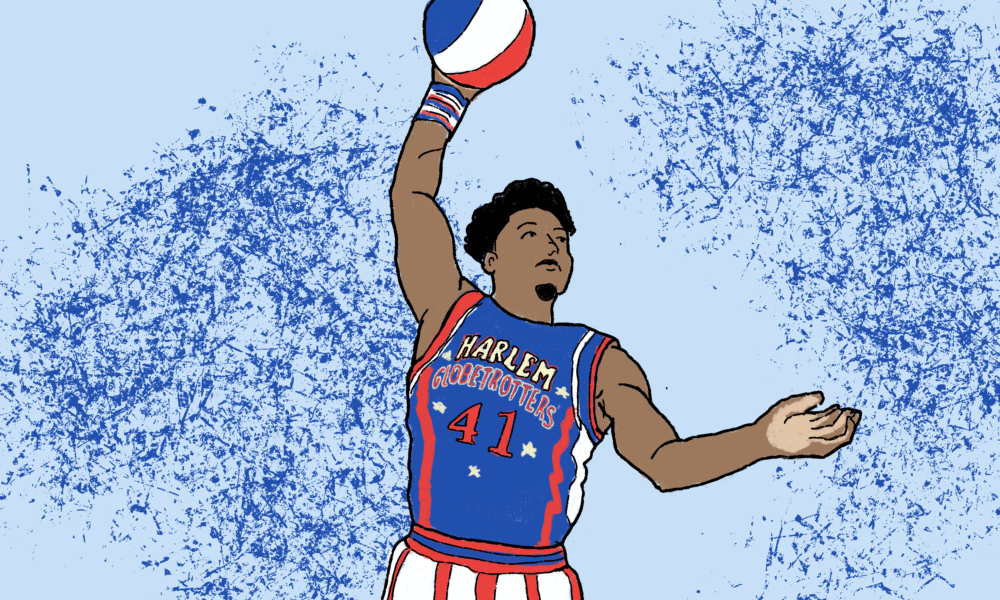
The Harlem Globetrotters: A complicated piece of basketball’s history

In 1950, Earl Lloyd, Chuck Cooper, and Nat “Sweetwater” Clifton entered the National Basketball Association (NBA) as the league’s first Black athletes. Cooper was the first to be drafted, Clifton was the first to sign an NBA contract, and Lloyd became the first Black player to enter an NBA game when he appeared on the court for the Washington Capitols in October of that year.

Prior to entering the NBA, Lloyd and Cooper had both played for the Harlem Globetrotters. While today the Globetrotters are seen more as a circus act than a basketball team, their role in the landscape of professional basketball is historically important.

The Harlem Globetrotters were originally founded in Illinois in the 1920s as the “Savoy Big Five,” a team that showcased Black talent at a time when segregation stopped Black players from playing in the professional league. They did not just happen to have Black players—they leaned into Black culture and identity. Later, the second iteration of the team branded itself as the “Harlem Globetrotters,” in reference to the Harlem Renaissance movement.

The team operated similarly to modern boxing, booking opponents and travelling around the globe to play in one-off games. Despite not being part of a formal basketball league, the Globetrotters dominated everywhere they went, with their most famous win taking place against Hall of Fame inductee George Mikan and the Minneapolis Lakers, who later became the Los Angeles Lakers. The Globetrotters were so dominant that they were forced to incorporate elements of the circus act we know them for today, as crowds were starting to become bored of how easily they would win games.

The team’s dominance and popularity meant the NBA simply could no longer ignore Black talent knocking at its door. In 1950, the NBA began signing players from the Globetrotters and continued to do so for years afterwards. NBA legend Wilt Chamberlain played one season with the Globetrotters in 1958-59, during which he took part in a sold-out tour in the Soviet Union. The following season, Chamberlain became a member of the NBA’s Philadelphia Warriors, where he won league Most Valuable Player (MVP), All-Star Game MVP, and Rookie of the Year in his first season. Chamberlain went on to rewrite virtually every NBA record in existence, forever changing the game of basketball.

While the Globetrotters provided a platform for Black players, the team has its own complicated history with race. Team owner Abe Saperstein was a known racist who saw Black players solely as financial assets rather than as marginalized people whom he could be an ally to. The team used Harlem branding in an effort to profit from the cultural renaissance in Harlem, New York City, while enriching a team owner who was a racist. 

Saperstein attempted to sign Boston Celtics legend and 11-time NBA champion Bill Russell in 1956. Russell notably refused to play for the Globetrotters after Saperstein declined to speak with him directly during contract negotiations, instead speaking with Russell’s white college coach. While this may have worked with other players, Russell was one of the first professional athletes to use their platform to speak about racial injustice in America and to become a champion of civil rights. He was never going to stand for how the Globetrotters treated Black players just for a few extra dollars.
The Harlem Globetrotters’ role in basketball history is significant, but equally as complicated. The Globetrotters provided a platform for Black players and became so dominant that the NBA could no longer keep its doors closed. On the flipside, they had an owner who clearly lacked respect for the Black players he employed while also profiting off the Harlem Renaissance. They were an organization deemed racially unjust by Bill Russell, one of the sport’s most significant players. Despite their prominence, they have been relegated to the status of basketball’s World Wrestling Entertainment (WWE) in recent years, when really they ought to be seen for what they are: An important piece of history.

Research Briefs, Science & Technology

‘Not enough:’ How racial invalidation impacts the mental health of multiracial individuals

Despite facing unique forms of discrimination, multiracial people remain largely overlooked in research on the intersection of racism and mental health. Multiracial people not only experience racism from strangers, but also from within their own families—a phenomenon known as intrafamilial racism. This, in turn, is a risk factor for poorer mental health outcomes.

In a recent study published in Race and Social Problems, N. Keita Christophe, assistant professor in McGill’s Department of Psychology and principal investigator of the Cultural Developmental Science Lab, examined how biracial individuals experience racial identity invalidation—the experience of having one’s racial identity denied. While previous research has focused on racial invalidation in public settings, this study looked inward to examine how these dynamics unfold in family circles. 

“Multiracial people are the fastest growing ethnic group in North America, and they’re already making up 10 to 15 per cent of the under 18 population,” Christophe said in an interview with The Tribune. “But at least in the type of stuff that I do, they make up one to three per cent of research, so I think there is a big gap.”

Christophe found that racial identity invalidation within families was not necessarily more or less common in certain types of families; rather, the difference lies in how discrimination between family members presents itself.

“For multiracial folks interacting with people of colour (POC), I think there’s kind of those invalidation comments around them not being X enough, like ‘you’re not Black enough’ or ‘you’re not Asian enough,’ and denying membership into that [POC] identity,” Christophe said. “Whereas from white family members, it tends to be more around being a [POC]. So because of skin tone, you already feel like you won’t be accepted or you’re not similar to white people, even though you have some of that heritage.”

The study found that nearly half of the 383 biracial adults surveyed reported experiencing racial identity invalidation from at least one family member. Those who experienced invalidation reported lower self-esteem and higher social anxiety, highlighting how experiences of discrimination can lead to increased mental health risks.

Christophe emphasized that although multiracial individuals share similarities with other racialized individuals in their experiences of discrimination, they differ in who they endure discrimination from.

“The difference is that they might also be more likely to experience discrimination from the groups to which they belong, such as from those POC groups to which they belong.”

Chrisptophe also highlighted how intersectional oppression plays into this phenomenon, where different axes of identity—race, gender, socioeconomic status, and sexuality—interact to create unique social positionalities for different people.

“Multiracial people also have intersectionality [within the element] of race,” Christophe said. “This kind of violates some longstanding notions of race as a binary [principle] and mutually exclusive category.”

Multiracial individuals often feel a stronger sense of connectedness or belonging to one group over another, and Christophe points out how these varying factors are worth investigating. 

“[Some multiracial individuals] really identify a lot more strongly with one group over the other just because of how they look. They may be white or Black presenting, [cases in which] people wouldn’t clock them as being multiracial,” Christophe explained. “However, some multiracial people feel very comfortable with all of the different backgrounds that they are [a part of].”

Overall, Christophe aims to highlight multiracial individuals’ resilience in their experiences and how their identity can bring many unique and positive experiences.

“Just because there’s more complexity in the multiracial experience living in our racially charged society, doesn’t mean that being multiracial is bad. A lot of people have really positive senses of self and feel a lot of pride in their identity and experience really good mental health,” Christophe noted.

As the gap between the rapidly growing population of multiracial individuals and their underrepresentation in research grows, studies such as Christophe’s call attention to the importance of addressing the unique experiences multiracial communities face.

Science & Technology, Student Research

Started vaping to stop smoking? This medication may help you quit both

Electronic cigarette usage has increased rapidly in recent years, with global estimates surpassing 100 million users. As vaping continues to grow in popularity, physicians and public health researchers are facing a difficult question: How should people quit a habit for which there is virtually no medical treatment consensus? A new clinical research review suggests the answer may already exist.

Tamila Varyvoda, a first-year student in McGill’s Faculty of Medicine and Health Sciences, found that varenicline—a medication prescribed to help people stop smoking cigarettes—may also help users quit vaping. The drug appears safe and potentially effective, though scientists emphasize that evidence is still developing.

Although vaping is often marketed as a safer alternative to smoking, it still administers nicotine, a substance that creates addiction by stimulating reward pathways in the brain. Despite growing concerns about its effects, there are no medications specifically approved to treat vaping dependency.

“Historically, teenagers were introduced to nicotine through cigarettes,” Varyvoda said in an interview with The Tribune. “Now that’s no longer the case. The first thing many young people try is vaping. When I was in CEGEP, there was literally an entrance where everyone would stand and vape. Seeing that made it clear that if we’re going to help people quit nicotine addiction, we need treatments designed for this new reality [….] If there’s a time we need treatments to help people quit, it’s now.” 

Researchers are intrigued by varenicline because, although it is typically used to help cigarette smokers quit, it is suspected that the medication could work for e-cigarette users as well. Varenicline targets the same brain receptors as nicotine, partially stimulating the receptor while blocking nicotine’s full effect, and thus maintaining a moderate dopamine release that reduces cravings and withdrawal symptoms. 

To investigate this hypothesis, Varyvoda conducted a systematic review and meta-analysis, combining the results of three randomized controlled trials conducted between 2023 and 2025 in Europe and the United States.

Across those trials, 178 participants received varenicline while 177 received a placebo. Participants ranged in age from roughly their early twenties to mid-fifties, and about half were male. Treatments lasted between eight and 12 weeks, and participants were followed for up to 24 weeks. In addition to medication, many participants also received behavioural support such as counselling sessions or text-based quitting programs.

Researchers measured success primarily by whether participants stopped vaping. Results showed that people taking varenicline were estimated to be about twice as likely to achieve abstinence as those receiving a placebo, although the limited sample size prevented any statistical significance.

“We couldn’t say, in good conscience, that varenicline was definitively effective yet,” Varyvoda explained. “Two of the trials showed clear benefits, but a smaller pilot study was inconclusive, which widened the confidence interval. Larger studies with longer follow-ups will likely clarify the effect, but right now the evidence points in a promising direction rather than a final answer.” 

Stronger evidence appeared in secondary measures. Participants using varenicline were more than twice as likely to report not vaping within the previous week, both at the end of treatment and during follow-ups. In two of the trials, continuous abstinence rates reached roughly 40 to 51 per cent in the varenicline groups compared to about 14 to 20 per cent in placebo groups at the end of treatment and remained higher months later. 

Safety findings were reassuring as well. Serious adverse reactions occurred in zero to three per cent of participants. The most reported side effects included nausea, insomnia, and vivid dreams, which were typically mild and temporary. Overall, the drug did not produce a higher rate of serious complications compared to the placebo.

Varyvoda reiterated that evidence remains limited. With only three trials available, and one involving only 40 participants, the results are not necessarily conclusive. Differences in treatment length and how quitting was measured also reduced certainty in the findings. In any case, Varyvoda reminds us that quitting nicotine is a path worth pursuing.

“It’s never too late to take care of your health,” Varyvoda said. “Quitting nicotine is difficult, but the body can recover, and it’s always worth trying.”

Arts & Entertainment, Film and TV

Racial representation is missing from the world’s most beloved rom-coms

When people think about popular, treasured romantic comedies, a few titles immediately come to mind: 10 Things I Hate About You, When Harry Met Sally, Love Actually, and 13 Going on 30. These films continue to dominate conversations about classic love stories and remain some of the most beloved in the industry. They make us laugh while giving insight into relationships, which transform into life lessons. But what do they—and most rom-coms—have in common? They primarily centre white leads and white storylines as the face of love, reinforcing the idea that they are the standard for romantic narratives. Some films completely lack diverse racial representation, and when there is representation, Black characters are confined to supporting roles, often reinforcing stereotypes.

In North America alone, over the last 31 years, the rom-com genre has brought in $11.7 billion USD. This widespread popularity emphasizes the influence of their message—who is represented and who is not—leaving a majority of viewers underrepresented. In 2024, white actors occupied 74.7 per cent of top roles in films, while Black actors only made up 10.7 per cent of these leading roles. This is even more striking considering that a study conducted in 2025 found that the majority of movie-goers are BIPOC. 

The rom-coms that do include Black representation often reduce characters to caricatures like ‘The Black Best Friend,’ an attempt for productions to seem inclusive by diversifying the cast and narrative structure while still pushing a white-centric storyline. Take Gabrielle Union’s role as Chastity Church in 10 Things I Hate About You, the best friend of co-lead Bianca Stratford (Larisa Oleynik). At the end of the film, Chastity is villainized, whereas Bianca experiences a positive character arc. It is not a coincidence that Chastity is one of the only Black characters in the film. 

Alongside her is Daryl Mitchell’s Mr. Morgan, the film’s Black English teacher. He is depicted as the ‘sassy’ Black character—another common cliche in film. Unlike Chastity, Mr. Morgan has the authority to be adored for his actions rather than villainized.

10 Things I Hate About You also exemplifies how passive inclusion of Black characters in the cast doesn’t qualify as authentic representation. Most of the Black representation exists as harmful stereotypes or underlying negligence of the Black character. Even when films highlight Black love stories, there’s often a condition of trauma or social struggle that affects the storyline. It’s uncommon that the industry shows Black couples experiencing love without hardship. To combat this industry-wide ignorance, fully developing Black characters in narratives and casting more Black actors in film and TV will address the film industry’s representational needs. Diversity isn’t a difficult feat to achieve; it simply requires active effort.

Black-led rom-coms do exist. However, they simply aren’t as popularized. Brown Sugar, Love and Basketball, and Love Jones are all fan favourites centering Black couples. But if we look at the worldwide box office earnings, How To Lose a Guy in 10 Days made over $178 million USD,  whereas Brown Sugar, released a year before, made only a little over $28 million USD. This large difference in earnings illustrates how Black rom-coms are simply not prioritized in the film industry. White is the default of the majority of films, and it is what’s constantly advertised to consumers worldwide. Meanwhile, Black rom-coms are typically only marketed to Black people. There’s an imbalance in the distribution system that favours white narratives. 

Rom-coms are essential to modern-day pop culture. They provide comfort and hopeful love stories that shape our views on relationships. As such, these movies must go beyond telling the story of white characters and seek more racial diversity in their leads and storylines. Cast diversity is still lacking in Hollywood, and there remains a lack of care when writing non-white characters. 

BIPOC representation matters because BIPOC matter; representation isn’t simply a character on screen, it is a different outlook on life, one where individuals from marginalized communities deserve to be appreciated, seen, and loved. Seeing someone who looks like you on the silver screen validates your lived experience, which is why representation matters. 

Arts & Entertainment, Theatre

The McGill Classics Play brings a chilling new ‘Antigone’ into the modern world

Sophocles is having a moment. The Ancient Greek playwright may be well over two millennia old, but his plays are seeing new life; his famed Oedipus Rex was recently adapted for an acclaimed Broadway run, and, here at McGill, his terrifying Antigone could not have been a more fitting choice for this year’s Classics Play.

Antigone, chronologically the last of Sophocles’s three Theban plays, culminates the story chronicled in Oedipus Rex and Oedipus at Colonus. In a move to modernize the work, translator Adam Zanin, adapter Caroline Little and director Madelyn Mackintosh set this production in the 1930s, on the heels of European fascism.

Starring Anelia Stanek, U2 Arts, as the eponymous daughter of Oedipus, the tragedy follows the rise of Oedipus’s advisor, Creon (Nikhil Girard, U3 Arts), to the throne of the city of Thebes after a violent civil war. His first act is to honour the fallen Eteocles, brother of Antigone, who fought to protect Thebes against their rebellious brother Polynices. For his treason, however, Creon denies the latter traditional Greek burial rites. The play’s conflict surrounds Antigone’s choice to bury her brother in spite of the edict.

Antigone’s actions create a storm in Thebes: Her sister, Ismene (Neela Perceval-Maxwell, U1 Arts), disagrees with her, fearful of Creon’s wrath. It can be easy to scorn her as cowardly, but in an interview with The Tribune, Mackintosh provided a more sympathetic perspective on the character.

“Most of us, maybe, would like to be Antigone but are Ismene, and would not necessarily accept execution, even for the strongest principles,” Mackintosh said. “But I don’t think that makes Ismene or anyone else weak […] and I don’t think it’s a responsibility to all be martyrs, or to all be some unforeseen level of bravery. I think it is our responsibility to be as courageous as we can.”

Mackintosh’s direction brings out the play’s debate over what loyalty entails, humanizing the struggle of the fight for the audience. Much of it feels familiar even now; many of the play’s subjects, such as the tempting of fate and the idolization of leaders, resonate brightly.

“The show was written 2500 years ago, it’s set a hundred years ago,” Mackintosh said. “And it pulls on references from today, and I think it is demonstrative of the way that tyranny is cyclical and destructive that the same story is applicable in all of those contexts.”

In this regard, Sam Snyders, U4 Arts, takes his part as “The Bartender” seriously. His near-constant presence throughout the production, as a spectator and aide to those in need, anchors him as the man who has witnessed and endured the cycle of tyranny. As the closest figure to a narrator, Snyder’s passionate performance brings with it anticipation and a will to fight.

While staying generally true to Sophocles’s original plot, there were several notable changes. One of them is the adaptation of the traditional Greek Chorus into a more modern ensemble; another is the introduction of death scenes, which were never performed in Ancient Greece. Together, these changes heighten drama in the production, resulting in a powerfully modern show that treats its source not just as history, but as a warning of what might be coming.

Ruminating on how Antigone mirrored the current state of U.S. politics, Mackintosh shared mixed emotions regarding global politics. Still, she highlighted a silver lining—that so many are willing to help keep Antigone’s fire alive through their work.

“A very significant part of me wishes the show was not as prescient as I feel it is, but at the same time, I also think that is why it is necessary and why I’m really proud of it […] a lot of people have put a lot of heart into the production, and I’m so incredibly proud of them.”

Sports, Varsity Round UP

McGill varsity sports roundup

This past week delivered a wide array of results for McGill’s Redbirds and Martlets, with overtime heartbreak, senior celebrations, and a tough road loss setting the stage for the upcoming Winter semester regular season finales. From volleyball victory to hockey hurt, McGill teams battled across multiple venues as they prepared for their respective playoff pushes.

The Martlets Volleyball team banded together for a dramatic 3–2 victory over the École de technologie supérieure (ÉTS) Piranhas on Feb. 8 at Love Competition Hall. The match marked the squad’s first five-setter of the season, with McGill prevailing 25-17, 25-15, 21-25, 19-25, 15-10.

Emma Waskiewicz recorded a match-high 16 kills while Selima Guidara dished out 38 assists in what proved to be a fitting home finale for the program’s graduating players. Seniors Guidara and Emilia Grigorova were fondly celebrated in a post-game ceremony following their final match at Love Competition Hall.

The victory lifted the young and slightly rebuilt Martlets squad to 7–13 on the season and snapped a six-match losing streak. McGill then travelled to Université du Québec à Trois-Rivières (UQTR), suffering a 2-3 defeat on Thursday before moving forward to wrap up the regular season against Laval University on Valentine’s Day, where they unfortunately fell short 1-3 against a relentless opposition.

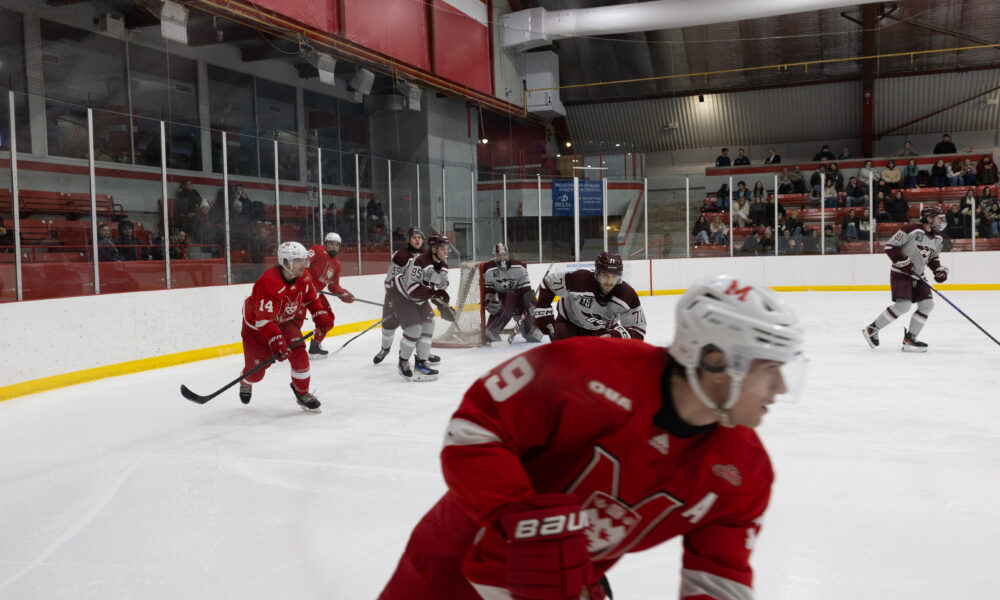
Redbirds Hockey persisted through a difficult week on the road, dropping both of their games by painfully narrow margins. After a thrilling 3-2 overtime victory over the Queen’s University  Gaels on Feb. 6, McGill unfortunately could not build and maintain its positive momentum in its subsequent matchups.

The week began with a heartbreaking 4-3 overtime loss to cross-town rival, the Concordia University Stingers, in the Corey Cup showdown on Feb. 7 at the Ed Meagher Arena. After battling back from a 2-0 deficit to take a 3-2 lead in the third period on Mathieu Gagnon’s goal, the Redbirds saw Concordia equalize and eventually prevail when captain Simon Lavigne scored on a breakaway in overtime.

The struggles continued Wednesday night with a 5-4 loss at Carleton University, leaving McGill with a 16–8–2 record leading up to their regular season finale. The Redbirds hosted the Ottawa University Gee-Gees on Valentine’s Day at the McConnell Arena in a dominant 4-0 victory in what was their final regular-season tilt before the OUA playoffs begin next week.

Bouncing over to basketball, the Martlets Basketball team suffered a disappointing 56-53 loss to the Bishop’s University Gaiters on Feb. 5 at Mitchell Gym, as a dominant second quarter from the Gaiters proved decisive. After leading 16-9 following the opening frame, McGill was outscored 23-12 in the second quarter, turning a seven-point advantage into a six-point halftime deficit they could never fully erase.

Emilia Diaz-Ruiz, still recovering from injury, paced McGill with 16 points and nine rebounds in 20 minutes off the bench. Lily Rose Chatila added 13 points and Daniella Mbengo contributed 12, but the Martlets struggled from beyond the arc, converting a faltering four of 20 three-point attempts.

The loss snapped McGill’s three-game winning streak and dropped them to 9–4, slipping into second place in the Réseau du sport étudiant du Québec (RSEQ) standings behind Laval University. However, a hard-fought victory in the late stages of their home win against Concordia (57-52) shifted their momentum heading into the last two games of the season against Laval and L’Université du Québec à Montréal (UQÀM). That being said, a comfortable first-seeded Laval team fought off the McGill momentum in Quebec City to close out another 57-52 victory, securing their spot at the top of the rankings for the season. The Martlets, currently holding third place in the league, will be determined to secure a victory in their last game of the season.

As Redbirds and Martlets compete on home ice and courts in what is shaping up to be a bitter winter, a high-stakes playoff season looms ahead, giving the regular season finales added significance across all McGill programs. Teams will look to build momentum heading into the postseason, with strong performances serving as crucial confidence boosters before the stakes rise even higher. For McGill athletics, February has delivered its fair share of drama, but the most important games have yet to come.

Research Briefs, Science & Technology

Improving Black and Latine youths’ sense of belonging in schools

Adolescence is a formative time for young people to define both who they are and who they hope to become. For Black and Latine youth, that journey often unfolds against a backdrop of historical barriers and discrimination in society as well as in educational settings, ultimately shaping how they see themselves, their future, and their place in school.

Negative stereotypes about academic ability, exposure to racism, and the lack of both role models and an institutional culture that reflects their identity are among the barriers affecting Black and Latine students’ identity and sense of belonging in school. Such barriers are not just individual shortcomings, but conditions that can affect students’ sense of belonging, confidence, and long-term engagement in school.

Régine Débrosse, an assistant professor at McGill’s School of Social Work, and her collaborators investigated whether simple, strength-based reflection activities could improve the academic persistence of Black and Latine adolescents.

In her study, participants were randomly assigned to three groups. The first group completed a community resourcefulness reflection, identifying strategies they could employ to help overcome obstacles to their ideal future. Participants in the second group completed a voice reflection, in which they were prompted to reflect on situations in which they might be underrepresented and were encouraged to view their identity and perspective as strengths. The third group served as a control group and did not complete any reflection activities.

The participants then filled out a form assessing school belonging, academic persistence, and ethnic-ideal alignment—the connections between their racial/ethnic identity and their future identity.

“Both reflections improved markers of academic persistence by transforming adolescents’ experiences,” Débrosse wrote in an email to The Tribune.

Altogether, the community resourcefulness and voice reflections both increased academic persistence of Black and Latine adolescents, but their effects depend on gender and operate through different psychological pathways.

Girls who completed the written community resourcefulness reflection reported greater alignment between their racial and ethnic identities and their ideal future self, which, in turn, predicted higher academic engagement. There was no measurable impact on the boys in this group.

However, both boys and girls who participated in the voice reflection reported greater belonging at school, which was associated with higher academic engagement.

Débrosse’s research highlights the importance of shifting away from deficit-based narratives in education and toward approaches that affirm students’ identities and lived experiences. Her results also suggest that identity development during adolescence may be especially sensitive to targeted messages. Repeated opportunities for students to see their racial or ethnic background as aligned with long-term goals can reshape how young people relate to school and their futures and help nurture developmental pathways marked by sustained motivation and persistence.

The results also underscore the importance of intersectionality: Black and Latina girls appeared to benefit differently from the community resourcefulness reflection, potentially because they face distinct social expectations or tensions when imagining their futures.

“[This research] adds to work demonstrating the potential of highlighting people’s strengths and full experiences, especially people whose community is negatively stereotyped in a certain area,” Débrosse wrote.

The study also points to practical implications. For instance, schools might consider implementing structured reflection activities that both highlight community resilience and affirm students’ unique voices, particularly during key developmental transitions. However, Débrosse cautions that further research is needed, especially given limitations such as small subgroup sample sizes and measurement constraints.

“[Future studies should examine] further the potential of strengths-based approaches, identity approaches that support expanding and connecting the different parts composing who each of us is, and of approaches that counter harmful narratives and make space for people to be their full selves,” Débrosse wrote.

Ultimately, the findings suggest that even brief, structured opportunities for reflection can meaningfully shape how adolescents see themselves in relation to school and their aspirations.

“It is powerful to go beyond common stories we hear about one another, and that incredible things happen when we focus on and lift each other’s strengths,” Débrosse wrote.

Commentary, Opinion

Nunavik’s disproportionately high suicide rate reveals colonialism’s continued impact on mental health

Content warning: Mentions of suicide

Feb. 2 to Feb. 8 marked Quebec’s Suicide Prevention Week. The province entered the awareness week with a statistic that sounds like a clear public health win: The suicide rate has dropped to 11.9 per 100,000 people, making it the lowest observed since 1981. However, this provincial average obscures the fact that progress has not occurred evenly across Quebec. The Institut national de sante publique du Québec (INSPQ) reports that Nunavik, an arctic region in Northern Quebec primarily inhabited by Inuit, had the highest suicide rate by far, with 122.7 suicides per 100,000 people—over 10 times more than the provincial average. 

The uneven jump in suicide rates disproportionately affects Indigenous people in Canada, and this difference is not coincidental. If a region’s suicide rate is over 10 times higher than the rest of the province, this discrepancy cannot be explained as a statistical outlier. Nunavik’s case reflects the persistence of the deeply embedded power structures of colonialism, racial discrimination, and the intentional erasure of culture and language in the province. 

Quebec’s suicide-prevention messaging often emphasizes reaching out, breaking the stigma around mental health, and reminding people that they are not alone. Those are not empty gestures, but stigma alone cannot explain a tenfold regional gap. This year’s campaign theme, “tendre la main, soutenir l’espoir” (extend a hand, support hope), captures that emphasis on individual intervention and interpersonal relations as key to combating suicide. 

But if awareness and social stigma were the main barriers, there wouldn’t be a stark geographic pattern; Nunavik’s disparate suicide rate instead points to an uneven landscape of support and access. In practice, ‘reaching out’ can take on very different meanings depending on whether suicide-prevention services are stable, staffed, culturally safe, and close enough to be accessed before a crisis escalates. A generalized campaign cannot, and should not, substitute consistent, local, and culturally-grounded care. 

Research on the pervasive harms of Canada’s residential school system demonstrates that state policy has created intergenerational risk through family separation, abuse, and cultural suppression. A Western University study highlighted the link between increased rates of suicide, intergenerational trauma, and residential schooling. By forcibly separating children from their families and communities, residential schools also laid the groundwork that perpetuates downstream inequities and raises suicide risk today, including lower educational attainment, lower income, unstable employment, and poorer housing conditions. 

INSPQ also noted that Nunavik lacks emergency rooms, and that consultations in its 14 local community service centres may not be as effective as ER visits elsewhere. When staffing is unstable and specialized services are concentrated at the two regional hospitals, this can result in time-sensitive delays and transfers.  

With Nunavik’s small population of approximately 14,000, each death in the province carries an outsized statistical weight. In small, tight-knit villages, the impact of a single suicide can ripple through extended families, peer groups, schools, and frontline workers, intensifying grief and strain on already limited support systems. Public health guidance on suicide clusters emphasizes that closely connected communities can face a heightened risk of additional deaths after an initial loss. This cascading vulnerability is itself a product of the structural conditions colonialism created: Isolated communities with minimal services bear disproportionate grief, with disproportionately fewer resources to absorb it.

The Quebec government must treat colonial policies as living determinants of health, not just features of history. When the province headlines its declining suicide rate, it obscures the systematic inequalities keeping Nunavik’s rate disproportionately high. The same report used by Quebec to demonstrate progress also shows where mental health programming has not translated into prevention outcomes and well-being.

The key imperative during Suicide Prevention Week isn’t just whether reaching out matters—it’s applying that message to systems that people can actually reach. Culturally safe care is inseparable from addressing racism and power imbalances in service delivery. 

Nunavik’s disparate rate doesn’t erase Quebec’s progress, but it does complicate it. It suggests that any honest accounting of prevention has to hold two truths at once: The provincial average is falling, but regional crises remain severe. If Suicide Prevention Week is meant to describe the province’s reality—and not just offer a reassuring statistic—then local disparities are where the prevention has to begin.

If you or someone you know needs support, help is available 24/7 via suicide.ca or the AQPS.

Student Life

Welcome home: A day in the life of a 2016 McGillian

I wake up to the sound of birds chirping after 9 hours of blissful sleep. As my eyelids flutter open, my Hipster Indie Boho Chic Urban Outfitters curtains soak up the September sun and drench my room in a haze so warm and rich I almost want to call it “Rio De Janeiro?”  Before my feet hit the ground, I know that today is already perfect.

After throwing on my American Eagle skinny jeans, a loose tank top, and a flannel, I’m ready for the day. The sun hits my stack of rose gold bangles as I step out the door. I snap a quick pic on my new iPhone SE and upload it to Tumblr, not caring who sees it or how many interactions I get. I shared it because it made me happy. I go back and add a caption: #HappyThursYAY.

On my way to Starbucks, I listen to a new album that I can’t get enough of, Blonde by Frank Ocean. I order a venti Unicorn Frappuccino. To my surprise, they accidentally make two, and let me keep both. This day just keeps getting better.

I head to campus and surprise my friend, who’s going through a breakup, with the second drink. She tells me he wants to keep seeing her—only without a label. He misses her, she tells me, but the responsibility of being 21 makes him far too busy for “the relationship she deserves.” She describes her state of affairs as ‘being benched.’ A backup girlfriend, given just enough attention to stay attached. 

Sitting in my Comparative Politics lecture, my professor explains what the United Kingdom’s referendum to leave the European Union actually means. The UK has been a member of the European Union for 43 years. I think of all the history that has passed from then to now, and how exciting it feels to live through this moment in history. My friend interjects, pointing out how every moment of every day is a moment in history. He’s right, but nonetheless, it feels new to study a contemporary global event.

I race over to McLennan, eager to squeeze some reading in before heading home. All the floors are open, and the shelves are overflowing with books. Once I am settled at a desk, all optimism falters when I realize the sheer volume of my assigned readings. Two hours later, the weight of my readings only a month into the semester makes me plead with a higher power. I beg for a magical tool that could do my readings in seconds. It would break down the core concepts, I could access it at any time, but I would still learn everything I need to and ace all of my exams. Doesn’t that sound great and completely unproblematic? But alas, it is only 2016, so I sit in the library with nothing but full bookshelves and tired eyes.

Back at home for a quick meal before Bar des Arts (BdA), I treat myself to a rainbow bagel. Always up with the latest trends, this week’s BdA theme is “Pokemon Go-DA.”  One of my roommates is going all out, creating a look with an uncanny resemblance to Pikachu. I decide to keep it classy and focus on my makeup: A nude lip, arched eyebrows, cut crease eyeshadow, and everything matte. I put on a choker, switch my tank for a tube top, and I’m off to the races. 

At BdA I drink a few too many Pabst Blue Ribbons and watch as the crowd attempts the Mannequin Challenge. Tonight feels endless in the best possible way. Right now, sitting in Leacock’s sweaty basement feels like the result of all the stars aligning. Gratitude fills me, and I think about where I will be 10 years from now. I vow to never let my optimism waver. I trust that the world will still be full of too much colour, light, and warmth to ever surrender to tyranny. My faith in our goodness brings me to my feet. I dance around the room, “Closer” by The Chainsmokers fills my ears, and I slowly close my eyes. 

Read the latest issue

Read the latest issue