Sofia Coppola’s latest cinematic endeavour, Priscilla, explores the lesser-known life and story of Priscilla Presley. The film is based on Priscilla’s autobiography Elvis and Me. While numerous portrayals of Elvis Presley cast the rock-and-roll icon in a positive light—such as Austin Butler’s portrayal in Elvis (2022)—Coppola’s film provides a nuanced take on the couple’s intricate romantic dynamic. Despite Priscilla herself serving as a producer on the movie, the film drew criticism from some family members, including her late daughter Lisa Marie, who feared it would tarnish Elvis’ reputation. But why should women remain silent to preserve the legacies of abusive men? While acknowledging Elvis’ violent and controlling behaviour towards Priscilla (Cailee Spaeny), the film presents something beyond a simplistic, black-and-white narrative. Instead, Priscilla depicts their relationship as a nuanced tapestry woven with threads of love and solace, recognizing the complexities that permeate even the most intimate bonds.
The brilliance of the casting choices in the film becomes evident in the face of initial scepticism. Despite critics questioning Jacob Elordi’s resemblance to Elvis and his limited knowledge of the icon, gleaned mainly from Lilo and Stitch, Elordi transcends doubt with a performance that radiates authenticity. While subtitles may have been beneficial to understand the accent, Elordi clearly worked hard to perfect Elvis’ unique mannerisms without needing to undergo intense method acting. His ease and adoption of Elvis’ characteristics in the role have undoubtedly left Austin Butler shaking in his blue suede shoes. Coppola’s choice to cast Elordi is particularly shrewd, tapping into his contemporary heartthrob status to replicate the admiration girls of the past felt for Elvis. Cailee Spaeny—in one of her first major roles—displays excellent acting prowess, deftly manipulating her facial expressions and physicality throughout the film. Her non-verbal acting contributes to the authenticity of Priscilla’s character, elevating the narrative. Through Coppola’s lens, the film unearths the challenges of being in the public eye, dispelling the glamorous illusions that often cloak the life of a rock star’s girlfriend.
Coppola employs clever narrative techniques to illustrate the jarring age gap between Priscilla and Elvis, underscoring the disparities in their respective worlds. Their initial encounter occurs when Priscilla is a 14-year-old, and Elvis is 24. Priscilla neglects her algebra homework, opting to compose affectionate letters to her famous boyfriend. While her peers concentrate on prom dates, she delves into tabloids to uncover details about Elvis’ affairs. At 24, Elvis assumes an uncomfortably paternal role, orchestrating Priscilla’s relocation to a Catholic school in Memphis, blurring boundaries between boyfriend and guardian. This dependency becomes a coercive force, compelling Priscilla to endure his mistreatment and abuse within the relationship.
Complementing its visual elements, the film’s soundtrack emerges as a powerful and integral component of the cinematic experience, mirroring Priscilla’s diverse emotional states throughout the movie. One particularly noteworthy moment is when she makes the courageous decision to leave Elvis, and Dolly Parton’s “I Will Always Love You” echoes in the background. This song choice goes beyond beauty. The lyrics refer to what Elvis told Priscilla when their divorce was finalized at the courthouse, but the song also gives a symbolic nod to Dolly Parton’s autonomy. It’s a well-placed reminder that Dolly never allowed Elvis to record this iconic song, preserving her artistic independence and royalties. This deliberate selection amplifies the film’s message, celebrating Priscilla’s emancipation from her abuser and underscoring her newfound agency to share her own narrative.
Ultimately, Sofia Coppola’s Priscilla offers a nuanced perspective on the relationship between Priscilla and Elvis Presley through the former’s eyes. The impeccable casting choices and soundtrack breathe life into the characters, capturing the tumultuous emotions of Priscilla’s journey. The film emerges as a poignant cinematic achievement, urging audiences to reconsider the untold stories behind cultural icons and challenging the perpetuation of idealized narratives.
Content Warning: Mentions of war, violence, genocide, and antisemitism
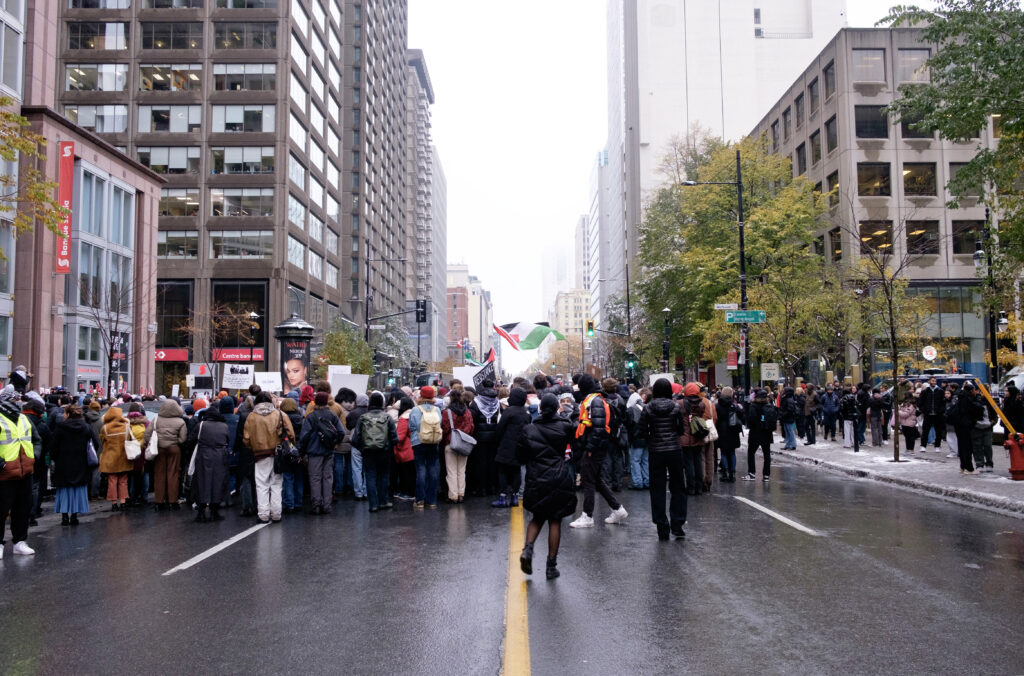
Montreal students and community members gathered once again on Nov. 9 to demand a ceasefire and protest Canada and McGill’s complicity in the war in Gaza, as well as Scotiabank’s investment in a private weapons manufacturer in Israel.
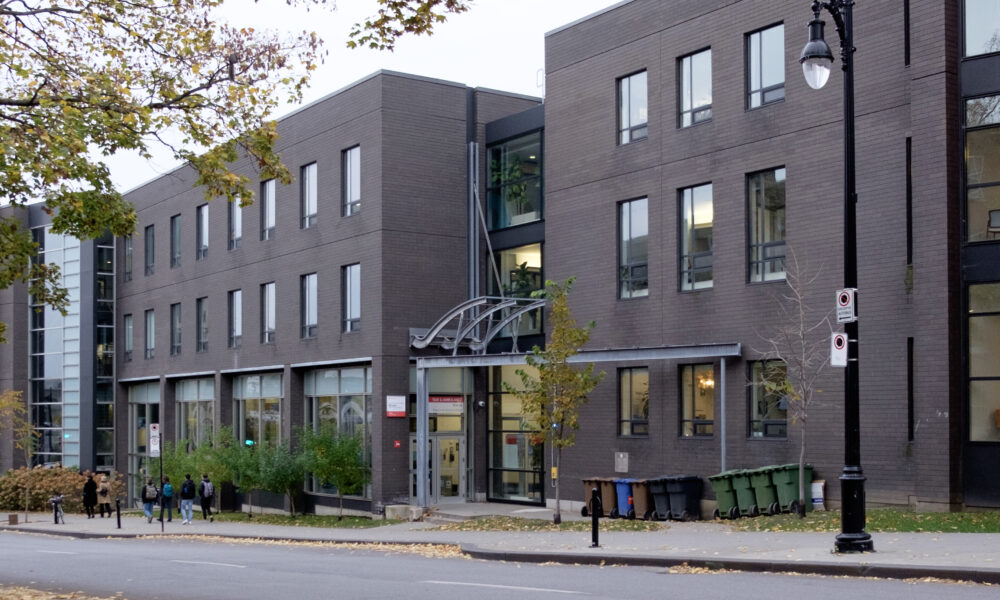
The rally, organized by Solidarity for Palestinian Human Rights (SPHR) McGill, began around 1 p.m. at the McCall MacBain Arts Building. SPHR McGill member Kareem Abuali presented an opening statement that honoured the Kanien’kehá:ka, the Indigenous inhabitants of the land on which McGill and Montreal are situated. Abuali then drew parallels between Canada’s occupation of unceded Indigenous lands on Turtle Island and the Israeli occupation of Palestine.
“We recognize that decolonization is not simply a metaphor for social justice and societal improvement but that it involves a material repatriation and getting back of Indigenous land and life both in Canada and in Palestine,” Abuali said, concluding his remarks with “Land Back” chants.
(The Tribune)
A representative from SDHPP UdeM—Solidarité pour les droits humains des Palestiniennes et Palestiniens de l’Université de Montréal—took the stage next, followed by two members of the recently revitalized McGill chapter of Independent Jewish Voices (IJV).
“Palestinian liberation has never been and never will be oppositional to Jewish safety,” Isaiah said on behalf of IJV McGill. “As Jewish people organizing for Palestine, we firmly say that ‘never again’ means for all people, all times, all over the world.”
IJV McGill was last active in September 2021, based on its Facebook activity. Isaiah says that the group resumed activity this November to offer an alternative community for Jewish students who do not align themselves with the state of Israel.
“We realized that there are […] a lot of Jewish students who don’t feel represented by the mainstream Jewish organizations on campus,” Isaiah told The Tribune. “We exist in numbers and IJV is restarting so we can mobilize that.”
Méshama Eyob-Austin, U3 Arts, who is Ethiopian-Jewish and Jamaican, also spoke at the protest. She stressed the connection between Black and Palestinian liberation movements.
“The United States, Canada, and other world powers have consistently made themselves complicit in Palestinian oppression [….] In return, Israel has helped these countries oppress their own communities, including Black communities,” Eyob-Austin said. “In 2014, when we protested for Michael Brown, it was Palestinians […] who [offered] advice on how to navigate the tear gas […] because it is the same tear gas that is used against them [….] And until one is free, we are not all free.”
After a speech by a representative from SPHR Concordia, Abuali returned to the stage to share some personal thoughts.
“One might wonder what it’s like to be a child in Gaza and grow up in a world that is so merciless and so evil [….] How these children grow up to be strong and resilient and blamed for the oppression they experience, and then they get killed,” Abuali said. “And here, you think how much of a disgrace you are for ever trying to appease the apathetic and unfeeling. For engaging in dialogue about terrorism, about religion, about UN resolutions and foreign policy [….] It becomes disgusting.”
When echoes of “Free Palestine” calmed, another speaker from SPHR McGill began listing the names of the massacres that the Israeli state has committed in its 75 years of existence. The speaker then initiated various chants like “So-So-So-Solidarité, avec, avec, avec la Palestine.”
Around 2 p.m., protestors marched to the Scotiabank branch opposite McGill’s Bronfman Building on Sherbrooke Street, where a group of protestors had formed a picket line. Scotiabank is the largest foreign shareholder in Elbit Systems, Israel’s largest private weapons manufacturer, holding five per cent of the company’s shares (valued at around 450 million USD).
(The Tribune)
Two hours before the protest began, Principal and Vice-Chancellor Deep Saini sent an email to the McGill community that denounced one of the event’s posters, calling it antisemitic, as it featured an image of protestors breaking glass. The event took place on Nov. 9, the anniversary of Kristallnacht—a series of pogroms that Nazi Germany carried out against Jewish businesses, named after the broken glass that littered the streets following the attacks. Saini wrote that he had requested extra security presence on campus and warned that the protest would only be tolerated if it remained peaceful. The image that Saini referenced is from 2002 protests at Concordia University that cancelled a speech by Israeli Prime Minister Benjamin Netanyahu.
IJV McGill took to social media to respond to Saini’s email, which the group characterized as “inflammatory” and “repressive.” In its statement, IJV McGill opposed the increased security presence and rejected the Principal’s insinuation that the pro-Palestine movement on campus has violent intentions.
“It’s legitimate to connect the anniversary of Kristallnacht to a photo of broken glass [….] I think it’s a bad faith interpretation to see that as an intentional act of antisemitism. Had it been any other day, it would have been an appropriate image to use,” Isaiah told The Tribune in an interview. “I definitely think that the way incidents of antisemitism have been manipulated to support Israel leaves Jews all over the world less safe [….] It threatens Jewish safety in the name of the Zionist cause.”
SPHR McGill has not responded to Saini’s email publicly, but the group reposted IJV McGill’s statement on their Instagram story on Nov. 9. In a statement to The Tribune, SPHR McGill denounced any entanglement of their activism with antisemitism.
“We reiterate that conflating Zionism and Judaism has long been used to promote and amplify Zionist narratives at the expense of both the Palestinian and Jewish community,” SPHR McGill wrote. “Once again, we reject this false association that attempts to undermine the history of Palestinian student activism in North America by weaponizing traumatic historical events and generational grief.”
On the walk to Scotiabank, The Tribune spoke with political science professor William Roberts, who was one of a few faculty members in attendance. Roberts said that he was disappointed in the McGill administration for being “incredibly naive or ignorant.”
“That level of cluelessness and one-sidedness from the administration is very predictable, unfortunately, and I really wish that they would […] get out of their offices and stop thinking that they understand the world just because they got angry emails,” Roberts said.
At Scotiabank, picket line organizer Eli Tareq El Bechelany-Lynch and a Palestinian Youth Movement representative gave speeches. Another organizer led a group singing of “Hey Hey Ya Falastin,” a song by Rola Azar that was dedicated to Shireen Abu Akleh, a journalist who was shot by Israeli forces in 2021.
(The Tribune)
Around 3:20 p.m., community members from Université du Québec à Montréal (UQÀM) marched toward Scotiabank, walking behind a large banner that read “Palestine Libre.” Chants such as “Boycottez Israël, boycottez les criminels” resonated through the streets as the group joined the other demonstrators. The Tribune spoke with two students from the group, both of whom asked to remain anonymous.
“We are here to take a stand against Canada and our institutions’ involvement and encouragement of the genocide that is going on in Palestine right now,” the two said in a joint statement. “UQÀM has a lot of programs in exchange with Israel and we’re asking UQÀM to join the BDS [Boycott, Divestment, Sanctions] campaign and stop buying products from companies that finance genocide.”
In an interview with The Tribune, El Bechelany-Lynch reiterated the importance of the BDS movement in the fight for decolonizing Palestine and rejected accusations that the campaign is antisemitic.
“People have been protesting peacefully for a long time now, it’s been a month. I think what has changed recently is there’s a shift in focus to think about where the money and weapons are coming from that are killing Palestinian civilians,” El Bechelany-Lynch said. “If you’re boycotting Israel, which is a government like any other government, you’re boycotting the actions of a government that is going against international humanitarian laws, that is killing innocent people. We’re not boycotting Jewish people or Jewish businesses [….] It’s a movement for the liberation of Palestinian people.”
The protest remained peaceful and continued until sundown at around 4:30 p.m.
*Ghazal Azizi has no affiliations with the event’s stakeholders. She has, however, signed a petition and appeared at demonstrations calling for a ceasefire. The Tribune does not consider her engagement to be a conflict of interest.
Redbirds basketball (0–3) faced off against the Bishop Gaiters (2–0) in a thrilling home opener on Nov. 9 at McGill’s Love Competition Hall. The Redbirds had a rough start, ending the first half down 40-21, however, the team showed their tenacity, fighting to the very end,scoring 29 points in the fourth quarter and narrowing the loss to 77-69.
Starting off the first quarter, the Redbirds were struggling to sink shots, with McGill’s first point coming from first-year forward Saransh Padhy with 7:48 left in the quarter. Despite falling behind early on, the team continued to play energetically throughout the half, putting up a very physical game and a solid defense. Forward Zachary Lavoie-Toure made a tough midrange fadeaway shot that amped up the crowd, but the Gaiters remained the more aggressive team, with 15 free-throw attempts at the break compared to the Redbirds’ four. With the addition of their six threes in the half, the Redbirds faced a 19-point deficit at the break.
Coming back with a bang, the second half started off with an impressive steal-dunk combo from Padhy, followed by two fast break layups from point guard Sean Herscovitch. This ignited a clear shift in momentum for the Redbirds, who increased their energy and put the defensive pressure on the Gaiters.
As the Redbirds rolled out of the locker room for the second half, assistant coach Michael Moody encouraged the team to to turn up the aggression on defense, and avoid giving up any open shots.
“We knew we had to climb back,” Herscovitch told The Tribune. “We had to pick up the intensity on defense and start executing better on offense. [As a point guard,] I have to hold my guys accountable and be the coach on the court. Be that second voice for the guys.”
Although both Herscovitch and Joshua Soifer, a recent graduate from the University of Oxford and current McGill law student, put up 20 points, the Gaiters held their ground and handed McGill a 77-69 loss.
In an interview with The Tribune, Moody provided some insight into the team’s mindset going into the second half of the game that helped them turn the energy up.
“[We had to] step up, you know,” Moody explained. “We were doing a good job of executing, we were still getting good shots, we just weren’t knocking them down.”
He emphasized that moving forward, the team would have to focus on playing their A-game right off the bat rather than waiting until the last quarter.
“One thing you can expect from us is to be gritty and give it a tough game,” he said. “And I think we did that tonight.”
Looking to the future, Herscovitch explained the team would not be deterred by the loss.
“There’s a lot of positives that we saw in the second half,” Herscovitch said. “We saw that we’re very capable of playing defense […] of finishing out possessions on defense, grabbing the rebound and getting the ball up quick.”
The Redbirds lost 79-62 against the Concordia Stingers on Nov. 11 and will play next against the Laval Rouge et Or on Nov. 18.
Moment of the Game
With 14 seconds left on the clock, first-year guard Benjamin Onyenwosa drilled a three-pointer on a pass from Joshua Soifer, cutting the deficit to five and causing the crowd to erupt in cheers.
Quotable
“I knew we had to keep pushing and being aggressive. If you start losing your edge there, then you’ve basically given up.”
–– First-year forward Joshua Soifer on his mindset going into the second half
Stat Corner
The Redbirds’ top scoring players were Sean Herscovitch and Joshua Soifer with 20 points each, followed by Zachary Lavoie-Toure with eight points.
The Redbirds (6–3–1) faced off against the York Lions (3–7–0) on Nov. 11 for the first time in six years, securing a decisive 5-3 victory in an intense and physical game.
The game opened with York dominating the puck, challenging McGill before they could mount their first offensive rush. Play went back and forth, punctuated by defender Thomas Belzile’s shot on goal, sparking a fierce scrum in front of the Lions’ net. When the Lions applied pressure, defenders Scott Walford and Alexandre Blanchard were quick to intercept and send the puck up the ice to centre William Rouleau. Three minutes later, York scored the first goal of the game.
McGill intensified its offensive pressure, leading forward Caiden Daley to receive a minor penalty for playing with a broken stick. Despite having a power play, York could not break through McGill’s defence. Goalie Fabio Iacobo briefly left the goal unattended before another scrum ensued, this time involving team captain Taylor Ford. York continued to battle before right wing Charles-Antoine Dumont scored McGill’s first goal with 3:33 remaining in the period. The Redbirds’ pressure would not wane until the end of the period for another goal.
The second period saw play go end-to-end until York eventually scoring their second goal with 11:07 minutes remaining. After a long struggle to get the puck in the net, centre Mikisiw Awashish scored his first goal of the season, equalizing the score at 2-2.
“I think just trying to find ways to get inside of them,” Ford said in an interview with The Tribune, reflecting on the game’s challenges. “They had some big bodies back on defense. I’ll give the forwards credit. They were trying hard to get inside and I think that paid off a little bit toward the middle of the game and we ended up scoring.”
The final period saw heightened tensions, with both teams applying relentless pressure. After forward Patrick Larkin received a penalty just under four minutes in, Brandon Frattaroli intercepted a pass and scored a goal, unassisted, on a breakaway.
With four minutes remaining in the game, McGill put a lot of pressure and had several shots before forward Eric Uba scored another goal with 3:54 remaining, bringing the score to 4-2. After a time out, McGill had a few shots on goal, but York were able to defend them despite pulling their goalie. York returned the pressure and scored a goal with two minutes remaining to make it 4-3.
York attempted to get one last rush in the final minute of play before centre Xavier Fortin scored the final goal on an empty net with an assist from defender Maxime Blanchard. With seven seconds remaining, both teams erupted into a physical battle of pushing and shoving, resulting in two York players being penalized for roughing. The game ended 5-3 on a McGill power play.
After the victory, Frattaroli reflected on the team’s performance following their 11-5 loss to the Université du Québec à Trois-Rivières (UQTR) Patriotes on Nov. 11.
“You know, it wasn’t a pretty game,” Frattroli said. “It was a tough loss against [UQTR] that we wanted to come back and we wanted to win really badly. It was a must win [….] I’m just happy. Simple game today that the boys figured out and got the W, so that’s all that matters.”
McGill’s next challenge is an away game at Waterloo on Nov. 17, where they will face off against the Laurier Golden Hawks (3–72).
Moment of the game: During York’s power play, Dumont’s stick broke, leaving him defenseless on the ice. Dumont proceeded to get down on the ice and hold the puck until his team mates arrived to help relieve the pressure.
Quotable: “There’s no easy games in this league. So knowing that, despite the difference in the rankings in the two teams, [we] knew that was gonna be a tough game. And it’s really good to see us bounce back after our game on Wednesday [against UQTR] [….] we’re a team that has success when we play with our structure and systems.”
–Head Coach, David Urquhart on how he felt going into the game and after the first period.
Stat corner: With seven seconds remaining in the game, three players received penalties for roughing: Two on York’s team, and one for McGill.
In the past month, the National Hockey League (NHL) and the Ottawa Senators have made headlines for a slew of undesirable reasons. One of the sources of controversy involving the club was forward Shane Pinto’s 41-game suspension for sports wagering activities, announced on Oct. 26. This came as a surprise to many players and league personnel for a number of reasons. Not only had the NHL not suspended one of its players for sports gambling activity since 1948, but the league’s investigation also found no evidence that Pinto had wagered on NHL games.
Though the NHL’s Collective Bargaining Agreement (CBA) prohibits players from placing bets on NHL games, no mention is made of the extent to which players are allowed to bet on other professional sports. Given the prevalence of Fantasy Football pools in NHL locker rooms, many players were confused by Pinto’s suspension. Pinto had seemingly not violated the NHL’s gambling policy. However, it has since been reported that the NHL took issue with proxy betting––when one party places wagers on behalf of another party––on Pinto’s sportsbook account in his home of New York. Professional athletes’ sportsbook accounts are monitored by sportsbooks for suspicious activity and can be flagged in the event of a proxy bet.
The league is within its right to negotiate such a hefty punishment with the NHL Players’ Association––a CBA provision affords the Commissioner the right to impose discipline for conduct deemed detrimental to the league and the sport. However, this all-encompassing provision should make specific mention of what constitutes detrimental conduct.
The current CBA was first ratified in 2013. Until 2018, just one per cent of the population of the United States lived in jurisdictions where sports gambling was legal. Similarly, when the CBA was ratified, the Canadian Parliament had not yet legalized single-event betting. Today, the industry’s landscape looks much different: Sports gambling is legal in 38 of 50 states and counting, while Canadian provinces are now free to regulate single-event sports betting at their discretion. Therefore, given the rapid growth of sports gambling in North America since the most recent CBA came into effect, a new set of explicit rules is needed.
A recent NHL memo to players provides some semblance of clarity, but it insufficiently addresses several questions. For instance, to what extent are players responsible for data breaches and hacks to their betting accounts? If NHL players encounter insider information on other sports through friends or acquaintances in other leagues, would they then be prohibited from placing wagers on those sports? Proposition bets on in-game events that do not directly affect the outcome of the contest are //no bueno//, but what is the league’s stance on long-term bets such as “Who’s going to win the Art Ross Trophy this year?” These are worthwhile questions that the next CBA must clearly address.
At the same time, the NHL must also clarify its rules governing hockey writers, who cast ballots for some of the league’s most coveted awards—including the Hart Memorial Trophy, awarded yearly to the league’s Most Valuable Player. A writer with insider knowledge who casts an MVP ballot should not be able to place a wager on the winner of said award. In an attempt to remove any semblance of impropriety in anticipation of the release of their new sportsbook app, ESPN recently released a memo to its staff prohibiting them from placing wagers on sports that they regularly cover. While a step in the right direction, these rules should be clearly outlined in reporters’ and insiders’ contracts, if they are not already. Some might point out the irony that Pinto received a suspension while the Senators actively promote sports gambling through a corporate sponsorship with Betway and the NHL partners with BetMGM and FanDuel. This development enters an ongoing debate in the world of sports pertaining to whether corporate partnerships between leagues and sportsbooks threaten the integrity of the games that we all enjoy. However, when leagues do not specify rules that govern sports gambling, they exacerbate the potential for unintended wrongdoing from their players. For the benefit of the league, its players, and its fans, the NHL ought to clarify these uncertainties promptly.
The Student Wellness Hub (SWH) is a multi-functional program proposed and opened in 2019 to encourage the well-being of students, staff, and faculty members. Since its creation, however, the SWH has faced obstacles in providing care due to a province-wide shortage of practitioners and a requirement that doctors volunteer their time. This has led to limited access to appointments and clinical availability for students across campus.
Lennox Wong-Chor, U1 Music, shared his experience with the SWH in an interview with The Tribune.
“I think realistically, the Wellness Hub is doing everything they can [….] I called the Wellness Hub bright and early, at 8:30, and by the time I called, I was 17th in line, even though I called as soon as they opened,” Wong-Chor said. “In a perfect world, I’d want there to be less of a wait time and more physicians, but I know realistically, it’s not going to happen because it’s not student-run and the doctors are volunteering their time.”
In a written statement to The Tribune, Dr. Hashana Perera, Medical Director of the SWH and a faculty lecturer in McGill’s Department of Family Medicine, explained that Quebec mandates specific amounts of time that doctors have to work in order to continue working in the province.
“Family physicians in Quebec are required to commit 12 hours per week to certain medical activities to maintain their license to practice in a region [….] Time spent seeing patients at McGill does not contribute to fulfilling these weekly required 12 hours,” Perera wrote. “Consequently, I must maintain a separate family medicine practice with 600 patients and work at a community walk-in clinic. While our doctors thoroughly enjoy working with our students, the difficulty lies in finding physicians willing to take on additional responsibilities beyond the government-mandated requirements.”
This requirement has led to a practitioner shortage at universities, including McGill, as doctors have to be willing to volunteer their time. Additionally, more than 80,000 Quebec healthcare practitioners organized a two-day strike on Nov. 8 and 9, as a result of Bill 15—Quebec legislation that stands to overhaul the existing health system. Bill 15 includes a proposal to increase the clinical hour requirements to account for post-pandemic labour shortages, which would likely lead to a decrease in practitioners able to volunteer their time at university clinics.
Alice Maitlis, U1 Arts, reports having a smooth experience visiting the SWH despite practitioner shortages, but agrees that there are barriers to access.
“My experience was fairly positive with the Student Wellness Hub, it was efficient, kind and there was no awkwardness, which was good,” Maitlis told The Tribune in an interview. “I doubt that everyone has equal access to the Hub, due to linguistic barriers or not being encouraged to go by friends or family. I’ve only accessed the physical health side of it which seemed very well run, and I assume in terms of mental [health] it [is] too, although those could always be more well funded in facilities like these.”
When asked about student accessibility at the SWH, the Hub responded that they have managed to reduce wait times over the years, but stated that students’ medical experiences could be further improved if provincial legislation allowed for easier practitioner recruitment.
“We’re proud of how we’ve leveraged our team of different clinicians to connect students with care when they need it,” the SWH wrote in a statement to The Tribune. “Mental health wait times have been reduced significantly over the past few years and we can often connect students with a mental health clinician within a few days […] If hours worked in our clinic were counted as clinic hours required under provincial legislation for all GPs, we would be able to recruit more doctors to provide medical services for students.”
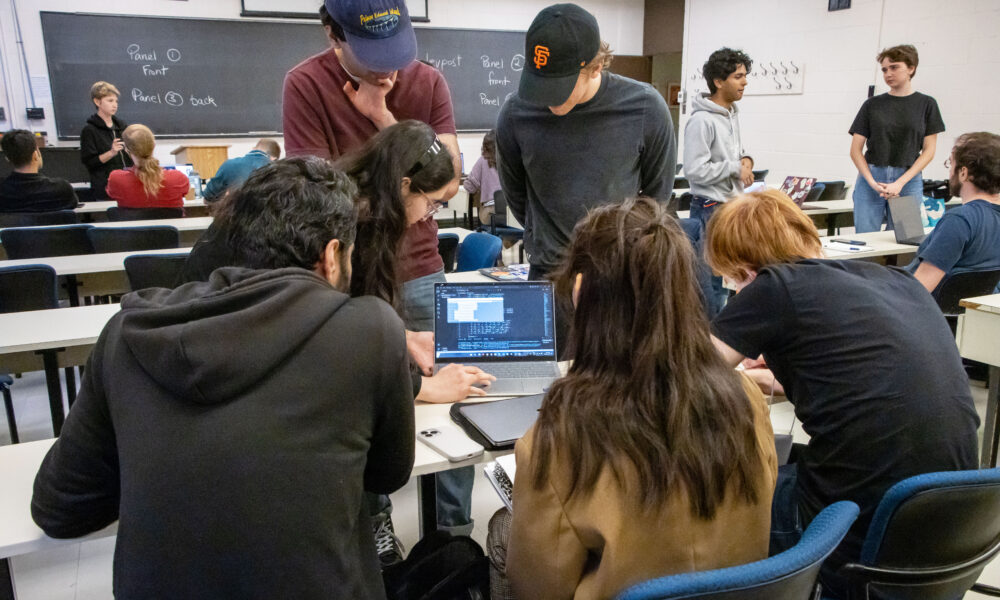
Amidst the vibrant hum of friendly competition, close to 150 students gathered in the Rutherford Physics Building on Nov. 3 for the eighth Annual McGill Physics Hackathon. An enduring event, the hackathon has persisted seamlessly, even switching to virtual hacking during COVID-19. In its current edition, participants form teams of two to five and engage in a 24-hour creative sprint over three days. Their task: Craft a project intertwining computer programming and physics.
David Gallacher, the lead organizer of the hackathon and a Ph.D. candidate in physics at McGill, spoke to The Tribune about the event’s purpose.
“The main motivation for the hackathon is to inspire and encourage students to use computation alongside their physics knowledge that they’re going to develop throughout the undergraduate [program] or that they’re learning in CEGEP, or high school physics. To combine computing and software with physics because that’s something that doesn’t get emphasized very much.”
This year saw a surge in demand, prompting the hackathon to sell out two weeks prior to the event. To accommodate the overwhelming interest, the organizers released a second round of tickets, which packed the venue to capacity. The academic background of competitors was especially diverse, with 50 per cent pursuing bachelor’s degrees, approximately 40 per cent from CEGEP, and the remaining attendees comprised of graduate and high school students.
“The way we view it is because, at the research level, […] it’s kind of expected for you to know how to code in order to do most of the physics research. This is kind of an opportunity to get people excited about learning new things, and to get some practice,” Gallacher said. “We give them support in terms of mentors and volunteers, who are graduate students, or postdocs, or sometimes alumni who are working in industry.”
The organizers of the McGill Physics Hackathon based their evaluation of different teams on three distinct criteria: Technical implementation, effective storytelling, and aesthetics.
Gallacher further elaborated on what exactly the judges were looking for during the two project pitch presentations that all teams had to do.
“[We assessed] how challenging was the problem you were trying to solve? How was your solution to solve the problem?” Gallacher explained.
He also raised the inclusion of science communication as one of the competition’s foremost benchmarks.
“We judge them on their communication, their ability to tell a story about the project, and they have five minutes to present at the end of the hackathon,” Gallacher said. “And then we have a third category, which is aesthetics/visualization. Some projects have much more aesthetic connectedness, because they’re a demo or interactive, like a GUI where you have to play with some knobs and change some physical parameters to teach a physics concept.”
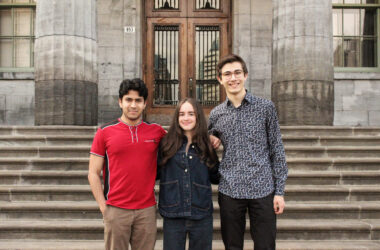
The winning project, SingularIO, was a simulation that displayed technical expertise and effective storytelling in addition to beautiful aesthetics. The team consisted of three first-semester computer science and mathematics students from Vanier College. Marco Alturk, Le Tuan Huy Nguyen, and Justin Bax enthusiastically signed up for the McGill Hackathon together after knowing each other for only two months. They discussed their exciting project, their individual perspectives on metaprogramming, and what they will take away from this unique experience in an interview with The Tribune.
“We got inspired from this game called Agar.io. We made these masses that float around. And we used Newtonian physics [fundamental branch of classical mechanics that describes the motion of objects detailing physical facts such as inertia and the relationship between force and acceleration] to calculate the acceleration to be able to simulate how it would look like in real space, how they would orbit around greater masses and how they would collide into each other and become bigger,” Alturk explained. “One thing that was more complicated was the simulation of space-time visualization, like the distortion of space-time around greater masses.”
The team paid extra care to their project’s visual presentation, even drawing parallels between the pleasing physics aesthetics and life more broadly.
“We spent a solid ten minutes, just the three of us admiring the orbits and wondering if the n-bodies are going to fall in or if they’re going to orbit. So it’s really beautiful within both our application itself, but also the physics behind it, because our simulation is aiming to show people how physics, astrophysics and the dynamics behind them can create useful things, both chaotic and not chaotic,” Bax said.
With the increasing popularity of artificial intelligence (AI) applications such as ChatGPT, the organizers faced a particularly challenging task in defining necessary guidelines. Striking the right balance between testing a group’s capabilities, but also not ignoring the practicality of AI as an increasingly essential tool posed a unique challenge according to Gallacher.
“From my experience, and from talking to colleagues, we’ve always viewed computation as a tool to help us do more physics,” Gallacher explained. “There is definitely a place for them in my research, and as a programming assistant. And it really can speed up the development process quite a lot. I think it would be silly to not encourage people and to not tell them about these tools.”
However, the practicality of AI technology does not seamlessly translate to its appropriateness in various programming competitions.
“The approach that we took is that by design, our event is already fairly resistant to that kind of thing [AI] being a dominating factor. Because we don’t evaluate participants or their teams on their code, on the execution of their code, or on really anything to do with their actual program,” Gallacher said.
All three members of the winning team shared some of their perspective regarding the use of ChatGPT during the hackathon.
“I think we barely used ChatGPT except for image generation. I personally don’t find the need to use it,” Bax noted.
Nguyen then provided additional nuance by discussing ChatGPT’s degree of helpfulness according to the context where a programmer would use it.
“I think it is a tool that can definitely help. But I’d say 90 per cent of the work is you just toying around with whatever you’ve got, and you’re trying to build from what you have. So I’d say sometimes it can be a bit of a hassle to even use it, but can definitely be useful,” Nguyen said.
Alturk also provided a specific instance where AI can be more of an obstacle than an aid.
“If you give it the wrong prompt or it misunderstands it, it makes a lot of errors, especially in programming. And I think that decreases your productivity, because now you have to fix the code that it gave you instead of writing it yourself. So for things like physics, or the optimization that we did, we didn’t use ChatGPT,” Alturk said.
To create a program worthy of the first-place award title, the three CEGEP students toiled over SingularIO with great persistence and admirable collaboration.
“The total time it took us was maybe 30 hours in total, because we would come to McGill, we’d work on it, and then we would go back home, and continue brainstorming ideas until 2:00 a.m.,” Alturk shared.
In response to reflecting about the three-day long excitement filled with physics, coding, camaraderie, and amicable rivalry, Bax illuminated the team’s biggest takeaways with bonding being a big one.
“The people around this, in my opinion, really made the hackathon enjoyable,” Bax added. “We were very inexperienced and otherwise all around us, we had teams of undergraduates or even graduates writing super complex equations on blackboards. We learned a lot of things.”
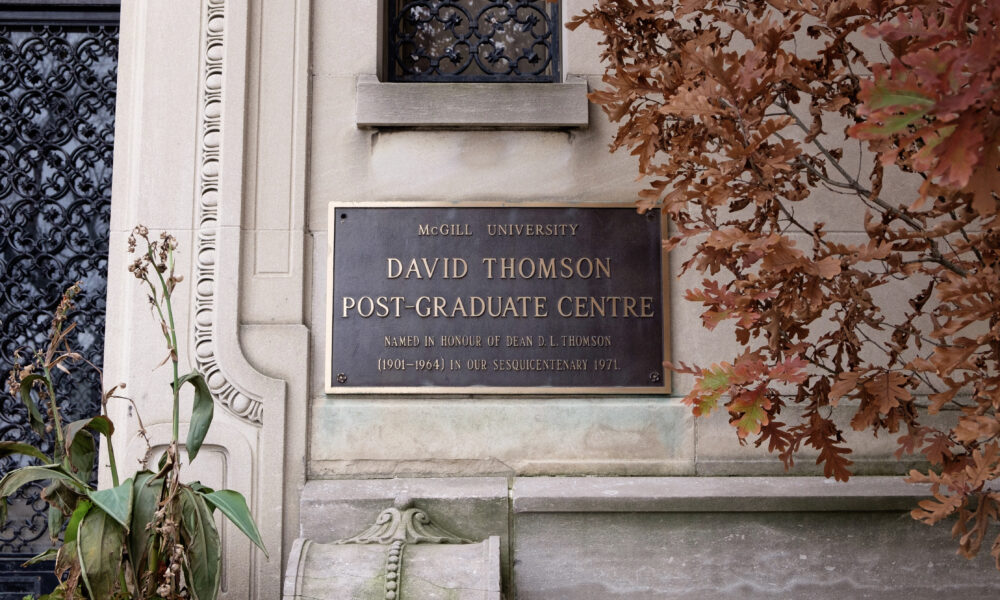
On Nov. 8, the Post-Graduate Student Society (PGSS) held both its November council meeting and general assembly (GA) at Thomson House. As the GA failed to reach quorum—which is one per cent of PGSS members, or 96 students—no motions could be passed and all items on the agenda were for consultation and discussion purposes only.
The November council was led by Nora Delahaye, the Council Speaker, who explained the new submission guidelines for agenda items. Instead of agenda items being submitted on the Wednesday before the meeting, the new deadline would be the preceding Monday, as the extra time is needed to produce French copies of documents in compliance with Bill 96.
Next, the speaker presented proposals for the library improvement fund, which were approved. External Affairs Officer Ansley Gnanapragasam explained what the two projects, which total over $12,000, entail for the Islamic Studies and Osler Libraries.
“These two projects were submitted last year and sent to the library asking for the quote. We received the quote this year, reviewed it, and we found it reasonable,” Gnanapragasam explained. “[They] are more or less new ergonomic desks and chairs for the two libraries.”
PGSS Secretary General Satish Kumar Tumulu then touched on the motion regarding a PGSS response to Quebec’s proposed tuition hikes. The motion outlined potential actions PGSS could take, including an official statement, endorsement of politicians opposing the hikes, support for protests and demonstrations, and an email template for PGSS members to express their disapproval to provincial politicians. The motion was approved.
The council briefly pivoted to a call for candidates to fill vacancies for representatives on the appointment board before adjourning a few minutes past 6 p.m.
After a half-hour break, the GA began. The first dozen minutes were spent trying to reach quorum by urging people to join the Slido, an online voting platform. However, the efforts proved to be unsuccessful. As a result, it was not possible to vote on motions and the purpose of the meeting was therefore consultative; voting will take place at the winter GA on Feb. 7, provided quorum is reached.
The question period was the night’s greatest speaker-audience engagement. In response to a question regarding how PGSS intends to achieve quorum at the winter GA, the Secretary General acknowledged the lack of success in achieving quorum since the COVID-19 pandemic.
“If [each] counselor can bring one extra person then we have a quorum. Right now we have 75 people in both in hybrid and in person,” Tumulu said. “We just need 21 more people to get quorum. It’s not that hard.”
Tumulu and Gnanapragasam mentioned that if all 122 council members attended, quorum would easily be reached. Various attendees then got up to offer suggestions on how to increase attendance and reach quorum.
David Gallacher, a third year PhD candidate in physics, referenced his own department’s success in achieving quorum at meetings.
“The most effective thing we did was just to go out and invite people in person, like walk around to all the offices, introduce ourselves and invite them to [our] GA,” Gallacher said. “One thing we found is that just sending more and more emails is increasingly less effective. Adding more emails is worse than having fewer emails.”
Other members insisted that the email communication be more direct and easy-to-understand, straying away from acronyms to lower the knowledge barrier and briefly explaining what can be achieved at PGSS meetings. One member even suggested that draws and raffles be used as a way to lure more participation. After acknowledging that the suggestions will be taken into account, the Secretary General dismissed the meeting a few minutes before 7 p.m.
Moment of the meeting:
A member commented on the phrasing of Chapter 9, Section 4 of the Society Activities Manual, about how former executives “cannot run for election the same year and the following year,” pointing out that it would mean that they could run during either the current or following year but could only not run for both. After discussion, it was decided the word “and” will be substituted for “or”.
Soundbite:
“Please call your friends so we have quorum.” — Delahaye, urging the crowd to help bring the GA to quorum.
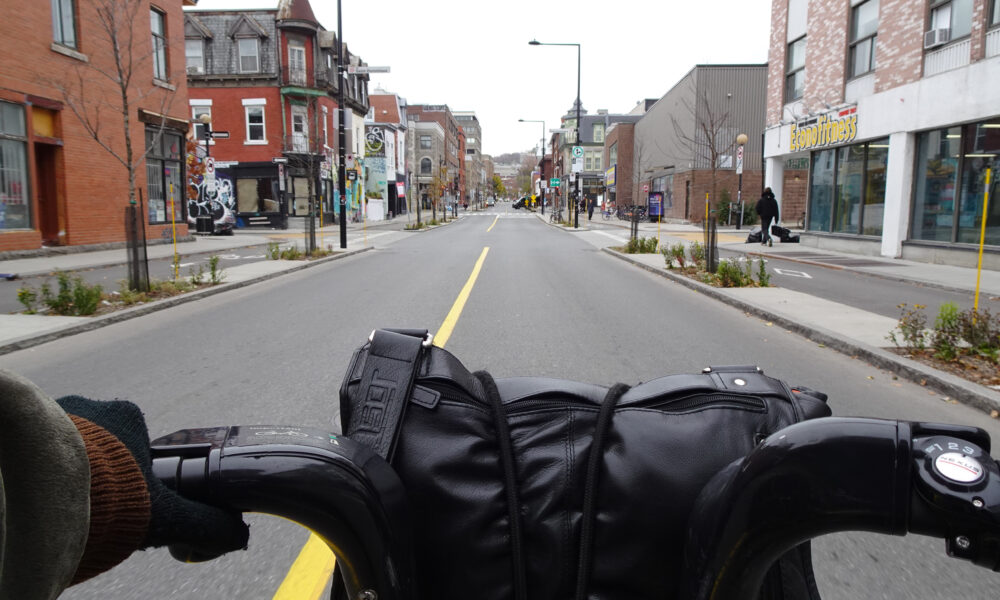
November usually marks the beginning of the frigid, seemingly everlasting Montreal winter. Dropping temperatures and the end of Daylight Savings Time are usually a wake-up call for city-dwellers to finally say goodbye to their bikes. But as Montrealers everywhere prepare for hibernation, BIXI bikes will sit—or ride—this one out. Last April, Montreal’s only public bicycle-sharing system announced an extension of its services through the winter months. Although the company usually ceases its operations in mid-November, its new year-round program will allow residents, for the first time, to BIXI during the colder months. This new initiative follows those in other North American cities such as Toronto and Chicago, where citizens experience similar, albeit milder, winters.
Bikes at every corner? Think again.
For those used to readily available BIXIs, the company’s winter program will work a little differently: Bikes will only be accessible in seven of the cities’ boroughs. These include Ahuntsic-Cartierville, Villeray–Saint-Michel–Parc-Extension, Mercier–Hochelaga-Maisonneuve, Rosemont–La Petite-Patrie, Plateau-Mont-Royal, Ville-Marie, and the Southwest. BIXI’s year-round station map, available on its website, pinpoints the exact spots where bike stations will be located. Unsurprisingly, they are mainly focused downtown and adjacent to certain metro stations in the Plateau.
So, will students turn to BIXIs?
The extension of BIXI’s regular services into the colder months of the year is a game-changer for students who rely on public transportation to get to and from campus each day. As great as all of this sounds though, an obvious barrier remains: Montreal’s biting weather conditions.
After all, there is a reason that BIXI refrained from introducing this initiative for so long. The city’s weather pattern of strong winds, blizzards, and iced pavements is difficult enough to cope with on two feet… let alone on two wheels. However, BIXI seems committed to overcoming that challenge. Its regular bikes will be equipped with studded tires and non-slip pedals—features which are essential for safe winter biking. Electric BIXIs, for their part, won’t make a reappearance until next spring.
Despite BIXI’s plan to provide Montrealers with safe equipment, the city must also be committed to regular road and bike path maintenance. Cyclist safety remains an ongoing issue in Montreal as the city saw a 22.7 per cent increase in bike-related injuries in 2022. These numbers only threaten to increase as layers of snow, ice and slush appear are added to the equation.
Is “BIXI-ing” truly a worthwhile option?
Unlike the Société de Transport de Montréal’s (STM’s) public transportation services, which offer discounted student passes for bussing and taking the metro, BIXI has yet to introduce a student-friendly discount on their services. Monthly memberships are currently priced at $20, and seasonal memberships amount to $99.
This is somewhat justifiable, considering that BIXI’s summer services are extremely reliable: with over 884 bike stations, customers are almost always guaranteed to find bikes within walking distance during the regular season. However, BIXI’s new year-round program is set to reduce the number of bike stations available during the winter months: Only 150 stations will continue their operations—18 per cent of the company’s usual number of available stations. Despite this, membership rates are somehow identical to those applicable during the regular BIXI season. This raises the question as to whether these costs will end up being worth it, as access to the service will certainly change.
Montreal’s everlasting winters have become synonymous with over-crowded buses and metros, but year-long biking suggests that, perhaps, Montreal’s public transport scene will look a little different in the future. The question remains, however, as to whether Montreal’s spring-and-summer-only bikers will be persuaded by this change.
As McGill students, we might not find the sidewalks we walk on during our daily walks to class particularly interesting. And yet, concrete is a major pillar of our society—quite literally. Its use and production affect our lives in innumerable ways. The construction industry uses more concrete than any other material on Earth. Society depends on it, from constructing skyscrapers to paving sidewalks.
However, with the universal necessity of concrete comes a steep environmental cost. Its rigid construction amplifies the effects of floods, leaving pools of water on our streets and sidewalks. By some estimates, concrete is responsible for four to eight per cent of CO2 emissions. Water is also an integral component in concrete production, depleting this valuable resource in regions that need it most.
CarbiCrete, a concrete technology company based in Montreal, has an interesting approach to limiting the negative impacts of concrete use: They produce carbon-negative concrete. In other words, the company’s method of production not only limits carbon dioxide emissions, but also captures carbon from the atmosphere during the process. Along with water, a mixture of aggregates—like sand and gravel—make up concrete with cement binding everything together. CarbiCrete licenses their technology to concrete producers, who then implement it in their production process.
“Typically, in the cement-based process, you take aggregate, water, cement; you mix those together. You mold them into whatever product it is you want to create. And then you cure the product with either heat or steam,” Yuri Mytko, CarbiCrete’s Chief Marketing Officer, said in an interview with TheTribune. “With our process, we replace the cement with steel slag [a by-product of the steel smelting process] […] but then when it comes to curing, we cure our products with carbon dioxide.”
This process simultaneously recycles a by-product of the steel industry and, during the curing process, uses carbon dioxide that likely would have been released into the atmosphere. Incorporated in 2016, the company first brought its technology onto the market this September. They are working to license their technology with established concrete companies and expanding their operation.
“We’re constantly being inundated with requests […] there is a lot of interest. Our focus has really been on standing up this one facility in Drummondville. Basically, we had a pilot project set up at their facility that has essentially been turned into a commercial operation,” Mytko said.
With CarbiCrete up and running and growing their business with investors, TheTribune spoke with Mette Bendixen, assistant professor in McGill’s Department of Geography, to better understand what issues the industry of concrete production still needs to address.
According to Bendixen, the aggregates that are mixed with cement or, in the case of CarbiCrete, with steel slag, opens up a whole new can of worms centred around another seemingly inconspicuous resource: Sand. Although most people do not think of sand as a critical substance, it is the most mined resource on Earth, and sand excavation is eroding ecosystems worldwide. Demand for it has even resulted in “sand mafias”—individuals vying for control and profit in the sand trade. Its scarcity has also forced countries such as the United Arab Emirates to import sand from other countries, including Belgium.
“[Sand excavation] naturally erodes the river banks […] meaning that we have houses falling into the rivers. It has huge consequences when you start digging that sand,” Bendixen said.
Bendixen noted the carbon negative aspect of the technology, but also highlighted the lack of green initiative with regard to the aggregates used.
“What might be lacking in that story […] is are they even addressing this point about aggregates. Is that something that’s considered?,” Bendixen asked.
As CarbiCrete further establishes itself in the construction field, with interest in the company increasing exponentially, it will be important to address other areas of concrete production according to Bendixen. Of course, CarbiCrete has brought about a brilliant new technology. It will need to take more initiatives that are equally as forward thinking, however, to address the other issues our environment faces, even in industries as superficially ‘boring’ as sand.