


Latest News

Arts & Entertainment, Film and TV

Seeing Quebec through a new lens in ‘Lida Moser Photographer: Odyssey in Black and White’

In the summer of 1950, Lida Moser set out from New York City on a journey to capture the spirit of Quebec through photographs. She was a single woman travelling with three men: Ethnologist Luc Lacourcière, folklorist Félix-Antoine Savard, and Paul Gouin, cultural advisor to Premier Maurice Duplessis. She did not speak a word of French. 

Today, her corpus of over a thousand photos continues to resonate with Quebecois and non-Quebecois people alike. They have been carefully preserved in the Bibliothèque et Archives nationales du Québec (BAnQ) and exhibited at the Musée national des beaux-arts du Québec. Now, they live on vividly in the animated short film Lida Moser Photographer: Odyssey in Black and White, produced by Academy-Award nominated filmmaker Joyce Borenstein. 

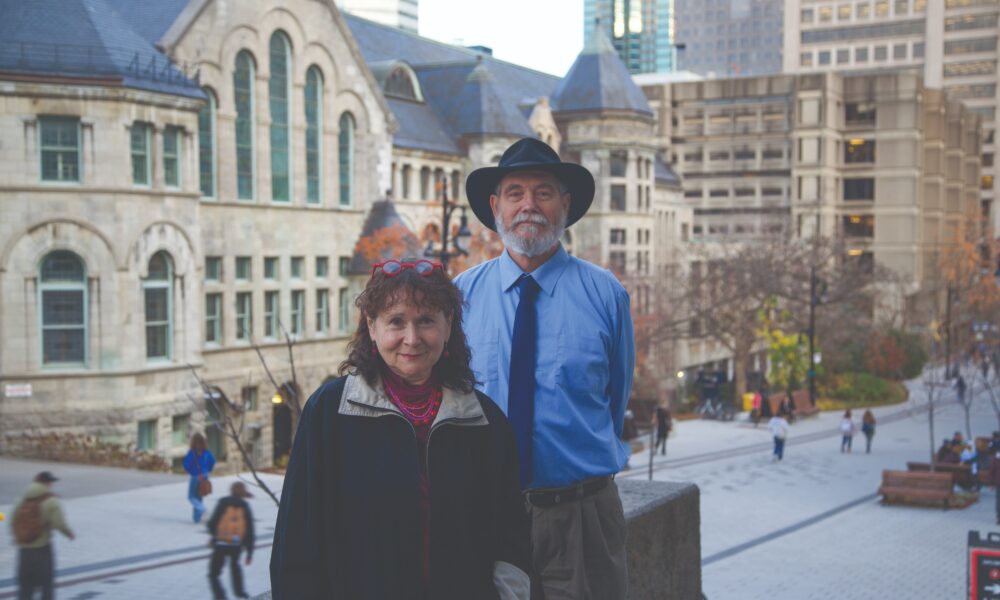
The McGill Tribune sat down with Borenstein and former McGill professor Norman Cornett to discuss the film and the lasting impact of Lida Moser’s photographs. 

“What started me on this quest was seeing her photographs. They just bowled me over, they were exquisite. They recalled my idyllic summers as a child,” Borenstein said. “My parents rented and then bought a little old schoolhouse in the middle of the farmland of Quebec, in the Laurentians. We played with our neighbours, who were francophone farming kids. We didn’t need language at the time [….] We got along beautifully, and summers were my favourite times in my childhood.”

Currents of profound understanding run through the film. Borenstein was born in Montreal to an immigrant, anglophone, Jewish family, and relates to Moser as a woman persisting in a patriarchal world. She explores the complexities of feelings of otherness with lyrical empathy, by placing herself in Lida Moser’s shoes. 

“I retraced her steps, I did her journey two and a half times,” Borenstein said. “It came alive, and I fell in love.” 

Professor Norman Cornett, also a Montrealer, was likewise captured by Moser’s photographs and Borenstein’s film. Earlier this fall, Cornett discussed the film in depth with Borenstein as part of a series of video dialogues.

“What intrigues me in Lida Moser Photographer as a religious studies scholar is, particularly as it relates to [Bill] 96 and nationalism, it’s as though through the animated documentary, we can see Quebec, its history, its people, its language, through another lens, in another light,” Cornett said.

The film’s Quebec is not the Quebec of postcards or brochures. Lida Moser’s photos do not depict eminent figures, grand buildings, or familiar landmarks. They show children growing up, playing with kittens, and people sitting outside, working with tools. What, then, shapes La Belle Province are not majestic monuments, but images of everyday life. The resulting photographs relate to outsiders in Quebec and abroad in their sheer authenticity. 

For Cornett, this approach, grounded in everyday occurrences, captures Moser’s essence. 

“Lida Moser comes from that milieu, that ambience, of Jewish, left-leaning, socially conscious artists [….] They want to tell the people’s stories, not the bankers’ stories […] they want to tell the untold stories,” Cornett said. “To what extent are we doing justice to the history of French Canada, to the history of Quebec, if we’re only looking at it through the lens of those that are bigger than life?” 

The film’s focus on everyday life crucially presents a rare and accessible ethnographic picture of Quebec in the 20th century. The language-less nature of photography and animation makes them boundary-breaking mediums to tell the story of a province whose identity exists entrenched in the French language. 

“Somehow art gets through […] no matter  the language,” Cornett said. “Art transcends language, art transcends ethnicity, art transcends identity, art transcends the boundaries, the barriers, between us. And that is the beauty of Lida Moser Photographer. She doesn’t speak a word, and yet we hear her loud and clear.”

Lida Moser Photographer: Odyssey in Black and White is currently in distribution, but is available to McGill students as a DVD via interlibrary loan.
Behind the Bench, Sports

Decolonizing tennis, tournaments, and talent

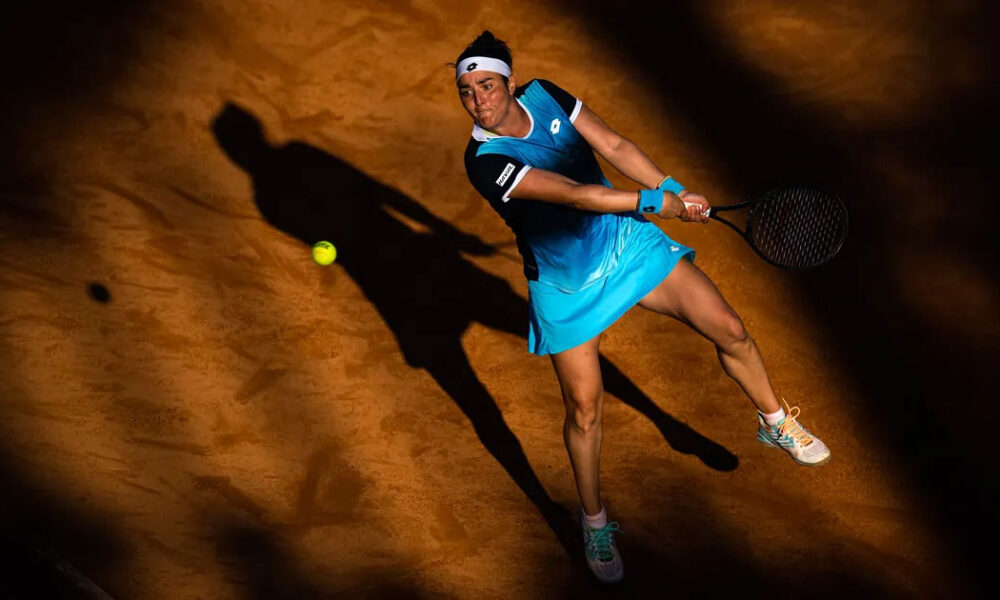
When the greatest of all time, Serena Williams, made a return to tennis this past June, she decided to play doubles on the grass at the Eastbourne International. Looking for an in-form partner, she called up the talented Tunisian Ons Jabeur. Jabeur, the first Arab woman to break into the world’s top 10 and the first African woman since South African Amanda Coetzer to enter these elite ranks, had just won the Berlin Open the week prior. This duo electrified the crowd, upsetting higher-seeded doubles specialists and putting together ludicrous shots and angles that would make the most pretentious geometrist jealous. 

As the 2022 season closed, Jabeur capped off a prodigious and productive year––reaching the finals at both Wimbledon and the U.S. Open, spearheading efforts to hold a tournament in Monastir, Tunisia, and finishing second overall in the world rankings. 2022 was a standout year for African tennis. Along with Jabeur’s remarkable successes, Mayar Sherif became the first Egyptian woman to win a Women’s Tennis Association (WTA) title in Parma. 

However, the winning efforts of players alone should not be incumbent for African tennis or Arab tennis to matter. Looking ahead to 2023, the administrative bodies of tennis—the WTA, in this case—must actively commit to decolonizing tennis. They must loosen the grip the United States, Great Britain, Europe, and Australia have on the overwhelmingly white sport by building new tournaments and training centres to increase access to tennis for women players across the world.

Let the statistics radicalize you. Jabeur, ranked no. 2, and Sherif, ranked no. 50, are the only two African tennis players in the top 100. The next highest-ranked African tennis player? World no. 265 Sada Nahimana from Burundi. The only WTA tournament in Africa slated for next year? The Moroccan Open, a WTA250 level tournament scheduled a week before the French Open––meaning that players will be less likely to participate. Tournaments in the Middle East, Latin America, and Asia raise high ticket sales, and bigger tournaments like those in Dubai, Qatar, and Tokyo serve as mainstays of WTA tennis. As well, successful players from underrepresented countries, such as Brazil’s Beatriz Haddad Maia, Kazakhstan’s Elena Rybakina, China’s Qinwen Zheng, and Colombia’s Camila Osorio continue to make leaps. But this work multiplies when they have to fight to be seen. 

To make a living as a tennis player, you have to win at the big tournaments and you have to do it year-round. A run to the quarterfinals at one of the four Grand Slams held in Europe, Australia, or America will win you approximately $400,000 USD. A semi-finals run in one of the WTA1000s garners $300,000 USD. A victory at one of the two WTA500s held in Asia (out of 12 total) could save your career, pay for your flights, your coach, your accommodations, your physio, your equipment, and your clothing—as you don’t have a sponsor until you become an American citizen. You had better hope that your friends and family from home won’t miss you when you’re in Ostrava. Can you afford the constant flights out of Addis Ababa, Lagos, or Kinshasa in order to compete in the most highly touted WTA tournaments and hopefully make a living in tennis? Non-European, non-Australian, and non-North American tennis players comprise only 12 out of the top 100 who get prioritized entry into where to play. How can you compete with one another in a game already rigged against you? 

Tennis needs to move past its dangerous individualism, laden in its claims as the “most civil sport.” The WTA is not ready to properly celebrate Jabeur, Sherif, Naomi Osaka, or Li Na––the first Asian woman to win a Grand Slam who built the WTA1000 Wuhan Open. It may be when it dismantles the systems that prevent players who look like them and who come from the same underrepresented countries as them from rising. 
The WTA’s Player Council, which does not include a representative for Africa, must push for equity. As their investments in the 2021 WTA Finals in Guadalajara show, the WTA should seek out opportunities to stimulate not only tournaments, but training centres for youth across the African continent. Fans should watch tennis both for the matches and for certain players’ unfair advantages. For us in the African diaspora––Black, North African, and Arab fans stirred by her brilliance alike––seeing Ons do well marks a fateful first step for the dreams we share of a decolonized future for tennis.

From the BrainSTEM, Science & Technology

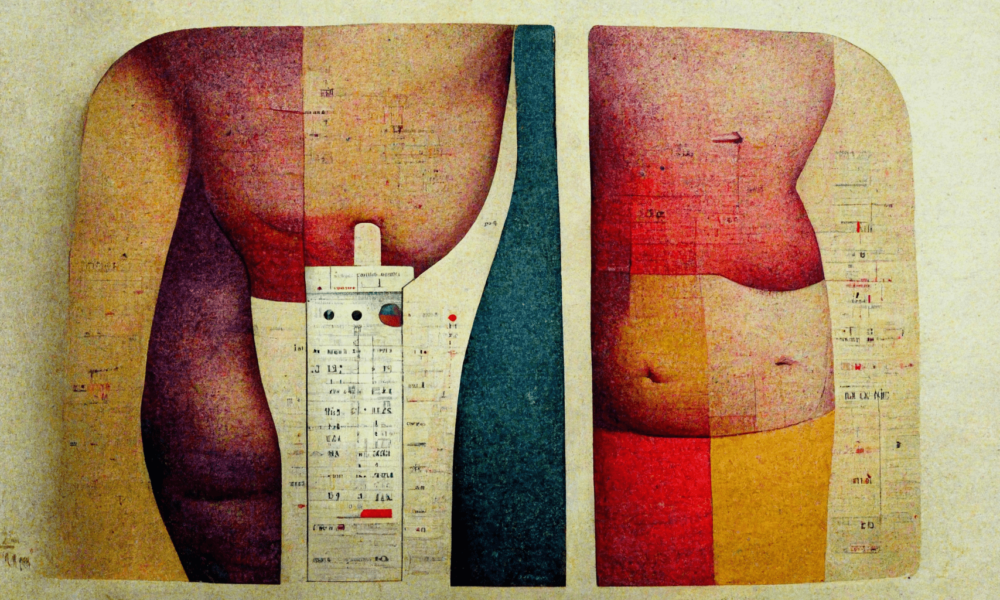
It’s time to scrap the body mass index

Imagine a medical assessment tool that tells you about a patient’s body composition—a tool that is used to determine levels of disease risk, dosages for vital medications, and individualized treatment plans. 

Now imagine this tool was based on the body measurements of white European adult men, but is applied the same way regardless of gender, age, or ethnicity. Imagine this tool’s accuracy and usefulness were never established with the scientific method. Imagine that the interpretation of its results has been called out as misleading, if not medically dangerous. Would you still trust this tool as an essential part of general health care? 

This is the story of the body mass index (BMI). Still an official measurement tool for physicians according to the “Canadian Guidelines for Body Weight Classification in Adults,” the BMI is widely used across North America and beyond. Weight in kilograms is divided by height in metres-squared to generate a ratio that automatically classifies an individual as underweight, normal, obese, or morbidly obese. A BMI of 18.5–25 falls within the “normal range”, while anything beyond that is considered overweight and “puts you at increased risk of developing health problems,” according to the Quebec government. Nothing is stated about the health problems associated with a lower-than-normal BMI—the implication is that there are none. 

The glaring problem, of course, is that the BMI does not take muscle mass or per cent body fat into account. Instead, the seemingly neutral measurement tool is used to classify patients as “obese” without considering how a “normal range” differs from person to person. The BMI is still the singular metric used to calculate nationwide obesity statistics, with no other supporting data. 

To understand the inherent flaws associated with the body mass index, we must rewind to the 1830s. Belgian statistician Adolphe Quetelet was trying to develop population-wide body standards based on the “average man” (read: French and Scottish soldiers) in order to find the population mean, which he considered the social ideal. In fact, it was later used as fodder for the eugenics movement to sterilize disabled people, fat people, and racialized people. Quetelet’s Index, as it was called, was never supposed to be an individualized measure of body composition.

For years, social health advocates and fat activists have decried the BMI, but it seems that these waves have barely disturbed the widespread practice for reasons perhaps generational, likely institutional, and undeniably racist. The BMI completely ignores the social determinants of health, especially race and income, which are inextricably linked. Inuit in northern Quebec are already less likely to have access to nutritious, affordable food due to systemic policy failures, yet the BMI ignores this and overestimates the health risk of obesity in this population. 

It’s a double-edged sword of neglect—non-Indigenous health care workers may be focusing on a so-called “obesity epidemic” in this population at the expense of the very real food insecurity epidemic. The BMI is yet another example of a colonial practice being forced on Indigenous peoples to their detriment, while traditional knowledges of health care are largely ignored. 

The uncritical application of the BMI, then, is actively harming our health. Many people with a high BMI are perfectly healthy—think of those with high muscle mass, higher bone density, and those with low metabolisms—but are still subject to health recommendations such as restrictive diets, or being told that they are at higher risk of disease when they are not. The world of medical research is shockingly fatphobic, and the stigma associated with bigger bodies causes weight shame and discrimination. In turn, this leads to the avoidance of medical treatment and poorer mental and physical health outcomes. 

One of the most esteemed principles of science is that correlation does not imply causation. The correlation between a high BMI, an inherently flawed measure, and the risk of diseases such as diabetes or heart disease, is just that—a correlation. The true causal link that public health should be investigating is the relationship between fatphobic, outdated tools of assessment and inadequate health care. 

McGill, News

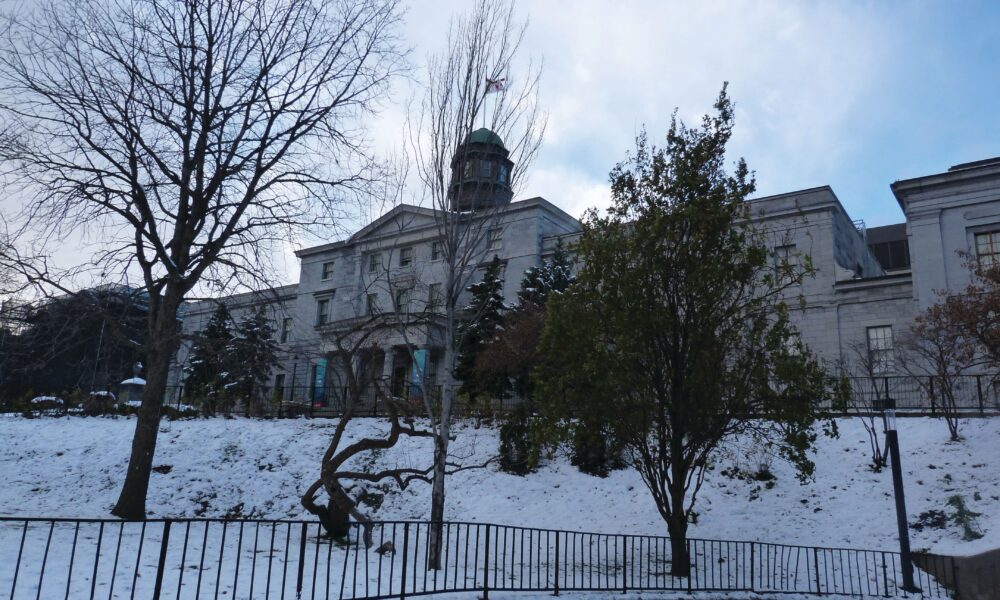
Student advocates call for reform of McGill’s harassment and discrimination policy

Content Warning: Mention of sexual violence and racism

McGill’s Policy on Harassment and Discrimination allows members of the university community to take action when they feel they have been harassed or discriminated against. The policy and its accompanying procedures outline how to file complaints and prompt investigations into both individuals at McGill and the university’s systemic practices. While it is intended to provide support to students navigating the official complaint process, many—including Black and 2SLGBTQIA+ students, and members of student advocacy groups—are dissatisfied with the policy’s framework and implementation. In interviews with The McGill Tribune, student advocates familiar with the policy explained that they have found several issues with it, such as inefficient procedural practices and a lack of legitimate third-party intervention. 

Complaints about harassment or discrimination are brought to McGill’s Office for Mediation and Reporting (OMR), which was created after the policy’s revision in 2021. McGill media relations officer Frédérique Mazerolle explained it as “an office dedicated to the independent and impartial oversight of the resolution of reports of harassment, discrimination, and sexual violence” in an email to the Tribune.

Once a complaint is filed with the OMR, assessors—typically members of the university’s staff—begin the investigation process. According to section 6.2 of the policy, reports may be handed to an external third-party assessor if one of the investigators has a conflict of interest, if one of the parties is a member of the OMR, or if one of the parties is a member of McGill’s senior administration. Regardless of whether the assessor is an independent party or not, the Provost is responsible for making a final decision that concludes the investigative process. 

“If the assessor’s report determines that the evidence is sufficient to find that harassment and/or discrimination has occurred, then the Provost will inform the parties in writing of the decision to refer the matter to the appropriate University disciplinary authority to determine disciplinary and/or administrative measures,” Mazerolle wrote. 

A case’s appropriate disciplinary authority depends on the role of the accused, according to section 6.16. The appropriate authority in the case of a student is outlined in the Code of Student Conduct and Disciplinary Procedures. In the case of a staff member, it will be the dean of their faculty or the dean’s delegate, whereas in the case of a Vice-Principal, it would go to the Principal. The Chair of the Board of Governors presides over cases involving the Principal. 

Queer McGill administrative coordinator Brooklyn Frizzle is concerned about what they believe is the Provost’s outsized role in managing harassment and discrimination complaints. Frizzle stressed that a Provost’s individual biases can have an impact on how cases are handled. They pointed to previous comments that the former Provost and current Interim Principal Christopher Manfredi made in Senate meetings. 

For example, Frizzle took issue with Manfredi’s indication—during a Nov. 18, 2020 Senate Meeting—that there is no inherent concern with McGill professors signing a petition to support a professor using racial slurs in their teaching.

In an interview with the Tribune, Students’ Society of McGill University (SSMU) vice-president (VP) University Affairs Kerry Yang explained that the OMR might not be completely detached from the university given it fits within the Equity department under the Office of the Provost and remains under the administration’s jurisdiction. 

“Although they say it’s all to remain impartial, based on how the structure is, it doesn’t seem that way,” Yang said. “There’s no recourse if [McGill does] conduct something in bad faith because it’s all centralized. How can we ensure that what [McGill] is saying is impartial is truly impartial?”  

Frizzle also takes issue with how the Policy serves 2SLGBTQIA+ students. They explained that many queer students who tried to file a complaint under the policy were advised by the OMR that their complaint would not be successful in an “investigative setting,” which ultimately discouraged them from seeking justice. 

“Most of those cases are not investigated. They’re not formally documented and there’s no assessment made, typically, because they’re kind of pre-screened,” Frizzle said. “They advise a student that now this doesn’t meet the definition, so it probably wouldn’t go anywhere.” 

The most recent annual report on the Policy on Harassment and Discrimination noted that only eight per cent of inquiries with the OMR led to formal reports in 2020-2021. However, 47 per cent of all inquiries met the definitional requirements to launch a report. 

Alex*, a student advocate, believes there are purposeful factual errors and omittances in McGill’s records. 

“Many other Black students had filed harassment and discrimination complaints under McGill’s policy, and […] it wasn’t conducted properly in the sense that [McGill] literally lied,” Alex explained in an interview with the Tribune.  “There were factual mistakes in the [reports]. They failed to include key elements, so it was intentionally not done properly.” 

Alex compared the Policy on Harassment and Discrimination to the university’s Policy against Sexual Violence (PSV), which they believe is much more robust due to continued momentum from the #MeToo movement

“Oftentimes when there’s a movement and there’s this kind of shift, like social pressure on a particular issue, sometimes it’s […] tied to a specific momentum and then it fades,” Alex said. “In [the case of sexual violence policies], we see this continuous legislative improvement and oversight. But when it comes to harassment and discrimination, it’s not the same.”

Frizzle explained that another reason McGill may prioritize updates to the PSV could be its provincial legal obligations. Bill 151 mandates universities to establish strong policies addressing sexual violence, whereas there are no specific laws mandating universities to institute policies against harassment and discrimination. 

“McGill is a very big fan of the bare minimum, legally,” Frizzle said. “So, of course, they are going to take it more seriously because if it’s found that they’re not investigating sexual violence, then that has a much bigger […]  legal implication than […] failing to address harassment and defending professors that use racial slurs in our classroom and uplifting the voices of people who perpetuate injustice.”

The additional staff members who are employed to assist in anti-discrimination policy-making often occupy roles with limited abilities. Alex explained that the Black Students Liaison Officer, who is responsible for supporting Black students, is not allowed to engage in any advocacy or directly aid students who have filed complaints. They also noted that McGill has recently eliminated the position of Assistant Dean (Inclusion – Black and Indigenous Flourishing), who was tasked specifically with supporting and recruiting Black and Indigenous law students. This position has been replaced with the Assistant Dean (Students), who carries out several student affairs duties in addition to being the dean’s lead on Black and Indigenous flourishing.

Both Yang and Alex believe that McGill’s Policy on Harassment and Discrimination must be revised to make it a more effective support mechanism. The most efficient way to conduct investigations, they say, would be entirely through an independent third party. Alex also suggested increased levels of academic accommodations for students during the complaint process and a provision to encourage advocacy throughout McGill’s governance channels.

“Every time I go to [governance] meetings, white administrators always say that ‘we don’t do any advocacy,’” Alex said. “But if we’re talking about equity issues and we’re trying to improve a structure, the whole point is to demand that these structures be more equitable, and that requires advocacy.”

*Alex’s name has been changed to preserve their anonymity.

Commentary, Opinion

McGill needs to boycott Sabra—for real this time

After a stickering campaign by  Students for Palestinian Human Rights McGill (SPHR) at the end of the winter 2022 semester, McGill’s Food and Dining Services removed Sabra products from the shelves of McGill’s dining halls and cafés. However, in recent weeks, they’ve returned. Instead of toying with their merchandising to temporarily appease student groups, McGill must permanently remove Sabra products from their selection. 

The Strauss Group, the parent company of Sabra which is co-owned by Pepsi-Co, is one of the largest food production corporations based in Israel. The group financially supports the Golani Brigade, a brutal and inhumane division of the Israeli Defense Forces (IDF). In addition to financial support, Ofra Strauss, the company’s chairwoman, has admitted to providing food and care packages to the Brigade during training and missions. The IDF is responsible for the continued ethnic cleansing and settler colonialism of Palestine through horrific violations of international law and crimes against humanity. The Golani Brigade in particular has carried out arbitrary murder campaigns, participated in the demolition of Palestinian homes, and helped incarcerate children. The brigade played a significant role in the egregious assault on Gaza in 2008, killing around 1,400 Palestinians and wounding many more. In addition to the alienation that McGill’s hundreds of Palestinian students face from an administration that systemically ignores Israel’s war crimes, supplying blood-stained products such as those of Sabra serves as a constant reminder of McGill’s complicity. 

Calls to remove such products are part of a larger Boycott Divest Sanction (BDS) movement, that aims to hold Israel economically accountable for its occupation of Palestine and subsequent apartheid and colonialism. With Sabra as one among many corporations, the global movement makes calls to boycott consumer brands like Puma, L’OREAL, and Pillsbury, supported by five members of the Pillsbury family themselves. The calls for BDS were successful. Earlier this year, Pillsbury’s parent company, General Mills, divested from apartheid Israel. We are seeing worldwide that BDS works; the University of Manchester removed Sabra from its campus after a boycott campaign.

The appropriation of hummus by an Israeli-backed group serves as another example of Israel’s obsession with co-opting and appropriating Palestinian culture. The Israeli promotion of falafel, hummus, and labneh without recognition of their Palestinian origins represents the overarching project to erase Palestinian culture and history. These historical and cultural deprivations complement the Israeli government’s systemic dispossession of Palestinian land,  restriction of access to water in occupied Palestine, and continual uprooting of farmland through military and settler violence. 

But why does the appropriation of hummus specifically matter? In Israel’s genocidal framework, the persistence of historical Palestinian culture threatens the state’s legitimacy and independence. Therefore, cultural appropriation is just one of many tactics to suppress traces of Palestinian validity and resistance. 

While settlements in the West Bank and the Gaza blockade illustrate instances of direct subjugation towards Palestinians, cultural appropriation, notably through corporate action, is far more cynical: The objective is to psychologically dominate and humiliate a people and nation by denying them not only their basic human rights but also the right to own their history and culture. 


McGill has a longstanding history of profiting from Israeli apartheid in Palestine and has shown time and time again that they do not value human rights, especially when it concerns people of colour. Students, however, have begun to show up and make their positions clear. Even though it was not adopted, the Palestine Solidarity Policy was approved with a  71.1 per cent majority, a policy that held a promise to boycott all corporations complicit in settler-colonial apartheid against Palestinians, including Sabra. It is imperative that students remain active in fights against McGill’s profiteering from Israel’s violent occupation in Palestine. Complicity is violent and until Sabra is off the shelf, we’re all guilty.

Arts & Entertainment, Theatre

McGill’s Department of English Drama & Theatre gears up for ‘Pomona’

For the first time in two years, McGill’s Department of English Drama & Theatre will be welcoming a full house back into Moyse Hall when its production of Pomona by Alistair McDowall opens on Nov. 23. Originally commissioned for The Royal Welsh College of Music and Drama in 2014, the play follows a young woman named Ollie as she desperately searches for her missing sister. A thrilling, surreal quest unfolds as she makes her way into a dark criminal underworld where nothing is as it appears. 

Director Sean Carney, an associate professor in the English Department’s Drama & Theatre and Cultural Studies streams, was drawn to the play for its intriguing plot and contemporary appeal. Notably, this is not the first time that McGill has produced Pomona. In March of 2020, Carney and Moyse Hall’s production team were amidst rehearsals for the play when the COVID-19 pandemic struck, shuttering theatres around the world. While memories of that lost production are bittersweet, Carney insisted on making this year’s Pomona a fresh start.

“I felt that it was important not to just revive that production,” Carney said in an interview with The McGill Tribune. “So it was all working pretty much from scratch.” 

This iteration of Pomona took on a whole new cast, crew, production concept, and design. Rehearsals began in September 2022 with a cast of seven undergraduate students, whose majors range from physics and mathematics to economics and theatre. 

In rehearsing the show, Carney was excited by the learning opportunities that Pomona presents to its student cast. The majority of the play’s scenes include only two or three characters of its small ensemble, allowing the actors to focus on detailed character work and the complex dynamics between them and their scene partners. Given the play’s dark subject matter, Carney also felt strongly about equipping the cast with methods to preserve both their physical and psychological safety while performing. 

“I don’t ascribe to the idea that you have to put yourself at risk when you’re acting in a play,” Carney said.

 Instead, he encourages the actors to pursue a more distanced approach: Each performer is instructed to look for an “as if” experience that is emotionally close to a real experience they may have, allowing them to access the intended emotions without feeling overwhelmed or unsafe during a difficult scene.

Outside the rehearsal hall, students from ENGL 368: Stage Scenery and Lighting were tasked with developing the world of Pomona through its design elements. Students expressed which areas of technical theatre interested them at the class’ outset. Led by Corinne Deeley and Keith Roche, Moyse Hall’s Production Manager and Technical Director, respectively, students were assigned specific roles and duties. This included everything from creating sound effects for the show’s final production to designing graffiti, painted across the show’s set. For U3 Arts student Magalie Goyette, this meant learning a whole new set of skills to become the production’s stage manager.

“I really wanted to get involved in the backstage [elements], so I knew I wanted to be a stage manager,” Goyette professed. “But I didn’t realize just how much there was to keep track of!”

As the stage manager, Goyette is responsible for attending rehearsals with the other assistant stage managers and taking note of the entrances, exits, and movements of actors and props onstage. During performances, she will call the show’s cues, signalling to the lighting and sound board operators when they should trigger the production’s spectacular effects. Despite the weighty responsibility that comes with this role, Goyette has been thrilled with her experience working on the show so far. 

“It’s so much fun. Seeing everything come together—cast, sound going up, everything—it’s such a great environment [….] It’s so impressive to see the evolution of the work throughout the semester. I can’t wait for people to see it.”

Pomona runs Nov. 23-25 and Nov. 30-Dec. 2 at 7:30pm. Tickets can be purchased in advance at https://moysehall.tuxedobillet.com/main/pomona

Montreal, News

Bill 21 hearings conclude, reinvigorate outrage from members of McGill community

Nov. 16 marked the final day of hearings against Bill 21 at the Court of Appeal of Quebec in Montreal. The legislation has faced controversy because it prohibits people employed in the public sector from wearing visible religious symbols at work and preemptively invoked the notwithstanding clause. Over five non-consecutive days, civil liberties groups, including the Canadian Civil Liberties Association (CCLA) and the National Council of Canadian Muslims (NCCM), argued against an April 2021 decision by the Superior Court of Quebec that upheld most aspects of the Bill. 

Among those protesting outside the courthouse on Nov. 7, when the hearings began, was the McGill Coalition Against Bill 21, which is composed of students, staff, faculty, and other McGill community members who oppose the law. 

The 17 groups challenging the Bill argued that the Coalition Avenir Québec (CAQ)’s use of the notwithstanding clause―section 33 of the Canadian Charter of Rights and Freedoms―was invalid. The notwithstanding clause allows Parliament and provincial legislatures to shield legislation from any provisions in sections 2 (fundamental freedoms) and 7 through 15 (legal rights and equality rights) of the Charter. Plaintiffs opposed Bill 21 on the grounds that the notwithstanding clause does not protect the Bill against section 28 of the Canadian Charter of Rights and Freedoms, which guarantees equality between the sexes.

Elizabeth Elbourne, a professor in the department of History and Classical Studies at McGill, is “deeply troubled” by the invocation of the notwithstanding clause, and hopes to see the court acknowledge the effects the Bill has on women, in particular.

“It would be good to hear a ruling on gender grounds, that it had a disproportionate impact on women, and that there is, therefore, a ground which would exempt [the Bill] from the purview of the notwithstanding clause,” Elbourne said in an interview with The McGill Tribune.

She added that she has witnessed the ramifications of Bill 21 herself at McGill.

“I had a student who was going to do a [master’s degree] with me, and who withdrew and left Quebec as a result of the law,” Elbourne said. “I met a student last month who used to wear [a] hijab and had to stop because of the law, but found it a very difficult and upsetting decision.”

Ehab Lotayef, a systems manager at McGill’s Department of Electrical and Computer Engineering and a member of the McGill Coalition, believes that the language used in Bill 21 inordinately targets Muslim women.

“The word symbol is very misleading [….] A Muslim man, for example, can wear certain necklaces or chains with a certain symbol. That is very optional, that’s what a symbol is,” Lotayef said in an interview with the Tribune. “But when a Muslim woman is covering her hair, she does not consider that […] an option, or consider that a symbol.”

A study conducted under the leadership of Maryse Potvin from L’Université du Québec à Montréal (UQÀM) surveyed the effects of Bill 21 on education faculties. Bronwen Low, a McGill associate professor of integrated studies in education and a member of Potvin’s team, shared some of their findings with the Tribune.

“Although the [Bill] is not to affect student teachers, findings from among the 972 survey respondents associate [Bill] 21 with negative and discriminatory treatment of student teachers, more polarized and conflictual interactions in university classrooms, and negative effects on the well-being and academic and professional achievement of students,” Low wrote.

The ramifications of the Bill extend beyond unpleasant classroom environments. Ghania Javed, U3 Arts and Arts Undergraduate Society (AUS) president, recalled conversations with students who fear Bill 21’s potential detriment to their future careers in Quebec. 

“I heard from one student that she’s considering going to Ontario after graduating from McGill Law because she’s not sure if by the time she will be practicing law, the Bill will [still] be here,” Javed told the Tribune. “Obviously if you want to work for the government, you have to choose between your career and wearing a religious symbol.”

Research Briefs, Science & Technology

Penguin feathers and the ice cube tray effect

One thing that is always on the mind during a Montreal winter is the cold and, more specifically, the ice. Living in Montreal makes slipping on ice inevitable. A painful landing on your behind, however, is not the only inconvenience associated with this crystalline structure. The buildup of ice on power lines, utility poles, and other structures can often spell disaster for those dependent on this infrastructure, putting out the lights and preventing heating systems from functioning during the winter months.

The Great Ice Storm of 1998 is a prime example of the damage this weather and ice can cause. Nearly 30,000 utility poles were felled, leaving millions of people in Quebec without power. Another instance of dangerous inclement weather occurred in China in 2008, when  winter storms left millions without power and damaged 80 per cent of power supply stations in the Guizhou province alone.

Even the successful removal and prevention of ice buildup often comes with unintended side effects. The chemicals used in some de-icers can seep into the environment during their use, transport, and storage, getting into the water supply and damaging the ecosystem. Other methods of de-icing may not involve chemicals, but any active method that relies on machinery requires consistent upkeep.  

A team of McGill researchers led by Anne Kietzig, associate professor in McGill’s Department of Chemical Engineering, looked to nature for inspiration in designing a new de-icing technique that avoids these pitfalls. The researchers found that penguin feathers possess an unique structure that allows them to shed ice more easily. When they copied the structure of the penguins’ feathers and applied it to a steel mesh, they found that the mesh was 95 per cent more effective at de-icing than an unenveloped sheet of polished stainless steel. 

Initially, the penguins’ feathers seemed like those of any other bird. But upon closer inspection under the microscope, Kietzig and her team discovered that the primary structures, or central beam of the feathers, had a superimposed nanostructure that formed a “groovy texture.” This is in addition to the microstructure—barbs and barbules—that are also part of the feather. Since Kietzig’s lab specializes in laser micromachining, the structure of penguin feathers was easy enough to replicate.

These feathers work, in a way, like an ice cube tray: The structure of the feather has pore-like areas where the water is left to freeze, and when it does, it expands, breaking the ice that formed around it and allowing that ice to slide off. The research team realized that the mesh’s pores could function in the same way as the barbs and barbules of a feather. Using a laser, researchers copied the feather’s groove-like texture in their mesh prototype. The final product—the overlap of microstructure and nanostructure—is what makes this mesh so efficient at preventing ice buildup and formation.

Although the uses for this technology seem obvious, like coating utility poles and airplane wings, putting it into practice isn’t so simple. It is still unknown if the mesh could be properly and stably attached to surfaces.

“I am not sure that metallic woven mesh will be suitable to attach to other surfaces,” Kietzig said in an interview with The McGill Tribune. “You have to imagine it’s like your kitchen tinfoil in thickness and rigidity. I can’t glue, I can’t solder.”

In addition to the lack of structural integrity in practice, the process of applying this coating could be prohibitively expensive for many industries. The project, therefore, is a starting point for future testing of this sort of structure.

“This is why I think [in the] very long run, what we want to do is use the mesh as a template to learn more about the relevant parameters in that mechanism, and then extract to structural surfaces out of which things are made,” Kietzig added.

Though more practical research is in order, it seems that the flightless, ice-sliding birds featured in countless kids’ books could just be the key to preventing future ice-related power outages.

Editorial, Opinion

First, eliminate random traffic stops. Then, abolish the police.

The federal government has until Nov. 25 to appeal a Quebec Superior Court ruling that ended random traffic stops in Quebec—which the court argued is an iteration of racial profiling that disproportionately affects Black people. The case was brought to the court by Joseph-Christopher Luamba, a 22-year-old Black resident from Montreal, whom the police stopped 12 times in 18 months without cause. An appeal would threaten this vital ruling that marks a significant step forward in protecting Black people from the systemic racism and the consistent violence that is entrenched within policing. 

The Superior Court’s acknowledgement of racial profiling is crucial to ensure dignity for overpoliced communities. Premier François Legault and the Quebec government have continuously denied the existence of systemic racism in the province, and the court’s ruling is a snub to these politicians. Beyond this, the ruling is in opposition to the traditional relationship between the courts and the police. In Quebec and elsewhere, police tend to lean on the law for support and justification of their actions, and the ruling calls this practice into question. Further, the decision can be used as a precedent for similar rulings in other provinces regarding traffic stops, which remain prevalent across Canada.

Beyond the policy and legal implications of the decision, the move to end random traffic stops improves the day-to-day quality of life for Black people in Quebec. It is important to emphasize the increased comfort this will bring; Black people will be able to do everyday tasks such as going shopping or driving their kids to school without as intense a fear of being legally harassed by police officers. 

Despite this being an essential step forward, the ruling remains limited in its scope as it operates within the flawed framework inherent to policing. Justice Michel Yergeau, who delivered the ruling, underlined that it applies specifically to traffic stops and that it is not an indictment of systemic racism within the entire police force. This is contradicted by the facts of policing on the ground: Black and Indigenous people are subjected to significantly more violence and harassment by the police compared to white people, they are stripped of dignity and humiliated in police reports and media coverage, and there remains little accountability or oversight over the police. In Canada, contrary to the U.S., racial data is not collected in any province other than Ontario when police violence occurs, so it is almost impossible to accurately hold the police to account for their disproportionate targeting of people of colour. With these continued abuses by the police, we must contextualize that although ending traffic stops is a small victory, it cannot end there.

The judge’s denial of the existence of systemic racism also goes against the very nature of policing—within which systemic racism is unshakeably ingrained. Systemic racism means that even if the members of the system are not racist, outcomes will be racist because of its structure. Policing is a clear example of this. The origins of policing go back to the colonization of Indigenous peoples and the enslavement of Black people. These structures of violence were meant to fulfill objectives of oppression, and the same structures remain to this day. As long as policing exists, it will continue to oppress marginalized people. For this reason, abolishing the police is the only road forward.


Similar to the rest of Quebec, McGill fosters an environment of systemic racism. Black and Indigenous professors remain underrepresented, while Black and Indigenous students bear the burden of educating those around them. The administration litigated aggressively against the Mohawk Mothers in an attempt to continue construction on a site potentially holding unmarked Indigenous graves. Systemic racism also is an issue among student groups. The Black Student Network (BSN) and Students for Palestinian Human Rights McGill (SPHR) are constantly mistreated by the Students’ Society of McGill University, and campus media continues to publish harmful and racist content. Systemic racism goes beyond traffic stops, and, hopefully, this ruling is the first step towards a broader recognition of the systemic racism permeating all our institutions.

Basketball, Sports

The sports world cannot forget about Brittney Griner

When you hear the name Brittney Griner, you no longer reminisce on her superstar career in the Women’s National Basketball Association (WNBA). You don’t reflect on her remarkable college career with Baylor, or her seven All-Star seasons with the Phoenix Mercury. Griner’s deserved legacy as an outstanding basketball player and outspoken political activist gets thrown to the side when you sit back and remember the reality of her situation: Brittney Griner has been detained in Russia since February

According to Russian officials, Griner was detained at the Moscow airport after a luggage search found vape cartridges containing oil derived from cannabis. Following her initial arrest, her pre-trial detention was extended four separate times until a trial date was ultimately set for July 1. On Aug. 4, Griner was found guilty of drug charges and sentenced to nine years in prison. On Oct. 25, a Russian judge rejected Griner’s appeal after reviewing it for just 30 minutes. Less than a month later, Griner was sent to a remote Russian penal colony to begin serving her sentence. The penal colony in question is IK-2 in Mordovia––a notoriously harsh prison, even by standards of the Russian carceral state. 

Since Russia’s invasion of Ukraine, the state of American-Russian relations has severely restricted American efforts to bring Griner home. With Russian President Vladimir Putin’s prolonged escalation of the conflict and the United States’ continued support for Ukraine, it is clear that Griner’s wrongful detainment is partly for political reasons. Not only has Griner been weaponized as a political pawn, but the Russian authorities’ deep-seated hostility towards her identity as a Black and queer woman has placed her in even graver danger.  

The question many have asked is why was Griner in Russia in the first place? Although Griner is one of the highest-paid players in the WNBA, she was able to make almost five times her salary with UMMC Ekaterinburg––a former member of the EuroLeague. Furthermore, playing in Russia is commonplace for WNBA players during the off-season as it presents the opportunity to supplement their salaries. Despite the WNBA’s progress in boosting the league minimum to $57,000 USD with the league average sitting at $102,751 USD, teams are severely restricted by the $1,379,200 USD hard cap, pushing them to carry fewer players and forcing stars to sacrifice the million-dollar salaries they deserve. For perspective, Lebron James alone makes $119,500,000 USD per year. 

Unrestricted by a salary cap, Russia provides players with salaries exceeding $1 million USD––almost quadruple the salary of Jewell Loyd, the highest-paid WNBA player. Players are offered resources and amenities that are simply unavailable to them in the WNBA, as many Russian teams are funded by government municipalities and owned by Russian oligarchs who have the freedom to treat their athletes with the “luxury” their National Basketball Association (NBA) counterparts are used to. 

While activism across women’s basketball continues to be both pervasive and unrelenting, the same cannot be said for the NBA––the league with a dominating societal influence. Additionally, the question of whether or not the U.S. government is doing enough to bring Griner home still hangs in the balance. Trevor Reed, a former U.S. Marine who was freed from Russian prison via prisoner exchange this past April, believes the White House had the ability to get Griner home “extremely fast” and has elected not to do so. At the end of the day, Griner’s continued detention cannot be blamed on a single institution––it is a systemic failure of all of America.

Griner should be in the news for her feats as a remarkable athlete. Her National Collegiate Athletic Association (NCAA) men’s and women’s record-setting 3,203 points and 736 shots with Baylor. Her NCAA and WNBA championships. Her not one, but two Olympic gold medals. Griner should be in North America, continuing on a trajectory that will enshrine her name as one of the world’s basketball greats. We cannot say unequivocally that if Griner were an NBA player of the same calibre, she would be home by now, but there is one thing we do know for certain––she never would have been in Russia in the first place.

Read the latest issue

Read the latest issue