Latest News

McGill, News, SSMU

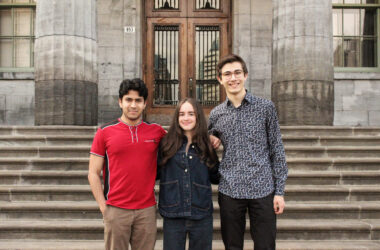
Risann Wright elected as 2022-2023 SSMU President

The 2022-2023 Students’ Society of McGill University (SSMU) executive team was announced on March 18 after a five-day voting period that saw the lowest voter turnout of the past decade. Only 12.9 per cent of the undergraduates cast their ballots this year. Risann Wright, U3 Arts, clinched the SSMU presidency with 51.9 per cent of the vote, beating opponents Bryan Buraga, U4 Arts and Science, and Julian Guidote, 1L. 

With 61.1 per cent of the vote, Hassanatou Koulibaly, U2 Arts and Science, was elected vice-president (VP) Student Life against Olivia Bornyi, U1 Arts. After five rounds of preferential voting, Catherine Williams, U3 Arts, won the VP Internal position over Jaz Kaur, U2 Arts, and Ananya Seth, U1 Arts. 

The rest of the executive team, all of whom ran uncontested, comprises Kerry Yang, U3 Science, as VP University Affairs (UA), Val Mansy, U3 Science, as VP External, and Marco Pizarro, U3 Science, as VP Finance. 

In an interview with The McGill Tribune, Wright affirmed that her priorities as SSMU president are to push for “systemic change” in the society, which would include reforming Human Resources and creating an Equity, Diversity, and Inclusion committee.

“The environment that I hope to create at the SSMU is one that is first and foremost professional, that is collaborative, and one that, should conflicts arise, [has] a very clear process to swiftly and effectively deal with them,” Wright said. “I can’t tell you that no conflict is ever going to happen or there are going to be no disagreements, but I can tell you that I can make every effort to have a safe environment and a structured process to deal with it so that it does not go to the sizes we have seen or overshadow work.” 

Wright plans to work with the rest of the executive team to improve student engagement in the SSMU, emphasizing the importance of getting immediate resources to students, such as stipends for wifi modems and access to COVID-19 rapid tests. 

“Students have every reason at this point to be disenchanted with the SSMU,” Wright said. “The way that we can improve engagement and improve voter turnout is by showing students that it is important, that [the SSMU] does impact you [….] We can improve confidence in the SSMU by genuinely and directly helping students, by allowing them to see that there are leaders, there are executive teams that are transparent, that are going to be held accountable, and that will own up to what they say they are going to do, which I have every intention of doing.”

VP Internal Williams referred to her status as a newcomer to the society, and discussed her focus on having better communication with students. 

“I understand being a student and feeling left in the dark, you see all these things happening, but no one is telling you anything about it,” Williams said in an interview with The McGill Tribune. “I completely get the frustration of a lack of transparency. My aim is to be as transparent as possible.”

In an interview with the Tribune, Yang cited the importance of centring students for a democratic student society. 

“This is going to be my fifth year at McGill and I have seen four SSMU exec teams all from varying levels, and I understand what a good SSMU team looks like and what a bad one looks like,” Yang said. “It is being humble and being people-centric and student-centric, because at the end of the day [being a SSMU executive] is about making every student’s experience the best it can be.”

The SSMU Winter 2022 Referendum results were released later on March 21 to account for an extended voting period after the Palestinian Solidarity Policy was removed from the ballot following an order from the SSMU Judicial Board. The Referendum ballot was rerun and the Policy passed with 71.1 per cent of the vote in favour. 

Other motions that passed included the creation of Dialogue telemedicine service fee, the creation of the MUSTBUS fee, the creation of the Student Support fee, and the creation of a Black Affairs fee levy. The proposals to increase the SSMU membership fee and to create aFrench Accessibility Fee did not pass.

McGill, News

Two years after the administration falsely reported her deceased to her family, Fanta Ly speaks about systemic racism at McGill

On July 30, 2020, the sister of Fanta Ly received a call from McGill falsely reporting that Fanta had passed away. In the two years since, there has been little explanation from the administration regarding how this mistake occurred. 

A Student Affairs case manager had mistakenly called Ly’s sister instead of the family of a student who had indeed passed away. In a statement to The McGill Tribune, McGill media relations officer Frédérique Mazerolle wrote that changes have been made to ensure this does not happen again.

“The situation […] is the result of a most unfortunate human error, by which an employee of the University contacted Ms. Fanta Ly’s sibling, thinking she was reaching out to the family of another student, who had passed away,” Mazerolle wrote. “The employee noticed the mistake early in the call and immediately apologized profusely. The Principal of the University also sent a written apology to Ms. Ly. We have since carefully reviewed our internal processes to ensure that such incidents do not happen again.” 

According to Ly, the case manager did not realize their mistake or apologize during the initial call. Principal and Vice-chancellor Suzanne Fortier sent an apology letter to Ly, now a fourth year law student, more than six months after the incident.

Ly, a national director at the Black Law Students’ Association (BLSA) of Canada and a Black Wealth Club fellow, believes her story is more than just a one-off mistake by a confused employee.

“Some people are trying to dismiss this as a mistake from McGill, but this incident really needs to be situated within the long-standing harassment and discrimination of Black students at McGill,” Ly said in an interview with the Tribune. ”

Ly went on to describe other incidents of hostility and differential treatment from the administration, particularly regarding academic accommodations. Prior to the phone call, Ly sought medical accommodations and was met with resistance from multiple McGill employees. 

“[An Associate Dean] told me I can’t get an accommodation for the same medical reason more than once,” Ly said. “Furthermore, for white students, these issues always get resolved because at some point administrators feel the need to respond and ensure equal treatment. I wish it were the same for Black students. When it comes to Black students, there’s never any response. And it’s just so much time and energy wasted, just trying to fight with an administration that doesn’t value us and treats us like absolute garbage.”

Ly also described receiving a failing grade after speaking out against discrimination, as well as having to contest seemingly targeted changes to the requirements for her minor, such as the removal of certain credits that used to count towards her program. After addressing these issues with the Student Affairs Office (SAO) and being redirected to multiple sources, Ly felt unsatisfied with the explanations given. Feeling ignored by the administration while handling complications with her academic standing, having difficulty getting accommodations, and grappling with the phone call, all amid the COVID-19 pandemic, took a toll on her.

“And even after the call to my family, no one ever reached out to me,” Ly said. “They only sent me that apology letter after I sent an email regarding the faulty investigation and stated that I would inform the media if they didn’t respond. This is all just too much anxiety and too much stress. I couldn’t keep up with my coursework. How am I supposed to do my classes in this type of environment?”

Hülya Miclisse-Polat, 3L and co-president of McGill’s BLSA chapter, believes that while aspects of Ly’s experience have been unique, it nevertheless reflects a larger range of systemic issues. Miclisse-Polat also believes that placing the onus on students not only to report incidents of racism, but to seek justice can create a taxing environment for Black students.

“The fact that the burden falls on the students creates a hostile environment—it a lot of times makes students feel unsafe, and it just sort of perpetuates a system of exclusion at the faculty,” Miclisse-Polat said in an interview with the Tribune. “This is what we mean when we talk about systemic discrimination. A lot of times it’s done in very insidious ways, but it continues to foster a sense of exclusion.”

Currently, Ly is seeking justice in a variety of ways, including filing a complaint to the Quebec Human Rights Commission, writing to the Minister of Higher Education, and sending documentation of students’ experiences to faculty alumni as well as her local member of Parliament.

If you are in need of resources or support relating to anti-Black racism, contact the Black Students’ Network, the Black Law Student Association at McGill, or visit this website for more.

A previous version of this article stated that Ly received multiple failing grades for speaking out against discrimination. In fact, this was a one-time incident. The Tribune regrets the error.

Hockey, Martlets, Sports

Stymied by Concordia Stingers, Martlets hockey falls short of RSEQ title

Delayed by a week due to COVID-19 protocols, game one for the Martlets hockey team (12-3-0) versus the Concordia Stingers (11-3-1) best-of-three playoff series took place on March 17. Throughout the season, McGill worked hard to earn their spot in the RSEQ finals. Though the team fought tooth and nail, they ultimately fell just short of the championship title, losing their first game 3-0 and their second 4-1. 

Though the Martlets couldn’t clinch this series, fifth-year forward Stephanie Desjardins emphasized that this does not hinder the girls’ end goal. 

“Obviously it was not the result we wanted,” Desjardins said. “But we still have a shot at our ultimate goal which is the national championship. The games were good [to] prepare for next week.”

McGill played Thursday night’s home game to a packed arena, with fans from both schools cheering loud and hard. Both Martlets and Stingers glided onto the ice with a powerful demeanour—ready, willing, and able to go to all lengths to secure the win. However, within the first five minutes of the period, Rosalie Begin-Cyr from the Stingers scored a swift goal to put the Stingers on the board. 

The Martlets tried to get past the Stingers’ wicked fast defence, with forward Katie Rankin attempting several shots on goal, but to no avail—the Concordia skaters were just too fast. They frequently intercepted McGill’s long passes, leaving no Martlet unguarded. Yet, goalie Tricia Deguire let no pucks through for the rest of the period, leaving the first frame of the game at 1-0 for Concordia.

During the second period, the Stingers left the Martlets’ defence scrambling. Even as their main tactic became to keep the puck away from the net, the Martlets’ offensive shots often took too long to set up, resulting in an impenetrable fortress forming around the Stingers’ goalie, Alice Philbert, and the shots inevitably being blocked. 

Things got bleaker for McGill fans when the Stingers scored another two goals, putting the Martlets at a three-point deficit. The third period saw little change in either teams’ strategies, and the first game closed off with a loss for McGill. 

Both teams returned refreshed on Friday, ready for the second game, with McGill hoping to push the series to a tie-breaker. Alas, the Martlets had a disheartening start, with the Stingers up 2-0 in the first period. Though their aggression increased in the second half of the game, McGill needed to step up and throw shots at goal, but their energy could not drive the team all the way to the net. With a goal from team captain Jade Downie-Landry, the score was briefly 2-1 for Concordia. However, with 7.8 seconds left in the second period, the Stingers scored again, followed later by a final open net goal after McGill pulled goalie Deguire off the ice, closing the series with another loss for McGill, 4-1. 

Marika Labrecque, a fifth-year centre on the team, shared Desjardins’ sentiments about the national championships, remaining proud of her team while recognizing what held them back. 

“Our first game was a bit more difficult and we knew that we would have to do better, especially shooting more,” Labrecque said. “We gave everything we got for this game. The intensity was there, but we didn’t capitalize when we had the opportunity.”

Despite this loss, the Martlets advance to the Final 8 tournament in Prince Edward Island, set to begin March 24.

Moment of the game: Reignited after a goal from the Stingers, goalie Tricia Deguire did not let in another goal for the rest of the game, saving five shots in a row even as the opponents’ offence continued to push forward.

Quotable: “I’m proud of how far we have come this season and still more to come. I feel as though we came together as a team and played a great game. Although we didn’t get the outcome we wanted, it was a hard fought battle. Tricia had two amazing games, which really held us in there.” – Third-year forward Makenzie McCallum
Stat Corner: Martlets goalie Tricia Deguire made 39 saves during the first game, and 32 during the second, putting her total number of saves at 11th-best in the USports Association.

McGill, News

McGill floor fellows go on strike, demand new Collective Agreement

On March 17, by way of a town crier, the Association of McGill University Support Employees (AMUSE) announced that floor fellows—upper-year students living and working in residences to provide support to first-year students—will be on strike as of March 18 at noon. The floor fellows’ last Collective Agreement (CA) with McGill expired in July 2020 and is still undergoing negotiations. Though AMUSE chose to go on strike after McGill reduced their wage offer from $13.64 to $13.50, there are other core tenets that they are pushing for, including updating the meal plan amount and implementing retroactive pay. For now, no end to the strike has been announced, with the main goals of the action being getting the McGill Administration to acknowledge AMUSE’s demands, such as $18.00 for the floor fellows’ wage, and ultimately arrive at an agreement on the terms of the new CA.

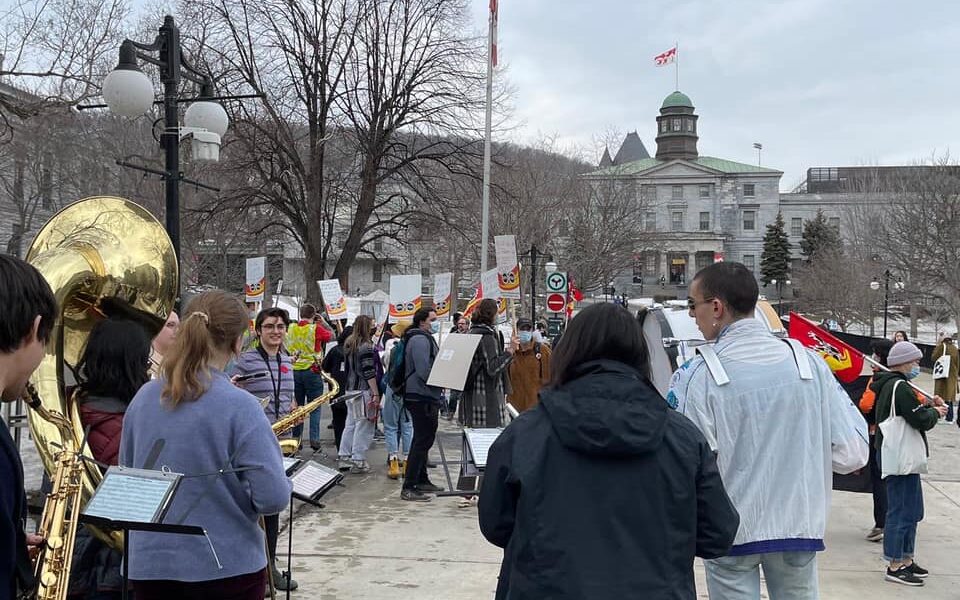
The strike began with a march from Jeanne Mance park to the Roddick Gates on March 18. AMUSE also hosted a cookout on March 19, where, according to Joanna,* a floor fellow in an upper residence, floor fellows gave out free samosas to students outside of the McLennan Library. Since July 2020, floor fellows and AMUSE have pushed for the inclusion of harm reduction and anti-oppression policies, and have also demanded that their wage and meal plans be adjusted to the rising costs of living in Canada. Floor fellows currently follow the terms of the expired CA, which means that their wages have been stagnant at the 2020 rate for 18 months now.

“De facto, we have been operating on the same collective agreement pending the signing of a new one. One consequence of this is that meal plan rates and wages have been frozen since then,” said James Newman, MA ‘20 and president of AMUSE, in an interview with The McGill Tribune. “If we sign a collective agreement that includes the retro[active] pay we insist upon, wage increases will be paid out to employees in a lump sum retroactive to the last collective agreement.” 

Newman told the Tribune that the strike’s primary action was to have floor fellows not enter residences, and perhaps stay in a hotel, from March 18 at noon until March 21—a measure funded by the Public Service Alliance of Canada, AMUSE’s parent union. In doing so, floor fellows did not cross the picket line nor did they perform their regular duties during the strike.

Because floor fellows are bound by an expired CA, they are currently receiving minimum wage for no more than 13 hours a week. According to Newman, floor fellows often work overtime, sometimes up to 30 hours a week, but will still only be paid for 13 hours. Floor fellows are often expected to respond to student crises, build a community within residences, and serve as role models to younger students. It was the lack of compensation for work, according to Newman, that primarily led to the 84 per cent vote in favour of a strike authorization on March 7. 

“[The McGill administration] have been quite clear about their disdain for the idea that floor fellows deserve anything beyond the upcoming provincial minimum wage,” Newman said. “What they have thus far failed to communicate clearly is why so many floor fellows have received net-zero pay stubs, when we can expect them to come to us with a fair deal.” 

According to Joanna, having an expired CA means that floor fellows face situations that fall beyond the scope of their mandate—like having to mitigate drug use despite receiving no training in harm reduction practices. Hazard pay, too, is a major demand AMUSE is pushing for. 

“We really hope that McGill will meet some of our demands,” Joanna said. “We believe what we are asking for is fair. We would like enough meal plan money to cover three meals per day at dining halls [….] We would also like to get hazard pay for 2020-2021 because we were working at the height of COVID.”

In an email to the Tribune, McGill media relations officer Frédérique Mazerolle stated that McGill is working alongside AMUSE and floor fellows in order to find a solution, and that some agreement has already been reached.

“McGill has been in discussion with the union for several months. Both parties have come to [an] agreement on all non-monetary elements within the collective agreement,” Mazerolle wrote. “Further meetings are planned with the union in the coming days. It is our hope we will reach a fruitful agreement rapidly.”

*Joanna’s name has been changed to preserve their anonymity.

McGill, News

Over 15 million dollars from McGill Investment Pool tied up in Uyghur genocide

Content warning: Mentions of violence and discrimination 

Divest McGill’s recent occupation of the McCall MacBain Arts Building has served as a reminder of the controversy surrounding McGill’s investments in fossil fuels. The McGill Tribune’s investigation into other investments within McGill’s $1.9-billion endowment fund reveals the university’s connection to companies aiding or complicit in the Uyghur genocide in China. McGill has invested over $15 million in Chinese government bonds, organizations contributing to mass surveillance, and businesses exploiting Uyghur labour. The university has millions invested in Chinese state-owned enterprises and businesses operating in East Turkestan. 

The Uyghurs are an ethnic minority with a population of around 12 million, living mostly in East Turkestan, or the Xinjiang Uyghur Autonomous Region of northwestern China. Starting as early as 2009, the Chinese government has been committing acts of violence against the Uyghurs and other Muslim minorities in the region, eventually escalating to genocide. Approximately one to three million Muslims have been detained in concentration camps—called “political training centres”—where there have been reports of murder, sexual violence, and forced sterilizations. Additionally, the Uyghur’s Turkic language and culture are being actively diminished through campaigns suppressing Uyghur birth rates, cracking down on the Uyghur language, and destroying mosques. China has also expanded technological surveillance in East Turkestan by nonconsensually collecting DNA samples, tracing online messages, and installing millions of surveillance cameras—effectively turning East Turkestan into a police state. 

An independent investigation by the Tribune has found that McGill’s investments are implicated in the Uyghur genocide. An independently sourced, interactive investment report last updated Nov. 30, 2021 shows several investments into entities complicit in the genocide, including $1,112,523 in China government bonds. Additionally, McGill has invested $8,954,164 into Tencent, a Chinese technology and entertainment giant, which owns WeChat, the most popular messaging service in China. The Chinese government has complete access to WeChat data and has used it to track, oppress, and arrest Uyghur activists and dissidents. McGill also has $3,603,034 invested in Alibaba, a company that taught its clients how to use its software to detect Uyghur faces. Although it is not confirmed how this technology is being used, it is thought that the Chinese government and corporations use it to surveil Uyghurs in East Turkestan and China. McGill has also invested $511,114 into Li Ning Co., a sportswear company accused of using enslaved Uyghur labour to produce cotton. 

Frédérique Mazerolle, a McGill media relations officer, stated in an email to the Tribune that McGill is committed to ethical investments, citing the Board of Governors’ approved changes to their investment policy in 2020 as evidence of this commitment.

“McGill has a long-standing commitment towards sustainability and social responsibility, and as such, our ongoing commitment has already expressed itself in a number of initiatives and measures,” Mazerolle wrote. “Moreover, the Board of Governors has approved in June 2020 changes to the Statement of Investment Policy of the Endowment Fund to include [Environmental, Social, and Governance] (ESG) considerations and a socially responsible investment concrete action plan.”

The McGill Divest for Human Rights coalition, a student organization on campus, is campaigning to divest from companies complicit in the Uyghur genocide. In their report introducing their 2021 campaign, the coalition called for McGill to divest from four companies that the student group identified as exploiting the Uyghur people for labour: Puma, Kohl’s, Footlocker, and Nordstrom. None of these companies are headquartered in China and the group recognizes that their list is non-exhaustive. Rebecca Parry, U3 Arts and a representative from McGill Students for a Free Tibet, a subsidiary organization of Divest for Human Rights, explained the coalition’s divestment strategy and how it is confined by SSMU’s boundaries. 

“The companies listed in our report are based off of a list of companies using Uyghur forced labour in their supply chain published by the Coalition to End Uyghur Forced Labour,” Parry wrote. “We chose to maximize our efficacy by taking part in a targeted boycott as opposed to choosing companies at random [….] As to the decision to not call for divestment from specific countries, we are bound by the 2016 Judicial Board Reference re Legality of the BDS Motion and Other Similar Motions which mandates that SSMU cannot take a position against a specific nation.”

In an interview with the Tribune, Jérôme Beaugrand-Champagne, the 2018 Li Ka Shing Professor of Practice at the McGill Faculty of Law and lawyer with over 20 years of experience working in China, argued that divesting from companies with ties to the Chinese government is difficult because the country is so deeply intertwined in global financial markets and supply chains. 

“It depends how clean you want to be,” Beaugrand-Champagne said. “We can take a step back and say we won’t invest in companies that are on the international list [of companies exploiting Uyghur labour] […] but if you invest in a company in Shanghai, which is a state-owned enterprise it will be interconnected [with the genocide] [….] The least [McGill] can do is not invest in companies that are doing business in Xinjiang.”

McGill invests in approximately 250 companies based in China, some of which are based in Xinjiang. McGill also invests $1,766, 675 in Zijin Mining Group, which appeared on a list of malign Chinese companies compiled by the US State Department that cooperate with the Chinese military. The company operates a copper mine in East Turkestan that is 32.9 kilometres away from a Uyghur concentration camp.

However, despite his insistence on divestment, Beaugrand-Champagne believes that divesting will not economically hurt the Chinese government enough to discourage their crimes, but that McGill and other institutions must divest anyway. 

“They wouldn’t change unfortunately. [China] has sufficient money to run their businesses and the way they structured their stock market makes it very difficult for a foreign company to invest,” Beaugrand-Champagne said. “But morality is very important [….] Unless McGill scraps their code and says we don’t care about freedom of expression then fine, but if you write it down and you hold to those values, you should apply them where you do business.”

Parry, on the other hand, believes that divestment goes beyond a moral duty and that taking money out would put economic pressure on China to stop its human rights abuses. 

“Although this may seem like a long shot,” Parry said. “We believe that if the costs of genocide and occupation outweigh the benefits, East Turkestan, Tibet, and all other countries occupied by China will once again be free.”

On top of this, Parry believes that McGill’s endowment fund and investments should reflect the interests of its students.

“The endowment fund is directly comprised of students’ tuition dollars,” Parry said. “McGill has every responsibility to students to invest its money in a way that aligns with student values and priorities [….] Very few students know that their tuition dollars are being used to fund settler-colonialism, war crimes, crimes against humanity, and genocide. It’s incredibly disturbing.”

The McGill Muslim Law Students Association (MLSA) is concerned that the Uyghur genocide is not getting the amount of global attention it deserves, considering the scale of the atrocities. 

“The global response to the Uyghur genocide is disproportionate given the scale of what is happening,” the MLSA wrote in a statement to the Tribune. “Uyghurs warrant more international attention, more compassion, and more justice.”

Beaugrand-Champagne agreed that the Uyghur genocide is not getting enough attention and that the international response to the genocide has been inadequate. He cited the global sanctions against Russia after its invasion of Ukraine as an example of this hypocrisy.

“We are doing [divestment] with Russia,” Beaugrand-Champagne said. “What’s happening in Ukraine is horrible and horrendous, but there are 1.5 million Uyghurs [interned] and nobody cares. People are like: We don’t know them, we haven’t heard of them, whatever.” 

According to The McGill Tribune’s estimates, it is likely that millions more dollars above the 15 million already identified from the endowment fund are contributing to the genocide given how embedded China and East Turkestan are in global financial systems and supply chains, but this has yet to be confirmed at the time of reporting.

A previous version of this article stated that Jérôme Beaugrand-Champagne was a former McGill law professor. In fact, Beaugrand-Champagne was not a former McGill law professor; rather, he was the Li Ka Shing Professor of Practice at the Faculty of Law of McGill University in 2018. The Tribune regrets the error.


Editorial, Opinion

SSMU Executive Endorsements 2022—2023

The McGill Tribune presents its endorsements for the Students’ Society of McGill University (SSMU) 2022—2023 Executive team.


President


Bryan Buraga

If elected, Bryan Buraga’s 2022-2023 term would be his second—he served as SSMU president during the 2019-2020 academic year. His experience is, unsurprisingly, extensive: He has in-depth knowledge of SSMU’s structures, and is well-equipped to fix the problems he sees in the society’s bureaucracy and workplace environment. Since his departure from office, he has gotten involved in various activist groups on campus including Divest McGill and the broader Divest for Human Rights campaign. Buraga, U3 Arts, also heavily contributed to the McGill Student Union Democratization Policy Initiative. If elected, his main priorities would be to democratize SSMU, faculty associations, and university governance, and to create a McGill Tenants’ Union to support student housing rights.

Julian Guidote

Julian Guidote, BA&Sc ‘21 and first-year law student, has experience as a mental health counsellor for Kids Help Phone and as a mental health advocacy coordinator for SSMU. Throughout his campaign, he has stressed the importance of listening to his staff and strengthening relationships within SSMU by increasing the budget and staff of the Social committee. To improve institutional memory, he plans to maintain open communication with the prior SSMU executives and implement a translation and transcription service to make SSMU website information and meetings available in different languages. Guidote also promises to create a green space and to promote student artistic talent. With his combined knowledge of law and mental health advocacy, Guidote is versed in listening to and caring for others, and hopes to turn this experience into meaningful action for students.

Risann Wright

Risann Wright, U3 Arts, has staked her campaign on  reforming SSMU from the inside, out, to make it a more effective and supportive governing body. The commissioner for both Black Affairs and External Affairs, as well as an Arts senator, she has considerable experience in student governance. She has also served on numerous other clubs and committees throughout her time at McGill. Her platform has three major pillars: Advocacy; Equity and Governance; and Leadership and Support. Wright is strongly committed to reforming equity and leadership policies within SSMU to help the organization operate more effectively and better support students. If elected, she plans to create an interactive online advocacy platform to connect students with resources, and to establish an Equity, Diversity, and Inclusion (EDI) plan within SSMU.


Endorsement: Yes to Risann Wright 
Wright’s campaign combines extensive and relevant SSMU experience with practical, realistic goals that will both encourage a safer work environment at SSMU and lead to more effective student advocacy. Her front and centre commitment to representing the interests of the student body are commendable. While Buraga boasts a previous term in the president role, the society would benefit from Wright’s fresh perspective, especially in the midst of various ongoing internal conflicts within the executive team. Buraga’s commitment is inspiring, but his platform  lacks in-depth explanations of how his massive, structural projects will come to fruition. And while Guidote evidently cares deeply about mental health, his relative lack of SSMU experience and few concrete policy points call into question his readiness for the role.


VP Internal


Catherine Williams


In their platform, Catherine Williams, U3 Arts, conveys that she is just like any other student—someone who, like many voters, had limited knowledge of the inner workings of SSMU, but felt motivated to get involved. Their experience in event planning as a Frosh Leader for two years, coupled with communications roles in student clubs and a corporate internship, is relevant to the VP Internal portfolio. She plans to provide equity packages for those participating in SSMU events, emphasizing that as in-person events make a return, their main priority would be to put on events that are safe and accessible to all students. Williams’ other ideas include creating a SSMU app to promote student engagement with SSMU, and to increase transparency when communicating with the student body.

Jaz Kaur 

Jaz Kaur, U2 Arts, is currently active in many areas of SSMU—as parliamentarian, she serves on the Legislative Council and chairs the Nominating Committee for the Judicial Board and Board of Directors. She is also involved in a multitude of campus initiatives and clubs, occupying three  executive positions. If elected, Kaur promises to facilitate more effective and transparent communication between SSMU executives, staff members, and the student body. Indeed, her platform pushes for greater accountability for SSMU, which she hopes to get started on as soon as possible. She also wants to make SSMU more equitable by identifying systematic patterns of oppression, whether found in policies or the structure of SSMU itself, that create an unsafe workspace. Other promises include improving the relationship between SSMU and student journalists, and increasing advocacy for bilingual rights and non-Western cultures on campus through event planning.

Ananya Seth

Ananya Seth’s platform revolves around making communications at SSMU more accessible, transparent, and accountable. If elected, Seth, U1 Arts, plans to improve SSMU’s social media presence and engagement with the student body by creating a feedback section in the SSMU listserv. She shows great ambition for event planning, which she has ample experience with in her capacity as co-president of the Indian Students Association, among other executive roles. Some of her other ideas include introducing same-day counselling at the Wellness Hub, as well as creating a food bank for students, though both lack concrete blueprints for implementation.


Endorsement: Yes to Jaz Kaur 

Kaur shows a deep understanding of the VP Internal portfolio and the inner workings of the SSMU bureaucracy. Her experience on Legislative Council and the BoD will not only prepare her for the role, but also hopefully allow her to fulfill her campaign promises of increased accessibility and transparency with students. Kaur’s ideas for student events are engaging, practical, and not overly ambitious, placing her a cut above her opponents. If elected, Kaur would bring a wealth of experience and surefooted commitment to governance. Seth’s limited understanding of SSMU’s inner workings and her lack of concrete action plans for her sweeping ideas hinder her promises. Similarly, Williams also fails to provide action plans, and her lack of SSMU experience reflects her misunderstanding of the scope of the VP Internal portfolio.


VP University Affairs


Kerry Yang

Kerry Yang, U3 Science, comes to the VP University Affairs position already familiar with the Senate, having been an Associate Senator in his first year, the incumbent Science Senator this year, as well as being involved in the SSMU Senate Caucus. Some of his platform priorities include overseeing the implementation of the Academic Wellness Proposal and pushing for an S/U policy that gives students the choice to include a course grade in their GPA if they end up doing well. Yang also hopes to expand the autonomy of the Black Affairs, Indigenous Affairs, and Francophone Affairs portfolios, primarily by opening up communication channels and connecting student representatives to the university’s Action Plan on EDI and the Action Plan on Anti-Black Racism.


Endorsement: Yes to Kerry Yang

Given that a major responsibility of the VP UA is to represent student interests at the McGill Senate, Yang’s prior experience navigating the governing body is a key asset. Self-described as a pragmatic idealist, his campaign promises comprise a healthy mix of new ideas and pre-existing, ongoing projects—all of which fall neatly, and realistically, under the UA portfolio. Yang has a strong grasp of the scope and limitations of the VP UA portfolio, and his prior knowledge and experience make him a strong candidate for the position.


VP External


Val Masny

Endorsement: Yes to Val Masny

Val Masny, U3 Science, is running for VP External on a platform that centres accessibility and supporting communities within the larger McGill community. They have experience as the External Affairs coordinator for SSMU, they have worked with neurodivergent communities and people with disabilities for several years, and they are a member of the Citizen Committee of Milton-Parc and QPIRG McGill, among many other community groups. These connections would lend Masny a significant advantage in the role of VP External. Masny plans to continue fostering their previously established relationships with groups like the Mohawk Mothers to expand SSMU’s support for marginalized groups at McGill and within Montreal. While Masny falls short of providing clear plans of action beyond engaging with their community connections, their strong belief in and dedication to increasing accessibility, democratization, and accountability will hopefully guide their term in office.


VP Finance


Marco Pizarro

Endorsement: No to Marco Pizarro

Marco Pizarro pledges to bring an engaged, political perspective to the finance portfolio, including strongly supporting the McGill Student Union Democratization Initiative Policy and campaigns to divest from fossil fuels. With respect to finances, he aims to learn more about the transparency issues clouding the financial processes at SSMU and to streamline processes accordingly. However, a point of concern is his complete lack of experience in the organization—its deeply complicated governance structure and large budget will prove challenging for Pizarro if he catapults up to this executive position. If elected, he faces a steep learning curve when it comes to balancing the budget and navigating the governance structure. Unfortunately, many of his proposed initiatives—like democratizing SSMU, decentralizing power, and creating a tenants’ union for  students—are unrealistic and fall well outside of the scope of VP Finance. Although Pizarro is clearly passionate and sincere about improving SSMU, his ambitions are not suited to the VP Finance portfolio, and his lack of understanding of SSMU and its finances hinder his chance of success.


VP Student Life


Hassanatou Koulibaly

Koulibaly’s portfolio is centred around three pillars: Clubs and services, mental health, and family care. As president of the McGill African Students’ Society, with two prior years on its executive team, Koulibaly understands the frustrations felt by student club leaders and plans to advocate for their demands. As for students’ mental health, she wants SSMU to move away from a diagnosis-led approach to mental health, instead recognizing its fluid and fluctuating nature. Accordingly, she intends to introduce self-reported absences (SRA), a new academic consideration that is not dependent on medical notes, to support more students. In regards to family care, Koulibaly aims to expand the SSMU daycare and better address the needs of student caregivers on campus.

Olivia Bornyi

As SSMU’s current mental health outreach coordinator, Bornyi, U1 Arts, is versed in navigating the inner workings of the organization. Her platform, anchored on accessible and efficient mental health services, also aims to rebuild the relationship between SSMU and its students, and to increase liaison between VP Student Life and student groups on campus. She plans to continue and expand current initiatives, like the SSMU minicourses and daycare volunteer programs. Consistent across each goal is a general effort to improve the flow of information within SSMU. One notable idea is to centralize this information in a shared database to alleviate the burden of communicating and organizing across committees, which she hopes will translate into better experiences for all.


Endorsement: Yes with reservations to Hassanatou Koulibaly

Both candidates appear passionate about the role and are committed to expanding initiatives such as the daycare centre and its associated volunteer program. However, each also faces pitfalls that hinder their preparedness for the role. Koulibaly lacks formal SSMU training, and many of her action items are relatively vague beyond implementing the SRA program. Bornyi offers more experience, bringing up ideas to streamline internal SSMU processes, but elements of her platform are overly ambitious and absent of any larger equity dimension. However, Koulibaly’s experience as a high-ranking club executive, along with her commitment to bolstering equity and accessibility to student life, ultimately sets her apart from Bornyi.


The Editorial Board’s Endorsement Process:

In order to present the most informed endorsement decisions possible, select editors and managing editors conducted remote interviews with all of the candidates, and examined each platform in detail. The endorsements are the product of an Editorial Board meeting in which we addressed, debated, and voted on every candidate. In order to earn the Tribune’s endorsement, a candidate had to receive a majority vote. Reservations could also be appended to any “Yes” endorsement with the approval of a majority of editors. Any questions or concerns about our editorial process or its outcomes should be directed to [email protected].

Editorial, Opinion

SSMU Winter 2022 referendum endorsements

Creation of French Accessibility Fee: No

The stated goal of this semesterly $0.25 non-opt-outable fee is to promote advocacy, accessibility, and student rights for both Quebecois and international francophone students. If passed, an additional annual $12,000 would be added to the Commission des affaires francophones’ budget—but only five per cent and 20 per cent would go toward advocacy and promotion of francophone student clubs, respectively. An overwhelming 40 per cent would go toward the promotion of French culture on campus, which would primarily include a French culture week and Francofête, a week-long celebration of the language. Should the referendum question fail, services under the Commission des affaires francophones would still be able to run, albeit with more difficulty in the case of hosting those larger events. The distribution of the new budget is idealistic at best; with the largest cut of the budget going toward French events instead of promotion of student services and student accessibility, the Tribune has chosen not to endorse this fee.

Increase of the SSMU Membership Fee: Yes

If approved, this non-opt-outable fee increase of $1.20 each semester will help fund fair wages for legislative councillors and student senators. The SSMU Membership Fee had remained the same from 2007 to 2019, and in 2019 the Society increased the fee in order to hire more staff, citing SSMU’s growing scope. By offering fair compensation for labour, leadership positions will become more accessible to a wider range of students in SSMU, potentially encouraging more diverse student representation. As well, the fund sustains vital student safety programs like WALKSAFE and Drivesafe, reasons that further support upholding and increasing the fee. 

Creation of Dialogue Telemedicine Service Fee: Yes 

If passed, this question would create an opt-outable fee of $44.85 for full, year-round access to Dialogue’s 24/7 telemedicine services. It would also ensure the longevity of the program, securing the fee’s existence through 2027. Dialogue’s services were first made available to those on the SSMU health plan in 2020, following the onset of the COVID-19 pandemic, and, according to the referendum motion, have been heavily used. Considering the demonstrated inefficiency and unreliability of the Wellness Hub over the past few years, the stress the pandemic has placed on the health-care system, and the high out-of-pocket expense of medical care for those without a RAMQ card, this fee would make basic essential medical care more accessible to students. Further, those who do not feel they would benefit from Dialogue’s services can simply opt-out of the fee.

Creation of the MUSTBUS Fee: Yes 

McGill University Student Transport (MUSTBUS) is a student-run transit cooperative offering trips between Montreal and New York at a reduced cost. While MUSTBUS became a SSMU Independent Student Group in Winter 2021, they do not currently receive any funding from student fees. The proposed opt-outable fee of $2.00 per semester would be used to help subsidize trips and ensure the co-operative can remain in service long-term. With the help of the funds, the group plans on expanding to include Toronto, Boston, and Ottawa routes in the future. Considering the high cost of VIA Rail and Amtrak train tickets, this service would help keep trips affordable for students wishing to travel to see family and friends, to seek professional opportunities, or simply to spend a weekend outside Montreal. 

Creation of Student Support Fee: No

If passed, this opt-outable fee of $9.99 would provide students access to Calm, Grammarly, and Udemy for one year through Student Support—a for-profit start-up. This fee would remain in place for one year only to test usage rates and gauge whether or not to put the fee up for a five-year term at next year’s referendum. Student Support has come under scrutiny for a lack of transparency with their finances, promotional strategies, and usage rates at various Canadian universities. Given the company’s spotty track record, it is not worth the risk. In addition, there is a free version of Grammarly available and the Calm app’s features are not universally suited tools for mental wellness. Instead of being outsourced to large for-profit corporations, this money could be better invested in academic and mental health support services at McGill. 

Creation of Black Affairs Fee Levy: Yes 

The Black Affairs Fee Levy would amount to an non-opt-outable fee of $1.50 per semester, $0.75 per semester for part-time students, to enhance and fund the institutional capacities of the recently formed Black Affairs committee and Black Affairs commissioner position. The fee would go toward paying new and existing staff members, supporting student initiatives in and beyond Black History Month, helping open a new Black student space, and bolstering relationships with community organizations and businesses that serve Black and racialized people. This fee is an important financial step forward to ensure support for Black students and anti-racist advocacy at McGill.

Palestine Solidarity Policy Referendum Question: Yes

If approved, the Students’ Society of McGill University would adopt the Palestine Solidarity Policy. This policy mandates that SSMU publicly condemn the harmful surveillance of Palestinian and pro-Palestine students, issue at least one statement every semester affirming solidarity in the fight against apartheid in Palestine, and create a Palestine Solidarity committee. Additionally, it mandates the boycott and complete divestment of SSMU from all corporations complicit or participating in settler-colonial apartheid in Palestine and directs SSMU to demand the same from the McGill administration. Considering the documented difficulties student organizations face in passing motions supporting Palestine—such as the five-month delay approving the Divest for Human Rights Policy—SSMU’s commitment to long-term support is necessary. This policy is imperative to institutionalizing SSMU’s support for Palestinian students and concretizing their stance against settler-colonial apartheid.

Editorial, Opinion

SSMU executives set a low bar for next year

In the latest scandal in a long line of occurrences that have kept elected student officials from fulfilling their duties, an anonymous Students’ Society of McGill University (SSMU) director spoke out about blatant racism within SSMU. More concerned with drama and airing out personal grievances, the 2021-2022 SSMU executive team not only failed to achieve their goal of addressing SSMU’s toxic culture, but have actively contributed to it. As a predominantly white institution, sexism against white executives has been taken much more seriously than allegations of racism. The clear double standard in their approach to tackling racism versus sexism signals that SSMU remains an unsafe space for racialized people. This year’s mistakes place a heavy burden on the next executive team to prove their commitment to protecting marginalized students. 

The newest accusations against an unnamed white male executive carry eerie similarities to the experiences of rampant sexism revealed in the fall. Despite the degree of anonymity and the detailed accounts of sexism and racism rife within SSMU, only the article regarding sexism received a statement from the executive team pledging to call out toxic behaviour. On the other hand, no acknowledgement has been made of the article about racism at SSMU. Disappointingly, this piece details that other executive members were allegedly aware of the racist remarks made by their colleague––and no consequences were implemented. That racist comments were tolerated without action is indicative of their internal values. The lack of accountability for racism paired with the outspokenness about sexism reveals a wider issue of executives prioritizing issues based on their lived experiences. Meanwhile, in their silence, the almost entirely white executive team reinforces its deep-seated presence in SSMU. When executives focus on their personal grievances with SSMU as well as the optics of their every decision without considering the impacts of SSMU’s toxic work environment, they alienate members whose identities exist at marginalized intersections. 

SSMU has not only jeopardized but, arguably, lost student trust. Between the silencing of SSMU employees, the mysterious disappearance and reappearance of president Darshan Daryanani, a repeated track record of poor communication and transparency, and even fumbles with Activities Night, this year has seen attempts and subsequent failures. Further, VP Finance Eric Sader’s apology to arts councillors for unprofessional comments show how executives are oblivious to power dynamics at play. Even students who choose to attend Legislative Council to understand the workings of the society frequently endure sessions where executives laugh and joke in response to conversations about racism and sexism. Though investigations occur, and a standard of discipline was, to some extent, set with the suspension of Daryanani, directors do not write anonymous pieces out of fear of retribution when policies are expansive and meaningful. This year has shown that issues are not addressed unless they are made public through the media, and even then, it is often only the issues that affect executives that are acknowledged. As it stands, executives are more worried about maintaining a positive image than actually enacting long-term changes that would benefit present and future employees and students.

SSMU executives have degraded their roles as student representatives, blaming these recurring issues on a preexisting culture problem. This year’s executive team has taken students’ distaste for SSMU and turned it into a repugnance for these students who are paid upwards of $30,000 to argue amongst themselves. Rebuilding any level of trust between students and SSMU will likely take years. 

SSMU executive roles come with major responsibilities but, unfortunately, this year, the team has chosen to allocate its time to obsessing over scandals and disputes––executives have spent hours at Legislative Council meetings talking around all the issues that they do not want to confront. Rhetorical commitments to equity are not, and have never been, enough. This team’s term is coming to a shaky close and the next executive team will need to work hard to repair the damage done within SSMU.

Read the latest issue

Read the latest issue